REVIEW · KATHMANDU
Kanchenjunga Circuit Trek 19 Days
The quiet trails come with a price. The Kanchenjunga Circuit Trek trades easy access and polished teahouses for forests, rough jeep roads, small villages, glaciers, and huge Himalayan views. You visit the northern base camp at Pang Pema and reach the southern side near the Yalung Glacier, seeing Kanchenjunga from strikingly different angles.
I like the small maximum group size of eight, and I like that the price includes domestic flights, private jeeps, permits, guides, porters, and most meals. The main drawback is the long road travel at the start and end, plus basic food and simple accommodation in a remote region.
This is a serious 19-day mountain trip, not a comfortable lodge holiday. You need strong physical fitness, patience with slow transport, and a willingness to sleep in modest teahouses. In return, you get a quieter route than Nepal’s better-known trekking circuits and a close look at villages that have not been reshaped for mass tourism.
Key reasons to consider this trek
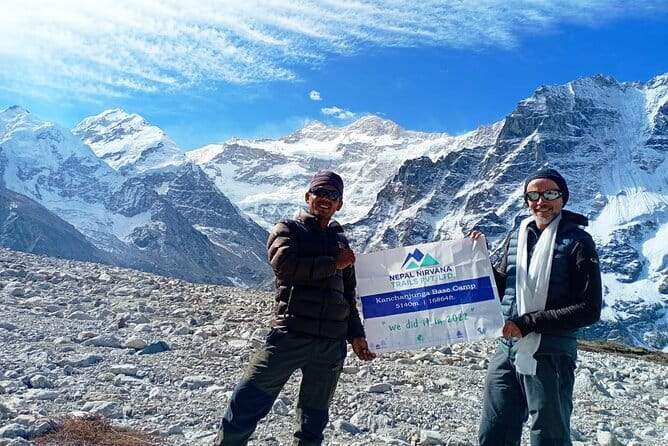
- Both sides of Kanchenjunga: The route reaches Pang Pema in the north and the Yalung Glacier area in the south.
- A small group of up to eight: This allows a more personal pace and makes communication with the guide easier.
- Long remote-road access: Private jeeps connect Bhadrapur, Taplejung, Sekathum, Yamphudin, Kanyam, and the airport.
- Three major high passes: Sinion La, Mirgin La, and Sinelapche Bhanjyang create one of the trek’s hardest and most scenic days.
- Strong support package: Permits, domestic flights, teahouses, guides, porters, insurance for staff, and most meals are included.
- A basic mountain experience: Food, showers, Wi-Fi, charging, and rooms are simple, so pack with realistic expectations.
What $2,000 buys you on this route
At $2,000 per person, this trek offers good value if you want an organized expedition into a remote part of eastern Nepal. The fee covers three nights in a three-star Kathmandu hotel with breakfast, tea-house accommodation during the trek, all required trekking permits, and domestic flights between Kathmandu and Bhadrapur.
It also includes private jeep transport from Bhadrapur to Taplejung and Sekathum, then from Yamphudin through Kanyam to Bhadrapur Airport. Those transfers matter. Kanchenjunga is far from the main tourist centers, and getting to the trailhead without arranged transport would be a major headache.
The staff package is also useful. A licensed, first-aid-trained guide and porter are provided, with one porter shared between two trekkers. Guide and porter salaries, food, equipment, and insurance are included. You still need to budget for tips, personal snacks, drinks, bottled water, Wi-Fi, charging, hot showers, and any extra hotel nights in Kathmandu.
International flights, a Nepal entry visa, and travel insurance are not part of the price. Your insurance must cover emergency rescue and evacuation. That is particularly important on a route with high passes, remote valleys, and limited road access.
A few more treks around Kathmandu worth a look
- Everest Base Camp Trek – 14 Days
★ 5.0 · 1,499 reviews - Everest Base Camp Trek
★ 5.0 · 842 reviews - Everest Base Camp Trekking
★ 5.0 · 485 reviews
Days 1 and 2: Kathmandu preparation in Thamel
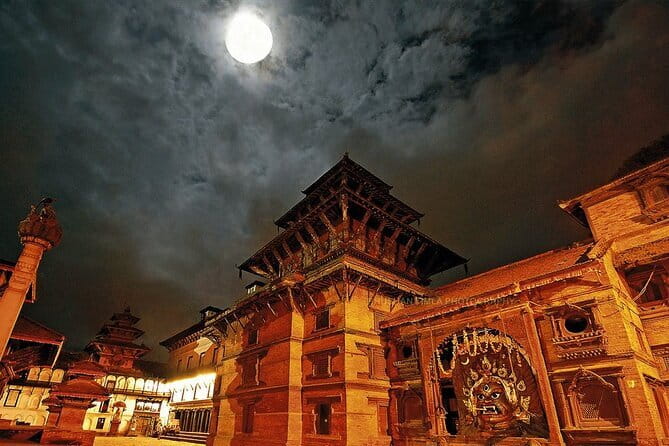
Your first day begins with airport pickup and a private transfer to the hotel in Thamel. This is a useful start after a long international flight, since you do not have to arrange a taxi or find the hotel alone.
Day 2 is for paperwork and preparation. The team collects your original passport around 9 a.m. to arrange permits, then returns it during an office meeting at about 5 p.m. This is also the time to clarify the route, check personal equipment, and ask practical questions about food, porter loads, and weather.
The package gives you three Kathmandu hotel nights with breakfast, though the itinerary uses the first two before the trek and the final night after flying back. Keep some flexibility in your schedule. Mountain trips can be affected by flight delays, road conditions, or weather.
Days 3 and 4: From Bhadrapur to remote Sekathum
The adventure begins with a domestic flight from Kathmandu to Bhadrapur, also called Chandragadhi Airport. The flight takes about 45 to 50 minutes, but the road journey afterward is much longer.
From Bhadrapur, a private jeep travels through Kanyam and along the Mechi Highway toward Taplejung. Kanyam is known for tea cultivation, and the drive introduces you to the green eastern hills before the route becomes rougher and more remote.
Day 4 brings another jeep journey to Sekathum. Many people would normally walk part of this approach, but the organized trip uses road transport to save trekking days and keep the full circuit within 19 days. This is efficient, but not especially restful. Expect roughly 12-hour travel days, winding roads, and limited comfort.
The long drive is one of the clearest compromises in the itinerary. You reach the walking route sooner, but you give up some gradual preparation and village walking. If you dislike rough road travel, ask about this part before booking.
Days 5 and 6: Bridges, jungle, and Amjilosha
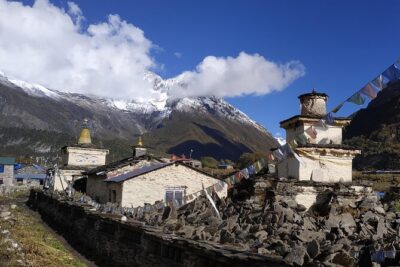
The walking begins at Sekathum. The path climbs beside the Ghunsa Khola, crossing several bridges and passing through thick woodland. This first hiking day feels very different from the dry, open mountain routes many people picture when they think of Nepal.
Amjilosha is a small stop surrounded by forest. The route is quiet and the settlements are limited, so you start to understand the remote character of the Kanchenjunga region. Food and rooms are basic here, and the pace depends on trail conditions and the group’s fitness.
From Amjilosha, the trail continues through dense forest toward Gyabla, also called Kyapra. There are stretches without human settlement, which makes the walk feel wild but also means you cannot count on frequent shops or extra supplies.
The forest is one of the great strengths of this trek. You may see a range of plants and wildlife, though sightings are never guaranteed. The route description specifically notes the possibility of blue sheep and snow leopards later in the trek, but you should treat wildlife as a bonus rather than an expectation.
Same trailhead, a longer or shorter day out:
- Annapurna Circuit Trek with Tilicho Lake
★ 5.0 · 368 reviews - Everest Base Camp Trekking – 13 Day
★ 5.0 · 365 reviews - Everest Base Camp Trek
★ 5.0 · 350 reviews - Everest Base Camp Trek -14 Days
★ 5.0 · 321 reviews
Days 7 to 9: Ghunsa and acclimatization at Khambachen
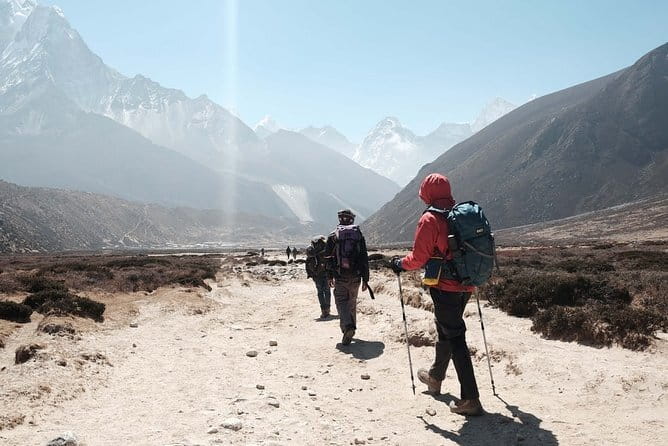
From Gyabla, the trail reaches Phale before continuing to Ghunsa. Phale and Ghunsa give you more contact with mountain village life, while the surrounding woodland provides shade and a steady change in scenery.
Ghunsa is an important overnight stop because it is used for acclimatization. The schedule returns here later, after the northern base camp, which gives you another chance to rest in a familiar place.
Day 8 brings a gradual climb through open pine forest to Khambachen. The trail passes through areas prone to landslides, so you need to follow the guide’s instructions and keep a sensible distance from unstable slopes. The scenery opens up as you leave the thicker forest behind.
Day 9 is a rest day at Khambachen, but rest does not mean staying indoors all day. A short hike toward nearby glaciers, lakes, and viewpoints helps your body adjust to the altitude. This is a valuable part of the plan. On a high trek, a spare day can be the difference between enjoying the route and struggling through it.
Days 10 and 11: The Kanchenjunga North Base Camp at Pang Pema
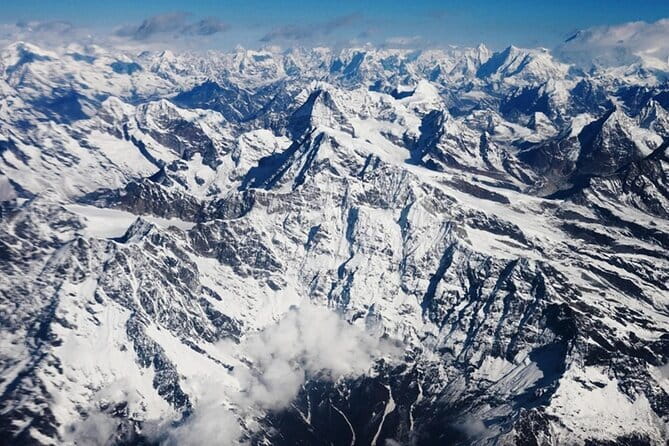
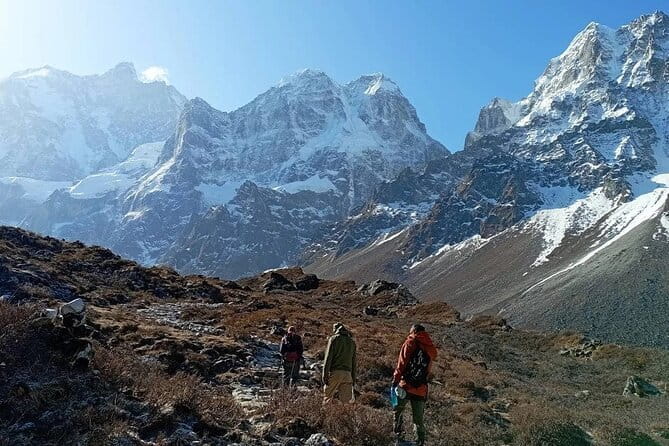
From Khambachen, you follow the Kanchenjunga Glacier trail toward Lhonak. The route becomes more exposed and alpine, with fewer trees and more open views. During the main season, you may see other trekking groups heading toward or returning from the northern base camp, but this route is still far quieter than Nepal’s major circuits.
Day 11 is the high point for the northern side. You hike gradually over moraine terrain to Pang Pema, the North Base Camp of Kanchenjunga. The appeal is not simply reaching a sign or endpoint. You get a close view of glaciers, rock, snow, and the immense mountain walls surrounding the valley.
The route then returns to Ghunsa on Day 12, retracing much of the same trail. Some trekkers dislike walking back over familiar ground, but here it gives you a second chance to appreciate views you may have missed while concentrating on the climb.
The descent also helps your body recover before the next demanding section. This is not a trek where every day is designed to show you something brand new. Some repeated trails are part of the practical route design.
Days 13 and 14: Sele Le and three demanding high passes
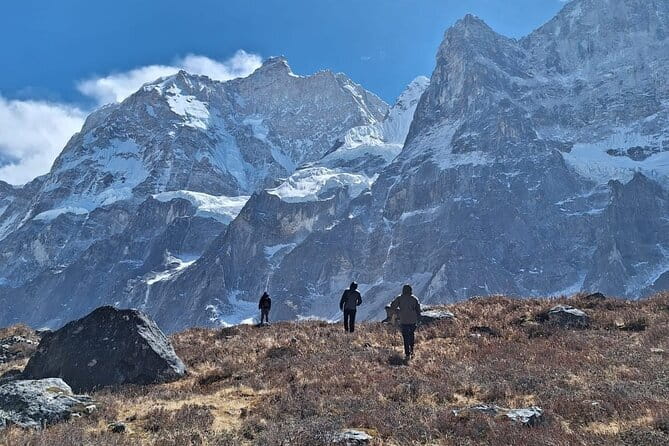
From Ghunsa, the trail turns toward Sele Le rather than returning directly to Gyabla. This is a more isolated section, with dense forest, few settlements, and only a small number of teahouses. Some of these lodges open only during the trekking season, so the availability of basic accommodation depends on timing.
The next day is one of the hardest and most scenic of the trip. From Sele Le, you cross Sinion La at 4,440 meters, Mirgin La at 4,480 meters, and Sinelapche Bhanjyang at 4,645 meters.
At these heights, the pace must be steady. The passes bring broad Himalayan views, but the reward comes after sustained climbing and uneven ground. Snow and weather can affect the feel of the route, so strong fitness alone is not enough. You also need patience and a willingness to let the guide set the pace.
This day is a major reason to choose the circuit instead of a shorter base camp trek. It links the northern and southern sides through a high mountain crossing, but it also makes the trip unsuitable for anyone looking for an easy walking holiday.
Days 15 and 16: Yalung Glacier and the southern side
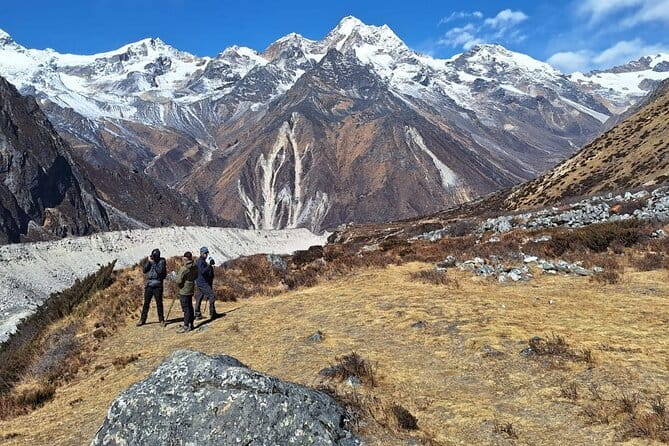
After the passes, the route reaches the Yalung Glacier area. The views include Rathong at 6,682 meters and Kabru at 7,412 meters, along with the snowy peaks around the southern side of Kanchenjunga.
This section provides the second major perspective on the mountain. The route information describes the trip as visiting both the North and South Base Camp areas, while the daily schedule identifies the Yalung Glacier as the southern highlight. You should confirm the exact southern base camp walking point with the operator before departure if reaching a named base camp is important to you.
Day 16 drops through rhododendron forest toward Tortong, following the Simbuwa Khola. After the exposed glacier and pass sections, the forest feels calmer and more sheltered. The downhill walking is easier for your lungs but can still be tiring on knees and feet.
Days 17 to 19: Returning through Yamphudin and Kanyam
From Tortong, the trail descends toward Amji Khola, passing Lasiya or Lamite Bhanjyang at 3,415 meters and Dhupi Bhanjyang at 2,665 meters. The path includes steep slopes before reaching Yamphudin, one of the larger villages on the return route.
Day 18 continues through changing scenery beside the Kabeli Khola. You leave the high mountain villages behind and return to road transport at Kanyam. The tea-growing area offers a gentler final stop, and it breaks up the long return to the airport.
On Day 19, you spend a little time around Kanyam before a two to three-hour drive to Bhadrapur. The flight back to Kathmandu takes about 45 to 50 minutes, usually later in the day. You are dropped at your Kathmandu hotel, but remember that an extra hotel night is not included if delays or schedule changes require one.
Food, rooms, and daily comfort
Food on the trek is described as very basic, with vegetarian choices recommended. You should expect practical mountain meals rather than a broad menu. Snacks, drinks, bottled water, Wi-Fi, battery charging, and hot showers cost extra when available.
Tea-house rooms are part of the package, but comfort levels can vary in remote villages. Pack warm layers, a sleeping bag suitable for high-altitude nights, personal snacks, and a power bank. Do not assume that every stop will offer reliable electricity or strong phone service.
The positive side of simple lodging is that it keeps the route tied to local villages rather than large resort-style properties. The tradeoff is less privacy and fewer conveniences.
Guide support and the human side of the trek
The operator assigns a licensed guide with first-aid training and a porter shared between every two trekkers. That support matters on a route with isolated sections, changing altitude, landslide-prone trails, and high passes.
The strongest praise has centered on staff care and organization. Guides named in the feedback include Raj, Jangbu, Abinta, Raju, and the company manager KP Dhital. Raj was especially praised for hard work and attentive service, while Jangbu was credited with making the trek memorable through care and local understanding.
The displayed rating is 4.9 from nine reviews, and the comments repeatedly highlight warm communication, reliable organization, and excellent guide and porter support. One especially notable account came from a person beginning their 80th year, who completed the trek with help from the guide and support team. That does not make the route easy, but it shows how much good support can matter.
Who should book this 19-day trek?
I would recommend it to fit hikers who want a quieter Himalayan route, dramatic mountain views, and a more remote village experience. It suits people who value wilderness and local contact more than smooth roads, luxury rooms, or a packed schedule of sightseeing.
You should think twice if you dislike long jeep rides, basic food, shared teahouse facilities, or repeated walking on the return route. The trek also requires strong physical fitness, and the itinerary includes high passes above 4,400 meters.
Free cancellation is available up to 24 hours before the local start time for a full refund. Inside that window, refunds are not provided and changes are not accepted.
Should you book the Kanchenjunga Circuit Trek?
Book this trek if your priority is a quieter route with serious mountain scenery, two major Kanchenjunga viewpoints, and strong logistical support. The $2,000 price is reasonable for the included flights, private road transfers, permits, staff, accommodation, and meals.
Do not book it expecting polished infrastructure. The long drives, plain food, remote teahouses, and demanding high-pass day are central parts of the experience. If you accept those limits, this is one of Nepal’s better choices for a more rugged and less crowded Himalayan adventure.
FAQ
How long is the Kanchenjunga Circuit Trek?
The trip lasts approximately 19 days, including Kathmandu preparation, domestic flights, road transfers, trekking days, rest days, and the return to Kathmandu.
Where does the trek begin?
The organized route begins with arrival in Kathmandu, followed by a flight to Bhadrapur. The walking section begins at Sekathum after jeep travel through Taplejung.
Does the trip include airport pickup?
Yes. Airport pickup in Kathmandu is offered, and you are transferred to the booked hotel by private vehicle.
Are domestic flights included?
Yes. The package includes flights from Kathmandu to Bhadrapur and from Bhadrapur back to Kathmandu.
Is private road transport included?
Yes. Private jeep transport is included from Bhadrapur through Taplejung to Sekathum, and from Yamphudin through Kanyam to Bhadrapur Airport.
Does the trek reach Kanchenjunga North Base Camp?
Yes. The route reaches Pang Pema, also known as Kanchenjunga North Base Camp, on Day 11.
What are the main high passes?
The route crosses Sinion La at 4,440 meters, Mirgin La at 4,480 meters, and Sinelapche Bhanjyang at 4,645 meters.
Are meals included?
Breakfast is included for 18 days, lunch for 17 days, and dinner for 16 days. Personal snacks, drinks, bottled water, and other extras are not included.
Is travel insurance included?
No. You must arrange your own travel and health insurance, including cover for emergency rescue and evacuation.
How many people can join the group?
The maximum group size is eight people. A guide and a porter are provided, with one porter shared between two trekkers.
Recently added around Kathmandu
- Ghorepani Poon Hill Trek★ 5.0 · 16 reviews
- Private Manaslu Circuit Trek at Himalayas★ 5.0 · 3 reviews
- Amazing 1 Day Trekking Experience in Kathmandu Nepal★ 5.0 · 24 reviews
- Ghorepani Poonhill Trek★ 5.0 · 5 reviews
- Upper Mustang Trekking★ 5.0 · 2 reviews
- Upper Mustang Trekking★ 3.0 · 2 reviews
- Upper Mustang Trekking★ 5.0 · 4 reviews
- Upper Mustang Trek★ 5.0 · 5 reviews
Kathmandu Trekking Tours, compared.