REVIEW · KATHMANDU
Annapuran Base Camp Trek
This trek puts big mountains within walking distance. I like the route’s mix of Gurung village life in Ghandruk and the high mountain setting at Annapurna Base Camp, plus the useful stop at Jhinu Hot Spring. The biggest concern is the published duration: it says two days in the summary, but the actual plan is an 11-day journey.
I also like that the price includes permits, meals, mountain lodging, porters, guide services, and bus transport between Kathmandu and Pokhara. Guide Ram receives special praise for route knowledge and safety, while porter Santosh is also mentioned warmly. You should still prepare for long walking days, changing weather, shared toilets, and extra costs for showers, charging, laundry, drinks, tips, and personal items.
Key points to know before booking
- The real trip takes 11 days, including arrival and departure, not two days.
- Annapurna Base Camp reaches 4,130 meters, so fitness and sensible pacing matter.
- Ghandruk adds cultural interest, with Gurung and Dalit communities along the early part of the route.
- Guide Ram is singled out for safety and route care, especially when conditions turned wet and cold.
- Jhinu Hot Spring gives the return journey a welcome change of pace after several demanding trekking days.
- The $741.34 price covers many essentials, but not insurance, Kathmandu and Pokhara dinners, tips, or personal expenses.
What this Annapurna trek really includes
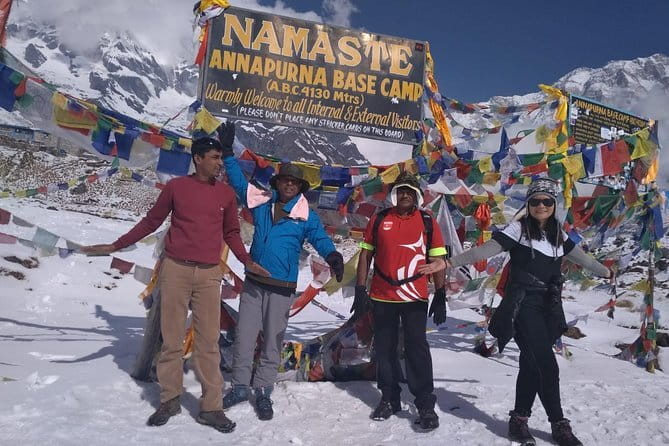
The Annapurna Base Camp Trek offered by Well Plan Trekking is best understood as an 11-day private trekking package from Kathmandu. The route begins with city arrival, heads to Pokhara, climbs through Ghandruk and the Modi Khola area, reaches Annapurna Base Camp at 4,130 meters, then returns through Bamboo and Jhinu Hot Spring.
The listed price is $741.34 per person. For a private trip, that is a useful package price because it includes an English-speaking trekking guide, porters, permits, transport between Kathmandu and Pokhara, two nights in Kathmandu, two nights in Pokhara, and meals and lodging during the trek.
You also receive airport pickup and drop-off in Kathmandu by private car. The Kathmandu to Pokhara and Pokhara to Kathmandu legs use a tourist bus, not a private vehicle, so expect a more basic transport experience on those long road days.
The wording around duration needs careful attention. The tour summary says two days, and the itinerary is split under two day headings, but the actual schedule clearly runs from Day 1 through Day 11. I would treat this as an 11-day trip and confirm that point before paying.
A few more treks around Kathmandu worth a look
- Everest Base Camp Trek – 14 Days
★ 5.0 · 1,499 reviews - Everest Base Camp Trek
★ 5.0 · 842 reviews - Everest Base Camp Trekking
★ 5.0 · 485 reviews
Day 1 in Kathmandu: arrival and a practical start
The first day is an arrival day at about 1,300 meters. Airport pickup by private car is included, which removes one common source of hassle after a long flight.
You stay in Kathmandu for two nights with breakfast included. Lunch and dinner in Kathmandu are not included, so you will need to budget for those meals. Personal costs such as phone calls, laundry, showers, battery charging, bar bills, and other optional services are also yours to cover.
This first stop is less about sightseeing and more about getting organized. Your guide and trekking company can help set the plan in motion, while the extra night gives you some breathing room before the long road journey to Pokhara.
Day 2: the six to seven hour road trip to Pokhara
The drive from Kathmandu to Pokhara takes about six to seven hours and ends at roughly 820 meters. This is a full travel day, not a quick transfer, so do not count on arriving with enough energy for a serious walk.
Pokhara is the main staging point for the trek. Two nights of accommodation with breakfast are included there, but lunch and dinner are not. I would use this time to check your clothing, walking shoes, rain gear, and daypack before you leave the road behind.
The return drive to Kathmandu is listed as seven to eight hours, slightly longer than the outward journey. Road conditions can affect timing, so avoid scheduling a tight international flight immediately after the bus ride.
Days 3 and 4: Ghandruk brings people into the story
On Day 3, you drive from Pokhara to Nayapul and begin walking toward Ghandruk. The combined drive and trek take about five to six hours, with Ghandruk at 1,940 meters.
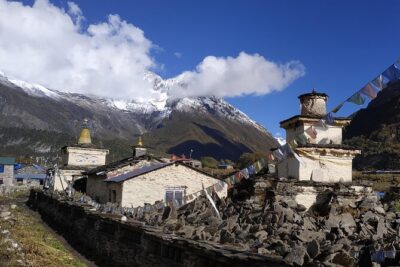
Ghandruk is one of the most appealing parts of this route because the experience is not only about reaching a famous mountain point. The village is associated with Gurung communities, and the route also introduces you to Dalit communities. That human element gives the early trek more meaning than a simple uphill march through scenery.
The next day takes you from Ghandruk to Sinuwa at 2,360 meters. The walk lasts about five to six hours. You are now gaining height steadily, which is a sensible way to approach the much higher base camp.
The route’s cultural value is strongest here. You can enjoy mountain views while also seeing how communities in the hills connect with the trekking path. The trade-off is that the walking is already substantial, and the schedule leaves little room for a leisurely village stay.
Same trailhead, a longer or shorter day out:
- Annapurna Circuit Trek with Tilicho Lake
★ 5.0 · 368 reviews - Everest Base Camp Trekking – 13 Day
★ 5.0 · 365 reviews - Everest Base Camp Trek
★ 5.0 · 350 reviews - Everest Base Camp Trek -14 Days
★ 5.0 · 321 reviews
Days 5 and 6: the serious climb to Annapurna Base Camp
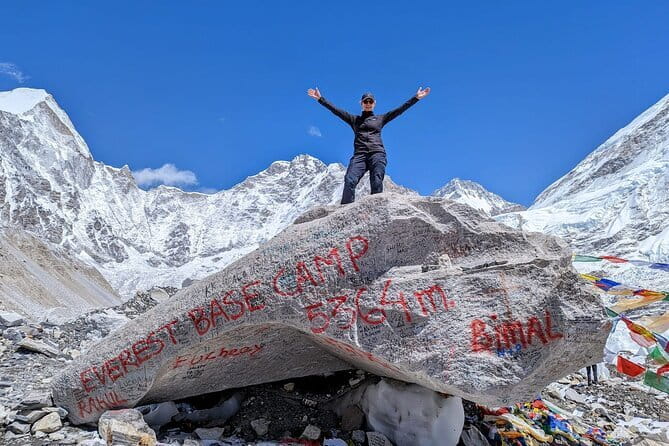
Day 5 runs from Sinuwa to Deurali at 3,230 meters and takes about six hours. This is where the altitude begins to feel more important, even if you are in good shape.
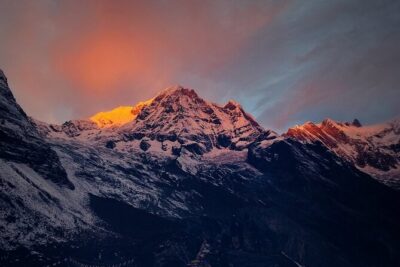
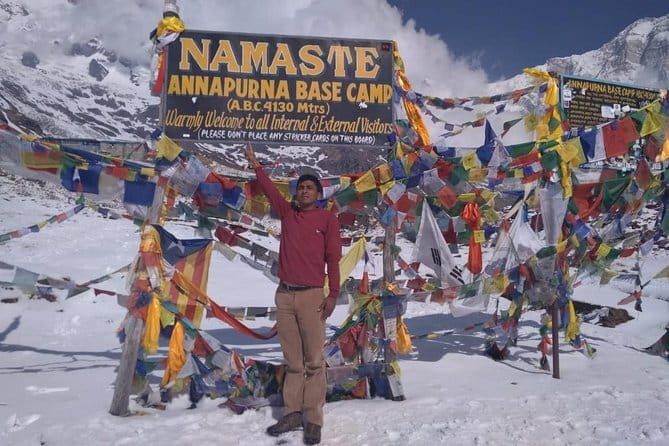
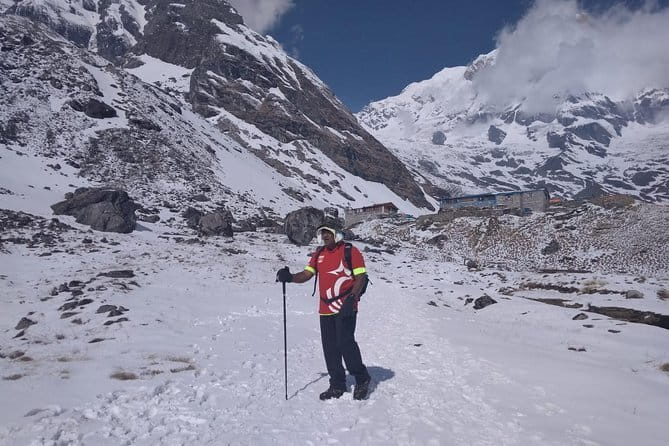
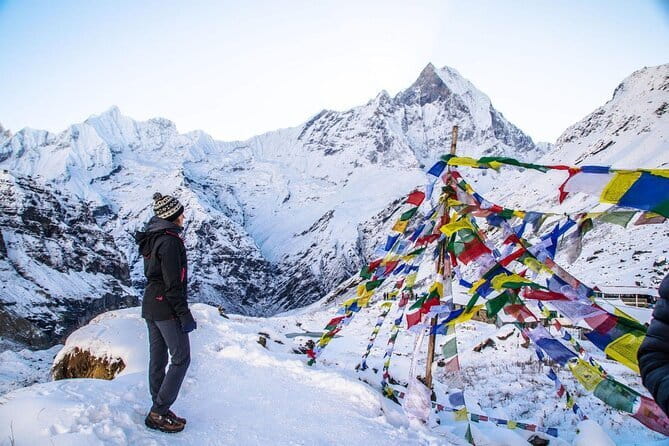
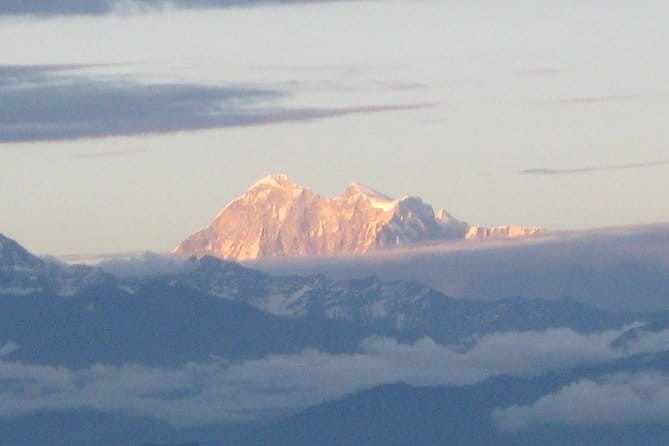
The following day is the main goal: five hours from Deurali to Annapurna Base Camp at 4,130 meters. The approach brings you into the Annapurna Sanctuary, a high mountain setting surrounded by some of Nepal’s most impressive peaks.
Reaching base camp is a real physical achievement. The trip description calls Annapurna the world’s 10th tallest mountain, and the route lets you reach its base on foot rather than simply viewing it from a road or lookout.
Do not mistake the five-hour estimate for an easy morning. You will already be above 3,200 meters when leaving Deurali, and weather can make the route slower. One person on the trip reached Machapuchare Base Camp rather than continuing to Annapurna Base Camp, with guide Ram placing safety first and adjusting to a slow pace.
That detail matters. A good mountain guide should not treat the scheduled endpoint as more important than your condition. The information provided suggests Ram handled this part carefully, which is reassuring, but you should still be honest about your fitness and any health concerns before departure.
Days 7 and 8: a long descent and Jhinu Hot Spring
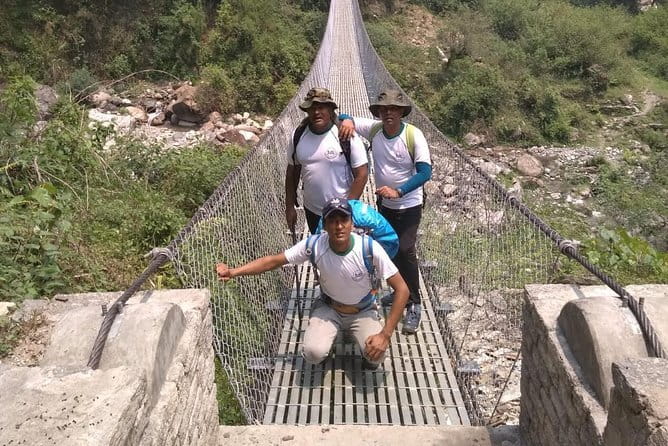
After reaching Annapurna Base Camp, Day 7 takes you down to Bamboo at 2,340 meters. The walk takes about six hours. Descending may look easier on paper, but tired legs and steep sections can make it demanding.
Day 8 continues from Bamboo to Jhinu Hot Spring at 1,780 meters, taking about five hours. This is a smart route choice because it gives you a memorable reward after the high point of the trip.
The hot spring is also a useful emotional reset. After several days of cold mornings, high altitude, and long walks, time near warm water can make the return journey feel less like a retreat and more like another part of the trip.
The itinerary does not specify exactly how long you spend at the spring or what facilities are provided there. You should ask your guide about the timing and bring any personal items you need, since showers, charging, and similar services are excluded from the package.
Days 9 through 11: back to Pokhara and Kathmandu
Day 9 combines a five to seven hour walk from Jhinu Hot Spring to Nayapul with a drive back to Pokhara. This is another long day, so expect a late arrival or at least a tiring one.
You have your second included night in Pokhara, with breakfast provided. Dinner remains your responsibility, as do personal expenses and drinks.
Day 10 is the seven to eight hour tourist bus ride from Pokhara to Kathmandu. Day 11 is departure day, with the activity ending back at the Kathmandu meeting point.
The schedule works well if you want a complete trekking package with transport arranged at both ends. It works less well if you want extra time in Pokhara or Kathmandu, since the plan gives you limited flexibility around the fixed travel days.
What the $741.34 price covers
The value here comes from the number of major costs bundled into one price. You receive:
- Two nights in Kathmandu with breakfast
- Two nights in Pokhara with breakfast
- Kathmandu airport pickup and drop-off by private car
- Tourist bus transport between Kathmandu and Pokhara
- An English-speaking trekking guide
- Porter support, including porter meals, accommodation, salary, and insurance
- Annapurna Conservation Area permits and TIMS paperwork
- Breakfast, lunch, dinner, and tea or coffee during the trek
- Mountain accommodation in private rooms with shared toilets
For a trek of this length, permits, food, porters, and transport can quickly add up. The inclusion of porter costs is especially useful because carrying your own full pack for this route would make the long walking days harder.
The lodging is described as soft, comfortable private rooms with shared toilets. That is a fair expectation, but you should not read it as hotel-style accommodation in the mountains. Shared facilities are part of the deal, and the package does not cover showers or battery charging.
The price does not include travel or rescue insurance. It also excludes alcoholic drinks, bar bills, Kathmandu and Pokhara lunch and dinner, personal expenses, optional services, and tips for the guide and porters.
Travel insurance is not a minor extra on a high-altitude trek. The company does not provide it for you, so arrange suitable cover before setting out. The supplied details do not specify the exact policy requirements, so check that your insurance includes trekking at the stated altitude and emergency rescue.
Guides, porters, and the value of private travel
This is a private activity, meaning only your own group participates. That gives you more control than a large fixed group, particularly if your walking speed differs from other people’s.
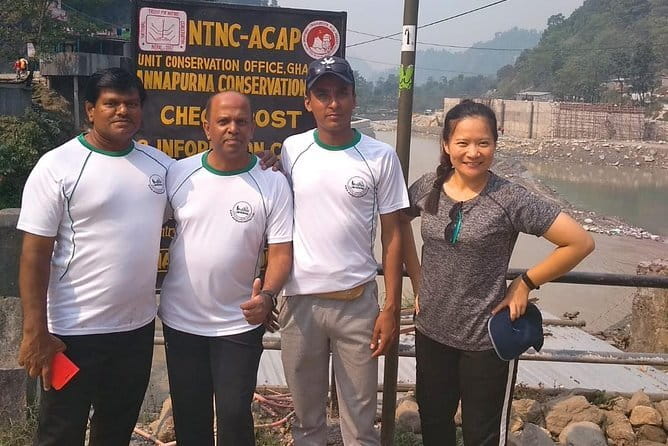
Guide Ram is the name most closely associated with the experience. He is praised for route knowledge, safety awareness, and patient support when one person was moving slowly. During bad weather, including rain and hail near Deurali, he reportedly prepared raincoats, which shows the practical value of having someone watching conditions rather than simply following a clock.
Porter Santosh is also mentioned positively. Porters make a major difference on a trek like this, since they carry the heavier load while you walk with a lighter daypack.
Still, private does not mean effortless. The daily walking times range from five to six hours, with long transport days added at both ends. You need moderate physical fitness, as the operator states, and you should be ready for changing weather and rougher mountain conditions.
Weather, gear, and the small costs that matter
The weather can change quickly. Hail and poor conditions were reported during the ascent toward Deurali, so rain protection is not optional. A waterproof jacket or raincoat should be easy to reach, not buried at the bottom of your bag.
The included meals during the trek are breakfast, lunch, dinner, and tea or coffee. That simplifies the daily budget, but the package does not cover every comfort. Showers, charging, laundry, phone use, and drinks can all create small extra charges.
You should also set aside money for tips. Tips for the guide and porters are specifically excluded, and they are an important part of the final cost you need to plan.
The itinerary gives exact elevations, which helps you understand the physical shape of the trip. You start at 1,300 meters in Kathmandu, descend to Pokhara at 820 meters, then climb through Ghandruk, Sinuwa, and Deurali before reaching 4,130 meters. That steady rise is one reason the route can suit people who prepare properly, but it does not remove the risk of altitude problems.
Who should book this Annapurna route?
I would recommend this trek to you if you want a well-organized first Himalayan trek with guide and porter support already arranged. It suits people who value village contact, mountain views, and a clear route more than luxury lodging or a slow, flexible schedule.
It is also a good fit if you prefer a private group. You can walk at your own group’s pace, and the guide can respond to individual ability, as the experience with Ram suggests.
I would hesitate to recommend it to anyone expecting a two-day excursion, comfortable hotel facilities throughout, or a relaxed sightseeing holiday. The two-day wording is misleading, the mountain walking is demanding, and the road transfers are long.
The rating shown for the experience is 4.6 from five ratings. That is encouraging, but it is still a small sample. The strongest praise centers on organization, guide support, porter help, and the once-in-a-lifetime nature of reaching the Annapurna area. Those are exactly the parts I would weigh most heavily.
Should you book the Annapurna Base Camp Trek?
Book it if you want an 11-day private trek that combines Ghandruk’s village culture, high mountain scenery, and a hot spring stop in one route. The included permits, meals, porters, guide, and transport make $741.34 a strong value for the main services covered.
Before booking, confirm the correct duration, ask what accommodation is planned in each mountain stop, and check how the company handles weather or a slower pace. If you arrive prepared for shared toilets, long road journeys, variable weather, and extra personal costs, this looks like a practical way to reach Annapurna Base Camp with solid support.
FAQ
How long does the Annapurna Base Camp Trek take?
The detailed plan runs for 11 days, from arrival in Kathmandu through departure. The two-day duration shown in the summary does not match the day-by-day schedule, so confirm the dates before booking.
What is the highest point of the trek?
The highest listed point is Annapurna Base Camp at 4,130 meters, or 13,549 feet.
Is transportation included?
Yes. Airport pickup and drop-off in Kathmandu use a private car. Transport between Kathmandu and Pokhara uses a tourist bus, with journeys of about six to seven hours going out and seven to eight hours returning.
Are meals included?
Breakfast, lunch, dinner, and tea or coffee are included during the mountain trek. Kathmandu and Pokhara lunch and dinner are not included.
Are permits and porter services included?
Yes. The package includes the Annapurna Conservation permit, TIMS paperwork, and porter services, including porter meals, accommodation, salary, and insurance.
Can I cancel for a full refund?
You can cancel at least 24 hours before the experience begins for a full refund. Cancellations or changes made less than 24 hours before the start time are not accepted for a refund.
Recently added around Kathmandu
- Ghorepani Poon Hill Trek★ 5.0 · 16 reviews
- Private Manaslu Circuit Trek at Himalayas★ 5.0 · 3 reviews
- Amazing 1 Day Trekking Experience in Kathmandu Nepal★ 5.0 · 24 reviews
- Ghorepani Poonhill Trek★ 5.0 · 5 reviews
- Upper Mustang Trekking★ 5.0 · 2 reviews
- Upper Mustang Trekking★ 3.0 · 2 reviews
- Upper Mustang Trekking★ 5.0 · 4 reviews
- Upper Mustang Trek★ 5.0 · 5 reviews
Kathmandu Trekking Tours, compared.