REVIEW · KATHMANDU
20 Days Private Kanchenjunga Circuit Trek
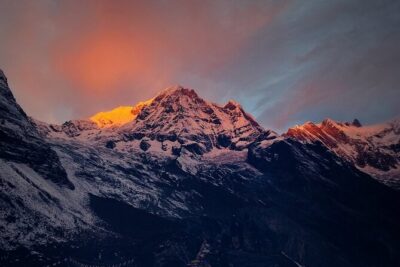
Remote mountains reward patience. This 20-day private Kanchenjunga Circuit Trek reaches both the North Base Camp at Pangpema and the South Base Camp near Oktang, with high passes, mountain villages, and long stretches far from Nepal’s busier trekking routes. I like the rare two-base-camp route and the personal attention of a private guide. The main catch is the demanding access: long road journeys, basic tea houses, and altitudes above 5,000 meters.
I also like that the price of $2,560 covers flights, local buses, a guide for 19 days, permits, mountain lodging, and all three daily meals. Guides such as Narayan and Dil have been praised for their trail skill, planning, and ability to adjust plans around weather or health. You should still arrive fit, flexible, and ready for changing conditions.
Key points at a glance
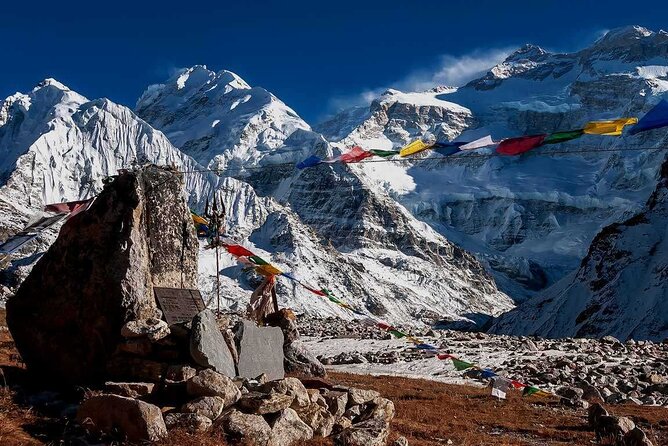
- Both Kanchenjunga base camps: Reach Pangpema in the north and take a day trip toward the South Base Camp from Cheram.
- High-pass crossing: The route uses Sele Le, Sinion La, Mirgin La, and Sinelapche La, making this a serious high-altitude trek.
- Remote eastern Nepal: The journey passes through Chirwa, Ghunsa, Kambachen, Lhonak, Cheram, and Yamphudin.
- Private guiding: Only your group takes part, with a guide provided for 19 days.
- Strong package value: Flights, permits, lodging, meals, and key ground transport are included in the $2,560 price.
- Basic mountain comfort: Tea houses are included, but hot and cold drinks cost extra.
Why this Kanchenjunga route feels different
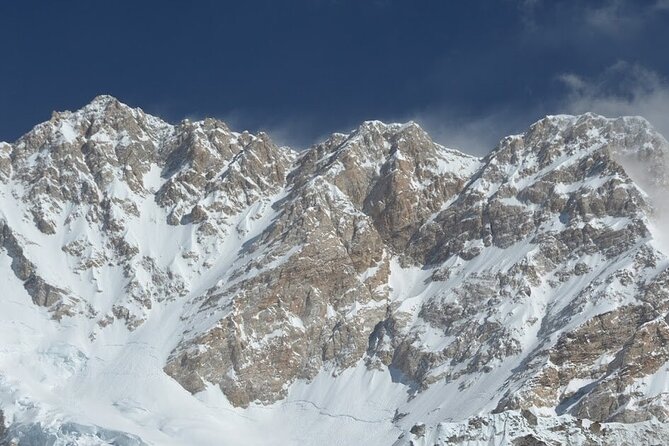
Kanchenjunga is Nepal’s third-highest mountain, rising to 8,586 meters. This trek takes you into the Kanchenjunga Conservation Area in the far east of Nepal, where the approach is slower and less polished than the classic routes near Everest or Annapurna.
I like the sense of progression here. You begin with roads, buses, and tea-growing hills around Ilam. Then the route narrows into river valleys, forests, alpine meadows, moraines, and finally the stark upper country around Lhonak and Pangpema.
The route is not simply a walk to one viewpoint. You cross between valleys and gain access to both sides of the Kanchenjunga massif. That makes the trip valuable for anyone who wants a fuller mountain experience rather than a short out-and-back trek.
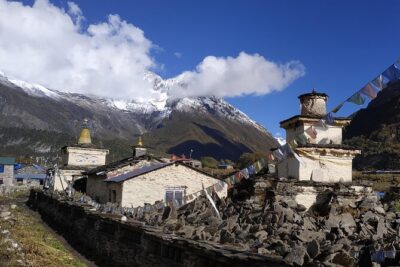
The setting also has a strong cultural side. Chirwa, Ghunsa, and Yamphudin are not just sleeping points on a map. They are working villages, with local homes, small lodges, and communities that include Limbu, Sherpa, Rai, and Gurung people.
A few more treks around Kathmandu worth a look
- Everest Base Camp Trek – 14 Days
★ 5.0 · 1,499 reviews - Everest Base Camp Trek
★ 5.0 · 842 reviews - Everest Base Camp Trekking
★ 5.0 · 485 reviews
Days 1 and 2: Kathmandu to Ilam and Taplejung
Your trip begins at Tribhuvan Airport in Kathmandu, with a listed start time of 10:15 a.m. The afternoon flight to Bhadrapur takes about 45 minutes. From there, you continue by public bus for roughly five hours to Ilam.
Ilam is a sensible first overnight stop. It breaks up an otherwise punishing transfer and gives you a first look at eastern Nepal before the high mountains appear. The next day is another long transport day, with a public bus from Ilam to Taplejung. The roughly 240-kilometer journey can take 9 to 12 hours depending on road conditions and traffic.
I would treat these first two days as part of the adventure, not as a smooth transfer. Public buses keep the cost down and put you closer to local life, but they also make the schedule less predictable. If you need a polished, quick arrival at the trailhead, this may test your patience.
Days 3 to 6: Chirwa, Lelep, Amjilosa, and Gyabla
The walking section begins around Chirwa, a small village with tea houses and lodges. It is a practical first trekking base and a good place to settle into the rhythm of daily walking, simple meals, and modest accommodation.
From Chirwa, the route continues toward Lelep. The distance is about 20 kilometers, with a walking time of six to seven hours. Lelep serves as the headquarters of the Kanchenjunga Conservation Area, giving the stop more importance than its size might suggest.
Next comes Amjilosa, at about 2,310 meters. The walk from Lelep covers around 13 kilometers and generally takes six to seven hours. The route moves deeper into the protected area, and the steady gain in height begins to matter.
The following day takes you toward Gyabla. Details of the exact distance are not provided, but this section is described as a chance to see varied terrain and local culture. I would expect the basic pattern to continue: long walking days, small lodges, and a gradual change from lower forested country toward colder mountain terrain.
These days are valuable because they ease you upward rather than rushing you straight into extreme altitude. They are also where a private guide can help with pacing and daily decisions.
Days 7 and 8: Ghunsa and your first acclimatization stop
Ghunsa sits at about 3,475 meters and is one of the key villages on the route. Traditional wooden houses and basic tea houses give it a more settled feel than the higher camps.
You spend two nights here, with the second day used for acclimatization. That extra night is not wasted time. At this altitude, your body needs time to adjust before the route moves toward 4,000 meters and beyond.
I like the way the schedule builds in this pause. The route is difficult enough without treating acclimatization as an afterthought. You can use the day to rest and explore around the village, though the information provided does not specify a separate acclimatization hike.
The tea houses are included in the price, but do not expect hotel-style comfort. The package covers breakfast, lunch, and dinner, while hot and cold drinks are excluded. Bring enough spending money for tea, coffee, water, or other drinks along the way.
Same trailhead, a longer or shorter day out:
- Annapurna Circuit Trek with Tilicho Lake
★ 5.0 · 368 reviews - Everest Base Camp Trekking – 13 Day
★ 5.0 · 365 reviews - Everest Base Camp Trek
★ 5.0 · 350 reviews - Everest Base Camp Trek -14 Days
★ 5.0 · 321 reviews
Days 9 to 12: Kambachen, Lhonak, and Pangpema
From Ghunsa, you follow the Ghunsa River toward Kambachen. The trail passes through alpine meadows and moraines, with the terrain becoming more open and severe as you gain height.
Kambachen is about 4,050 meters above sea level. You spend two nights there, giving you another acclimatization day before the push toward Lhonak and the North Base Camp. This is one of the most important features of the schedule. The altitude is high enough that fitness alone does not guarantee an easy time.
Lhonak is a high mountain stop with views of glaciers, surrounding peaks, and barren upper-country terrain. From here, the route reaches Kanchenjunga North Base Camp, also called Pangpema, at approximately 5,140 meters.
Pangpema is the great northern objective. It provides views toward the north face of Kanchenjunga, and reaching it is likely to be one of the hardest and most rewarding parts of the trip. The provided schedule does not state the exact walking time for this day, so you should ask for the detailed daily distances before booking.
This section deserves respect. Kambachen, Lhonak, and Pangpema are not casual sightseeing stops. You need strong physical fitness, and your guide’s judgment matters. One guide named Dil was specifically praised for changing plans around weather and the health of people in the group. That kind of flexibility is useful on a route where conditions can alter the day.
Days 13 to 16: Returning to Ghunsa and crossing toward the south
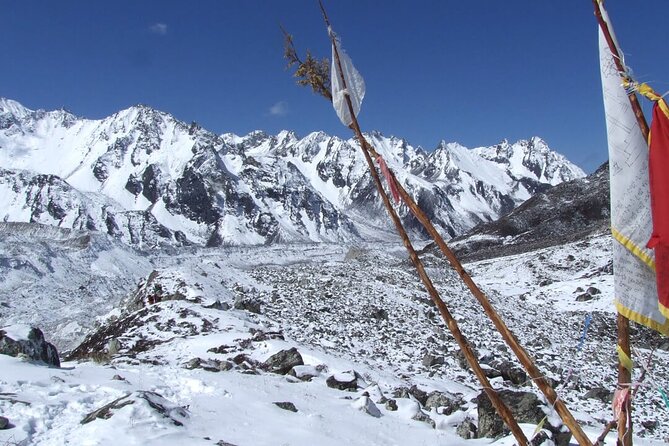
After the northern base camp section, you descend from Lhonak to Ghunsa for the night. This return gives your body some relief before the route turns toward the southern valley.
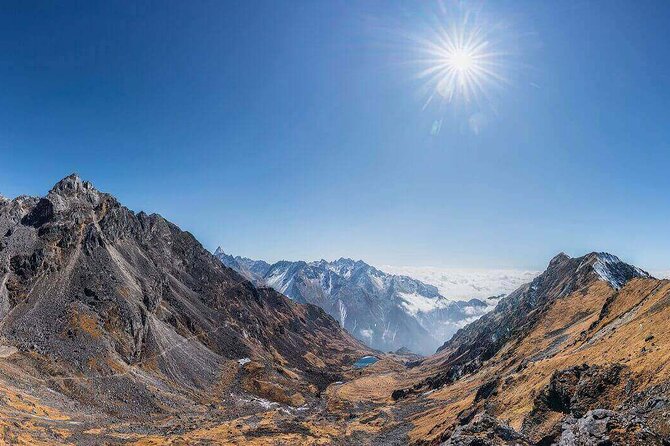
The next destination is Sele Le, a high-altitude camp used when crossing toward the south and north base-camp areas. From here, the route includes Sinion La, Mirgin La, and Sinelapche La. These passes are a major reason to choose the full circuit instead of visiting only the northern valley.
Pass crossings can be tiring even when the distance looks manageable. The combination of thin air, uneven ground, and changing weather makes this a section where you should follow your guide’s pace instead of trying to prove anything.
After the passes, you reach Cheram, at approximately 3,870 meters. The distance from Sele Le is around 10 kilometers, with a typical walking time of seven to eight hours. Cheram is a useful base for the southern objective and provides another chance to rest at a lower altitude than the high northern camps.
Day 16 is a day trip to the Kanchenjunga South Base Camp area, with another night in Cheram. This means you see both major sides of the mountain without carrying your full trekking load to a new sleeping place that evening. It is a practical arrangement, though the southern base-camp day will still be demanding.
Days 17 to 20: Torongding, Yamphudin, Fikal, and Kathmandu
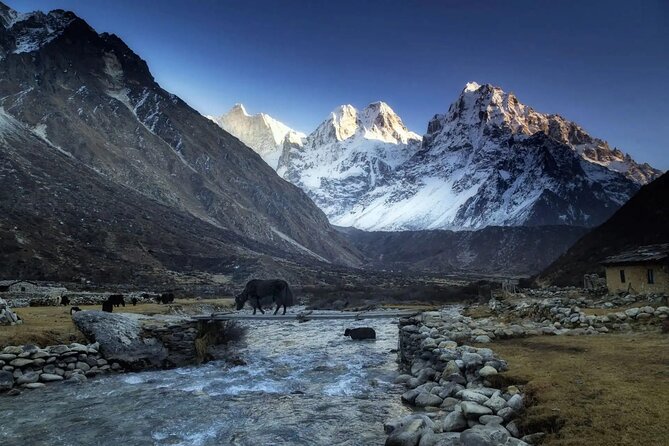
After Cheram, the route descends through forests, alongside rivers, and past small settlements toward Torongding. The change from high, bare terrain to greener lower country should feel dramatic.
Yamphudin is an especially interesting stop because of its mixed population. Limbu, Sherpa, Rai, and Gurung communities live here, making it one of the better places to notice the cultural variety of eastern Nepal.
The following day uses a public bus from Yamphudin to Fikal, also written as Fickle in the supplied details. This is another point where road conditions and timing may affect the day. You should confirm the exact spelling and transport plan with the operator before departure.
On the final day, you drive about two hours from Fikal to Bhadrapur and take an afternoon flight back to Kathmandu. The trip ends at Tribhuvan International Airport, where a representative drops you at the departure terminal.
The final transport plan is useful, but it leaves little room for major delays. I would avoid scheduling an important international connection too tightly after the return flight.
What the $2,560 price really covers
At $2,560, this is not a cheap walking holiday, but the package includes the main costs that can quickly add up in a remote part of Nepal:
- Kathmandu to Bhadrapur and return flights
- Public buses between Bhadrapur, Ilam, Taplejung, Yamphudin, and Fikal
- A guide for 19 days
- Required trekking permits
- Tea house accommodation for 19 nights in the mountains
- 19 breakfasts, 19 lunches, and 19 dinners
That is solid value for a private trip covering both base-camp areas. You are paying for access, logistics, guiding, permits, and a long stretch of support in a remote region.
The exclusions are simple but important. All hot and cold drinks cost extra. The supplied details also do not list porter service, personal gear, insurance, snacks, tips, or extra accommodation outside the stated mountain lodging. Do not assume those items are included. Ask the operator directly before you pay.
The private format is another part of the value. Your group is the only group taking part, so the guide can respond to your pace and condition more easily than on a large departure. That matters on high passes and during acclimatization days.
Guide quality and the private format
The strongest praise is directed at the guiding. Narayan is described as highly professional, strong on route details, and able to explain local culture and stories along the way. Dil is praised for adjusting the plan when weather or health made the original schedule risky.
That is exactly what I want on a trek like this. A guide should do more than point out the trail. You need someone who can read conditions, encourage a sensible pace, explain what lies ahead, and make changes without fuss.
The private setup also means you should speak up early. If you have a headache, unusual fatigue, or trouble eating, tell the guide rather than waiting for the problem to grow. The schedule includes acclimatization stops, but no plan can remove the risks of high altitude.
Who should book this trek?
I would recommend it to you if you want a demanding Himalayan route with both Kanchenjunga base camps, prefer a private group, and value local villages over polished facilities.
It suits fit hikers who can handle repeated six-to-eight-hour days, rough mountain paths, basic tea houses, long bus transfers, and altitudes reaching about 5,140 meters. You also need patience. The first and last parts involve public transport, and the exact timing can shift with traffic, road conditions, weather, or health.
I would not choose it for a first mountain holiday if you dislike basic accommodation or need a tightly controlled schedule. The route is remote, and the information provided does not give every daily distance or walking time. Get the detailed plan, gear list, porter information, and altitude procedure before booking.
The cancellation terms are friendly: you can receive a full refund if you cancel at least 24 hours before the start time. Cancellations inside 24 hours are not refunded, and late changes are not accepted.
My verdict on the Kanchenjunga Circuit
This is a serious trek with an unusually strong route concept. The combination of Pangpema, the southern base-camp day, high passes, village stays, and a private guide gives you far more than a single mountain viewpoint.
I like the built-in acclimatization nights, the cultural variety around Yamphudin, and the inclusion of the major practical costs. I also place real value on the reported guide work from Narayan and Dil, especially the ability to adjust plans when conditions change.
The tradeoff is comfort and certainty. Public buses, basic tea houses, high altitude, and incomplete detail about some daily stages mean you should prepare carefully. If you want a remote, physically demanding circuit and can accept a little roughness, this $2,560 package is worth serious consideration. If you want easy roads, soft beds, and short walking days, choose a gentler Nepal route instead.
FAQ
How long is the Kanchenjunga Circuit Trek?
The scheduled experience lasts approximately 20 days. The wider route is described as a 20 to 25 day adventure, so the exact duration may vary with conditions and planning.
What is the highest point on the trek?
Kanchenjunga North Base Camp, also called Pangpema, is at approximately 5,140 meters or 16,863 feet.
Does the trek visit both Kanchenjunga base camps?
Yes. The route reaches the North Base Camp at Pangpema and includes a day trip to the South Base Camp area from Cheram.
Are flights included?
Yes. The package includes flights between Kathmandu and Bhadrapur in both directions.
Is transport from Bhadrapur to the trekking region included?
Yes. Public bus transport from Bhadrapur to Ilam, Ilam to Taplejung, and Yamphudin to Fikal is included.
Are meals included?
Yes. The package includes breakfast for 20 days, lunch for 19 days, and dinner for 19 days. Hot and cold drinks are not included.
Is this a private tour?
Yes. Only your group participates, and a guide is provided for 19 days.
Can I cancel for a full refund?
Yes, if you cancel at least 24 hours before the experience start time. Cancellations made less than 24 hours before the start time are not refunded.
Recently added around Kathmandu
- Ghorepani Poon Hill Trek★ 5.0 · 16 reviews
- Private Manaslu Circuit Trek at Himalayas★ 5.0 · 3 reviews
- Amazing 1 Day Trekking Experience in Kathmandu Nepal★ 5.0 · 24 reviews
- Ghorepani Poonhill Trek★ 5.0 · 5 reviews
- Upper Mustang Trekking★ 5.0 · 2 reviews
- Upper Mustang Trekking★ 3.0 · 2 reviews
- Upper Mustang Trekking★ 5.0 · 4 reviews
- Upper Mustang Trek★ 5.0 · 5 reviews
Kathmandu Trekking Tours, compared.