REVIEW · KATHMANDU
12 Days Trek Tour in Nepal
Quiet mountain paths matter. This 12-day Nepal journey pairs Kathmandu’s temples and markets with the less crowded Mohare Danda trek, where community lodges, Magar villages, forest paths, and Himalayan sunrise views shape the experience. I like the eco-community focus and the fact that the route supports local lodging rather than relying only on large trekking hubs.
I also like the sensible mix of hiking and sightseeing. You get time in Kathmandu and Pokhara, plus a six-day trek through the Annapurna region. The main caution is physical effort: the walk to Mohare Danda gains nearly 1,000 meters and is described as the hardest day, while the long road journeys can test your patience.
Key points to know before booking
- Mohare Danda offers quieter trails: You avoid much of the foot traffic found around Gorepani and Poon Hill.
- Community lodges shape the trip: Overnight stays support local homes, farms, and eco-focused village businesses.
- The hardest day gains almost 1,000 meters: You need moderate fitness and comfort with several hours of uphill walking.
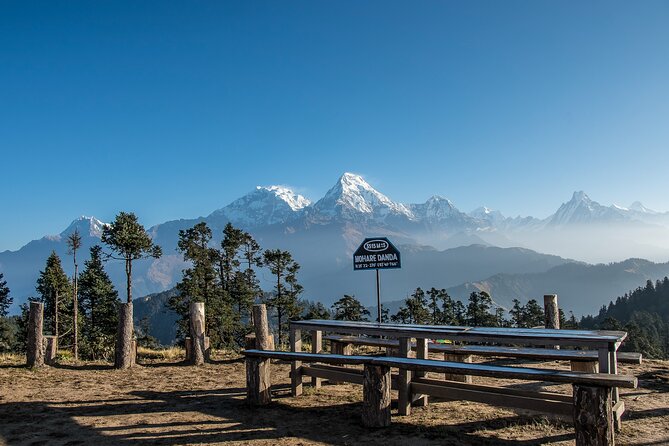
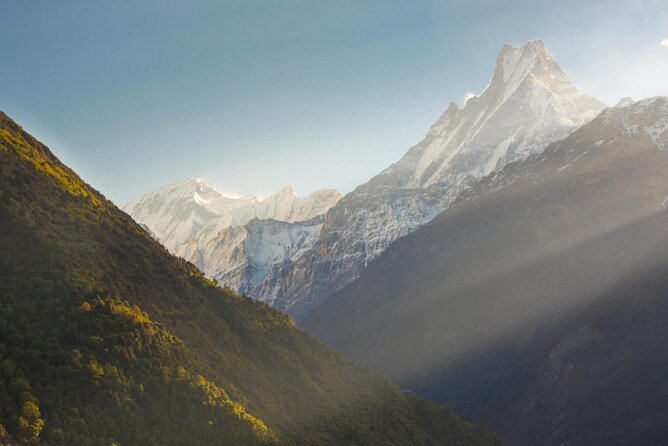
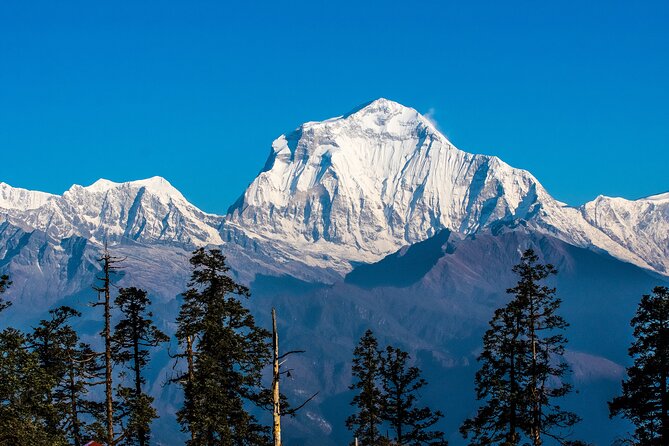
- Mountain views arrive in stages: Machapuchre, Annapurna, Dhaulagiri, Annapurna South, and Himchuli appear from different points along the route.
- The package includes trekking equipment: A down jacket, sleeping bag, fleece liner, and duffel bag are provided.
- The group limit is 16 people: That is small enough for a more personal group while still giving you company on the trail.
Why Mohare Danda is a smart alternative in Nepal
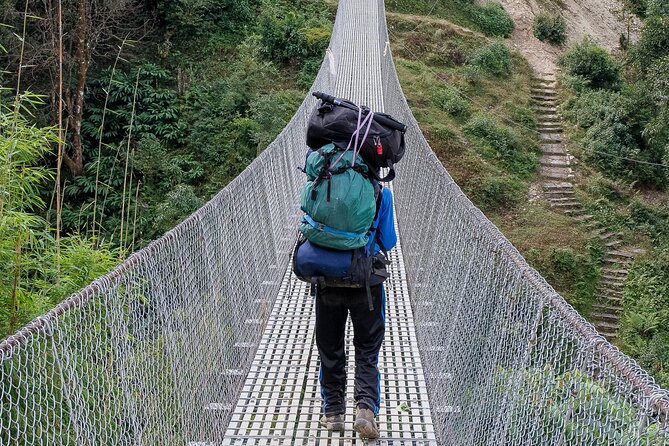
Nepal offers famous routes with famous crowds. Mohare Danda takes a quieter approach. The path travels through forest, farmland, and villages inhabited by Magar people, one of Nepal’s major ethnic communities. You are not simply walking from one lodge town to another. You are passing through places where farming, schools, home cooking, and local community projects are part of daily life.
The route also has a clear environmental and social purpose. Community-based lodges provide accommodation, food, and employment along the trail. That makes your spending more direct and useful than a standard hotel-based holiday, though you should keep expectations practical. These are village lodges and homestays, not luxury mountain resorts.
The trek itself is moderate in rating, but that word needs context. You walk for roughly three to seven hours on trekking days, often on uneven mountain paths. The biggest test arrives on Day 6, when the route climbs toward Mohare Danda and gains close to 1,000 meters. You should be comfortable walking uphill for much of a day.
A few more treks around Kathmandu worth a look
- Everest Base Camp Trek – 14 Days
★ 5.0 · 1,499 reviews - Everest Base Camp Trek
★ 5.0 · 842 reviews - Everest Base Camp Trekking
★ 5.0 · 485 reviews
Days 1 and 2: Kathmandu temples, Thamel, and trip preparation
Your first day begins with an airport welcome and a transfer to your hotel. After check-in and a short rest, the schedule introduces you to Thamel. This is useful rather than decorative sightseeing. You can exchange money, buy food, pick up trekking items, and check whether anything is missing from your gear.
A trip briefing at the company office follows. Pay attention here. This is the time to ask about walking pace, meals, water, luggage limits, weather plans, and the exact equipment supplied. Flight and road conditions in Nepal can change plans, so a clear briefing helps you start calmly.
Day 2 focuses on two major religious sites in Kathmandu Valley. Pashupatinath is a major Hindu temple dedicated to Shiva and sits beside the Bagmati River, a spiritually important place where cremation ceremonies take place. The site can feel intense and solemn, so approach it with respect and follow your guide’s advice about where you may go.
Boudhanath Stupa provides a different mood. Its large Buddhist structure and surrounding religious setting give you a useful introduction to Nepal’s mix of faiths and traditions. With about four hours assigned to the city tour, you see the main sites without using up all your energy before the trek.
Day 3: The long road from Kathmandu to Pokhara
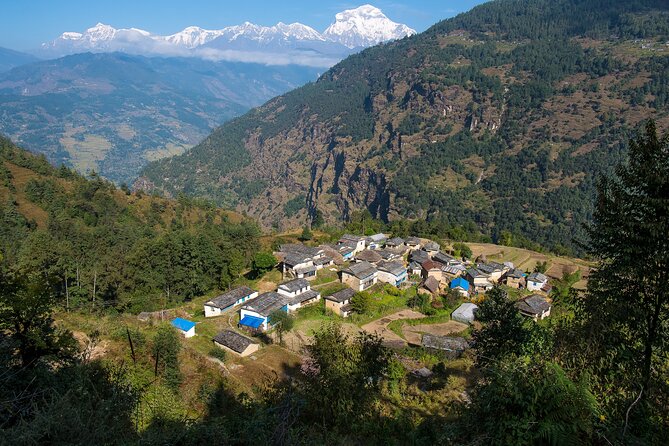
The journey to Pokhara takes about seven hours by winding mountain highway. This is not a quick transfer. Narrow roads, traffic, and stops can make the ride feel longer than the timetable suggests.
Still, the route gives you a ground-level view of Nepal outside the capital. You pass hills, roadside shops, small settlements, and changing scenery. If you dislike long road journeys, this is one of the less comfortable parts of the trip. If you enjoy watching a country unfold through its roads and villages, it gives you useful context before the walk begins.
You spend the night in Pokhara, with time to explore the Lakeside area. The city is a pleasant transition point between Kathmandu and the mountains. The tour uses three-star standard hotels in Kathmandu and Pokhara, with breakfast included. Lunch and dinner in both cities are your responsibility, giving you freedom to choose restaurants but adding some daily expense.
Day 4: From Galeshwor to Bas Kharka
After breakfast, you drive for about four hours to Galeshwor. The road follows the Kali Gandaki River, with occasional views of hills, homes, farms, and small roadside businesses. This is another lengthy transfer, but it also brings you closer to the walking route.
The trek begins after arrival. You cross a suspension bridge over the Kali Gandaki, then climb for about three hours toward Bas Kharka. This first walking day introduces the rhythm of the trek without immediately demanding the biggest climb.
The reward is a closer look at village life. You pass agricultural fields and farms rather than only scenic viewpoints. At Bas Kharka, you stay in an eco-community lodge or homestay. The setting is simple, but that is the point. You trade some hotel comfort for a more direct connection with the people and places along the route.
Same trailhead, a longer or shorter day out:
- Annapurna Circuit Trek with Tilicho Lake
★ 5.0 · 368 reviews - Everest Base Camp Trekking – 13 Day
★ 5.0 · 365 reviews - Everest Base Camp Trek
★ 5.0 · 350 reviews - Everest Base Camp Trek -14 Days
★ 5.0 · 321 reviews
Day 5: Magar culture and the trail to Nangi
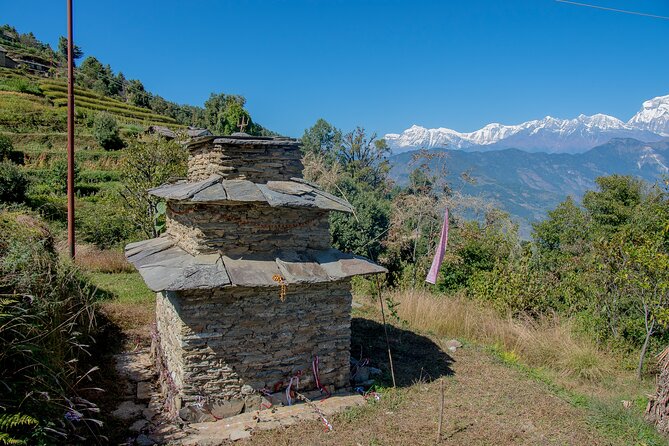
The walk to Nangi takes about seven hours, making this a full trekking day. The trail passes through villages, mountain views, and open scenery, with the pace shaped by the group and the condition of the path.
Nangi is especially important for cultural context. The village is home to Magar people, whose language and customs form an important part of Nepal’s social fabric. The itinerary includes time to see organic farms and a school in the afternoon. These visits make the stop feel more grounded than a quick photograph from a viewpoint.
You should expect another community lodge night rather than polished hotel service. That can mean basic rooms and shared facilities, though the package includes food and lodging during the trek. If local interaction and a slower pace appeal to you, this is one of the strongest parts of the itinerary.
Day 6: The climb to Mohare Danda
This is the day to respect. The walk from Nangi to Mohare Danda takes about seven hours and gains nearly 1,000 meters. The trail runs through forest, and the physical work is balanced by increasingly broad views toward Machapuchre, Annapurna, and Dhaulagiri.
The supplied description calls this the hardest day, and you should plan accordingly. Walk steadily, drink regularly, and do not treat the group schedule as a race. A guide and assistant guide are included, and the company provides a porter or helper, which reduces the amount you need to carry.
Mohare Danda is known for sunrise and sunset. That makes the overnight stay worthwhile, since the best views may come outside the main walking hours. Mountain weather can change quickly, so clear skies are never guaranteed. The tour also requires good weather, and poor conditions may lead to a new date or a full refund.
Day 7: Sunrise, Deurali, and the busier Gorepani route
The sunrise from Mohare Danda is one of the trip’s main highlights. You may see Machapuchre, Dhaulagiri, Annapurna, and smaller peaks in the morning light. The appeal is not just the view itself, but the quiet setting after a demanding climb.
After breakfast, you walk toward Deurali for about five hours. The path passes near Gorepani, a well-known Annapurna stop associated with the Poon Hill sunrise viewpoint. Gorepani is described as the busiest town on this route, so the contrast with Mohare Danda becomes clear here.
This section is useful for understanding what the quieter trail offers. You still reach a popular trekking area, but your route has already given you village lodges and less crowded paths before joining the better-known circuit.
Day 8: Forest walking and Gurung culture in Ghandruk
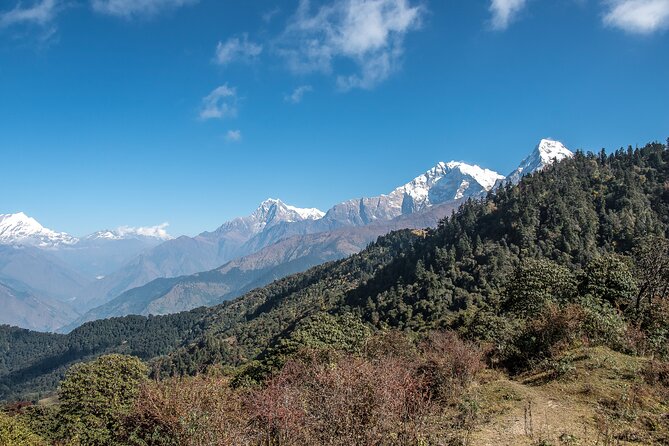
The five-hour walk to Ghandruk continues through forest. After several days of steady trekking, this shorter day gives you time to enjoy the surroundings rather than focus only on reaching the next lodge.
Ghandruk is one of the best-known villages in the Annapurna region. From here, views include Annapurna South and Himchuli. The village also offers a Gurung museum and a chance to learn about local culture.
This is a good stop for visitors who want more than mountain photographs. The itinerary does not treat culture as a quick add-on in Kathmandu only. It places community life directly inside the trekking route, where the setting gives it more meaning.
Day 9: Finishing the trek at Syauli Bazar
After breakfast, you descend from Ghandruk toward Ghandruk Bensi, also called Syaulibazar, beside the Madi River. This marks the end of the walking section.
The descent takes about three hours, but downhill walking can be hard on knees and ankles. Trekking poles may be useful, though they are not listed among the included items, so ask the operator before departure if you need them.
A private transfer then takes you to Pokhara in about two and a half hours. You arrive with the rest of the day available. This is a sensible design choice. Rather than forcing another long walk, the program gives you time to rest, eat, and enjoy Pokhara after the trail.
Day 10: Pokhara sights and the flight back to Kathmandu
The Pokhara sightseeing program includes Devi’s Fall, Gupteshwar Cave, and the International Mountain Museum. Each offers something different. Devi’s Fall and the cave provide natural and religious interest, while the museum explains mountaineering expeditions and Himalayan peaks.
The sightseeing lasts about five hours, including the transfer to Pokhara Airport. You then fly to Kathmandu and are met at the airport for the hotel transfer.
The flight is a welcome change after the earlier highway journeys, but air travel in Nepal can also be affected by weather. Keep your plans flexible and avoid scheduling an important international connection too tightly after the domestic flight.
Day 11: Kathmandu’s old lanes and royal square
The final full day returns to Kathmandu’s streets and historic center. You walk through Ason, Indrachowk, Kilagal, New Road, and smaller courtyards with hidden stupas. These areas show everyday city life, markets, religious spaces, and old neighborhoods in close quarters.
Kathmandu Durbar Square adds the major historical setting. It was connected with the Malla Kings from the fourteenth through eighteenth centuries and later with the Shah dynasty, which ruled Nepal from 1768 to 2008. The itinerary also includes the temple of the living goddess, one of Kathmandu’s most distinctive traditions.
Allow yourself patience here. The value lies in walking slowly and noticing details, not rushing from monument to monument. The five-hour schedule gives you enough time for a broad introduction, though a specialist wanting every courtyard and carving would need longer.
What the $1,500 price includes
At $1,500 per person, the package is not simply a guided walk. It includes trekking staff, trekking food and lodging, government taxes, ACAP and TIMS permits, and transportation connected with the route. A professional guide, porter or helper, and assistant guide are included. Staff salaries, insurance, medical equipment, and food are also covered for the trekking team.
The gear loan improves the value. You receive a down jacket, sleeping bag, fleece liner, and duffel bag. That can save money and luggage space, especially if you do not own cold-weather trekking equipment.
The price does not include lunch and dinner in Kathmandu or Pokhara. Tips for the guide, porter, and driver are not compulsory but are expected, so set aside extra money. The road and flight arrangements should also be clarified at booking, especially which transfers are included beyond the specifically listed private journeys from Pokhara to Galeshwor and Syaulibazar to Pokhara.
Service, group size, and practical expectations
The maximum group size is 16. That is large enough to create a social atmosphere but small enough for guides to keep track of walking pace and basic needs. The company has earned strong praise for organizing demanding Nepal routes, with guides including Baburam, Purna, Mingur, and others receiving warm comments on different treks. Ask in advance who will lead your Mohare Danda departure, since the named guides in those accounts may not be assigned to this route.
The company’s strongest service theme is practical care. Guides have been praised for helping slower walkers, handling logistics, arranging food orders, lending equipment, and responding when someone became ill at altitude. That does not remove the need for your own travel insurance, but it is a positive sign for a route where conditions can change.
Confirmation is provided when you book. The experience is available for people with moderate physical fitness, but you should be comfortable with repeated uphill and downhill walking. Free cancellation applies if you cancel at least 24 hours before the start time. Inside that window, the payment is not refunded, except that weather cancellation offers a different date or a full refund.
Who should book this Nepal trek?
I would choose this trip if you want a real mountain walk without committing to a high-altitude base camp route. It suits you if village life, community lodges, forest paths, and cultural stops matter as much as peak views.
It is also a good fit if you want a prepared package. Permits, staff, trekking equipment, food on the trail, hotels, and key transfers are arranged. You still need to manage personal spending, tips, and some meals, but the major pieces are in place.
I would hesitate if you dislike long road transfers, basic lodge accommodation, or fixed group pacing. You should also think twice if your fitness is below moderate, since Day 6 is a serious climb and several other days last five to seven hours.
Should you book the Mohare Danda tour?
Yes, if you want a balanced first Nepal trekking holiday with fewer crowds, local lodging, and enough Kathmandu and Pokhara time to make the trek part of a wider trip. The best value comes from the combination of included staff, permits, equipment, trekking meals, and transport rather than from any single sightseeing stop.
Before paying, confirm the exact hotel names, guide assignment, domestic flight arrangements, lodge facilities, and tip expectations. If those details match your comfort level, this is a thoughtful choice for a scenic and culturally focused Nepal route, with a quieter trail than the region’s most famous walks.
FAQ
How long is the Nepal trekking tour?
The complete experience lasts 12 days, including Kathmandu, Pokhara, the trek, return transport, and departure from Kathmandu.
What fitness level is required?
The tour states that you should have a moderate physical fitness level. The hardest walking day lasts about seven hours and gains nearly 1,000 meters.
What trekking equipment is provided?
The package provides a down jacket, sleeping bag, fleece liner, and duffel bag.
Are meals included?
Food and drinks during the trekking section are included. Breakfast is included at the three-star standard hotels in Kathmandu and Pokhara. Lunch and dinner in those two cities are not included.
What permits are included?
The Annapurna Conservation Area Permit and Trekking Information Management System permit are included.
What happens if bad weather cancels the tour?
If poor weather causes cancellation, you will be offered a different date or a full refund. You can also cancel for a full refund if you do so at least 24 hours before the experience begins.
Recently added around Kathmandu
- Ghorepani Poon Hill Trek★ 5.0 · 16 reviews
- Private Manaslu Circuit Trek at Himalayas★ 5.0 · 3 reviews
- Amazing 1 Day Trekking Experience in Kathmandu Nepal★ 5.0 · 24 reviews
- Ghorepani Poonhill Trek★ 5.0 · 5 reviews
- Upper Mustang Trekking★ 5.0 · 2 reviews
- Upper Mustang Trekking★ 3.0 · 2 reviews
- Upper Mustang Trekking★ 5.0 · 4 reviews
- Upper Mustang Trek★ 5.0 · 5 reviews
Tours, compared.
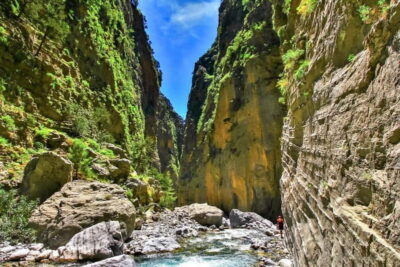
Full-Day Samaria Gorge Trek Excursion & Guide
Read our review →
Mount Etna Trekking Tour Beyond the Tourist Trails
Read our review →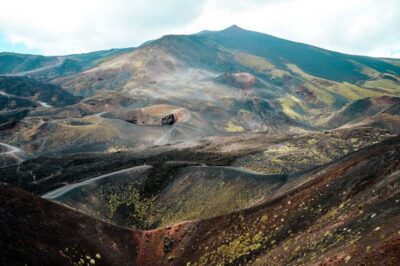
Etna Sunset Tour: Volcano trek, Cave & tasting from Catania
Read our review →
3-in-1: Doi Inthanon Tour, Elephant Sanctuary, and Trekking Trail
Read our review →
Mount Batur Sunrise Trekking Private Tour with Breakfast and Hotel Transfer
Read our review →
Perito Moreno Glacier Trekking Tour and Cruise
Read our review →