
REVIEW · POKHARA
Pokhara: 7-Day Annapurna Base Camp Trek & Natural Hot Spring
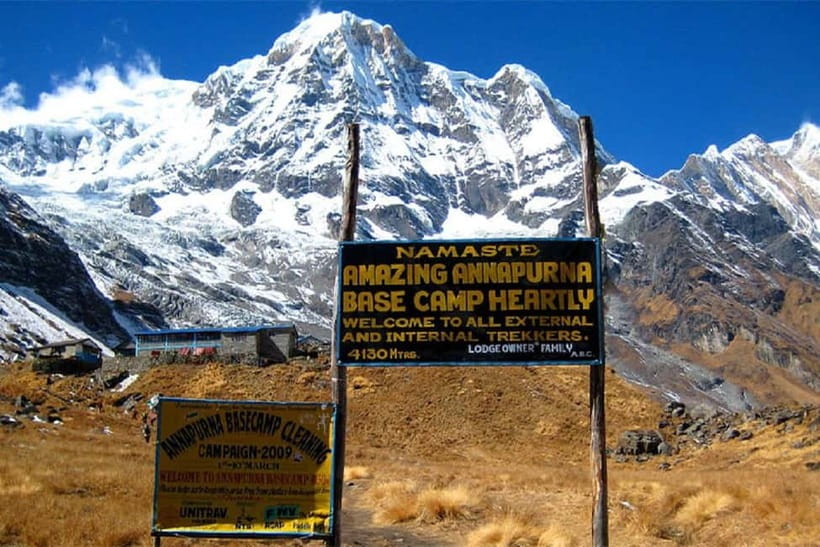
The mountains arrive one village at a time. This seven-day trek from Pokhara combines Annapurna Base Camp at 4,130 meters with Gurung villages, forest trails, tea house stays, and a hot spring finish at Jhinu Danda. It gives you a serious Himalayan goal without requiring a two-week schedule.
I like the route’s variety: one day you are walking through rhododendron forest, and a few days later you are inside the high alpine bowl of the Annapurna Sanctuary. I also like the strong guide support, with guides such as Chandra, Bishnu Giri, Anil, Jeet Bahadur, Sun, and Laxman praised for care, encouragement, and local insight.
The main drawback is the pace. Reaching base camp in seven days means several long walking days, with six to seven hours on foot and a high point of 4,130 meters. The final road sections near Nayapool can also be dusty, so check exactly how much transport is arranged for your dates.
Key points to know before you book
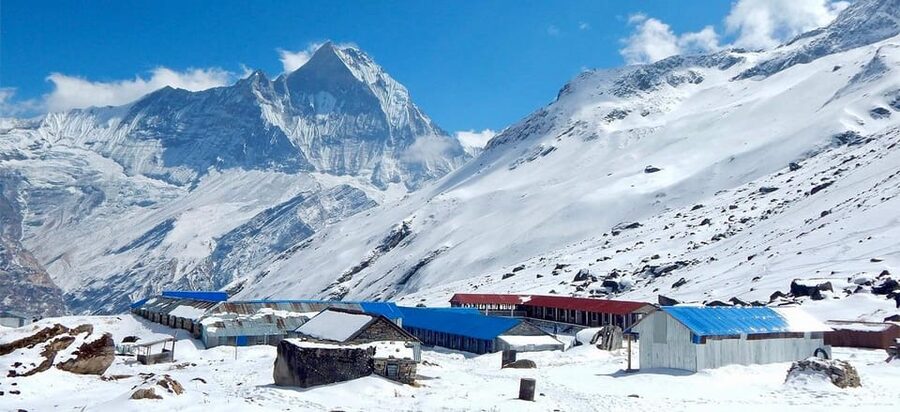
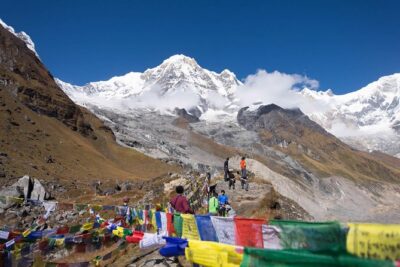
- Base camp at 4,130 meters: The trek reaches the heart of the Annapurna Sanctuary, with Annapurna I and Machhapuchhre rising around the high valley.
- A private seven-day trek: Your group is private, and a government-certified English-speaking guide leads the route. Hindi and Nepali guides are also available.
- Tea house nights: You sleep in simple lodges at Ghandruk, Chomrong, Himalaya, Annapurna Base Camp, Bamboo, and Jhinu Danda.
- A rewarding hot spring finish: After descending from the high mountains, you get time at the natural hot springs near Jhinu Danda.
- Good value at $181 per person: Permits, TIMS fees, tea house lodging, guide costs, taxes, first aid, and selected meals are included, depending on the package.
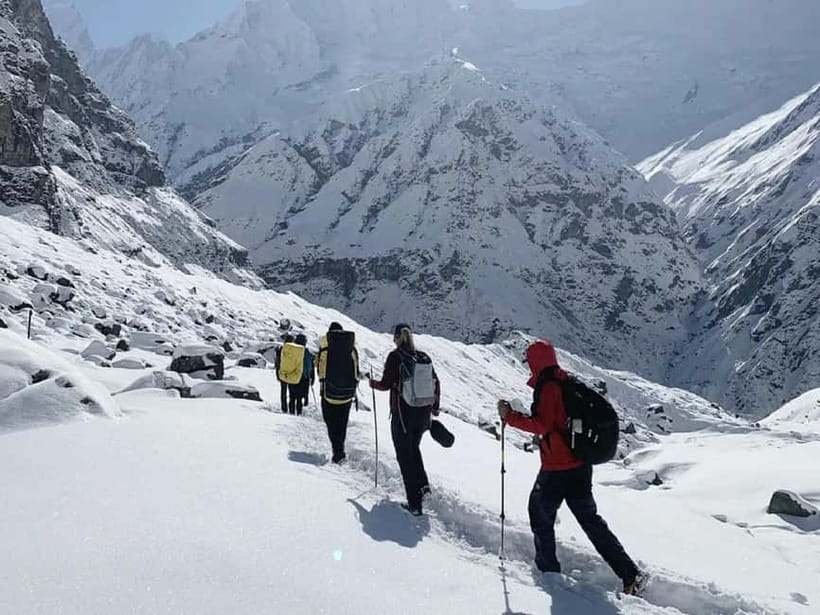
- Fitness matters: The route includes stone steps, steep climbs, long descents, cold conditions, and substantial altitude gain in a short period.
Why this seven-day route works from Pokhara
Pokhara is a practical starting point for Annapurna trekking. The city gives you an easy place to arrange pickup, store extra luggage, and begin the road transfer toward Nayapool. Pickup is available from Pokhara Lakeside hotels and Pokhara International Airport, which is useful if you are arriving shortly before the trek.
This is a compact route, but it is not a gentle walk. You climb from low valleys and village farmland to an overnight stay at Annapurna Base Camp, then descend quickly to warmer forests and Jhinu Danda. The changing scenery is the point. You get a clear sense of how the Himalayas shift with altitude.
The private-group format is another plus. You are not tied to a large bus-tour schedule, and the guide can pay attention to your pace. One guide, Chandra, was praised for adjusting guesthouse plans to match progress. That flexibility can be valuable on a route where some people move quickly and others need more time for the steps.
At $181 per person, the price is low for a guided Himalayan trek. It covers permits, paperwork, TIMS fees, lodging, guide salary and insurance, transport connected with the trek, luggage storage in Pokhara, trekking gear such as a stick or sleeping bag when needed, and government and local taxes. Meals depend on the selected option, so confirm that detail before paying.
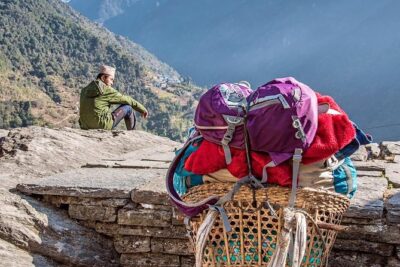
A porter is not included. If you want one, the stated rate is $20 per day. You also need to budget for snacks, drinks, personal purchases, travel insurance, and possible emergency rescue costs. The price is good, but it is not an all-inclusive mountain holiday.
More Annapurna Treks in Pokhara
- Trekking in Annapurna/Langtang/Everest/Upper Mustang regions
★ 5.0 · 161 reviews - Kathmandu/Pokhara: 5-Day Annapurna Base Camp (ABC) Trek
★ 4.9 · 72 reviews - Annapurna Panorama trek
★ 5.0 · 71 reviews
Day 1: Nayapool to Ghandruk, with a village welcome
The first day begins with about a one-hour drive from Pokhara toward Nayapool. From there, you walk for roughly five to six hours through villages, forest, and the Modi Khola area before reaching Ghandruk at 1,940 meters.
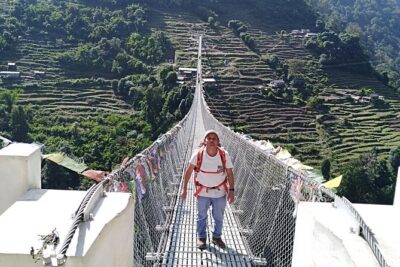
Ghandruk is one of the most appealing overnight stops because it feels like a real mountain village rather than just a trail checkpoint. The route introduces you to traditional Gurung communities, terraced fields, and the rhythm of walking between settlements. It is a good first day because you gain altitude gradually compared with the harder days ahead.
You should not treat this as a warm-up stroll. Five or six hours on foot after a road transfer can feel long, especially if your legs are not used to uneven paths. Pack water, sunscreen, and a light layer where you can reach them without opening your main bag.
Day 2: Ghandruk to Chomrong and the stone-step test
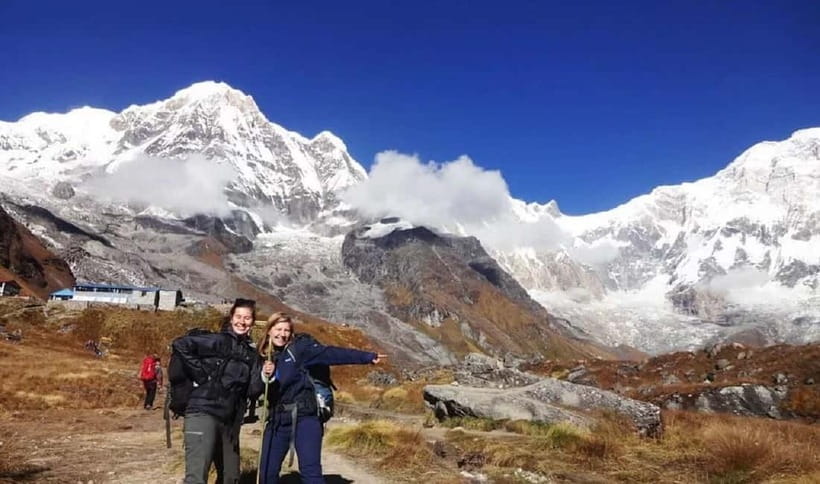
The walk from Ghandruk to Chomrong takes about five to six hours. The route climbs through forest and along stone steps, with broad views toward Annapurna and Machhapuchhre when the weather is clear.
Chomrong sits at 2,170 meters and is an important staging point for the Sanctuary. This is where the route begins to feel more serious. The steps can be tiring, but the steady climb helps prepare you for the higher trail.
This is also a good day to watch your pace. A guide such as Bishnu Giri has been praised for checking health and giving practical tips at higher elevations. That sort of attention matters more than fast walking. You want to arrive with enough energy for the long forest climb on Day 3.
Day 3: Chomrong to Himalaya through forest and river valleys
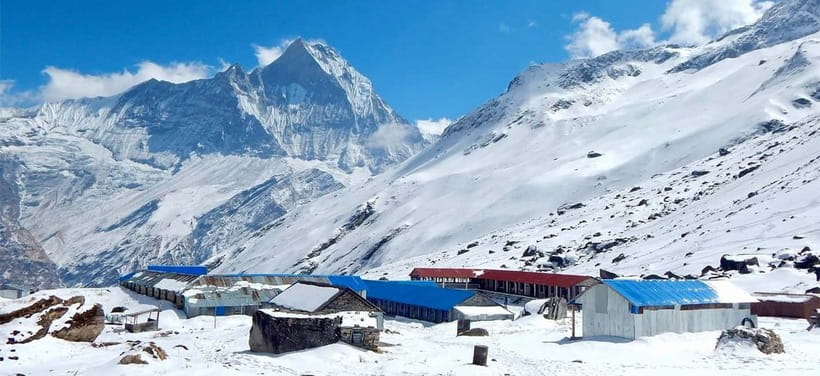
Day 3 covers about six to seven hours between Chomrong and Himalaya, at 2,920 meters. You first descend toward the river, then climb again through bamboo and rhododendron forest.
The repeated up-and-down rhythm can surprise you. A descent feels easy at first, but every lost meter must be regained later. The forest provides shade and a cooler walking environment, while the narrow valley begins to make the surrounding peaks feel much larger.
Himalaya is a functional overnight stop rather than a grand destination. Its value is its position on the route. You are high enough to shorten the next day’s push to base camp, but you should still pay attention to altitude symptoms, cold, hydration, and sleep.
Your guide should monitor how you feel, but you need to speak up early if you have a headache, unusual fatigue, or trouble breathing. Do not try to win an argument with the mountain.
More Hot Spring Treks in Nepal
- Pokhara: 5 Day Annapurna Base Camp Trek & Natural Hot Spring
★ 4.9 · 44 reviews - From Pokhara: 5-Day Annapurna Basecamp Trek with Hot Springs
★ 4.9 · 26 reviews - Pokhara: 5-Day Trek to Annapurna Base Camp and Hot Springs
★ 5.0 · 4 reviews - Pokhara: 7-Day Annapurna Base Camp Trek & Hot Spring
★ 4.0 · 3 reviews
Day 4: Himalaya to Machhapuchhre Base Camp and Annapurna Base Camp
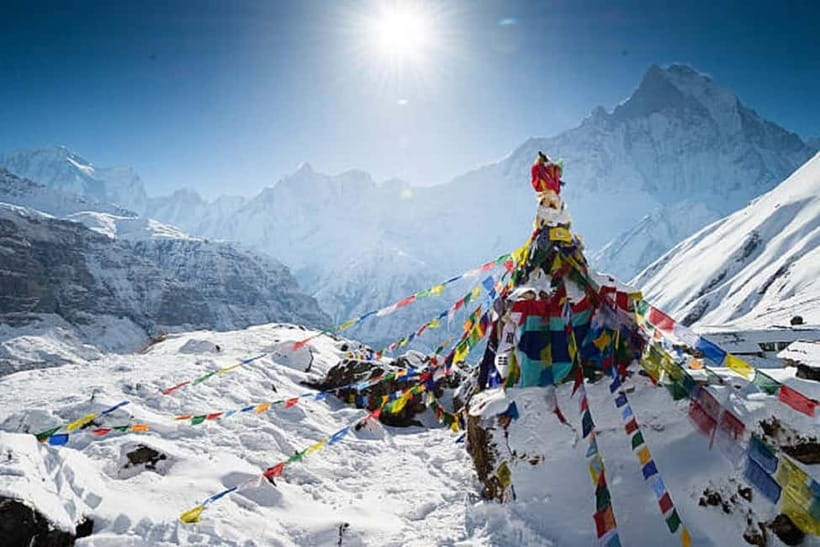
This is the trek’s main event. The six to seven-hour walk from Himalaya passes into the alpine zone, then continues through the glacier valley to Machhapuchhre Base Camp before reaching Annapurna Base Camp at 4,130 meters.
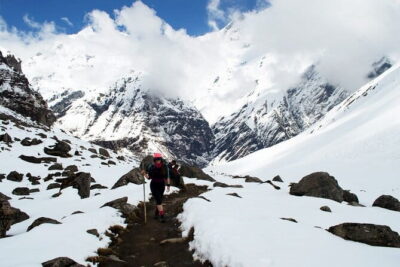
The scenery changes sharply as the forest thins. The trail leads into the Annapurna Sanctuary, a natural amphitheater surrounded by enormous Himalayan peaks. Annapurna I and Machhapuchhre are the names you will hear most often, but the real impact comes from being enclosed by snow-covered summits on every side.
Reaching base camp is physically demanding because you gain altitude quickly during the overall trip. The final approach can feel slow, particularly in cold weather or poor visibility. Still, the overnight stay gives you time to experience the high valley rather than simply arrive, take a photo, and leave.
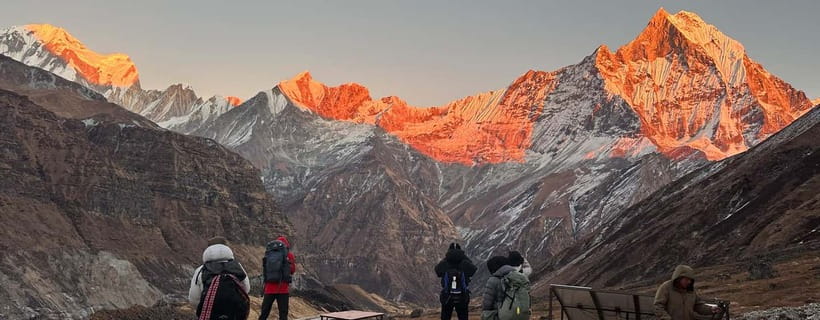
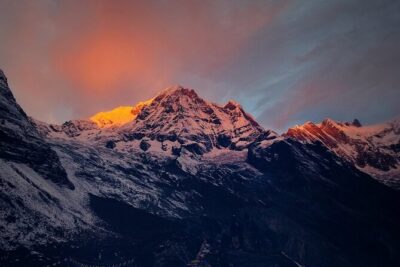
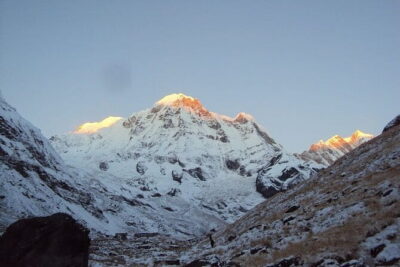
Sunrise and sunset are important parts of the stay when conditions allow. Clear skies can reveal the peaks in changing light, while cloud or weather can limit the view. January received praise for quieter trails, peaceful tea houses, and clear conditions on one departure, but mountain weather is never guaranteed.
Sleeping at 4,130 meters is the biggest challenge of the route. Warm clothing, a sleeping bag, gloves, and a headlamp are sensible items. The operator can provide a sleeping bag when needed, but confirm what is supplied and what you should bring yourself.
Day 5: The long descent from base camp to Bamboo
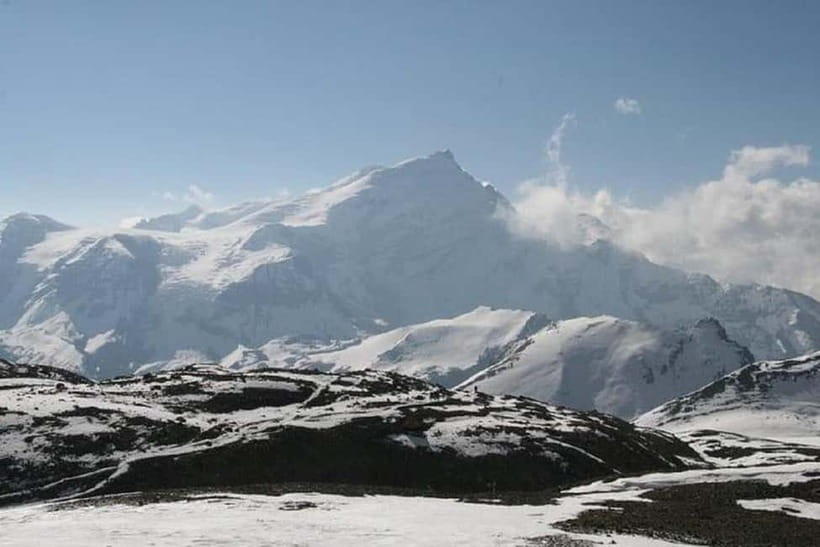
After the high point, you descend for six to seven hours to Bamboo at 2,335 meters. The route retraces much of the valley, but it will not feel like a repeat. Looking back from the trail gives you a different view of the Annapurna range, waterfalls, and the steep valley walls.
Descending is often harder on knees than climbing is on lungs. Trekking poles are useful here, especially on stone steps and damp forest sections. The supplied trekking stick can help, but make sure it is adjusted properly before the long descent begins.
Bamboo is warmer and lower than base camp, which makes this night feel like a reward. You will still be tired, but the return to forest and lower altitude usually brings some relief.
Day 6: Bamboo to Jhinu Danda and the hot spring reward
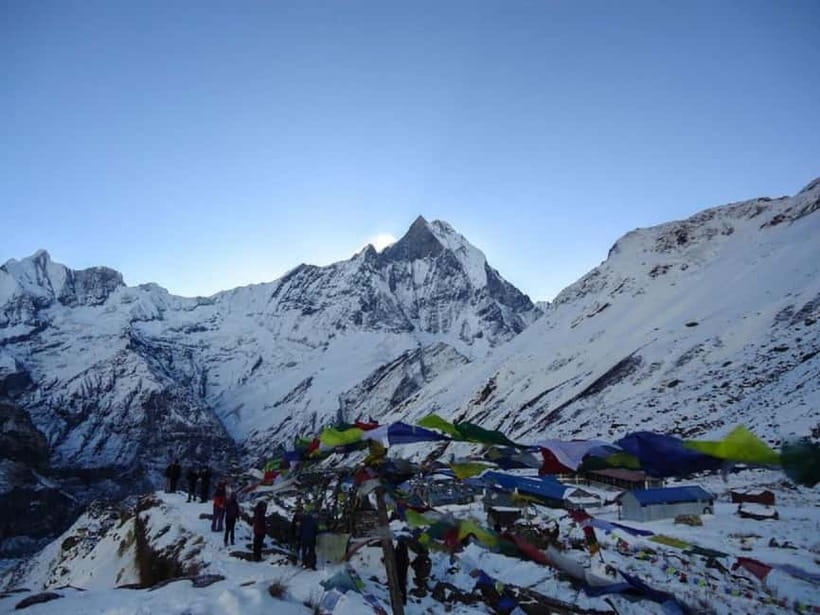
The walk from Bamboo to Jhinu Danda takes about five to six hours. You descend toward the riverside, leaving the high valley behind and returning to greener, warmer surroundings.
Jhinu Danda sits at 1,610 meters and is the route’s best change of mood. After several demanding days, you can soak in a natural hot spring near the village. Bring a towel and a change of clothes, both specifically recommended for the trek.
The hot spring is not a substitute for rest, but it gives the final full trekking day a satisfying finish. You have moved from high snow peaks to a riverside bathing spot in less than a week. That contrast is one reason this route feels larger than its seven-day length suggests.
Day 7: Jhinu Danda to Nayapool and back to Pokhara
The final trek takes about four to five hours before a roughly one-hour drive back to Pokhara. This is a shorter walking day, but the last road sections may not be especially scenic. One guest specifically suggested using a car or jeep instead of walking along dusty roads on the first and final days.
Ask the operator what portion of Day 7 is covered by vehicle and what portion is on foot. The published plan says you trek to Nayapool, but transport arrangements can depend on the selected option and current road conditions.
Drop-off is available at several Pokhara locations, including Lakeside hotels, Hotel Temple Tree, Hotel Middle Path and Spa, Hotel Barahi, Pokhara International Airport, and Sarangkot. Confirm your chosen drop-off point in advance, especially if you have a flight.
Tea houses, meals, and daily comfort
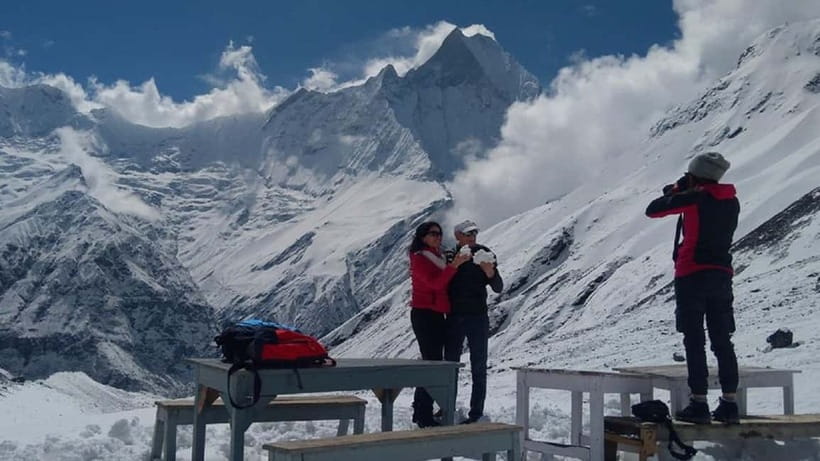
The accommodation is in simple tea houses or lodges. You should expect practical mountain lodging rather than hotel comfort. The main benefit is location: you sleep along the route and share the basic rhythm of trekking life.
The tea houses also make the cultural side of the trip more personal. Guides have been praised for explaining local culture and sharing stories along the walk, especially Bishnu Giri, who was described as having more than 20 years of experience. Chandra was also praised for clear English and information about the mountains.
Meals are included only with certain package options, so read the selected option closely. Snacks and drinks are not included. Carry cash for personal purchases, and remember that power access can be limited or inconvenient, making a power bank useful.
Guides and the value of private support
The guide may be the most important part of this trek. Walking to base camp is not only about finding the trail. You need someone who can help with pacing, health checks, food choices, local communication, and changes caused by weather or fatigue.
The named guides receiving strong praise include Chandra, Anil, Jeet Bahadur, Bishnu Giri, Sun, and Laxman. Their praised qualities were consistent: kindness, safety awareness, encouragement, good communication, flexibility, and attention to small problems.
The exact guide is not guaranteed in the information provided, so ask if you have a preference. You can specifically request Bishnu Giri, according to the booking information, but availability may affect the assignment.
The trek is offered as a private group, which suits people who want a more personal pace. It is also useful for couples, friends, and families with a similar fitness level. A porter costs $20 per day if you do not want to carry your own main bag.
Preparation, altitude, and what to pack
You need reasonable fitness for this trek. Expect five to seven hours of walking on most days, frequent stone steps, steep climbs, long descents, and a high overnight stay at 4,130 meters.
Pack for both warm valleys and cold high camps:
- Comfortable hiking shoes or waterproof hiking shoes
- Warm clothing, jacket, gloves, and rain gear
- Sun hat, sunglasses, sunscreen, and a second hat if useful
- Hiking pants and comfortable spare clothes
- Towel and change of clothes for Jhinu hot springs
- Sleeping bag, if you are not borrowing one
- Flashlight or headlamp
- Power bank
- Cash and passport, with a copy accepted
- First aid items and any personal medication
Travel insurance is mandatory. Emergency rescue is available if needed, but the cost is not included. You must also send a passport copy at least one day before departure so the permits can be arranged.
Who should book this Annapurna trek?
Book this if you want a short but serious Himalayan trek with a clear goal. It suits hikers who value scenery, village life, tea houses, and a private guide more than luxury or a relaxed schedule.
It is a good choice if you have seven available days and want to combine high mountains with the hot springs at Jhinu Danda. It is less suitable if you dislike basic lodging, long walking days, steep steps, or sleeping at high altitude.
The five-star score from 11 ratings and the repeated praise for the guides support the tour’s strongest selling point: personal care on a demanding route. Still, you should judge the trek by its physical requirements, not just its scenic promise.
FAQ
How long is the Annapurna Base Camp trek?
The trek lasts seven days, including transport from Pokhara, walking to Annapurna Base Camp, the descent to Jhinu Danda, and the return to Pokhara.
How high is Annapurna Base Camp?
Annapurna Base Camp is at 4,130 meters, or 13,550 feet.
Is transportation from Pokhara included?
Round-trip transportation connected with the trek is included, with pickup available from Pokhara International Airport or hotels in the Lakeside area. The listed plan includes a drive of about one hour at the start and end, but you should confirm the exact vehicle arrangements for your selected option.
What accommodation is provided?
You stay in simple tea houses or lodges along the route, including nights at Ghandruk, Chomrong, Himalaya, Annapurna Base Camp, Bamboo, and Jhinu Danda.
Are meals included?
Meals are included depending on the option selected. Snacks and beverages are not included, so bring cash for personal food and drink purchases.
Do I need a porter?
A porter is optional and is not included in the stated price. If you want one, the listed rate is $20 per day.
What languages can the guide speak?
Guides are available in English, Hindi, and Nepali. The trek includes a professional English-speaking guide certified by the Nepal Government.
Should you book it?
I would book this trek if I wanted the Annapurna Base Camp experience but had only one week. The route offers an excellent mix of mountain scenery, Gurung villages, forest, tea houses, a high Sanctuary finish, and a hot spring recovery day.
Before booking, confirm three things: what meals your package includes, how much luggage you will carry, and whether the first and final road sections use a car or require walking. If you are fit, prepared for altitude, and comfortable with simple lodging, $181 offers strong value for a guided private trek into one of Nepal’s great mountain valleys.
More 7-Day Experiences in Pokhara
- Best Kilimanjaro Adventure 7 days Machame route Trekking
★ 5.0 · 42 reviews - 7-Day: Inca Trail Trek to Machu Picchu Group Tour
★ 5.0 · 40 reviews - Kilimanjaro 7 Day Private Trekking Experience
★ 5.0 · 40 reviews - Pokhara: 7 Day Annapurna Base Camp Trek
★ 4.9 · 38 reviews
More Hot Spring Treks in Pokhara
- Private Tour Mount Batur Sunrise Trekking and Natural Hot Spring
★ 5.0 · 431 reviews - Mount Batur Sunrise Trek & Natural Hot Spring Experience
★ 5.0 · 95 reviews - 3D/2N Rinjani trekking summit,lake and hot springs.
★ 5.0 · 85 reviews - Mount Batur Sunrise Trekking & Natural Hot Spring – All Inclusive
★ 5.0 · 58 reviews
Recently added around Pokhara
- Pokhara: Majestic Mardi Base Camp Guided Trek with HotSpring★ 5.0 · 6 reviews
- Pokhara: 9-Day Annapurna Base Camp Trek with Poon Hill★ 5.0 · 6 reviews
- Pokhara: 5-Day Trek to Annapurna Base Camp and Hot Springs★ 5.0 · 4 reviews
- Pokhara: 5-Day Ghorepani and Poon Hill Private Trek★ 5.0 · 4 reviews
- Pokhara: 7-Day Annapurna Base Camp Trek & Hot Spring★ 4.0 · 3 reviews
- Pokhara:4-Day Ghorepani Poon Hill Guided Trek via Ghandruk★ 5.0 · 3 reviews
- Pokhara: 4-Day Poon Hill and Ghandruk Guided Trek★ 5.0 · 14 reviews
- Pokhara: 4-Day Ghorepani, Poonhill & Ghandruk Village Trek★ 5.0 · 6 reviews
Annapurna Base Camp Treks, compared.
Trekking in Annapurna/Langtang/Everest/Upper Mustang regions
Read our review →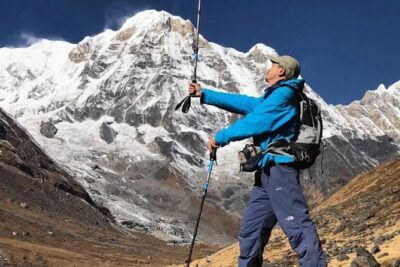
Kathmandu to Annapurna Base Camp (ABC) 5-Day Trek
Read our review →Browse the lists this tour appears in