
REVIEW · POKHARA
Pokhara: 7-Day Annapurna Base Camp Trek & Hot Spring
The sunrise is worth the early start. This seven-day trek links Pokhara with Annapurna Base Camp at 4,130 meters, using forest paths, mountain villages, and simple tea-house lodging. I like the clear progression from Ghandruk to Chomrong, Himalaya, and finally ABC, and I also like the final soak in Jhinu Danda’s natural hot springs. One important caution: the transport and extra-cost arrangements need careful confirmation before you pay, especially for the return to Pokhara.
I like that this is a private-group trek with a government-registered guide and permits included. I also like the strong mix of effort and reward: rhododendron forests and village life during the walk, huge Annapurna and Machapuchare views at the top, then a warm spring for tired legs. The trek is not a gentle sightseeing walk, though. You need proper hiking shoes, warm layers, cash, and enough fitness for several long uphill days.
Key points at a glance
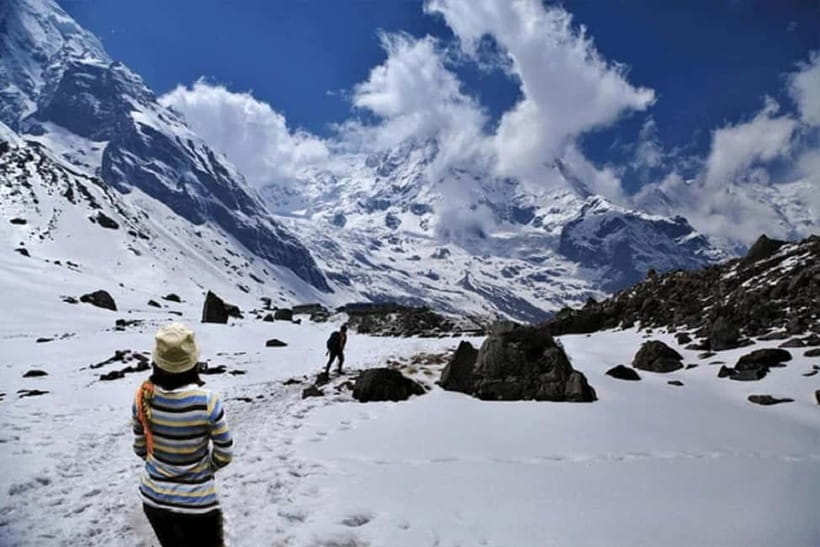
- 4,130-meter Annapurna Base Camp: The high point brings you close to the Annapurna range and Machapuchare.
- Sunrise over the mountains: The early view from ABC is one of the trek’s main rewards.
- Six nights in basic tea houses or lodges: Expect useful shelter, not hotel comfort.
- Jhinu Danda hot springs: The final mountain stop gives your legs a welcome rest.
- Private guide and group: English, Hindi, and Nepali guiding is available.
- $190 starting price: This can be good value if your chosen option includes meals, transport, and the stated gear.
What the $190 price really covers
At $190 per person, this trek looks keenly priced for a seven-day Himalayan route. The value comes from the bundle: transport, permits, a guide, tea-house accommodation, government and local taxes, a first-aid kit, and support costs for the guide and porter.
Meals are included only with the option that specifies them, so check the exact package before booking. Private-vehicle arrangements also depend on the option you select. That small detail can change the real cost and comfort of the trip.
The listed support for the guide and porter includes food, lodging, insurance, salary, transport, and equipment. That is useful because you are not left to arrange the working team’s basic costs yourself. A trekking stick and sleeping bag may also be available when needed.
You should still carry cash for personal expenses. Wi-Fi and drinking water at mountain lodging may cost extra, and those charges can add up over a week. The advertised price should therefore be treated as the starting cost, not necessarily the final amount.
The package does not include travel insurance. This matters greatly in the Himalayas. Your policy should cover emergency rescue, since any rescue costs are your responsibility. Do not assume ordinary holiday insurance is enough.
Free cancellation up to 24 hours before the activity and reserve-now, pay-later booking give you some useful flexibility. Still, I would confirm the departure plan, meal option, private transport, and return vehicle in writing before setting off.
More Annapurna Treks in Pokhara
- Trekking in Annapurna/Langtang/Everest/Upper Mustang regions
★ 5.0 · 161 reviews - Kathmandu/Pokhara: 5-Day Annapurna Base Camp (ABC) Trek
★ 4.9 · 72 reviews - Annapurna Panorama trek
★ 5.0 · 71 reviews
Day 1: Pokhara to Ghandruk at 1,940 meters
The first day begins with a ride from your Pokhara hotel to Nayapool. From there, the walking starts, with roughly five to six hours on foot before reaching Ghandruk.
The route follows the Modi Khola and passes through ethnic villages and forests. This gives you an immediate sense of the Annapurna region as a lived-in mountain area, not just a backdrop for photographs. You will see settlements, working paths, and wooded slopes as the route begins its steady climb.
Ghandruk sits at 1,940 meters, high enough to feel like a real mountain stop but still a manageable opening night. The village is an important first stage because it lets you begin gaining height without racing straight toward the highest part of the trek.
The drawback is simple: this is a demanding first day if you are not used to several hours of uphill walking. Wear your hiking shoes from the start, keep water close, and do not treat the vehicle ride to Nayapool as the main part of the day. Your real trek begins there.
Day 2: Ghandruk to Chomrong at 2,170 meters
The walk to Chomrong continues through hilly settlements and rhododendron forests. The Annapurna range remains part of the scenery, so you get both local life and mountain views rather than a day spent only on forest paths.
Chomrong, at 2,170 meters, is a useful stage on the way toward the sanctuary. The elevation gain from Ghandruk is moderate, but the route can still feel tiring because mountain paths rarely travel in a straight, flat line. Expect plenty of changes in height.
This day is good for settling into the rhythm of the trek. You have a guide beside you, but you should still keep your own pace. A private group helps here because the walking schedule can be more personal than on a large group departure.
The scenery is a major strength, but do not expect full mountain views every minute. Forest sections are part of the appeal, and clouds or weather can affect what you see. The route remains worthwhile because the villages and woodland provide a closer look at the area than a quick mountain viewpoint would.
Day 3: Chomrong to Himalaya at 2,920 meters
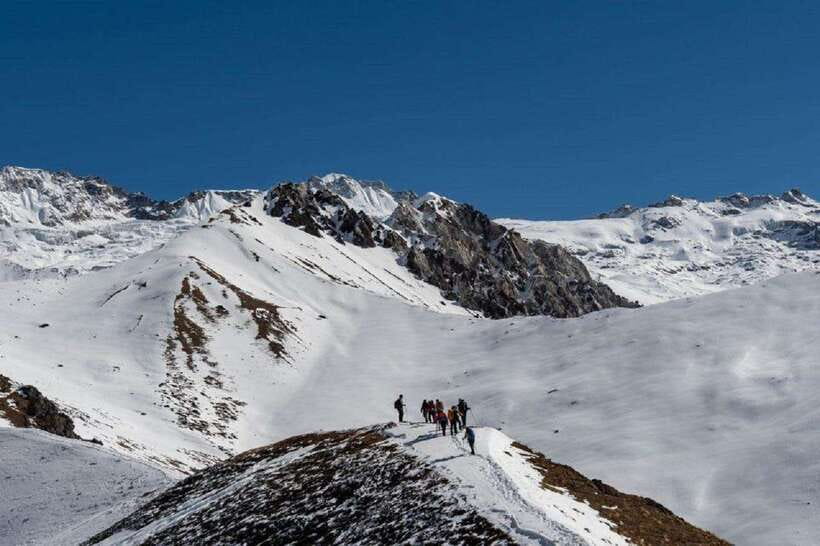
The third day takes you to Himalaya, a stop at 2,920 meters. Once again, the route includes villages, rhododendron forests, and views toward the surrounding peaks.
This is the point where the trek begins to feel more serious. You are gaining height and moving closer to the high section, so a calm pace matters. I would keep this day steady rather than trying to arrive early and then spending the afternoon wearing yourself out.
Rhododendron forests are one of the route’s memorable features. Their appeal is not only visual. They give shade, texture, and a change from open mountain views, while the village sections keep the walk connected to local life.
Himalaya is also where you should pay attention to the cold. Warm clothing is listed among the required items, and that advice is practical. A jacket, spare clothes, and a hat can make the evening far more comfortable.
More Hot Spring Treks in Nepal
- Pokhara: 5 Day Annapurna Base Camp Trek & Natural Hot Spring
★ 4.9 · 44 reviews - From Pokhara: 5-Day Annapurna Basecamp Trek with Hot Springs
★ 4.9 · 26 reviews - Pokhara: 7-Day Annapurna Base Camp Trek & Natural Hot Spring
★ 5.0 · 11 reviews - Pokhara: 5-Day Trek to Annapurna Base Camp and Hot Springs
★ 5.0 · 4 reviews
Day 4: Himalaya to Annapurna Base Camp at 4,130 meters
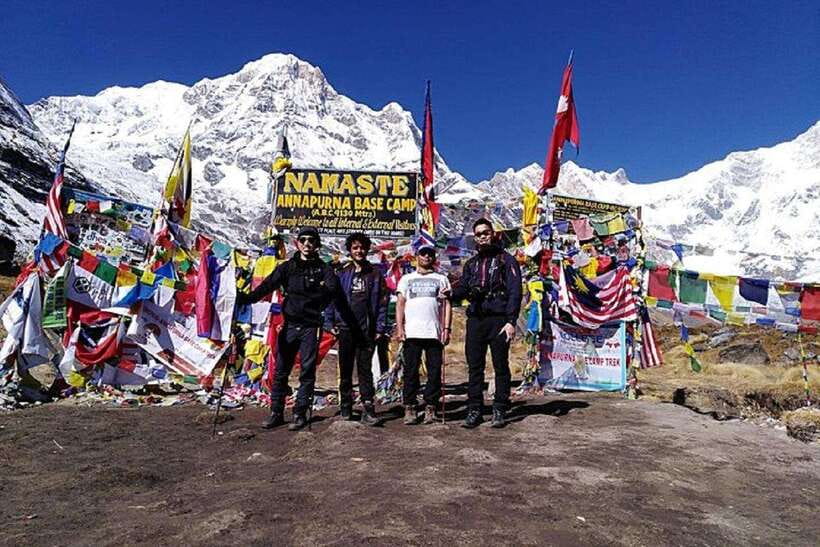
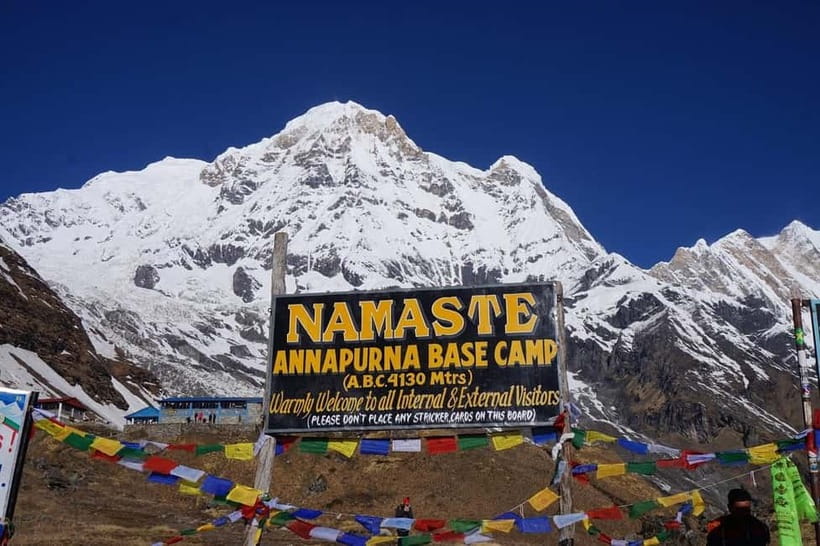
Day four is the big push. You leave Himalaya and climb to Annapurna Base Camp, the highest point of the trek at 4,130 meters.
This is the day that gives the trip its name and its strongest sense of achievement. From ABC, you are close to the Annapurna range and Machapuchare, with wide mountain views in every direction when conditions cooperate. The route also passes natural springs and waterfalls, adding movement and sound to the mountain setting.
You stay overnight at base camp, which is important. It means you do not rush up for a photograph and immediately turn around. You have time to experience the high setting, rest, and prepare for the early morning view.
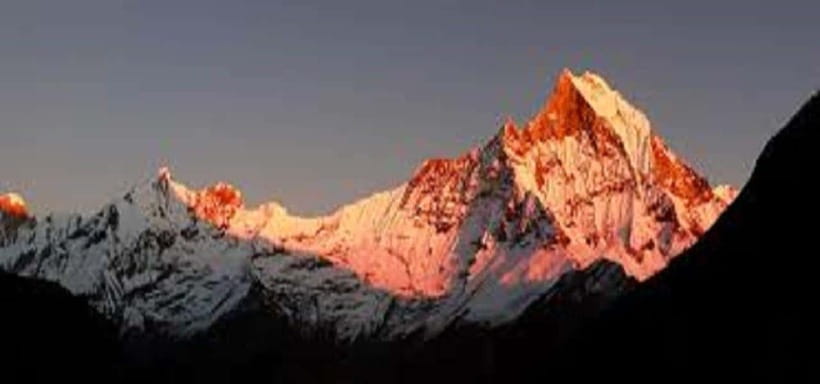
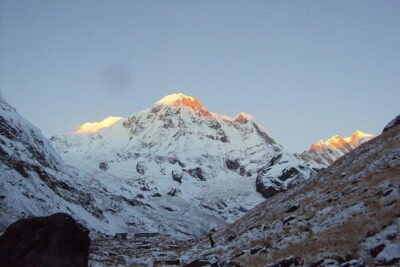
The sunrise is one of the most praised parts of this trip. The Annapurna range can catch the first light in dramatic fashion, so keep your warm clothes ready for an early start. At 4,130 meters, the cold can be sharp, even when the daytime walk has felt comfortable.
Altitude is the main concern. The schedule moves from 2,920 meters to 4,130 meters in one day, so you should take symptoms such as headache, nausea, unusual tiredness, or dizziness seriously. The supplied information does not promise a separate acclimatization day, so honest self-assessment is important. Tell your guide promptly if you feel unwell.
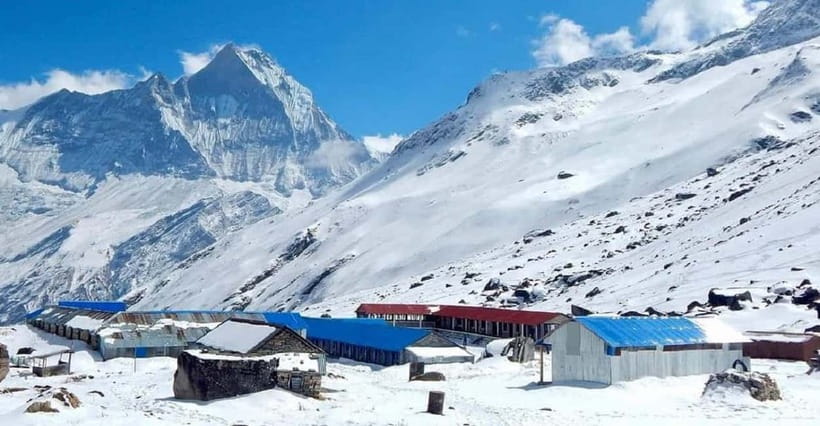
The basic lodging is another consideration. Tea houses and lodges provide a place to sleep, but this is not a luxury mountain retreat. Bring a sleeping bag if needed, a flashlight, and a change of clothes. A private room cannot be assumed from the information provided.
Day 5: Annapurna Base Camp to Bamboo at 2,335 meters
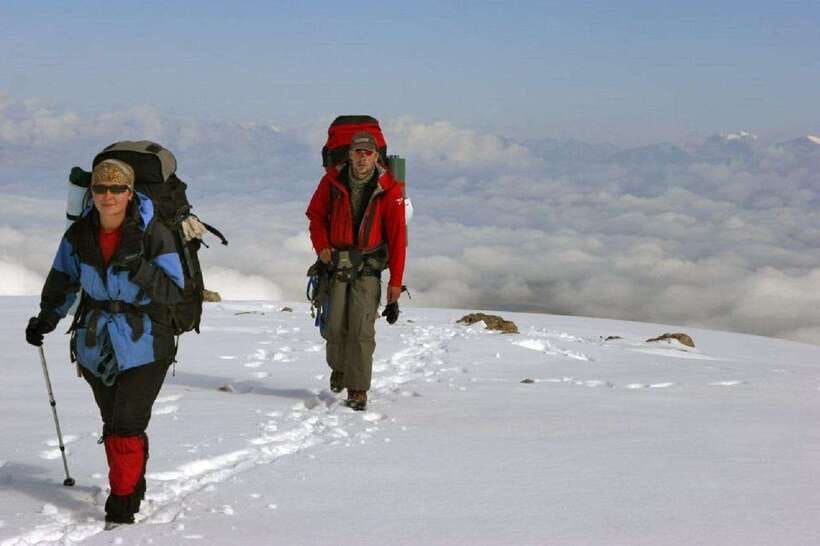
After the high point, the route turns back toward Bamboo. The walk follows forest sections and passes springs, waterfalls, and ethnic settlements.
The descent should feel easier on your breathing than the climb to ABC, but downhill walking can be hard on knees and ankles. Trekking poles are useful here, and a supplied trekking stick may be available depending on the arrangement.
This day gives you a different view of ground you have already covered. Paths can look completely different in the opposite direction, and the lower forest feels more enclosed after the open high mountain setting.
Bamboo at 2,335 meters is a sensible overnight stop before the final hot-spring day. Do not make the mistake of thinking the trip is finished because the highest point is behind you. You still have a full walking day ahead.
Day 6: Bamboo to Jhinu Danda at 1,610 meters
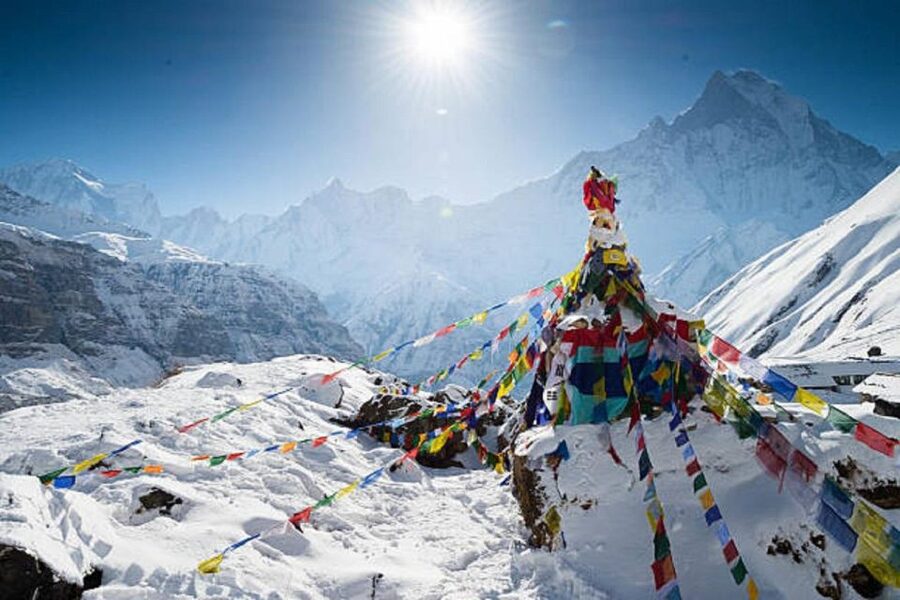
The sixth day heads to Jhinu Danda, at 1,610 meters. The lower altitude brings a warmer feel, while forest paths, village sections, springs, and waterfalls continue to shape the route.
The hot springs are the reward. After several days of climbing and descending, soaking in natural hot water gives you a chance to relax your muscles before the final transfer. This is more than a decorative extra. It changes the mood of the trip from high-altitude effort to recovery.
Bring a change of clothes and keep your swimming arrangements practical. The supplied packing advice includes a change of clothes, hand sanitizer or tissues, and cash, all sensible items for a basic mountain stop.
Jhinu Danda is also a good reminder of the trek’s design. You do not simply reach ABC and leave. The route gives you a high mountain goal, a return through forests and villages, and a restorative stop at a lower elevation.
Day 7: Jhinu Danda to Nayapool and back to Pokhara
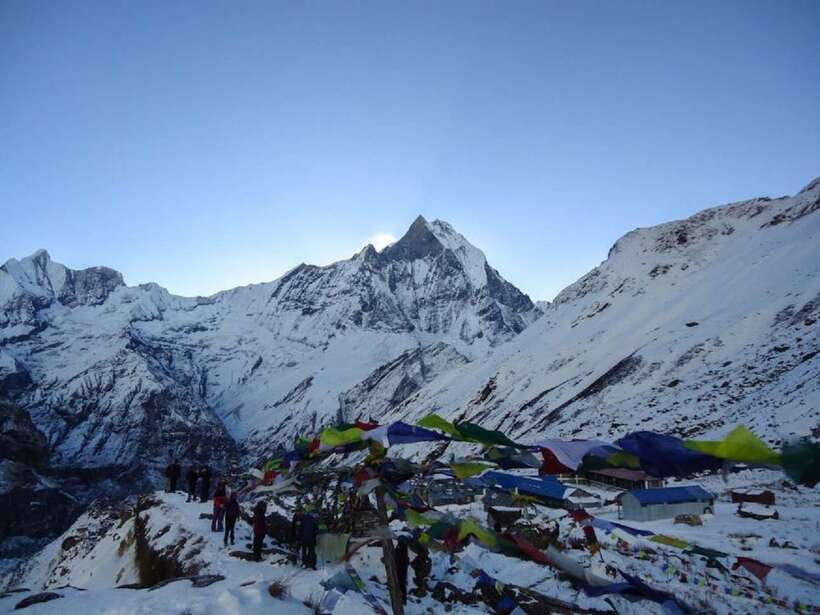
The final day takes you from Jhinu Danda to Nayapool, followed by transport back to Pokhara. The activity ends when you are dropped at a Pokhara hotel of your choice.
The return transport deserves special attention. One difficult account describes an earlier-than-expected return and a lack of the promised private Jeep, with a bus used instead. That is a serious service concern, especially on mountain roads. Ask the operator to confirm the planned vehicle, what happens if the walking schedule changes, and whether the return transfer is private or shared.
This issue does not erase the quality of the trek itself, but it affects the value of the package. A well-organized return is part of the experience, not an afterthought.
Tea houses, meals, water, and daily comfort
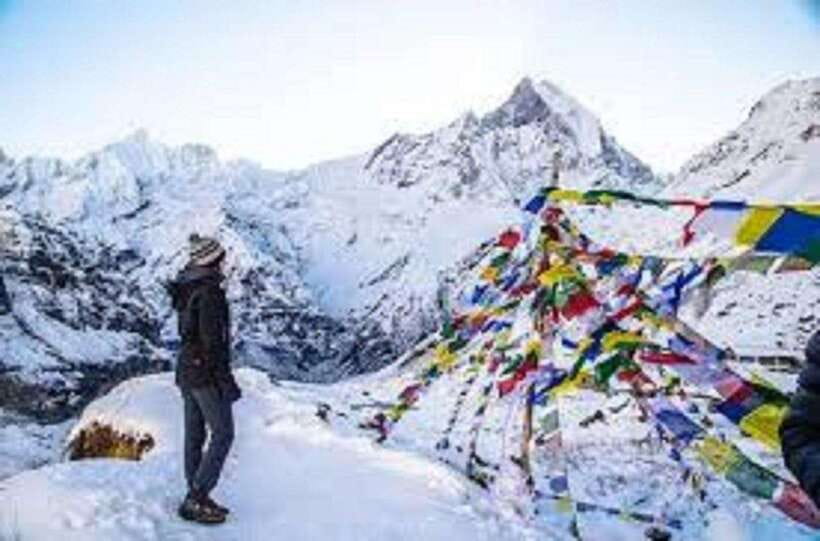
Accommodation is in basic tea houses or lodges. You should expect a practical bed and shelter rather than polished rooms or a full range of hotel facilities.
Meals are included only with selected options, so read the booking choice carefully. Drinking water and Wi-Fi may cost extra at lodges. Carry cash for these purchases and for other personal needs.
The listed packing guidance is sensible:
- Comfortable hiking shoes and a separate pair of hiking shoes if needed
- Warm clothing, a jacket, hat, and hiking pants
- Flashlight and spare clothes
- Camera and hair tie
- Cash, passport or ID copy, and hand sanitizer or tissues
- Trekking gear, including a sleeping bag if required
Alcohol and drugs are not allowed, and pets and baby carriages cannot join the activity. Those restrictions fit the terrain and the practical limits of a high mountain route.
Guides, porters, and private-group travel
The trek includes an experienced, government-registered guide. Guiding is available in English, Hindi, or Nepali. Porter support is also described, with food, accommodation, insurance, salary, transport, and equipment covered for the guide and porter.
A private group can be a real advantage. You can discuss pace, rest, and the day’s progress with your guide instead of adjusting to a large mixed group. It also makes the experience more personal for couples, families with suitable fitness, or friends traveling together.
The guide’s role matters most on the high day to ABC and during any change in transport. I would ask direct questions before departure about altitude concerns, the overnight stay at ABC, meals, water, and the final vehicle.
Who should book this trek?
I would recommend this route to you if you want a compact Himalayan trek with a clear goal and a relaxing finish. It suits people who value forests, villages, mountain views, and cultural contact as much as the base camp itself.
You should be comfortable with long walking days and significant elevation changes. This is not a casual hotel excursion from Pokhara. The jump from Himalaya to 4,130 meters deserves respect, and you should be prepared for basic lodging and extra personal costs.
The trek is also a good fit if you prefer a private group and want a guide who can speak English, Hindi, or Nepali. It is less suitable if you want guaranteed luxury, a slow acclimatization schedule, or a fully predictable private vehicle without confirming the details first.
Should you book the Pokhara ABC trek?
I would book it for the route, the sunrise, the close views of Annapurna and Machapuchare, and the Jhinu Danda hot springs. At $190, it can offer strong value if your selected package includes meals, private transport, and the stated equipment.
I would not book it without clarifying the return vehicle, meal plan, lodge costs, water and Wi-Fi charges, and emergency arrangements. The mountain experience appears to be the star, but organization can make or break a seven-day trek.
If those details are confirmed and you have suitable insurance, this is a rewarding way to reach Annapurna Base Camp without stretching the trip into a longer itinerary. The high point is demanding, the lodging is basic, and the final hot spring is exactly the kind of simple comfort that makes the effort feel worthwhile.
FAQ
How long is the Annapurna Base Camp trek?
The trek lasts seven days, including transport from Pokhara and the return to Pokhara.
What is the highest point of the trek?
Annapurna Base Camp is the highest point, at 4,130 meters or 13,550 feet.
Where does the trek start?
Transport takes you from Pokhara to Nayapool, where the walking portion begins.
Where does the trek finish?
The walking ends at Nayapool after leaving Jhinu Danda, followed by transport back to Pokhara. You are dropped at a Pokhara hotel of your choice.
Is accommodation included?
Yes. Accommodation is provided in basic tea houses or lodges during the trek.
Are meals included?
Meals are included with the option that provides them. Check the exact option before booking.
Is a guide included?
Yes. An experienced, government-registered trekking guide is included. Guiding is available in English, Hindi, and Nepali.
Are permits and trekking fees included?
Yes. The necessary trek permits and fees, along with government and local taxes, are included.
Is travel insurance included?
No. You must arrange your own travel insurance, and the policy should cover emergency rescue costs.
More 7-Day Experiences in Pokhara
- Best Kilimanjaro Adventure 7 days Machame route Trekking
★ 5.0 · 42 reviews - 7-Day: Inca Trail Trek to Machu Picchu Group Tour
★ 5.0 · 40 reviews - Kilimanjaro 7 Day Private Trekking Experience
★ 5.0 · 40 reviews - Pokhara: 7 Day Annapurna Base Camp Trek
★ 4.9 · 38 reviews
More Hot Spring Treks in Pokhara
- Private Tour Mount Batur Sunrise Trekking and Natural Hot Spring
★ 5.0 · 431 reviews - Mount Batur Sunrise Trek & Natural Hot Spring Experience
★ 5.0 · 95 reviews - 3D/2N Rinjani trekking summit,lake and hot springs.
★ 5.0 · 85 reviews - Mount Batur Sunrise Trekking & Natural Hot Spring – All Inclusive
★ 5.0 · 58 reviews
Recently added around Pokhara
- Pokhara: Majestic Mardi Base Camp Guided Trek with HotSpring★ 5.0 · 6 reviews
- Pokhara: 9-Day Annapurna Base Camp Trek with Poon Hill★ 5.0 · 6 reviews
- Pokhara: 5-Day Trek to Annapurna Base Camp and Hot Springs★ 5.0 · 4 reviews
- Pokhara: 5-Day Ghorepani and Poon Hill Private Trek★ 5.0 · 4 reviews
- Pokhara:4-Day Ghorepani Poon Hill Guided Trek via Ghandruk★ 5.0 · 3 reviews
- Pokhara: 4-Day Poon Hill and Ghandruk Guided Trek★ 5.0 · 14 reviews
- Pokhara: 4-Day Ghorepani, Poonhill & Ghandruk Village Trek★ 5.0 · 6 reviews
- Pokhara: 4-Day Beautiful Ghorepani Poon Hill & Ghandruk Trek★ 4.8 · 21 reviews
Annapurna Base Camp Treks, compared.

Trekking in Annapurna/Langtang/Everest/Upper Mustang regions
Read our review →
Kathmandu to Annapurna Base Camp (ABC) 5-Day Trek
Read our review →Browse the lists this tour appears in