
REVIEW · POKHARA
Annapurna Panorama trek
Wake up above the clouds. This 11-day Annapurna Panorama trek combines six days on foot with Kathmandu and Pokhara sightseeing, giving you a solid taste of Nepal without committing to a much longer high-altitude route. I like the private format and the practical gear support, including down jackets, sleeping bags, poles, and a duffel bag. The main catch is the physical demand: stone steps, long walking days, and basic mountain rooms require a moderate level of fitness.
I also like the way the route moves beyond the standard Poon Hill outing, continuing through Tadapani, Ghandruk, Pothana, and Dhampus. The scenery changes from forest to ridge views and traditional hill villages. You should also know that several costs remain separate, including Kathmandu entrance fees, hot showers, Wi-Fi, device charging, drinks, insurance, and tips.
Key points to know before booking
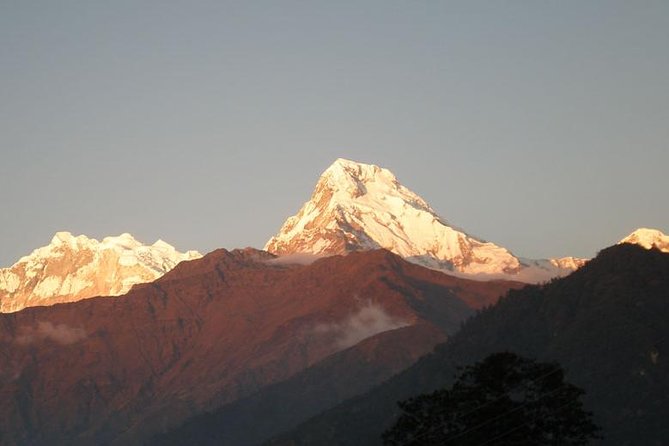
- Poon Hill sunrise at 3,210 meters: The early climb brings wide views of the Annapurna range and is the visual high point of the trek.
- Six trekking days with private support: Your own guide and porter team can set the pace around your group rather than a large fixed party.
- Kathmandu culture before the mountains: The itinerary includes Pashupatinath, Boudhanath, Swayambhunath, and Patan Durbar Square.
- Practical equipment included: You can borrow a down jacket, sleeping bag, walking poles, and duffel bag if needed.
- A village-to-village route: Ghandruk, Landrung, Tolka, Deurali, and Pothana add local character beyond mountain viewpoints.
- Strong guide reputation: Guides such as Ram Bhandari, Yookumar, Nabin, and Dolakh have received especially warm praise for care, organization, and patience.
What this Annapurna route is really like
The Annapurna Panorama trek is designed for people who want a proper Himalayan walk without spending two or three weeks on the trail. You spend the first part of the trip in Kathmandu and Pokhara, then walk for six days through the lower Annapurna region.
The highest point is Poon Hill at 3,210 meters. That is high enough for cold mornings and possible altitude discomfort, but this route does not reach the extreme elevations of the Annapurna Circuit or Annapurna Base Camp treks. The walking is still serious. Expect repeated stone staircases, uphill and downhill trails, and five to seven hours on several days.
I see the private setup as one of the best features. You are not tied to a large group moving at one speed. If one person needs a slower morning or a longer lunch, your guide can manage the day around your group. The package requires at least two people, so this is not a solo booking.
The listed price is $1,045 per person. That is not a bare-bones trekking fee. It includes three nights in a boutique Kathmandu hotel, mountain accommodation, meals and snacks during the trek, permits, private transfers, a guide, porters, trekking equipment, taxes, and transport between trail points and Pokhara.
You still need to budget for Kathmandu sightseeing entrance fees, meals in Kathmandu and Pokhara, hot showers, bottled drinks, Wi-Fi, charging, travel insurance, evacuation insurance, and tipping. Read the inclusions carefully, since bottled water is listed while boiled water is not included. That small detail can affect your daily spending.
More Annapurna Treks in Pokhara
- Trekking in Annapurna/Langtang/Everest/Upper Mustang regions
★ 5.0 · 161 reviews - Kathmandu/Pokhara: 5-Day Annapurna Base Camp (ABC) Trek
★ 4.9 · 72 reviews - Annapurna Base Camp Trek -8 days
★ 5.0 · 56 reviews
Kathmandu brings culture before the trail
Your first day begins in Kathmandu at about 1,300 meters. An airport representative meets you outside the terminal hall, then you have time for a walk around Thamel. This is useful rather than decorative. It gives you a chance to settle in, adjust to Nepal, and pick up any small personal items before leaving for the mountains.
The second day is devoted to major cultural sites. You visit Pashupatinath Temple, Boudhanath Stupa, Patan Durbar Square, Krishna Temple, Kumbheshwar Temple, the Golden Temple, Swayambhunath Stupa, and Kathmandu Durbar Square.
That is a full program, so expect a lot of walking and visual information. Patan gives you detailed Newari architecture and temple squares, while Boudhanath offers a very different atmosphere around one of Kathmandu’s major Buddhist sites. Pashupatinath is an important Hindu religious center, and the itinerary gives you a useful introduction to Nepal’s mix of faiths before the rural portion begins.
Entrance fees are not included. Carry local currency for tickets and personal purchases. The sightseeing uses private transport, which should make a packed day easier than arranging every transfer yourself.
The long road from Kathmandu to Pokhara
Day three involves a five to six-hour drive from Kathmandu to Pokhara, following the Trishuli River. The exact time depends on traffic and the time of day, so keep your expectations flexible. Nepal road journeys can be slow, and this is a transfer day rather than a sightseeing day.
Pokhara sits at about 910 meters beside Fewa Lake. The change from Kathmandu gives you a calmer base before the trek. Your hotel is in the Lakeside area, close to the lake, where you can rest and prepare for the next morning.
The itinerary lists the trek starting from Pokhara at 8:00 a.m. The precise transport arrangements take you by private vehicle to Nayapul, the trail starting point. Since the full program begins in Kathmandu, confirm your arrival timing and hotel details when booking, especially if you plan to arrive independently.
Nayapul to Ulleri: the first serious climb
The fourth day begins with a roughly one-and-a-half-hour drive from Pokhara to Nayapul, covering about 45 kilometers. From there, you walk through Birethanti and Sudame before reaching Tikhedhunga.
The trail gradually follows the valley, then becomes much steeper as you climb stone steps to Ulleri at 1,950 meters. This is where the trek makes its point. The route is accessible, but it is not a gentle stroll.
Give yourself permission to walk slowly. A private guide should help with pacing, water breaks, and luggage arrangements. Porters carry the main bags, but you still need a daypack with water, layers, medication, and rain protection.
Ulleri is a useful first night because you gain height without racing toward Poon Hill. Your accommodation is described as a private room with a shared toilet. That means you get more privacy than a dormitory, but you should not expect hotel-style facilities in the mountains.
Same trailhead, a longer or shorter day out:
- Poon hill Trek 3 days
★ 5.0 · 176 reviews - Pokhara: 4-Day Ghorepani, Poonhill & Ghandruk Mountain Trek
★ 5.0 · 132 reviews - Ghorepani – Poon Hill Trek 3N-4D
★ 5.0 · 125 reviews - From Pokhara: 3-Day Ghorepani Poon Hill Trek with Guide
★ 4.9 · 68 reviews
Rhododendron forests lead to Ghorepani
From Ulleri, the route climbs through rhododendron and oak forest toward Ghorepani. The day takes about five to six hours and covers roughly 11 kilometers. You stay at Upper Ghorepani, also called Deurali, at around 2,850 meters.
The forest is one of the pleasures of this section. In season, rhododendrons add color to the walk, while the trees provide shade and a sense of enclosure before the next day’s open ridge views. The uphill work continues, so your legs may feel the stairs more than the distance suggests.
Ghorepani is a popular overnight point because it places you close to Poon Hill. It also means an early wake-up the next morning. Pack your warm layer where you can reach it quickly, rather than burying it in your main bag.
Poon Hill sunrise is the main prize
Day six begins with the climb to Poon Hill at 3,210 meters. You return to Ghorepani afterward, then continue through pine and rhododendron forest to Tadapani at 2,520 meters.
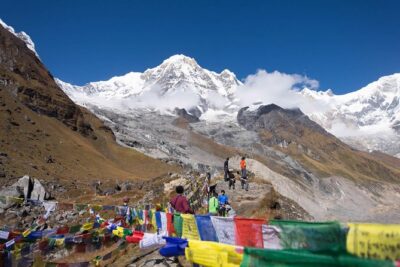
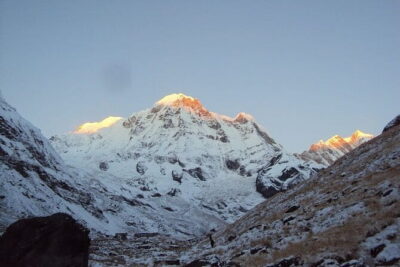
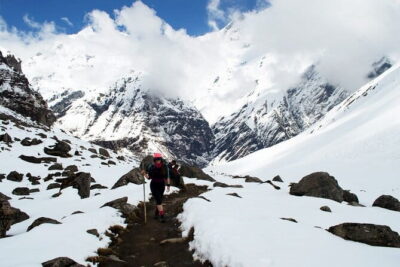
This is the day most people picture when they hear Poon Hill. The viewpoint offers broad Himalayan views, and sunrise is the reason for the early start. The exact visibility depends on weather, so you should enjoy the walk and forest as part of the experience rather than treating the panorama as guaranteed.
The climb is short compared with the full trekking day, but the combination of cold, early darkness, altitude, and later walking makes it demanding. Your guide can help set a safe pace. If you have not walked at altitude before, take headache, breathlessness, and unusual fatigue seriously.
Tadapani brings a welcome change after the viewpoint. The route through pine and rhododendron forest gives you a quieter walking day, though the six to seven-hour total makes this one of the longer sections.
Tadapani and Ghandruk add village life
The walk from Tadapani to Ghandruk is shorter, about three to four hours. It follows a forested downhill path to Ghandruk, a well-known hill village in the Annapurna region.
This is a good day to slow down and look around. The itinerary allows time to explore the surrounding area rather than simply arriving, eating, and sleeping. The village section adds a human scale to the trek. You are not only chasing peaks and sunrise viewpoints; you are moving between established communities in the hills.
The downhill trail may sound easy, but descents can be hard on knees after several days of steps. Trekking poles are particularly useful here, and poles are included if you need to borrow them.
Ghandruk to Pothana crosses varied ground
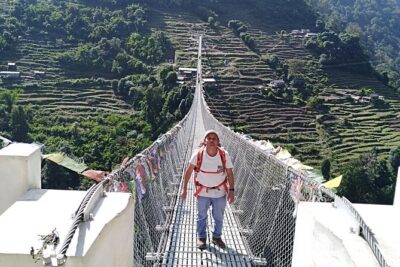
The route from Ghandruk to Pothana takes about five to six hours. You descend stone staircases toward the Modi Khola, then climb to Landrung and continue through Tolka toward Deurali.
This is a satisfying middle section because the walking keeps changing. You get village paths, river-side height loss, steady climbing, and wooded trails in one day. The final descent to Pothana follows a forested red-mud path that can become slippery during the monsoon.
That seasonal warning matters. Sturdy shoes with good grip are important, and walking poles can help on wet ground. The itinerary does not promise a dry trail, so ask about current conditions before setting out if your trip falls during the rainy period.
Mountain accommodation remains simple. Rooms are private, but toilets are shared. Hot showers, Wi-Fi, and device charging cost extra or may not be available in the way you expect. Bring a power bank and a patient attitude toward mountain comforts.
Pothana to Pokhara closes the walking circuit
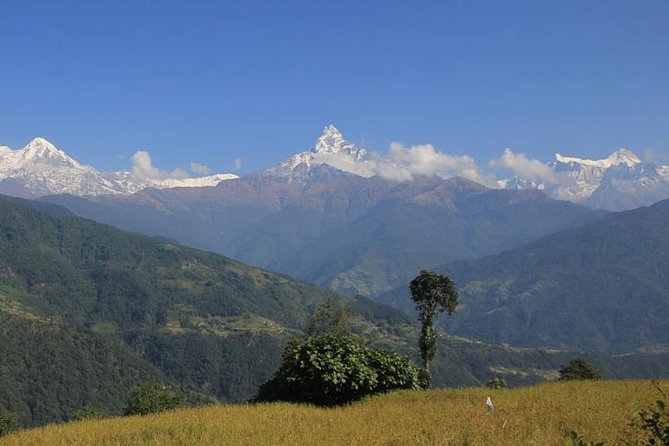
From Pothana, the trail follows a ridge toward Dhampus, with views of the Annapurna range. You then descend to Phedi, a three to four-hour walking day followed by a roughly 40-minute drive to Pokhara.
The ridge section provides a final chance for mountain views before the route drops toward the road. The downhill finish can be tiring, but it is a sensible ending: you complete the walk on foot, then return to the comfort of Pokhara by private vehicle.
Back in Pokhara, you have time to recover by Fewa Lake. Lunch and dinner in Pokhara are not included, so you can choose how much or how little to spend after the trek.
The guide and porter setup adds real value
The package provides an English-speaking, government-registered trekking guide and local porters, with a stated ratio of one porter for two trekkers. Guide and porter salaries, insurance, equipment, transport, food, and lodging are included.
That support matters most on the stairs and on days when weather or fatigue changes the plan. A guide also handles permits and paperwork, including the Annapurna Conservation permit and TIMS. You avoid having to organize those details yourself.
Several named guides connected with this company have earned particularly strong praise. Ram Bhandari is repeatedly described as warm, patient, attentive, and excellent with families. Yookumar, along with porters Kumar and Rajan, has been praised for careful attention to safety, accommodation, and food. Nabin has received kind words for guiding families with children aged 12 and 15.
Those comments do not guarantee who your guide will be. Ask for the assigned guide’s name before departure, and share any concerns about pace, food, footwear, or medical needs early. One especially useful example involved a guide lending his own shoes to a hiker with footwear trouble. That is the sort of practical care you want, but proper shoes are still your responsibility.
Meals, rooms, and borrowed gear
Breakfast, lunch, and dinner are included during the trek, along with cookies, energy bars, seasonal fresh fruit, tea, coffee, and snacks. This is valuable because food choices become limited in the mountains, and you do not need to negotiate every meal separately.
The information does not promise the same accommodation standard each night. It describes comfortable private rooms with shared toilets. Hot showers, Wi-Fi, charging, and boiled water are separate concerns, so bring cash and a backup battery.
Borrowed equipment includes a down-filled sleeping bag, down jacket, walking poles, and duffel bag. This can reduce the cost of buying specialist gear for one trek. I would still bring properly fitted hiking shoes, warm personal layers, and a small daypack.
Who should book this trek?
I would recommend this trip to someone with moderate fitness who wants Himalayan views, village walking, and a taste of Kathmandu without a very long expedition. It also suits families with older children, based on the successful family trips described by the company, though children must be accompanied by an adult.
You should think twice if you dislike long road transfers, shared mountain bathrooms, early starts, or repeated stair climbing. This is not a luxury holiday, despite the boutique hotel in Kathmandu. The mountain portion asks you to accept basic facilities in exchange for access to forests, villages, ridges, and high viewpoints.
The trip also suits people who value organization. Permits, transport, meals, guides, porters, and equipment are arranged in one package. If you prefer to plan every hotel and meal yourself, the package may feel restrictive.
Should you book the Annapurna Panorama trek?
Book it if you want a well-supported introduction to the Annapurna region and like the idea of combining Nepal’s cultural sights with six days of walking. The private format, included equipment, porter support, and Poon Hill sunrise make the $1,045 price reasonable for what is covered.
Before paying, confirm the exact Kathmandu hotel, guide assignment, starting arrangements from Pokhara, equipment sizes, and current trail conditions. Also price travel insurance and evacuation cover separately, since neither is included.
The trek offers a strong balance of mountain scenery and village life. It is not effortless, and the stairs will remind you of that. But if you arrive prepared, walk steadily, and accept simple rooms, this is a rewarding way to see the Annapurna foothills without rushing through them.
FAQ
How long is the Annapurna Panorama trek?
The full trip lasts approximately 11 days. It includes time in Kathmandu and Pokhara, plus six days of trekking.
Where does the experience start?
The listed meeting point is in Pokhara, Nepal, with an 8:00 a.m. start time. The full itinerary itself begins with arrival in Kathmandu, so confirm the exact meeting arrangements when booking.
Is the trek private?
Yes. This is a private activity, and only your group participates. A minimum of two people is required.
What fitness level is needed?
A moderate physical fitness level is recommended. Several walking days last five to seven hours and include steep stone staircases and downhill trails.
What is the highest point on the route?
The highest point is Poon Hill at 3,210 meters, or 10,528 feet.
Are meals included?
Breakfast, lunch, dinner, and supplementary snacks are included during the trek. Lunch and dinner in Kathmandu and Pokhara are not included.
Are permits included?
Yes. The Annapurna Conservation permit and TIMS paperwork are included.
Is trekking equipment provided?
You can borrow a down-filled sleeping bag, down jacket, walking poles, and duffel bag. Personal hiking shoes and clothing are not listed as provided.
What is the cancellation policy?
You receive a full refund if you cancel at least six full days before the start time. A cancellation made two to six full days before the start may receive a 50 percent refund. Cancellations less than two full days before the start are not refunded.
Recently added around Pokhara
- Pokhara: Majestic Mardi Base Camp Guided Trek with HotSpring★ 5.0 · 6 reviews
- Pokhara: 9-Day Annapurna Base Camp Trek with Poon Hill★ 5.0 · 6 reviews
- Pokhara: 5-Day Trek to Annapurna Base Camp and Hot Springs★ 5.0 · 4 reviews
- Pokhara: 5-Day Ghorepani and Poon Hill Private Trek★ 5.0 · 4 reviews
- Pokhara: 7-Day Annapurna Base Camp Trek & Hot Spring★ 4.0 · 3 reviews
- Pokhara:4-Day Ghorepani Poon Hill Guided Trek via Ghandruk★ 5.0 · 3 reviews
- Pokhara: 4-Day Poon Hill and Ghandruk Guided Trek★ 5.0 · 14 reviews
- Pokhara: 4-Day Ghorepani, Poonhill & Ghandruk Village Trek★ 5.0 · 6 reviews
Annapurna Base Camp Treks, compared.
Trekking in Annapurna/Langtang/Everest/Upper Mustang regions
Read our review →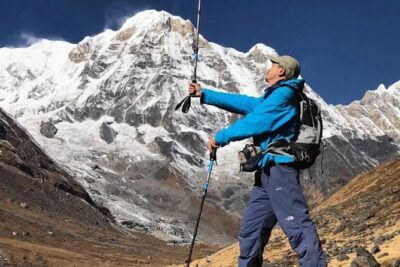
Kathmandu to Annapurna Base Camp (ABC) 5-Day Trek
Read our review →Browse the lists this tour appears in