
REVIEW · KATHMANDU
Poonhill Trek
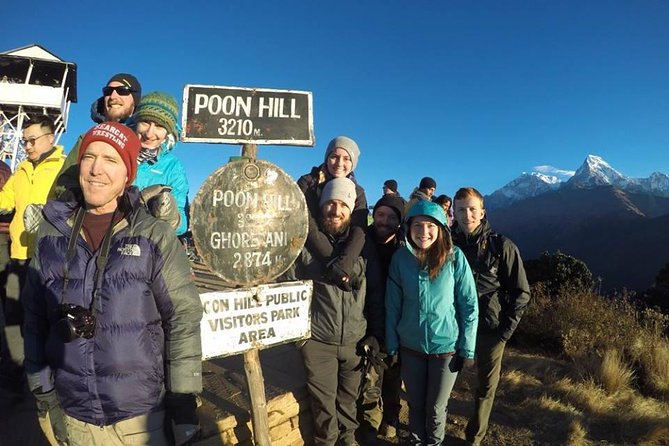
Mountain views arrive one step at a time. This seven-day Poon Hill trek gives you a manageable way to see the Annapurna region, with forest paths, mountain villages, sunrise views, and a soak in natural hot springs. I like the slower seven-day pace, which gives you more time to adjust to higher ground than a rushed two- or three-day version. I also like that the price includes accommodation, most meals, permits, transport, and a guide.
The main catch is simple: this is still a real mountain trek. The climb to Ulleri is steep, Poon Hill sits at 3,210 meters, and several days involve five to six hours of walking. You should arrive with moderate fitness, comfortable shoes, and a good attitude toward stairs.
The best parts of the Poon Hill experience
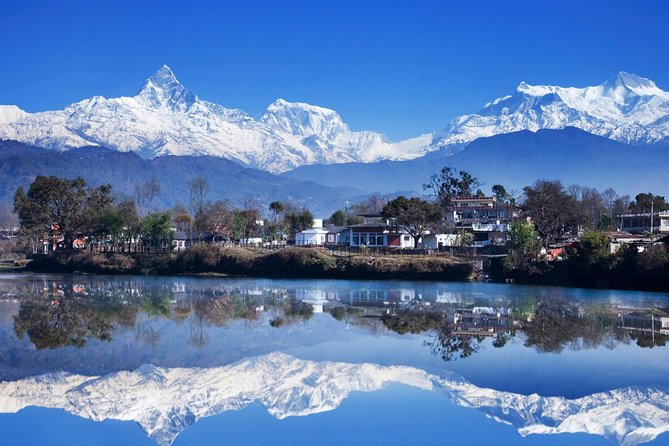
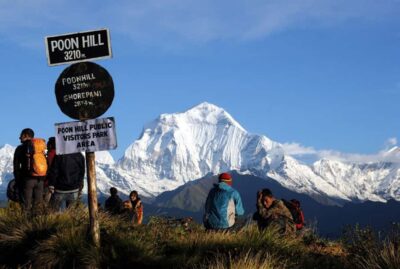
- A sunrise viewpoint at 3,210 meters: The early climb from Ghorepani leads to the trek’s most famous mountain panorama.
- A useful seven-day pace: You travel from Kathmandu to Pokhara, walk through several villages, and have time for a hot-spring stop.
- Small-group support: Groups are limited to 14 people, allowing more direct help from the guide.
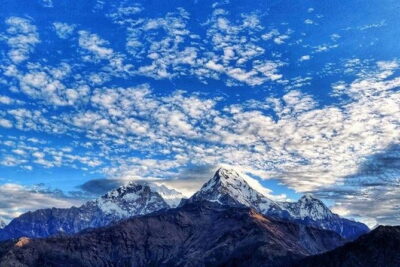
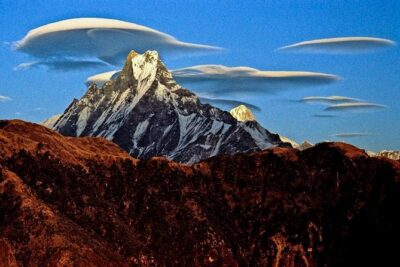
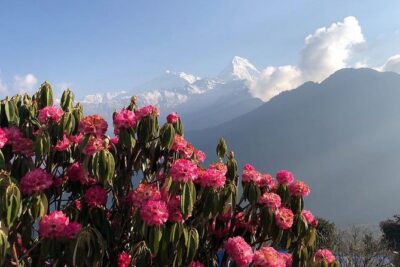
- A strong mix of scenery: Expect riverbanks, rhododendron and oak forests, Magar and Gurung villages, and views of Annapurna and Fish Tail.
- Good value for a supported trek: The $600 price includes lodging, five breakfasts, five lunches, four dinners, national park fees, activities, and shared transfers.
- A finish that feels civilised: After the final mountain walk, you return to Pokhara before riding back to Kathmandu for a farewell dinner.
Why seven days works well at Poon Hill
Poon Hill is often treated as a quick mountain sampler. That can work if time is tight, but a seven-day plan makes more sense for many people. You spend the first night in Pokhara, walk through the hills at a steadier pace, and have room to appreciate the changing scenery instead of treating every stop as a race.
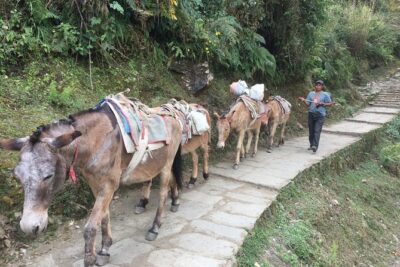
The schedule also helps you understand the area. This is not only a viewpoint hike. The route passes through river valleys, small teahouse settlements, rhododendron woods, and villages connected by steep stone paths. You see how transport, food, and daily life change as the road gives way to walking trails.
I would call the trek moderately difficult. The hardest section arrives early, with the steep ascent from Tikhedhunga to Ulleri. The climb to Poon Hill is shorter, but the early start and high altitude can make it feel demanding. Downhill walking later in the trip can also be tough on knees.
More Poon Hill Treks in Kathmandu
- 4 Days Poon Hill Trek
★ 5.0 · 94 reviews - Ghorepani(Poonhill Trek)
★ 5.0 · 81 reviews - 4-day Poon Hill Trek
★ 5.0 · 74 reviews
Day 1: Kathmandu to Pokhara by road or flight
The trip begins after breakfast with the journey from Kathmandu to Pokhara, about 200 kilometers away. By bus, the ride takes roughly six hours, including a lunch stop along the way. It is a long first day, but it gets you from the capital to the main gateway for the Annapurna foothills.
A flight takes about 30 minutes and gives you more time in Pokhara. That option is not simply faster transportation. Pokhara is worth a look, with its lakeside setting and scenic surroundings, so an earlier arrival lets you enjoy more of the city before the trek begins.
You spend the night in a guesthouse in Pokhara. If you are coming from a long international journey, this overnight stop is useful. It gives you a chance to collect yourself, check your walking gear, and start the trail the next morning without immediately combining a bus ride and a mountain hike.
Day 2: Nayapool, Birethanti, and the hard climb to Ulleri
From Pokhara, a drive of about one hour takes you to Nayapool, where the walking begins. The early part of the route follows the Modi River and reaches Birethanti, a village with small teahouses along the trail.
After crossing the village, you climb toward Hille and Tikhedhunga. Then comes the day’s serious test: the steep ascent to Ulleri. Ulleri is a large Magar village, and reaching it requires patience more than speed. Break the climb into short sections, keep your water handy, and let faster walkers go ahead.
This five-hour walking day is a good warning about what follows. The trail is not technical, but the stairs and uphill sections will challenge anyone unused to sustained walking. The reward is a night in a mountain village rather than a roadside hotel, with a much stronger sense of the region’s daily rhythm.
Day 3: Forest walking from Ulleri to Ghorepani
The next morning feels gentler. From Ulleri, the route rises gradually through rhododendron and oak forests before reaching Banthanti. The tree cover gives the walk a cooler, quieter character, especially after the exposed effort of the previous day.
A couple of hours beyond Banthanti, you reach Ghorepani. This is one of the key bases for the Poon Hill hike, and its importance becomes clear the next morning. Staying here means you can reach the viewpoint before breakfast rather than adding a long approach from below.
Ghorepani is also where the trek begins to feel more focused on the high mountain views. You have already passed villages and forests, but the next day brings the big panorama. Keep your warm layers close at hand because the Poon Hill start is early and the viewpoint sits well above 3,000 meters.
Same trailhead, a longer or shorter day out:
- Everest Base Camp Trek – 14 Days
★ 5.0 · 1,499 reviews - Everest Base Camp Trek
★ 5.0 · 842 reviews - Everest Base Camp Trekking
★ 5.0 · 485 reviews - Annapurna Circuit Trek with Tilicho Lake
★ 5.0 · 368 reviews
Day 4: Sunrise at Poon Hill, then on to Tadapani
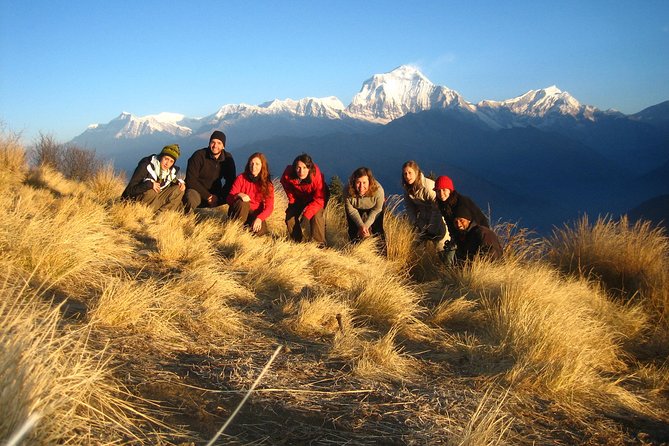
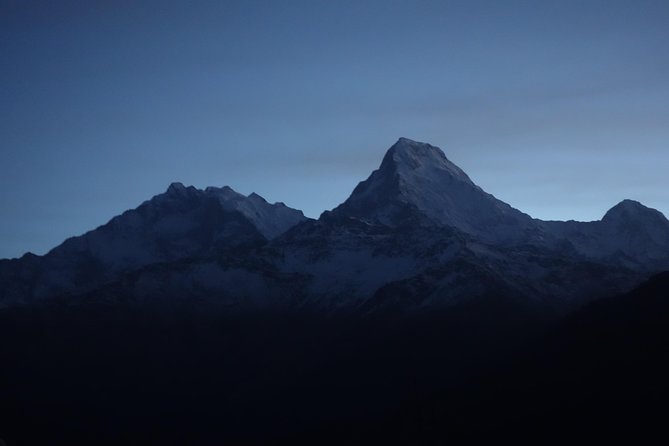
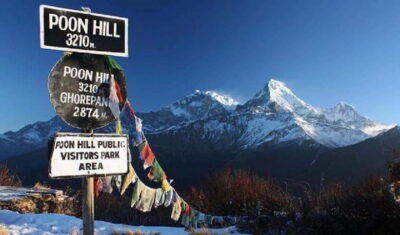
The short walk to Poon Hill is the centerpiece of the trek. It takes about 45 minutes from Ghorepani and reaches 3,210 meters. The aim is sunrise, when the mountain ranges can catch the first light and the viewpoint becomes a wide-open place for photographs.
This is the point where an early start pays off. The walk is not long, but the altitude, darkness, and uphill grade make it more than a casual stroll. Wear proper shoes, bring a warm layer, and do not judge the day by the first climb. You return to Ghorepani for breakfast before continuing.
After breakfast, the trail heads toward Deurali over a steep and strenuous section. The route then becomes easier through the jungle toward Banthanti, where you might spot monkeys and langurs. The day ends at Tadapani after about six hours of walking.
Tadapani is valuable because it changes the feel of the route again. You move from Ghorepani’s viewpoint focus into a forested section with more wildlife possibilities and changing mountain angles. It is also a demanding day, so plan to eat, drink, and rest rather than trying to squeeze in extra activity at night.
Day 5: Rhododendron woods and a night near the hot springs
From Tadapani, the trail descends gradually through rhododendron forest. You cross the Kimsung River, then climb toward Gurjung, a Gurung village. This up-and-down pattern is typical of mountain routes: a descent does not always mean the work is over.
The route continues toward the hot-spring area at Jhinu. The plan allows time to enjoy the natural hot springs, making this one of the most welcome stops of the week. After several days of climbing and descending, soaking your legs is not a luxury. It is part of what makes the longer schedule worthwhile.
You spend the night in a guesthouse. Keep in mind that the day still includes an ascent before the rest period. The hot springs come after the walking, not instead of it.
Day 6: Along Modi Khola back to Pokhara
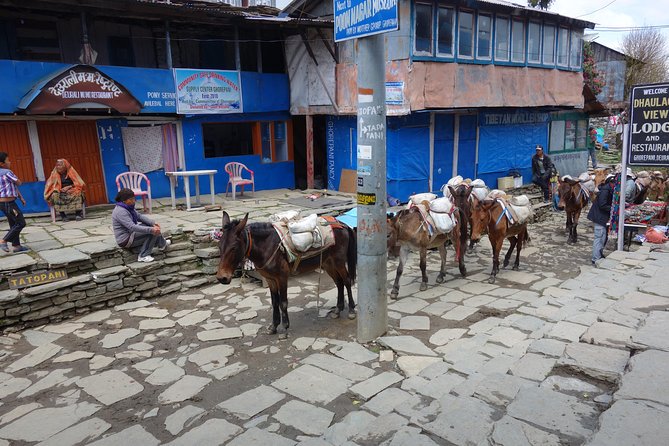
The final walking section begins from Jhinu and drops toward the Modi Khola. The route offers impressive views toward Fish Tail and the Annapurna range as it follows the riverbank to Birethanti, the place where the trek began.
From Birethanti, another walk of about 30 minutes brings you to the waiting van. You then return to Pokhara for the night. This is a satisfying finish because the route closes its loop, taking you back to the same trail area where the mountain journey started.
The day combines downhill walking, riverside stretches, and vehicle transport. It is not a simple ride out from the mountains, so expect another active day before you reach your hotel. Still, sleeping in Pokhara after the trek gives you a proper chance to recover.
Day 7: The long road back to Kathmandu
The return bus journey from Pokhara to Kathmandu takes six to seven hours. That is a substantial final transfer, especially after several days on foot, but it keeps the trip at a reasonable total price.
The journey ends with a farewell dinner and an overnight stay in Kathmandu. The dinner gives the group a clear closing point, rather than simply dropping you back at the starting address and ending the experience without ceremony.
The meeting point is Green Nepal Tourism Pvt Ltd on Nikhil Marga, Mitranagar Marg, Kathmandu. The stated start time is 6:30 a.m., and hotel pickup and drop-off are available only if that option is selected.
What the $600 price really covers
At $600 per person, this is not a bare-bones walking route. The price includes accommodation as described, a professional guide, national park fees, activities, shared round-trip transfers, and five breakfasts, five lunches, and four dinners.
That package matters in Nepal because transport and permits can complicate an independent trek. You are not left to arrange the road journey to Pokhara, the transfer to Nayapool, the return van from Birethanti, or the bus back to Kathmandu. The guide also gives you a practical point of contact during the walk.
The meals are not fully covered every day. Drinks are excluded, and excess luggage charges may apply where relevant. Hotel pickup and drop-off are also excluded if you do not choose that option. I would budget extra for drinks and personal expenses, even though the core trek costs are included.
A group limit of 14 is a sensible middle ground. You get the social side of a small group, but the tour is not advertised as a private trek. If you need a very quiet, highly flexible walking schedule, ask about customization before booking. Past departures have included solo walkers, couples, and families, including one family with children aged nine and five.
The guides can make a major difference
Good guiding matters most on a trek like this, where the route is physically clear but the days are long. Guide names associated with past departures include Krishna, Kishore, Phurba, Yadu, Gopal, Rajan, Sushanta, Raj, and Bhairas.
Krishna is described as having 13 years of guiding experience. Phurba is praised for keeping an eye on comfort and wellbeing, while Gopal is noted for working especially well with a family group. These details suggest that the human side of the trip is one of its strongest features.
The company has also been willing to adjust dates and plans for some groups. That does not mean every booking can be changed, so ask before paying if your schedule is unusual. The small-group format should help the guide respond to different walking speeds, but you still need to communicate clearly when you are tired or uncomfortable.
Who should book this trek
I would recommend Poon Hill for someone who wants major Himalayan views without committing to a weeks-long expedition. You do not need advanced mountaineering skills, but you should be comfortable with five- to six-hour walking days and steep uphill and downhill sections.
It can suit first-time trekkers who prepare properly. Several past departures included people with limited trekking experience, and one family used the trip as a first mountain adventure. Still, first-time does not mean effortless. Train with hills or stairs, wear footwear you have already tested, and expect the Ulleri and Poon Hill sections to set the pace.
Families should examine the walking times carefully. Children have completed similar trips with guide support, but the steep climbs and long days require patience from everyone. Solo walkers can also fit into the small group and benefit from having transport, lodging, permits, and meals arranged.
This is less suitable if you dislike basic mountain accommodation, early mornings, long bus rides, or changing walking conditions. It is also not the right choice if you want a relaxed sightseeing holiday with only occasional walks.
Practical details before you book
Confirmation is provided at booking. Children must be accompanied by an adult, and the activity is near public transportation. The stated maximum is 14 people.
The tour has a free-cancellation policy when you cancel at least 24 hours before the local start time. Cancellations made later, or changes requested inside that 24-hour window, are not accepted for a refund.
I would contact the operator before departure to confirm the pickup arrangement, the exact accommodation names, luggage limits, and whether your booking includes hotel transfers. Those questions are especially useful because the package has both included and optional transport elements.
Should you book the Poon Hill Trek?
Book it if you want a supported introduction to Nepal’s mountain trails, especially if the sunrise at Poon Hill, village stays, and the hot springs appeal to you. The best reasons to choose this version are its seven-day rhythm, included logistics, small group size, and strong guide support.
Skip it if you want a short, easy walk or dislike long road transfers. For a moderately fit person who can accept steep steps and basic guesthouse nights, this is a well-priced way to reach the Annapurna views without signing up for a much longer high-altitude trek.
FAQ
How long is the Poon Hill Trek?
The experience lasts approximately seven days, including travel between Kathmandu and Pokhara, the mountain trek, and the return to Kathmandu.
What time does the tour start?
The stated start time is 6:30 a.m. The meeting point is Green Nepal Tourism Pvt Ltd on Nikhil Marga, Mitranagar Marg, Kathmandu.
Is hotel pickup included?
Hotel pickup and drop-off are included only if you select that option. They are not included if you choose the standard option without transfers.
How large is the group?
The group can include a maximum of 14 people.
Are meals included?
The package includes five breakfasts, five lunches, and four dinners. Drinks are not included.
What is the highest point on the trek?
Poon Hill reaches 3,210 meters. The early walk from Ghorepani to the viewpoint takes about 45 minutes.
Can I cancel for a full refund?
Yes, if you cancel at least 24 hours before the experience start time. Cancellations or changes made less than 24 hours before the start are not accepted for a refund.
Recently added around Kathmandu
- Ghorepani Poon Hill Trek★ 5.0 · 16 reviews
- Private Manaslu Circuit Trek at Himalayas★ 5.0 · 3 reviews
- Amazing 1 Day Trekking Experience in Kathmandu Nepal★ 5.0 · 24 reviews
- Ghorepani Poonhill Trek★ 5.0 · 5 reviews
- Upper Mustang Trekking★ 5.0 · 2 reviews
- Upper Mustang Trekking★ 3.0 · 2 reviews
- Upper Mustang Trekking★ 5.0 · 4 reviews
- Upper Mustang Trek★ 5.0 · 5 reviews
Poon Hill Treks, compared.
4-Day Ghorepani, Poonhill & Ghandruk Mountain Trek
Read our review →
Browse the lists this tour appears in