
REVIEW · KATHMANDU
Poon Hill Trek
The mountains reveal themselves slowly. This 10-day Poon Hill Trek combines rhododendron forests and Gurung villages with one of Nepal’s most accessible Himalayan viewpoints. I like the early sunrise walk to Poon Hill and the care built into the trip, including airport transfers, porters, permits, and city sightseeing. The main drawback is that the trek is more demanding than the word easy suggests, especially on the steep stone steps to Ulleri and the pre-dawn climb from Ghorepani.
I also like the sensible rhythm: Kathmandu sightseeing first, Pokhara as a calmer base, then four nights in teahouses along the trail. The $1,172.27 price is not pocket change, but it covers a great deal, including hotels, breakfasts, six lunches, six dinners, transport, guides, porters, permits, and staff costs.
Your guide can make a real difference. Guides named Sushanta, Janardan, Shyam, Raj, Ishwar, and Baburam received especially warm praise for their kindness and flexibility. One group shortened the walking schedule by combining days, while another found the planned pace too relaxed. Ask about this before departure if you want longer walking days.
Key points to know before booking
- Poon Hill sunrise at 3,210 meters: Expect an early, uphill walk from Ghorepani for broad views of the Annapurna range.
- A moderate trek with one tough section: The climb to Ulleri includes a steep ascent, and the pre-dawn Poon Hill walk adds another test.
- Four nights in mountain guesthouses: Accommodation is mostly twin-share, with occasional dormitory arrangements.
- Culture beyond the mountains: The route passes Magar and Gurung villages, while Kathmandu sightseeing includes Pashupatinath, Boudhanath, and Bhaktapur.
- A mostly organized package: Airport transfers, tourist buses, private road transfers, permits, meals on trek, guides, porters, and staff expenses are included.
- Small-group format: The maximum group size is 15 people, which should make trail logistics easier than on a large group departure.
Why Poon Hill works for a first Himalayan trek
Poon Hill gives you a proper taste of Nepal’s mountain country without requiring the long commitment of a high-altitude expedition. The route reaches 3,210 meters, but it does not involve technical climbing, and the published fitness requirement is moderate.
That does not mean effortless. You will walk on mountain paths, climb stone steps, and spend several days gaining and losing height. The Ulleri section is the key warning. The trail rises steeply from the low valley toward the Magar village, and the effort can surprise anyone who has pictured a gentle country walk.
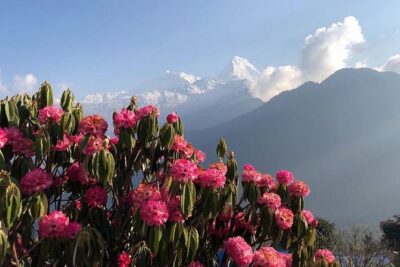
The reward is variety. You move from subtropical valleys and rivers to oak, pine, and rhododendron forests, then to open mountain viewpoints. Waterfalls, mossy woodland, village terraces, and snowy peaks keep the route from feeling repetitive.
I think Poon Hill suits you best if you want big Himalayan views without a high-altitude expedition. It also works well if you have limited time but want more than a short sightseeing tour around Pokhara.
More Poon Hill Treks in Kathmandu
- 4 Days Poon Hill Trek
★ 5.0 · 94 reviews - Ghorepani(Poonhill Trek)
★ 5.0 · 81 reviews - 4-day Poon Hill Trek
★ 5.0 · 74 reviews
Kathmandu begins with temples and a practical briefing
Your trip starts at Tribhuvan International Airport, where an Ace the Himalaya representative meets you outside the terminal and takes you to your hotel in a private tourist vehicle. If you arrive after 4 pm, the pre-trip briefing takes place with the guide. Earlier arrivals attend the meeting at the company office.
Bring your passport, since it is needed for the briefing and trip arrangements. This meeting is the right time to ask about the walking pace, luggage, meals, accommodation, and the next morning’s transport. It is also when you meet the trek leader.
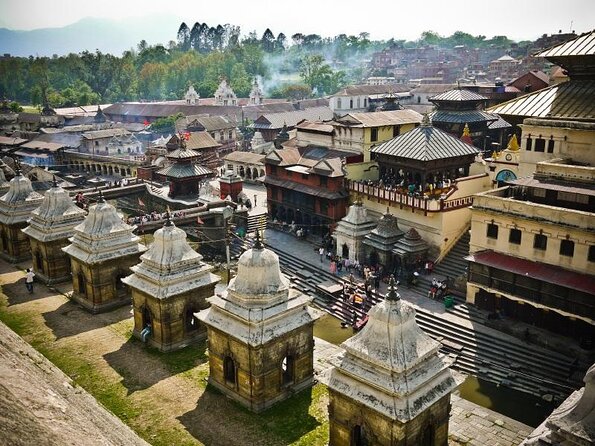
The first full sightseeing day covers three important places in the Kathmandu Valley. At Pashupatinath Temple, you view the Hindu temple complex from the eastern side of the Bagmati River because the main temple is restricted to Hindus. The setting is religious and active, not simply an old building to photograph.
At Boudhanath Stupa, Buddhist pilgrims walk around the large stupa and turn prayer wheels. The site is especially notable for the four pairs of Buddha eyes facing the cardinal directions.
Bhaktapur Durbar Square gives you a different view of the valley. The former royal quarter includes the five-story Nyatapola Temple, Batsala Temple, Bhairavnath Temple, Dattatraya Temple, Pujari Muth, and the Palace of 55 Windows. The sightseeing is brief, so you will see the main sites rather than explore every corner.
The long road from Kathmandu to Pokhara
Day three begins early. Trekking staff collect you from your hotel at 6:30 am and escort you to the tourist bus station for a bus departing around 7:30 am.
The Kathmandu to Pokhara journey is a major part of the day. It is not a quick transfer, but it moves you from Nepal’s crowded capital to a smaller city beside Phewa Lake. The trip includes tourist-bus transport, which keeps the cost lower than using a private vehicle for the entire journey.
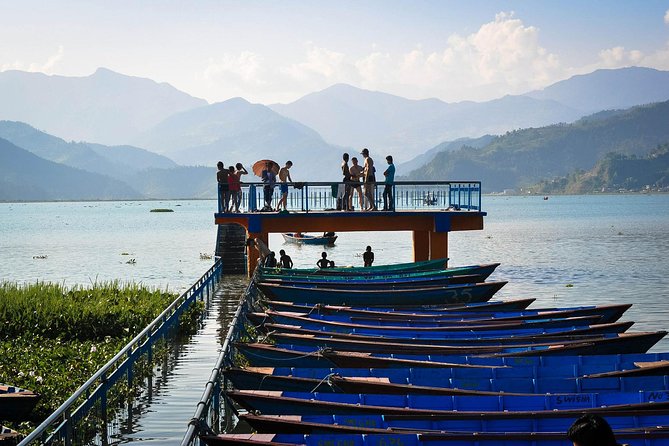
Pokhara is a useful pause before the trek. It is known for views of Annapurna, Machhapuchhare, Dhaulagiri, Lamjung Himal, and Manaslu, although mountain visibility depends on the weather. You spend two nights in Pokhara during the overall program, with breakfast included at the three-star hotel.
The return to Kathmandu is also by road on day nine. If you want more time in Nepal, the program identifies Chitwan, rafting, shopping, and mountain biking as possible extensions, but these are not included in the price.
Day four: Nayapul to Tikhedhunga
The walking portion begins after a private vehicle takes you from Pokhara to Nayapul. From there, you walk beside the Modi Khola for about 15 minutes before reaching Birethanti at 1,015 meters.
Birethanti is a useful early stop, with shops and teahouses. The route then follows the north bank of the Bhurungdi Khola, climbing steadily through the valley toward Hille at 1,495 meters and Tikhedhunga at 1,570 meters.
This is described as a short and easy walking day, which is helpful after the long road journey and before the harder climb. Still, you should use it to settle into the rhythm of walking, eating, and resting in mountain lodges.
Same trailhead, a longer or shorter day out:
- Everest Base Camp Trek – 14 Days
★ 5.0 · 1,499 reviews - Everest Base Camp Trek
★ 5.0 · 842 reviews - Everest Base Camp Trekking
★ 5.0 · 485 reviews - Annapurna Circuit Trek with Tilicho Lake
★ 5.0 · 368 reviews
Day five: the hard climb to Ghorepani
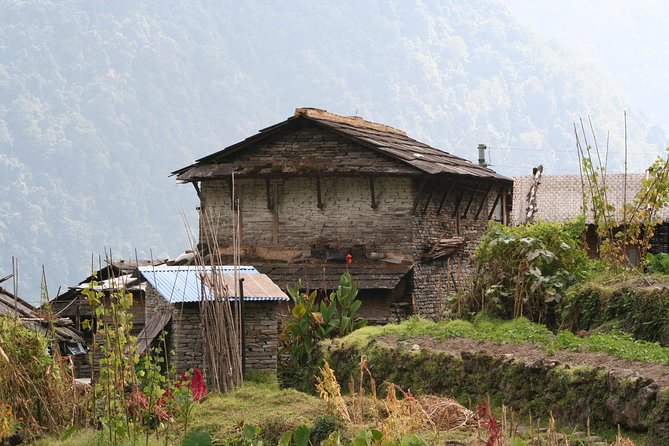
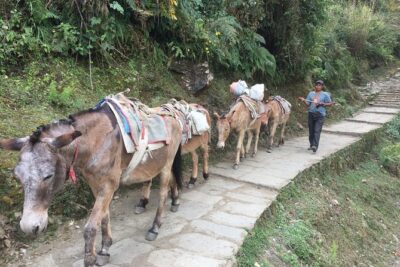
The route becomes more demanding on the way to Ghorepani. You climb steeply to Ulleri, a large Magar village at 2,070 meters. This is the section most likely to challenge your legs, especially if you are new to extended uphill walking.
After Ulleri, the ascent becomes gentler. The path passes through oak and rhododendron forests toward Banthanti at 2,250 meters, then continues to Nangethanti at 2,460 meters. The final approach reaches Ghorepani at 2,840 meters.
Ghorepani is the base for the signature Poon Hill morning. The altitude is high enough that pacing matters. Walk slowly, drink regularly, and do not treat the afternoon as a chance to prove anything. Your guide can help you judge the pace.
Day six: sunrise at Poon Hill and the route to Tadapani
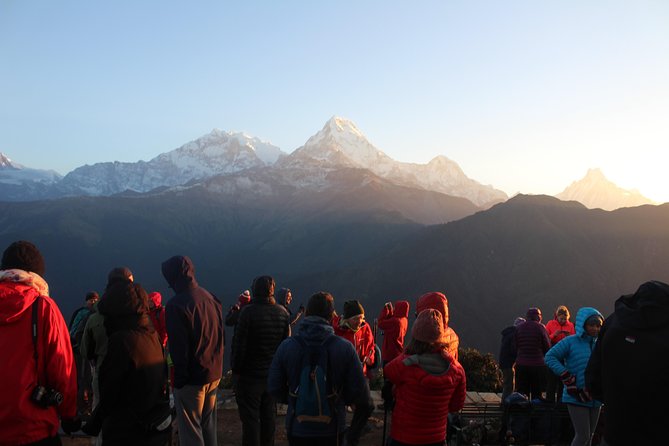
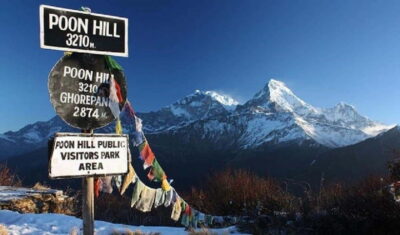
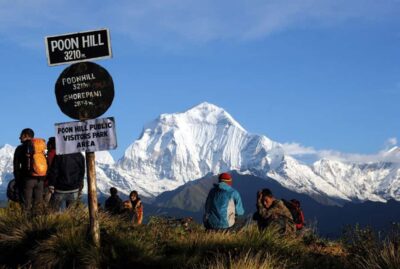
The Poon Hill morning starts early, usually before dawn. From Ghorepani, you walk for about an hour to the viewpoint at 3,210 meters, where you wait for sunrise over the Himalayan peaks.
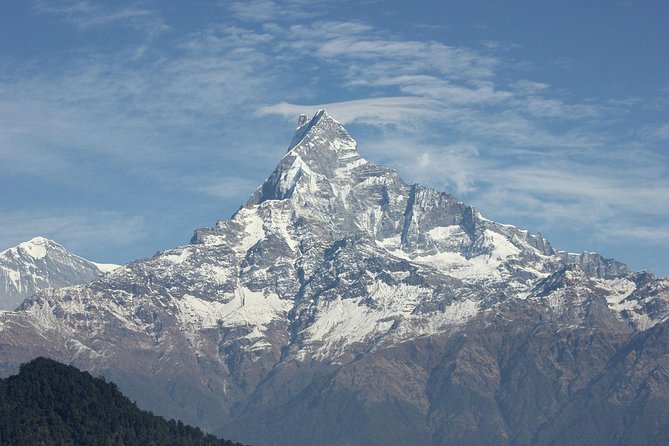
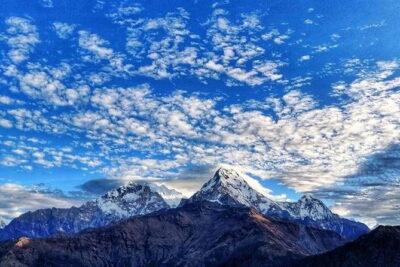
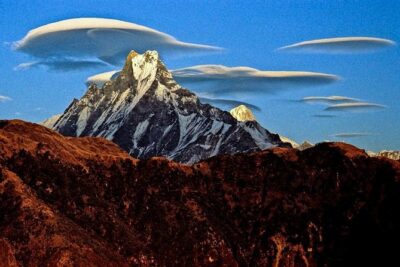
The appeal is the open view. From the high point, the route gives you broad mountain scenery rather than only occasional glimpses through trees. The Annapurna range and Machhapuchhare are central to the experience, and clear weather determines how much you see.
You spend about an hour at the viewpoint before returning to Ghorepani for a hot breakfast. That return matters because the day is not finished. After breakfast, you climb along ridges through pine and rhododendron forest toward Deurali at 2,960 meters.
From Deurali, the route descends to Banthanti and then turns toward Tadapani. This is a full walking day with an early start, so the sunrise comes with a cost: less sleep and more miles on already tired legs.
The early hour is worth taking seriously. Bring warm clothing for the viewpoint, and keep your headlamp ready. The provided information does not specify personal equipment, so you need to bring or arrange suitable trekking gear yourself.
Day seven: Ghandruk and Gurung culture
From Tadapani, the path descends through forest to Ghandruk, a well-known Gurung village. Gurung communities have their own dialect, clothing, customs, and way of life, giving the trek a strong cultural side as well as a mountain focus.
Ghandruk is also connected with Gurkha soldiers. You have the afternoon to visit the Annapurna Conservation Office and museums, then walk around the village.
I like this slower afternoon because it prevents the trek from becoming only a sequence of viewpoints. Ghandruk gives you time to notice the settlement itself, learn about local life, and recover after the early start at Poon Hill.
The descent from Tadapani may feel easier than the climb to Ghorepani, but downhill walking can still work your knees. Trekking poles may help, though personal equipment is not included and must be supplied by you.
Day eight: back to Nayapul and Pokhara
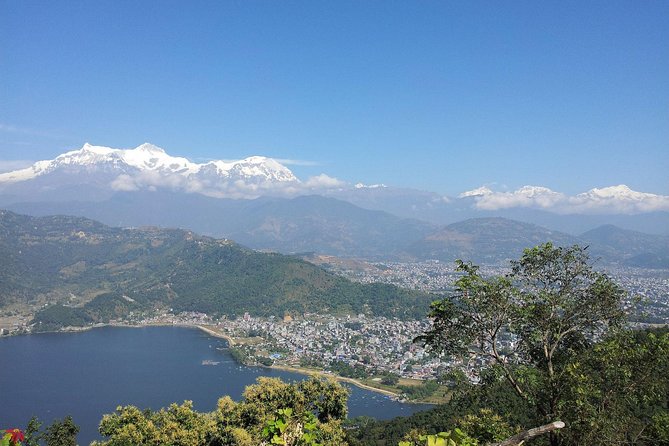
The final walking day takes you back to Nayapul, followed by a short private drive to Pokhara. The schedule leaves the afternoon free for rest and a walk beside the lake.
This is a useful buffer. After several days on foot, you can enjoy Pokhara without another major sightseeing obligation. Lunch and dinner in Pokhara are not included, so budget separately for these meals.
The route ends at Nayapul rather than at a remote mountain settlement, which keeps the final transfer relatively simple. You do not need to organize this road connection yourself because the private vehicle is included.
What the $1,172.27 price covers
The cost makes more sense once you separate included services from personal spending. You receive three nights in a three-star hotel in Kathmandu, two nights in Pokhara, and four nights in trek accommodation. Breakfast is included for nine meals, along with six lunches and six dinners.
During the trek, lodging is mostly twin-share and may occasionally be dormitory-style. Do not expect city-hotel privacy in every mountain stop. The comfort level is practical and tied to the route.
The package also covers:
- Private airport and hotel transfers
- Tourist bus transport between Kathmandu and Pokhara
- Private vehicle transport between Pokhara and Nayapul
- An English-speaking licensed trekking guide
- One porter for every two people
- Annapurna Conservation Area and TIMS permits
- Staff food, accommodation, salary, insurance, equipment, and medicine
- Kathmandu Valley sightseeing and monument entrance fees
- A duffel or kit bag and sun hat to keep
- Government taxes and service charges
This is a strong list of inclusions for a guided Nepal trek. You still pay for international flights, the Nepal entry visa, travel insurance, drinks, personal trekking equipment, meals in Kathmandu and Pokhara, tips, and other personal expenses.
Travel insurance is especially important because it must cover emergency rescue and evacuation. That is not included in the tour price.
Guides, porters, and the value of support
The most praised part of the experience is the staff. Specific guides including Sushanta, Janardan, Shyam, Raj, Ishwar, and Baburam were singled out for being attentive, kind, flexible, and encouraging. Porters named Posan, Babu, Limbhu, Indra, RJ, and others were also praised for making the trek easier.
The porter arrangement is one porter for two people, which reduces the weight you carry. You should still pack carefully and keep your day-to-day essentials in your own small bag.
Flexibility seems to be a real strength. Some groups completed the route in four or five days by joining walking days together, while the standard program allows more downtime. Do not assume that a shorter version is automatic. Discuss it with your guide, especially since the published trip lasts about 10 days overall.
The maximum group size is 15 people. That is small enough for a guide to keep an eye on the group, though the exact number on your departure is not stated.
Food, lodging, and what to pack
Meals during the trek are partly covered, with six lunches and six dinners included. Alcoholic drinks and hot and cold drinks are extra. The supplied information does not provide a fixed menu, so you should expect mountain guesthouse food rather than a restaurant program.
Lodging is similarly straightforward. Four trekking nights are in guesthouses, mostly in twin rooms and sometimes in dormitories. The city hotels are three-star properties, but the specific hotel names are not provided.
Personal trekking equipment is not included. You need to plan for the walking conditions, the cold early morning at Poon Hill, and changing weather. The operator supplies a duffel or kit bag and sun hat, but the rest of your gear is your responsibility.
The official fitness level is moderate. I would take that seriously rather than reading it as a promise of an easy holiday. The steep Ulleri climb, the altitude at Ghorepani and Poon Hill, and the long sunrise day are the main physical demands.
Practical booking details
Pickup is offered, and the meeting time is listed as 8:00 am, although the airport arrival and day three transport have their own stated times. Confirm the exact pickup details before departure.
The experience is confirmed at booking, and service animals are allowed. It requires good weather, so a cancellation caused by poor conditions can lead to a different date or a full refund.
You can cancel for a full refund up to 24 hours before the start time. Changes or cancellations made less than 24 hours before the start time are not accepted for a refund.
FAQ
How long is the Poon Hill Trek?
The full program lasts approximately 10 days, including arrival and departure in Kathmandu, sightseeing, transport to and from Pokhara, and the trekking section.
Where does the trek start and finish?
The walking route begins at Nayapul after a private drive from Pokhara and ends at Nayapul. You then return to Pokhara before traveling back to Kathmandu.
Is the trek suitable for beginners?
The stated requirement is a moderate physical fitness level. The route is often presented as accessible, but you should be ready for steep walking, particularly the climb to Ulleri and the early ascent to Poon Hill.
What accommodation is included?
You receive twin-share rooms in three-star hotels in Kathmandu and Pokhara. During the trek, accommodation is in guesthouses, mostly twin-share and occasionally dormitory-style.
Are meals included?
Breakfast is included nine times, while six lunches and six dinners are included. Lunch and dinner in Kathmandu and Pokhara, drinks, and personal expenses are not included.
Is travel insurance included?
No. You must arrange your own travel insurance, and it should cover emergency rescue and evacuation.
Should you book this Poon Hill Trek?
I would recommend it if you want a well-supported introduction to the Annapurna region, especially if you value organized transfers, a porter, included permits, and a guide who can adjust the pace. The route offers a lot in a short time: Kathmandu’s major religious sites, Pokhara, mountain forests, Magar and Gurung villages, and the sunrise from Poon Hill.
I would hesitate only if you want a fully private trek with hotel-style comfort every night, or if steep uphill walking is a serious concern. You should also budget for gear, insurance, tips, drinks, visas, and city meals.
For the right person, this is a practical first Himalayan trek. The sunrise is the headline, but the real pleasure is the steady change from valley roads to forest paths, high ridges, and village life under the Annapurnas.
Recently added around Kathmandu
- Ghorepani Poon Hill Trek★ 5.0 · 16 reviews
- Private Manaslu Circuit Trek at Himalayas★ 5.0 · 3 reviews
- Amazing 1 Day Trekking Experience in Kathmandu Nepal★ 5.0 · 24 reviews
- Ghorepani Poonhill Trek★ 5.0 · 5 reviews
- Upper Mustang Trekking★ 5.0 · 2 reviews
- Upper Mustang Trekking★ 3.0 · 2 reviews
- Upper Mustang Trekking★ 5.0 · 4 reviews
- Upper Mustang Trek★ 5.0 · 5 reviews
Poon Hill Treks, compared.
4-Day Ghorepani, Poonhill & Ghandruk Mountain Trek
Read our review →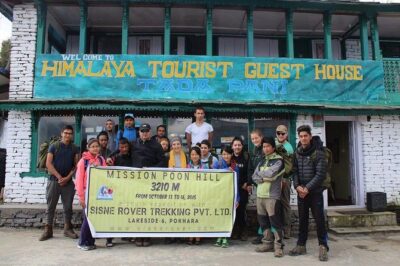
Browse the lists this tour appears in