
REVIEW · KATHMANDU
Poon Hill Trek
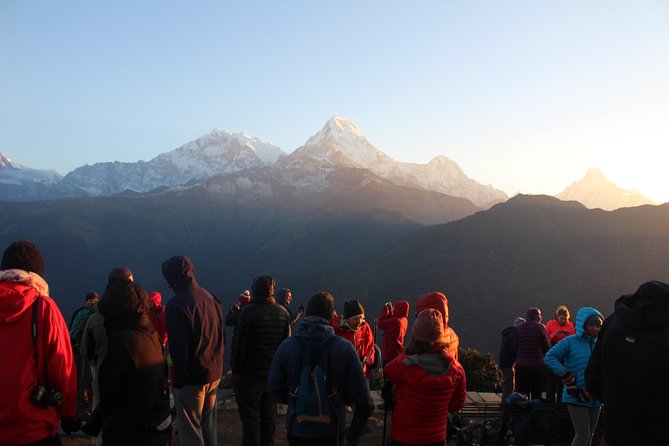
Sunrise turns the Himalayas gold. The Poon Hill Trek pairs a famous dawn viewpoint with Gurung and Pun villages, rhododendron forests, and wide views of Dhaulagiri and Annapurna. I like the strong value at $450 per person, especially with transport, meals, permits, lodging, guide, and porter support included. I also like the private format, which lets your group move at its own pace.
The main caution is the itinerary itself. It is sold as a seven-day trip, but the walking portion is described in places as four days, and the Day 3 and Day 4 descriptions overlap around Hile and Ulleri. You should confirm the exact walking plan before arrival. The route is family-friendly in principle, but steep stone steps and long drives still demand patience.
What makes this trek worth considering
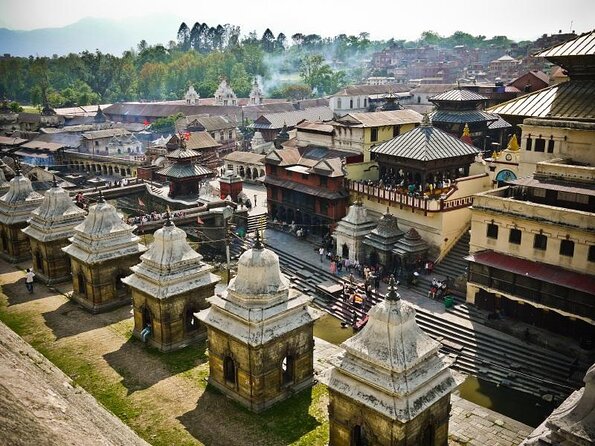
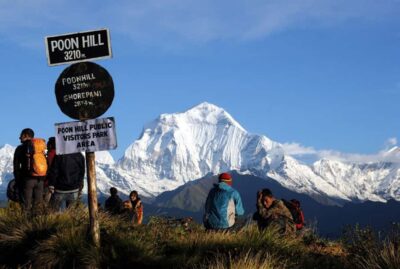
- Poon Hill sunrise: Reach the viewpoint early for views of Dhaulagiri I, Annapurna I, and Manaslu.
- Two peaks above 8,000 meters: The route gives you views of Dhaulagiri at 8,167 meters and Annapurna I at 8,091 meters.
- A private seven-day plan: Only your own group takes part, with a licensed English-speaking guide.
- Full trekking support: One porter is provided for every two people, with a duffle bag available if needed.
- Forest and village walking: Expect rhododendron and magnolia woods, meadows, local villages, and mountain scenery.
- Good family potential: Families with young children have completed versions of this trek, but the stairs should not be underestimated.
Why Poon Hill works for a short Nepal trek
Poon Hill is a practical choice if you want a Himalayan experience without committing to a long, high-altitude expedition. The route reaches its main viewpoint at about 3,210 meters, though that elevation is not provided in the tour details themselves. What is clear is the shape of the trip: several days of road travel and walking, a pre-dawn climb for sunrise, then a return through Ghandruk and Pokhara.
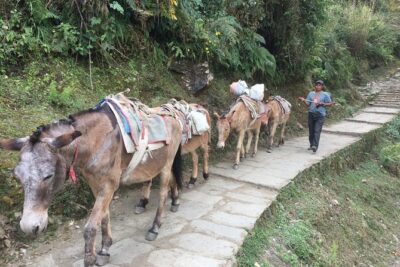
I like this balance. You get mountain views, forest trails, village life, and teahouse stays without spending weeks away from cities. The route also gives you a proper taste of trekking in Nepal. You will walk uphill, climb many stone steps, sleep in basic guesthouses, and depend on your guide and porters for the rhythm of the day.
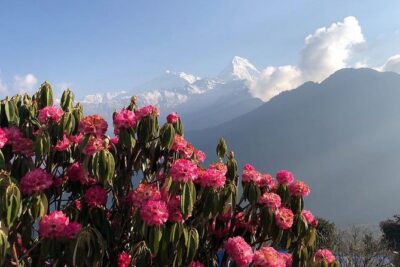
The best reason to choose this tour is the range of scenery packed into a short trip. The route passes through countryside, meadows, forests, and villages. In flowering season, magnolia and rhododendron trees add color and scent to the walk. If you are lucky, you might spot a Nepal grey langur moving through the treetops.
The price is another strong point. At $450, the package includes private ground transport, trekking meals, accommodation, permits, a guide, porter service, and staff costs. You still pay for a Nepal visa, personal drinks, hot showers, battery charging, laundry, trekking clothing, travel insurance, and tips. Even with those extras, the price gives you a clear package rather than leaving every major cost to be settled along the way.
More Poon Hill Treks in Kathmandu
- 4 Days Poon Hill Trek
★ 5.0 · 94 reviews - Ghorepani(Poonhill Trek)
★ 5.0 · 81 reviews - 4-day Poon Hill Trek
★ 5.0 · 74 reviews
Day 1: Airport pickup and a useful briefing
Your trip begins at Tribhuvan International Airport in Kathmandu, with a listed start time of 7:15 am. A private vehicle takes you to your hotel, followed by a trek briefing.
This first day is important because the route details need clarification. Ask your guide to explain the exact walking days, expected walking hours, road transfers, and accommodation stops. The supplied schedule describes the route in slightly different ways, so a clear briefing will help you know what comes next.
The briefing is also your chance to check your equipment and ask about the duffle bag. Personal trekking gear is not included, so you should arrive ready with suitable clothing and footwear. The operator provides a first aid box, but your own travel insurance remains mandatory in case of an emergency.
Day 2: The long road from Kathmandu to Pokhara
The drive to Pokhara takes about eight to nine hours, with the itinerary also listing a total day length of around ten hours. That is a full day in a vehicle, not a gentle transfer.
The payoff is the changing view along the road. You can see mountain ranges and countryside on the way, then enjoy more mountain views from Pokhara. Since the transfer is by tourist bus, you should think of this day as part of the Nepal experience rather than a quick connection.
I would not choose this trip expecting daily hiking from the moment you land. The road journey takes time, and traffic or road conditions can affect the schedule. Still, including the tourist bus from Pokhara to Kathmandu in the package keeps the cost manageable and removes the need to arrange a separate return connection.
Lunch and dinner in Pokhara are not included, so budget for your own city meals. The same applies to food in Kathmandu.
Day 3: Hile, the trailhead, and the first serious climb
The next transfer takes you toward Hile, described as the starting point for the walk. The drive takes about three to four hours. After lunch, you begin trekking through countryside, meadows, jungle, and local villages.
This is where the trip changes character. You leave the road behind and settle into the steady pace of a Himalayan trail. The day includes many stairs, so do not treat the word short trek as a promise of an easy stroll.
The route gives you a close look at daily life in the hills. You pass through settlements linked with Gurung and Pun culture, rather than simply viewing the mountains from a vehicle. That human side is one of the trip’s best features. Your guide can help explain the places and people you meet, though the exact cultural program is not specified.
The itinerary lists roughly eight hours for this day. That figure likely includes the road transfer, lunch, and walking, but you should ask how much time you will spend on foot. For families, this is a useful point to settle before committing.
Same trailhead, a longer or shorter day out:
- Everest Base Camp Trek – 14 Days
★ 5.0 · 1,499 reviews - Everest Base Camp Trek
★ 5.0 · 842 reviews - Everest Base Camp Trekking
★ 5.0 · 485 reviews - Annapurna Circuit Trek with Tilicho Lake
★ 5.0 · 368 reviews
Day 4: Ulleri Stairs through magnolia and rhododendron
The schedule describes another demanding day of climbing, known locally as the Ulleri Stairs. The trail rises through magnolia and rhododendron forests, with especially good scenery during the flowering season.
This is one of the most memorable parts of the route, but also one of the clearest tests of fitness. Stone steps can feel harder than a gradual trail, especially after the previous day’s walking. You can expect your legs to work, and your pace should be set by the slowest person in your group.
Keep your eyes open in the trees. Nepal grey langurs may appear overhead, moving between branches and calling to one another. The forest gives you shade and variety, but it also hides the larger mountain views at times. That is part of the route’s rhythm: close forest one moment, open mountain views the next.
There is a scheduling issue here. The Day 3 description already mentions Hile, lunch, and a stair-heavy first trekking day, while Day 4 describes the Ulleri Stairs again. It may simply reflect different versions of the route, but I would ask the operator for the confirmed overnight stops and walking distances.
Day 5: Poon Hill before breakfast
The central event comes early on Day 5. You head to Poon Hill before breakfast to watch the sunrise spread across the Himalayan peaks.
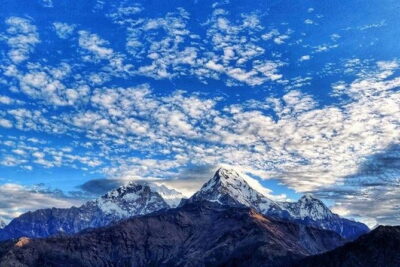
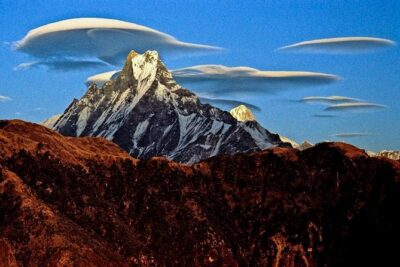
The view is the reason most people choose this route. You may see Dhaulagiri I, Annapurna I, and Manaslu, along with a broad sweep of mountain ridges. The tour also describes views toward the Kali Gandaki Gorge and the trans-Himalayan ranges that mark the visual border between Nepal and Tibet.
The sunrise timing means an early start, cold conditions, and a climb before you have eaten. Bring warm layers and keep your camera ready, but do not let photography turn the viewpoint into a frantic equipment stop. The light changes quickly.
After returning to the lodge for a late breakfast, you continue toward Tadapani. This section is not a simple downhill walk. The trail has repeated climbs and descents, so the day can feel tougher than its distance suggests.
The forest remains a major attraction. Flowering trees surround the path, and the route gives you a softer setting after the exposed effort of the sunrise viewpoint. You should also expect the day to feel long because it combines the early climb, breakfast break, and a hilly trek afterward.
Day 6: Down to Ghandruk, then back to Pokhara
The route descends to Ghandruk before a drive to Pokhara. Ghandruk is one of the named village stops, giving you another chance to see local life and mountain communities before leaving the trail.
The descent may sound easier than the climb, but downhill steps can be hard on knees. Trekking poles can help, though personal equipment is not supplied. Ask your guide about the pace and any changes caused by weather or trail conditions.
Once you reach Pokhara, the trekking portion is over. The package includes accommodation during the trekking days, but it does not clearly state whether your Pokhara hotel is included on this night. Confirm that detail before booking, along with the exact hotel arrangements in Kathmandu and Pokhara.
Day 7: Returning to Kathmandu by tourist bus
The final day is the return drive to Kathmandu. The package includes a tourist bus transfer for you and your guide.
This is another long road day, so leave room in your schedule rather than booking an immediate flight after arrival. The trip description does not provide a precise travel time for this return, and road conditions can affect the journey.
The transfer is practical rather than luxurious. A private vehicle is listed for the airport and other stated land movements, but the Kathmandu to Pokhara and Pokhara to Kathmandu sections use tourist buses. That mix keeps the price reasonable while still covering the main route.
What the $450 price really covers
The strongest value comes from the number of essential services bundled into the price. You receive:
- Private transportation where specified in the itinerary
- Airport pickup by private vehicle
- Tourist bus transfers between Kathmandu and Pokhara
- Breakfast, lunch, and dinner during trekking days
- Guesthouse accommodation during trekking days
- A licensed English-speaking guide
- One porter for every two people
- Annapurna Conservation Area permits
- Nepali staff wages and food
- Guide and porter insurance
- A first aid box
- Seasonal fruit when available
- A duffle bag if you need one
That is a solid package for a private trek. The food arrangement is especially useful because village lodges offer limited choices, and you do not need to negotiate each trekking meal separately.
The exclusions are worth reading carefully. Drinks, bar bills, hot showers, phone calls, battery charging, laundry, donations, monument fees, and personal expenses come out of your pocket. Tips are not compulsory, but they are highly expected, so include them in your budget.
A Nepal entry visa is listed at $40. You also need personal travel insurance. This is not a place to cut costs, since the route includes remote walking and road transfers.
Guides, porters, and the private format
The tour provides a fluent English-speaking, licensed guide and one porter for every two people. That ratio is useful because you can carry a light daypack while the porter handles the larger load.
The names connected with past trips include Shree Ram, Sheeram, Ashish, Abishek, Bimal, Pratap, Ashok, Kul, Nabaraj, and Ashuk. Shree Ram, also written as Sheeram in the supplied material, appears to have helped with planning and family arrangements. Ashish is noted for adjusting plans around weather and group needs, while Abishek is praised for close attention to safety and support on solo trips.
Do not assume a particular guide will be assigned to you. Instead, ask who will lead your group and how many people the guide normally handles. The private format means only your group participates, which is helpful for families, couples, and first-time trekkers who may need frequent breaks.
The available rating is five out of five from 15 ratings, with 100 percent recommending the experience. That is a strong signal for service quality, especially since the praise centers on guide care, planning, porters, and help with changing conditions. It does not remove the need to check the itinerary details.
Is this suitable for children and first-time trekkers?
The route is described as suitable for all types of trekkers and family holidays. Families have completed four- and five-day versions with children as young as three and a half, four, and eight.
That is encouraging, but it should not be read as a promise that every child will find the trek easy. The Ulleri Stairs, early sunrise start, long road transfers, and repeated uphill sections require patience. A private group helps because you can stop and adjust the pace more easily than in a large fixed group.
First-time trekkers also receive useful support from the guide and porters. The trip includes a briefing, full-board trekking meals, accommodation, permits, and a first aid box. Still, you need suitable clothing, walking gear, travel insurance, and enough fitness for long days on uneven steps.
Solo trekkers can also book the private trip, but the price is stated per person and the porter arrangement is based on two people sharing one porter. Confirm how the staffing and cost work for a solo booking.
Practical cautions before you book
The biggest issue is not the scenery. It is clarity. Ask for a day-by-day version showing:
- Exact trekking start and finish points
- Overnight villages
- Walking hours for each day
- The confirmed treatment of Hile and Ulleri
- Accommodation in Kathmandu, Pokhara, and the trekking villages
- The exact Pokhara to Kathmandu bus arrangements
- What happens if weather affects the sunrise walk
The experience requires good weather. If the operator cancels because of poor conditions, you can choose a different date or receive a full refund. If the minimum number of participants is not met, the same choice applies.
You can cancel for a full refund up to 24 hours before the start time. Cancellations or changes within 24 hours are not refunded or accepted. The cut-off uses local Nepal time.
Should you book the Poon Hill Trek?
I would choose this trip if you want a compact Himalayan trek with strong support and a clear focus on sunrise views. The combination of Poon Hill, Dhaulagiri, Annapurna, village trails, flowering forest, meals, porters, and permits gives you a lot for $450.
I would be more cautious if you dislike long bus journeys, steep stone steps, or basic trekking accommodation. I would also confirm the schedule before paying, since the seven-day plan and the four-day walking description do not line up perfectly.
For families and first-time trekkers, the private arrangement and attentive guide service are major advantages. For experienced hikers, the route may feel short, but the sunrise, forests, and village sections still make it a worthwhile introduction to the Annapurna area. Book it if you want a supported, moderately demanding trek and are willing to accept a few long travel days.
FAQ
How long does the Poon Hill Trek take?
The full experience lasts approximately seven days, beginning with airport pickup in Kathmandu and ending with the return drive from Pokhara. The walking portion is described in some places as four days.
What time does the tour start?
The listed meeting point is Tribhuvan International Airport in Kathmandu, with a start time of 7:15 am.
Is airport pickup included?
Yes. Airport pickup and transfer to your Kathmandu hotel by private vehicle are included.
Are meals included?
Breakfast, lunch, and dinner are included during the trekking days. Lunch and dinner in Kathmandu and Pokhara are not included.
Is accommodation included?
Guesthouse accommodation is included during the trekking days. The supplied details do not clearly specify all Kathmandu and Pokhara hotel arrangements, so confirm those before booking.
Is a guide and porter included?
Yes. The trek includes a licensed English-speaking guide and one porter for every two people. A duffle bag is available if you need one.
What happens if bad weather cancels the trek?
If poor weather causes the experience to be canceled, you can choose another date or receive a full refund. You can also receive a full refund if you cancel at least 24 hours before the start time.
Recently added around Kathmandu
- Ghorepani Poon Hill Trek★ 5.0 · 16 reviews
- Private Manaslu Circuit Trek at Himalayas★ 5.0 · 3 reviews
- Amazing 1 Day Trekking Experience in Kathmandu Nepal★ 5.0 · 24 reviews
- Upper Mustang Trekking★ 5.0 · 2 reviews
- Ghorepani Poonhill Trek★ 5.0 · 5 reviews
- Upper Mustang Trekking★ 3.0 · 2 reviews
- Upper Mustang Trekking★ 5.0 · 4 reviews
- Upper Mustang Trek★ 5.0 · 5 reviews
Poon Hill Treks, compared.
4-Day Ghorepani, Poonhill & Ghandruk Mountain Trek
Read our review →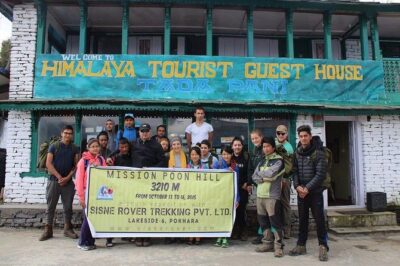
Browse the lists this tour appears in