
REVIEW · KATHMANDU
Manaslu circuit trek and side trips
The mountains arrive one village at a time. This 12-day Manaslu Circuit Trek follows a quieter Himalayan route around 8,163-meter Manaslu, with Tibetan-influenced villages and forests of pine, bamboo, and rhododendron. I like the gradual change from river valleys to high glacier country, and I like the chance to spend a full acclimatization day in Samagaun. The main drawback is the demanding transport and walking schedule, especially the long first and final road journeys.
I also like that this is a private trip rather than a large group departure. Past guests praised the organization by Hari, Bimal, and Bikash, along with quick answers before departure and careful support on the trail. Still, you should clarify the inclusions before paying: the details say food, accommodation, and insurance are included, then separately list food, teahouse lodging, and insurance as excluded.
Key points at a glance
- A restricted Himalayan route: Manaslu opened to trekkers only in 1991, helping preserve its distinct village culture and quieter trails.
- A real acclimatization day: Day 7 in Samagaun allows time for Pung-gyen Gompa and local exploration before the highest section.
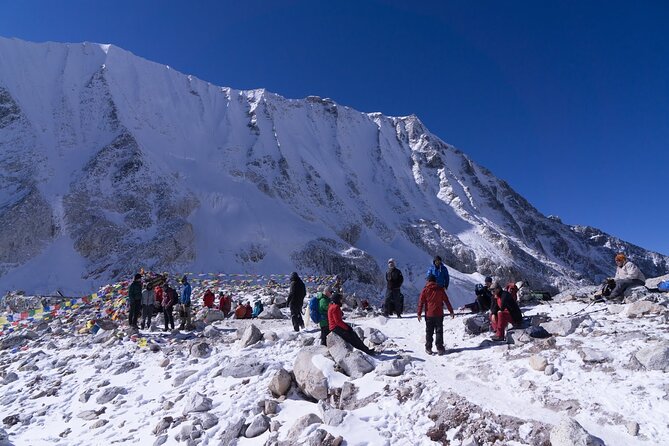
- Larkya La is the big test: The pass brings views of Himlung Himal, Cheo Himal, Kang Guru, and Annapurna II, but the approach is steep and demanding.
- Road travel is part of the package: The journey begins with a long drive to Machhakhola and ends with shared jeep and bus travel through Besisahar.
- A strong cultural route: Prayer flags, Mani walls, chortens, monasteries, stone houses, and Tibetan-style villages give the trek its character.
- The $600 price needs checking: It can be good value if permits, guide costs, transport, food, and lodging are covered, but the published inclusions conflict.
Why the Manaslu Circuit feels different
The Manaslu Circuit is not simply a mountain walk with a famous summit in the distance. It is a long passage through changing communities, climates, and elevations. You begin beside the Budhi Gandaki River, where suspension bridges, terraced farms, and hot springs shape the day. Farther north, the valley tightens and the villages take on a stronger Tibetan character.
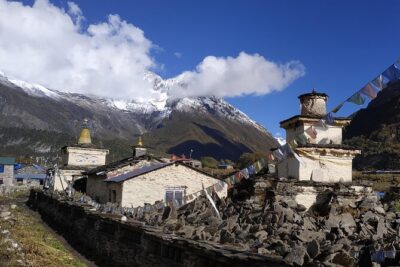
The route opened to trekkers in 1991, and that relatively late opening matters. The area has kept a more separate identity than Nepal’s busiest trekking corridors. You will see prayer flags, painted chortens, Mani walls, monasteries, and stone homes rather than a continuous chain of large tourist facilities.
I especially like the balance between nature and village life. The scenery includes bamboo forests, pine and birch woods, roaring rivers, glacier views, and open yak pastures. At the same time, stops such as Prok, Lho, Samagaun, and Samdo give the walk a human scale.
The price is listed at $600 per person. That is attractive for a guided 12-day Himalayan trek, but only if the final package really includes the items described as included. The information names a guide, food, accommodation, insurance, public transport, and conservation permits as part of the trip. It also says food and beverages, travel insurance, teahouse fees, and porter service are not included.
That is not a small detail. Ask for a written breakdown of what the $600 covers, especially lodging, meals, permits, and insurance. If the price covers the guide, public transport, and restricted-area permits but not teahouses or meals, the actual cost will be higher.
More Manaslu Treks in Kathmandu:
- Manaslu Circuit Trek
★ 5.0 · 292 reviews - Manaslu Circuit Trek:
★ 5.0 · 106 reviews - Manaslu Circuit Trek (15 Days)
★ 5.0 · 50 reviews
Day 1: The long road to Machhakhola
Your trip starts at Hotel Moonlight on Paknajol Marg in Kathmandu at 7:15 am. The drive toward Machhakhola takes roughly eight hours in the main description, though the day is presented as a very long travel day overall.
The road is paved from Kathmandu to Dhading Bensi. After that, about 30 kilometers become partly bumpy dirt road. You will pass farms, villages, hills, and changing mountain scenery, but the final section can be tiring after an early start.
This is not a glamorous transfer. It is useful to think of it as part of the adventure rather than dead time. Public deluxe buses and jeeps are used, and the road carries you to the actual trailhead. If you prefer a smooth, short approach to a trek, this route may test your patience before your boots even get dirty.
Day 2: Bridges, hot springs, and Jagat
The walk toward Jagat introduces the character of the Manaslu route. The trail rises and falls over rocky ground, crosses streams, and passes through ravines.
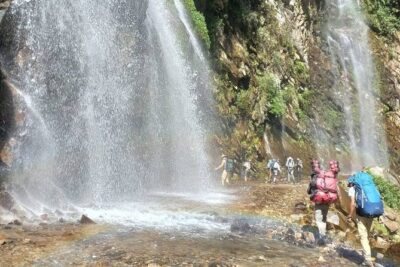
At Tatopani, you reach a small hot spring. Later, a suspension bridge leads to the eastern bank, followed by a wide staircase climbing toward Dobhan. The trail then becomes steeper and rougher, with landslip areas and another suspension bridge over the Yaru Khola.
You finish with more stairs toward Thado Bharyang, cross to the western side of the Budhi Gandaki, and climb to Jagat. This is a good example of the trek’s rhythm: water crossings, stone steps, forest, and village paths rather than one steady uphill grade.
The day is physically serious. The listed timing repeatedly says 15 hours, which is almost certainly a formatting or itinerary error if understood as walking time. You should ask the operator for realistic daily walking hours before departure.
Day 3: From Philim toward Deng and Ghap
The trail climbs a rocky ridge to Salleri, drops to Setibas, and follows the Ghatta Khola toward Philim, a Gurung village. Millet fields add a cultivated patch to the route before the path narrows into a steep, empty gorge.
Bamboo forest then closes in around the trail. After crossing the Deng Khola, you reach Deng, a small settlement where you spend the night according to the description.
The day heading names Ghap, but the route text describes Deng. That mismatch is worth confirming with the operator. It may reflect a changing overnight plan, but you should know where you are meant to sleep and how far you are expected to walk.
A few more treks around Kathmandu worth a look
- Everest Base Camp Trek – 14 Days
★ 5.0 · 1,499 reviews - Everest Base Camp Trek
★ 5.0 · 842 reviews - Everest Base Camp Trekking
★ 5.0 · 485 reviews - Annapurna Circuit Trek with Tilicho Lake
★ 5.0 · 368 reviews
Day 4: Ghap, Prok, and the road to Namrung
From Deng, you cross the Budhi Gandaki and climb toward Rana. The route continues west through the river valley, crossing streams and entering the Sringi Valley.
Forests and Mani walls lead toward Ghap. You may also take a side trip to the Tibetan gompas at Prok. This is one of the more appealing optional additions because it gives the day a cultural focus rather than making every hour about distance and elevation.
The heading lists Namrung, while the detailed route describes an overnight at Ghap. Again, confirm the actual schedule. Ghap and Namrung are not interchangeable stops when you are planning daily effort, food, and lodging.
Day 5: Namrung, Lho, and the first grand views
The path climbs through dense pine and birch forest, crossing a river that roars through a narrow gorge. You pass Namrung and continue toward Lihi, Sho, and Lho, with small Tibetan villages appearing among the trees.
A painted chorten welcomes you to Sho, where stone houses create a compact village form. As you gain height, the mountain views grow more dramatic. Manaslu, Manaslu North, Himalchuli, Saula Himal, and Dwijen Himal begin to dominate the horizon.
The heading names Shyala, but the text places the night in Lho. Lho is an important stop and a highlight of the upper route, so this is another itinerary detail to verify. The walk is rewarding, but the rising elevation means you should keep a steady pace and avoid treating the day as a race.
Day 6: Shyala and the broad valley of Samagaun
A steep descent crosses the rock-strewn Thusang Khola. You then climb through fir forest toward Shyala, a village on a plateau with an exceptional mountain setting.
From Shyala, you can look toward Himal Chuli, Peak 29, Manaslu, and Ganesh Himal. The route continues past a large chorten and drops into a smaller hollow where Samagaun begins.
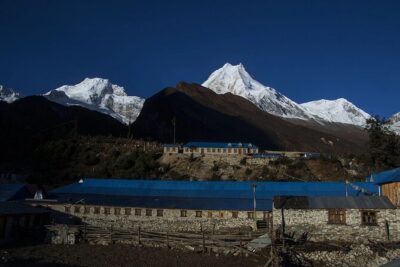
Samagaun is one of the trek’s most important bases. It has a monastery called Sama and offers a change from the tighter river valleys below. The air is thinner here, and the scenery opens wide. You are no longer simply following a river through forest. You are moving into high mountain country.
Day 7: The acclimatization day in Samagaun
A full day in Samagaun is a major strength of this plan. Rather than climbing higher immediately, you can walk to Pung-gyen Gompa, a well-known monastery with views toward the glacier, or spend time seeing village life.
This day matters for more than comfort. It gives your body time to adjust before Samdo, Larkya Phedi, and the pass. The itinerary also leaves room for a slower look at the settlement, its homes, and its religious sites.
The walk to Pung-gyen Gompa is presented as an option, so confirm the exact plan with your guide. Either way, do not treat the day as wasted time. On a high route, rest and measured pacing are part of good planning.
Day 8: Samagaun to Samdo
The trail leaves Samagaun beneath the great Manaslu Glacier. A branch leads toward Manaslu Base Camp, while your route continues toward Larkya La.
You pass Mani walls and enter a valley that gradually widens. Birch, juniper, and rhododendron replace some of the lower forest. After a wooden bridge, the path climbs sharply onto a promontory between two rivers before reaching Samdo.
Samdo feels like a threshold. The route is higher, more exposed, and closer to the pass. The walk is not described as a technical climb, but the steep sections and altitude require care. This is a day for layers, water, and a calm pace.
Day 9: Samdo to Larkya Phedi
You cross a wooden bridge over the Budhi Gandaki and pass several streams. The Larkya Glacier appears across the river, making the scale of the upper valley clear.
The trail steadily climbs around the Sarka Khola to the stone guesthouse at Dharmashala, also called Larkya Phedi. This is the staging point for the pass crossing.
The stop is functional rather than leisurely. You are there to rest before the hardest day. Since the published details do not give exact walking hours, ask your guide how early you will start and what lodging arrangements are confirmed at this high stop.
Day 10: Crossing Larkya La to Bimthang
This is the trek’s main physical challenge and its great payoff. A short initial climb leads to the north side of the Larkya Glacier, where Cho Danda and Larkya Peak come into view.
You cross glacial moraines and climb gradually toward Larkya La. From the pass, the scenery includes Himlung Himal, Cheo Himal, Kang Guru, and Annapurna II. The pass itself is the high point of the circuit, both literally and emotionally.
After enjoying the view, you descend across yak pastures toward Bimthang. Evening mist may settle over the route, giving the final section a different mood from the bright, exposed pass.
Do not underestimate this day. The crossing combines altitude, uneven ground, a long ascent, and a substantial descent. A moderate fitness level is required, but you should also be comfortable with repeated steep steps and a full day outdoors.
Day 11: Bimthang, Tilije, and Dharapani
The route drops from Bimthang toward Dharapani, passing through Tilije and along stone-paved village paths. You cross the Dudh Khola, follow the riverbank, and cross another wooden bridge.
A chorten-shaped arch and Mani wall mark the approach to Thonje. From there, the trail continues to Dharapani for the night.
The day heading names Chumchet, but the detailed route clearly describes Dharapani. Confirm this point before booking, since the overnight location affects the next day’s transport plan.
After the pass, this section feels like a return to lower country. The descent brings more village texture and river vegetation, but your legs may be tired from the previous day.
Day 12: Jeep and bus back to Kathmandu or Pokhara
The final transfer begins with a local shared jeep from Dharapani to Besisahar, taking about four to five hours. You then continue by bus along the Prithvi Highway.
The trip can end in Kathmandu or Pokhara. The drive to Pokhara takes about five to six hours, while Kathmandu takes about seven to eight hours. Along the way, you pass green hills, farms, terraces, villages, and the banks of the Marsyangdi and Trishuli rivers.
The final day is not a quick airport transfer. It is another full travel day, and road conditions can shape the timing. If you have an international flight soon after the trek, allow plenty of extra time.
What the $600 price really means
At $600, this trek looks appealing for anyone seeking a guided Manaslu Circuit without a large group. A private departure lets your own group participate, and the stated package includes an English-speaking guide, public transport, and the special permits needed for the restricted Manaslu area and conservation zones.
But the contradictory cost information is the biggest practical concern. One section says food, accommodation, and insurance are included. Another excludes all food and beverages, travel insurance, teahouse accommodation, and porter service.
Before booking, get clear answers to these points:
- Are all teahouse nights included?
- Are breakfast, lunch, and dinner covered?
- Is travel insurance included, or only guide insurance?
- Are the Manaslu restricted-area and conservation permits included?
- Is a porter available, or do you carry your own bag?
- Is the $600 price still valid for your dates and group size?
Past customers praised quick communication from Bikash before departure and organization by Hari and Bimal. That suggests direct questions should be part of your preparation. Get the answers in writing.
Who should book this trek
I would recommend this route to you if you want a quieter Himalayan circuit with strong village culture, changing scenery, and a major high-pass crossing. It suits people with moderate fitness who can handle long walking days, rough paths, stairs, suspension bridges, and altitude.
It is less suitable if you want polished roads, short transfers, luxury lodging, or a simple schedule. The first and final drives are long, the trail can be rough, and the itinerary contains several mismatched stop names that need clarification.
The trek also suits independent-minded people who still want a guide. You get a private group, but the guide remains important for route decisions, permits, pace, and the high pass.
Should you book the Manaslu Circuit Trek?
Book it if the operator confirms the price and inclusions clearly, and if you want a genuine mountain journey rather than a quick sightseeing trip. The combination of Samagaun, Pung-gyen Gompa, Tibetan-style villages, glacier country, and Larkya La gives the 12 days real variety.
I would not pay until the food, lodging, insurance, porter service, exact overnight stops, and daily walking times are settled. Once those points are clear, this is a strong-value private trek for a fit hiker who wants Manaslu’s quieter trails and serious mountain scenery.
Cancellation is allowed for a full refund up to three full days before the local start time. The meeting point is Hotel Moonlight in Kathmandu, and the activity returns to that meeting point after the trek arrangements are complete.
FAQ
How long is the Manaslu Circuit Trek?
The planned duration is approximately 12 days, including the drive from Kathmandu to Machhakhola and the return by jeep and bus from Dharapani.
Where does the trek start?
The meeting point is Hotel Moonlight on Paknajol Marg in Kathmandu. The listed start time is 7:15 am.
Is this a private tour?
Yes. Only your group participates in the activity, rather than joining a larger shared trekking group.
Is a guide included?
The stated package includes one English-speaking trekking guide. The experience is provided by Nepal Trek Ways Pvt. Ltd.
Does the trek include an acclimatization day?
Yes. Day 7 is planned as an acclimatization day in Samagaun, with an optional walk to Pung-gyen Gompa and time to explore the village.
Can the trek end in Pokhara instead of Kathmandu?
Yes. After traveling by jeep to Besisahar, you can continue by bus to either Pokhara or Kathmandu, according to the provided travel plan.
Recently added around Kathmandu
- Ghorepani Poon Hill Trek★ 5.0 · 16 reviews
- Private Manaslu Circuit Trek at Himalayas★ 5.0 · 3 reviews
- Amazing 1 Day Trekking Experience in Kathmandu Nepal★ 5.0 · 24 reviews
- Ghorepani Poonhill Trek★ 5.0 · 5 reviews
- Upper Mustang Trekking★ 5.0 · 2 reviews
- Upper Mustang Trekking★ 3.0 · 2 reviews
- Upper Mustang Trekking★ 5.0 · 4 reviews
- Upper Mustang Trek★ 5.0 · 5 reviews
Manaslu Circuit Treks, compared.
16 Day Private Manaslu Circuit Trek from Kathmandu
Read our review →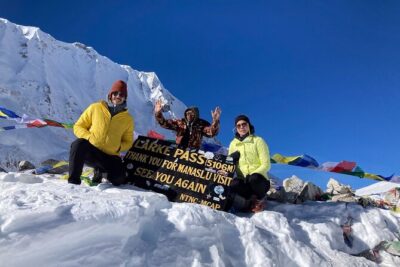
10 Days Manaslu Circuit Trek in Larke La Pass
Read our review →Browse the lists this tour appears in