
REVIEW · KATHMANDU
Manaslu Circuit Trek
The mountains arrive slowly, then all at once. This 17-day Manaslu Circuit Trek takes you from Kathmandu through Gurung villages, forest paths, Buddhist monasteries, high valleys, and the demanding Larkya La Pass. I like the strong mix of scenery and local life, especially the nights in Namrung, Lho, Samagaon, and Samdo. I also like that the price includes permits, meals, lodging, transport, a guide, a porter, sleeping bag, down jacket, and airport transfers.
The main caution is the physical demand. Long walking days, rough trails, repeated uphill and downhill sections, and a pass at high altitude make this a serious trek, not a gentle sightseeing trip. The Kathmandu to Machha Khola drive can also take 8 to 12 hours, depending on the exact road and schedule.
The company has a listed rating of 5 from seven reviews, with repeated praise for careful planning, friendly service, and attentive guides. Guides named in the feedback include Mod, Chirring, and TB. Suman is also singled out for arranging trips around individual needs. That personal attention matters on a trek where weather, fitness, and altitude can change the plan.
Key points to know before booking
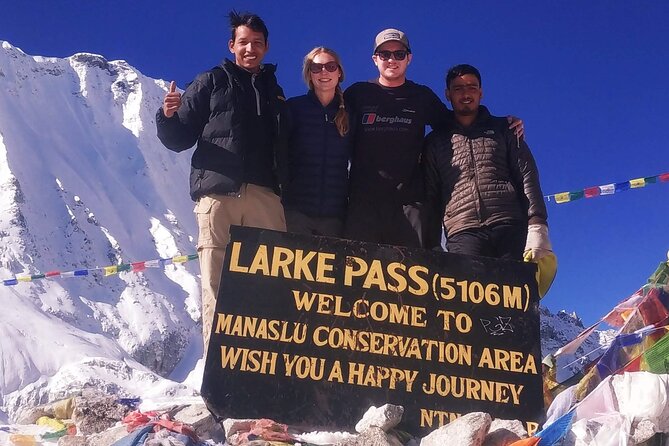
- Larkya La is the big test: The highest point comes on Day 12, followed by a long descent to Bimthang.
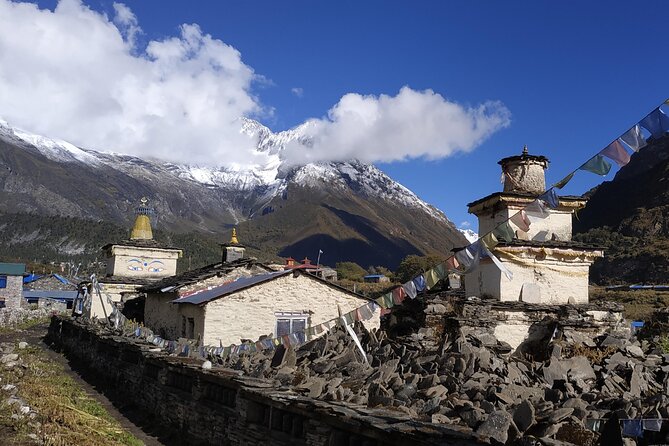
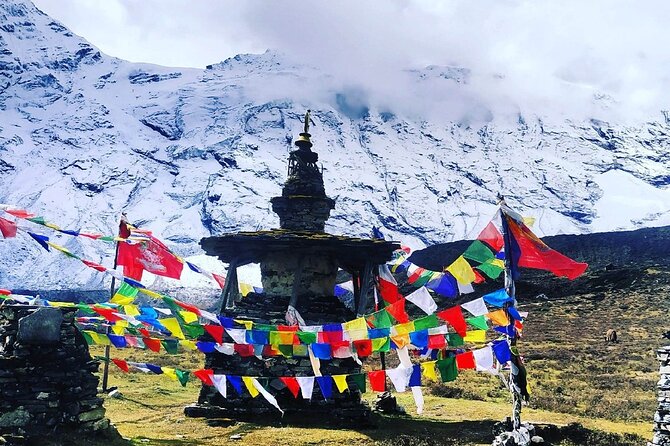
- You get real village life: Gurung communities, mani walls, chortens, monasteries, and traditional mountain hospitality shape the route.
- The package covers a lot: Meals, teahouse lodging, permits, transport, guide, porter, gear rental, and rescue management are included.
- Kathmandu sightseeing is built in: You visit Kathmandu Durbar Square, Swayambhunath, Pashupatinath, and Boudhanath before the trek.
- Acclimatization is planned: A full day in Samagaon and time around Samdo and Dharamsala help prepare you for the pass.
- The group can reach 20 people: Ask about your expected group size if you prefer a quieter walking experience.
Kathmandu begins with temples and practical preparation
Your arrival day is simple. A representative meets you at Tribhuvan International Airport and takes you to Hotel Green Horizon in Kathmandu. You can rest, walk around Thamel, and recover from the flight.
The next day combines preparation with major cultural sights. You meet the trekking guide, leader, and operations staff at the company office in Thamel, sort out needed equipment, and then visit four important sites: Kathmandu Durbar Square, Swayambhunath Stupa, Pashupatinath Temple, and Boudhanath Stupa.
This is a useful start because you do not spend the first day of the trek worrying about permits or missing equipment. It also gives you a quick introduction to Nepal’s Hindu and Buddhist traditions before you reach the high mountain villages.
The schedule is full. Six hours of sightseeing after an early meal leaves little time for a slow morning. If you want longer at each monument, ask how the day is arranged. Admission costs are not included for the Kathmandu sightseeing stops, so keep some money available.
More Manaslu Treks in Kathmandu:
- Manaslu Circuit Trek
★ 5.0 · 292 reviews - Manaslu Circuit Trek:
★ 5.0 · 106 reviews - Manaslu Circuit Trek (15 Days)
★ 5.0 · 50 reviews
The long road to Machha Khola
Day 3 is mostly about transport. You drive from Kathmandu toward Machha Khola, following routes beside the Mahesh and Trishuli rivers before reaching the Budhi Gandaki valley.
The journey may take around 8 to 12 hours. That is a major part of the experience, and the road can feel tiring before your feet even touch the trail. Still, it gets you into a quieter part of Nepal and avoids adding extra days to the itinerary.
From Machha Khola, the walking begins in earnest. The early route brings suspension bridges, forest, small settlements, and several ups and downs. At Tatopani, you can stop at a natural hot spring, a welcome break after the road journey and the first walking stages.
You then continue toward Jagat. The trail can be rough and tiring, but this section gives you a clear taste of the trek’s character: river crossings, forest, village paths, and changing views rather than one nonstop mountain panorama.
Jagat to Namrung: rivers, villages, and rising peaks
The walk from Jagat to Deng includes a gradual descent, a river crossing, an uphill section to Saguleri, and views toward Singri Peak. This is not a flat valley stroll. The repeated changes in height are part of the route and require steady pacing.
From Deng to Namrung, you pass mani walls, pastureland, river crossings, and broad mountain views. The Budhi Gandaki remains a constant companion. Its sound helps mark your progress as the valley grows more remote and the peaks become more prominent.
Namrung is an important point in the trek. The scenery begins to feel more alpine, but the cultural details remain close at hand. Mani walls and Buddhist features are not decorative extras here. They are part of daily life and give the route a strong sense of place.
The itinerary lists long walking days of up to 12 hours. That figure may include stops and the full day schedule, but you should still prepare for sustained effort. Good boots, walking poles, and a willingness to slow down are more useful than trying to keep a fast pace.
Lho and Samagaon bring the best mountain views
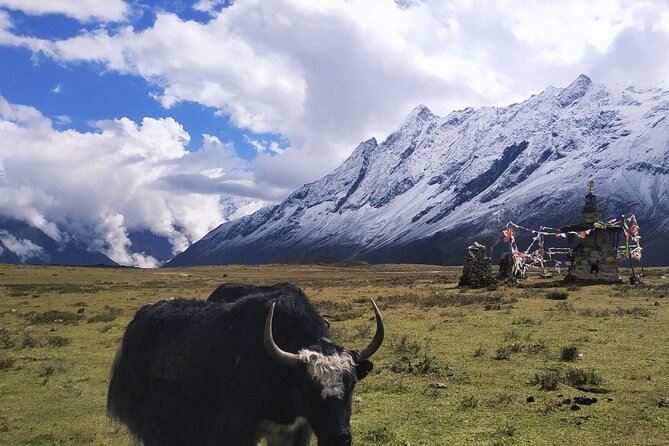
The walk to Lho is described as an easier half-day route, which gives you a welcome change after the longer stages. You can see Himalchuli near the Hinang Glacier and pass through Sho, an area noted for apples.
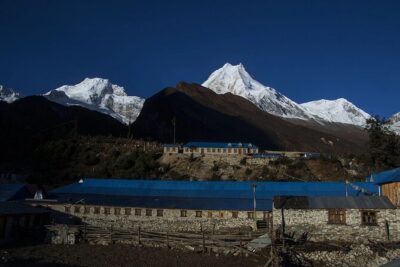
In Lho, Ribung Monastery is a highlight. You can walk up to the monastery and continue to a high point behind it for views of the Manaslu Massif. A nearby viewpoint is also used for sunrise. This is one of those places where an early start can pay off, especially if the sky is clear.
The route then continues toward Samagaon through forests, terraced fields, chortens, and mountain villages. Views may include Ganesh Himal, Himal Chuli, Siring Himal, and Manaslu.
Samagaon is more than an overnight stop. It is the main acclimatization base before you move toward the highest parts of the trek. The extra time here helps break up the steady climb and gives you a chance to settle into the altitude.
A few more treks around Kathmandu worth a look
- Everest Base Camp Trek – 14 Days
★ 5.0 · 1,499 reviews - Everest Base Camp Trek
★ 5.0 · 842 reviews - Everest Base Camp Trekking
★ 5.0 · 485 reviews - Annapurna Circuit Trek with Tilicho Lake
★ 5.0 · 368 reviews
Pungyen Gompa adds meaning to the acclimatization day
Day 9 is set aside for an excursion around Pungyen Gompa, an old monastery near Samagaon. The site includes a small prayer hall and offers views across the surrounding mountains.
I like this part of the plan because the rest day is not treated as wasted time. You get a cultural visit and a shorter outing while allowing your body to adjust. The monastery also gives you a closer look at local Buddhist practice, rather than reducing the high valley to a backdrop for photographs.
The schedule refers to this as an excursion around Manaslu Base Camp, but the detailed description focuses on Pungyen Gompa. If visiting the actual base camp matters to you, confirm the precise route with the operator before departure.
Samdo and Dharamsala prepare you for the pass
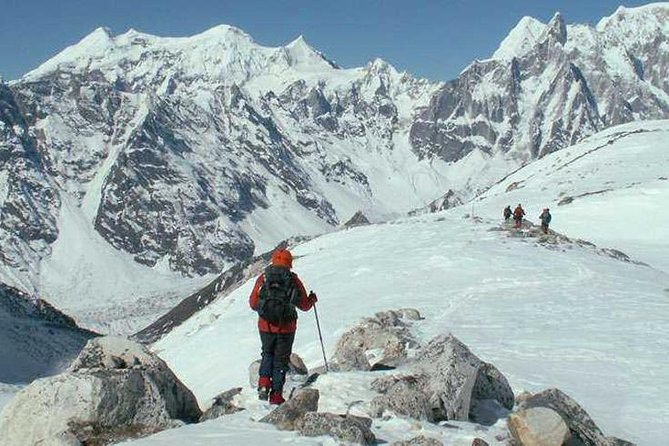
From Samagaon, the route continues to Samdo. You descend toward the Budhi Gandaki, cross a wooden bridge, and climb between two branches of the river. Samdo is a high settlement and a key step before the pass.
The next stage reaches Dharamsala, also called a stone-built shelter area. The trail follows the river, crosses streams, and passes glacier moraines. At around 5,000 meters, the altitude becomes a serious concern.
You have time to rest and acclimatize at Dharamsala, but do not treat that as a guarantee that everything will be easy. Altitude affects people differently. Follow your guide’s advice, tell the guide if you feel unwell, and resist the temptation to push ahead simply because the group is moving.
The accommodation here is basic compared with Kathmandu. That is part of the tradeoff for reaching the pass from the correct side of the route. You are paying for access to a demanding mountain crossing, not resort comfort.
Larkya La and the long descent to Bimthang
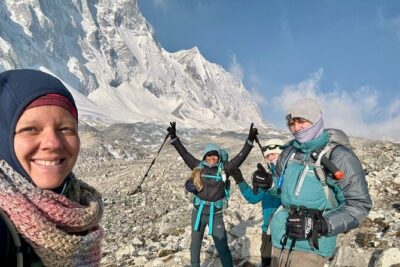
Day 12 is the hardest and most memorable day. You leave Dharamsala, climb across glacier moraines, and tackle steeper ground toward Larkya La Pass.
From the pass, the route offers views of Annapurna II, Cheu Himal, Himlung Himal, Larkya Peak, and the Manaslu area. The pass itself is listed as a short stop, but reaching it can occupy much of the day once the climb, pauses, weather, and descent are considered.
The effort does not end at the top. You continue down toward Bimthang, where mountain views, rhododendron, and local hospitality provide a welcome change after the exposed high route.
This day is a good reason to judge the trek by more than its price. A guide who manages the pace, checks on the group, and handles route decisions is valuable here. Several pieces of feedback praise the team’s care and support, including Chirring’s patience and TB’s attention to safety. Ask in advance who your guide will be and how the company handles changes if weather blocks the pass.
One review describes a trekker who could not cross Larkya Pass because of poor weather and could not continue as originally planned toward the Annapurna Circuit. That is a useful reminder: the pass is weather dependent, and a responsible plan must put safety before the advertised route.
Tilije, Tal, and the return to Kathmandu
After Bimthang, the route drops through pastureland, ridges, bridges, and rhododendron forest. Spring can bring blooms along this section. You continue to Tilije, then toward Thonje and Dharapani.
At Dharapani, the trek connects with the Annapurna Circuit route. You cross the Marsyangdi River and pass waterfalls before reaching Tal. This gives the final walking days a different feel from the more isolated upper Manaslu section.
Day 15 begins with an early drive to Besishahar by local jeep, followed by lunch and the longer drive back to Kathmandu. It is another full transport day. You may arrive tired, but the return to Hotel Green Horizon gives you a softer bed, a hot shower, and time to recover.
Day 16 is deliberately light. You can rest, shop, and spend time without a guide or porter. A farewell dinner in a Nepali cultural restaurant is included. The next day, airport transfer takes you to Tribhuvan International Airport.
What the $1,386.67 price really covers
At $1,386.67 per person, this is a substantial but useful package for a 17-day trek. The price includes four nights at the Kathmandu hotel, trekking food and lodging, transport, permits, a licensed English-speaking guide, a porter, airport transfers, Kathmandu sightseeing transport and guide service, a first aid box, rescue management service, and rental access to a sleeping bag and down jacket.
You also receive a T-shirt, duffel bag, trekking map, farewell dinner, government permits, VAT, and the company service charge. Meals listed in the package cover breakfast, lunch, and dinner during the trek, with some Kathmandu meals also specified.
The value depends on how much of this you would otherwise arrange yourself. Permits, road transport, equipment rental, portering, and teahouse meals can become a long list of separate costs. A guided package also gives you one point of contact if transport or weather causes trouble.
Not included are the Nepal visa, international flights, extra baggage, travel insurance, personal purchases, laundry, device charging, alcohol, soft drinks, and tips. Rescue operation costs are excluded even though rescue management service is included, so insurance with high-altitude trekking cover is important.
Guides, group size, and the human side
The strongest praise attached to this trek concerns the staff. Mod is described as professional, cheerful, and attentive. Chirring is praised for patience and support, while TB is described as experienced and safety focused. Suman receives credit for arranging routes around individual needs.
Those details matter more than a glossy route map. On a long trek, a guide’s patience can affect your entire day. Ask who will lead your group, how many people will be walking together, and how porter loads are managed.
The maximum group size is 20. That is not huge for a commercial trek, but it is large enough to affect pace and dining arrangements. Group discounts are offered, so the trip may suit friends or families who want to travel together. If you want a quieter experience, request a smaller group before booking.
Who should book this trek?
You should consider this trek if you want a challenging Himalayan route with a strong mix of mountain scenery, Buddhist culture, village life, and guided logistics. It suits people with moderate physical fitness who are comfortable walking for long hours and dealing with basic high-altitude accommodation.
I would not choose it for a first mountain trip without serious preparation. The drive is long, the trail is uneven, the itinerary includes many full days, and Larkya La requires stamina and flexibility. You also need to accept that weather may change the route.
Free cancellation is available up to 24 hours before the experience starts. Changes or cancellations inside that window are not accepted for a refund, so check the local cut-off time before finalizing your plans.
Should you book the Manaslu Circuit Trek?
Book it if you want a well-supported route where permits, transport, gear, meals, and lodging are organized in one price. The best reasons to choose it are the cultural depth around Lho and Pungyen Gompa, the gradual approach to Larkya La, and the reported care shown by guides such as Mod, Chirring, and TB.
Think twice if you dislike long road transfers, basic teahouses, or fixed group schedules. Before paying, confirm the guide’s name, expected group size, exact plan for Manaslu Base Camp, insurance requirements, and what happens if bad weather closes the pass. If those points suit you, this is a strong choice for a serious, culture-filled Himalayan trek.
FAQ
How long is the Manaslu Circuit Trek?
The experience lasts approximately 17 days, including arrival and departure days, Kathmandu sightseeing, the trek, return transport, and a final rest day in Kathmandu.
What is the highest point of the trek?
The highest point is Larkya La Pass, reached on Day 12 after leaving Dharamsala. The route then descends to Bimthang.
Is airport pickup included?
Yes. Airport pickup on arrival and airport drop-off before departure are included.
Are meals included during the trek?
Yes. Breakfast, lunch, and dinner are included during the trekking portion. Personal drinks, alcohol, soft drinks, and some Kathmandu meal costs are not included.
Is trekking equipment provided?
A sleeping bag and down jacket are available to rent through the package. You also receive a duffel bag, T-shirt, and trekking map with the company logo.
What is not included in the price?
The Nepal visa, international flights, extra baggage, travel insurance, personal expenses, laundry, electronic device charging, alcohol, soft drinks, guide and porter tips, and rescue operation costs are not included.
Recently added around Kathmandu
- Ghorepani Poon Hill Trek★ 5.0 · 16 reviews
- Private Manaslu Circuit Trek at Himalayas★ 5.0 · 3 reviews
- Amazing 1 Day Trekking Experience in Kathmandu Nepal★ 5.0 · 24 reviews
- Ghorepani Poonhill Trek★ 5.0 · 5 reviews
- Upper Mustang Trekking★ 5.0 · 2 reviews
- Upper Mustang Trekking★ 3.0 · 2 reviews
- Upper Mustang Trekking★ 5.0 · 4 reviews
- Upper Mustang Trek★ 5.0 · 5 reviews
Manaslu Circuit Treks, compared.
16 Day Private Manaslu Circuit Trek from Kathmandu
Read our review →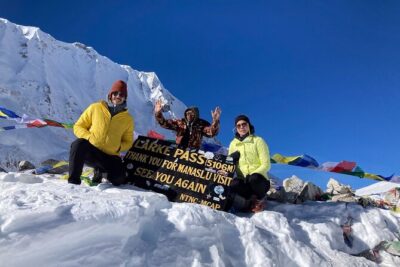
10 Days Manaslu Circuit Trek in Larke La Pass
Read our review →Browse the lists this tour appears in