
REVIEW · KATHMANDU
Manaslu Circuit Trek – 14 days of Himalayan Adventure
High passes reward patient feet. This 14-day Manaslu Circuit Trek takes you from Kathmandu through river valleys, Buddhist villages, and high mountain country around Mt. Manaslu, the world’s eighth-highest peak. I like the mix of scenery and culture, especially the shift from subtropical forest to Tibetan-influenced villages. I also like that the price includes permits, guide support, meals, a sleeping bag, and walking poles.
The main consideration is the road and trail time. Day 2 involves a long public-transport journey to Maccha Khola, and Day 13 is another lengthy return by jeep and public transport. You need moderate physical fitness, patience with rough roads, and enough energy for the high crossing at Larkya La Pass.
Key points to know before booking
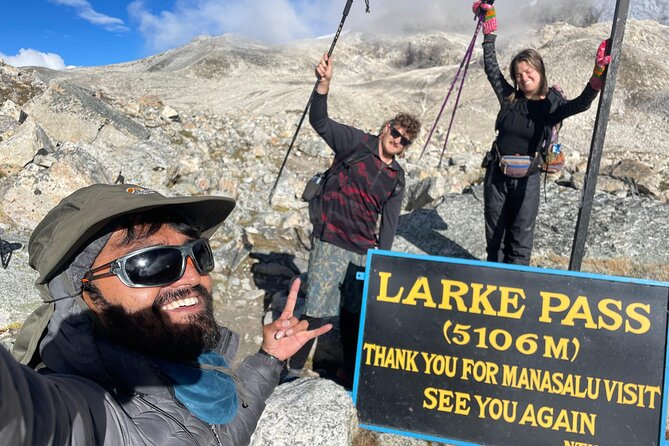
- Larkya La Pass is the trek’s big test: Day 11 includes the high crossing before a long descent to Bhimtang.
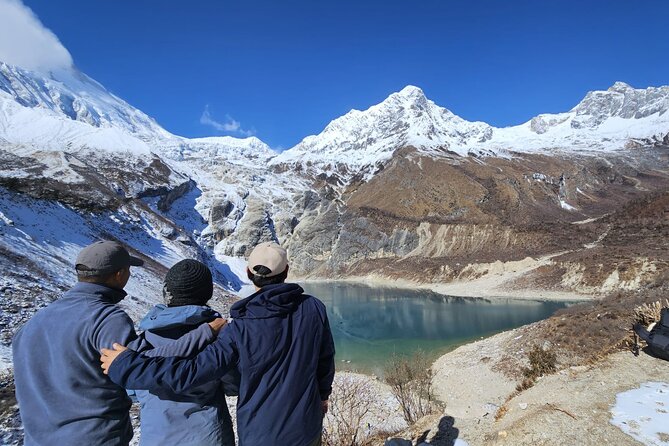
- The scenery changes every few days: Expect river valleys, rhododendron and pine forests, alpine ridges, and close views of the Manaslu massif.
- Sama Gaon gives you an acclimatization day: The short hike to Birendra Taal and a monastery visit help break up the climb.
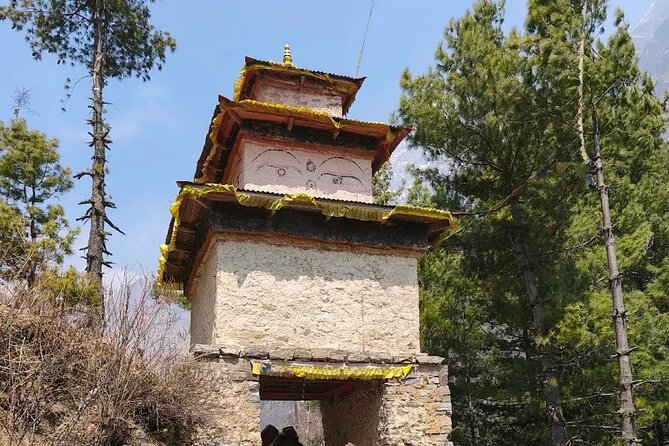
- Tibetan culture becomes clearer north of Deng: Mani walls, chortens, Buddhist monasteries, prayer flags, and traditional villages shape the route.
- The $1,099 price covers useful essentials: Permits, a government-registered guide, meals, public transport, a sleeping bag, walking poles, and an oxygen monitor are included.
- Guide care is a strong point: Santosh and Pradip are two named guides praised for patience, safety, and staying attentive to slower walkers.
Why the Manaslu Circuit is worth your time
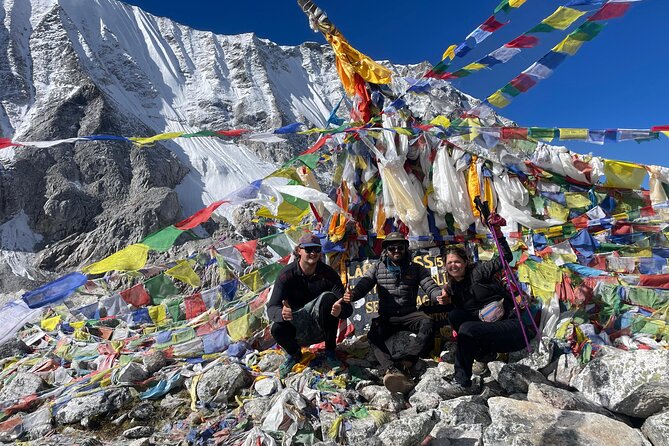
The Manaslu Circuit suits you if you want a serious Himalayan trek without choosing the most crowded route in Nepal. It circles Mt. Manaslu at 8,163 meters and passes through the Manaslu Conservation Area, where you may see signs of Himalayan tahr, blue sheep, and, if luck is on your side, snow leopard habitat.
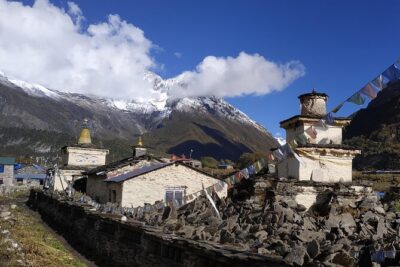
The route also gives you a clear cultural transition. Lower sections follow the Budhi Gandaki River through forests and farming villages. Higher up, Tibetan Buddhist customs become more visible through mani walls, chortens, monasteries, prayer flags, and stone villages.
I especially like that this is not only a mountain-view trip. You get close to the daily life of Himalayan communities, then spend time in high alpine country where the mountains take over the view. The change is gradual, which makes the trek feel like a journey rather than a series of disconnected viewpoints.
Still, the route is not a casual walking holiday. The operator describes it as suitable for people with moderate physical fitness, but that should be taken seriously. Long walking days, altitude, cold conditions, rocky trails, and the Larkya La crossing require preparation.
More Manaslu Treks in Kathmandu:
- Manaslu Circuit Trek
★ 5.0 · 292 reviews - Manaslu Circuit Trek:
★ 5.0 · 106 reviews - Manaslu Circuit Trek (15 Days)
★ 5.0 · 50 reviews
Day 1: Kathmandu arrival and a soft landing
Your trip begins with pickup at Tribhuvan International Airport. A Wonder Himalaya representative meets you with a name placard and transfers you into Kathmandu.
This first day is simple, but useful. You have time to settle in, organize your trekking equipment, and meet the local team before the long road journey begins. The itinerary does not promise a sightseeing program in Kathmandu, so you should treat this as an arrival and preparation day rather than a city tour.
The airport pickup is helpful if you arrive tired or have never been to Nepal before. Keep your important items close, including travel insurance details, medication, passport, and any gear you cannot replace easily.
Day 2: The long road to Maccha Khola
After an early breakfast, you leave Kathmandu for Maccha Khola by public transportation. The route offers views of the Trishuli and Budhi Gandaki rivers and takes you toward the trailhead.
This is one of the less glamorous parts of the trip, but it matters. You are trading comfort for access to a quieter trekking route. The included transport keeps the tour price down, yet public vehicles and rough mountain roads can make this a tiring day.
Do not judge the trek by this first transfer. The walking section has not really begun. Pack a small day bag with water, snacks, warm layers, and anything you need during the ride, since your main luggage may be handled separately by the support team.
Days 3 and 4: River paths, forests, and suspension bridges
From Maccha Khola, you start walking toward Jagat through subtropical forest beside the Budhi Gandaki River. The route is green and warm compared with the higher sections to come, and the river provides a steady companion as you gain height.
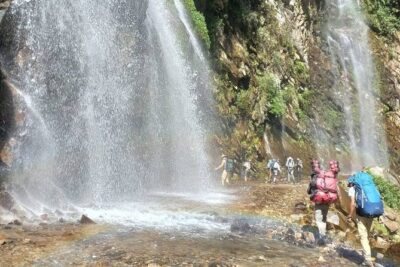
The next day leads from Jagat through dense forest with rhododendron and tall trees. Several suspension bridges cross rushing rivers and streams. These crossings are part of the character of the route, though they may feel exposed if you dislike swaying bridges or heights.
The early walking days are valuable because they build your rhythm before the colder, higher sections. You are not thrown straight into snow and thin air. Instead, the route changes bit by bit, giving your body time to adjust to longer days on foot.
Jagat also marks an important point in the journey. The lower river corridor begins to feel more remote, and the trail’s combination of forest, water, bridges, and villages becomes the pattern for the first part of the circuit.
A few more treks around Kathmandu worth a look
- Everest Base Camp Trek – 14 Days
★ 5.0 · 1,499 reviews - Everest Base Camp Trek
★ 5.0 · 842 reviews - Everest Base Camp Trekking
★ 5.0 · 485 reviews - Annapurna Circuit Trek with Tilicho Lake
★ 5.0 · 368 reviews
Day 5: From Deng toward Namrung
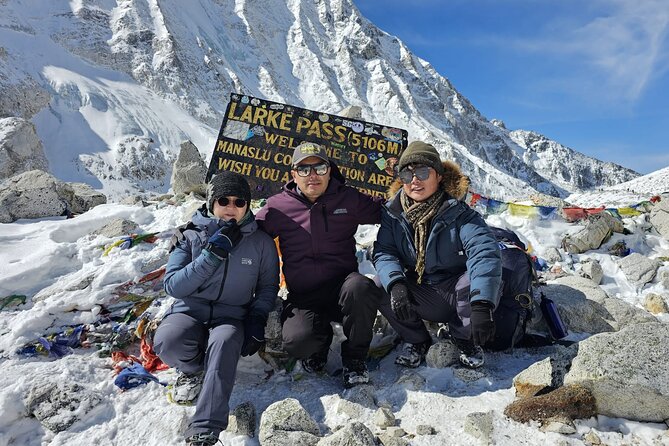
You leave Deng for Namrung, passing through Bihi Phedi and Bihi. These villages show a stronger Tibetan influence, and the cultural shift becomes easier to notice in buildings, religious features, and local traditions.
The trail continues through forest, with the mountain setting becoming more pronounced. This is the point where the trek begins to feel less like a river-valley walk and more like a high Himalayan route.
Namrung is an important overnight stop because the route is gaining altitude. Your best approach here is to walk steadily rather than race. The included guide is not just there to lead the way. A good guide can help keep the pace sensible and watch how you are handling the climb.
Day 6: Namrung to Shyala and the first big views
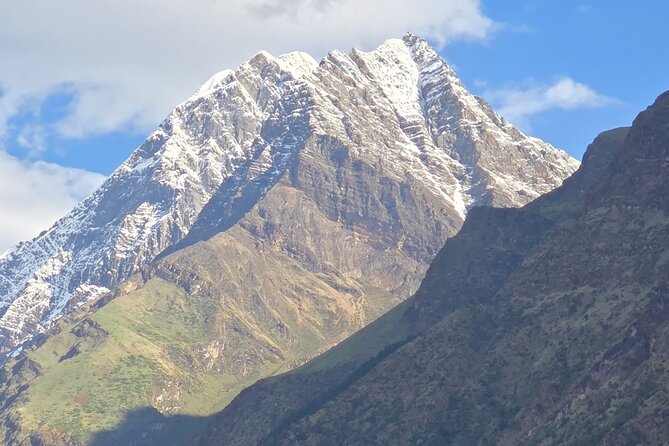
The walk from Namrung to Shyala passes through rhododendron and pine forest. Along the way, you see mani walls, chortens, and other Buddhist features that give the trail a strong spiritual character.
Shyala is one of the route’s memorable stops because the forest begins to open and the views become broader. You are moving toward the Manaslu massif, and the mountains begin to feel close rather than distant.
I like this part of the route because scenery and culture work together. A mani wall is not simply a photo stop. It shows how religion is part of the trail itself, and the route asks you to move through that setting with a little more attention and respect.
Day 7: Shyala to Sama Gaon
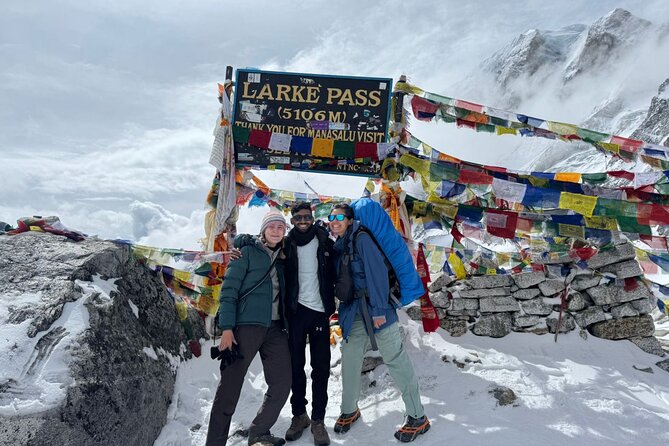
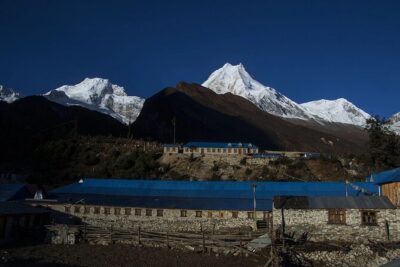
From Shyala, you walk toward Sama Gaon through alpine forest and open ridges. The Manaslu massif becomes the main feature, with wide mountain views accompanying the walk.
You also pass traditional mani walls and other Buddhist markers. Sama Gaon is one of the most important villages on the circuit, both for its setting and for its role in acclimatization.
This is a good day to slow down and notice the change in air, vegetation, and architecture. You are now much higher than the lower river sections, and the route has moved into a more open, austere mountain setting.
Day 8: Acclimatization at Birendra Taal
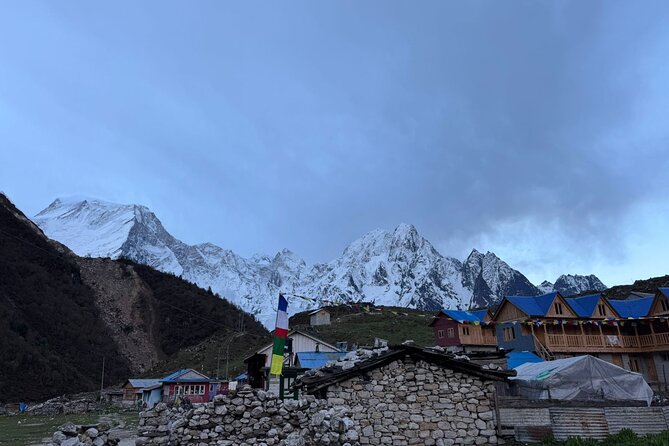
Sama Gaon provides a rest and acclimatization day. The plan includes a short hike of about two hours to Birendra Taal, a lake named after the late King Birendra of Nepal. You also visit Labrang Gompa, also called Kargya Chholing monastery, where monks conduct blessing ceremonies.
This is more useful than spending the whole day indoors. A short outing lets you move without adding another hard stage to the trek. It also gives you a chance to see a monastery and lake near Sama Gaon before the route climbs higher.
Altitude affects people differently, so the rest day is not wasted time. Use it to eat, drink, check your equipment, and tell your guide if you have headaches, unusual fatigue, or other problems. The included oxygen monitor can help the team check oxygen saturation and heart rate, though it is not a substitute for proper medical judgment or travel insurance.
Day 9: Sama Gaon to Samdo
After the rest day, you continue toward Samdo. The trail climbs through a rockier setting, with Mt. Manaslu watching over the route.
As you go higher, the vegetation thins and the mountain forms become more dominant. Prayer flags add color to the route, but the overall feeling is spare and exposed compared with the lower forest.
Samdo is a serious high-altitude stop. You should expect a slower pace and colder conditions. The guide’s role becomes more important here, particularly in keeping the group together and noticing anyone who is struggling.
Day 10: Preparing for the pass
The itinerary describes another climb through rocky trails, with views of Manaslu and nearby peaks. Prayer flags flutter along the way, marking the cultural and high-mountain setting.
This day is preparation for Larkya La Pass. It may not have the single dramatic event of the following day, but it is physically important. You are gaining height before the highest point of the trek, so conserving energy matters.
Keep your walking poles close. They are included, and you will likely appreciate them on uneven ground and during the long descent that follows the pass. Coffee, tea, snacks, bottled water, and electronic charging are not included, so budget for those personal extras.
Day 11: Larkya La Pass and the long descent to Bhimtang
This is the hardest and most rewarding day of the route. You start early from the high camp area and cross Larkya La Pass, walking over rocky ground and crossing small streams before reaching the pass after roughly two to three hours.
The pass is the trek’s high point in every sense. You get broad views of Manaslu and surrounding peaks, but the conditions can be demanding. Wind, cold, altitude, and uneven footing can turn a short distance into a real effort.
After the pass, you descend for another four to five hours through rocky paths and open valleys to Bhimtang. This long downhill section can be hard on knees and feet, even after the excitement of reaching the top.
Bhimtang is a welcome overnight stop. You can rest while taking in snow-capped mountain views. If you are choosing this trek mainly for one major mountain day, this is it. If you dislike long, demanding days, this is also the point that deserves the most honest thought before booking.
Day 12: Forest descent from Bhimtang
You leave Bhimtang after breakfast and descend toward lower elevations through pine and rhododendron forest. The air becomes easier as you lose height, and distant mountain views appear between the trees.
This day gives your legs a different kind of work after Larkya La. Downhill walking may sound easier, but rocky paths and tired muscles can make it surprisingly taxing.
The forest also provides a change in mood. After the exposed high country, trees and lower elevations feel familiar and forgiving. The route is still part of the trek, not merely a walk to the transport, so take time to enjoy the transition.
Day 13: Jeep to Besisahar, then back to Kathmandu
You travel by jeep from Tilije to Besisahar, taking in the scenery through the vehicle windows. The road is rough, and the transfer can take two to three hours before continuing toward Kathmandu by public transportation.
This is another long travel day. It is practical rather than relaxing, and road conditions may affect the timing. The advantage is that the transport is included, and you do not need to arrange the journey yourself.
I would keep this day flexible in your mind. Do not schedule an important flight immediately after the trek. The itinerary finishes in Kathmandu, but mountain roads and public transport are not as predictable as a city taxi ride.
Day 14: Airport transfer and departure
On the final day, Wonder Himalaya arranges your transfer to Tribhuvan International Airport. Check your luggage carefully before leaving. Small items such as chargers, trekking poles, documents, or personal medication are easy to overlook after two weeks on the move.
The airport transfer is a useful final service, especially after a long trek. Your meals and transport coverage finish with the trip, so plan your departure time carefully.
What the $1,099 price covers
At $1,099 per person, the trip offers solid value for a guided 14-day Himalayan circuit. The cost includes public transportation from Kathmandu to Maccha Khola, Tilche to Besisahar, and Besisahar to Kathmandu.
It also includes:
- Manaslu Conservation Area Permit
- Annapurna Conservation Area Permit
- Restricted Area Permit
- Government-registered trekking guide
- Breakfast for 13 days
- Lunch and dinner for 11 days
- Down-filled sleeping bag
- Walking poles
- Route map
- Oxygen monitor
That list matters because permits and transport can add up quickly on a remote trek. You still need to pay for bottled water, snacks, coffee or tea, alcohol, charging electronic devices, personal expenses, travel insurance, and medical evacuation.
The price is especially attractive if you want organized support without paying for private transport. A private vehicle costs more, so the public-transport option is the better fit for budget-conscious trekkers who can accept less comfort.
Guides, support, and the small details that matter
The strongest praise for this trip centers on guide care. Santosh is specifically praised for waiting for anyone who falls behind or going back to look for them. That is exactly the kind of practical attention you want on a high-altitude route.
Pradip is another named guide associated with a smooth and safe trip. The company also describes its guides as licensed, with porters and support staff included in the operation.
Ask about porter arrangements and luggage limits before departure, since those details are not specified here. You should also confirm the exact meeting point and transport timing, even though airport pickup is offered.
The tour is private, meaning only your group participates. That can make pacing and communication easier than joining a large mixed group, though the size of your own party is not stated.
Who should book this trek?
I would recommend it to you if you:
- Have moderate physical fitness
- Want a quieter Himalayan route
- Enjoy long walks and changing scenery
- Like combining mountain views with Buddhist culture
- Can handle basic public transportation and rough roads
- Want permits, meals, and guide support arranged together
- Are comfortable with one demanding pass day
I would be cautious if you want luxury transport, short walking days, or a relaxed holiday with little physical strain. The trek includes long road transfers, high-altitude walking, a major pass crossing, and limited included extras.
Free cancellation is available if you cancel at least 24 hours before the experience begins. Changes or cancellations inside that period are not refunded, so check the local start time before making a last-minute change.
Should you book the Manaslu Circuit Trek?
Yes, if you want a well-priced, culture-focused Himalayan trek with a real high-pass challenge. The route gives you Mt. Manaslu, the Budhi Gandaki River, Tibetan-influenced villages, monasteries, forests, alpine ridges, and Larkya La Pass in one 14-day plan.
The best reason to book is the balance of scenery and human contact. The best reason to hesitate is the physical demand and the amount of time spent on rough public transport.
For the strongest experience, arrive prepared for long days, carry personal snacks and water money, use the acclimatization day properly, and tell your guide early if you feel unwell. If that sounds like your kind of adventure, the $1,099 cost is a fair way to tackle one of Nepal’s more rewarding circuits.
FAQ
Where does the Manaslu Circuit Trek begin?
The experience begins with pickup at Tribhuvan International Airport in Kathmandu. The road journey toward Maccha Khola starts after breakfast on Day 2.
How long does the trek last?
The full experience lasts approximately 14 days, including arrival, trekking, transport, acclimatization, return travel, and airport transfer.
What level of fitness do I need?
The trek is described as suitable for people with moderate physical fitness. You should be ready for long walking days, rocky trails, altitude, and the Larkya La Pass crossing.
Is transportation included?
Yes. Public transportation is included from Kathmandu to Maccha Khola, from Tilche to Besisahar, and from Besisahar back to Kathmandu.
Are trekking permits included?
Yes. The price includes the Manaslu Conservation Area Permit, Annapurna Conservation Area Permit, and Restricted Area Permit.
Is a guide included?
Yes. An experienced government-registered trekking guide is included.
Are meals included?
Breakfast is included for 13 days. Lunch and dinner are included for 11 days.
Is drinking water included?
No. Bottled water is not included. Coffee, tea, snacks, alcohol, and electronic device charging are also personal expenses.
What equipment is provided?
A down-filled sleeping bag, walking poles, an oxygen monitor, and a trekking route map are included.
Is the tour private?
Yes. Only your group participates in the activity. The exact group size is not specified.
Is airport pickup and departure transfer offered?
Yes. Pickup is offered on arrival in Kathmandu, and a transfer to Tribhuvan International Airport is arranged on the final day.
What happens if I need to cancel?
You receive a full refund if you cancel at least 24 hours before the experience starts. Cancellations or changes made within 24 hours are not refunded.
Recently added around Kathmandu
- Ghorepani Poon Hill Trek★ 5.0 · 16 reviews
- Private Manaslu Circuit Trek at Himalayas★ 5.0 · 3 reviews
- Amazing 1 Day Trekking Experience in Kathmandu Nepal★ 5.0 · 24 reviews
- Ghorepani Poonhill Trek★ 5.0 · 5 reviews
- Upper Mustang Trekking★ 5.0 · 2 reviews
- Upper Mustang Trekking★ 3.0 · 2 reviews
- Upper Mustang Trekking★ 5.0 · 4 reviews
- Upper Mustang Trek★ 5.0 · 5 reviews
Manaslu Circuit Treks, compared.
16 Day Private Manaslu Circuit Trek from Kathmandu
Read our review →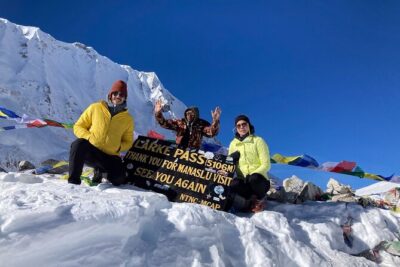
10 Days Manaslu Circuit Trek in Larke La Pass
Read our review →Browse the lists this tour appears in