
REVIEW · NEPAL
From Pokhara: 10-Day Poon Hill and Annapurna Base Camp Trek
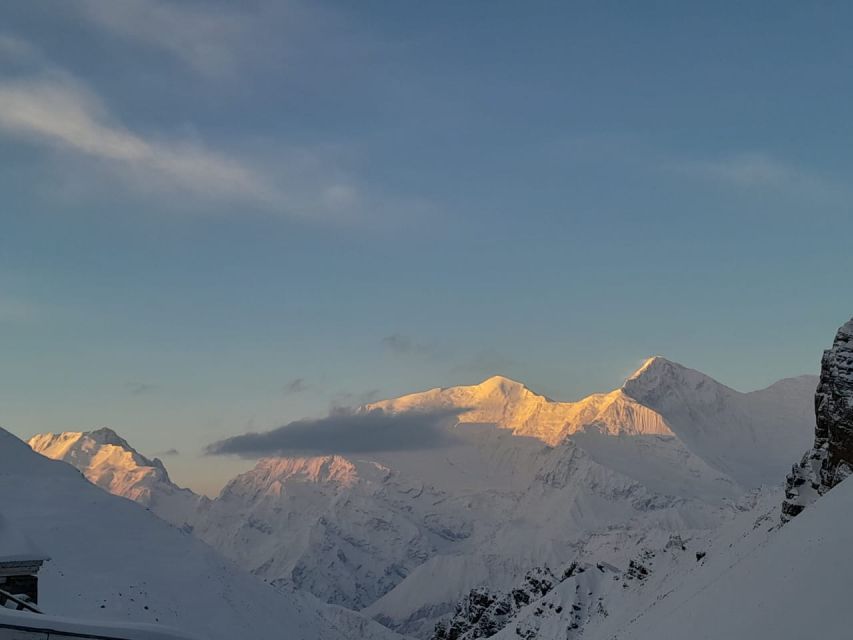
The Himalayas reveal themselves one step at a time. This 10-day private trek from Pokhara combines the sunrise at Poon Hill with the high mountain drama of Annapurna Base Camp, while still leaving room for village life, forest walks, and a soak in Jhinu Danda’s hot springs. I especially like the route’s gradual rhythm and the chance to see both the classic Poon Hill viewpoint and the enclosed Annapurna Sanctuary. I also like that guides such as Biru, Bikram, and Arjun have adjusted the pace when trekkers needed more time.
The main drawback is simple: this is a demanding high-altitude walk, not a string of easy day hikes. Rain can hide the peaks, especially outside the best spring and autumn months, and food, hot showers, WiFi, charging, and heaters cost extra in the higher villages. The advertised $310 price is attractive, but you should budget beyond it.
Key points at a glance
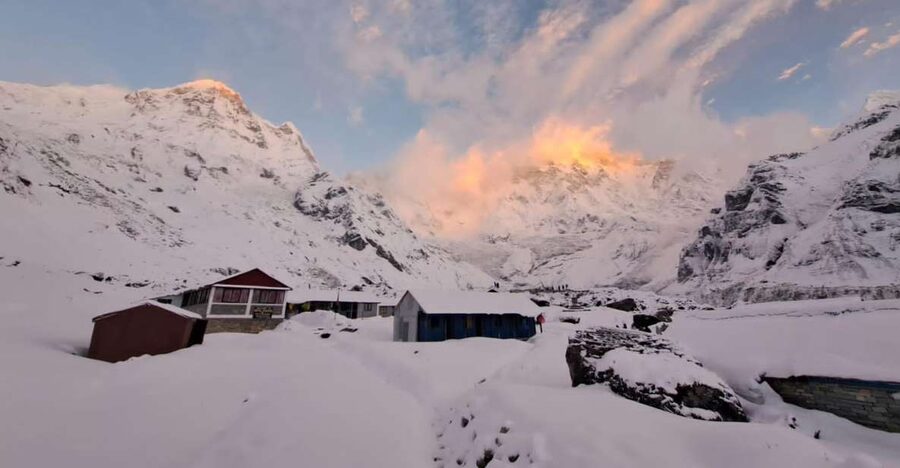
- Two famous Himalayan goals: Poon Hill offers sunrise views, while Annapurna Base Camp puts you inside a ring of high peaks.
- A private group with a flexible pace: The guide can adjust walking speed and, when needed, modify the schedule.
- Village and forest scenery: You pass Gurung communities, terraced fields, rhododendron woods, bamboo forests, and the Modi Khola valley.
- The hardest stretch comes late: Days six and seven take you above 3,000 meters, ending at Annapurna Base Camp at 4,130 meters.
- A useful recovery stop: Jhinu Danda’s natural hot springs provide welcome relief after the return walk.
- Best for prepared hikers: You need comfortable shoes, travel insurance, and patience for steep stone steps, changing weather, and basic guesthouse stays.
Why this route works so well
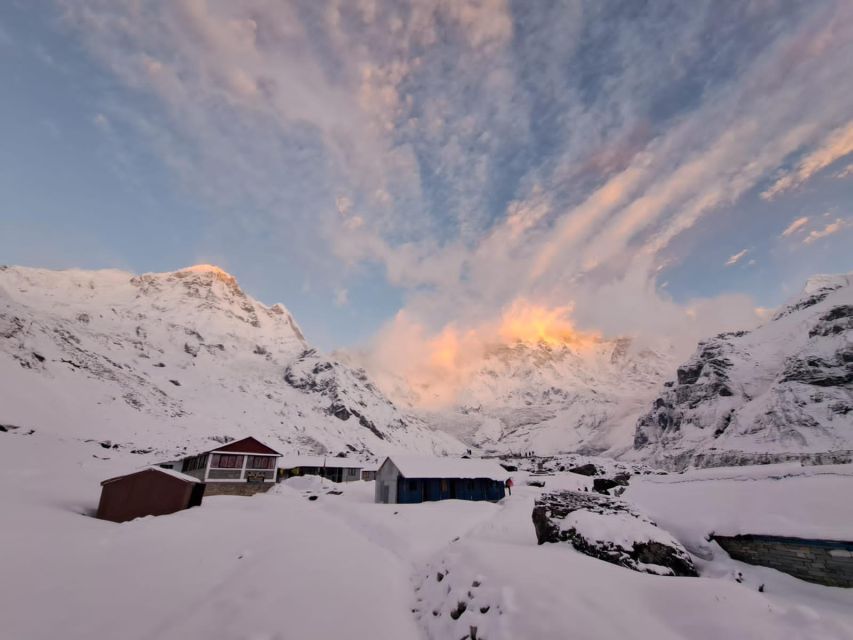
Many Himalayan routes ask you to choose between a scenic viewpoint and a major base camp. This itinerary gives you both. Poon Hill is the early reward, with a sunrise over the Annapurna and Dhaulagiri ranges. Annapurna Base Camp comes later, after the route has taken you through forests and narrow valleys into a high natural bowl surrounded by peaks.
You can expect views of Annapurna I, II, III, and IV, Dhaulagiri, Nilgiri, Machhapuchhre, and Hiunchuli when the weather cooperates. The mountain names are impressive, but the changing ground under your feet is what keeps the trek interesting. You start among fields and villages, then move through rhododendron, bamboo, and high valley scenery.
The private format matters here. A fixed group often moves at the pace of its fastest or slowest person. On this trek, the guide can respond to your condition. Sofiia, a slow hiker, particularly valued never feeling rushed, while Sören’s guide extended the schedule when altitude sickness became a concern. That flexibility is not a luxury on a route with long climbs and changing elevation.
The price is also worth examining. At $310 per person, the package includes pickup in the Lakeside area of Pokhara, private car transfers between Pokhara and Nayapul, a professional English-speaking guide, permits and official documents, guesthouse accommodation, an emergency first aid kit, and the Poon Hill entrance fee. You still pay for meals and drinks, travel insurance, tips, and emergency rescue. At higher elevations, daily extras can add up quickly.
More Annapurna Treks in Nepal:
- Annapurna Circuit Trek with Tilicho Lake
★ 5.0 · 368 reviews - Annapurna base camp trek 5 Days
★ 5.0 · 252 reviews - 14-Day Private Annapurna Base Camp Trek
★ 5.0 · 180 reviews
Day one: Pokhara to Nayapul and Tikhedhunga
Your morning begins with a private drive from Pokhara to Nayapul, taking about one and a half hours. That transfer keeps the start straightforward and avoids arranging separate transport for the first trailhead.
From Nayapul, you walk through small villages and terraced fields, following the Modi Khola. The first day reaches Tikhedhunga at 1,577 meters, so it is a useful introduction rather than an immediate altitude test.
Tikhedhunga is a modest overnight stop. The important point is that you are already trading city comforts for a simple mountain routine. You walk, eat, rest, and prepare for the steep climb ahead. Guesthouse accommodation is included, but the package does not include meals, so plan to buy food along the route.
Day two: Ulleri’s stone steps and Ghorepani
The climb from Tikhedhunga toward Ulleri is one of the first real tests. You ascend a long series of steep stone steps, then continue through rhododendron and marigold forests toward Ghorepani at 2,874 meters.
This day is physically demanding because the route gains height steadily. The forest helps, giving you shade and a sense of progress, but the steps can feel relentless. Take your time. The private guide arrangement is useful here, since the pace can be adjusted rather than forced.
Ghorepani is a major point on the route because it opens the first broad mountain views. On a clear afternoon or morning, you can see toward the Annapurna and Dhaulagiri ranges. Weather is never guaranteed. In September, one trekker had three rainy days and only one clear day, so you should regard clouds as part of the experience rather than a failed promise.
Day three: Poon Hill sunrise and Tadapani
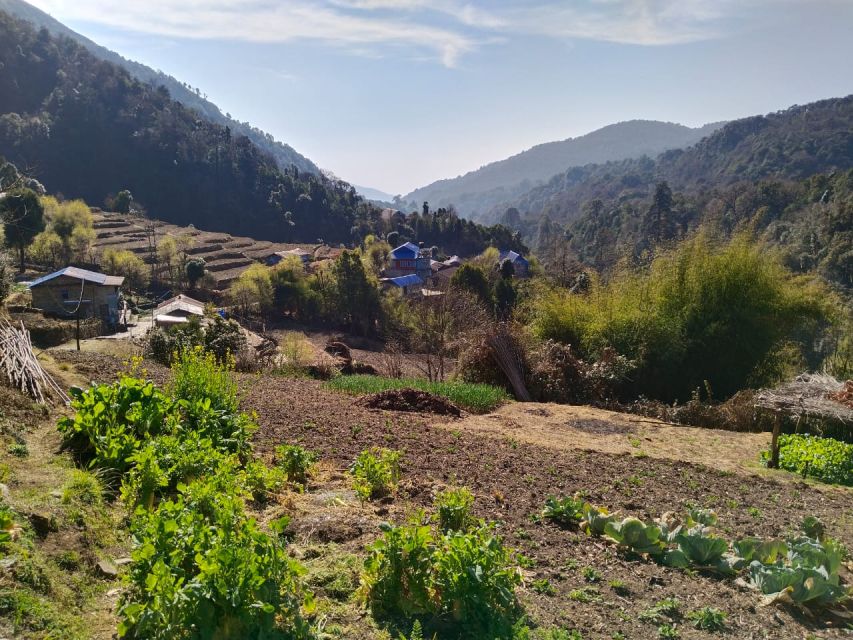
You rise early for the walk to Poon Hill at 3,210 meters. The climb is short compared with the longer trekking days, but the early hour and uphill path require warm clothing and a working headlamp if you carry one.
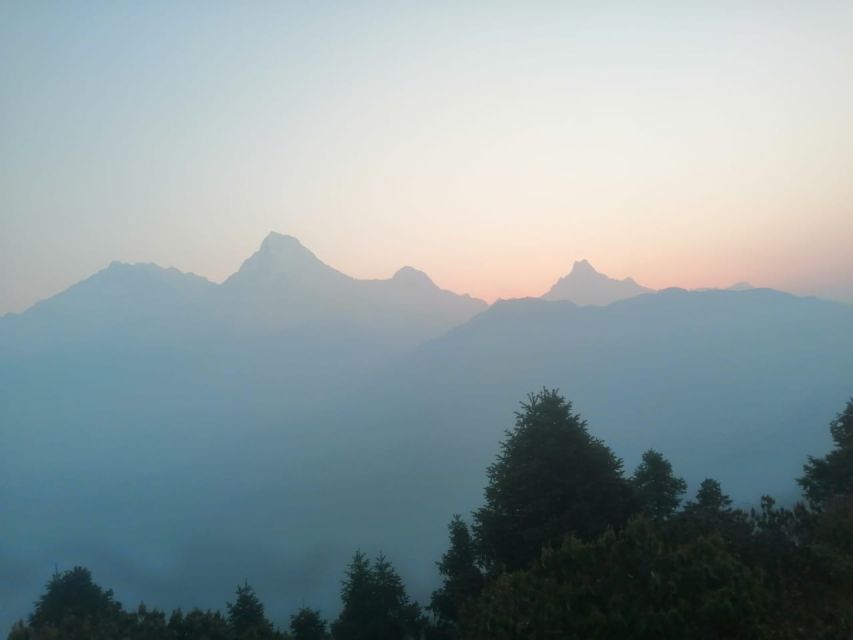
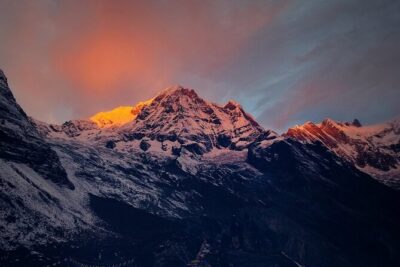
The reward is the sunrise over the Himalayas. This is the route’s classic viewing point, and the timing gives you a chance to watch light spread across Annapurna, Dhaulagiri, and nearby peaks. If clouds cover the range, the outing still gives you a memorable morning walk, but the famous panoramic view depends on conditions.
After returning to Ghorepani for breakfast, you continue through forest and rhododendron-filled valleys to Tadapani at 2,630 meters. This makes for a full day, but the scenery changes often enough to keep it engaging. You are no longer simply climbing to a viewpoint. You are moving through the mountain region itself.
More Poon Hill Treks in Nepal:
- Poon hill Trek 3 days
★ 5.0 · 176 reviews - Pokhara: 4-Day Ghorepani, Poonhill & Ghandruk Mountain Trek
★ 5.0 · 132 reviews - Ghorepani – Poon Hill Trek 3N-4D
★ 5.0 · 125 reviews - 4 Days Poon Hill Trek
★ 5.0 · 94 reviews
Day four: Tadapani to Chhomrong
From Tadapani, the trail descends through lush forest toward Gurjung village. You then drop to the Kimrong Khola before climbing again to Chhomrong at 2,170 meters.
The repeated pattern of descending and climbing is typical of this trek. A lower elevation does not always mean an easier day. Your legs may work hard on the downhill sections, then face another sustained ascent.
Chhomrong is one of the most appealing stops because it is a large Gurung village with clear views toward Annapurna South and Machhapuchhre, also known as Fishtail. It is a good place to appreciate the connection between the route and local communities. You are not just crossing empty mountain country. Villages, fields, guesthouses, and working trails shape the experience.
Day five: Chhomrong to Bamboo
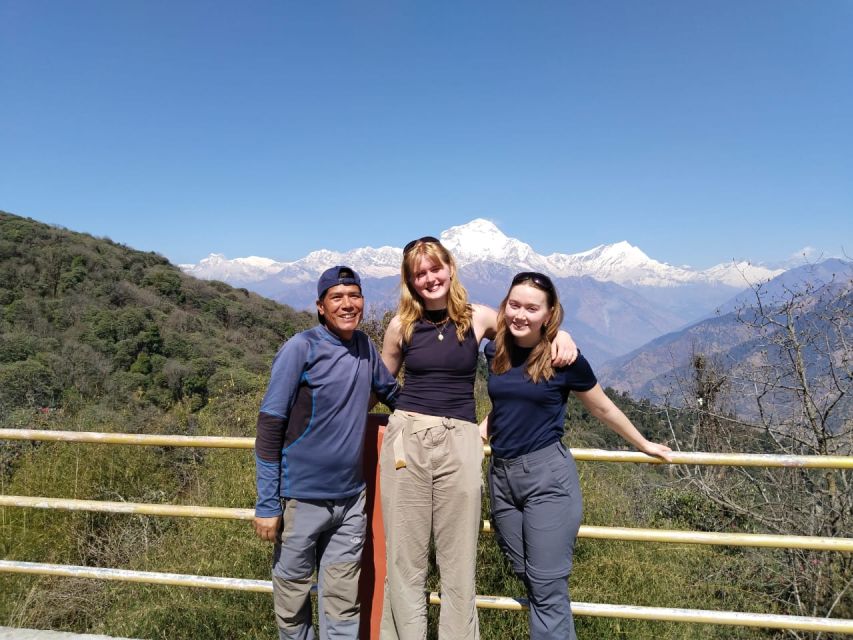
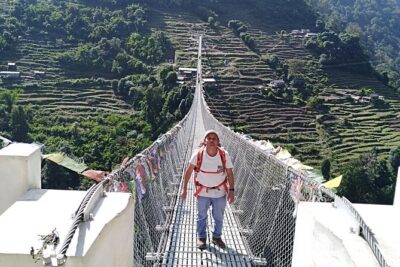
The day starts with a descent to the Chhomrong Khola and a suspension bridge. From there, you climb toward Sinuwa and continue through thick bamboo and rhododendron forest to Bamboo at 2,310 meters.
This section can feel enclosed compared with the open mountain views near Ghorepani and Chhomrong. That is not a weakness. The forest gives the trek a different mood, with shade and narrow paths replacing wide horizons.
Bamboo is a practical overnight stop before the route moves higher. You have already walked several days, so this is a good time to check your feet, clothing, and water supply. The next two days bring the most important altitude gain.
Day six: Bamboo to Deurali
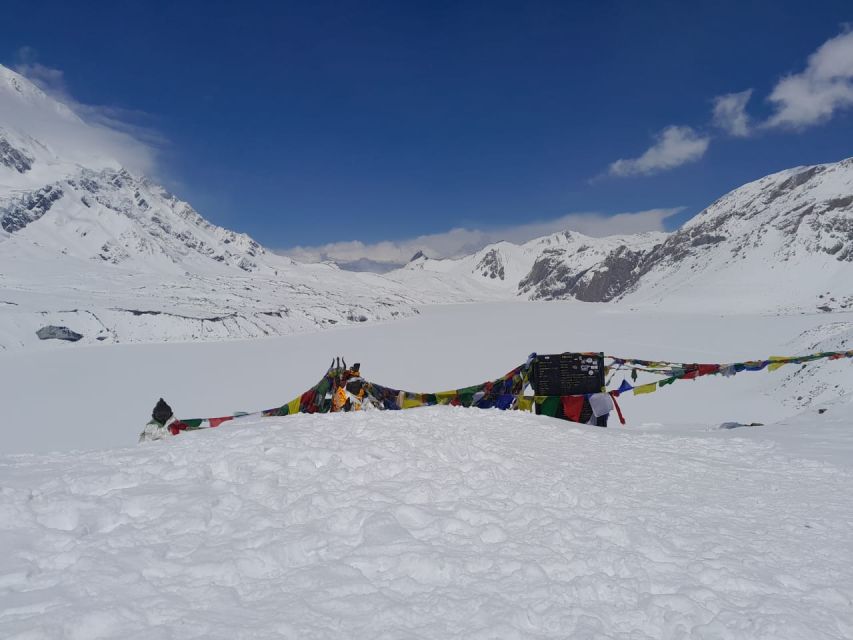
You continue through bamboo forest and along the Modi Khola valley, passing the Himalayan Hotel and Hinku Cave. The trail rises steadily to Deurali at 3,230 meters.
This is when the trek begins to feel more serious. You are high enough for colder nights, changing weather, and a greater need to watch how your body responds. The itinerary includes an emergency first aid kit with the guide, but it does not include emergency rescue or travel insurance. You should arrange insurance that covers the activities and elevation involved.
The guide’s role becomes especially important here. Arjun adjusted one trek when a participant developed altitude sickness, adding three days rather than pushing ahead. That is the kind of judgment you want on a high route. You should also speak up early if you have a headache, nausea, unusual tiredness, or trouble sleeping.
Day seven: Deurali to Annapurna Base Camp
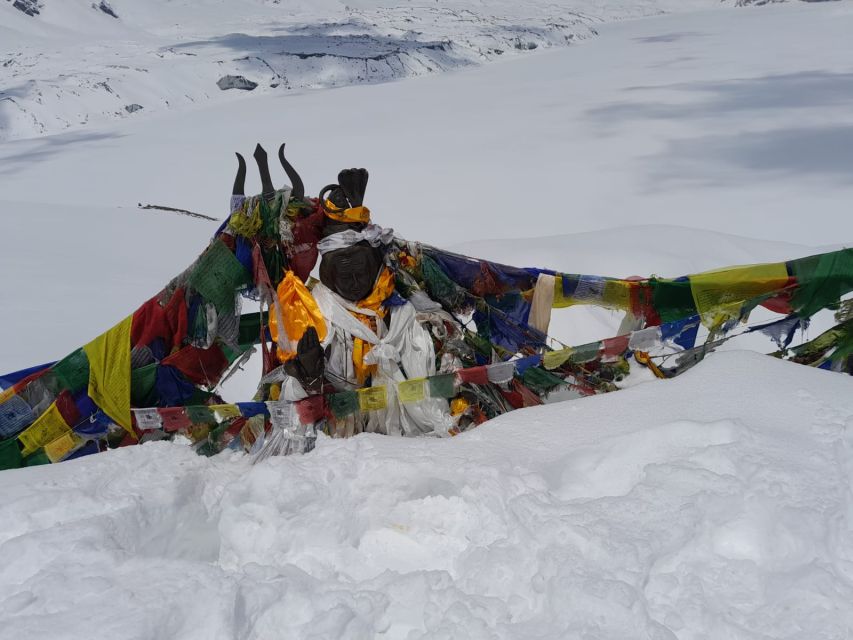
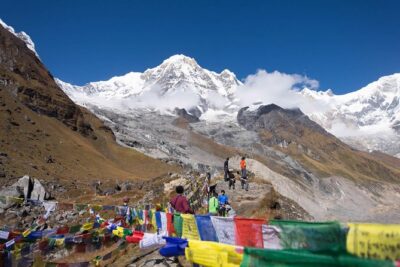
This is the central day. The trail passes through a narrow valley that opens into the Annapurna Sanctuary, then reaches Machhapuchhre Base Camp at 3,700 meters before continuing to Annapurna Base Camp at 4,130 meters.
The change in scale is the point. The route has taken you through villages and forests, but here the surrounding peaks become the main event. Annapurna I rises to 8,091 meters, with other major summits surrounding the base camp. You may also see Machhapuchhre and Hiunchuli in the wider mountain group.
Reaching base camp requires effort, and the thin air can make the final section slow. Give yourself time. The strongest part of the day is not only arriving, but seeing how the narrow valley opens into a much larger mountain setting.
You stay overnight at Annapurna Base Camp. That means you do not need to rush down immediately after arrival, and you have a chance to experience the high camp in evening light and again the next morning. Conditions can be cold and basic, so pack for warmth and accept that comfort decreases with altitude.
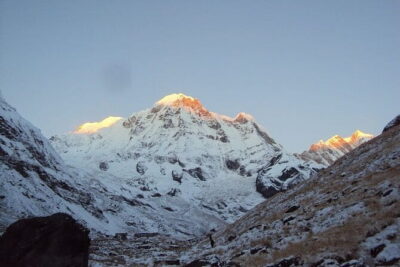
Day eight: Sunrise at base camp and the return to Bamboo
You wake early for sunrise over the peaks, then retrace the route through Deurali to Bamboo. The return is quicker in the sense that it is mostly downhill, but downhill walking can be hard on knees and tired legs.
This is a good example of why the 10-day schedule is useful. The route is not compressed into a frantic dash. You still have long walking days, but the itinerary allows time for the return and the hot springs stop that follows.
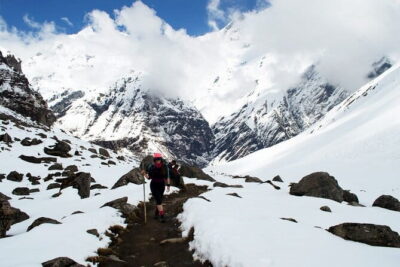
Clouds may again affect the view. One September trek included several rainy days, with the guide alerting the group whenever the peaks appeared through breaks in the cloud. That is a sensible way to approach mountain weather: keep walking, stay patient, and take the clear moments when they come.
Day nine: Bamboo to Jhinu Danda
You descend through the forest, return to Chhomrong for lunch, and then continue down to Jhinu Danda at 1,780 meters.
Jhinu Danda is one of the route’s best finishing points because of its natural hot springs. After days of stone steps, climbs, and descents, the warm water offers a practical reward rather than just another viewpoint. Bring suitable swimwear or clothing if you plan to use the springs.
This is also where you should resist cutting the trek short by jeep if your plan is to complete the full route. The return through Jhinu Danda gives the journey a proper ending, and the hot springs are part of what makes this route more than a simple out-and-back walk.
Day ten: Nayapul and back to Pokhara
The final trek takes you from Jhinu Danda to Nayapul, where a private car returns you to Pokhara. After nine days on foot, the vehicle ride will feel very welcome.
The return transfer is included, along with pickup and drop-off within the Lakeside area. Confirm the exact pickup point when booking, since the included service is specifically described for that part of Pokhara.
Guides, pace, and the human side of the trek
The strongest praise for this experience centers on the guides. Biru is described as patient, organized, and attentive to safety and comfort. Bikram was praised for adjusting the pace, explaining local people and nature, and helping when a participant had not brought enough cash. Arjun showed good judgment by changing the schedule around altitude concerns.
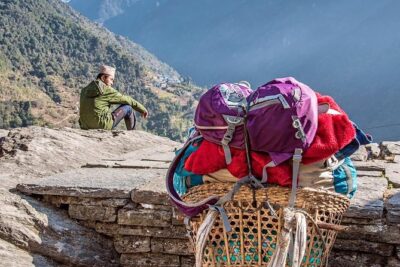
Those details matter more than a polished route description. A guide can handle accommodation arrangements, explain the next day, and notice when you are struggling. The itinerary includes Nepali, English, and Hindi language support, although communication with porters may be more limited in English.
The private group format also suits introverted hikers and anyone who prefers a calm walking rhythm. You can ask questions, stop when needed, and avoid the social pressure of a large group. The route is still physically demanding, but you are less likely to feel hurried.
What the $310 price really covers
The price is good value if you want the basic structure organized for you. Permits, official documents, guide services, accommodation, private transfers, the first aid kit, and Poon Hill entry are already handled.
You need extra money for:
- Food and drinks
- Hot showers
- WiFi
- Battery charging
- Heaters
- Tips
- Travel insurance
- Emergency rescue
At higher altitudes, daily spending of $30 to $40 was suggested for comfort items and services. That is not a required meal budget from the package details, but it is a useful warning about mountain pricing. Carry enough cash before the route gets high.
The accommodation is in guesthouses, not hotels. That keeps the price down and puts you closer to the local trekking economy, but you should expect simple facilities. Comfort varies with elevation and weather.
Best seasons, weather, and preparation
Spring, from March to May, and autumn, from September to November, are the preferred seasons for clearer views and more stable conditions. Even then, mountain weather can turn quickly.
The August and September experiences show why you should pack for rain, cold, and sun rather than trusting a forecast alone. Cloud may hide Annapurna for hours, then lift briefly at the right moment. The mountains set the schedule more than the printed itinerary does.
Bring comfortable shoes, a passport or ID card, travel insurance, and a passport-sized photo. You should also prepare for steep steps, long descents, cold nights, and basic guesthouse living. Plastic bottles are not allowed, so plan to carry a reusable water container.
This trek is not suitable for pregnant women or wheelchair users. It is best for people who can walk for roughly three to six hours on many days, with some longer or more strenuous sections. The exact pace can be flexible, but the terrain cannot be wished away.
Should you book this trek?
I would choose this trek if you want a full Annapurna experience in one route, with Poon Hill, Annapurna Base Camp, village walks, forests, and Jhinu Danda hot springs. The private format and strong guide record are especially valuable if you hike slowly, want personal support, or worry about altitude.
I would think twice if you want luxury, guaranteed mountain views, or short walking days. Rain, clouds, basic rooms, extra costs, and steep terrain are all part of the bargain.
For a fit and prepared hiker, $310 offers a solid framework for a major Himalayan route. Bring insurance, extra cash, warm and waterproof clothing, and a willingness to let the guide adjust the plan. The reward is not only the photograph at base camp. It is the gradual change from Pokhara’s lakeside streets to quiet villages, forest trails, and the high amphitheater of Annapurna.
FAQ
How long is the Poon Hill and Annapurna Base Camp trek?
The trek lasts 10 days, beginning and ending in Pokhara. The route includes transport from Pokhara to Nayapul and back from Nayapul to Pokhara.
What is the highest point on the route?
Annapurna Base Camp is the highest overnight destination, at 4,130 meters. The itinerary also reaches Machhapuchhre Base Camp at 3,700 meters and Poon Hill at 3,210 meters.
What is included in the $310 price?
The price includes hotel pickup and drop-off, a professional English-speaking trekking guide, trekking permits and official documents, private car transfers between Pokhara and Nayapul, guesthouse accommodation, an emergency first aid kit with the guide, a private tour, and Poon Hill entry.
Are meals included?
No. Food and drinks are available to purchase during the trek but are not included in the price.
When is the best time to go?
Spring, from March to May, and autumn, from September to November, generally offer the most stable weather and clearest mountain views. Weather can still change quickly at any time.
What languages can the guide speak?
Guide support is available in Nepali, English, and Hindi.
Recently added around Nepal
- Ghorepani Poon Hill Trek★ 5.0 · 16 reviews
- Private Manaslu Circuit Trek at Himalayas★ 5.0 · 3 reviews
- Amazing 1 Day Trekking Experience in Kathmandu Nepal★ 5.0 · 24 reviews
- Ghorepani Poonhill Trek★ 5.0 · 5 reviews
- Upper Mustang Trekking★ 5.0 · 2 reviews
- Upper Mustang Trekking★ 3.0 · 2 reviews
- Upper Mustang Trekking★ 5.0 · 4 reviews
- Upper Mustang Trek★ 5.0 · 5 reviews
Annapurna Base Camp Treks, compared.
Trekking in Annapurna/Langtang/Everest/Upper Mustang regions
Read our review →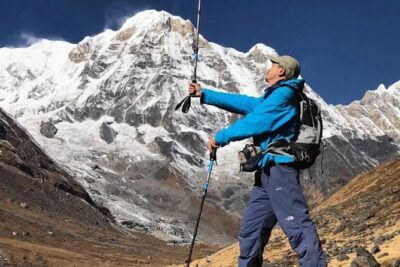
Kathmandu to Annapurna Base Camp (ABC) 5-Day Trek
Read our review →Browse the lists this tour appears in