
REVIEW · KATHMANDU
Tsum Valley Trekking
The quiet begins beyond the river. This 15-day Tsum Valley Trek takes you from Kathmandu into one of Nepal’s most remote mountain valleys, where Tibetan Buddhist culture, suspension bridges, pine forests, and high mountain trails shape each day. I like the small private-group format and the chance to visit places such as Milarepa Cave, Mu Gompa, and Rachen Gompa. I also like that meals and airport transfers are part of the arrangement.
The main trade-off is the physical demand. Several trekking days are listed at seven to twelve hours, and the route reaches high ground near the Tibetan border. The itinerary also includes long road transfers and a few details that should be clarified before booking, especially the Day 9 destination and the length of the return drive.
Key things to know before booking
- Tsum Valley opened to tourism only in 2007, so the area feels far less developed than Nepal’s better-known trekking routes.
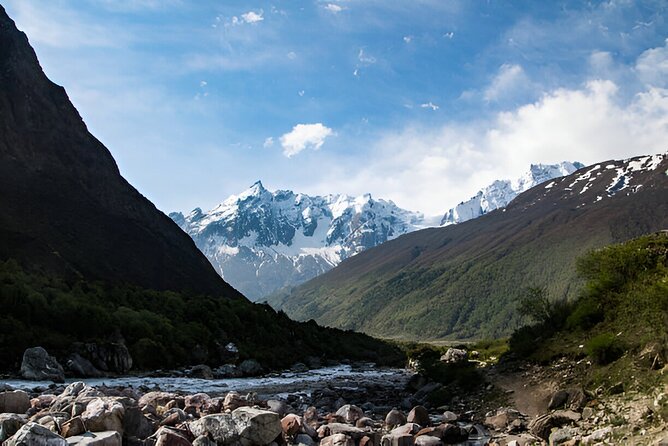
- The route follows the Budhi Gandaki River before turning into the Tsum Valley, with forests, bridges, villages, and steep mountain paths.
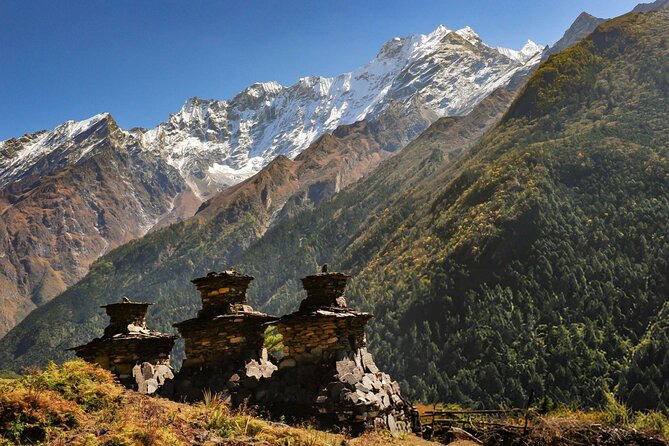
- Buddhist sites are central to the trip, including Milarepa Cave, Mu Gompa, Rachen Gompa, mani walls, chortens, and prayer wheels.
- The trek lasts about 15 days, including two days in Kathmandu at the start, a return night in Kathmandu, and airport transfer time.
- The price is $1,800 per person, with breakfast, lunch, dinner, and private touring included, while flights, visas, insurance, fees, and personal costs are extra.
- You need moderate fitness, and the demanding daily schedules make this a better choice for active hikers than casual walkers.
Why Tsum Valley feels different from the usual Nepal trek
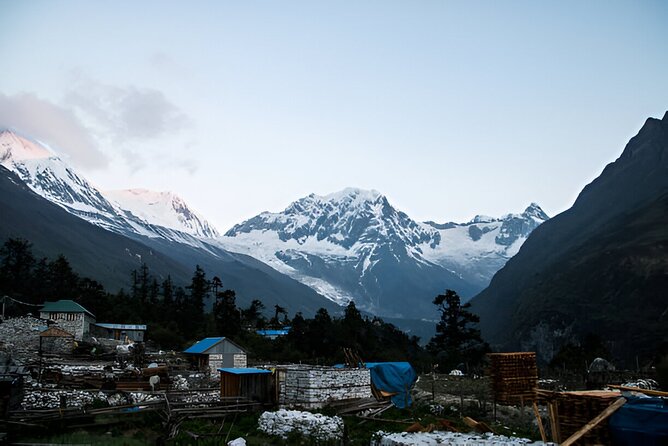
Tsum Valley sits in Nepal’s Gorkha district and contains two remote areas, Chumchet and Chhekampar. The name Tsum comes from the Tibetan word Tsombo, meaning vivid. Its older name, Tsum Tso Chuksums, refers to thirteen provinces once ruled as one territory.
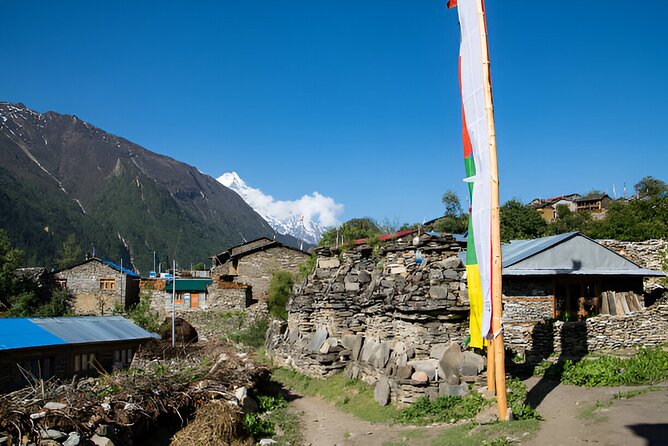
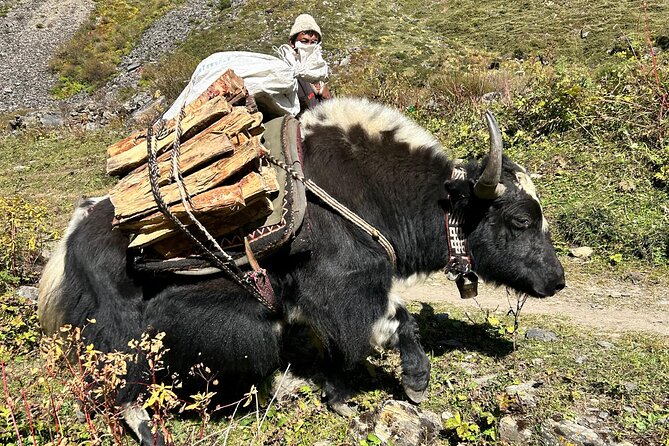
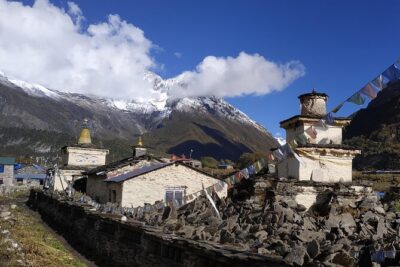
That background matters because the trek is not simply a mountain walk. You are moving through a place with its own cultural identity, long shaped by Tibetan Buddhism and Gurung communities. The route passes prayer wheels, mani walls, chortens, monasteries, nunneries, and villages where the pace is far removed from city life.
The valley was opened for tourism only in 2007. That does not mean you should expect complete wilderness, but it does explain why the route feels quieter and less developed than Nepal’s major trekking corridors. The appeal is not a single famous viewpoint. It is the steady change from river gorge to high valley, along with the religious sites and traditional settlements along the way.
More Manaslu Treks in Kathmandu:
- Manaslu Circuit Trek
★ 5.0 · 292 reviews - Manaslu Circuit Trek:
★ 5.0 · 106 reviews - Manaslu Circuit Trek (15 Days)
★ 5.0 · 50 reviews
Kathmandu gives you culture before the walking starts
Your first day begins with airport pickup at Tribhuvan International Airport and a transfer to a hotel in Thamel. The remaining time is set aside for rest after arrival, which is sensible after an international flight and a potentially busy airport experience.
Day 2 is devoted to Kathmandu Valley’s major cultural sites. You visit Boudhanath Stupa, Swayambhunath, Kathmandu Durbar Square, and Pashupatinath Temple. Each stop takes about two hours, giving you a broad introduction rather than a rushed drive-by tour.
Boudhanath is especially relevant preparation for the trek because Buddhist symbols and practices will continue into Tsum Valley. Swayambhunath adds hilltop views and another important Buddhist site, while Kathmandu Durbar Square and Pashupatinath show different sides of Nepal’s religious and royal past.
I like this opening because it gives the trip a cultural frame. You are not dropped straight into a mountain route without context. The drawback is that Day 2 is full, and Day 3 begins with a long journey, so you should treat the first two days as active orientation rather than a gentle holiday.
The Budhi Gandaki approach takes patience
Day 3 begins the trek toward Machha Khola. You cross the Soti Khola, pass through Sal forest, descend to Lapubesi, and continue toward the overnight stop. The schedule lists about twelve hours, which makes this one of the days to take seriously.
Day 4 follows the river through a narrow valley. You cross Tharo Khola, reach Tatopani, cross the Budhi Gandaki, and continue to Jagat. Again, the listed duration is about twelve hours. The scenery should be rewarding, but the combination of river crossings, uneven trail, and long walking time will test your legs early.
These two days are the approach rather than the main prize, yet they matter. They take you away from Kathmandu and toward the quieter valley route. If you prefer short walks and generous afternoons, this schedule may feel too hard. If you enjoy a proper point-to-point trek, the long approach helps make the later isolation feel earned.
Chumling marks the cultural change
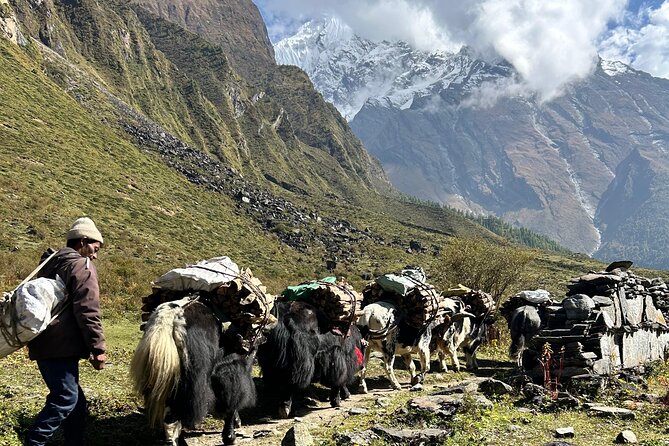
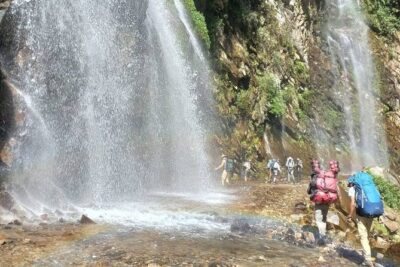
On Day 5, you enter Tsum Valley and climb gradually through pine and rhododendron forests. Suspension bridges add a little drama, while Chumling introduces you to a more traditional Tibetan-influenced setting.
The important change here is not just the scenery. The route begins to feel more culturally distinct, with village architecture and religious details that differ from the lower river settlements. You should pay attention to the smaller features, such as prayer wheels and local buildings, because they often tell you more about the valley than a single mountain photo.
The day is listed at about seven hours, still active but more manageable than the earlier twelve-hour stretches.
A few more treks around Kathmandu worth a look
- Everest Base Camp Trek – 14 Days
★ 5.0 · 1,499 reviews - Everest Base Camp Trek
★ 5.0 · 842 reviews - Everest Base Camp Trekking
★ 5.0 · 485 reviews - Annapurna Circuit Trek with Tilicho Lake
★ 5.0 · 368 reviews
Chhokangparo brings wider mountain views
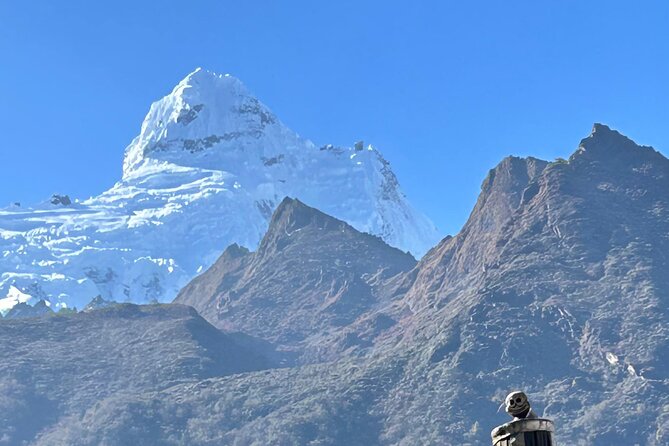
Day 6 continues toward the twin villages of Chhokang and Paro, often referred to together as Chhokangparo. The trail passes small monasteries and prayer wheels and offers views toward Ganesh Himal.
This is a good point in the trek to notice how altitude changes the rhythm. The valley opens out, the mountains become more visible, and the walking day remains long enough to require steady pacing. You are not simply climbing to a viewpoint and returning. The route connects villages and religious places, so the reward comes in pieces.
The itinerary lists approximately seven hours. It also notes that altitude begins to rise, so you should keep your pace controlled and tell your guide if you feel unwell.
Milarepa Cave and Nile are the spiritual high points
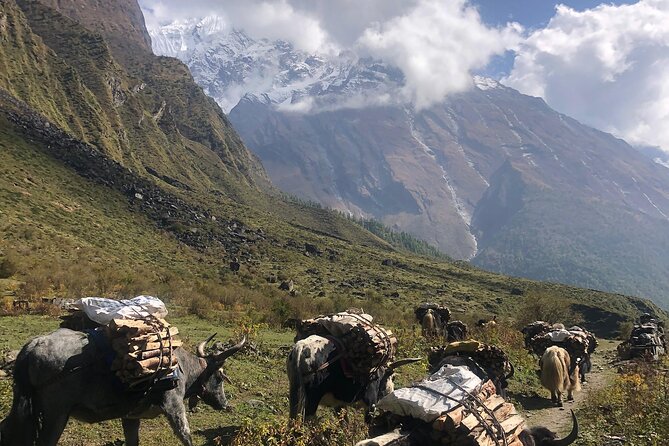
Day 7 takes you through yak pastures, mani walls, and colorful chortens. You pass Lamagaon and Phurbe before visiting Milarepa Cave on the way to Nile, the last village before the Tibetan border.
Milarepa is one of Tibet’s best-known Buddhist saints, and local tradition holds that he meditated in caves among these mountains. The visit gives the trek a strong sense of place. This is not a generic mountain trail with a monastery added for decoration. The religious sites are tied to the valley’s identity and to the stories people continue to preserve.
Nile is reached after about six hours of walking. Its position near the Tibetan border makes it feel like a natural turning point. You are deep into the valley now, and the combination of yak pastures, stone walls, mountain air, and Buddhist landmarks is likely to be among the most memorable parts of the trip.
Mu Gompa is the highest point of the route
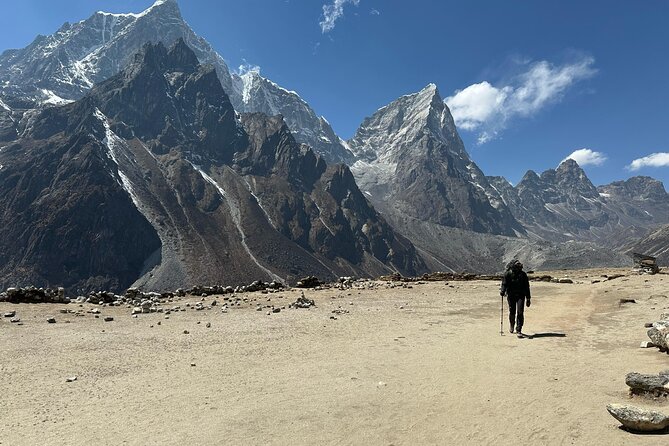
Day 8 is a shorter morning hike to Mu Gompa, identified as the highest point of the trek. The monastery lies near the Tibetan border and is one of the main reasons to choose this route.
The schedule allows about five hours, leaving more time to explore the ancient monastery and take in the surrounding mountains. This is a useful design choice after the longer days. You get a central cultural visit without having to rush through it.
At the same time, the highest point is where altitude deserves respect. The tour requires moderate physical fitness, but that phrase should not be read as meaning easy. You should be comfortable with long mountain walks and prepared for the effects of higher elevation. The provided information does not specify an altitude figure, so ask the operator for exact elevations and their plan for altitude problems before you pay.
Rachen Gompa adds a different Buddhist perspective
Day 9 descends through the valley and includes a visit to Rachen Gompa, described as one of the area’s largest nunneries. You have the chance to learn about the nuns’ daily life and spiritual practice.
This stop broadens the religious picture. Mu Gompa gives you a high monastery experience, while Rachen Gompa shows the role of women in the valley’s Buddhist tradition. The route is listed at about five hours, making it one of the easier walking days.
One practical point needs clarification: the itinerary labels this stop Gorkha, although the description focuses on descending through Tsum Valley to Rachen Gompa. I would ask the provider exactly where you sleep that night and how Gorkha fits into the route. A clear answer will help you understand the actual distance and accommodation plan.
The return route shows familiar ground differently
Day 10 retraces the route through pine forests and small settlements toward Lokpa. You may recognize parts of the trail, but the descent gives you different views of the surrounding mountains and river valleys.
The listed walking time is about seven hours. Returning along the same corridor is not as varied as a loop, yet it has a practical benefit: the route is focused on reaching the road connection safely rather than forcing a more complicated crossing.
Day 11 takes you back to Jagat and reconnects you with the Budhi Gandaki River. Forests, villages, and mountain views fill another day of walking, listed at about twelve hours. This is a demanding schedule late in the trek, so your earlier pacing matters. Save energy rather than treating the high valley as a race.
Day 12 continues toward Machha Khola at lower elevations. The trail combines forest paths, riverside sections, and village life, with about seven hours of walking. The lower altitude may feel easier, but you still have a full day on foot.
Road time is part of the real cost
Day 13 is the return drive to Kathmandu, listed at about twelve hours. Scenic views are part of the journey, but you should not mistake a long road transfer for a rest day. After the trek, sitting in a vehicle for most of a day can be tiring.
You spend Day 14 in Kathmandu with free time for shopping, souvenirs, or additional activities. This buffer is useful because it gives you time to recover and leaves some room if the mountain schedule or road conditions change. The description also lists twelve hours for the day, but that appears to indicate an open day rather than twelve hours of organized touring.
Day 15 includes the transfer to the airport for your international departure. The meeting point is Tribhuvan International Airport, and pickup is offered at the beginning of the trip.
What the $1,800 price really covers
At $1,800 per person, this is not a low-cost independent trek. The value comes from having a private activity for your group, airport transfers, Kathmandu sightseeing, trek organization, and three daily meals included throughout the 15-day program.
Breakfast, lunch, and dinner are included for all 15 days. That removes a major part of the daily planning, especially in remote areas where food choices may be limited. Entrance tickets are included for several Kathmandu sites and Mu Gompa, though the supplied details do not clearly explain every permit or government charge.
You still need to budget for international flights, visa costs, government fees, travel insurance, and personal or natural expenses. The phrase personal or natural expenses is unclear, so ask the provider what it covers. You should also confirm accommodation standards, porter arrangements, guide services, permits, and exactly which entrance fees are included.
Group discounts may improve the value for larger parties. Since this is a private tour, only your group participates, which gives you more control over pace and breaks than a large shared departure. That privacy is particularly useful on long walking days, but it does not remove the physical difficulty.
Who will get the most from this trek
I would recommend this route to you if you want Buddhist culture, remote villages, and a quieter mountain setting more than polished facilities or famous crowds. It suits people who can handle several long walking days and are comfortable with simple, remote travel.
It is also a strong choice if you enjoy seeing how a place changes from the low river corridor to the high valley. You get forests, suspension bridges, village life, yak pastures, monasteries, a nunnery, and a borderland setting in one journey.
I would hesitate if you want short walks, reliable road times, or a clearly gentle itinerary. The twelve-hour days on the approach and return deserve careful attention. Before booking, ask for the exact daily elevations, accommodation names, permit details, transport conditions, and the correct overnight location for Day 9.
Service animals are allowed, but the tour requires moderate physical fitness. That permission should not be taken as proof that the trail is suitable for every animal or every level of mobility. Ask the operator directly about the trail conditions for your needs.
Cancellation terms are strict close to departure. Cancel at least six full days before the start time for a full refund. Cancellation two to six full days ahead allows a 50 percent refund, while cancellations less than two full days before departure are not refunded.
Should you book the Tsum Valley Trek?
Book this trek if your ideal Nepal trip includes quiet villages, Buddhist sites, and a demanding route away from the main circuits. Milarepa Cave, Mu Gompa, Rachen Gompa, and the approach through the Budhi Gandaki corridor give the trip real character.
Think twice if you want a relaxed holiday or dislike long road transfers. The $1,800 price is reasonable for a private, meal-inclusive, 15-day program, but its value depends on what is included in the government fees, permits, accommodation, and guide support. Get those details in writing, confirm the Day 9 plan, and make sure your fitness matches the schedule. If those points check out, this is a compelling way to see one of Nepal’s more secluded cultural valleys.
FAQ
How long is the Tsum Valley Trek?
The experience lasts approximately 15 days, including time in Kathmandu, the trek, the return drive, a free day in Kathmandu, and airport transfer.
Where does the trek begin?
The trip begins with pickup at Tribhuvan International Airport in Kathmandu, Nepal.
What is the price per person?
The listed price is $1,800 per person.
Are meals included?
Yes. Breakfast, lunch, and dinner are included for all 15 days.
Are international flights included?
No. International flights are not included.
Is travel insurance included?
No. You must arrange and pay for travel insurance separately.
What level of fitness is required?
A moderate level of physical fitness is required. Several walking days are listed at seven to twelve hours.
Is this a private tour?
Yes. Only your group participates in the activity.
Which Buddhist sites are visited?
The route includes Milarepa Cave, Mu Gompa, Rachen Gompa, small monasteries, prayer wheels, mani walls, and chortens. The Kathmandu portion includes Boudhanath Stupa, Swayambhunath, and Pashupatinath Temple.
What is the cancellation policy?
You can receive a full refund if you cancel at least six full days before the start time. Cancellation two to six full days ahead receives a 50 percent refund. Cancellations less than two full days before the start time are not refunded.
Recently added around Kathmandu
- Ghorepani Poon Hill Trek★ 5.0 · 16 reviews
- Amazing 1 Day Trekking Experience in Kathmandu Nepal★ 5.0 · 24 reviews
- Private Manaslu Circuit Trek at Himalayas★ 5.0 · 3 reviews
- Ghorepani Poonhill Trek★ 5.0 · 5 reviews
- Upper Mustang Trekking★ 5.0 · 2 reviews
- Upper Mustang Trekking★ 3.0 · 2 reviews
- Upper Mustang Trekking★ 5.0 · 4 reviews
- Upper Mustang Trek★ 5.0 · 5 reviews
Manaslu Circuit Treks, compared.
16 Day Private Manaslu Circuit Trek from Kathmandu
Read our review →
10 Days Manaslu Circuit Trek in Larke La Pass
Read our review →Browse the lists this tour appears in