
REVIEW · KATHMANDU
16 Day Private Manaslu Circuit Trekking
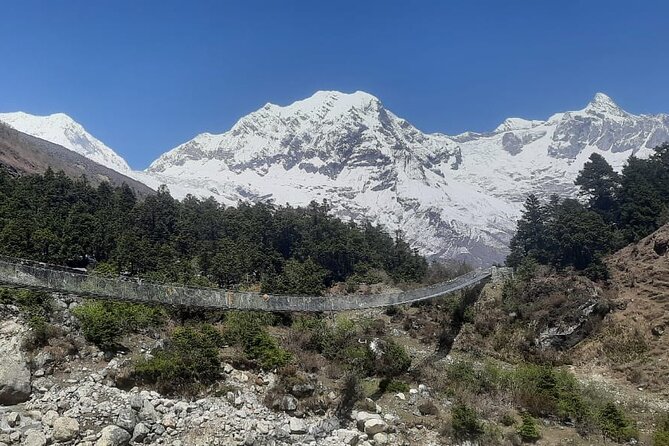
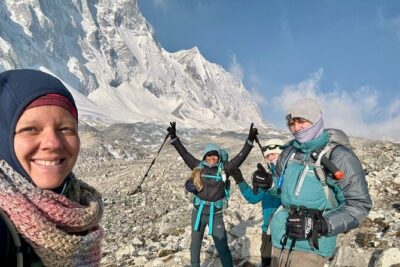
High passes reward patient feet. This 16-day private Manaslu Circuit Trek gives you a quieter Himalayan route, traditional Gurung and Tibetan villages, comfortable teahouses, and a serious crossing of Larkya La Pass. I like the small-group format and the fact that permits, porters, meals, accommodation, airport transfers, and safety arrangements are covered in one price.
I also like the steady change in scenery, from river valleys and waterfalls to pine forests, glaciers, monasteries, and high mountain viewpoints. The main drawback is clear: this is a demanding trek with long walking days, basic facilities, rough road transfers, and one very hard pass-crossing day. You need good physical fitness, patience, and proper travel insurance.
Key points to know before booking
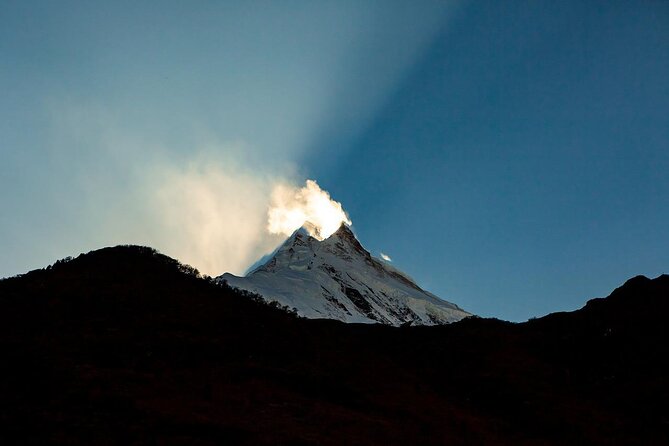
- Larkya La Pass is the big test: The crossing reaches the highest point of the route and can take about 10 hours, including the descent to Bhimtang.
- The route is quieter than Everest and Annapurna: You get fewer crowds, but also fewer shops and trekking facilities.
- Teahouse accommodation keeps your pack manageable: You do not need to carry tents and a full food supply, though facilities become simpler at higher elevations.
- The private format offers flexibility: Only your group participates, and an assistant guide is added when the group has more than six people.
- The price covers a lot: At $1,098 per person, permits, meals on trek, porters, guide costs, gear, Kathmandu hotels, and transport are included.
- Altitude planning matters: The itinerary includes an acclimatization day in Samagaon, but you should not treat that rest day as optional without careful thought.
Why the Manaslu Circuit feels different
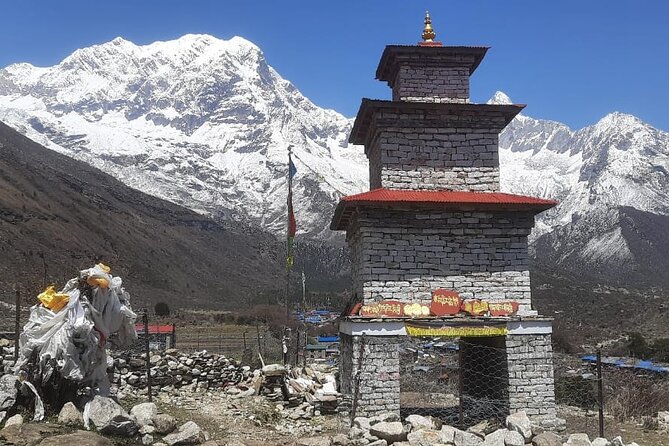
Manaslu was opened to trekkers in 1992, and the circuit still feels less developed than Nepal’s best-known routes. You walk through the Gorkha district along the Budhi Gandaki River, passing Gurung villages, Buddhist monasteries, yak pastures, glacier views, and high mountain settlements.
That lower visitor count is part of the appeal. You will not find a shop or lodge at every turn, and that means the route feels more like a journey through a living mountain region than a busy hiking corridor. The trade-off is that accommodation and food choices can be limited, especially farther north.
The route does not require you to carry camping equipment. Teahouses provide beds and meals, while porters carry much of your gear. That makes the trek possible for people who want a real Himalayan route without organizing a full camping expedition.
The tour is private, so only your party takes part. That is useful if you are traveling with family or friends, or if you want the pace adjusted around your group. It also means you should ask clear questions before departure about walking speed, porter loads, meals, emergency procedures, and the condition of the road.
More Manaslu Treks in Kathmandu:
- Manaslu Circuit Trek
★ 5.0 · 292 reviews - Manaslu Circuit Trek:
★ 5.0 · 106 reviews - Manaslu Circuit Trek (15 Days)
★ 5.0 · 50 reviews
Days 1 and 2: Kathmandu preparation and a first look at Nepal
Your trip begins with airport pickup at Tribhuvan International Airport. You are taken to a hotel in Kathmandu, usually in the Thamel area, the city’s main tourist district. It is a practical base for restaurants, trekking shops, money exchange, and last-minute supplies.
The second day is set aside for preparation. A meeting with your trekking team gives you time to discuss the route and check equipment. I would use this day seriously rather than filling every hour with sightseeing.
Kathmandu Durbar Square is only a short distance from Thamel and offers a useful introduction to Nepal’s religious and architectural traditions. You can visit ancient temples and the UNESCO-listed square before the walking begins.
The package includes Kathmandu accommodation with breakfast. Lunch and dinner in the capital are not included, so budget separately for those meals. A welcome or farewell dinner at a Nepali restaurant is included.
Day 3: The long road to Machha Khola
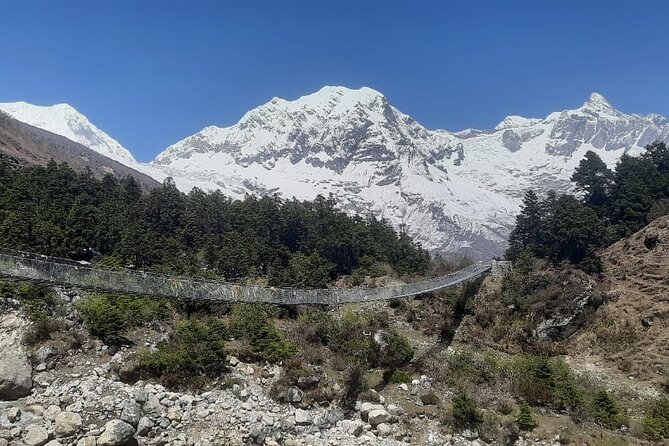
The first major transfer takes you west from Kathmandu toward the Manaslu region. You follow the Trishuli River to Malekhu, cross the river, and continue toward Arughat, an old trading outpost.
From Arughat, the road follows the Budhi Gandaki River. Mountain views begin to appear, including Manaslu, Ganesh, and Himalchuli. The route continues through Soti Khola before reaching Machha Khola, where you spend the night.
This is a long day of about nine hours. Much of the effort comes from the road rather than your feet, and the journey can feel tiring after an international flight and Kathmandu preparation. Local shared transport is included, while a private jeep is available for an additional cost.
If you value comfort or are traveling with a small private group, ask about the jeep before booking. The shared bus costs less, but the private option may give you more control over stops and space.
Days 4 and 5: River valleys, hot springs, and Gurung villages
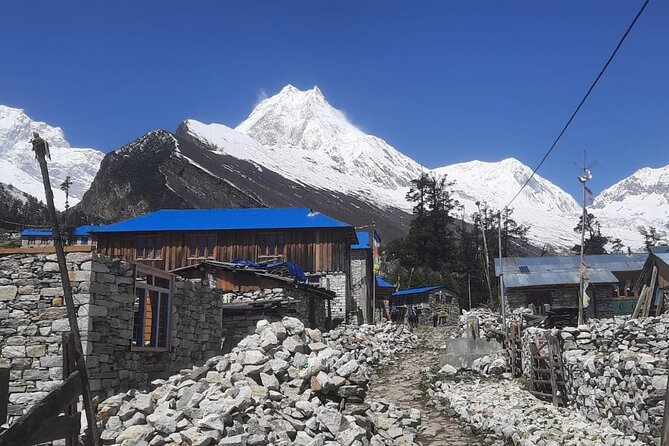
From Machha Khola, the route follows the increasingly powerful Budhi Gandaki. You cross the Thado Khola and reach Khorla Besi, a Gurung village where you can stop for Tibetan tea.
A hot spring near Tatopani offers a chance to soak if conditions and timing allow. After that, the trail passes through Yaru Phant and thickening forest before reaching Jagat. The day takes about seven hours.
Jagat is an important point on the route, and the scenery begins to feel more enclosed and mountainous. The river is louder, the trail more varied, and the forest gives welcome shade. You should still expect uneven footing and a steady climb.
The next day takes you through Salleri, Ghatta Khola, and Philim. Officials check trekking permits at Philim, which is a large Gurung settlement. The route then turns north through barley and millet terraces, waterfalls, pine and rhododendron forest, and across the Siyar Khola.
You finish at Deng after about seven hours. Tsum Valley lies to the right at this point, but this itinerary does not include the side trip. If that valley interests you, ask about it before confirming your dates, since adding it would change the schedule.
A few more treks around Kathmandu worth a look
- Everest Base Camp Trek – 14 Days
★ 5.0 · 1,499 reviews - Everest Base Camp Trek
★ 5.0 · 842 reviews - Everest Base Camp Trekking
★ 5.0 · 485 reviews - Annapurna Circuit Trek with Tilicho Lake
★ 5.0 · 368 reviews
Days 6 and 7: Wider views and the first clear sight of Manaslu
The walk from Deng begins with Rana hilltop and a bridge to Bihi Phedi. The Budhi Gandaki Valley opens wider here, and the mountains begin to occupy more of your view.
You pass Prok and Ghap, two traditional Gurung villages. Prok is known for its view of Siringi Mountain. The trail then continues to Namrung after roughly six hours.
This is one of the strongest sections for people who enjoy a gradual change in culture and scenery. Lower forests and cultivated fields give way to more open mountain country, while the villages retain their local character.
From Namrung, you walk gently upward through pine forest and small settlements toward Lho Gham. The listed walking time is about four to five hours, making this a shorter day than many earlier sections.
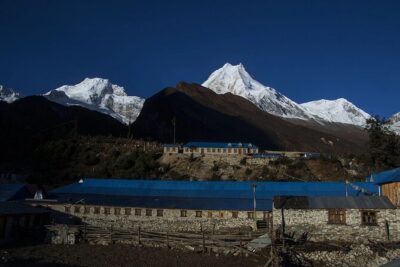
Lho is one of the memorable villages on the route. You get a clear view of Mount Manaslu and can visit the large monastery. This is a good place to slow down. A few quiet minutes inside the monastery can be more rewarding than rushing through another viewpoint.
The itinerary describes this day as only five minutes in one place, but the actual walk is clearly intended to take several hours. Treat the four to five-hour estimate as the useful planning figure and confirm the exact schedule with your guide.
Days 8 and 9: Samagaon and the essential rest day
The route continues toward Samagaon through Sho, Sama, and Shyala. Shyala offers views of Himalchuli, Manaslu, Peak 29, and large glaciers. Sama has the Ribung Monastery, adding another cultural stop to a day already full of mountain scenery.
After about five hours, you reach Samagaon, one of the larger settlements in the region. It is home to Gurung and Sherpa communities and is an important rest point before the highest section of the trek.
Day 9 is reserved for acclimatization. You can explore Samagaon, learn about the local Buddhist community, or hike toward Pung Yen Monastery. A longer trip toward Manaslu Base Camp is also possible, taking about five to six hours, but it should be arranged in advance because you need to preserve enough time for acclimatization.
I would not casually skip the rest day. The schedule climbs steadily, and the next days take you above the tree line toward Larkya La. The pause in Samagaon is not wasted time. It is part of the safety plan.
Days 10 and 11: Samdo, glaciers, and Larkya La Phedi
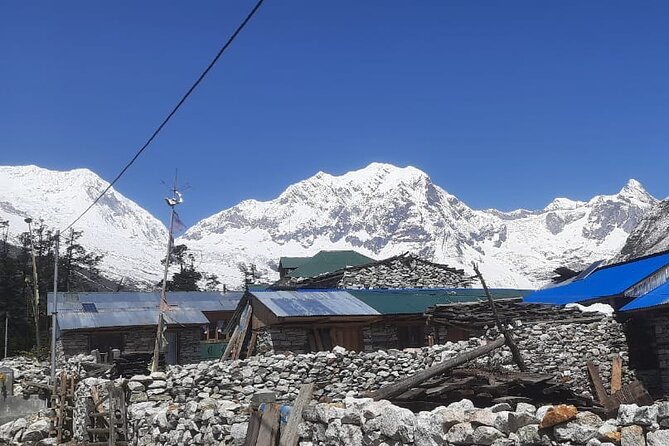
Leaving Samagaon, you follow the Budhi Gandaki toward the northern edge of the Manaslu region. At a junction, one route leads toward Manaslu Base Camp and the other toward Larkya La. This trek takes the pass route.
The walking is relatively gentle at first, with Kemro Kharka serving as a yak grazing area. Birch, pine, and juniper appear along the route, and the village of Kani comes into view before Samdo.
Samdo is largely inhabited by Tibetan asylum seekers. You can visit Samdo Monastery if time and energy allow. The village gives you a strong sense of how high and remote this part of the route has become.
The next day leads to Larkya Bazaar, a seasonal market with monasteries and stupas along the way. You cross the Athara Saya River, Larke River, and Salka Khola before reaching Dharamsala, also called Larkya La Phedi.
The day is only about four hours of walking, but the altitude makes it difficult. You can see Larke Glacier near Dharamsala, and the short schedule gives you a chance to rest before the hardest day.
Facilities at this height are basic. Do not expect the same comfort you had in Kathmandu or lower villages. Carry layers, water, personal medication, and any small comfort items you rely on.
Day 12: The hard crossing of Larkya La
This is the defining day of the circuit. You start early and cross icy glacial moraines near Larkya Glacier before reaching Larkya La Pass, the highest point of the trek.
The walking day can last about 10 hours. The route is hard because of the altitude, cold conditions, uneven ground, and the long descent that follows. Views include Larkya Peak, Cho Danda, Manaslu, Himalchuli, Cheo Himal, Gyagi Kunja, Kang Koru, Ganesh Mountain, and Ratna Chuli.
You pause at the pass for photographs, then descend to Bhimtang. The descent is not an easy finish. Your legs have already done the hardest climbing, but the downhill trail can be rough and tiring.
This day is where fitness and pacing matter most. You should follow your guide’s instructions, keep your own pace steady, and avoid treating the pass as a race. If the weather turns poor, the experience provider may offer a different date or a full refund, but mountain conditions can still affect the daily schedule.
Days 13 and 14: Rhododendron forest and the Annapurna connection
Bhimtang rewards you with a broad mountain view in the morning. From there, the route descends toward Sangure Kharka, then through rhododendron forest and cultivated areas near Karche.
A small river from Dudh Pokhari crosses the route, and flowers appear as you lose altitude. You continue through Gho to Tilje, a Gurung village where you spend the night.
This section feels like a reset after the high pass. The forest returns, the air gets warmer, and the route becomes greener. The eight-hour walking day is still substantial, especially after Larkya La, so do not assume the downhill direction makes it easy.
The next day takes you through Thonje toward Dharapani. Here you meet the Marsyangdi River and connect with people walking the Annapurna Circuit. The landscape shifts again, with rhododendron, pine, utis, khayar, and sal trees.
You continue to Chyamje, a sizable settlement that serves as a gateway toward the upper Annapurna and Manaslu areas. The day takes about seven hours. It is a satisfying finish to the walking portion, though the route is not yet over.
Day 15: The rough road back to Kathmandu
The final transfer begins with a drive from Chyamje to Besisahar. Expect a bumpy road, waterfalls, rivers, and traditional villages along the way.
From Besisahar, the road to Kathmandu follows the Marsyangdi and Trishuli rivers, passing through Dumre and the Mahabharata hill range before entering the capital through Nag Dhunga Pass. The complete drive takes about nine hours.
This is not a glamorous final day, but it is useful to have the transfer included. You do not need to arrange separate transport after a demanding trek. You spend the night at a Kathmandu hotel, with airport drop-off available the next day.
What the $1,098 price really covers
At $1,098 per person, the package offers strong value if you use the included services. It covers airport transfers, Kathmandu accommodation with breakfast, trek accommodation, meals during the trek, required permits, a guide, porters, local transport, government taxes, company charges, and basic trekking equipment.
The permit package includes Manaslu, Annapurna, Special Immigration, and TIMS permits. One porter is shared between two paying people, and the porter package includes expenses and insurance. Groups of more than six receive an assistant guide.
You also receive a down jacket, sleeping bag, duffel bag, T-shirt, trekking map, and first aid kit. Worst-case rescue and medical evacuation arrangements are listed, but your own travel and rescue insurance is not included. That insurance is essential for a trek of this difficulty.
You pay separately for international flights, Nepal visa fees, drinks, hot showers, WiFi, laundry, battery charging, personal expenses, extra porter costs, Kathmandu lunches and dinners, tips, and any extra accommodation caused by delays or early arrival.
The optional private jeep costs extra for both the outward and return road transfers. If road comfort matters to you, add that cost before deciding if the total fits your budget.
Who should book this trek?
I would recommend this trip to you if you want a quieter alternative to Everest or Annapurna, enjoy village-to-village walking, and can manage long days at altitude. It suits people who value scenery, local communities, Buddhist monasteries, and a route that still feels less built up.
It is not a good choice if you want smooth roads, comfortable hotels throughout, flexible food choices, or short walking days. You also need to accept that facilities are limited and the route can be affected by weather and road conditions.
The company has been praised for personal service from its owner, Shishir. Guides named in past trips include Rajendra, Lok, and Purna, with particular appreciation for guide and porter support when altitude or food caused difficulties. Ask who will lead your particular departure, since the guide assigned to your group may differ.
Cancellation is generous only up to three full days before the start time. After that, the payment is not refunded, and changes are not accepted. Keep this rule in mind when arranging flights.
Should you book the Manaslu Circuit Trek?
Book it if you want a serious Himalayan circuit with fewer crowds, strong mountain views, teahouse accommodation, and a private support team at a reasonable price. The route gives you far more than a mountain photo: you walk through Gurung and Tibetan communities, cross a major high pass, and follow rivers from low valleys to glacier country.
Skip it if you are not ready for the 10-hour Larkya La day, basic high-altitude lodging, rough road journeys, and the physical demands of a two-week trek. For a fit and prepared walker, this is one of Nepal’s most rewarding long routes, provided you respect the mountains and keep the schedule’s acclimatization day intact.
FAQ
How long is the Manaslu Circuit Trek?
The organized trip lasts approximately 16 days, including arrival, preparation, trekking, the return drive to Kathmandu, and departure.
Where does the trek start?
The experience begins at Tribhuvan International Airport in Kathmandu, where airport pickup is provided.
Is this a private trek?
Yes. Only your group participates in the activity.
What accommodation is provided?
Kathmandu accommodation is included according to the schedule, with breakfast. During the trek, you stay in teahouses. Camping equipment is not required for the listed route.
Are meals included?
Meals and accommodation during the trek are included. Breakfast is included in Kathmandu, but lunch and dinner in Kathmandu are not included.
Is the Larkya La Pass included?
Yes. Crossing Larkya La Pass is scheduled for day 12 and is the highest point of the route.
Is there an acclimatization day?
Yes. Day 9 is reserved for acclimatization in Samagaon. Optional activities include exploring the village, visiting Pung Yen Monastery, or arranging a longer walk toward Manaslu Base Camp.
What transport is included?
Airport transfers use a private vehicle. Local shared buses are included for the road to Soti Khola and the return to Kathmandu. A private jeep can be arranged for an extra charge.
Is travel insurance included?
No. Travel and rescue insurance, including emergency evacuation coverage, is not included and must be arranged separately.
Recently added around Kathmandu
- Ghorepani Poon Hill Trek★ 5.0 · 16 reviews
- Private Manaslu Circuit Trek at Himalayas★ 5.0 · 3 reviews
- Amazing 1 Day Trekking Experience in Kathmandu Nepal★ 5.0 · 24 reviews
- Ghorepani Poonhill Trek★ 5.0 · 5 reviews
- Upper Mustang Trekking★ 5.0 · 2 reviews
- Upper Mustang Trekking★ 3.0 · 2 reviews
- Upper Mustang Trekking★ 5.0 · 4 reviews
- Upper Mustang Trek★ 5.0 · 5 reviews
Manaslu Circuit Treks, compared.
16 Day Private Manaslu Circuit Trek from Kathmandu
Read our review →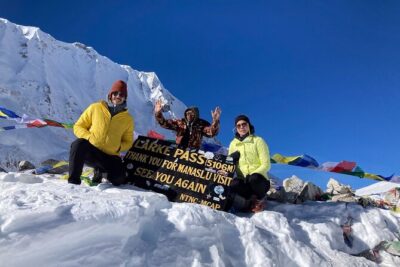
10 Days Manaslu Circuit Trek in Larke La Pass
Read our review →Browse the lists this tour appears in