
REVIEW · KATHMANDU
Manaslu Circuit Trek
Quiet trails, serious mountains. The Manaslu Circuit Trek gives you the chance to see Mt. Manaslu, the world’s eighth-highest peak, while walking through villages shaped by Tibetan culture. I like the quieter trails and the steady change from subtropical forest to high alpine country. I also like that permits, meals, guides, porters, and tea house lodging are included. The catch is clear: Larkya La Pass reaches 5,135 meters, and snow or altitude sickness can turn a demanding walk into a very hard one.
This is not a casual mountain holiday. You should be ready to walk five or six hours a day, sometimes closer to eight hours or about 15 kilometers, while carrying a light personal pack. The remote setting is the reward, but basic tea houses, changing trail conditions, and limited options after heavy snowfall require patience.
I especially appreciate the practical care built into the plan. Airport pickup, city hotels, permits, staff insurance, and a guide for the entire trek take away much of the usual planning work. Guides such as Pradip, Sonam, Dendi, Dorji, and Ang Dawa have led past departures, with porters including Rabin and Karma praised for helping trekkers feel safe and well supported.
What makes this trek worth your time
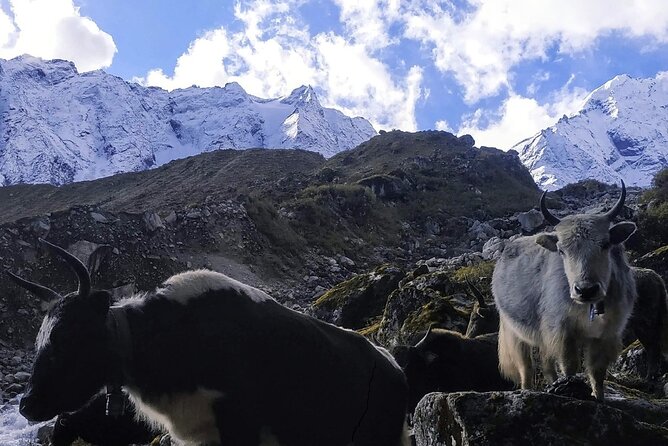
- Mt. Manaslu at 8,156 meters: You get repeated views of one of the world’s highest peaks, along with Ganesh Himal and other snow-covered summits.
- Larkya La at 5,135 meters: The high point is a real mountain crossing, with difficulty shaped by the amount of snow on the pass.
- A quieter Himalayan route: The Manaslu Circuit is less crowded than the Everest Base Camp and Annapurna Base Camp routes.
- Two conservation areas: The trail passes through the Manaslu Conservation Area and the Annapurna Conservation Area.
- Tibetan-influenced villages: The route offers a close look at local customs, mountain homes, and Himalayan life.
- A fully supported package: Meals, tea house lodging, permits, airport pickup, guides, porters, and city stays are included.
The big picture: 19 days of changing scenery
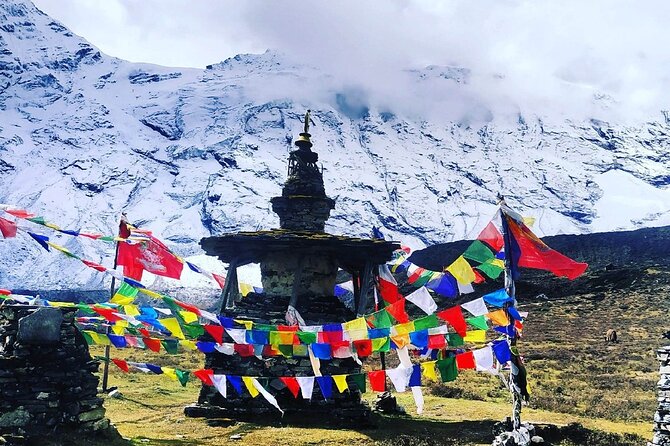
The advertised duration is about 19 days, 6 hours, including time in Kathmandu before and after the trek. That longer schedule is useful because the route starts at a relatively low altitude and rises gradually toward Larkya La.
You are not simply walking toward one viewpoint and turning around. The experience changes by altitude. Early sections offer subtropical forest and lower mountain scenery. Higher sections bring colder air, open slopes, snow, and much bigger views of Manaslu and neighboring peaks.
The trek is described as moderately strenuous, but that label should not make you too relaxed. The pass, long walking days, altitude, and remote setting make this a serious outing for people with a reasonable fitness base. A daily hour of jogging, hiking, cycling, gym work, or similar exercise in the weeks before departure is sensible preparation.
More Manaslu Treks in Kathmandu:
- Manaslu Circuit Trek
★ 5.0 · 292 reviews - Manaslu Circuit Trek:
★ 5.0 · 106 reviews - Manaslu Circuit Trek (15 Days)
★ 5.0 · 50 reviews
Kathmandu arrival and the first practical steps
The experience begins at Tribhuvan Airport in Kathmandu, with a listed start time of 9:45 a.m. Pickup is offered, which matters after a long international flight and gives you a clear first contact with the local team.
The package includes four nights of accommodation before and after the trek. In the cities, the quoted price is based on three-star hotels or resorts. You can request different arrangements, and rooms may be set up as single, double, triple, or twin sharing.
Those Kathmandu nights are more than a soft landing. They give you time to adjust, organize your pack, meet the guide, and handle the practical side of a high-altitude trip. The package also includes a welcome and farewell dinner, adding a pleasant bookend to a long journey.
Leaving the lower valleys for Manaslu country
The trail begins at a low altitude compared with the pass, then rises through forest, river valleys, and traditional villages. The gradual climb is one of the most valuable parts of the route because your body has time to adjust as the scenery changes.
The lower sections are not just filler before the mountains arrive. Dense subtropical forest, village life, and changing plant life give you a sense of how many climate zones fit into one Himalayan route. The path eventually becomes more exposed and alpine as you gain height.
Transportation is included for the start and end of the trek. Exact road details are not specified, but past departures have used jeeps for these sections. Road travel in the mountains can be rough and tiring, yet it saves walking time and allows the trek to focus on the main circuit.
Villages, tea houses, and the human side of the route
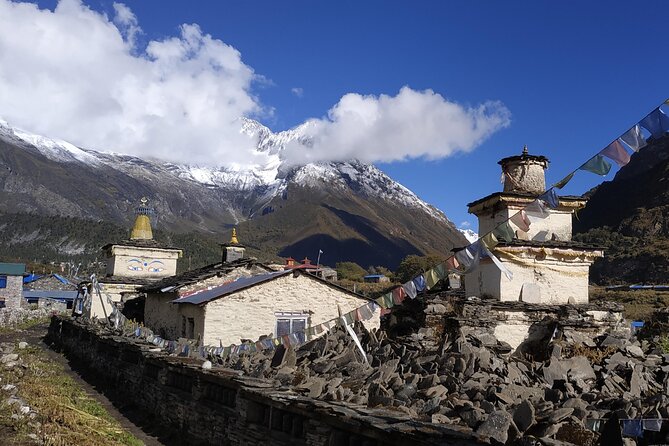
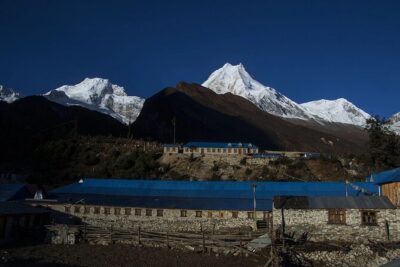
The Manaslu region is valued for its traditional settlements and strong Tibetan cultural influence. You will pass through communities where the mountain setting is not a backdrop for tourism but part of everyday life.
That cultural element is a major reason to choose this circuit over a more familiar Himalayan route. You get time to notice homes, local customs, food, and the rhythm of village life as you walk from one settlement to the next.
Tea houses provide overnight accommodation along the trail. They are described as comfortable but basic, which is the right expectation. You should not picture polished mountain resorts. Rooms can be arranged as single, double, triple, or twin sharing, depending on availability and your needs.
The same tea house generally provides dinner and breakfast. Lunch is eaten along the route. Food options can include Nepali, Continental, Tibetan, Indian, and Italian dishes, although menus may become simpler and more similar in remote sections. The basic setting is part of the experience, but it also means you should pack patience and keep expectations practical.
A few more treks around Kathmandu worth a look
- Everest Base Camp Trek – 14 Days
★ 5.0 · 1,499 reviews - Everest Base Camp Trek
★ 5.0 · 842 reviews - Everest Base Camp Trekking
★ 5.0 · 485 reviews - Annapurna Circuit Trek with Tilicho Lake
★ 5.0 · 368 reviews
Manaslu views and the approach to high country
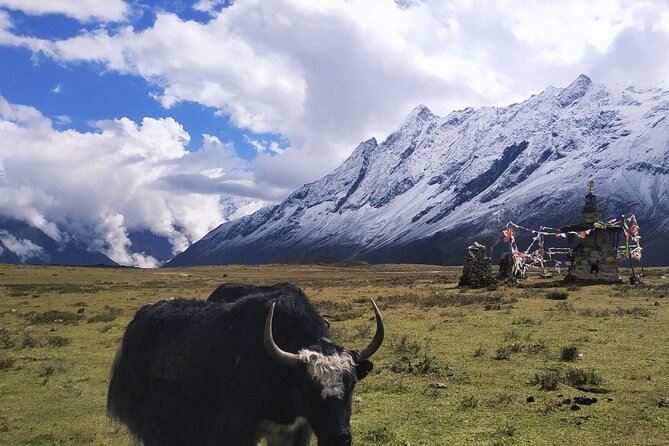
Mt. Manaslu is the star of the route. At 8,156 meters, it dominates the high mountain scenery, while Ganesh Himal, listed at 7,406 meters, adds another striking presence. You may also see many other snow-covered peaks as the route climbs.
The views are not limited to one final lookout. The appeal comes from watching the mountain world change day by day. Forest gives way to more open terrain, then to high alpine surroundings where snow and rock take over.
This section also shows why the trek needs a careful pace. The route can feel manageable at lower elevations, then become tiring as the air thins. You are advised to walk slowly and steadily, rather than race ahead on a good day and pay for it later.
Altitude sickness is a real concern. The tour information stresses prevention, and that is good advice. Previous short trekking experience is helpful, but technical mountaineering skills are not required. You still need moderate fitness and the ability to walk for several hours while carrying a light pack.
Crossing Larkya La at 5,135 meters
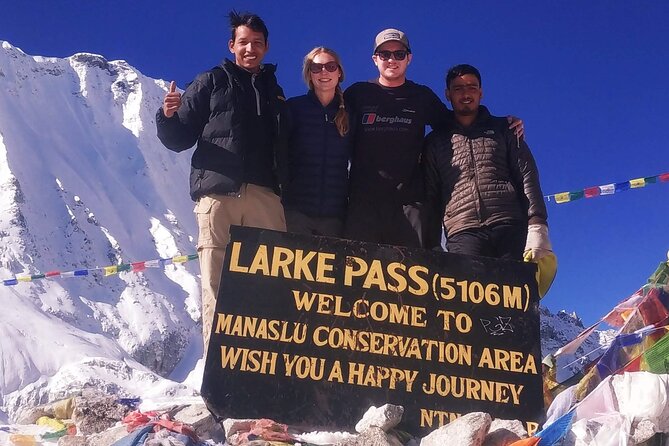
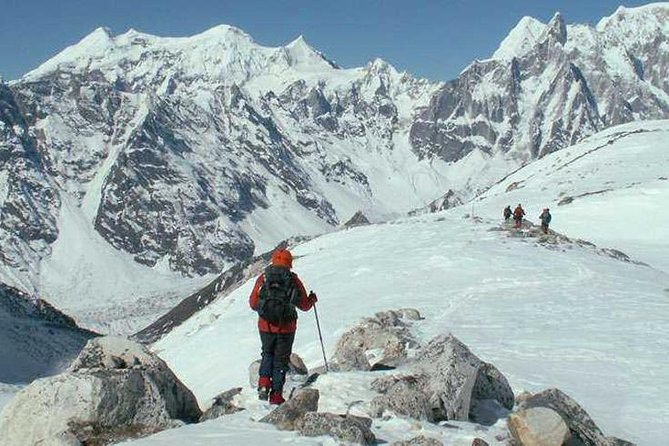
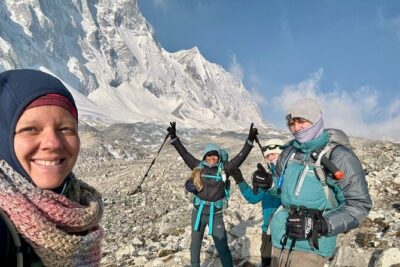
Larkya La is the defining challenge of the Manaslu Circuit. At 5,135 meters, it is high enough to demand respect, even from fit hikers. The crossing is not a technical climb, but conditions can change the character of the day.
Snow is the key variable. In some seasons, the pass may have large snow walls. At other times, less snow can make the route easier. Heavy snowfall has forced some departures to turn back rather than cross, and that is an important lesson: reaching the pass is never more important than making a safe decision.
A successful crossing can be one of the great achievements of your Nepal trip. You earn the views by walking at altitude, dealing with cold and fatigue, and keeping a steady pace. If the pass cannot be crossed, the scenery at lower and mid-level elevations still offers considerable value, but you should accept before departure that weather controls this part of the route.
The descent and the Annapurna Conservation Area
After the pass, the route descends toward the Annapurna Conservation Area. This gives the trek another change of setting rather than simply retracing the way up.
The descent can feel easier because you are losing altitude, but tired legs and long walking days still matter. Good footwear, walking poles if you use them, and careful steps are more useful here than speed.
The inclusion of both the Manaslu and Annapurna conservation areas adds real value. You see more than one protected mountain region and pass through a wider range of environments. The result is a trek with variety, not a single repeated view.
Guides, porters, and the value of support
A guide accompanies you for the entire trek, and the package includes the required number of porters. Staff food, clothing, salary, and insurance are also covered.
That support matters on a remote route. A guide can help with permits, pacing, route decisions, and communication in villages. A porter allows you to keep your personal pack light, which is especially useful on the approach to Larkya La.
Past departures have used guides including Pradip, Min, Sonam Sherpa, Dendi, Dorji, and Ang Dawa. Porters such as Rabin Tamang and Karma have also been specifically praised for their care and reliability. Guide assignments can change, so treat these names as examples rather than a promise of who will lead your departure.
The package does not include rescue or evacuation. You should have suitable travel insurance that covers high-altitude trekking and emergency evacuation. Tips are also not included, so budget separately for gratuities to the guide, porters, and other staff.
What the $1,955 price really covers
At $1,955 per person, this is not a bare-bones trek. The price includes four city nights before and after the mountain section, airport pickup, welcome and farewell dinners, all trekking meals, tea house accommodation, permits for the Manaslu region and Annapurna Conservation Area, taxes, paperwork, a guide, porters, and staff costs.
That package can offer good value if you want a guided trek without arranging each piece yourself. Permits and logistics for a restricted Himalayan region are not minor details, and having meals and lodging organized reduces daily decisions.
Still, the price does not cover everything. Drinks, bar bills, personal expenses, evacuation, and tips are extra. City accommodation is based on three-star properties, and trail lodging is basic tea house accommodation. You are paying for access, support, and organization, not luxury.
The group limit is 15 people. That is large enough to create a social atmosphere but still manageable on a mountain trail. Ask about your expected group size before booking if a smaller group is important to you.
Best seasons and the months to avoid
The strongest periods are March, April, and May in spring, followed by September, October, and November in autumn. These months are recommended for clearer, warmer conditions and better mountain views.
December through February can suit people who prefer fewer people on the trail and do not mind colder conditions. Snow may add difficulty, especially near Larkya La, so you need more flexibility.
June, July, and August are monsoon months and are described as poor for this trek because of rain. Wet roads, cloud, and trail conditions can make an already remote route much less pleasant.
Who should book this trek?
I would recommend it to you if you want a quieter alternative to the best-known Nepal routes, enjoy village-based travel, and are prepared for long mountain days. It suits hikers who want dramatic peaks but also care about local culture and changing scenery.
You should think twice if you want a soft adventure, hotel comfort throughout, fixed conditions, or short daily walks. The route is remote, the tea houses are basic, and snow can change the plan.
The trek is suitable for people with moderate physical fitness. Technical climbing ability is not required, but you should be comfortable walking five or six hours a day and carrying a light personal backpack. Previous trekking experience is useful, though not mandatory.
Should you book the Manaslu Circuit Trek?
Book it if your ideal Nepal trip combines quiet trails, high mountain views, Tibetan-influenced villages, and a genuine pass crossing. The included permits, meals, lodging, guides, porters, and city stays make the $1,955 cost easier to justify.
Do not book it expecting comfort or certainty. Larkya La may be blocked by snow, altitude can slow you down, and the tea houses are simple. If you accept those limits, the Manaslu Circuit offers a strong mix of scenery, culture, and challenge, with enough support to make a remote trek practical.
FAQ
Where does the Manaslu Circuit Trek start?
The experience starts at Tribhuvan Airport in Kathmandu, Nepal. The listed start time is 9:45 a.m., and pickup is offered.
How long is the Manaslu Circuit Trek?
The advertised duration is approximately 19 days, 6 hours, including time before and after the trekking section.
How high is Larkya La Pass?
Larkya La Pass reaches 5,135 meters.
Is technical mountaineering experience required?
No. Technical mountaineering skills are not required, although previous short trekking experience is recommended.
How many hours do I need to walk each day?
You should be prepared to walk about five or six hours per day while carrying a light personal backpack. Some days may be longer, with past schedules reaching about eight hours.
What meals are included?
Breakfast, lunch, and dinner are included during the trekking period. Food options may include Nepali, Continental, Tibetan, Indian, and Italian dishes.
Where do I sleep during the trek?
You stay in tea house lodges along the trail. Accommodation can be arranged as single, double, triple, or twin sharing, depending on requirements and availability.
Are permits included?
Yes. The package includes the special permit for the Manaslu region, Annapurna Conservation Area permits, taxes, and necessary paperwork.
Is rescue or evacuation included?
No. Rescue and evacuation are excluded, so you should arrange suitable insurance before departure.
Can I cancel for a full refund?
You can receive a full refund if you cancel at least 24 hours before the experience start time. Cancellations or changes made less than 24 hours before the start are not accepted for a refund.
Recently added around Kathmandu
- Ghorepani Poon Hill Trek★ 5.0 · 16 reviews
- Private Manaslu Circuit Trek at Himalayas★ 5.0 · 3 reviews
- Amazing 1 Day Trekking Experience in Kathmandu Nepal★ 5.0 · 24 reviews
- Ghorepani Poonhill Trek★ 5.0 · 5 reviews
- Upper Mustang Trekking★ 5.0 · 2 reviews
- Upper Mustang Trekking★ 3.0 · 2 reviews
- Upper Mustang Trekking★ 5.0 · 4 reviews
- Upper Mustang Trek★ 5.0 · 5 reviews
Manaslu Circuit Treks, compared.
16 Day Private Manaslu Circuit Trek from Kathmandu
Read our review →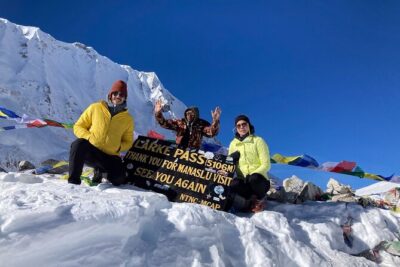
10 Days Manaslu Circuit Trek in Larke La Pass
Read our review →Browse the lists this tour appears in