
REVIEW · KATHMANDU
Manaslu Circuit Trek
Remote trails reward patient walkers. The Manaslu Circuit Trek gives you 14 days of river valleys, rhododendron forests, high mountain villages, and the demanding Larkya La Pass. I like that you reach the trailhead by road instead of taking a domestic flight, and I like the quieter route compared with Everest Base Camp and the Annapurna Circuit.
The main drawback is the physical demand. You climb from low river country to 4,480 meters, then cross a high pass the next day. The itinerary also includes a long first drive from Kathmandu, basic guesthouse accommodation, and several days where comfort gives way to scenery.
Key points at a glance
- A quieter Manaslu route: You walk through a less crowded part of Nepal, with fewer signs of modern development than the better-known trekking circuits.
- A serious high-altitude finish: The trek reaches Dharmashala at 4,480 meters before crossing Larkya La Pass on Day 11.
- No domestic flight to the trailhead: The journey begins with about eight hours on the road from Kathmandu to Soti Khola.
- A private experience: Only your group takes part, with a government-licensed English-speaking guide.
- Good inclusions for the price: Meals, guesthouses, permits, staff costs, transport, a first-aid kit, and a trekking map are covered.
- A guide with a personal touch: Pasang Sherpa is named as the owner and guide, and one itinerary was customized for a small group.
Why the Manaslu Circuit feels different
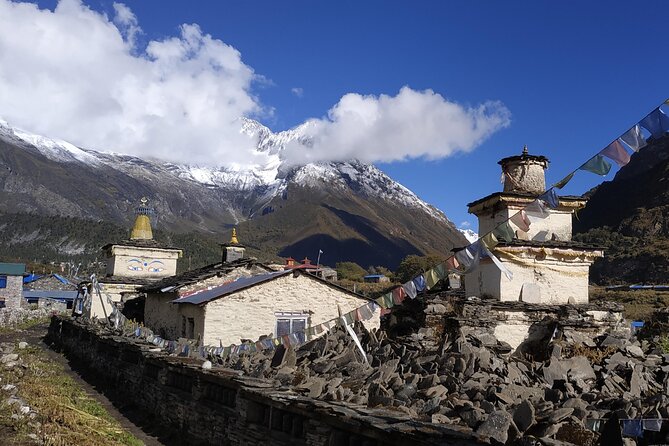
Manaslu offers a useful middle ground for trekkers who want a major Himalayan route without the busiest trails. You still get big mountain scenery, high villages, and a demanding pass, but the route is described as less visited and less changed by modern tourism.
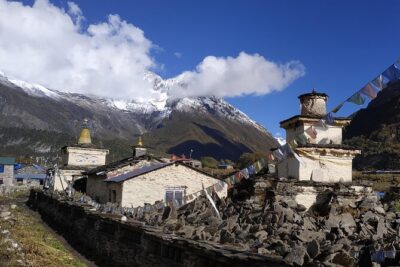
That quieter character matters. The trail passes through Manaslu National Park, where rhododendron forests, birds, butterflies, waterfalls, and the Budhi Gandaki River shape the journey. The scenery changes steadily as you gain height, from tropical river country to cooler mountain settlements and wide views of the Manaslu Range.
You should not expect a polished resort-style trek. Guesthouses provide the basic shelter needed on the route, while the guide and support staff handle much of the practical work. The appeal is the setting and the sense of movement through remote communities, not luxury.
The route is also a good choice if you prefer overland access. Domestic flights can be useful in Nepal, but they add another layer of timing and weather concerns. Here, the approach is long, but it keeps the trek connected by road from Kathmandu.
More Manaslu Treks in Kathmandu:
- Manaslu Circuit Trek
★ 5.0 · 292 reviews - Manaslu Circuit Trek:
★ 5.0 · 106 reviews - Manaslu Circuit Trek (15 Days)
★ 5.0 · 50 reviews
From Kathmandu to Soti Khola on Day 1
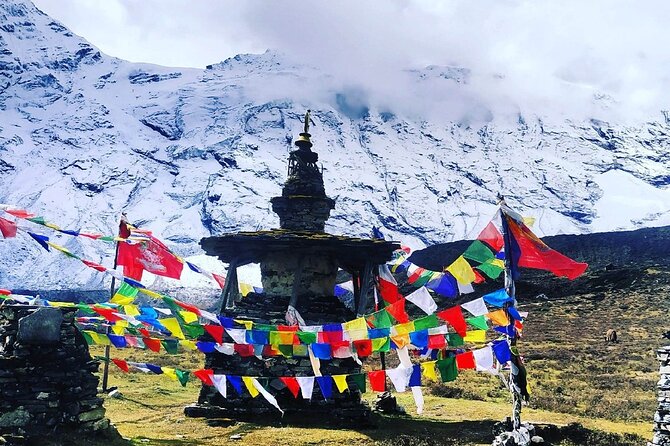
The first day is mostly transport. You leave Kathmandu at about 7:15 am and drive roughly eight hours to Soti Khola, listed at about 715 meters.
That is a long day before the walking begins. Pack snacks and keep essentials close, even though meals and snacks are included during the trekking portion. The road journey is part of the price of reaching a remote trailhead without flying, but it may feel tiring after arrival.
Pickup is offered, and surface transportation is included. Since the tour is private, your group has a better chance of handling the road day at its own pace than on a large fixed departure.
River trails and waterfalls on Days 2 to 5
Day 2 takes you from Soti Khola toward Labubesi or Machha Khola, around 870 meters. The trail crosses a bridge, climbs to a ridge above the powerful rapids of the Budhi Gandaki, and reaches Khorsaani.
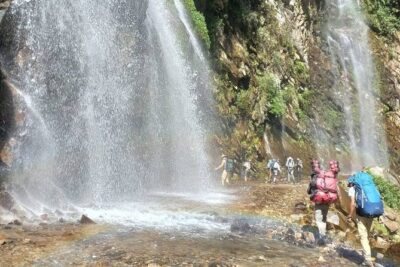
This is an early taste of the route’s rough character. The path becomes rocky and at times precarious, passing a large rock, a stream, nettle growth, waterfalls, and the riverbank before reaching Machha Khola. You get plenty of natural scenery, but the footing may be awkward, so sturdy footwear and careful pacing matter.
Day 3 continues from Machha Khola to Jagat at 1,410 meters. You gain height gradually, though the trail remains shaped by the river valleys rather than wide open mountain views.
On Day 4, you walk from Jagat to Ngyak at 1,950 meters. This is an important transition day. The route begins to feel cooler and more alpine, and your body starts adjusting to regular climbing.
Day 5 links Ngyak with Ghap at 2,050 meters. The elevation gain is modest compared with what comes later, but the steady sequence of walking days can still wear you down. I would treat these early stages as conditioning rather than rushing through them.
Ghap to Lho, with the mountains getting closer
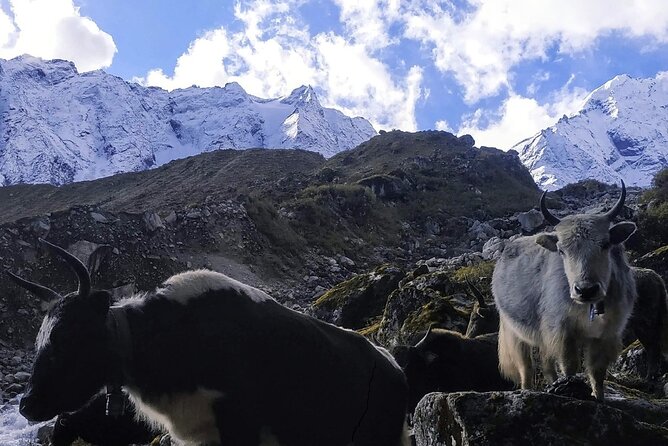
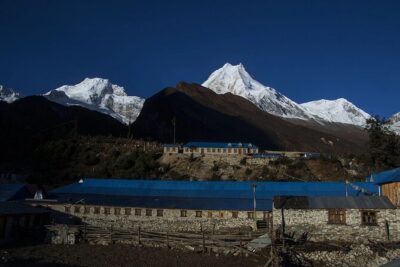
Day 6 takes you from Ghap to Lho at 3,148 meters. This is where the trek begins to feel properly high. The forest setting gives way to a more open mountain environment, and the route offers stronger views toward the Manaslu Range.
Ghap is still relatively low compared with the pass, but Lho marks a clear shift in the trip. You are no longer simply following a river through warm country. You are moving into villages and scenery shaped by cold, elevation, and mountain weather.
For you, this day is also a reminder to protect your energy. The itinerary does not include a large number of spare days, so a moderate fitness level is important. The operator provides a first-aid kit and medicine for staff, but your own travel and rescue insurance is not included.
A few more treks around Kathmandu worth a look
- Everest Base Camp Trek – 14 Days
★ 5.0 · 1,499 reviews - Everest Base Camp Trek
★ 5.0 · 842 reviews - Everest Base Camp Trekking
★ 5.0 · 485 reviews - Annapurna Circuit Trek with Tilicho Lake
★ 5.0 · 368 reviews
Lho to Samagaon on Day 7
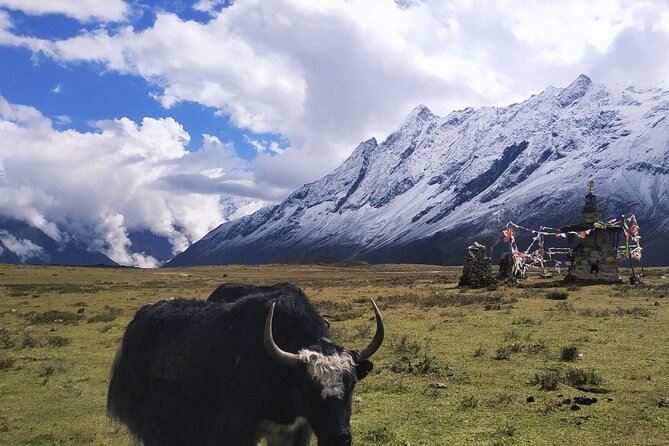
The route reaches Samagaon at about 3,517 meters on Day 7. This is one of the key settlements on the circuit and a natural point to slow down and appreciate how much the surroundings have changed since Soti Khola.
The appeal here is not just the altitude. The trek moves through a more distinctive mountain culture, with remote villages and a setting far removed from Kathmandu. The supplied itinerary describes the trail as wild, culturally unique, and relatively untouched by modern changes.
You should expect simpler accommodation than you would find in a city hotel. Guesthouses are included, which keeps the trip practical, but you should choose this trek for the route rather than for comfort.
Samagaon and the Samdo rest day
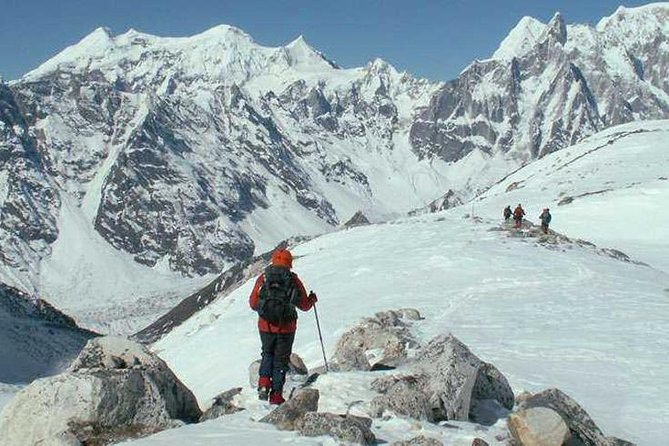
Day 8 continues from Samagaon to Samdo at 3,738 meters. The distance may not sound dramatic, but at this height each climb takes more effort. Keeping a steady pace is more useful than trying to finish early.
Day 9 is a rest day in Samdo. This is one of the itinerary’s strongest features. A planned pause gives you time to recover before the route rises above 4,000 meters and heads toward the pass.
The rest day also gives you time for yourself, which is part of the experience’s appeal. You are not being pushed from one point to the next without a break. At this elevation, taking the day calmly is a sensible choice.
Dharmashala at 4,480 meters
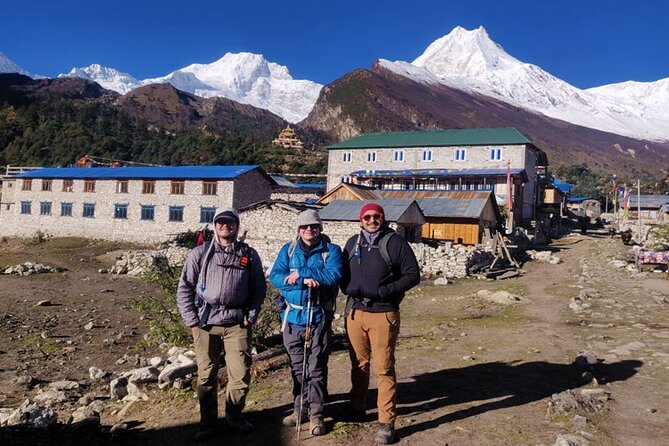
Day 10 runs from Samdo to Dharmashala, listed at 4,480 meters. This is a major altitude gain and one of the most demanding days before the pass.
Dharmashala is important because it places you close to Larkya La. It is also where the thin air becomes a serious practical concern. You should listen to your guide, keep your pace controlled, and use the rest period well.
The route’s schedule makes clear that this is not a casual walking holiday. You need to be comfortable with long trekking days, uneven ground, and significant elevation. The experience is suitable for people with moderate physical fitness, but that phrase should not be read as meaning easy.
Crossing Larkya La Pass on Day 11
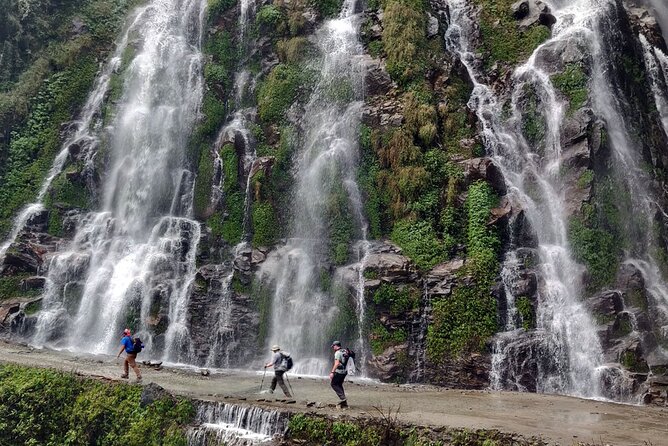
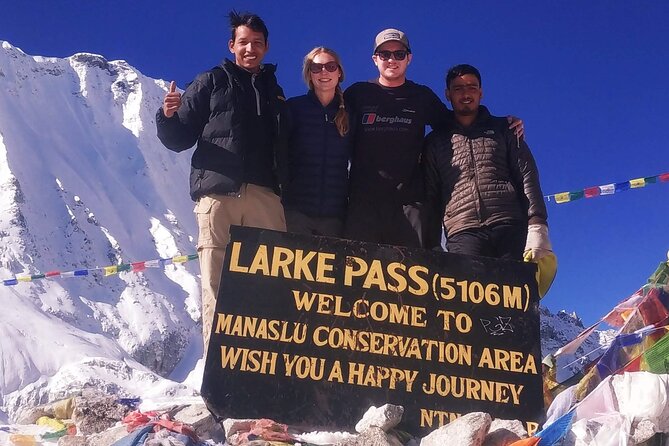
Day 11 is the high point of the trip, both literally and practically. You leave Dharmashala, cross Larkya La Pass, and descend to Bintang at about 3,890 meters.
This is the day that gives the circuit its sense of achievement. You climb to the route’s highest point, then begin the long descent. The change in altitude afterward is welcome, but the pass day may be tiring because of the combination of height, cold mountain conditions, and sustained walking.
You should keep your daypack light and carry only what you need at hand. The operator supplies a trekking map per person, and the guide leads the group, but personal preparation still makes a difference.
The long descent through Tilje and Syage
Day 12 takes you from Bintang to Tilje at 3,010 meters. After the pass, the lower altitude should feel easier, although descending can be hard on your knees and legs.
Day 13 continues from Tilje to Syage at 1,725 meters. The route returns toward warmer country, and the gradual change in vegetation helps mark the end of the high mountain section.
Day 14 is the return from Syange to Kathmandu. This closes the circuit with another overland journey rather than a domestic flight. The itinerary does not give a precise driving time for this final transfer, so plan for a travel day rather than assuming you will have a full afternoon in Kathmandu.
One important clarification: the promotional description refers to Tilicho Lake at 4,919 meters, but the 14-day itinerary provided here does not list a side trip to Tilicho Lake. If seeing Tilicho is a priority, ask the operator to confirm whether it can be added and how that would change the schedule.
What the $2,000 price covers
At $2,000 per person, this is not a budget walk, but the inclusions make the price easier to assess. The cost covers all meals and snacks while trekking, guesthouse accommodation, permits, conservation fees, surface transport, a licensed English-speaking guide, and the costs of the supporting staff.
Staff coverage is unusually important on a trek like this. Food, accommodation, salary, insurance, equipment, and medicine for the staff are included. Government taxes and the special Manaslu permit are also covered, so you are not left to manage major permit costs on the trail.
You still need to budget for Nepal’s entry visa, travel and rescue insurance, and tips for the guide, porter, and driver. Those exclusions are normal enough, but they should be part of your real trip budget.
The price is strongest for people who value a private trip with organized logistics. If you are willing to arrange every permit, transport connection, guide, and guesthouse yourself, you might spend less in some circumstances. The tradeoff is more planning and more responsibility in a remote setting.
The guide and private group format
The experience is private, so only your group participates. That gives the trip a more personal feel and may make it easier to discuss pacing, rest, and itinerary needs with the guide.
Pasang Sherpa is identified as the owner and guide. He is also credited with customizing an itinerary for a group of three friends, which suggests you should ask directly about adjustments before booking. Do not assume every requested change is possible, especially around the high pass and permit rules, but the operator has shown a willingness to tailor plans.
An experienced English-speaking guide is included, along with staff support and a first-aid kit. That is valuable on a route where weather, elevation, and rough trail conditions can change the character of a day.
Who should book this trek
I would recommend this trek to you if you want a quieter Himalayan circuit, enjoy remote villages and natural scenery, and are comfortable trading comfort for access. It suits walkers who want a serious goal in the Larkya La crossing rather than a gentle sightseeing program.
You should think twice if you dislike long road transfers, basic guesthouses, steep climbs, or high-altitude trekking. The route reaches 4,480 meters, and the itinerary has little room for careless pacing.
The experience has received two five-star ratings, with particular praise for Pasang Sherpa, the company’s support, and the way the itinerary was customized. That praise fits the tour’s strongest qualities: personal guiding, a private format, and a route that feels less crowded than Everest Base Camp or the Annapurna Circuit.
Practical booking advice
Confirmation is provided at booking, and a mobile ticket is available. Service animals are allowed, and the starting point is near public transportation, though pickup is offered.
The stated start time is 7:15 am. For Day 1, that early start makes sense because the road journey to Soti Khola takes about eight hours.
Free cancellation is available if you cancel at least 24 hours before the experience start time. Changes or cancellations made inside that period are not accepted for a refund. The operator uses local time for the cutoff.
Should you book the Manaslu Circuit Trek?
Book it if you want a private, guided route with fewer people, strong scenery, and a real high-pass challenge. The included permits, staff costs, meals, accommodation, and overland transport give the $2,000 price solid value for a supported trek.
Do not book it simply because it sounds remote and beautiful. You need to be ready for a long opening drive, basic facilities, demanding altitude, and the possibility that the Tilicho Lake reference does not match the actual 14-day route. Ask about that point before paying.
For a fit walker who values quiet trails and personal guiding, this is a compelling choice. Pasang Sherpa’s role, the small-group format, and the rest day in Samdo add practical strengths to an already impressive route.
FAQ
Where does the Manaslu Circuit Trek begin?
The trip begins in Kathmandu, with an overland drive to Soti Khola. The drive takes about eight hours.
How long does the trek last?
The experience lasts approximately 14 days, from the departure in Kathmandu through the return from Syange to Kathmandu.
What is the highest point on the itinerary?
The itinerary reaches Dharmashala at 4,480 meters before crossing Larkya La Pass on Day 11.
Is a domestic flight included?
No. The route reaches the trailhead by road, and surface transportation is included.
Is this a private tour?
Yes. Only your group participates in the activity.
What level of fitness is needed?
A moderate level of physical fitness is required. The route includes several days of walking, substantial elevation gain, and the crossing of Larkya La Pass.
Are meals included?
All meals and snacks while trekking are included.
What accommodation is provided?
Accommodation is provided in guesthouses during the trek.
Are permits included in the price?
Yes. Government permits, conservation fees, and the special Manaslu permit are included.
Is travel insurance included?
No. Your own travel and rescue insurance is not included. Nepal’s entry visa and tips for the guide, porter, and driver are also excluded.
Recently added around Kathmandu
- Ghorepani Poon Hill Trek★ 5.0 · 16 reviews
- Private Manaslu Circuit Trek at Himalayas★ 5.0 · 3 reviews
- Amazing 1 Day Trekking Experience in Kathmandu Nepal★ 5.0 · 24 reviews
- Ghorepani Poonhill Trek★ 5.0 · 5 reviews
- Upper Mustang Trekking★ 5.0 · 2 reviews
- Upper Mustang Trekking★ 5.0 · 4 reviews
- Upper Mustang Trek★ 5.0 · 5 reviews
- Upper Mustang Trekking★ 3.0 · 2 reviews
Manaslu Circuit Treks, compared.
16 Day Private Manaslu Circuit Trek from Kathmandu
Read our review →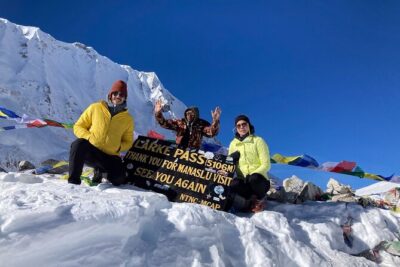
10 Days Manaslu Circuit Trek in Larke La Pass
Read our review →Browse the lists this tour appears in