
REVIEW · KATHMANDU
Manaslu Circuit Trek
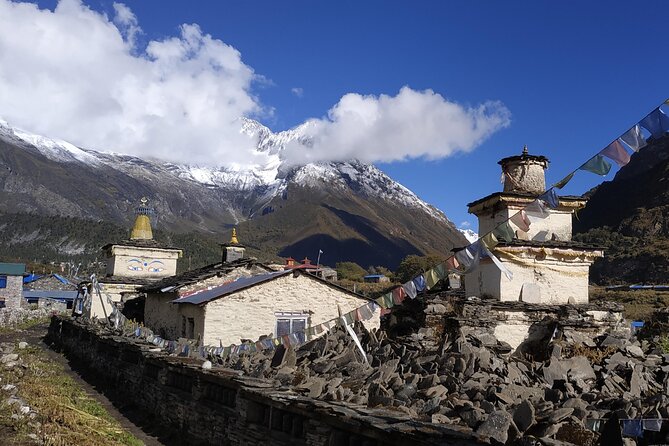
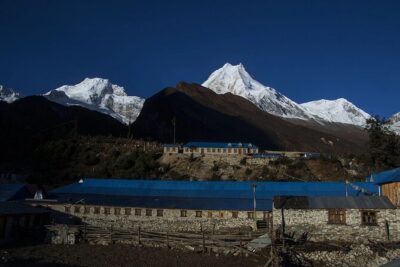
Mountain views come with a real price here. The 12-day Manaslu Circuit Trek takes you from Kathmandu into a remote Himalayan valley, where Tibetan-style villages, old monasteries, suspension bridges, glaciers, and Mt. Manaslu fill the route. I like the quieter setting and the strong local support from Touch The Himalaya Treks & Expedition, with guides such as Roshan, Arjun, Madan, Kumar, Bishnu, and Raju receiving repeated praise for careful service.
I also like that the price includes the restricted-area permits, guide, transport, airport transfers, and government fees. The main drawback is important: food and accommodation are not included in the advertised $589 price. At high altitude, the trek is also demanding, and the itinerary requires a minimum of two people, a registered guide, and good fitness.
Key points before you book
- Larkya La is the great test: You cross a high pass at roughly 5,100 meters, with views toward Cheo Himal, Kang Guru, Gyaji Kung, and Annapurna II.
- The route feels remote: Villages, monasteries, and Tibetan-influenced customs give this trek a quieter character than Nepal’s most famous circuits.
- Permits are included: The package covers ACAP, MCAP, Manaslu Restricted Area, and TIMS permits.
- Samagaon gives you a useful rest day: You can choose a hike to Birendra Lake and Manaslu Base Camp or head toward Pungen Gumpa.
- Teahouse comfort is basic but useful: You can buy meals along the route, but hot showers, Wi-Fi, battery charging, and drinks cost extra.
- The price needs careful reading: Guide services and transport are covered, while meals, lodging, porter support, insurance, gear, and tips are separate.
Why the Manaslu Circuit feels different
Manaslu is a good choice if you want a serious Himalayan trek without the crowds associated with Nepal’s busiest routes. The path follows the Budhi Gandaki River, moving through forests and river gorges before reaching a high world of rock, ice, and snow.
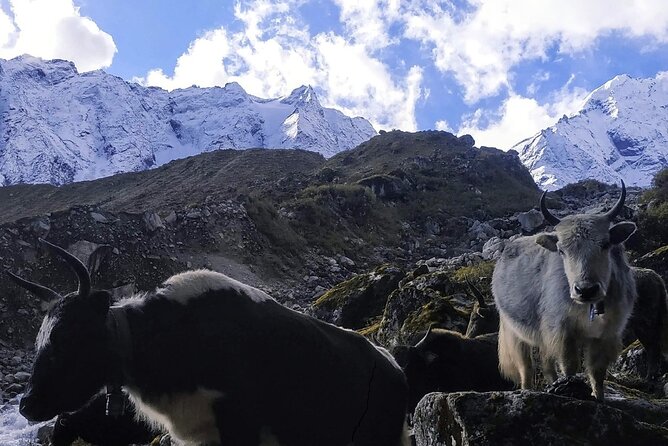
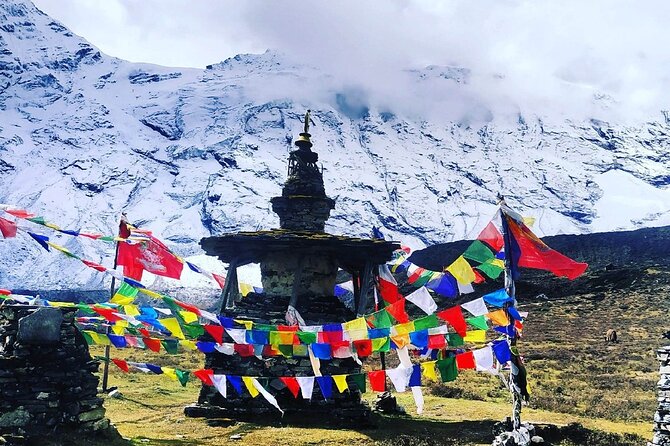
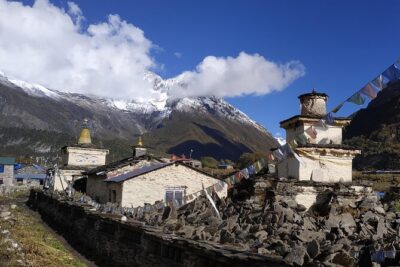
The appeal is not only the mountain. You pass through Buddhist villages with mani walls, monasteries, prayer stones, and Tibetan cultural links. The route also lies inside the Manaslu Conservation Area, where the habitat includes rare animals such as snow leopards and red pandas. Seeing either would be uncertain, but the protected setting gives the trek a stronger sense of wildness.
The trek is restricted, which means you cannot treat it like a casual independent walk. A registered guide is required, and the permit work is part of the value of this package. You also need at least two people to book the private activity.
The route is demanding but not a technical mountaineering trip. You walk for several hours most days, with the longest day listed at eight hours. The hardest part is the combination of distance, thin air, cold, and the Larkya La crossing.
More Manaslu Treks in Kathmandu:
- Manaslu Circuit Trek
★ 5.0 · 292 reviews - Manaslu Circuit Trek:
★ 5.0 · 106 reviews - Manaslu Circuit Trek (15 Days)
★ 5.0 · 50 reviews
Day 1: Kathmandu to Machha Khola
The day begins early, with a 6:45 am start from Touch The Himalaya Treks & Expedition on JP Road in Kathmandu. Pickup is offered, and transport may be by bus, jeep, Hiace, or private vehicle depending on group size.
The road takes you toward Machha Khola, the starting point of the walk. The journey is listed at about six hours, though road conditions in Nepal can affect timing. Machha Khola is a small settlement on the Budhi Gandaki River, with a mix of Hindu and Buddhist communities.
This first day is mostly about reaching the trailhead. Expect a long transport day rather than a scenic warm-up walk. You spend the night in a local hotel, which gives you a chance to organize your pack before the real trekking begins.
Day 2: Machha Khola to Jagat
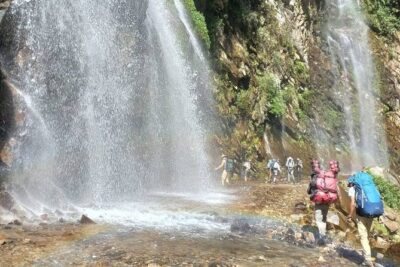
The trail follows the river through forest, with waterfalls, suspension bridges, and views toward Ganesh Himal. Monkeys, birds, and deer may appear along the route, although wildlife sightings are never guaranteed.
A mani wall adds a clear Buddhist touch to the walk. These stone walls carry carved prayers, and the right practice is to pass them on the left.
After roughly seven hours, you reach Jagat, a small village at the foot of Ganesh Himal. Jagat is also where the restricted trekking area begins, so permits and guide arrangements become especially important from here onward.
This is a full day on foot, but the route gives you plenty of variety. You will not be walking through high alpine terrain yet. Forest shade, river sounds, and village stops shape the day.
Day 3: Philim, Ekle Bhatti, and Deng
The itinerary names Jagat in one place, but the route description covers the section from Philim to Deng. In practical terms, you should expect a day that includes Philim, Ekle Bhatti, a pair of suspension bridges, and the village of Deng.
The trail rises gently, reaches a flatter section, and then crosses the Budhi Gandaki. From Philim, you continue uphill to Ekle Bhatti, a small settlement on a ridge. Another bridge leads you down toward Deng.
The day takes about six hours. Deng is small, with teahouses and lodges for the night. This part of the route is a good example of the trek’s rhythm: climb, cross a bridge, pass a village, and settle into a simple mountain lodge.
A few more treks around Kathmandu worth a look
- Everest Base Camp Trek – 14 Days
★ 5.0 · 1,499 reviews - Everest Base Camp Trek
★ 5.0 · 842 reviews - Everest Base Camp Trekking
★ 5.0 · 485 reviews - Annapurna Circuit Trek with Tilicho Lake
★ 5.0 · 368 reviews
Day 4: Deng to Namrung
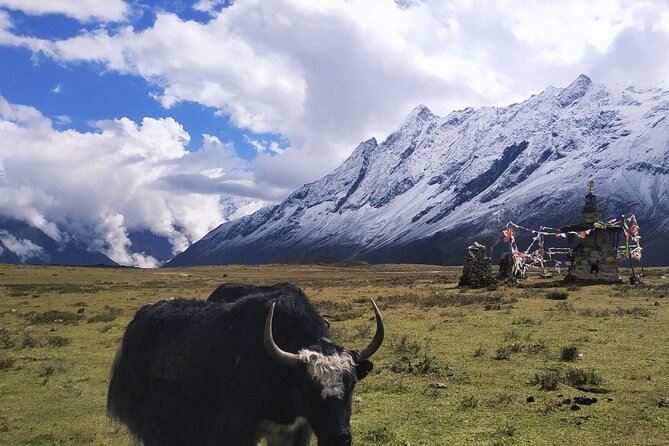
You first drop toward the river, cross a bridge, and climb to Ranagoan. The route continues to Bihi Phedi, where you take the right-hand trail toward Ghap.
After passing Ghap, the path climbs again to Namrung. Six hours of walking brings you into a higher section of the valley, with clearer views of Ganesh, Shingri, and Kutang Himal.
This is one of the days when the elevation begins to matter more. You are gaining height steadily, so walking at a moderate pace is sensible. The guide’s role is valuable here, not just for navigation but also for keeping the group moving at a safe speed.
Day 5: Namrung to Lho and Lihi
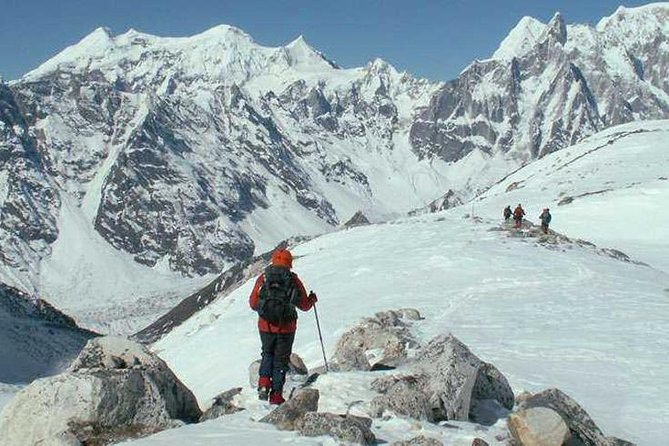
The route passes through oak, fir, and rhododendron forest before reaching a permit checkpoint. Keep your trekking documents accessible rather than buried at the bottom of your bag.
You pass Lihi Gaon and Sho Goan before reaching Lho at about 3,280 meters. The day is listed at six hours. Lho is one of the more memorable settlements on the route, with a strong mountain setting and a local restaurant for lunch.
The evening meal is described as a traditional Nepalese dinner at the lodge. You should still expect teahouse standards rather than hotel service. Meals are available for purchase, but they are not part of the $589 base price.
Day 6: Lho to Samagaon through Shyala
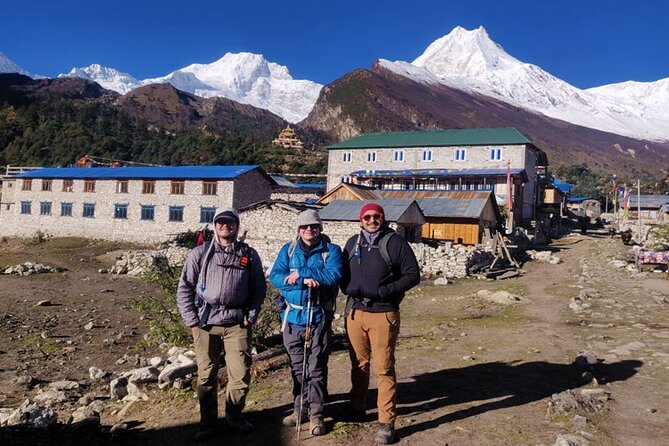
This is a shorter day, listed at about five hours, and it brings you to Samagaon, also called Sama or Sama Gaon. The stop at Shyala is a highlight because the village offers a broad mountain view in several directions.
From the route, you can see Manaslu, Himal Chuli, Nadi Peak, Naike Peak, Kutang Himal, and Pangbuche Himal. The scenery becomes more open and more alpine as you leave the lower forests behind.
Samagaon is an important place to slow down. You have already gained substantial altitude, and the next days take you higher still. The village also has cultural interest, with Tibetan influence and monasteries along the route.
Day 7: Acclimatization around Samagaon
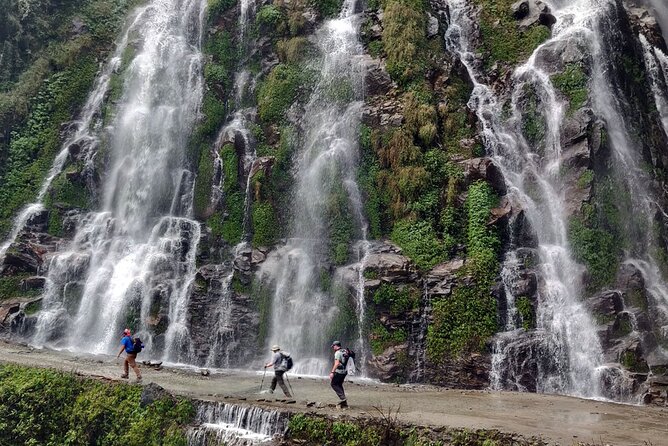
A rest day here does not mean doing nothing. The plan gives you a short acclimatization walk of about two hours, with two main choices.
You can walk around Birendra Lake and continue toward Manaslu Base Camp, or hike toward Pungen Gumpa. Your guide can help choose the better option for your fitness and energy that day.
This is one of the most useful parts of the itinerary. Rushing from Kathmandu to Larkya La would make the trek much less sensible. A measured day at Samagaon gives your body time to adjust and gives you a chance to see more than the main path.
Do not use the rest day as a reason to push too hard. The purpose is to gain altitude gradually, not to collect the longest possible side trip.
Day 8: Samagaon to Samdo
The walk to Samdo is short, about four hours, but the altitude makes it serious. You climb slowly and reach the village around lunchtime.
Samdo is known as a Tibetan refugee settlement and has excellent views toward Manaslu. If you still have energy, you can hike toward Samdo Peak in the afternoon. That extra walk is optional, and your stamina matters more than reaching every viewpoint.
This is another place where a flexible guide helps. You may feel strong at breakfast and tired by lunch. At this height, it is wise to judge the day by how your body responds, not by the distance on paper.
Day 9: Samdo to Dharamsala
The walk to Dharamsala, also called Larkya Phedi, takes about four hours. You pass near Larke Bazaar, a seasonal Tibetan market, and see traditional monasteries along the route.
Dharamsala is the final overnight stop before the pass. The short walking day leaves time to rest, organize warm clothing, and check your camera batteries.
The altitude is now high, and facilities are basic. This is not the night to expect comfort or entertainment. Eat, drink what is available, protect yourself from the cold, and prepare for an early start.
Day 10: Crossing Larkya La to Bhimtang
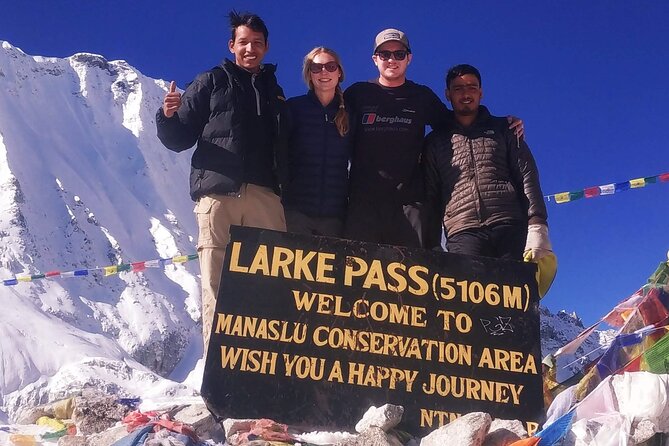
This is the main event. You leave early and climb gradually toward Larkya La. The pass is described at slightly different heights in the itinerary, but you should plan for an altitude of roughly 5,100 meters.
The crossing can take much of the day. The route is listed at eight hours, including the climb, time at the pass, and descent to Bhimtang. The reward is a broad Himalayan panorama toward Cheo Himal, Gyaji Kung, Kang Guru, and Annapurna II.
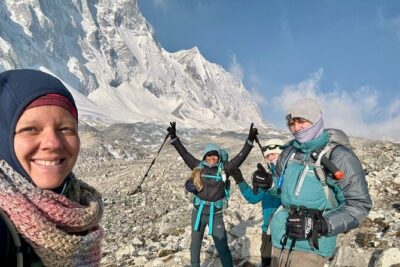
The pass itself is a place to pause, take photographs, and recognize the effort involved. The descent can be tiring after the climb, so trekking poles may be useful. You need warm layers, gloves, sturdy boots, water, snacks, and a head covering.
Bhimtang offers a welcome change after the pass. The accommodation is described as possibly the best of the trek, making it a natural place to celebrate. Still, this remains a remote mountain stop, not a luxury lodge.
Day 11: Bhimtang to Tilje
You leave Bhimtang after breakfast and walk downhill for most of the day. The route takes about five hours, passing through Ghoa before continuing to Tilje.
The lower altitude brings warmer air and more vegetation. Tilje is a scenic village with local culture, better hotel options, and Wi-Fi available after crossing the mountain. Wi-Fi is not included, so treat it as an extra service rather than a guaranteed connection.
An early start can give you a sunrise view from the teahouse. After the intense pass day, this gentler descent is a relief, though downhill walking can still be hard on knees and ankles.
Day 12: Dharapani to Besisahar
The final day begins around Dharapani, with a walk through pine forest and small villages before a vehicle transfer to Besisahar. The schedule describes the drive as about two hours in one place and about four hours in another, so you should allow extra time.
Besisahar is the finishing point for the mountain section. It is a practical place to eat, have a drink, and plan onward travel. The package includes return transport by bus, but exact timing can depend on road conditions and the group.
The activity ends back at the Kathmandu meeting point according to the booking details, although the day-by-day plan specifically describes arrival in Besisahar. Confirm the final transfer arrangement before departure so you know if Kathmandu return transport is included on the same day or handled separately.
What the $589 price really covers
At first glance, $589 for 12 days looks low for a restricted Himalayan trek. The reason is that the price covers the guiding and logistics core, not every daily expense.
Included services are:
- Airport pickup and drop-off
- Transport from Kathmandu to Machha Khola
- Return transport after the trek
- ACAP, MCAP, Manaslu Restricted Area, and TIMS permits
- A local Manaslu guide
- The guide’s meals, accommodation, salary, and insurance
- One assistant guide for each five trekkers
- Government taxes and agency charges
- An achievement certificate
You must budget separately for food and lodging during the trek. Porter service is also extra, with a porter shareable by two or three people and a 20-kilogram limit. Personal gear, travel insurance, Nepal visa fees, tips, drinks, Wi-Fi, hot showers, battery charging, souvenirs, and heritage-site entrance fees are also outside the base cost.
That does not make the package poor value. The permits alone can be complicated, and the guide requirement makes organized support necessary. But you should compare the total expected cost, not just the headline price.
Guides, group size, and the human side
The strongest pattern in the feedback is the praise for the guiding team and office support. Roshan is repeatedly singled out for care, flexibility, and good judgment. Arjun, Kumar Neupane, Bishnu, Raju, Madan, and porter Niran also receive warm personal praise.
That matters on Manaslu. You need more than someone who can point toward the trail. You need help with permit checks, pace, altitude days, changing energy levels, lodge arrangements, and the pass crossing.
This is a private activity, so only your group participates. The minimum group size is two, and each five trekkers receive an assistant guide. Ask in advance how many people will be in your group and who your lead guide will be.
The package has a five-star rating from 22 ratings and a 100 percent recommendation figure. Those are strong signals, especially because the positive comments focus on concrete details such as airport pickup, permit handling, flexible timing, guide care, and help with difficult sections.
Who should book this trek?
I would recommend it to you if you want a quieter Himalayan route, can walk for several hours on consecutive days, and are happy with simple teahouse accommodation. It suits people who value mountain scenery, cultural encounters, and a structured guide more than polished facilities.
You should think twice if you want a relaxed holiday, dislike long road transfers, or expect meals and hotels to be included in the advertised price. The trek also requires strong preparation for cold, altitude, and the eight-hour Larkya La day.
Bring trekking boots, warm clothes, personal gear, light snacks, and energy bars. Confirm your insurance, and do not assume that Wi-Fi, hot showers, or charging will be available without payment.
Should you book the Manaslu Circuit Trek?
Book it if the combination of remote villages, high mountain views, Tibetan culture, and the Larkya La crossing sounds worth the effort. The included permits, guide support, airport transfers, and intercity transport give the $589 package a useful foundation.
Before paying, get a written estimate for meals, accommodation, porter service, and any final transfer from Besisahar. If those extra costs fit your budget, this is a strong choice for a serious trek with personal guide support and fewer crowds than Nepal’s better-known routes.
Cancellation is free up to 24 hours before the 6:45 am start for a full refund. Changes or cancellations made within 24 hours are not accepted for a refund.
FAQ
Is the Manaslu Circuit Trek suitable for beginners?
The experience requires moderate to strong physical fitness, with several walking days lasting four to eight hours and a pass crossing at roughly 5,100 meters. It is better suited to people prepared for demanding mountain walking.
Is a guide required for the Manaslu Circuit?
Yes. The Manaslu region is restricted, and the package includes an expert local guide. The activity also requires at least two participants.
Are meals and accommodation included in the $589 price?
No. Food, drinks, and accommodation during the trek are available for an additional charge. You can buy meals at teahouses along the route.
Which permits are included?
The price includes ACAP permits, MCAP permits, the Manaslu Restricted Area Permit, and the TIMS Card.
Can I hire a porter?
Yes, but porter service is not included in the base price. A porter can be shared by two or three trekkers, with a stated limit of 20 kilograms.
What equipment should I bring?
You need trekking boots, warm clothing, and trekking gear. Light snacks and energy bars are also suggested for extra energy on long walking days.
Recently added around Kathmandu
- Ghorepani Poon Hill Trek★ 5.0 · 16 reviews
- Private Manaslu Circuit Trek at Himalayas★ 5.0 · 3 reviews
- Amazing 1 Day Trekking Experience in Kathmandu Nepal★ 5.0 · 24 reviews
- Upper Mustang Trekking★ 5.0 · 2 reviews
- Ghorepani Poonhill Trek★ 5.0 · 5 reviews
- Upper Mustang Trekking★ 3.0 · 2 reviews
- Upper Mustang Trekking★ 5.0 · 4 reviews
- Upper Mustang Trek★ 5.0 · 5 reviews
Manaslu Circuit Treks, compared.
16 Day Private Manaslu Circuit Trek from Kathmandu
Read our review →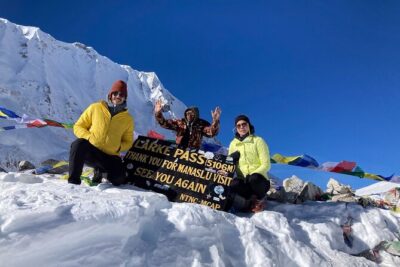
10 Days Manaslu Circuit Trek in Larke La Pass
Read our review →Browse the lists this tour appears in