
REVIEW · KATHMANDU
14 Days Private Manaslu Circuit Trek in Nepal
A pass worth the effort. The 14-day private Manaslu Circuit Trek gives you a strong mix of Himalayan scenery, Buddhist culture, quiet villages, and a serious high mountain crossing. I like the private format, which lets your group move at its own pace, and I like the careful progression from river valleys to high alpine country. The main drawback is the schedule: several trekking days run six to nine hours, and the Larkya La crossing demands good fitness, patience, and favorable weather.
I also like that the trip begins and ends in Kathmandu with airport pickup, so you do not have to solve the first and last transfers yourself. The route includes time to rest in Samagaon, which is important before the highest part of the trek. The long road journeys on Days 2 and 13 are less glamorous, but they are part of the price of reaching and leaving this remote circuit.
Key Details Before You Book
- The trek crosses the 5,106-meter Larkya La pass: This is the hardest and most memorable day, with views toward Annapurna II and Himlung Himal.
- The private group format gives you flexibility: Only your own party participates, rather than joining a large mixed group.
- Samagaon provides a useful rest day: You can visit the monastery or take a short outing toward nearby glaciers and lakes.
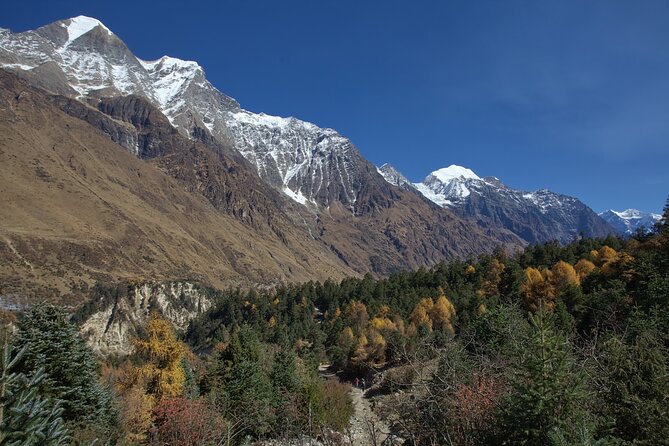
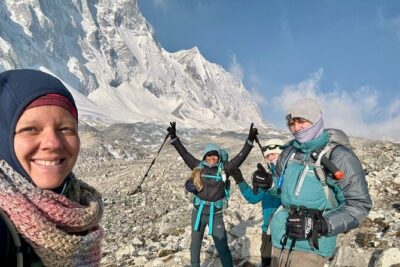
- The route changes dramatically as you gain height: Expect river crossings, forests, terraced fields, stone prayer walls, Tibetan-style villages, and snow-covered peaks.
- The price is $1,800 per person: That may offer good value for a private trek with airport pickup and organized transport, but confirm exactly what accommodation, meals, permits, and staff costs include.
- Heaven Himalaya has a strong service record: The company receives a 5.0 rating from nine published evaluations, with particular praise for organization, flexibility, and personal care.
Why the Manaslu Circuit Is Worth Your Time
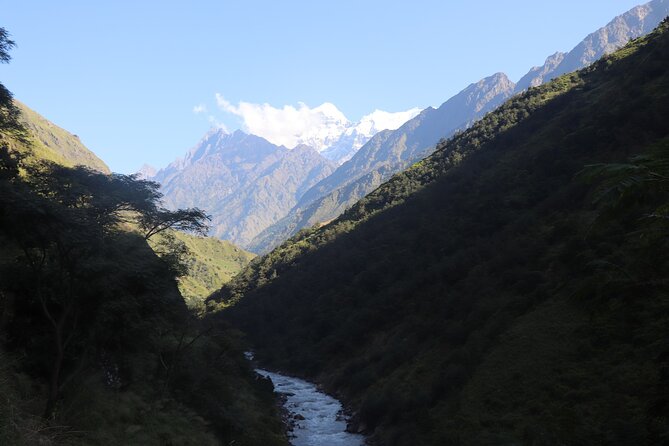
The Manaslu Circuit works well if you want a major Himalayan trek without spending the entire trip in a crowded trail corridor. The route follows the Budhi Gandaki River for much of its lower section, then climbs through forests and traditional villages toward Mount Manaslu and the Larkya La pass.
The variety is the real prize. One day you may walk beside rushing water and waterfalls. A few days later, you are passing mani walls, chortens, pine forests, and villages with strong Tibetan influence. Near the pass, trees give way to open high country and broad mountain views.
This is not a gentle sightseeing holiday. The trip involves repeated climbs and descents, rough paths, suspension bridges, long driving days, and a high pass. You should have a moderate level of physical fitness at minimum, and you should be comfortable walking for several hours on consecutive days.
The private setup helps here. Your group can discuss the pace with the guide, take breaks when needed, and deal with ordinary trekking fatigue without adjusting to a large party. That does not make the route easy, but it can make the experience more manageable.
More Manaslu Treks in Kathmandu:
- Manaslu Circuit Trek
★ 5.0 · 292 reviews - Manaslu Circuit Trek:
★ 5.0 · 106 reviews - Manaslu Circuit Trek (15 Days)
★ 5.0 · 50 reviews
Day 1: Kathmandu Arrival and a Soft Landing
You arrive at Tribhuvan International Airport, where a representative transfers you to your hotel. The remaining time is free for rest or a first look at Kathmandu.
This is a sensible opening day rather than wasted time. International flights can leave you tired, and the next morning brings a full road journey. Use the afternoon to recover, organize your gear, and make sure you understand the plan with your guide.
The airport pickup is a practical benefit, especially if this is your first visit to Nepal. The tour description does not specify the hotel, meals, or exact orientation arrangements, so ask for those details before departure.
Day 2: The Long Road to Soti Khola
After breakfast, you drive for roughly eight to nine hours to Soti Khola, the starting point of the trek. The road passes villages, rivers, forests, and Himalayan scenery.
This is one of the least comfortable days, but it serves an important purpose. You are moving from Kathmandu toward the trailhead, and there is no quick shortcut through this part of Nepal. Expect the day to feel more like an expedition transfer than a tour stop.
If you dislike long vehicle journeys, this is worth considering before you book. The reward is that the walking begins in a quieter river valley rather than at a busy urban trailhead.
Day 3: River Paths from Soti Khola to Machha Khola
The trek begins with a gentler walk through forest and small villages. You follow the Budhi Gandaki River, cross suspension bridges, pass Lapu Besi, and continue toward Machha Khola.
The scenery changes constantly. Waterfalls and river views give the day a lively feel, while the village sections offer your first close look at daily life along the route. Machha Khola is a small riverside settlement, and its position beside the water gives it a distinct character.
The six-hour walking time is a useful introduction to the trail. You will still climb and descend, but the day should help you learn how your body responds to the route before the harder sections begin.
A few more treks around Kathmandu worth a look
- Everest Base Camp Trek – 14 Days
★ 5.0 · 1,499 reviews - Everest Base Camp Trek
★ 5.0 · 842 reviews - Everest Base Camp Trekking
★ 5.0 · 485 reviews - Annapurna Circuit Trek with Tilicho Lake
★ 5.0 · 368 reviews
Day 4: Hot Springs and the Trail to Jagat
The route becomes more demanding as you cross streams and tackle steep ups and downs. Forest and terraced fields frame the walk, and you pass Tatopani, a Gurung village known for natural hot springs.
The Budhi Gandaki remains your guide through the valley. Suspension bridges and uneven paths add interest, but they also require steady footing. The stated walking time is about five hours, yet the steep sections can make this feel like a full day.
Jagat is an important point on the route, and reaching it marks real progress into the mountain region. This is also a day when good shoes and trekking poles can make a noticeable difference.
Day 5: Forests and the Village of Deng
The day begins with a descent to the river and a suspension bridge. From there, the trail follows rocky sections through forest before reaching Deng, a small village with mountain views.
The route description labels this stop simply as Nepal, but the actual destination is Deng. That kind of naming inconsistency is worth noting when you read your final trip documents, since clear place names help you follow the route.
At seven hours, this is a substantial walking day. The reward is a deeper sense of remoteness, with fewer signs of ordinary city life and more time among river valleys, forests, and mountain villages.
Day 6: Pine, Rhododendron, and Namrung
You climb gradually through pine and rhododendron forests toward Namrung. Along the way, you pass chortens and mani walls, with Buddhist prayers carved into the stones.
These details give the route more than mountain views. The religious markers show how culture and walking routes fit together here. You should take time to look closely, while remembering to treat shrines and prayer stones with care.
Namrung sits on a hillside and opens toward the Himalayas. The seven-hour day continues the steady gain in altitude, so keep your pace controlled. Walking too fast at this stage is a poor bargain.
Day 7: Entering the High Country at Samagaon
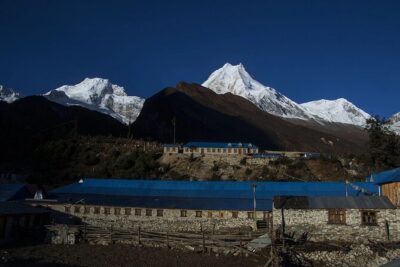
The trail passes through Lihi and Hinang before reaching Samagaon. Mount Manaslu and surrounding peaks become more prominent, and the villages take on a stronger Tibetan character.
Samagaon is one of the key stops on the circuit. Its traditional houses and Buddhist monastery give you a chance to experience the local culture before the route rises into harsher terrain. The eight-hour walking time makes this another demanding day, so reaching the village should feel like a real accomplishment.
I like the placement of Samagaon in this schedule. You arrive after a long day, then receive a full rest day before the highest section of the trek.
Day 8: A Necessary Rest Day in Samagaon
The rest day gives you time to explore the village and its surroundings. You can visit the local monastery or take a short outing toward nearby glaciers and lakes.
A rest day at altitude is not just a sightseeing bonus. It allows your body time to adjust before the route climbs toward Samdo and Larkya Phedi. The listed activity time is about two hours, but the point is not to fill every minute with walking.
Use this day sensibly. Enjoy the village, stay hydrated, and ask your guide how much activity is appropriate for your condition. The exact glacier or lake walk is not specified, so the available option may depend on local conditions and your group’s energy.
Day 9: Samdo and the Tibetan Borderland
The trail continues through juniper and birch toward Samdo. The village sits near the Tibetan border and is known for traditional Tibetan houses and culture.
This is a shorter-feeling cultural step into the upper valley, though the listed walking time is still about seven hours. The views of Manaslu and nearby peaks become more immediate as vegetation thins and the air grows colder.
Samdo is not simply a place to sleep before the pass. It is a reminder that the circuit passes through communities shaped by trade, religion, altitude, and proximity to Tibet. Pay attention to the buildings and prayer structures, not just the distant peaks.
Day 10: Reaching Larkya Phedi
The walk to Dharamsala, also called Larkya Phedi, is relatively short in distance but challenging because you gain a lot of altitude. Streams and mountain views accompany the route, and you finish at the base camp for the Larkya La crossing.
This is a day to conserve energy. The listed duration is about eight hours, which suggests that the combination of altitude, rough footing, and slow movement makes the day harder than its distance might suggest.
Larkya Phedi is a functional stop rather than a place for comfort and entertainment. Your main task is to rest and prepare for the pass. Weather matters here, and the company states that poor conditions can lead to a changed date or a full refund if the experience is canceled.
Day 11: Crossing the Larkya La Pass
This is the defining day of the trek. You cross the Larkya La, the highest point on the route, then descend toward Bhimthang through changing mountain scenery.
The pass offers views toward Annapurna II and Himlung Himal. Those views are the payoff, but the crossing itself requires stamina. The day is listed at about nine hours, making it the longest and most demanding walking day in the schedule.
The descent to Bhimthang is a welcome change after the high point, though tired legs can make downhill walking surprisingly tough. Keep your pace steady and listen closely to your guide. This is exactly where an experienced guide earns their fee, especially when conditions or group energy are less than ideal.
Day 12: Forests and Terraced Fields to Dharapani
The route drops through forests and terraced fields, passing Tilije and Thonje before reaching Dharapani. After the exposed high country, the return of trees and cultivated slopes feels like a major shift.
Dharapani is known for traditional houses and local culture. It also marks the end of the high pass section and the beginning of the journey back toward Kathmandu.
The seven-hour walk still requires effort, but the gradual descent should feel more forgiving than the previous day. Your knees may disagree, so use trekking poles if you have them.
Day 13: The Long Drive Back to Kathmandu
You drive for roughly eight to nine hours back to Kathmandu, passing villages, rivers, and forested hills. This is another long transport day, with little control over the pace.
The drive gives you time to process the trek, but it can also be tiring after nearly two weeks on the move. Once back in Kathmandu, you can rest or go out for a final look around the city.
The schedule does not provide a separate buffer day before departure. That makes the road transfer an important practical point to confirm with the company, particularly if you have a fixed international flight.
Day 14: Airport Transfer and Departure
A representative takes you to the airport for your flight home. The listed transfer time is about two hours, though the actual timing will depend on your flight and local traffic.
This is a simple final day. You leave with the circuit completed, from the Budhi Gandaki valley to the Larkya La and back toward Kathmandu.
What $1,800 Buys You
At $1,800 per person, this is not a shoestring trek. The value comes from organization and private support rather than from luxury.
The company handles the airport pickup, transport to and from the trekking area, and the structure of the 14-day journey. Its general service description also refers to accommodation and meals, but the supplied details do not clearly list what the price includes. Before paying, ask specifically about:
- Accommodation in Kathmandu and along the trail
- Meals during trekking days
- Guide and porter arrangements
- Trekking permits and required documents
- Ground transportation
- Airport transfers
- Any extra charge for a private room or changes to the route
That check matters. A private trek can be excellent value when it removes planning stress and gives you direct support, but the price cannot be judged fairly until inclusions are clear.
The company’s service record is encouraging. Prem Dahal receives a particularly warm recommendation for guiding a Manaslu trip, while Ramhari and Sanjeev are praised for patient communication during planning. Other personal accounts describe careful organization, reserved lodges, flexibility for solo trekkers, and help from guides and porters.
I would still ask who your assigned guide will be. Names connected with the company include Prem Dahal, Ramhari, Sanjeev, Dipak, Babu, and Bishal, but availability changes. A name is less important than clear communication, safety practice, and a guide who understands the route.
Who Should Book This Trek?
This trek suits you if you want mountain scenery and village life, and you are prepared for physical work. It is a good match for someone who prefers a private trip, values organized transfers, and wants a guide to manage the route while the group focuses on walking.
It is less suitable if you want short daily walks, comfortable roads, or a relaxed holiday with plenty of free time. The 14-day schedule includes several long days, and the pass crossing cannot be treated as a casual outing.
You should also be comfortable with uncertainty. Mountain weather can affect the schedule, and remote routes rarely run with the precision of a city tour. The company’s free cancellation policy allows a full refund when you cancel at least 24 hours before the start time. Changes made within 24 hours are not accepted, and poor weather may lead to another date or a full refund.
My Verdict on the Manaslu Circuit
I would recommend this trip to fit walkers who want a serious Himalayan route with strong cultural variety and private support. The combination of the Budhi Gandaki valley, Samagaon, Tibetan-style villages, and Larkya La gives the journey a clear sense of progression.
The main caution is not the scenery. It is the workload. Ask detailed questions about inclusions, accommodation, porter support, assigned guide, and the road transfers before booking. If those answers suit you, $1,800 can be a sensible price for a carefully organized private trek through one of Nepal’s most rewarding mountain routes.
FAQ
Where does the Manaslu Circuit Trek begin?
The experience begins with airport pickup at Tribhuvan International Airport in Kathmandu. The walking portion starts after the drive to Soti Khola on Day 2.
How long does the experience last?
The trip lasts 14 days, including arrival and departure days, driving days, trekking days, and a rest day in Samagaon.
Is this a private tour?
Yes. Only your own group participates in this private activity.
What is the highest point of the trek?
The highest point is the Larkya La pass, crossed on Day 11. The route description identifies it as the highest point of the trek.
How difficult is the Manaslu Circuit Trek?
You should have a moderate level of physical fitness. The trek includes several six to nine-hour walking days, steep climbs and descents, altitude gain, and the demanding crossing of Larkya La.
Is there a rest day during the trek?
Yes. Day 8 is a rest day in Samagaon. You can explore the village, visit the monastery, or take a short hike toward nearby glaciers and lakes.
Does the price include accommodation and meals?
The company describes its service as handling transportation, accommodation, and meals, but the supplied price details do not clearly specify every inclusion. Confirm the exact package before booking.
What happens if bad weather cancels the experience?
If poor weather causes the experience to be canceled, you will be offered a different date or a full refund. If you cancel yourself, you must do so at least 24 hours before the start time for a full refund.
Recently added around Kathmandu
- Ghorepani Poon Hill Trek★ 5.0 · 16 reviews
- Private Manaslu Circuit Trek at Himalayas★ 5.0 · 3 reviews
- Amazing 1 Day Trekking Experience in Kathmandu Nepal★ 5.0 · 24 reviews
- Ghorepani Poonhill Trek★ 5.0 · 5 reviews
- Upper Mustang Trekking★ 5.0 · 2 reviews
- Upper Mustang Trekking★ 5.0 · 4 reviews
- Upper Mustang Trek★ 5.0 · 5 reviews
- Upper Mustang Trekking★ 3.0 · 2 reviews
Manaslu Circuit Treks, compared.
16 Day Private Manaslu Circuit Trek from Kathmandu
Read our review →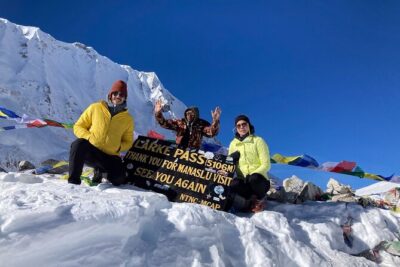
10 Days Manaslu Circuit Trek in Larke La Pass
Read our review →Browse the lists this tour appears in