
REVIEW · KATHMANDU
Annapurna Ghorepani Poonhill Trekking
Sunrise is the reward for a steep morning. This 8-day Annapurna trek combines Poon Hill sunrise views with village paths, rhododendron forest, Kathmandu landmarks, and time in Pokhara. I like that you reach 3,210 meters without committing to a long, high-altitude expedition, and I also like the blend of guided trekking and cultural sightseeing.
I especially value the manageable route for families and first-time trekkers with moderate fitness. Guides such as Raju, Bishal, and Dipendra’s team receive repeated praise for kindness, organization, and attention to health. The main consideration is the pace: the stone steps above Ulleri are tough, and the final morning includes an early climb followed by a long descent to Nayapul.
Key points to know before booking
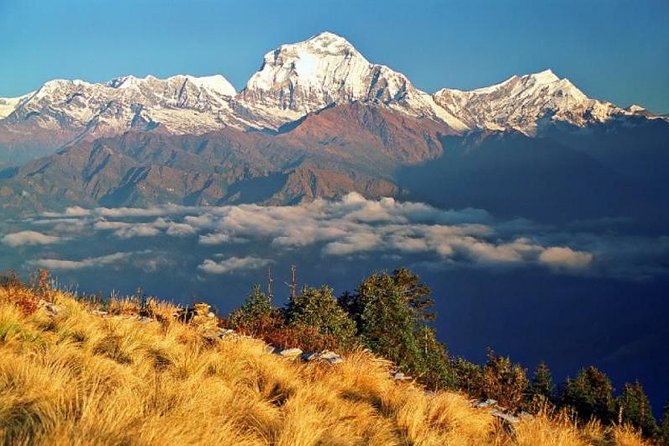
- Poon Hill reaches 3,210 meters: The summit gives you sunrise views toward Dhaulagiri, Annapurna, Machhapuchhre, and Manaslu.
- Ulleri is the first serious test: The route includes a steep stone staircase after Tikhedhunga, so moderate fitness matters.
- You get more than a trek: Kathmandu temples, Patan Durbar Square, Pokhara, and rural mountain villages all feature in the plan.
- The package costs $400 per person: Four dinners, seven breakfasts, and three lunches are listed, while city meals and international flights are extra.
- The route suits first-time trekkers: It avoids the greater altitude and longer commitment of Annapurna Base Camp while still giving you a strong Himalayan experience.
- Guide quality is a major strength: Raju and Bishal are praised by name, while Dipendra and the wider team receive credit for arranging transport, lodging, meals, and permits on related trips.
Why Poon Hill works for a first Himalayan trek
Poon Hill is popular for a sensible reason. You get a real mountain walk, not just a roadside viewpoint, but the highest point is still low enough for a short itinerary. At 3,210 meters, altitude remains a consideration, yet this is far less demanding than a trek deep into the Annapurna range.
I like the route because the scenery changes often. You begin around riverside settlements, climb through forest, pass traditional villages, and finish with broad mountain views. The trail is not just a march toward a single summit. The villages and forests are part of the experience.
The route is often called the Annapurna sunrise trek or Annapurna Panorama trek. Those names are fair. From Poon Hill, you can look toward Dhaulagiri in the west, the Annapurna peaks, Machhapuchhre, and, on a clear day, Manaslu. The view is wide rather than focused on one mountain.
You should still take the fitness warning seriously. This is not a sightseeing tour with a few gentle walks. The route has repeated uphill sections, many steps, and a demanding descent. If you can walk for several hours and handle sustained stairs, you are likely better prepared than someone who only takes occasional short walks.
More Annapurna Treks in Kathmandu
- Annapurna Circuit Trek with Tilicho Lake
★ 5.0 · 368 reviews - Annapurna base camp trek 5 Days
★ 5.0 · 252 reviews - 14-Day Private Annapurna Base Camp Trek
★ 5.0 · 180 reviews
Kathmandu arrival and the first evening
Your airport pickup is arranged by Nepal Horizon Treks and Expedition. An airport representative meets you outside the terminal with a company card, then takes you to your hotel and introduces you to the trekking guide.
The first evening is kept light, with time to walk around Thamel. That is useful after a flight. You can get your bearings, check your equipment, and meet the person who will lead you into the mountains. The itinerary does not promise a full equipment briefing, so I would use this time to confirm the walking schedule, meals, transport, and what you need to carry.
The company requires at least two people per booking, and the activity is private. That gives your group more control over the pace than a large shared departure. It also means solo visitors cannot book this exact arrangement alone unless they join another booking or arrange a different format directly with the operator.
Kathmandu’s temples before the mountains
Day two is a full cultural day in the Kathmandu Valley. You visit Pashupatinath Temple beside the Bagmati River, Swayambhunath, Boudnath Stupa, and Patan Durbar Square. The plan also includes Krishna Temple, Kumbheshwor Temple, the Golden Temple, and other sites around the old city.
This is a smart addition to a short trekking holiday. You see Nepal as more than a mountain destination, and the religious sites give context to the communities you pass later on the trail. Swayambhunath, often called the Monkey Temple, is described as around 2,000 years old. Boudnath is known for its enormous stupa architecture and remains one of the valley’s major Buddhist sites.
Patan adds another layer, with its old urban center, temples, courtyards, and traditional Newar culture. The drawback is time. There are several major sites packed into one day, so the schedule may feel full rather than leisurely. Still, if this is your first visit to Nepal, I would keep the cultural day rather than cutting it for extra rest.
The road from Kathmandu to Pokhara
On day three, you drive by private car from Kathmandu to Pokhara, following the Trishuli River and passing through the countryside. The route is scenic, but it is also a long road day. You should not mistake this transfer for a relaxing train journey. Nepal’s mountain roads can be slow, winding, and tiring.
The itinerary points out Trishuli as a river associated with rafting for families and beginners. You are not scheduled to raft on this trip, but the river gives the drive a clear thread and adds interest to the journey.
Pokhara provides a useful pause before the trail. You arrive at the hotel and have a free afternoon. I like this buffer because it gives you time to rest, prepare your daypack, and enjoy the city before the early start. City meals are not included, so budget separately for lunch and dinner in Kathmandu and Pokhara.
More Poon Hill Treks in Kathmandu
- 4 Days Poon Hill Trek
★ 5.0 · 94 reviews - Ghorepani(Poonhill Trek)
★ 5.0 · 81 reviews - 4-day Poon Hill Trek
★ 5.0 · 74 reviews - Ghorepani Poon Hill Trek
★ 5.0 · 61 reviews
Nayapul, Birethanti, and the hard climb to Ulleri
Day four begins with a drive to Nayapul, the starting point of the trek. From there, you walk to Birethanti, a large riverside village at the meeting point of the Modi and Bhurungdi rivers. This opening section introduces the rural side of the route without throwing you straight into the steepest climb.
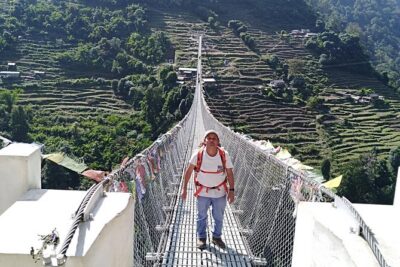
You then continue toward Sudame and Tikhedhunga. The route rises gradually at first, with off-road sections and valley views. After crossing a suspension metal bridge, you face the steep stone staircase to Ulleri.
This is where the trip becomes a proper trek. The staircase can feel relentless, especially if you are carrying too much. I would keep your personal bag light and let your guide set a steady pace. The itinerary notes views toward Annapurna South and Hiunchuli from this section, which gives you a welcome reason to pause.
Ulleri is not a minor detail. It is the first strong test of your legs, and it shows why the tour asks for moderate fitness. Families can enjoy this route, but children and less active adults should be prepared for a full day of walking and stairs.
Rhododendron forest and arrival at Ghorepani
On day five, the trail continues through dense rhododendron and oak forest. The trees provide shade and change the mood after the exposed climb near Ulleri. In season, rhododendrons add color, though the exact display depends on the time of year.
The path keeps rising toward Ghorepani. You are likely to feel the altitude and the previous day’s effort here, so short breaks are worthwhile. The itinerary describes Upper Ghorepani, also called Deurali, as a viewpoint for Dhaulagiri and the Annapurna range.
Ghorepani is the strategic stop of the trek. It positions you for the pre-dawn walk to Poon Hill, which is the central event of the route. The schedule includes breakfast before the climb, but you should confirm the exact departure time with your guide because sunrise timing changes with the season.
The Poon Hill sunrise and the long descent
Day six begins with a 45-minute hike to Poon Hill at 3,210 meters. The route passes through rhododendron forest before opening onto the grassy summit. The early start is worth it for the chance to see sunlight reach the high peaks from west to east.
The views listed include Dolpo toward the far west, Dhaulagiri, the Annapurnas, Machhapuchhre, and Manaslu. Clear weather is never guaranteed, so keep your expectations sensible. You may get a full panorama, or cloud may hide part of the range. Even with changing conditions, the climb gives you a strong sense of place.
The difficult part is what comes next. After Poon Hill, you descend toward Nayapul and take a private vehicle back to Pokhara. This is a substantial walking day, not a quick viewpoint visit. The steep descent can be hard on knees, especially after the climb to the summit.
I would bring trekking poles if you use them, wear shoes with a secure grip, and avoid racing downhill. The tour is private, so your guide can help set a safer pace. One useful comment from the supplied feedback is that the trek was described as tough but fully worth it for the sunrise. That is a fair description.
Pokhara, the return drive, and the final dinner
After returning to Pokhara, the schedule gives you a short break before the drive back to Kathmandu on day seven. The return follows the same route used earlier, so this is another long road transfer rather than a scenic flight.
Back in Kathmandu, you have free time to rest, shop, or visit more landmarks. The evening ends with a farewell dinner at a traditional Nepali restaurant, including cultural shows. Four dinners are included in total, though the exact locations and menus are not specified.
This final dinner is a pleasant way to close the trip, but remember that city lunches and dinners are excluded from the package. The included meal count covers four dinners, seven breakfasts, and three lunches. Ask the operator to confirm which trekking nights and transport costs are covered before paying, since lodging and several other major items are not clearly itemized in the supplied inclusions.
What the $400 price really gives you
At $400 per person, this looks like a competitive price for an organized eight-day Nepal trip, especially with airport pickup, private road transfers, a guide, trekking arrangements, and meals included in the plan. The value improves if you want one company to handle the change from city touring to mountain trekking.
The price does not cover international airfare, visa fees, WiFi on board, or city lunches and dinners. The published details also do not clearly list accommodation, trekking permits, porter service, or insurance as separate inclusions. That does not mean they are absent, but you should ask before booking.
The strongest evidence of the company’s service comes from the repeated praise for organization and personal care. Dipendra is credited with explaining plans and helping with last-minute arrangements. Raju is praised as friendly, professional, and attentive to health. Bishal is described as kind, funny, and helpful. Other feedback names Kumar and Ramesh in connection with Annapurna trips.
Some of those comments refer to Annapurna Base Camp and Annapurna Circuit journeys rather than this exact eight-day route. Still, they give you useful names to ask about. If you have a preference for Raju or Bishal, request guide availability instead of assuming a particular guide is guaranteed.
Who should choose this route
I would recommend this trek to you if you want Himalayan scenery without the longer commitment of Annapurna Base Camp. It is a good match for couples, families with active older children, first-time trekkers, and people who want cultural sightseeing before and after the walk.
You should be comfortable with several hours of walking, steep steps, early mornings, and a long downhill section. Moderate fitness is the stated expectation, and the climb to Ulleri plus the Poon Hill descent make that more than a formality.
This is less suitable if you want a slow holiday with minimal exertion, dislike basic mountain walking conditions, or need a highly flexible schedule. The route is short, but the walking days still demand effort.
The private format is useful for a small group. You can discuss pace and breaks with the guide, and you avoid being tied to strangers. The minimum booking size is two people, so solo visitors need to check other options with the provider.
Practical details before you commit
Confirmation is provided when you book, and pickup is available. The experience is near public transportation, though the main transfers are arranged by private vehicle according to the itinerary.
The cancellation policy allows a full refund if you cancel at least 24 hours before the local start time. Cancellations or changes made within 24 hours are not accepted for a refund.
The company has a displayed rating of 5 from 17 reviews, with 100 percent recommendation. I would treat that as a strong service signal, while still checking the less glamorous details: room standards, porter arrangements, permit costs, guide availability, and the exact meal plan.
Should you book the Ghorepani Poon Hill trek?
I would book it if your priority is a compact introduction to Nepal that combines temples, villages, forest paths, and one memorable Himalayan sunrise. The route offers excellent scenery for its length, and the guide feedback suggests a friendly, attentive local team.
I would not book without clarifying the missing cost details. Ask what accommodation, permits, porter support, and insurance cover, and confirm how the four dinners, seven breakfasts, and three lunches are allocated. If the answers are clear, $400 can offer very good value.
For a first trek, Poon Hill is a sensible choice. You get the mountains, but you do not have to give up most of your holiday to reach them.
FAQ
How long is the Annapurna Ghorepani Poon Hill trek?
The full experience lasts approximately eight days, including airport pickup, Kathmandu sightseeing, transfers between Kathmandu and Pokhara, the trek, and the return to Kathmandu.
What is the highest point on the trek?
Poon Hill is the highest stated point, at 3,210 meters or 10,530 feet.
Is the trek suitable for beginners?
Yes, the experience is presented as suitable for families and beginners who have moderate physical fitness. The stone steps to Ulleri and the long descent from Poon Hill still require preparation.
How many people are required to book?
A minimum of two people per booking is required. The activity is private, so only your group participates.
What meals are included?
The package lists four dinners, seven breakfasts, and three lunches. Lunch and dinner in the cities are not included.
Are international flights included?
No. International airfare is not included in the price.
Is airport pickup available?
Yes. An airport representative meets you outside the terminal and transfers you to the hotel.
What places are visited in Kathmandu?
The itinerary includes Pashupatinath Temple, Swayambhunath, Boudnath Stupa, Patan Durbar Square, Krishna Temple, Kumbheshwor Temple, and the Golden Temple.
Can I cancel for a full refund?
Yes, if you cancel at least 24 hours before the experience start time. Cancellations made less than 24 hours before the start time are not refundable.
Recently added around Kathmandu
- Ghorepani Poon Hill Trek★ 5.0 · 16 reviews
- Private Manaslu Circuit Trek at Himalayas★ 5.0 · 3 reviews
- Amazing 1 Day Trekking Experience in Kathmandu Nepal★ 5.0 · 24 reviews
- Ghorepani Poonhill Trek★ 5.0 · 5 reviews
- Upper Mustang Trekking★ 5.0 · 2 reviews
- Upper Mustang Trekking★ 3.0 · 2 reviews
- Upper Mustang Trekking★ 5.0 · 4 reviews
- Upper Mustang Trek★ 5.0 · 5 reviews
Annapurna Base Camp Treks, compared.
Trekking in Annapurna/Langtang/Everest/Upper Mustang regions
Read our review →
Kathmandu to Annapurna Base Camp (ABC) 5-Day Trek
Read our review →Browse the lists this tour appears in