
REVIEW · KATHMANDU
7 Days Langtang Valley Private Trek From Kathmandu
The Himalayas begin surprisingly close to Kathmandu. This private Langtang Valley trek gives you rhododendron woods, mountain streams, Tibetan-influenced villages, glaciers, and snowy peaks without the longer approach needed for Everest. I especially like the small private-group format and the fact that meals, permits, guides, tea houses, and Kathmandu transfers are included.
I also like the route’s variety. You move from forested river valleys to high alpine country around Kyanjin Gompa, with Langtang Lirung rising to 7,246 meters above the valley. The main caution is the schedule: the advertised seven-day experience actually describes an eight-day calendar, including arrival and return days. The final walking day back to Syabru Bensi is also long, so good fitness is essential.
Key points to know before booking
- Langtang is one of Nepal’s closest major trekking regions to Kathmandu, reducing the amount of time spent reaching the trailhead.
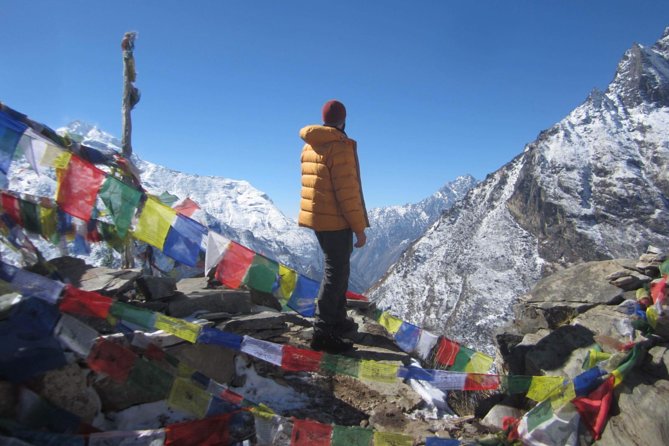
- Kyanjin Gompa sits at 3,870 meters, giving you impressive mountain scenery without going as high as many Everest routes.
- The trek uses basic twin-share tea houses, with bathrooms and toilets outside the rooms.
- The package includes three meals daily, permits, a guide, public bus transport, and airport transfers, making the $585 price fairly strong for a private trip.
- The route includes long walking days, especially the return from Lama Hotel to Syabru Bensi, listed at 21.6 kilometers.
- The itinerary can be customized, and equipment such as sleeping bags, down jackets, and trekking poles can be arranged after arrival.
Why Langtang works well for a short Nepal trek
Langtang Valley is a good choice when you want a real Himalayan trek but do not have two or three weeks available. The drive from Kathmandu reaches Syabru Bensi in about seven to eight hours, then the route heads into Langtang National Park.
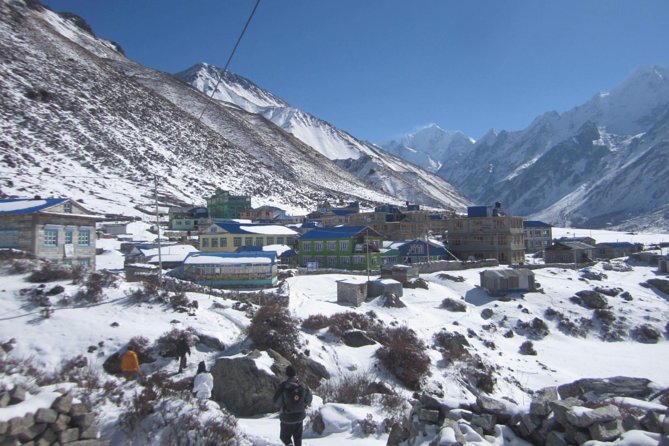
The valley is narrow and dramatic. The main Himalayan range rises toward Tibet, while another snowy range closes the valley to the south. Langtang Lirung dominates the northern skyline, with Gang Chhenpo, Naya Kangri, and Dorje Lakpa adding more sharp peaks farther along.
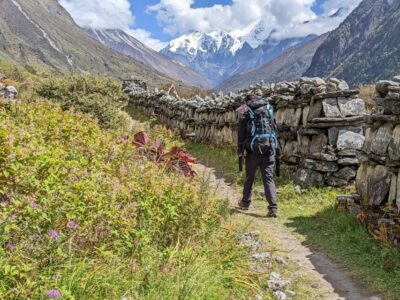
I like the way the route changes as you gain height. Lower sections pass through pine, bamboo, and rhododendron woods. Higher ground brings open meadows, rocky slopes, waterfalls, swift streams, and glacial views. If you visit during the rhododendron flowering season, the forest can add strong color to the walking days.
Langtang National Park was established in 1971 and covers about 1,710 square kilometers. The area is known for red pandas, Himalayan black bears, wild boar, langur monkeys, orchids, and rhododendrons. Wildlife sightings are never guaranteed, but the park gives the walk more than a mountain backdrop.
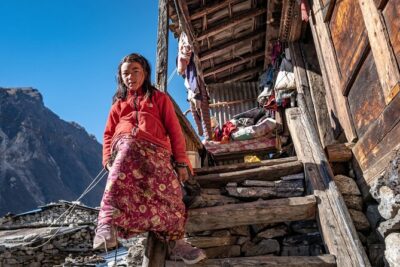
The valley also has a strong Tibetan cultural influence. At higher villages, you see Buddhist traditions and local ways of life that differ from the city and lower hill country. This cultural element gives the trek a human scale. You are not simply walking toward a viewpoint. You are moving through lived-in mountain communities.
More Langtang Treks in Kathmandu:
- Langtang Valley Trek
★ 5.0 · 140 reviews - Langtang Valley Trek
★ 5.0 · 61 reviews - 8 Days Tour in Langtang Valley Trek
★ 5.0 · 45 reviews
The route from Kathmandu to Syabru Bensi
Your first day begins with an airport greeting, a private transfer to your Kathmandu hotel, and time to prepare. The package includes two nights in a deluxe Kathmandu hotel on a twin-share basis, with breakfast.
On day two, you travel by public bus from Kathmandu to Syabru Bensi, at about 1,550 meters. The journey takes roughly seven to eight hours, although traffic and road conditions can change that estimate. This is not a luxury transfer. Public bus travel is less private and less predictable, but it is part of the local experience and helps keep the overall price down.
The drive is also one of the less polished parts of the trip. You should expect a full day on the road before the walking begins. If you are sensitive to winding roads or want a quieter ride, ask the company about private transport and any extra cost before booking.
Syabru Bensi is the practical gateway to the valley. It is not the grand highlight of the trek, but it marks the shift from urban Nepal to a mountain route. Your guide handles the trail arrangements from here, while you begin adjusting to the pace of walking and the thinner air.
Day three: Syabru Bensi to Lama Hotel
The first walking day covers about 10.9 kilometers and takes six to seven hours. You climb from 1,550 meters to Lama Hotel at 2,450 meters, gaining around 1,070 meters.
This is a proper mountain day, not a gentle warm-up stroll. The route follows the valley through forest, with streams, rocky sections, and changing views as you gain height. The tree cover can make the walking feel enclosed at times, but it also provides shade and a chance to see the park’s plant life.
Lama Hotel is a simple overnight stop. Accommodation is in a basic tea house, with two people sharing a room. Toilets and bathrooms are outside the room, and comfort is limited compared with a city hotel.
Three meals per day are included throughout the trek. Tea, coffee, bottled or mineral water, hot water, soft drinks, alcohol, snacks, desserts, and extra meals cost more. Budget for these extras, especially if you want hot drinks or frequent charging.
Day four: Lama Hotel to Langtang Village
The fourth day is longer, with about 14.8 kilometers of walking and seven to eight hours on the trail. You gain roughly 980 meters and finish at Langtang Village, at 3,430 meters.
The forests gradually thin as the valley opens. This is one of the most rewarding sections because you begin to feel the scale of the surrounding peaks. Waterfalls, mountain streams, meadows, and rocky slopes add variety, so the walk does not feel like one continuous climb.
Langtang Village is also an important cultural stop. The area reflects the valley’s Tibetan influence, and you have more opportunity to see how people live in a high mountain setting. Your guide can help explain local customs and the names of nearby peaks, which is one of the reasons I see value in booking a guide rather than attempting this route alone.
At 3,430 meters, the altitude begins to matter. You should keep your pace steady, drink regularly, and tell your guide if you develop a headache, unusual tiredness, nausea, or other symptoms. The schedule is fixed, but the guide can help judge how you are coping.
A few more treks around Kathmandu worth a look
- Short Annapurna Base Camp Trek – 7 Days
★ 5.0 · 22 reviews - Kathmandu to Langtang Valley 7-Day Trek
★ 5.0 · 11 reviews - Langtang Trek from Kathmandu 7 Days
★ 5.0 · 5 reviews - Everest View Trek – 7 Days
★ 5.0 · 4 reviews
Day five: Langtang Village to Kyanjin Gompa
This is the shortest walking day, covering about 6.8 kilometers in two to three hours. The route climbs around 460 meters to Kyanjin Gompa, at 3,870 meters.
A shorter day is useful here. You gain altitude while still having time to settle into the higher elevation. Kyanjin Gompa is the main destination of the trek, surrounded by high peaks, glaciers, and open mountain country.
If time and conditions allow, you can visit Kyanjin Ri in the afternoon. The supplied itinerary does not give a fixed height or duration for this side walk, so you should treat it as an optional addition rather than a guaranteed part of the day. Ask your guide about the conditions and your energy level before setting out.
The views around Kyanjin are the main reward. Langtang Lirung is the dominant peak, while the valley leads toward glaciated ridges and higher passes. This is where the route feels most like a true Himalayan trek, even though the highest overnight point remains below 4,000 meters.
The altitude is still serious. You should not treat the short distance as an easy day. At nearly 3,900 meters, a slow pace and sensible rest matter more than reaching every possible viewpoint.
Day six: returning to Lama Hotel
The route turns back on day six. The listed distance is 21.6 kilometers, with seven to eight hours of walking and a descent of about 1,430 meters.
This is the hardest day for many people, not because of altitude gain but because of the distance and repeated downhill walking. Descending can be tiring on knees and thighs, especially after several days on the trail. Trekking poles are worth bringing or arranging, and good footwear matters.
The return route gives you a different view of the valley. Sections that felt like a climb on the way up can pass more quickly on the descent, but you still need to watch your footing on rocky and uneven ground.
This long day is one of the main points I would discuss with the operator before booking. If you prefer a gentler program, ask whether the route can be adjusted with an extra night. The company says the itinerary can be customized, but any change may affect the price and number of included nights.
Day seven: Lama Hotel to Syabru Bensi
The final walking day covers about 10.9 kilometers and takes five to six hours. You descend another 1,070 meters from Lama Hotel to Syabru Bensi.
After the longer previous day, this section may feel manageable, though downhill walking can still be hard on tired legs. Once back in Syabru Bensi, you have completed the walking portion and can prepare for the return drive.
The schedule then lists a further day for the drive back to Kathmandu. That means the full plan is eight calendar days if you count the airport arrival, the trekking days, and the return to the city. The tour title says seven days, so check the exact dates supplied at booking. This is an important detail if you have a tight international flight schedule.
What the $585 price really includes
At $585 per person, the price offers solid coverage for a private trek. You receive:
- Two nights in a deluxe Kathmandu hotel with breakfast
- Six nights in basic tea houses during the trek
- Breakfast, lunch, and dinner during the trekking period
- An English-speaking professional guide
- Guide salary, food, accommodation, transport, and insurance
- Public bus transport between Kathmandu and Syabru Bensi
- Langtang National Park permit
- TIMS card
- Private airport, hotel, and airport transfers
- Emergency evacuation and medication service arrangements
The value is strongest if you use the included services. Permits, guide costs, hotel nights, meals, and transport can quickly add up when arranged separately.
There are also clear extra costs. Drinks, bottled water, hot showers, charging, phone calls, laundry, snacks, photography fees, and personal purchases are not included. A porter is available for an additional charge, and I would consider one if you are carrying more than a light daypack.
Tips for local staff are also separate. International flights, Nepal visa fees, travel insurance, and extra Kathmandu nights are not part of the package.
The emergency evacuation wording needs careful attention. Helicopter rescue and medical care may be arranged, but the cost is expected to be covered by your insurance company. Buy a policy that specifically includes trekking and helicopter evacuation, then check the altitude limit and exclusions.
Tea houses, equipment, and daily comfort
The tea houses provide a simple base after each walking day. You share a twin room, while the bathroom and toilet are outside. You should not book this trip expecting private hotel-style facilities in the valley.
Bring or arrange a sleeping bag, down jacket, headlight, water bottle, first-aid kit, water purification supplies, trekking poles, raincoat, sunglasses, gloves, socks, thermal hat, fleece, and sunscreen. The company can help arrange equipment after you arrive if you want to travel light.
A current passport is required, along with scanned copies of passport pages and passport-sized photos for each participant. You should also carry your travel insurance details.
The trek operates in all weather, so clothing must work in rain, cold, sun, and changing mountain conditions. Weather can also affect transport. If poor weather forces cancellation, you are offered another date or a full refund under the stated policy. For a standard cancellation, you need to cancel at least 24 hours before the start time to receive a full refund.
The guide makes a real difference
A private guide is useful on this route for more than navigation. The guide helps manage the pace, explain the villages and Buddhist culture, check the practical details at tea houses, and respond if you feel unwell at altitude.
Several guides are praised by name in the supplied feedback, including Rupak, Prakash, Dilli, Arjun, and Brokus. Rupak is repeatedly associated with strong guiding and a good experience in the Langtang area. Prakash is described as professional and friendly, while Dilli receives praise for careful handling of a longer trekking program.
Those names do not guarantee who will lead your departure. Ask for the guide’s name before leaving Kathmandu, and confirm whether a porter is included or costs extra. Children must be accompanied by an adult, and the activity is private, so only your own group takes part.
Who should book this trek?
I would recommend it to hikers who want a shorter Himalayan route, prefer a private arrangement, and are comfortable with basic lodging. It is especially suitable if you want mountain scenery, local villages, forest walking, and a Tibetan-influenced region without committing to a long Everest itinerary.
You should have good general fitness and be ready for six to eight hours of walking on several days. Previous mountain experience helps, but it is not listed as an absolute requirement. The main need is the ability to walk uphill and downhill for long periods while carrying at least a daypack.
This is not the best match if you want luxury rooms, private road transport, short walking days, or a fixed seven-day trip with no calendar ambiguity. It also may not suit anyone who has not prepared for altitude or who dislikes basic bathrooms and changing mountain conditions.
Should you book the Langtang Valley trek?
Book this trek if you want strong Himalayan scenery at a moderate package price, can handle basic tea houses, and have enough time for the full arrival-to-return schedule. The route offers an excellent mix of forests, waterfalls, villages, high peaks, and glaciers, while the private format gives you more personal support than a large group departure.
Before paying, confirm the exact number of calendar days, the guide assigned to your group, porter pricing, equipment rental costs, and the plan for Kyanjin Ri. If those details fit your needs, this is a practical and rewarding way to reach the mountains from Kathmandu without spending weeks on the trail.
FAQ
How long is the Langtang Valley trek?
The tour is described as a seven-day experience, but the detailed schedule includes day one airport arrival and day eight transport back to Kathmandu. You should confirm the exact calendar length before booking.
What is the price?
The listed price is $585 per person. Group discounts may be available.
Is this a private trek?
Yes. Only your own group participates in the activity.
What accommodation is included?
The package includes two nights in a deluxe Kathmandu hotel and six nights in basic tea houses during the trek. Tea house rooms are shared by two people, and bathrooms and toilets are outside the rooms.
Are meals included?
Yes. Breakfast, lunch, and dinner are included during the trek, along with breakfast during the included Kathmandu hotel stay. Drinks, snacks, desserts, and extra meals cost extra.
Is transportation included?
Yes. Airport, hotel, and airport transfers use private transport, while the Kathmandu to Syabru Bensi and return journeys use public bus transport.
Do I need travel insurance?
Yes. You are expected to arrange travel insurance covering cancellations, accidents, health care, emergency evacuation, and lost, stolen, or damaged belongings. Your policy should specifically cover helicopter evacuation and medication costs.
What equipment should I bring?
Recommended equipment includes a sleeping bag, down jacket, headlight, water bottle, first-aid kit, water purification supplies, trekking poles, raincoat, sunglasses, gloves, socks, thermal hat, fleece, and sunscreen. Equipment can be arranged after arrival if needed.
Can I cancel for a full refund?
You can receive a full refund if you cancel at least 24 hours before the experience begins. Cancellations or changes made less than 24 hours before the start time are not accepted, unless poor weather causes the operator to cancel and offer another date or a refund.
Recently added around Kathmandu
- Ghorepani Poon Hill Trek★ 5.0 · 16 reviews
- Private Manaslu Circuit Trek at Himalayas★ 5.0 · 3 reviews
- Amazing 1 Day Trekking Experience in Kathmandu Nepal★ 5.0 · 24 reviews
- Ghorepani Poonhill Trek★ 5.0 · 5 reviews
- Upper Mustang Trekking★ 5.0 · 2 reviews
- Upper Mustang Trek★ 5.0 · 5 reviews
- Upper Mustang Trekking★ 3.0 · 2 reviews
- Upper Mustang Trekking★ 5.0 · 4 reviews
Langtang Valley Treks, compared.
Trekking in Annapurna/Langtang/Everest/Upper Mustang regions
Read our review →
Browse the lists this tour appears in