
REVIEW · KATHMANDU
Experience the Thrill of a Lifetime:12-Days Manaslu Circuit trek
The Himalayas feel wilder here. This 12-day Manaslu Circuit trek takes you from Kathmandu toward the Budhi Gandaki Valley, through Gurung and Tibetan-style villages, across high alpine country, and over the 5,160-meter Larkya La Pass. I like the quiet route and the steady change from farmland to high mountain terrain. I also like that the price includes permits, tea-house lodging, meals, transport, and a private group with a guide.
The main caution is the physical demand. Days can last up to 10 hours, the trail rises to thin, cold air, and the pass crossing is no small stroll. The final cost is attractive at $1,500 per person, but you still need to budget for insurance, tips, hot showers, Wi-Fi, bottled or boiled water, laundry, and personal purchases.
Key points before you book
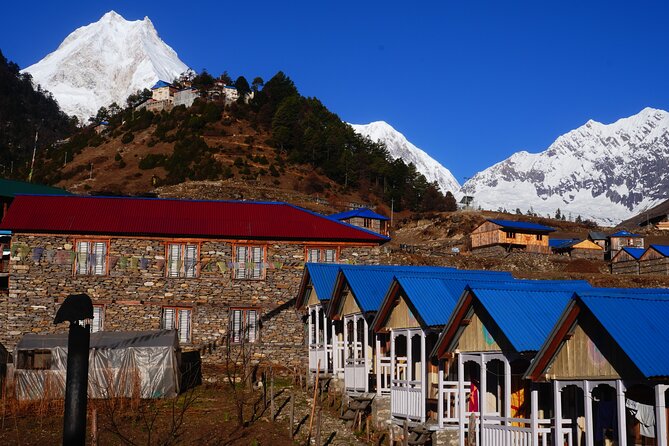
- The route reaches Larkya La Pass: The trek’s major test comes on the long day from Dharmasala over the pass and down to Bimthang.
- Scenery changes every few days: Expect terraced farmland, forest, river gorges, pasture, desert-like high country, icy lakes, and snowy peaks.
- Acclimatization is built in: The extra day at Samagaun includes a roughly two-hour walk to Pungyen Gompa.
- Culture is part of the route: Gurung villages, monasteries, chortens, prayer flags, and Tibetan-style settlements give the trek a strong local character.
- The price covers the major basics: Permits, tea-house accommodation, a guide, meals, and scheduled transport are included.
- Guide service is a major strength: The company has used guides including Jeewan, Raj Rai, Lalu, and Zeewan, with repeated praise for care, communication, and organization.
Why the Manaslu Circuit feels different
The Manaslu Circuit is a good choice if you want a Himalayan trek with a sense of distance from the busiest trails. The route is not simply a mountain-view walk. It begins beside the Budhi Gandaki River, passes through agricultural villages, enters forest, and then climbs into a colder, drier world near the Tibetan border.
I like this gradual change because it gives your body and mind time to adjust. You see how houses, crops, forests, and daily life change with altitude. By the time you reach Samagaun and Samdo, the route feels distinctly high mountain rather than merely rural Nepal.
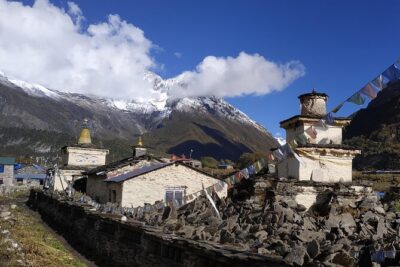
The cultural side is just as important. Gurung communities appear early in the trek, while Buddhist symbols become more common higher up. Monasteries, chortens, prayer flags, and Tibetan-style homes help explain the character of the Nubri Valley without turning the walk into a staged cultural show.
Wildlife is another possible bonus. The region is home to Himalayan thar, many bird species, and the much rarer snow leopard. You should treat sightings as luck, not as a promised part of the trip.
More Manaslu Treks in Kathmandu:
- Manaslu Circuit Trek
★ 5.0 · 292 reviews - Manaslu Circuit Trek:
★ 5.0 · 106 reviews - Manaslu Circuit Trek (15 Days)
★ 5.0 · 50 reviews
Days 1 and 2: Long roads, river paths, and Machhakhola
The first day is mostly a road journey. You leave Kathmandu, follow the Prithivi Highway, turn near Malekhu, and continue through villages and farmland toward Soti Khola. The drive takes about eight to nine hours, so this is a demanding start even though the walking is fairly gentle.
The route follows the Budhi Gandaki River on a relatively flat path. Soti Khola is less about sightseeing than getting properly into the trek. I would treat this day as a test of patience, especially if long vehicle rides leave you stiff or tired.
Day two brings about six hours of walking toward Machhakhola. Forest, village paths, and the Gurung settlement of Lapu Besi give the route more character. The zigzag trail keeps the walk interesting, but you should not expect a soft, level path all day.
These first stages are valuable because they ease you into the rhythm of walking, eating, resting, and repeating. They also show why sturdy footwear matters. The route is active and uneven from the start, even before the serious altitude appears.
Days 3 and 4: Suspension bridges, hot springs, and Gurung villages
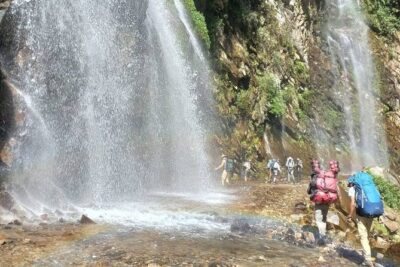
The next section follows the river upstream through Khola Besi and toward Tatopani, known for its hot springs. The path includes several suspension bridges, forest walking, and uphill sections near Doban and Lauri.
The day finishes around Jagat in the route description, although the stop labels also refer to Sirdibas. The practical point is clear: this is the part of the trek where the valley narrows, the trail becomes more rugged, and the route begins to feel more remote.
The following day brings another suspension bridge and the village of Philim, with its traditional homes, monasteries, and chortens. Gurung culture is especially visible here. The route then continues through more bridge crossings toward Deng, an agricultural village.
I like this section for its texture. You are not just walking toward a mountain pass. You are passing through working communities, crossing rivers that shape the valley, and watching the architecture shift with the terrain.
The route descriptions use several village names as day stops, so I would confirm the exact overnight locations with the operator before departure. That is not a major concern, but it is useful when you are checking maps or explaining the plan to family at home.
Days 5 and 6: Namrung, Manaslu views, and Samagaun
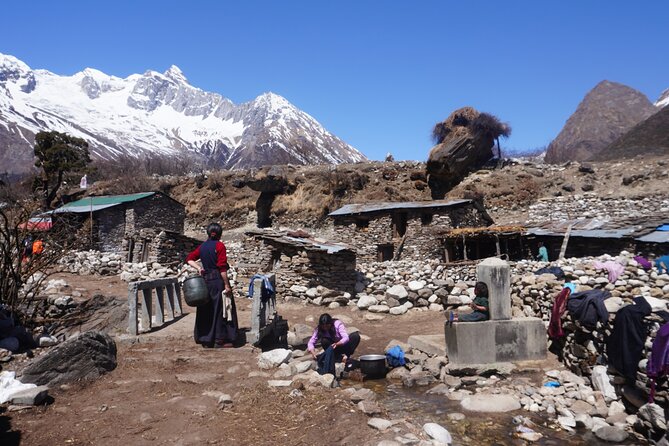
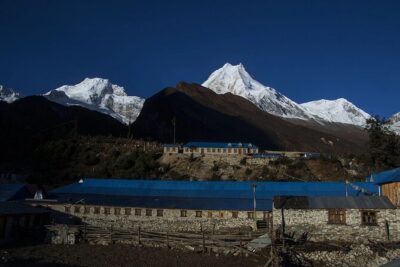
Day five begins on a flatter trail before climbing through forest toward Namrung. The approach brings views of Manaslu, ridges, and valleys. Namrung is a Buddhist village marked by monasteries, chortens, and prayer flags.
This is one of the points where the trek’s visual character changes. The lower route feels more river-focused and forested. Around Namrung, the mountains begin to dominate the scene, while Buddhist traditions become more visible in everyday village life.
Day six leads toward Samagaun, with views of Gorkha Himal, Lajing Himal, Saula Himal, and Manaslu. The path winds uphill, the air becomes colder and thinner, and rhododendron forest gives way to pasture grassland.
You also pass through Lhogaun, a Tibetan-style village, before reaching Samagaun. This is an important overnight stop because the altitude is now high enough that rushing ahead would be unwise. The seven-hour walking day may feel manageable at a steady pace, but altitude can change how your body responds.
At this point, I would pay close attention to headaches, nausea, unusual tiredness, or poor coordination. The tour includes an acclimatization day, which is one of its strongest practical features. You should use it properly rather than treating it as a day to sleep late and skip the walk.
A few more treks around Kathmandu worth a look
- Everest Base Camp Trek – 14 Days
★ 5.0 · 1,499 reviews - Everest Base Camp Trek
★ 5.0 · 842 reviews - Everest Base Camp Trekking
★ 5.0 · 485 reviews - Annapurna Circuit Trek with Tilicho Lake
★ 5.0 · 368 reviews
Day 7: Acclimatization at Samagaun and Pungyen Gompa
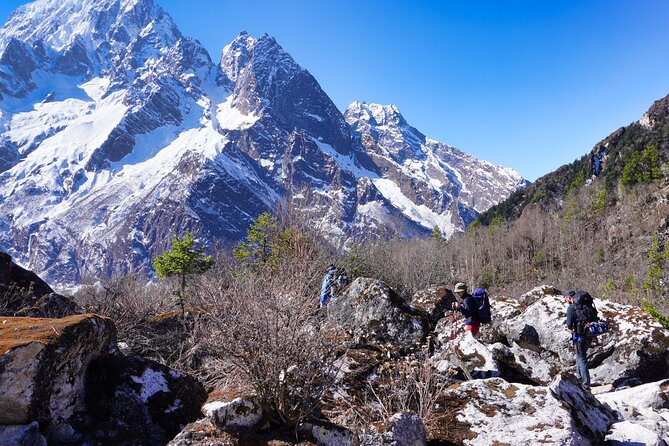
The extra day at Samagaun includes a walk to Pungyen Gompa on the east side of the Nubri Valley. The stated walking time is about two hours, and you can carry lunch for a rest stop along the way.
This is a short day by distance, but it does real work. A controlled hike helps your body adjust before the route climbs higher toward Samdo and the pass. The setting also gives you time to appreciate the valley without the pressure of reaching a new lodge before dark.
The route crosses a roaring river and passes through forest, with mountain views around the valley. I like this pause in the schedule because high-altitude trekking is not improved by constant forward motion. The best plan is often the one that gives your body time to catch up.
Days 8 and 9: Samdo, the Tibetan border, and Dharmasala
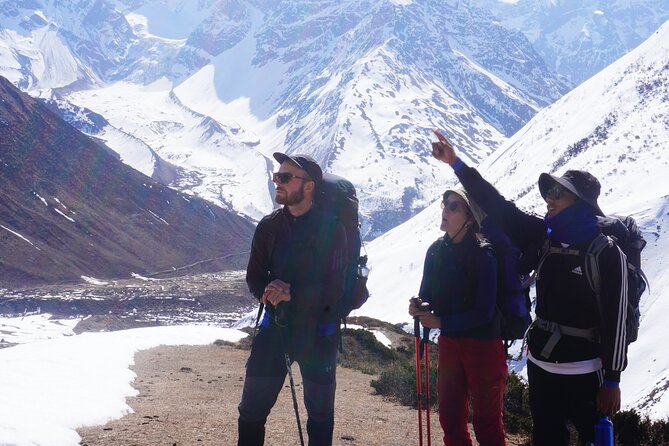
From Samagaun, the route climbs toward Samdo in about five hours. The surroundings become more open and dry, almost desert-like, and the village is only about four kilometers from the Tibetan border.
Samdo also has a Tibetan refugee camp, adding another layer to the cultural story of the route. This is one of the more distinctive stops because the settlement sits in a high, exposed setting close to the border rather than in a sheltered river valley.
The next stage leads from Samdo to Dharmasala, also called Larkya Phedi or Larkya Base Camp. The distance is about 11.7 kilometers, or 7.2 miles, and takes roughly three to four hours. The path passes through Larke Bazar, a seasonal Tibetan market.
The route description labels this stage with Larkya La, but Dharmasala is the base camp before the pass. That distinction matters. You do not cross the pass on this day. Instead, you reach the high overnight point and prepare for the hardest day.
Dharmasala sits at about 4,470 meters. Accommodation and sleep can be less comfortable at this altitude, and the cold may be sharper. Keep your evening simple: eat, drink what is available, organize your clothing, and rest.
Day 10: The Larkya La Pass and descent to Bimthang
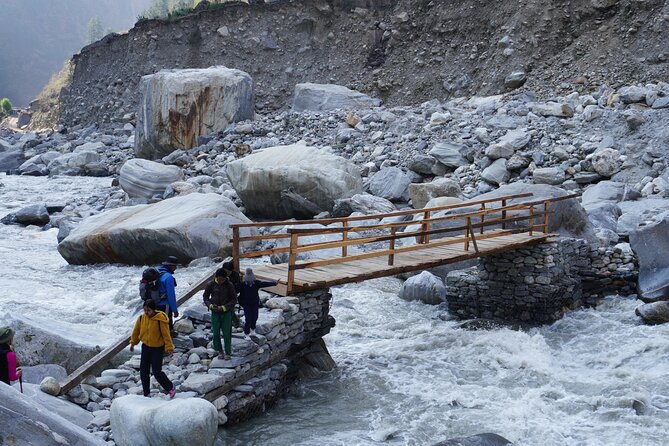
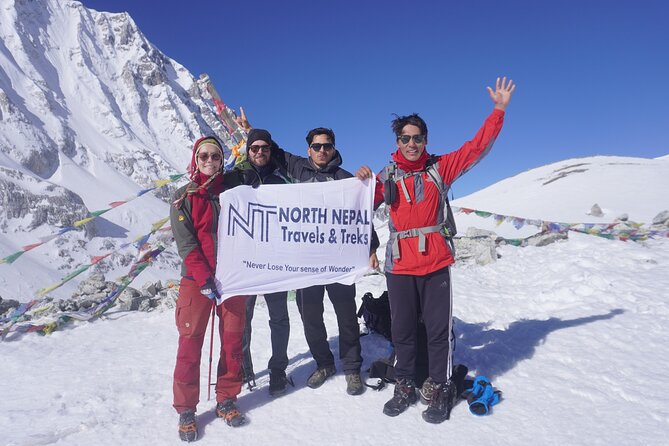
The pass day begins early. You climb from Dharmasala along a rocky, winding trail before reaching Larkya La at approximately 5,160 meters. The walk is described as moderately difficult, but the 10-hour day makes it a serious physical test.
At the top, you can expect views toward Ratna Chuli, Cheo Himal, Manaslu, and other snow-covered peaks. The pass is the emotional high point of the trek, but it is not the end of the work. The descent toward Bimthang can be hard on tired knees, especially after hours at altitude.
The route also passes icy lakes before dropping lower. This combination of cold, rock, wind, and wide mountain views is exactly why the Manaslu Circuit appeals to strong walkers. It is also why you should not choose this trip based only on the price or the photographs.
Pack snacks and water access carefully, since personal bottled or boiled water is not included. You will also want warm layers that are easy to add or remove. The day may begin cold and become warmer during the descent, but conditions at the pass can change quickly.
Days 11 and 12: Forest, apples, Dharapani, and the road back
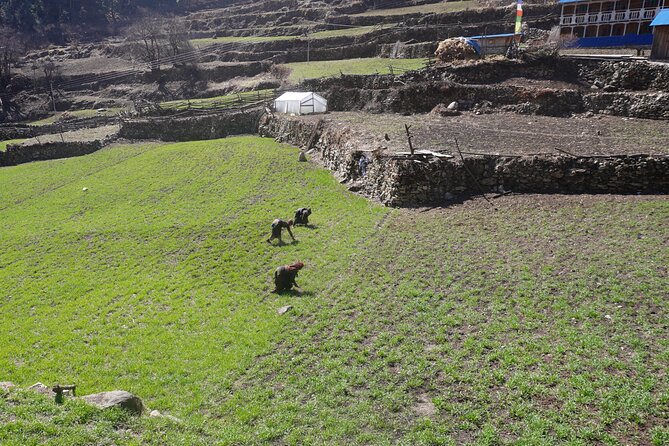
After the pass, the route crosses pasture and descends toward the Budhi Khola valley. You cross the river and walk through rhododendron forest before reaching Tije, a place known for its apple orchard and wine.
This is a welcome change after the stark high country. The forest and lower valley feel softer, and the agricultural details return. From Tije, you continue for about another hour to Dharapani.
The final day includes a roughly five-hour 4WD Jeep journey from Dharapani to Besisahar, followed by a transfer to Kathmandu or Pokhara. The full day is listed at about eight hours, so do not plan an important same-day connection without checking the timing carefully.
The transport arrangement is practical rather than luxurious. Road conditions and mountain routes can make any return journey tiring, but having the transfer arranged is a useful part of the package.
What the $1,500 price really covers
At $1,500 per person, the package offers solid value for a private 12-day trek. It includes the Manaslu Special permit, Manaslu Conservation Area Permit, and Annapurna Conservation Area Permit, along with tea-house accommodation, a registered guide, meals, and transport at the start and end.
The food allowance covers 12 lunches, 12 dinners, and 11 breakfasts. Breakfast is not listed for the final departure day, which makes sense if you leave early, but you should confirm the exact meal schedule before setting out.
Guide costs include food, accommodation, salary, and insurance. That matters because guide support is not an optional add-on here. The company’s past trips have used guides such as Jeewan, Raj Rai, Lalu, and Zeewan. Direct praise has focused on clear communication, professional organization, patience, and a caring approach.
You still pay for tips, laundry, bar bills, Wi-Fi, showers, extra porters, and bottled or boiled water. Travel and rescue insurance are also your responsibility. I consider insurance essential on a high-altitude trek, particularly one that includes a 5,160-meter pass.
Guide support and the private-group format
This is a private activity, so only your own group participates. That gives you more control over pace and daily decisions than a large shared departure, although the route still has fixed realities such as lodge availability, altitude, and weather.
Communication appears to be a strong point. Mohan is involved in trip organization, and the company has received repeated praise for arranging routes carefully and staying in touch. Raj Rai has been specifically praised for strong English and a calm, caring manner, while Lalu has been described as attentive and highly professional.
Those details matter because a guide on the Manaslu Circuit does more than point toward the next village. Your guide helps manage timing, altitude concerns, accommodation, meals, bridges, and the difficult pass day. I would still ask who is assigned to your group, how many people the group includes, and how the company handles a change in pace.
Who should book this trek?
I would recommend this trek to fit walkers who want a serious Himalayan route with strong cultural elements and fewer crowds than Nepal’s most famous circuits. You should be comfortable with six to ten hours of walking, uneven trails, suspension bridges, long vehicle rides, and basic tea-house accommodation.
It is also a good fit if you value a private group and guide attention. The itinerary gives you time for acclimatization, but it does not turn the trek into an easy holiday.
I would not choose it if you want short daily walks, high comfort, or a flexible schedule with lots of spare days. The final pass day is long, and the altitude is real. Moderate physical fitness is the stated minimum, but preparation beyond a casual walking routine would be sensible.
You can cancel for a full refund if you do so at least 24 hours before the start time. Cancellations inside 24 hours are not refunded, and poor weather or failure to meet the minimum number of participants may lead to a new date, another experience, or a full refund.
Final verdict: a demanding route with strong value
I like the balance this trek offers. You get river valleys, forest, working villages, Buddhist culture, high pasture, Tibetan border country, major peaks, and one memorable pass crossing in only 12 days.
The strongest reasons to book are the included permits and meals, the built-in acclimatization day, the private format, and the company’s record of attentive guides. The main reasons to pause are the long walking days, basic accommodation, extra personal costs, and the need to handle high altitude responsibly.
Book it if you want a genuine mountain challenge and are ready to prepare for it. Skip it if the appeal is only the scenery and you are not comfortable with long days, cold conditions, and a demanding descent after Larkya La.
FAQ
How long is the Manaslu Circuit trek?
The experience lasts approximately 12 days, including the approach to the trail, the trek, the pass crossing, and transport back toward Kathmandu or Pokhara.
What is the highest point on the trek?
The highest point is Larkya La Pass, at approximately 5,160 meters above sea level.
Is acclimatization included?
Yes. Day seven is an acclimatization day at Samagaun, with a roughly two-hour hike to Pungyen Gompa.
What permits are included?
The package includes the Manaslu Special permit, the Manaslu Conservation Area Permit, and the Annapurna Conservation Area Permit.
Are meals included?
Yes. The package includes 12 lunches, 12 dinners, and 11 breakfasts.
Is accommodation included?
Yes. Tea-house lodge accommodation is included during the trek.
Is this a private tour?
Yes. Only your own group participates in this private tour or activity.
What is not included in the price?
Personal expenses such as laundry, bar bills, Wi-Fi, showers, extra porters, and bottled or boiled water are not included. Tips and travel or rescue insurance are also excluded.
Recently added around Kathmandu
- Ghorepani Poon Hill Trek★ 5.0 · 16 reviews
- Private Manaslu Circuit Trek at Himalayas★ 5.0 · 3 reviews
- Amazing 1 Day Trekking Experience in Kathmandu Nepal★ 5.0 · 24 reviews
- Ghorepani Poonhill Trek★ 5.0 · 5 reviews
- Upper Mustang Trekking★ 5.0 · 2 reviews
- Upper Mustang Trek★ 5.0 · 5 reviews
- Upper Mustang Trekking★ 3.0 · 2 reviews
- Upper Mustang Trekking★ 5.0 · 4 reviews
Manaslu Circuit Treks, compared.
16 Day Private Manaslu Circuit Trek from Kathmandu
Read our review →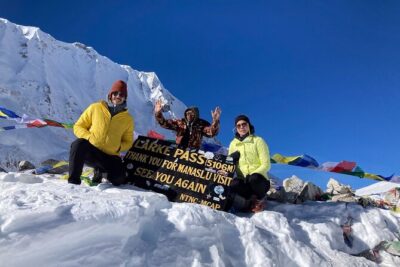
10 Days Manaslu Circuit Trek in Larke La Pass
Read our review →Browse the lists this tour appears in