
REVIEW · POKHARA
Kathmandu/Pokhara: 5-Day Annapurna Base Camp (ABC) Trek
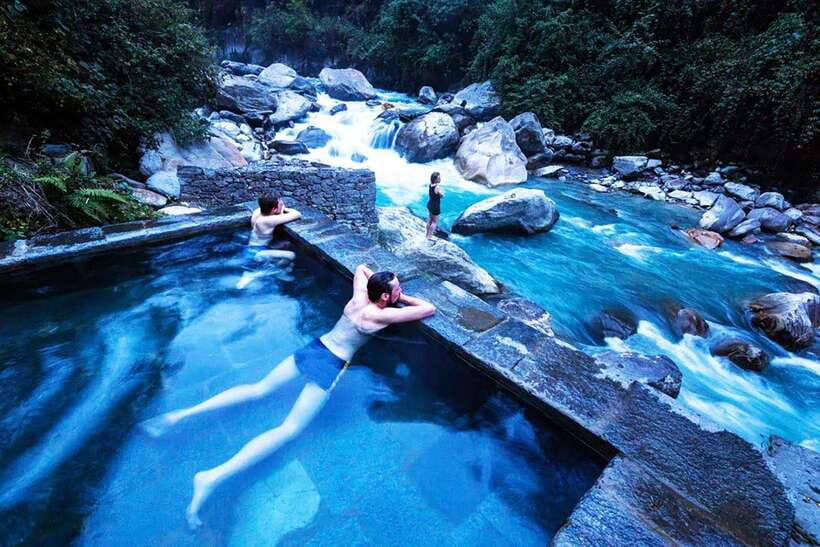
ABC is a big mountain goal in a compact trek. In five days, you move from Pokhara’s lower hills through Gurung villages, bamboo forests, waterfalls, and icy high ridges to Annapurna Base Camp at 4,130 meters. I especially like the changing scenery and the chance to finish with a soak at Jhinu Danda’s hot springs.
The second strong point is the support. Guides such as Raju, Pratip, Om, Anil Sherpa, Smile, and Oham Raj Tamang have earned praise for pacing, safety checks, local stories, and calm help when conditions turn rough. The main drawback is the schedule: this is a hard five-day push, with long walking days and a quick rise in altitude.
At $96 per person, the basic price can be excellent value, but you need to check which option you are choosing. Meals, porter service, flights, and some transport arrangements vary by package. Tea-house comforts also cost extra, so bring cash and expect a few added trail expenses.
Five details that shape the experience
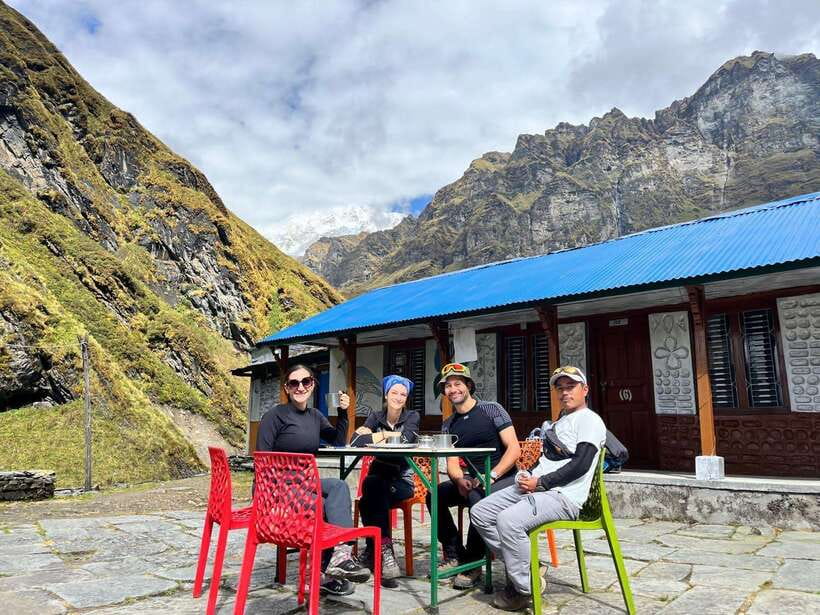
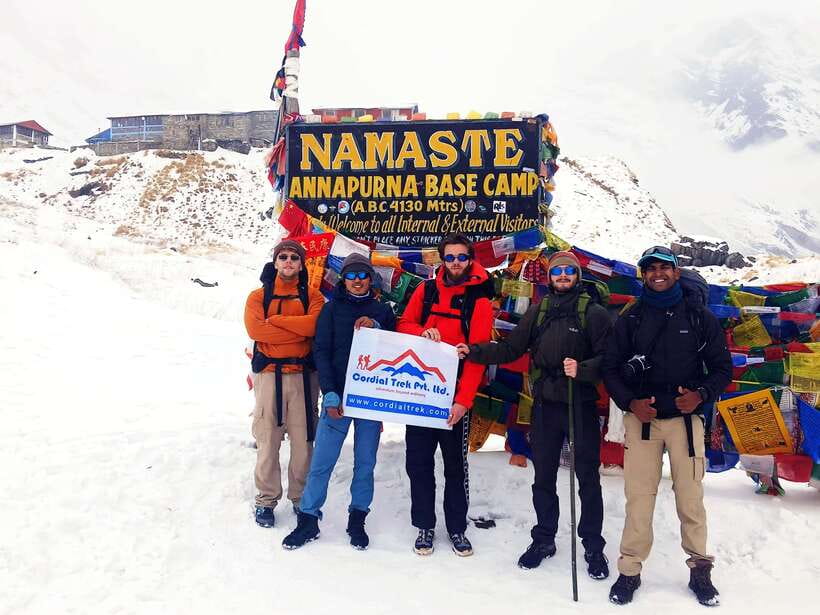
- 4,130-meter Annapurna Base Camp: The high point sits inside the Annapurna Sanctuary, surrounded by enormous Himalayan peaks.
- A fast change in scenery: The route moves from warm river valleys and terraced fields to bamboo forest, snow, and exposed mountain country.
- Jhinu Danda hot springs: The final walking day includes a chance to rest tired legs in natural hot water.
- Private guide support: English and Hindi-speaking guides handle permits, lodging arrangements, navigation, and altitude concerns.
- Four nights in mountain tea houses: Accommodation is simple and practical, with hot showers, Wi-Fi, charging, food, and drinks generally costing extra.
- A demanding five-day timetable: Daily walks run about five to eight hours, and the third day reaches 4,130 meters.
What this Annapurna Base Camp trek is really like
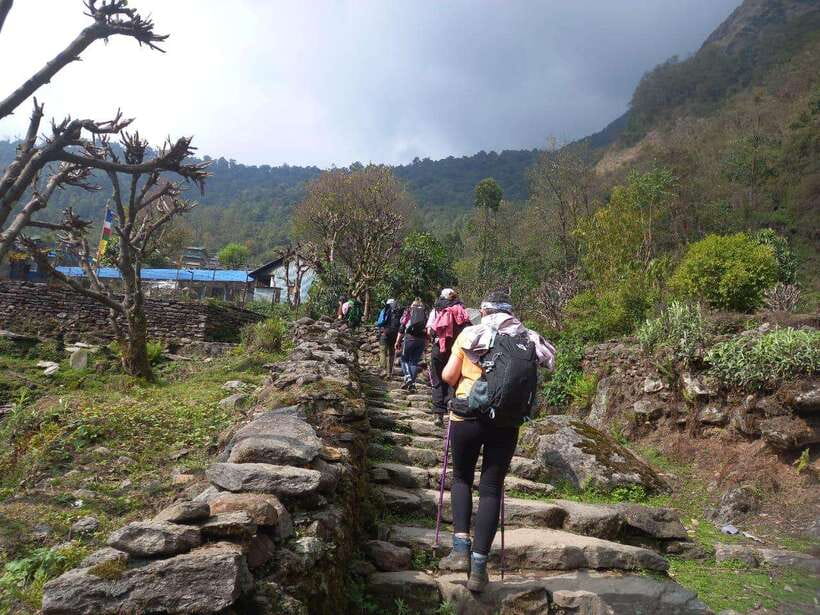
This is not a gentle sightseeing trip with a little walking added. You cover roughly 10 to 14 kilometers on several days, often on uneven mountain paths with long climbs and descents. Still, the route gives you a remarkable amount in a short time.
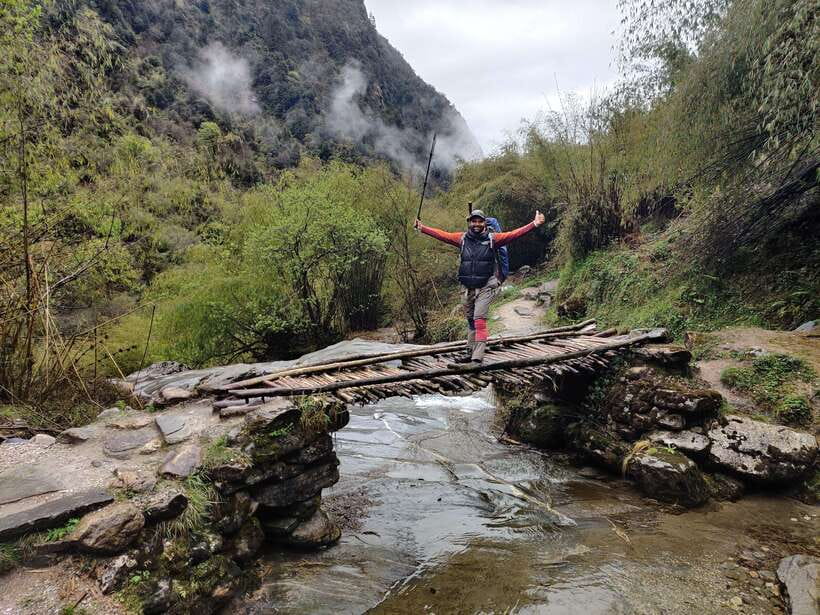
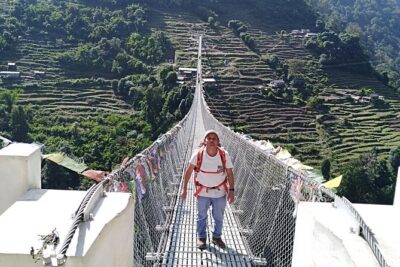
You see the Annapurna region change almost hour by hour. Lower sections bring rivers, waterfalls, farm terraces, and broadleaf forest. Higher up, the vegetation thins, bamboo becomes common, and the air turns cold. At ABC, the trail reaches a stark world of rock, snow, and huge mountain walls.
The trip is offered from Kathmandu or Pokhara. If you begin in Kathmandu, the plan includes a roughly 30-minute flight to Pokhara, depending on the package you select. From Pokhara, a shared Jeep takes about two to three hours to Simrung via Nayapul, where the trek begins.
I would choose Pokhara as your starting point if your schedule allows. It removes the extra flight connection and makes the first morning simpler. If you are already in Kathmandu, the flight option is useful, but build in flexibility because mountain transport can be affected by weather or delays.
More Annapurna Treks in Pokhara
- Trekking in Annapurna/Langtang/Everest/Upper Mustang regions
★ 5.0 · 161 reviews - Annapurna Panorama trek
★ 5.0 · 71 reviews - Annapurna Base Camp Trek -8 days
★ 5.0 · 56 reviews
Day 1: Pokhara to Simrung, then Sinuwa
The first day combines road travel and a substantial walk. The Jeep leaves Pokhara for Simrung, passing through Nayapul before reaching the trailhead. The road transfer takes two to three hours, and shared vehicles can be basic and crowded, especially when several groups are heading into the mountains.
From Simrung, you walk about 10 to 11 kilometers to Sinuwa. The trek takes five to six hours, with forest, river crossings, village sections, and steady uphill work. You finish at about 2,340 meters, high enough for cooler air but not yet in the cold upper zone.
This is a useful first day because it gets you away from city life quickly. You see terraced farmland and traditional settlements, and you begin to understand that the route is a working mountain corridor, not just a scenic path. Take the pace slowly from the start. A fast first morning can make the later altitude gain harder.
Your night is in a mountain guest house in Sinuwa. Expect a simple room and shared facilities. Private rooms may be available, but do not assume they are guaranteed, especially if you are traveling alone or during a busy period.
Day 2: Forest, waterfalls, and Deurali at 3,230 meters
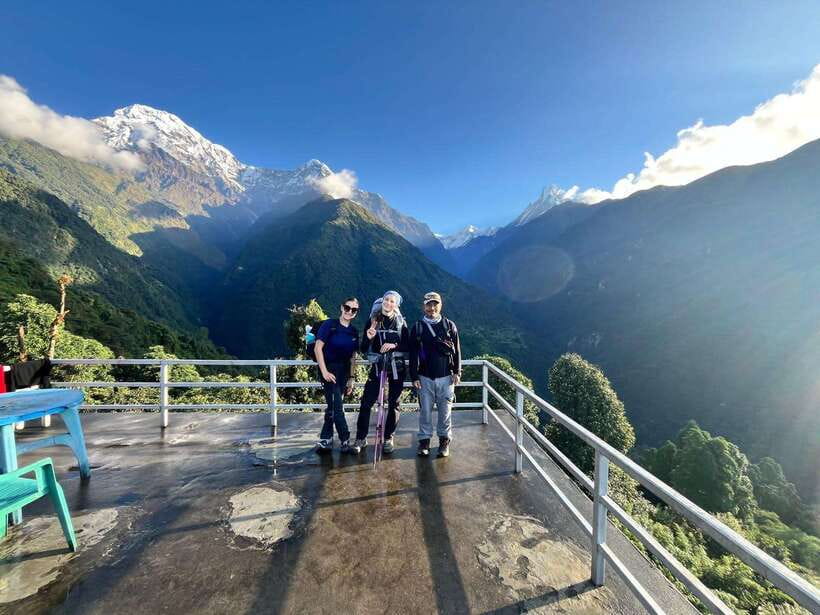
The second day runs from Sinuwa to Deurali, again around 10 to 11 kilometers and five to six hours. This section passes through thick forest and the small settlement of Himalaya, where tea houses offer a welcome break.
The route is especially good for people who enjoy natural details rather than only famous viewpoints. Waterfalls appear along the trail, and the sound of moving water follows you through sections of forest. Bamboo valleys give the route a different feel from the lower farmland around Simrung.
Deurali sits at about 3,230 meters, so this is where the altitude begins to matter more. You may notice colder rooms, a slower pace, and a bigger appetite for warm food and tea. Keep your evening simple. Eat, drink water, organize your sleeping bag and clothing, and avoid treating the night as a social marathon.
The accommodation remains a tea house rather than a hotel. Hot showers, Wi-Fi, and battery charging are not included, and each can cost extra. Bring a power bank if you have one, but do not rely on charging being available.
Day 3: Machhapuchhre Base Camp to ABC at 4,130 meters
Day three is the emotional center of the trek. You walk from Deurali through Machhapuchhre Base Camp, often called MBC, and then continue to Annapurna Base Camp. The distance is listed at about 10 to 11 kilometers, with five to six hours of walking, but altitude can make this day feel much longer.
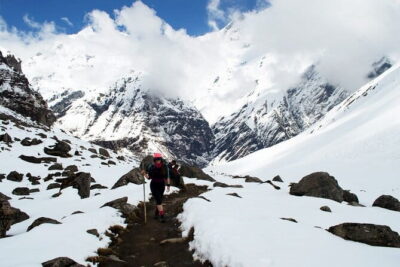
The scenery changes sharply. Forest gives way to more open mountain terrain, and the path enters the Annapurna Sanctuary. The MBC valley is an important stopping point before the final climb, so use it to eat, drink, and adjust your layers.
The last section to ABC is not the place to race. Your guide should watch your pace and condition, and you should speak up early if you feel unwell. Headache, nausea, unusual weakness, or poor coordination deserve attention. The guide team has been praised for checking on people often and adapting to slow walkers, which is particularly valuable on this day.
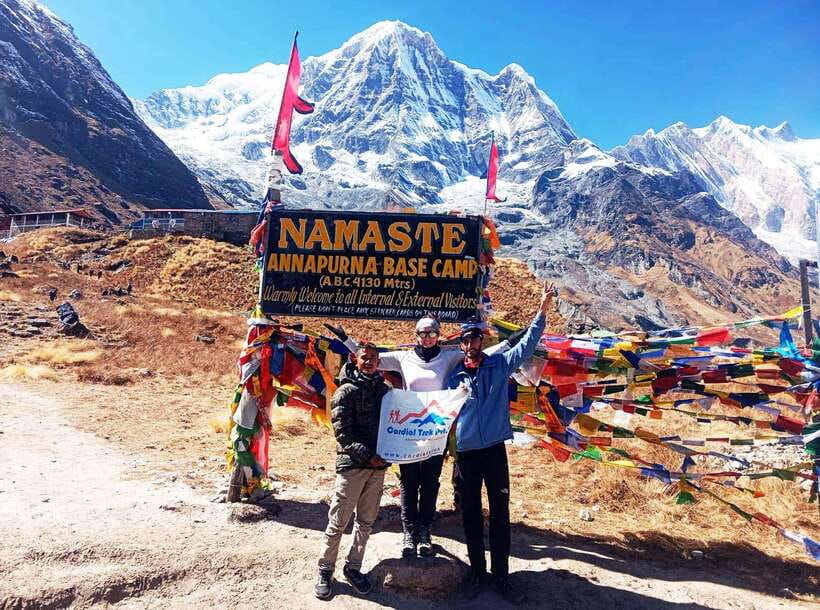
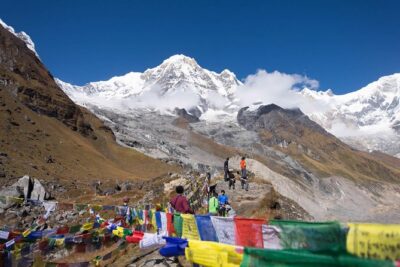
At 4,130 meters, ABC offers the trip’s great reward. Annapurna I reaches 8,091 meters and is the world’s tenth-highest mountain. You are not climbing the peak, but reaching its base gives you a close look at the scale and severity of the central Himalayas.
The tea houses at ABC are basic. Nights can be very cold, especially in winter, so use the borrowed down jacket and sleeping bag if needed. The package allows you to borrow a down jacket, sleeping bag, and trekking poles at no added cost. Crampons are relevant only if snowy conditions require them, so ask about current trail conditions before setting out.
Same trailhead, a longer or shorter day out:
- Poon hill Trek 3 days
★ 5.0 · 176 reviews - Pokhara: 4-Day Ghorepani, Poonhill & Ghandruk Mountain Trek
★ 5.0 · 132 reviews - Ghorepani – Poon Hill Trek 3N-4D
★ 5.0 · 125 reviews - From Pokhara: 3-Day Ghorepani Poon Hill Trek with Guide
★ 4.9 · 68 reviews
Sunrise at ABC and the long descent
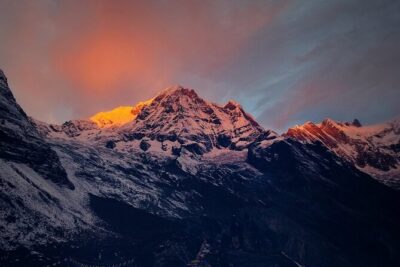
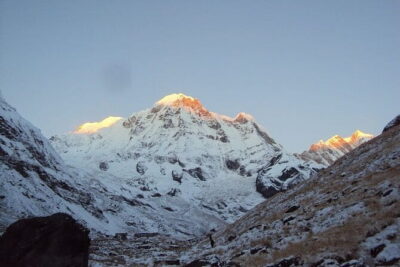
One of the best reasons to sleep at ABC is the morning light. You can step outside early for sunrise over the surrounding peaks, though exact visibility depends on weather. The supplied temperature range gives a useful warning: winter lows can drop to between minus 10 and minus 2 Celsius, while spring and autumn nights can still fall below freezing.
After sunrise, you descend through Deurali, Himalaya, and Dobhan toward Bamboo or Sinuwa. This is a long day of 12 to 14 kilometers and seven to eight hours. Descending is easier on your lungs but can be tougher on knees, ankles, and tired feet.
Do not underestimate this day. The excitement of reaching ABC can hide the fact that you still have a full mountain walk ahead. Trekking poles are genuinely useful here, not just decorative equipment for photographs. If you have knee problems or little experience with long hikes, this itinerary may feel too compressed.
The return night is in a guest house at Bamboo or Sinuwa, depending on the plan and pace. That lower altitude should help you sleep more comfortably, although the long descent may leave you ready for an early night.
Day 5: Jhinu Danda hot springs and the road back
The final walking section goes through Jhinu Danda to Simrung, covering about seven to eight kilometers in four to five hours. The highlight is the natural hot spring stop, where you can rest tired legs before finishing the trek.
Bring a swimsuit or clothing you can comfortably use in the water, along with a small towel. The checklist specifically recommends a towel, and this is one reason why. The hot springs are a pleasant counterpoint to the cold of ABC, though you should not expect a luxury spa.
From Simrung, the Jeep takes two to three hours back to Pokhara. The planned drop-off is no later than 5:00 p.m. in Pokhara. If you are continuing to Kathmandu, the flight option is scheduled to arrive no later than 7:30 p.m., with hotel drop-off after arrival. I would avoid booking a tight international connection on the same evening. Mountain roads and flights can change, and the trek itself is tiring.
Guides, porters, and the human side of the trip
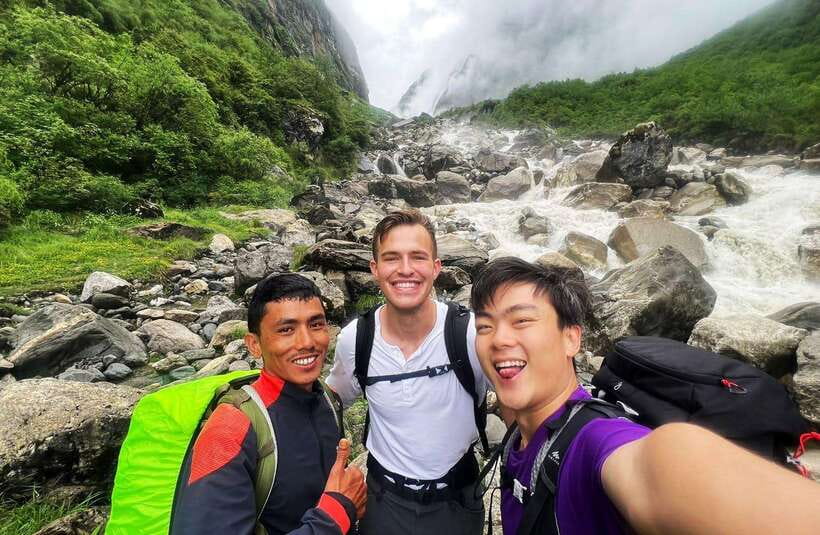
The strongest part of this experience is the guide service. The names most praised for care and good company include Raju, Pratip, Om, Smile, Anil Sherpa, Oham Raj Tamang, Terence Tamang, Bikash, and Laxman. You may not be assigned one of these specific people, so treat those names as useful requests rather than promises.
Good guiding matters here for more than directions. Your guide can help secure a room, explain local plants and customs, suggest food at each stop, judge weather, and notice when you are struggling. Several people were helped through illness, food poisoning, poor gear, heavy rain, or a need to change plans quickly.
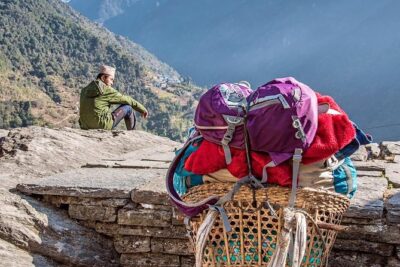
Porter service is included with the all-inclusive option and can be added to the budget or one-way flight options. A duffel bag is available when porter service is selected. Pack only what you need for the trail and keep important items, such as medication, documents, money, and a phone, in your daypack.
The guides also add a social element. Om has been praised for singing along the trail, while other guides have taught card games, shared local stories, and helped groups stay cheerful during hard climbs. That may sound small, but a joke or game can make a long uphill hour feel much shorter.
What the $96 price does and does not buy
At $96 per person, this trek offers strong value if you choose the budget arrangement and already have suitable gear. The base inclusions cover key logistics such as permits, a licensed guide, four nights of mountain accommodation, shared Jeep transport between Pokhara and Simrung, first aid, water purification tablets, and hotel pickup and drop-off in Pokhara.
The Kathmandu options cost more or include different arrangements because flights are involved. An all-inclusive Kathmandu package includes return flights between Kathmandu and Pokhara, meals, and porter service. The exact package matters more than the headline price.
Meals can be included or added. The full meal arrangement covers four breakfasts, five lunches, and four dinners. If you choose the budget or one-way Kathmandu flight option without meals, you will pay for food along the route. Tea-house meals are practical and filling, but prices rise with altitude.
Budget for hot showers, Wi-Fi, charging, drinks, snacks, and tips. None of those are included. Carry cash because card payment may not be available in the mountain lodges. Tipping your guide and porter is also an important part of the trip’s real cost.
Weather, seasons, and packing without overpacking
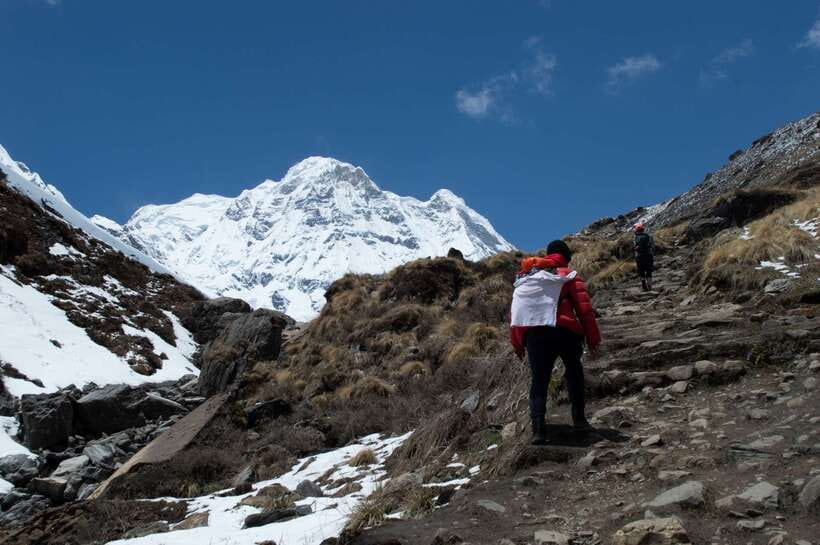
Spring and autumn, from March to May and September to November, generally offer the best balance in the supplied temperature guide. Low temperatures range from minus 3 to 3 Celsius, while highs range from 2 to 20 Celsius.
Summer and monsoon, from June to August, can bring highs of 5 to 22 Celsius and lows of 0 to 5 Celsius. Rain can make trails slippery and leave clothing damp for days. One practical lesson is to bring extra socks and spare layers because wet clothes may not dry overnight.
Winter, from December to February, can be cold enough for lows between minus 10 and minus 2 Celsius. Warm layers are not optional at ABC. Pack a down or puffer jacket, thermal base layers, gloves, a beanie, a neck gaiter, warm socks, and sunglasses.
Your footwear matters more than fancy clothing. Use high-ankle waterproof trekking boots that you have already worn in. Add trekking pants, a daypack, sunscreen, toiletries, a water bottle or CamelBak, and a towel. Crampons may be needed in snowy conditions, but check before packing or hiring them.
Travel insurance is recommended. It should be suitable for a high-altitude trek, though the supplied information does not specify coverage limits, so read the policy carefully.
Who should choose this five-day route?
I would recommend it to you if you want a famous Himalayan base camp but have limited time. It suits fit beginners who are ready for long walks, as well as experienced hikers who prefer a supported trip with transport and permits arranged.
It is also a good choice for solo hikers who want company and practical help without organizing every tea house themselves. Female solo hikers have received careful support from guides and porters, and the guide team has helped people facing unexpected illness or transport problems.
I would think twice if you dislike basic lodging, cannot manage seven to eight hours of walking, or want generous rest days. The itinerary can be completed by people with limited hiking experience, but that does not make it easy. Several strong accounts describe the trek as physically and mentally demanding.
The route is not suitable for people with mobility impairments or anyone over 95. More broadly, you should be honest about your fitness, knees, and ability to walk on uneven ground for several consecutive days.
Should you book the ABC trek?
Book it if you want a high-impact Nepal experience in five days and accept that comfort will be limited. The views, changing ecosystems, village contact, sunrise at ABC, and Jhinu Danda hot springs give the route plenty of variety, while the guide support takes care of many difficult details.
Before paying, confirm the exact package, especially flights, meals, porter service, and transport. Ask about current snow and rain conditions, request a guide you trust if possible, and leave breathing room after the trek before any important flight.
For $96 in its basic form, this is an unusually useful way to reach Annapurna Base Camp without arranging permits, lodges, and road transfers alone. Just do not mistake a low price for an easy trip. The mountain gives you the grand scenery, but you still have to earn it one uphill step at a time.
FAQ
How long is the Annapurna Base Camp trek?
The experience lasts five days. Walking days range from about four to eight hours, with the longest listed day covering 12 to 14 kilometers.
What is the highest point on the trek?
Annapurna Base Camp is the highest point, at 4,130 meters. The route also passes through Machhapuchhre Base Camp before reaching ABC.
Does the tour start in Kathmandu or Pokhara?
You can begin in Kathmandu or Pokhara. The Kathmandu option includes a flight to Pokhara, depending on the package selected.
Are meals included?
Meals are included with the all-inclusive option or when you add the meal package. The full meal arrangement covers four breakfasts, five lunches, and four dinners.
Is a porter included?
A porter is included with the all-inclusive option. For the budget and one-way Kathmandu flight options, porter service is available as an add-on.
Can I borrow trekking equipment?
You can borrow a down jacket, sleeping bag, and trekking poles at no additional cost. A duffel bag is available when porter service is selected.
What languages does the guide speak?
Guides are available in English and Hindi.
More 5-Day Experiences in Pokhara
- Pokhara: 5 Day Annapurna Base Camp Trek & Natural Hot Spring
★ 4.9 · 44 reviews - From Pokhara: 5-Day Annapurna Basecamp Trek with Hot Springs
★ 4.9 · 26 reviews - From Pokhara: 5-Day Mardi Himal Base Camp Trek
★ 5.0 · 10 reviews - Pokhara: 5-Day Trek to Annapurna Base Camp and Hot Springs
★ 5.0 · 4 reviews
Recently added around Pokhara
- Pokhara: Majestic Mardi Base Camp Guided Trek with HotSpring★ 5.0 · 6 reviews
- Pokhara: 9-Day Annapurna Base Camp Trek with Poon Hill★ 5.0 · 6 reviews
- Pokhara: 5-Day Trek to Annapurna Base Camp and Hot Springs★ 5.0 · 4 reviews
- Pokhara: 5-Day Ghorepani and Poon Hill Private Trek★ 5.0 · 4 reviews
- Pokhara: 7-Day Annapurna Base Camp Trek & Hot Spring★ 4.0 · 3 reviews
- Pokhara:4-Day Ghorepani Poon Hill Guided Trek via Ghandruk★ 5.0 · 3 reviews
- Pokhara: 4-Day Poon Hill and Ghandruk Guided Trek★ 5.0 · 14 reviews
- Pokhara: 4-Day Ghorepani, Poonhill & Ghandruk Village Trek★ 5.0 · 6 reviews
Annapurna Base Camp Treks, compared.
Trekking in Annapurna/Langtang/Everest/Upper Mustang regions
Read our review →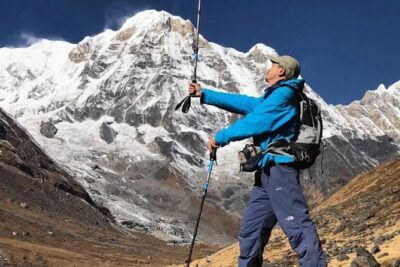
Kathmandu to Annapurna Base Camp (ABC) 5-Day Trek
Read our review →Browse the lists this tour appears in