
REVIEW · SAPA
Sapa: Muong Hoa Valley View & Villages Trek with Local Guide
Rice terraces, mountain paths, and village life await. This $19 Sapa trek gives you a full day in the Muong Hoa Valley, with views toward Fansipan, visits to Black Hmong villages, and lunch at a local family-run restaurant. I especially like the route through Hau Thao and Hang Da, and the care shown by guide Su, who adjusts the pace when weather or fitness levels make the trail harder.
The main catch is the walking. The route is described as 12 to 14 kilometers in one place and 14 to 16 kilometers elsewhere, with steep climbs, slippery paths, and a long return section. You need sturdy shoes and decent stamina, particularly after rain. This is not a gentle stroll dressed up as a trek.
Key points to know before booking
- A long mountain walk: Plan for roughly 14 to 16 kilometers, with an uphill start and slippery downhill paths in wet weather.
- The best views come early: The first climb opens wide views of Sapa town, Fansipan Mountain, and the Muong Hoa Valley.
- Black Hmong village life: Hang Da, Hau Thao, and Muong Hoa offer a closer look at homes, farming, animals, and local routines.
- Su is a major strength: His friendly manner, clear English, local knowledge, patience, and willingness to help have earned especially warm praise.
- Lunch is local and simple: You eat at a small restaurant run by a local family, an appealing change from a standard tourist buffet.
- Good value, with a physical price: At $19, the inclusions are generous, but your legs do most of the work.
Meeting at Sapa’s main church
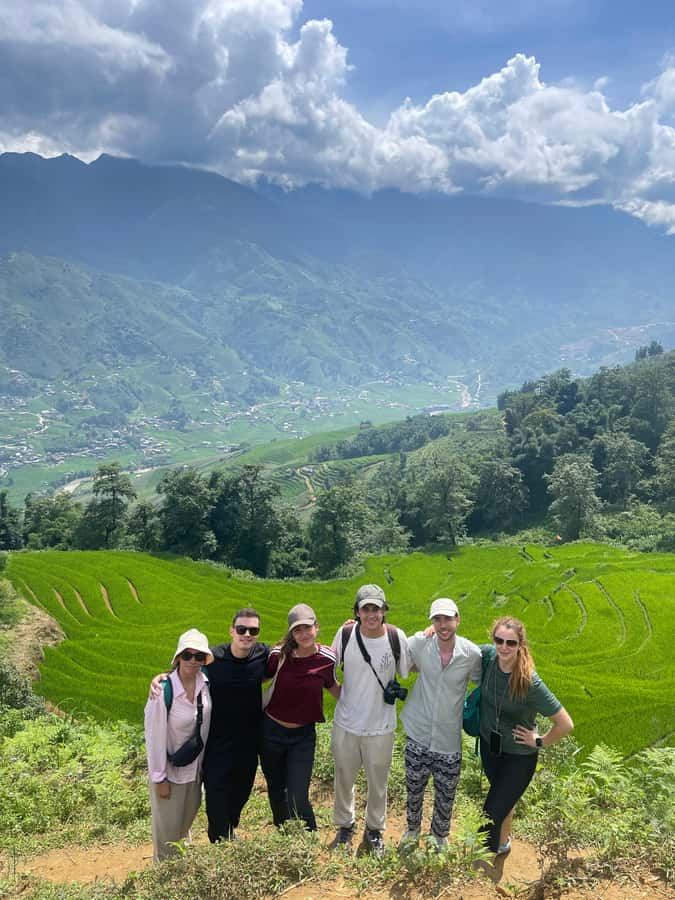
The day begins in front of Sapa’s main church. Your guide contacts you before the tour, so leave a working WhatsApp number when booking and keep an eye on your messages.
After a short introduction, you set off on foot. There is no long transfer at the start, which is useful because the trek begins almost immediately. You should arrive ready to walk, rather than treating the first part as a warm-up around town.
The tour is offered in English and Vietnamese. Guide Su is frequently praised for his clear English, friendly attitude, and ability to explain local customs in a way that is easy to follow. He also appears comfortable helping people through the tougher sections, which matters once the trail becomes steep or slick.
More Rice Terrace Treks in Sapa
- Sa Pa: Muong Hoa Valley Trek and Local Ethnic Villages
★ 4.6 · 864 reviews - Explore Sapa by TrekkingAdventures, Mountain,Rice fields
★ 4.9 · 229 reviews - Sa Pa: 6-Hours Muong Hoa Valley Trek with Local Ethnic guide
★ 4.5 · 178 reviews
The 2.5 kilometer climb above Sapa
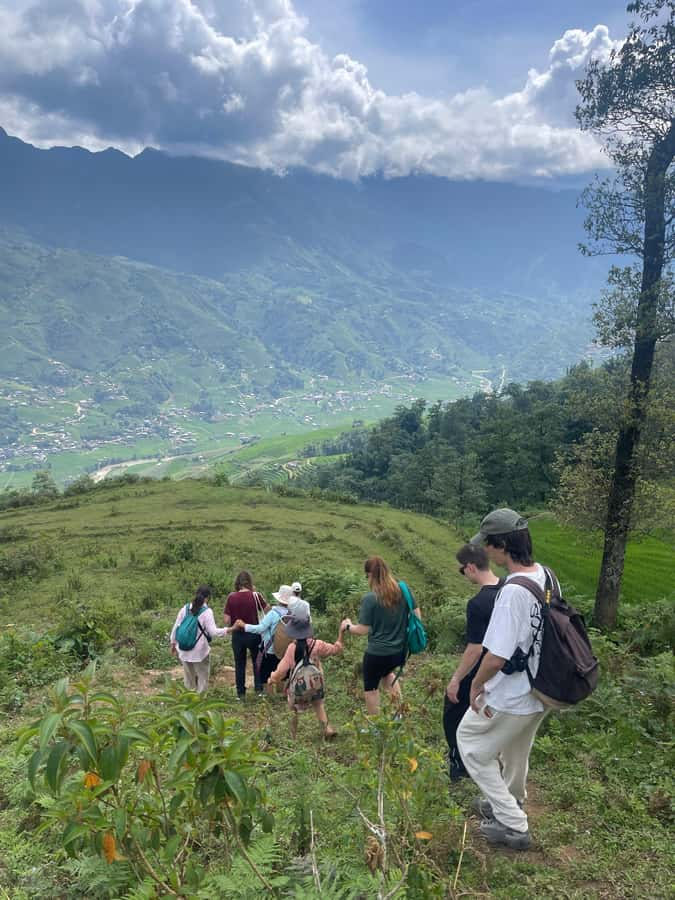
The first major section is an uphill hike of about 2.5 kilometers on a small mountain trail. This is where you earn the views.
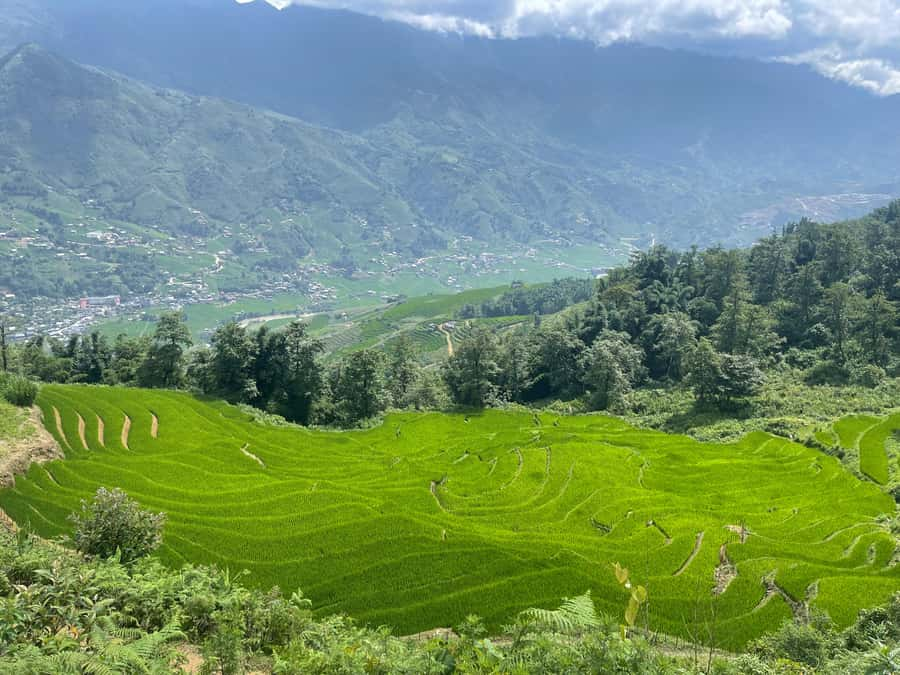
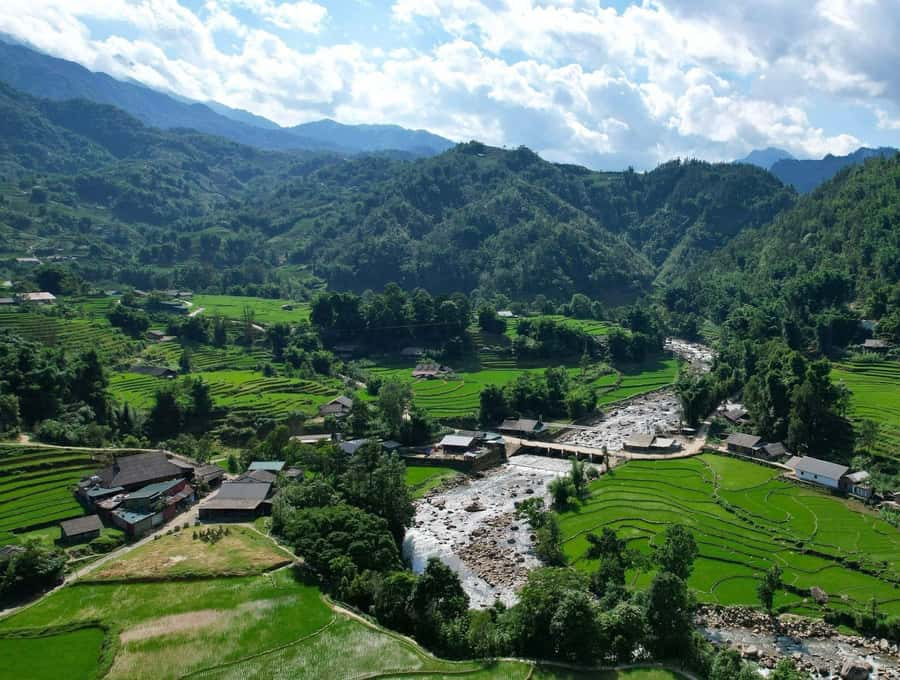
From the higher point, you can look across Sapa town and toward Fansipan, the highest mountain in Indochina. On a clear day, this opening viewpoint gives you a useful sense of the area’s shape: town below, high ridges around you, and the Muong Hoa Valley extending through the middle.
The views are a major reason to choose this route, but do not underestimate the climb. You may be walking on uneven ground rather than a smooth path, and the height can make the effort feel greater than the distance suggests. If you have back problems, mobility limitations, altitude sickness, or a strong fear of heights, this trek is not a good match.
You also need to allow for changing weather. Sapa can turn a firm trail into a muddy one, and several people have found the downhill sections especially slippery after rain. Bring shoes with real grip. Old trainers with smooth soles are asking for trouble.
Muong Hoa Valley and its famous rice terraces
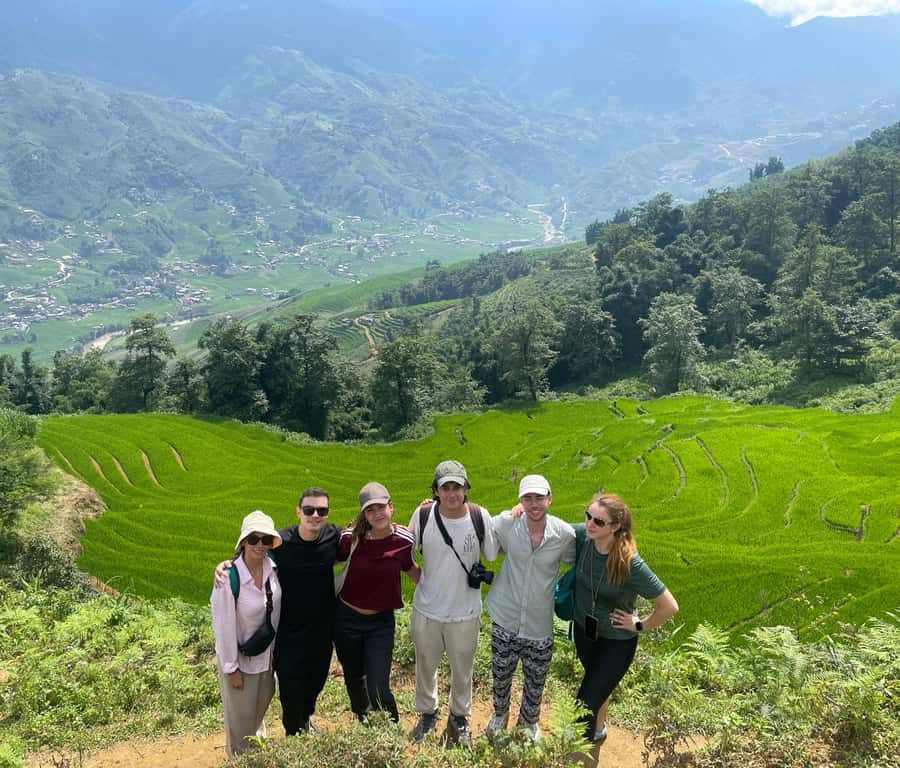
After reaching the mountain views, the route turns your attention to the Muong Hoa Valley. The rice terraces are the visual centerpiece of the day, with layers of cultivated fields cut into the mountain slopes.
The terraces are not just scenic decoration. They show how local communities have shaped steep ground for farming over many years. The view becomes more meaningful when your guide explains how people live and work in this setting, rather than simply pointing out a pretty valley.
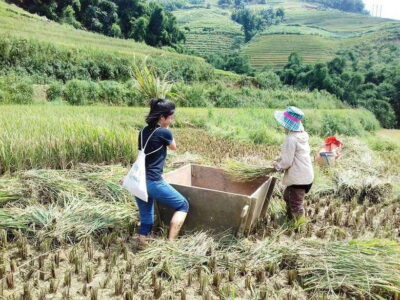
Timing matters here. If your visit lines up with planting or harvesting, you might see local people working in the fields. The tour does not promise a particular farming activity, since the work depends on the season, but the chance to see everyday agricultural life adds a useful human side to the scenery.
The valley also contains one of Sapa’s significant rivers. As you walk along the mountainside, you get changing views rather than one fixed lookout. That makes the route feel more like a walk through the area than a quick photo stop.
Down to Hang Da, a Black Hmong village
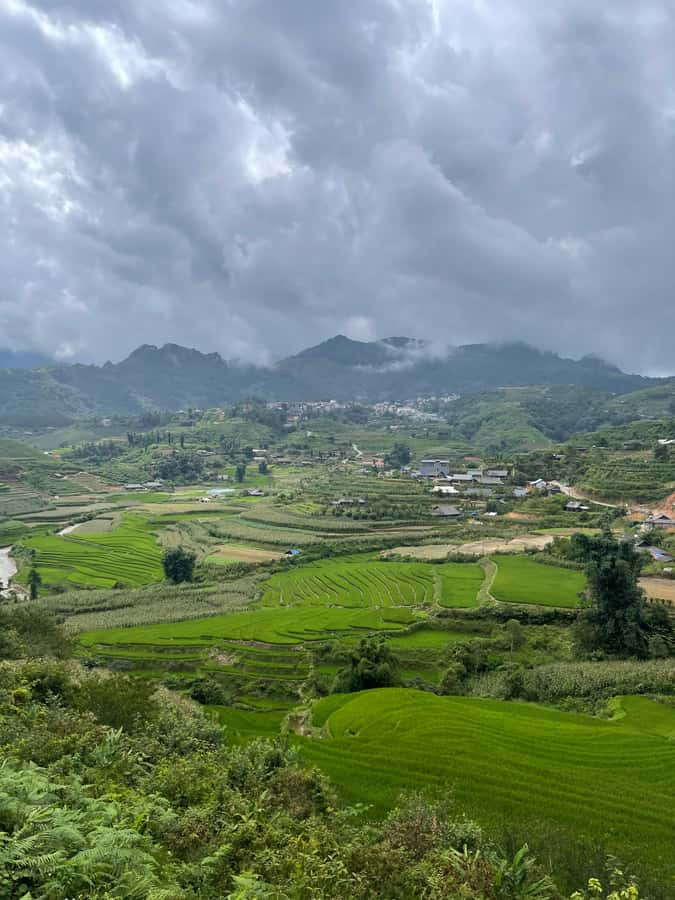
From the viewpoints, the trail continues down toward Hang Da, a village associated with the Black Hmong people. The descent is often where the physical challenge becomes more obvious.
Downhill walking can be harder than it looks, especially on wet stone, packed earth, or mud. Take your time, keep your hands free, and avoid trying to match the fastest person in the group. Su’s patient approach is useful here, since a good guide should help you stay safe rather than push you to hurry.
Around Hang Da, you may see buffalo, cows, and pigs. These are ordinary parts of village life, not staged attractions, and they help show how closely homes, farming, and animals are connected.
The value of this stop lies in the slower pace. You are not only looking at mountains. You are seeing the roads people use, the animals they care for, and the setting in which families work each day. At the same time, you should remain respectful. Do not disturb animals, enter private areas, or photograph people without care.
More Rice Terrace Treks in Vietnam
- Sapa Muong Hoa Valley & Ta Van Eco Village Scenic Tour (No Trek)
★ 5.0 · 144 reviews - Daily Tour: Sapa Trekking in Muong Hoa valley, Bamboo forest
★ 5.0 · 121 reviews - 1-Day Sapa Long Trek – Rice Field Terrace, Ethnic Culture
★ 4.9 · 62 reviews - 3-Day Trek in Amazing Muong Hoa Valley & ethnic Homestay
★ 5.0 · 49 reviews
A local family lunch after the hardest section
Lunch takes place at a small restaurant run by a local family. The precise menu is not specified, so you should think of this as a local meal rather than a guaranteed selection of particular dishes.
This stop comes at a sensible point in the day. By then, you have completed the main climb and much of the descent, so a meal and a rest are welcome. Lunch is included in the price, along with a 500 milliliter bottle of water.
That single bottle is not enough for a long mountain walk in warm weather. Bring extra water and snacks, even though snacks are not included. Hydration matters more than carrying a fancy camera, and you will want energy for the afternoon section.
One useful point about the lunch stop is that it supports a small family-run business rather than placing the meal in a large commercial venue. It may be simple, but that fits the character of the route.
Hau Thao and Muong Hoa village life
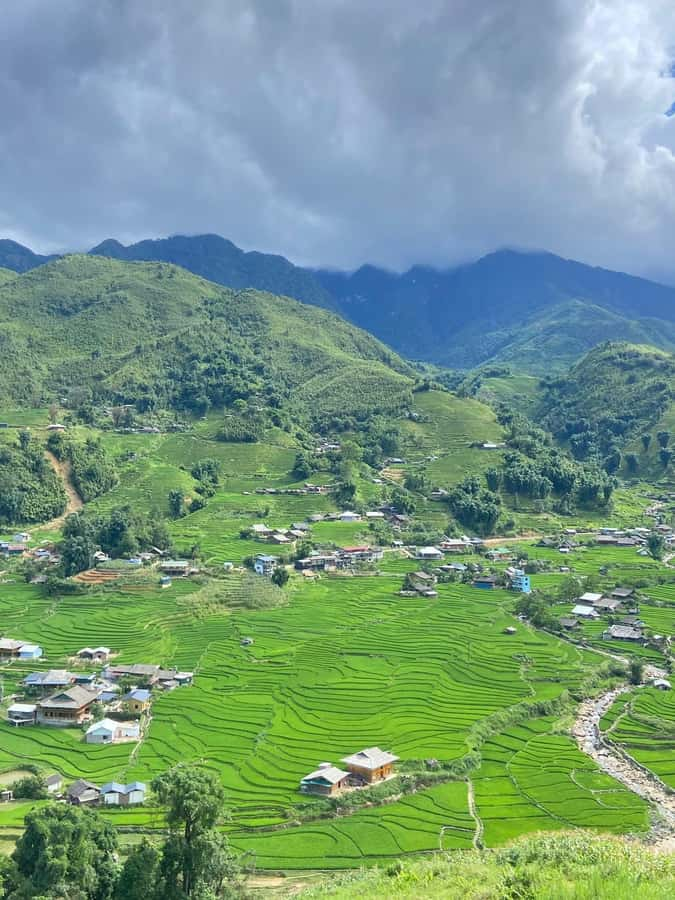
After lunch, you continue along a smaller road toward Hau Thao, another Black Hmong village. The route then carries on toward Muong Hoa village.
This section is less about one dramatic viewpoint and more about watching daily life unfold. You may see homes, animals, field work, and people moving through their normal routines. If planting or harvesting is underway, your guide can help explain what you are seeing and how it fits local customs.
The cultural explanations are one of the strongest reasons to book a guided walk instead of trying to follow the paths alone. Guide Su has been praised for sharing stories about Hmong traditions, local communities, and the way people live in Sapa. His role is not just to lead you from one village to the next. He helps turn unfamiliar details into something you can understand.
You may also meet local people selling handmade goods along the route. Be polite and decide in advance how you want to handle purchases. A more serious issue in Sapa is child begging and child labor. Do not encourage children to beg by handing out money, sweets, or gifts. Respectful travel means taking photographs carefully, buying only what you genuinely want, and avoiding behavior that turns village life into a performance.
The final walk and return to Sapa
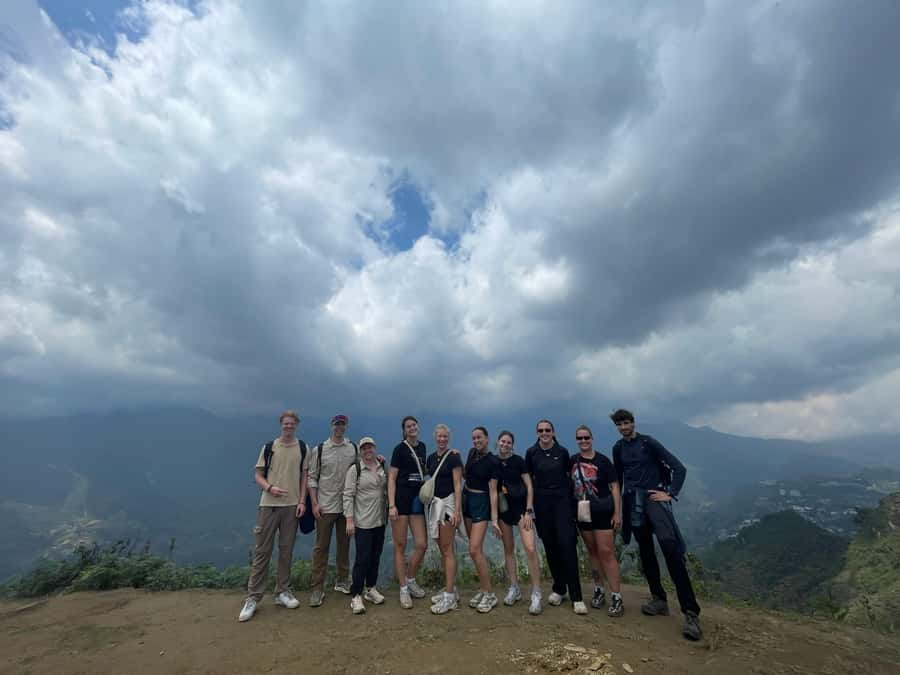
The full route ends after passing through the minority villages, with transport provided back to Sapa. The tour is expected to finish at about 3:30 PM.
The supplied details also say the activity ends back at the meeting point, while the transport inclusion refers to returning to Sapa after the village section. In practical terms, you should expect help getting back into Sapa once the walking route is complete, but confirm the exact drop-off point with your guide beforehand.
The afternoon return can last another two or three hours according to the route description and should not be dismissed as a short stroll. If rain has arrived, this is when tired legs and slippery paths can become a real test.
Build your day around the trek. Avoid booking another demanding activity immediately afterward, and do not assume you will be fresh enough for a late-night outing. The stated finish time is approximate, since weather, group pace, and trail conditions can affect the schedule.
What the $19 price really covers
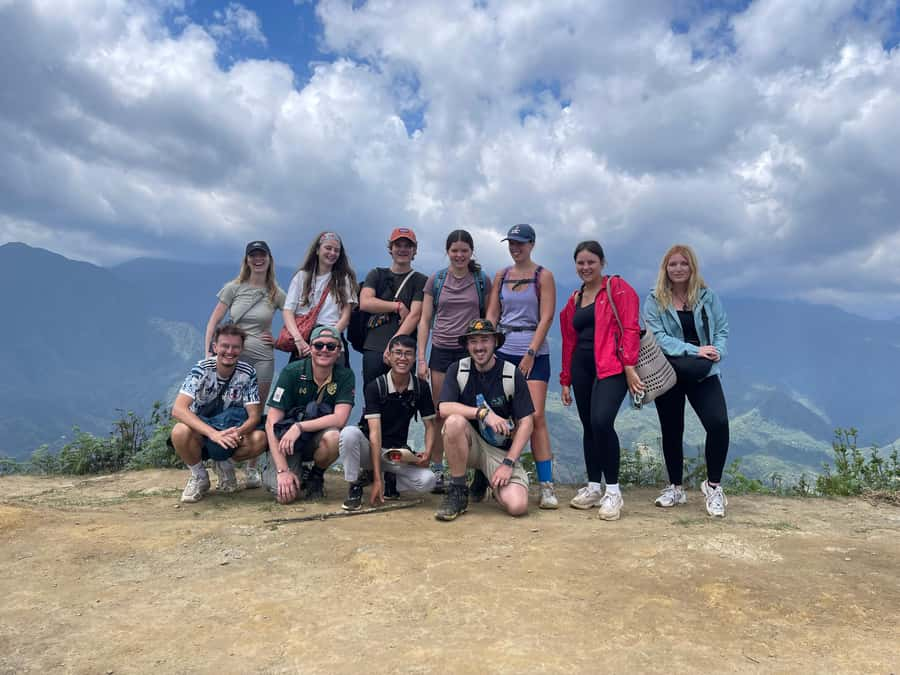
At $19 per person, this is strong value if you want a full day outdoors with a local guide. The price includes an English-speaking guide, lunch, village entrance fees, a 500 milliliter bottle of water, and transport back to Sapa after the village walk.
The value comes from the combination. A viewpoint visit alone would be cheaper and easier, but it would not give you the same time among the villages or the chance to ask questions about Black Hmong life. You are paying for access, orientation, food, and practical help on a route that can be confusing or difficult to manage alone.
There are also clear limits. The price does not include anything not specifically listed, so plan to pay for personal purchases, extra drinks, snacks, and any other costs that arise. Group size is not stated, so you should not book assuming a private trek.
The 500 milliliter water bottle is a useful start, not a complete supply. Bring your own refillable container if possible, although the tour information asks guests not to bring plastic bottles and not to litter. Pack light, carry your rubbish, and protect the trails.
The guide can make or break this trek
The strongest part of the experience is the guide. Su is described as warm, attentive, encouraging, and easy to talk with. He explains local culture, answers questions, helps people through difficult terrain, and adjusts the pace to suit the group and the weather.
That flexibility matters in Sapa. A dry morning can become a wet afternoon, and a route that feels manageable on paper can become much harder underfoot. A guide who pays attention to the group is more useful than one who simply marches ahead.
Su’s English is said to be very good, which helps if you want more than directions. You can ask about Hmong culture, farming, village routines, and the scenery around you. The cultural side of the trek depends heavily on how much you engage, so come with questions.
Of course, guide quality can vary from one departure to another, and no walking tour can remove the physical challenge. Still, the consistent praise for Su’s patience and care is a strong reason to consider this particular experience.
Packing for mud, sun, and a long day
Wear comfortable walking shoes with good grip. Waterproof or easily washable footwear is sensible if rain is expected, since mud and slippery ground are part of the risk.
Bring:
- A hat
- Sunscreen
- Extra water
- Snacks
- A camera
- Light clothing suited to changing weather
- A small bag that leaves your hands free
Smoking, littering, and plastic bottles are not allowed. The environmental rules are basic but important. The valley and village paths are shared spaces, not disposable backdrops for a day trip.
You should also think honestly about your fitness. The trek is not suitable for pregnant women, people with mobility impairments, people with back problems, people with altitude sickness, or people with a cold. Anyone afraid of heights may also find the mountain sections uncomfortable.
Who should book this Sapa trek?
I would choose this tour if you want a physically active day, strong mountain views, and real time in Black Hmong villages. It suits people who prefer walking through a region rather than looking at it from a vehicle.
It is also a good fit if you value conversation. Su’s explanations and friendly manner add much of the tour’s meaning, particularly for visitors who want to understand local customs instead of simply collecting photographs.
I would look elsewhere if you want a short, easy outing, dislike mud, or need a fixed schedule with little room for changes. The distance is listed differently in the tour details, so plan for the longer estimate of 14 to 16 kilometers. Wet weather can make the route much tougher.
You can cancel up to 24 hours in advance for a full refund, and the reserve-now, pay-later option gives you some flexibility. Still, the most important decision is not the payment policy. It is whether your shoes, knees, and general fitness are ready for a full mountain day.
Should you book the Muong Hoa Valley trek?
Book it if you want good value, a demanding walk, and a guide who helps connect the scenery with local life. The combination of Fansipan views, Muong Hoa rice terraces, Hang Da and Hau Thao, a family-run lunch, and village paths gives you much more than a quick Sapa lookout.
Skip it if you want comfort or an easy pace. The route can be slippery, the walking distance is long, and the return section may still challenge you after lunch.
For the right person, this is an affordable and meaningful way to see Sapa. Bring proper shoes, extra water, modest expectations about facilities, and enough time to walk slowly. That is how you get the best from it.
FAQ
Where does the trek begin?
The guide meets you in front of Sapa’s main church. The guide will message you before the tour to confirm the meeting details.
How far is the trek?
The route is described as 12 to 14 kilometers in one section and 14 to 16 kilometers in another. You should prepare for the longer distance.
What time does the tour finish?
The tour ends at approximately 3:30 PM. The exact timing may depend on weather and the group’s walking pace.
What villages does the trek visit?
The route includes Hang Da, Hau Thao, and Muong Hoa villages, which are associated with the Black Hmong community.
Is lunch included?
Yes. Lunch is provided at a small restaurant run by a local family.
What should I bring?
Bring comfortable walking shoes, a hat, sunscreen, a camera, snacks, and extra water. Good grip is especially important if it has rained.
Is the trek suitable for everyone?
No. It is not suitable for pregnant women, people with back problems, mobility impairments, altitude sickness, a cold, or a fear of heights. The long distance and slippery sections can be challenging.
More Rice Terrace Treks in Sa Pa
- Muong Hoa Valley Trek & Homestay Experience – 4D3N
★ 5.0 · 42 reviews - Sapa: Muong Hoa Mountain Views and Villages Trek with Lunch
★ 4.3 · 28 reviews - From Sapa: Muong Hoa Valley View & Village Trek 1-Day
★ 5.0 · 21 reviews - SAPA: 1-DAY TREKKING TOUR WITH LOCALS, LUNCH & RICE FIELDS
★ 4.7 · 18 reviews
Recently added around Sa Pa
- Soob Sapa Trekking Tour★ 4.3 · 3 reviews
- Sapa Trekking – Waterfalls And H’mong Villages★ 5.0 · 2 reviews
- Sapa Trekking Private Tour With Ethnic Female Tour Guide★ 4.9 · 24 reviews
- Sapa: Trekking Through Terraced Rice Fields & Valley 1 Day★ 4.8 · 4 reviews
- Sapa: Y Linh Ho – Lao Chai, and Ta Van Trekking Day Tour★ 5.0 · 25 reviews
- Sapa Trekking Guide Francophone 2 days – 1 night★ 5.0 · 2 reviews
- Sapa: Ta Phin Village Trek with Lunch and Bathing Experience★ 4.7 · 13 reviews
- Sapa: Ta Phin Village Trek & Red Dao Herbal Bath★ 5.0 · 22 reviews
Rice Terrace Treks, compared.
Muong Hoa Valley Trek and Local Ethnic Villages
Read our review →
Explore Sapa by TrekkingAdventures, Mountain,Rice fields
Read our review →
Selogriyo Temple and Trekking Java Rice Terraces, hidden waterfall -Nature Java
Read our review →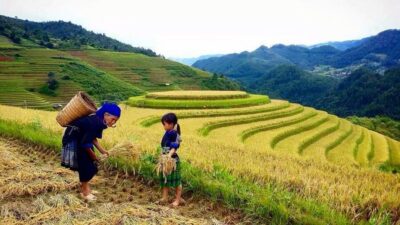
6-Hours Muong Hoa Valley Trek with Local Ethnic guide
Read our review →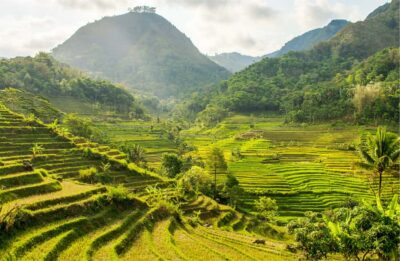
Sapa Muong Hoa Valley & Ta Van Eco Village Scenic Tour (No Trek)
Read our review →
Daily Tour: Sapa Trekking in Muong Hoa valley, Bamboo forest
Read our review →
Rice Terrace, Holy Water Temple & Waterfalls Trek Tour
Read our review →Browse the lists this tour appears in