
REVIEW · POKHARA
Nepal: Time For Easy Annapurna Base Camp Trek
Five days can take you very high. This trek links Pokhara with the Annapurna Base Camp through rhododendron forests, mountain villages, rocky paths, and some of Nepal’s finest Himalayan views. I like the clear route from Jhinu to Lower Sinuwa, Deurali, Machhapuchhre Base Camp, and finally Annapurna Base Camp. I also like the strong guide support, with guides such as Sagar and Arjun praised for steady pacing, safety checks, communication, and personal care.
The main concern is the word easy. This is not an easy walk for most people. A five-day schedule can mean long hours, steep climbs, rapid altitude gain, and a hard descent. The experience can be excellent value at $180 per person, but you should book it as a demanding mountain trek, not a gentle sightseeing hike.
Key points to know before you book
- The five-day schedule is fast: You reach Annapurna Base Camp at 4,130 meters, with limited time for gradual acclimatization.
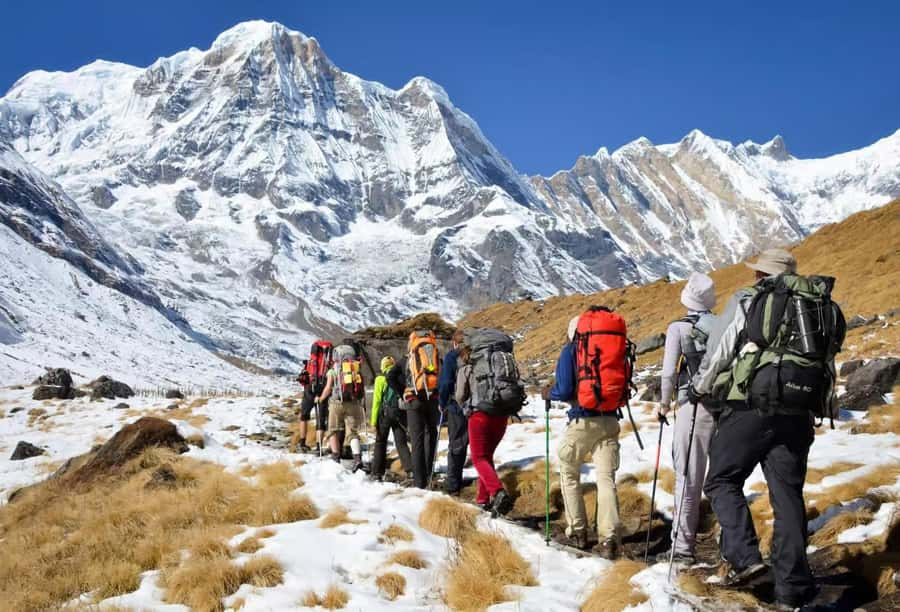
- The mountain views are the reward: Look for Annapurna I, Annapurna South, Hiunchuli, Machhapuchhre, and Dhaulagiri.
- Guide care is a major strength: Guides check your pace, health, weather, and trail conditions, while porters can carry heavy bags.
- The route changes character each day: Expect forests, terraced fields, traditional villages, rocky paths, and high alpine scenery.
- The $180 price covers useful basics: A guide, permits, first aid, shared transport, and trekking accommodation are included, but meals and porters cost extra.
- Fitness matters more than trekking experience: You do not need to be an expert, but you do need stamina, sound preparation, and a sensible attitude toward altitude.
Why this short Annapurna trek appeals
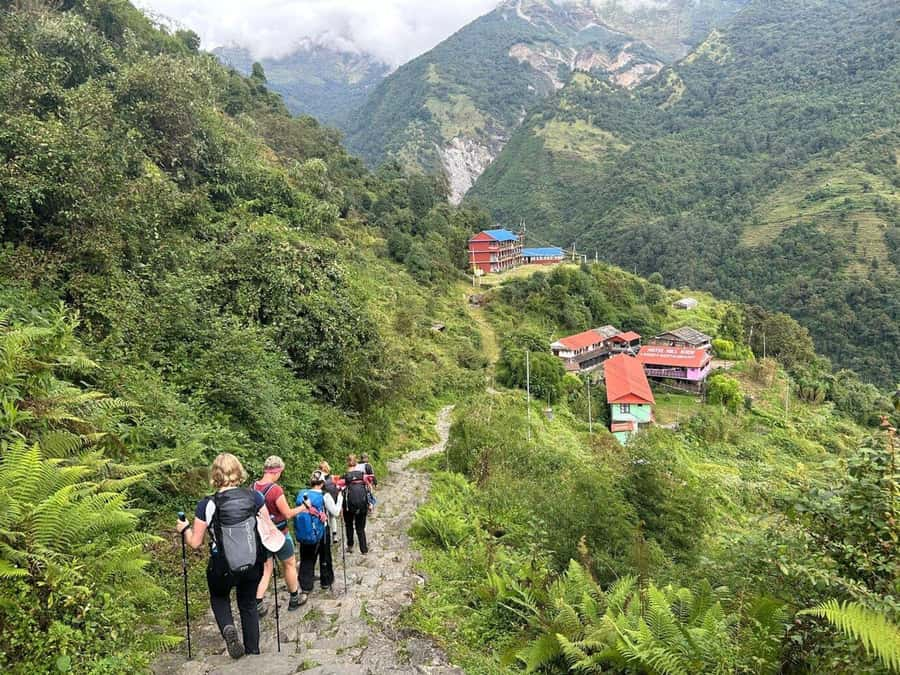
The Annapurna Base Camp route gives you a strong sense of progression. You begin near Pokhara, in a lower and warmer setting, then climb through forest and village country before reaching a bowl of high peaks at base camp. The scenery changes often enough to keep the walking interesting.
I especially like the cultural side of the route. You pass through communities where local traditions, hospitality, terraced farming, and mountain routines remain part of daily life. This is not only a mountain-view trip. You also get a look at how people live along a trail shaped by weather, altitude, and foot travel.
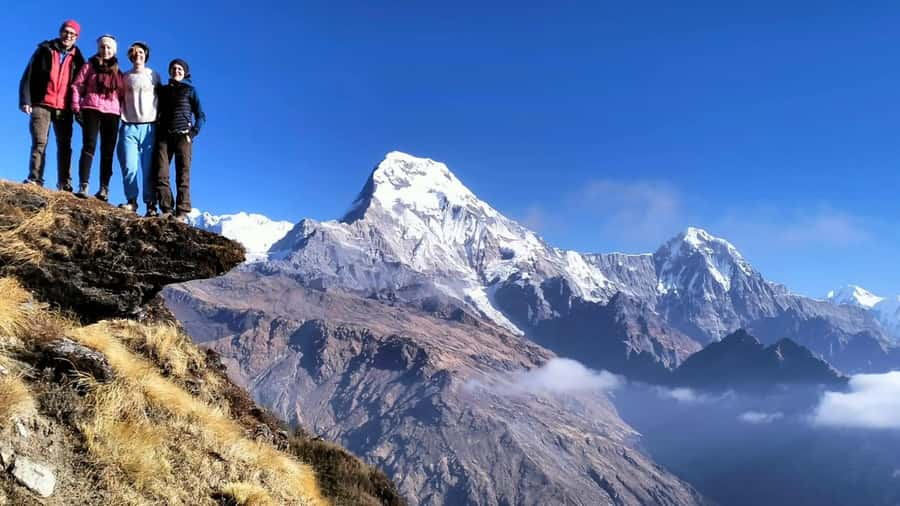
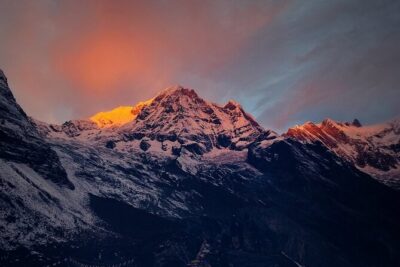
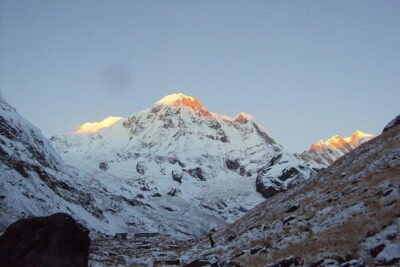
The mountain views are the obvious prize. Annapurna I, Annapurna South, Hiunchuli, Machhapuchhre, and Dhaulagiri are all part of the visual story. Machhapuchhre, also called Fishtail, is particularly memorable for its sharp profile and its role as a landmark on the way toward base camp.
Still, you should not confuse a compact itinerary with a gentle one. One account describes an 18-kilometer day and a descent of more than 2,000 meters. Even strong walkers felt worn out, and altitude sickness affected the group. That warning matters more than the cheerful title.
More Annapurna Treks in Pokhara
- Trekking in Annapurna/Langtang/Everest/Upper Mustang regions
★ 5.0 · 161 reviews - Kathmandu/Pokhara: 5-Day Annapurna Base Camp (ABC) Trek
★ 4.9 · 72 reviews - Annapurna Panorama trek
★ 5.0 · 71 reviews
Day 1: Pokhara to Jhinu, then Lower Sinuwa
The journey begins with a shared vehicle from Pokhara to Jhinu, followed by about five hours of trekking to Lower Sinuwa. The stated altitude for the day is 2,300 meters.
Jhinu is a useful starting point because it places you directly into the walking portion of the route. From here, the trail leads through forest and mountain settlements, with the first real sense that the road network has been left behind. You will likely notice a mix of green forest, stone or rocky sections, and slopes that require steady effort.
Lower Sinuwa is not an especially high stop by Himalayan standards, but the day still asks a lot from your legs. You are beginning with transport, then switching to a sustained uphill walk. Keep your first day controlled. Trying to prove your fitness early can make the next morning harder.
The walking time is listed as five hours, but your actual day may feel longer once you include the vehicle transfer, breaks, and stops. Your guide should help set a manageable rhythm. A useful sign from the guide service is the attention given by people such as Sagar and Arjun, who checked pace, comfort, and physical condition rather than simply pushing ahead.
Day 2: Lower Sinuwa to Deurali at 3,200 meters
Day two covers roughly six hours and reaches Deurali at 3,200 meters. This is where the altitude begins to matter more, and the route becomes a serious physical test.
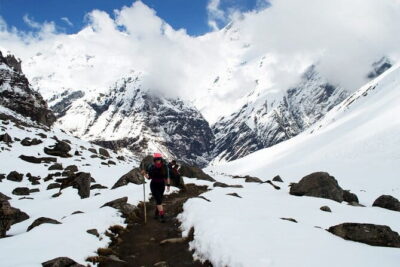
The trail passes through forest and mountain terrain, with rhododendron trees adding color when conditions are right. You also see how quickly the surroundings change as you climb. Lower sections feel greener and more settled, while higher ground becomes cooler, rougher, and more exposed.
Deurali is a key overnight point because it puts you within reach of Machhapuchhre Base Camp and Annapurna Base Camp. The drawback is clear: you gain nearly 900 meters from the previous day’s stated altitude, and you do so after several hours of walking. Hydration, measured pacing, and honest communication with your guide are essential.
Do not treat a headache, nausea, unusual tiredness, or dizziness as a minor inconvenience. The activity is specifically not suitable for people with altitude sickness, and the information provided stresses gradual ascent and hydration. On a five-day schedule, you have less spare time if your body needs an easier day.
Day 3: Deurali to Annapurna Base Camp via Machhapuchhre Base Camp
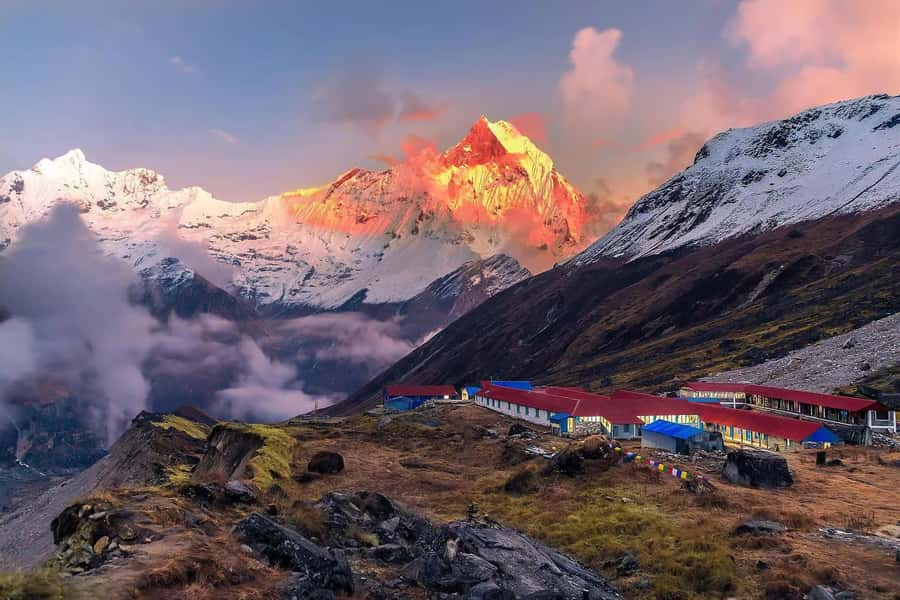
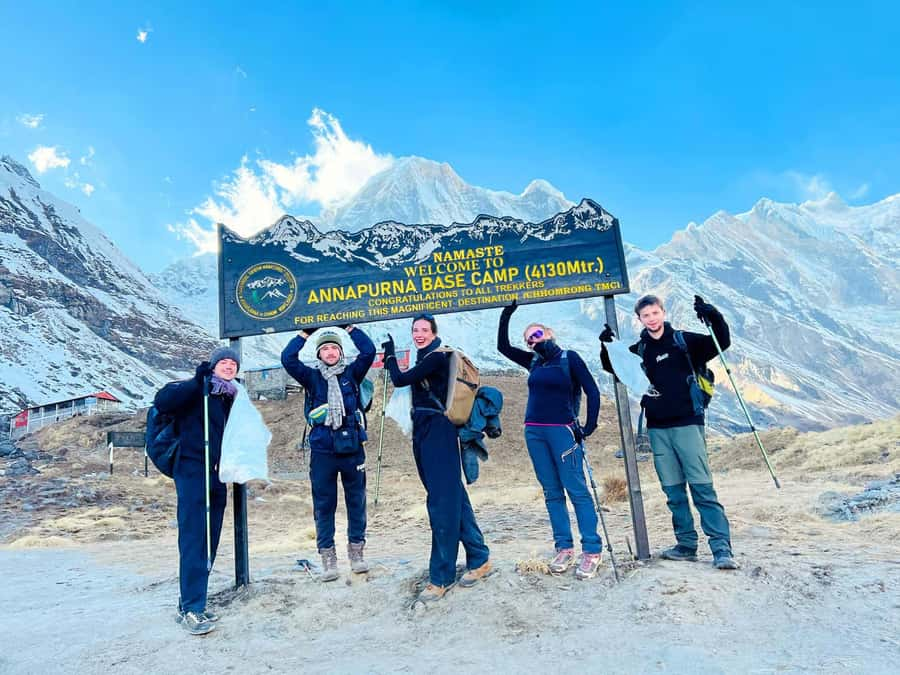
Day three is the emotional center of the trek. The listed walking time is four hours, with Annapurna Base Camp reaching 4,130 meters. You pass through Machhapuchhre Base Camp before continuing toward the final destination.
This section brings the biggest visual change. The trees thin out, rocky ground becomes more prominent, and the high peaks feel much closer. Machhapuchhre Base Camp provides a natural pause before the final approach. From there, the route leads into the broad mountain setting around Annapurna Base Camp.
At 4,130 meters, the air is noticeably thinner than at the lower stops. A four-hour estimate does not mean an effortless day. Your pace may slow, and you may need more breaks than you expect. The guides’ role becomes especially important here. Arjun was praised for setting a steady pace, using well-timed breaks, and watching trail and weather conditions. That is the kind of practical support you want at altitude.
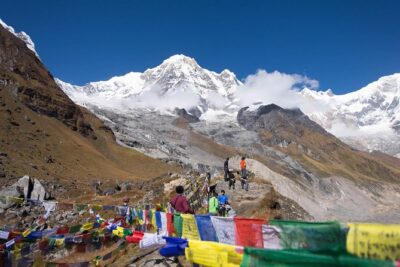
Annapurna Base Camp is the reward for the climb, with towering peaks around you and a strong sense of arrival. The views can include Annapurna I, Annapurna South, Hiunchuli, Machhapuchhre, and other Himalayan summits in the wider region. Weather can affect what you see, so keep your expectations flexible. Even with cloud, the setting remains a major moment of the trek.
Same trailhead, a longer or shorter day out:
- Poon hill Trek 3 days
★ 5.0 · 176 reviews - Pokhara: 4-Day Ghorepani, Poonhill & Ghandruk Mountain Trek
★ 5.0 · 132 reviews - Ghorepani – Poon Hill Trek 3N-4D
★ 5.0 · 125 reviews - From Pokhara: 3-Day Ghorepani Poon Hill Trek with Guide
★ 4.9 · 68 reviews
Day 4: Annapurna Base Camp to Bamboo
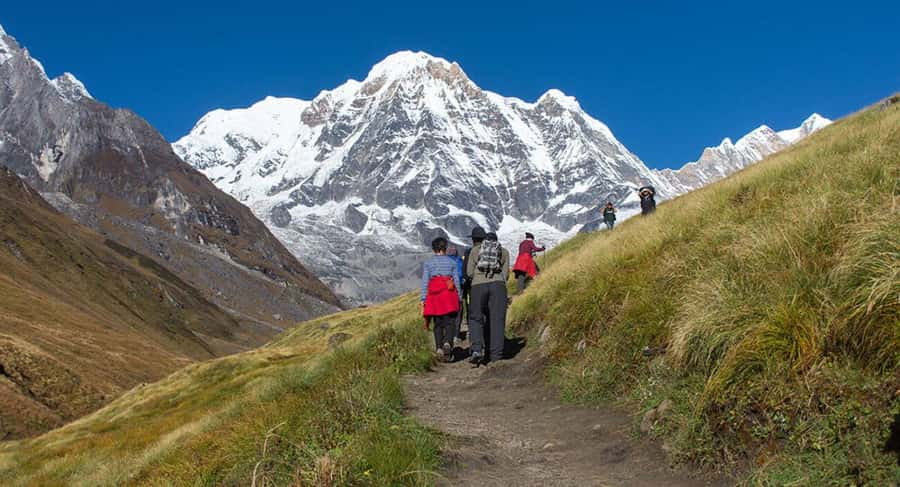
Day four begins with time to explore Annapurna Base Camp, then turns into a six-hour trek down to Bamboo at 2,400 meters. This is a major change from the previous day. You may be descending, but the day is not automatically easy.
The morning at base camp gives you a chance to take in the surrounding peaks without immediately rushing away. It also offers time for photographs and a quiet look at the scale of the mountain setting. Guides have helped with photographs during this trek, including Sagar, who was praised for taking pictures while also keeping an eye on health and comfort.
The descent to Bamboo can be tiring because downhill walking places repeated strain on knees and thighs. Rocky paths demand attention, especially after the fatigue of the ascent. Trekking poles, if you use them, can be useful, though they are not listed among the supplied equipment.
Bamboo at 2,400 meters brings warmer air and more vegetation. You may feel relief as the altitude drops, but do not race downhill. A controlled descent is kinder to your joints and leaves you in better shape for the final day.
Day 5: Bamboo to Jhinu, then back to Pokhara
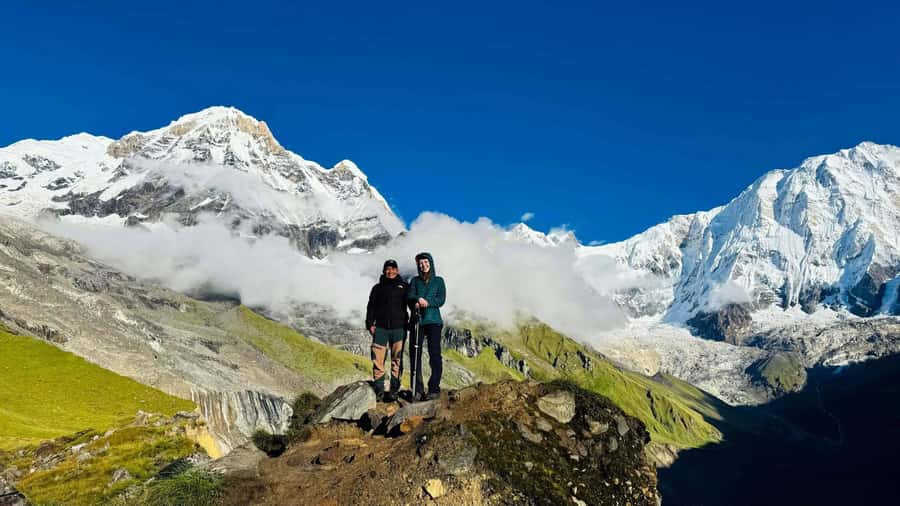
The final day combines about six hours of trekking with a return drive to Pokhara. The route goes from Bamboo to Jhinu, with a hot spring stop before the vehicle journey.
The walk back through lower forest and mountain villages gives you a different view of ground you may have passed earlier. Descending trails can reveal details you missed while climbing, including village life, terraced fields, and the way the path connects communities.
The hot spring stop is a welcome finish after several demanding days. It gives your legs a chance to recover before the shared vehicle transfer. Since the day includes both walking and driving, you should keep some patience in reserve. Mountain transport can be tiring after a long trek, even when the route works as planned.
Returning to Pokhara on day five makes this a compact option for people with limited time. The tradeoff is that you have less flexibility for rest, bad weather, or a slower pace. A longer Annapurna Base Camp schedule would normally give your body more time to adjust, but this version is built for a quick return.
What the $180 price really covers
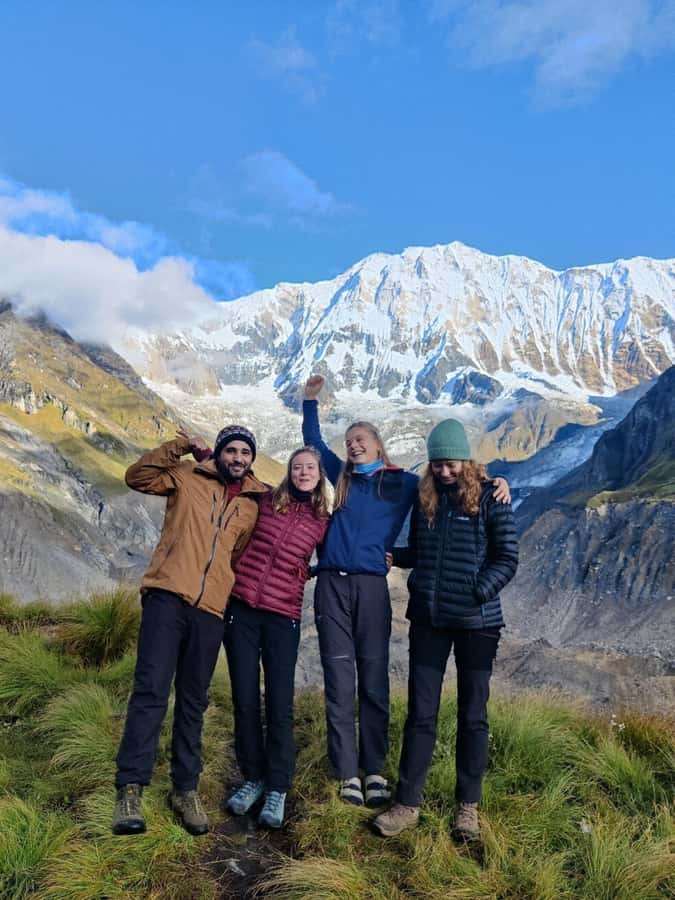
At $180 per person, the price is attractive for a guided five-day trek, provided you understand what is included. The package covers an English-speaking guide, first aid, required permits and fees, shared transport for drop-off and pickup, and trekking accommodation.
A private group adds value because your pace and needs can receive more attention than in a large mixed group. The exact meaning of private group should still be confirmed when booking, especially if you are traveling alone or with a small party.
Meals are not included. Food can be purchased along the route, with common choices such as dal bhat, noodles, rice dishes, and soups. Budget separately for meals and personal expenses, and carry cash in Nepalese rupees. Currency can be exchanged in Kathmandu or Pokhara.
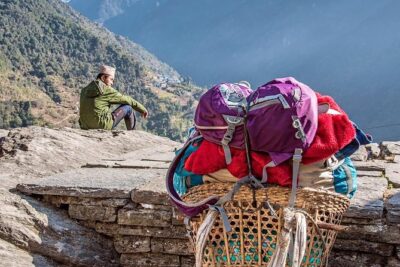
A porter is optional at $25 per day. That can be money well spent on a demanding route. One porter, Ganesh, was praised for carrying a heavy backpack and sleeping bag, while another porter, Sagar, helped keep the walking manageable. Remember that a porter is not simply a luggage service. Carrying less can help you protect energy for the climb and reduce strain at altitude.
Guides, communication, and the human side
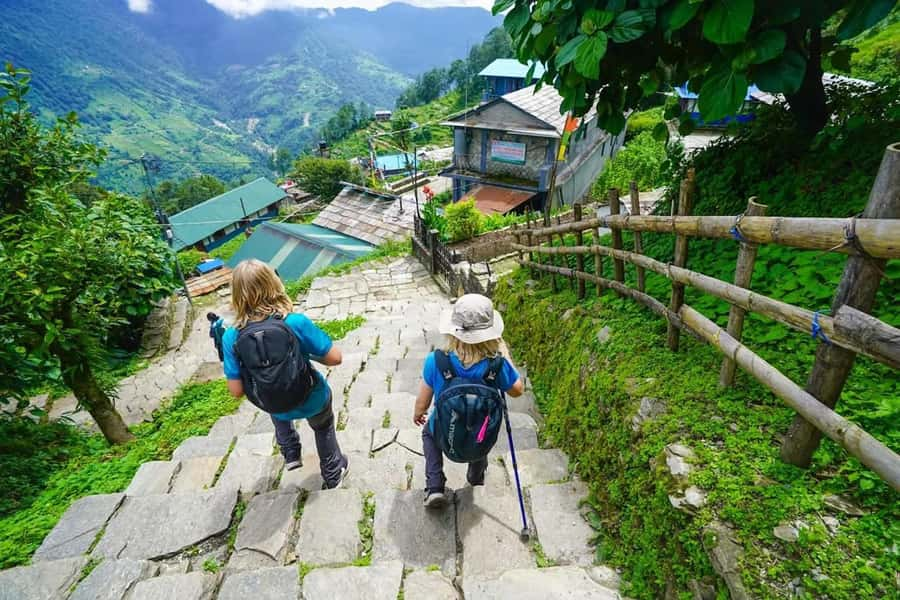
The most praised part of this experience is the support from the trekking team. Sagar was described as cheerful, attentive, and careful about health, accommodation, photographs, and questions. Arjun was praised for clear route knowledge, safety checks, sensible breaks, and attention to weather and trail conditions.
Those details matter because the success of a short high-altitude trek depends on small decisions. A good guide notices when you are walking too fast, asks how you feel, and responds before a problem becomes serious. Clear communication before departure also helps. A briefing was used to explain the route and the equipment needed, with communication available through WhatsApp.
The listed languages are English, Japanese, and Chinese. Guide assignments can vary, so you should confirm who will lead your group and what language support is available.
Who should book this trek?
This trip suits you if you want a focused Annapurna experience from Pokhara and have only five days available. It is a good fit for people who value mountain scenery, local village life, a private group, and direct guide support.
You should prepare with regular cardio and strength training. Comfortable clothing, breathable layers, a jacket, a hat, a headscarf, cash, and identification are listed as essentials. Conditions can shift from warm lower elevations to cold high-altitude weather, so pack for both.
This is not a suitable choice if you have altitude sickness, and it is not designed for babies under one year or people over 95. Those age limits do not tell you everything about fitness, however. Your ability to walk for several hours, manage steep ground, and recover from one demanding day to the next matters more.
Dress modestly and ask before photographing local people. That simple courtesy helps you enjoy the cultural side of the route without treating villages as scenery.
Should you book the 5-day Annapurna Base Camp trek?
Book it if you want a short, well-supported route to Annapurna Base Camp and you are ready for a serious physical challenge. The $180 price is good value because it includes permits, a guide, first aid, accommodation, and shared transport. Add money for food, personal costs, and possibly a porter.
Do not book it because the word easy sounds reassuring. The high point is 4,130 meters, the schedule is compressed, and the descent can be punishing. If you train beforehand, respect altitude, listen to your guide, and carry realistic expectations, this can be a powerful introduction to the Annapurna region.
FAQ
How long is the Annapurna Base Camp trek?
The trek lasts five days and four nights. The listed walking times range from four to six hours per day, not including transport or rest stops.
Where does the trek begin?
The experience begins in Pokhara. A shared vehicle takes you to Jhinu, where the trekking section starts.
What altitude does Annapurna Base Camp reach?
Annapurna Base Camp reaches 4,130 meters. The itinerary also passes through Machhapuchhre Base Camp before reaching Annapurna Base Camp.
What is included in the $180 price?
The price includes an English-speaking trekking guide, first aid, permits and fees, trekking accommodation, and shared vehicle transport for drop-off and pickup.
Are meals included?
No. Meals are available for purchase along the route. Common dishes include dal bhat, noodles, rice dishes, and soups.
Can I hire a porter?
Yes. A porter is optional and costs $25 per day.
What languages are available?
Guide support is listed in English, Japanese, and Chinese.
Can I cancel for a full refund?
You can cancel up to 24 hours in advance for a full refund. The activity also allows you to reserve now and pay later.
Recently added around Pokhara
- Pokhara: Majestic Mardi Base Camp Guided Trek with HotSpring★ 5.0 · 6 reviews
- Pokhara: 9-Day Annapurna Base Camp Trek with Poon Hill★ 5.0 · 6 reviews
- Pokhara: 5-Day Trek to Annapurna Base Camp and Hot Springs★ 5.0 · 4 reviews
- Pokhara: 5-Day Ghorepani and Poon Hill Private Trek★ 5.0 · 4 reviews
- Pokhara: 7-Day Annapurna Base Camp Trek & Hot Spring★ 4.0 · 3 reviews
- Pokhara:4-Day Ghorepani Poon Hill Guided Trek via Ghandruk★ 5.0 · 3 reviews
- Pokhara: 4-Day Poon Hill and Ghandruk Guided Trek★ 5.0 · 14 reviews
- Pokhara: 4-Day Ghorepani, Poonhill & Ghandruk Village Trek★ 5.0 · 6 reviews
Annapurna Base Camp Treks, compared.

Trekking in Annapurna/Langtang/Everest/Upper Mustang regions
Read our review →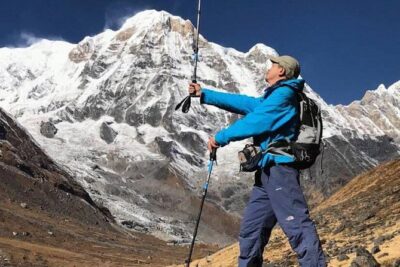
Kathmandu to Annapurna Base Camp (ABC) 5-Day Trek
Read our review →Browse the lists this tour appears in