
REVIEW · POKHARA
Private 7 – Day Annapurna Base Camp Trekking
The Himalayas start with stone steps. This private seven-day trek takes you from Pokhara through mountain villages, bamboo forests, alpine trails, and finally Annapurna Base Camp, with a guide, porter, permits, meals, and tea-house lodging arranged for you. I especially like the freedom of traveling only with your own party and the practical support built into the price. The main caution is that this is a demanding trek, not a gentle sightseeing tour.
I also like that the itinerary allows some flexibility. Past guests have praised guides such as Sanjay, Amar, Laxman, and Ram for careful support and for adjusting plans when needed. You should still prepare for long days, steep climbs, and countless stone steps. Travel insurance is required for your own protection, and it is not included.
Key points to know before booking
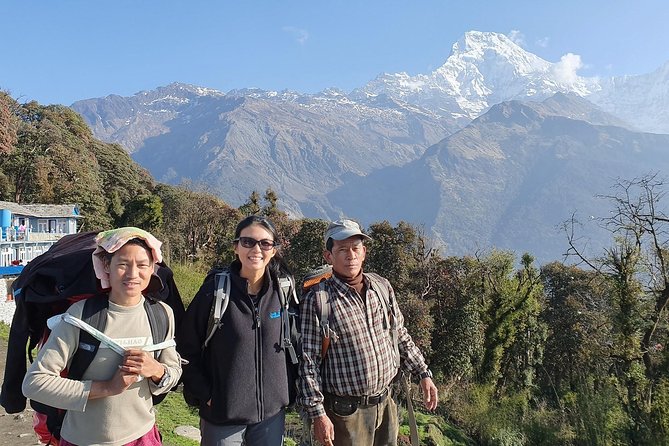
- Private group from Pokhara: You trek only with your own party, rather than joining a large group.
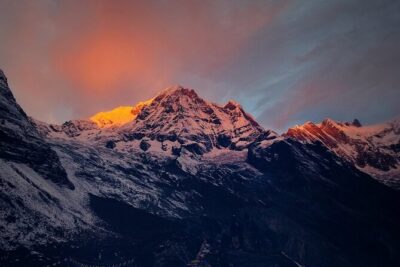
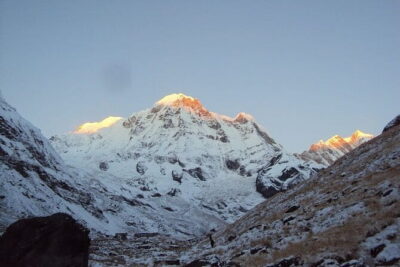
- Annapurna Base Camp included: The route reaches the high mountain amphitheater at ABC, with views of the Annapurna massif and Machhapuchhre.
- Guide and porter costs covered: Their accommodation, meals, transport, and other listed expenses are included.
- Tea-house trekking: You sleep in lodges along the route, with breakfast, lunch, and dinner supplied during the trek.
- A demanding return day: The route includes a long eight-hour day, steep stone stairs, and plenty of uphill and downhill walking.
- Strong record for personal care: The experience has a 4.8 rating from 50 reviews, with 98 percent recommending it.
What the $625 price really covers
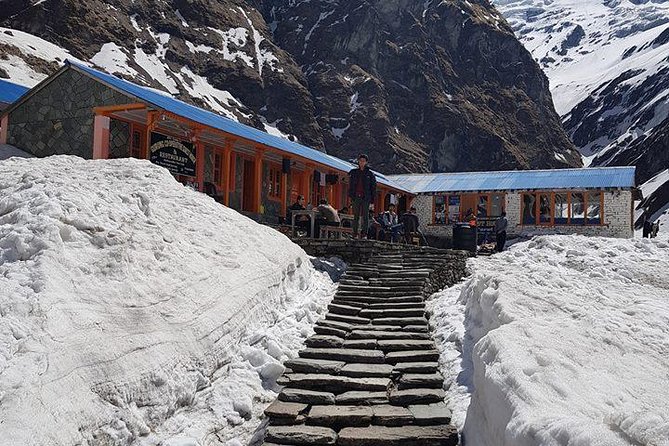
At $625 per person, this trek offers solid value if you want a managed route rather than arranging each detail yourself. The fee includes a government-registered trekking guide, porters and their expenses, lodge accommodation along the trail, conservation area and other required permits, overland transport listed in the program, and all meals during the trek.
You also receive a trekking map, oxygen saturation checks, a duffle bag, water purification, emergency rescue assistance, government taxes, service charges, and public liability insurance. That is a useful bundle. Permits and porter arrangements alone can be a nuisance to organize, especially if you are unfamiliar with trekking in Nepal.
The price does not cover hotel accommodation in Kathmandu or Pokhara, travel insurance, or tips for your guide and porter. Those exclusions are easy to miss, so add them to your budget. You should arrange travel insurance before departure, with cover suited to trekking and emergency evacuation.
The biggest value is the private format. Your guide can set the walking rhythm around your group instead of forcing you to match strangers. Several people who used this operator praised its willingness to adjust timing and plans. One couple choosing a seven-day private trip valued being able to enjoy the route at their own pace, while another party arranged a custom version after changing its original schedule.
Still, private does not mean effortless. The basic fitness requirement is moderate, but the route is physically serious. You will walk for roughly three to eight hours per day, often over uneven stone paths. The price is attractive for a seven-day private trek, but only if you are ready for the work involved.
More Annapurna Treks in Pokhara
- Trekking in Annapurna/Langtang/Everest/Upper Mustang regions
★ 5.0 · 161 reviews - Kathmandu/Pokhara: 5-Day Annapurna Base Camp (ABC) Trek
★ 4.9 · 72 reviews - Annapurna Panorama trek
★ 5.0 · 71 reviews
Day 1: Pokhara to Chhomrong by road
The meeting point is in Pokhara Lakeside, with an 8:15 am start. From there, the route uses a private jeep for about two and a half hours before reaching the Chhomrong area. The day is listed as roughly three hours, so much of the first stage is transport rather than walking.
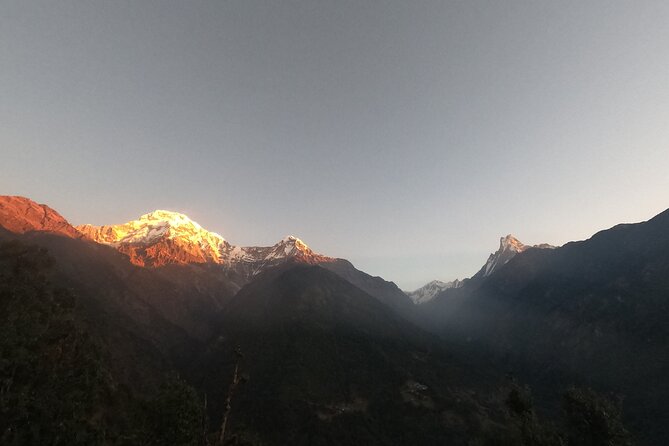
One appealing detail is the breakfast stop overlooking Annapurna I, at 8,091 meters, and Machhapuchhre, at 6,997 meters. Starting the trek with those peaks in view gives the first morning a fine sense of occasion. The terrace setting also offers a practical moment to eat, check your bags, and meet the guide before the trail gets serious.
The road journey matters because it saves walking time and makes a seven-day schedule possible. You are not spending the opening day on a long approach from Pokhara. On the other hand, road conditions can affect the feel of the day, and the description does not promise a specific arrival time at Chhomrong. Keep your first day flexible.
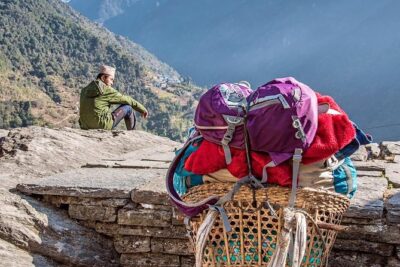
Your porter carries the main load, but you should keep essentials in a daypack. Water, rain protection, warm layers, medication, snacks, and personal documents should stay with you rather than in the duffle bag.
Day 2: Stone stairs, Sinuwa, and Bamboo
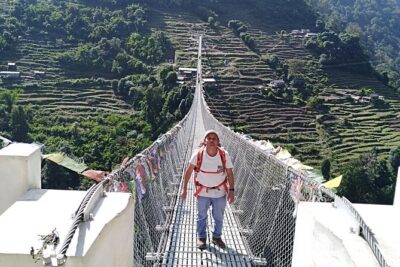
Day two is a six-hour walk through the Annapurna region. It begins with a descent of about 2,500 stone steps, followed by a bridge over the Chhomrong Khola. From there, the trail climbs toward Sinuwa, where you stop for lunch before continuing to Bamboo for the night.
This is the kind of day that shows why a moderate fitness rating should be taken seriously. Descending thousands of steps can be hard on knees, and the climb afterward tests your legs in a different way. Trekking poles would be sensible, though the supplied information does not confirm that they are provided.
Sinuwa gives the route a useful rhythm: descend, cross the river, climb, eat, and continue. Bamboo is a forest settlement, and the overnight stop places you inside the trail rather than beside a road. Accommodation is in a tea house, with dinner included.
The route is not a parade of mountain viewpoints every minute. Much of this stretch runs through forest, and one past assessment called it mainly a forest trail with many tiring ups and downs. That is fair. You come for the larger reward at base camp, but the approach includes plenty of ordinary trekking hours.
Day 3: Bamboo to Deurali through the Weeping Wall
After breakfast at Bamboo, you climb toward Himalaya Hotel, passing Dovan and the feature known as the Weeping Wall. The route also passes a local shrine before continuing toward Himalaya and eventually Deurali. The walking time is about five hours.
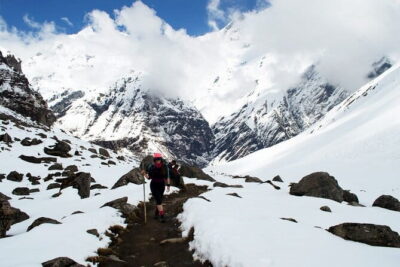
This section gradually changes the setting from lower forest to a more alpine environment. The Weeping Wall is a memorable trail feature because water runs down the rock face, and the shrine offers a small cultural detail amid the mountain route. You are not simply ticking off a base camp; you are moving through a series of changing villages, forests, river corridors, and mountain paths.
The five-hour estimate may sound manageable, but the route continues to climb. Pace matters more than speed. A good private guide should help you avoid racing early in the day, and that is one reason the private arrangement can be useful. Past trips have praised the care provided by guides including Amar, Laxman, Sanjay, and others, but the particular guide assigned to your group should be confirmed when booking.
Deurali is an important overnight point before the final push. Expect a simpler tea-house setting than in Pokhara. Meals and lodging are included, but comforts at mountain lodges should be understood as practical rather than luxurious.
Same trailhead, a longer or shorter day out:
- Poon hill Trek 3 days
★ 5.0 · 176 reviews - Pokhara: 4-Day Ghorepani, Poonhill & Ghandruk Mountain Trek
★ 5.0 · 132 reviews - Ghorepani – Poon Hill Trek 3N-4D
★ 5.0 · 125 reviews - From Pokhara: 3-Day Ghorepani Poon Hill Trek with Guide
★ 4.9 · 68 reviews
Day 4: Deurali to Annapurna Base Camp
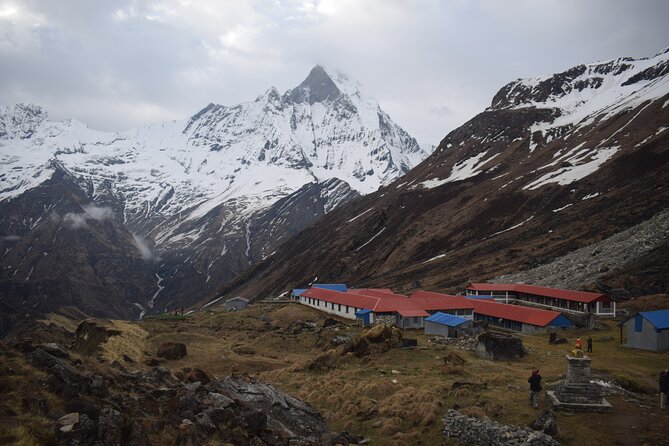
The fourth day takes about five hours and reaches Annapurna Base Camp. From Deurali, the trail follows the Modi River and passes through alpine forest. You will see carefully arranged stacks of rocks along the way, then continue past an icy cave and toward the base camp area.
This is the most anticipated section of the trek, but it is not a quick walk to a signpost. The climb is described as arduous, and the changing terrain can make the final approach feel demanding. Your guide’s job is especially important here, helping with pace, route decisions, and regular checks.
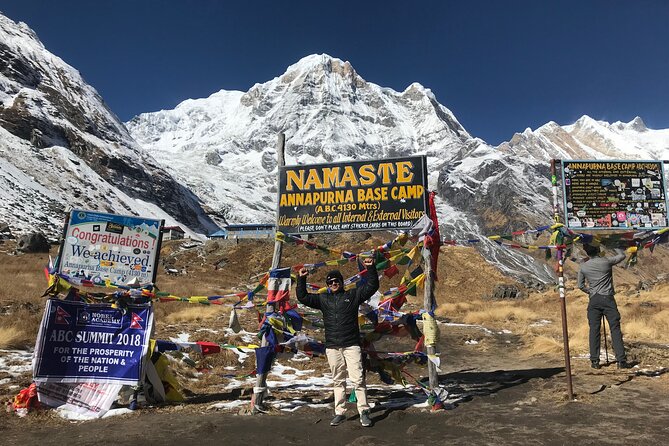
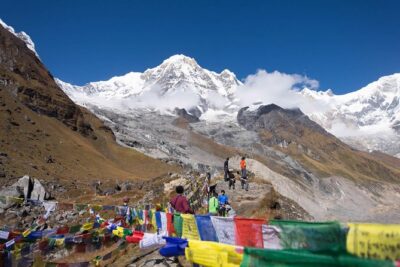
At Annapurna Base Camp, the setting opens into a high mountain bowl surrounded by peaks. The next morning is reserved for exploring the area, so you are not expected to rush in, take a photograph, and immediately turn around. That extra time is one of the better features of the schedule.
The route includes oxygen saturation monitoring, which is a useful precaution. It does not remove the need to pay attention to your body. Travel insurance and emergency evacuation cover remain important, even though assistance for rescue evacuation is listed among the inclusions.
Day 5: An eight-hour return through the Annapurna region
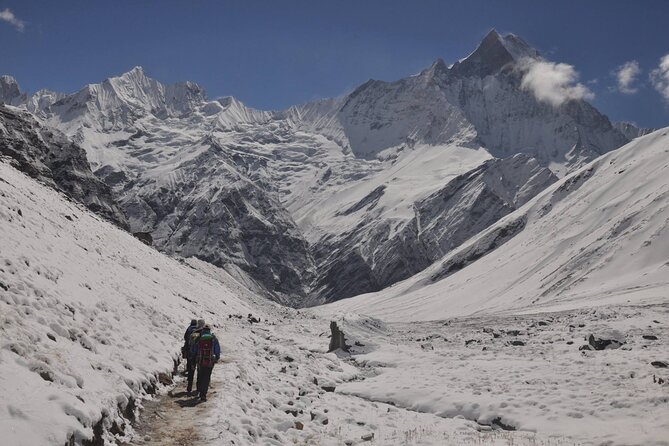
Day five begins with time to explore Annapurna Base Camp. The high setting provides a 360-degree view of the mountain group, including the Annapurna massif and nearby peaks. This is your clearest chance to appreciate why the long approach was worthwhile.
The day is listed at about eight hours, making it the longest walking day in the program. After enjoying ABC, you begin the return journey through the Annapurna region. The exact overnight point is not fully spelled out in the supplied schedule, but day six begins from Bamboo, so you should confirm the precise lodging plan with the operator before departure.
This is also where the seven-day format becomes clear. The schedule gives you time at base camp, but it does not build in a spare weather or recovery day. A private guide may help adjust the pace, and the operator has a record of accommodating changes, yet the overall trip still runs to a tight timetable.
Bring patience for the return. Descending is not automatically easy, especially after reaching the highest point of the route. Your knees may feel the difference, and the long day makes proper meals, hydration, and steady pacing important.
Day 6: Bamboo, Chhomrong, and the hot spring at Jhinu Danda
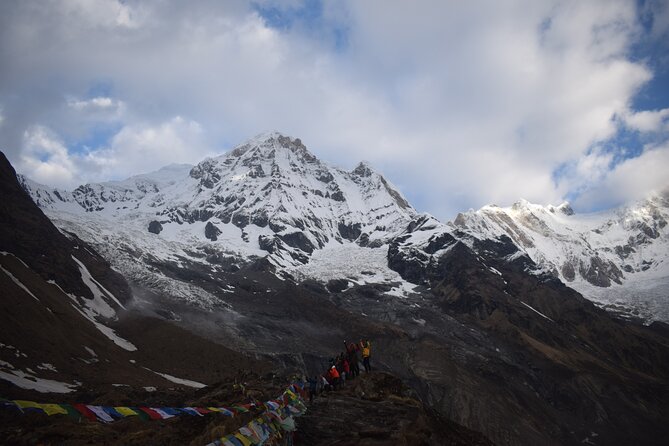
The sixth day is about six hours and includes a hot spring stop at Jhinu Danda. From Bamboo, you walk through bamboo forest toward Sinuwa, then descend toward the Chhomrong River. The route eventually reaches the Jhinu Danda area.
This section offers a welcome change after the high mountain days. The forest returns, and the hot spring provides a chance to rest tired muscles. The route still includes climbs and descents, so do not treat this as a full rest day.
The itinerary wording connects Bamboo, Sinuwa, Chhomrong, and Jhinu Danda, but it does not provide a minute-by-minute schedule for the hot spring. Ask your guide how much time is planned there. If soaking is important to you, a swimsuit and quick-drying clothing would be practical, though the supplied details do not confirm facilities or exact bathing arrangements.
The village and forest sections are valuable because they bring you back into everyday mountain life. You see more than snow and rock. The journey includes local settlements, bridges, shrines, tea houses, and working trails, which gives the trek a broader sense of place.
Day 7: Return to Pokhara by jeep
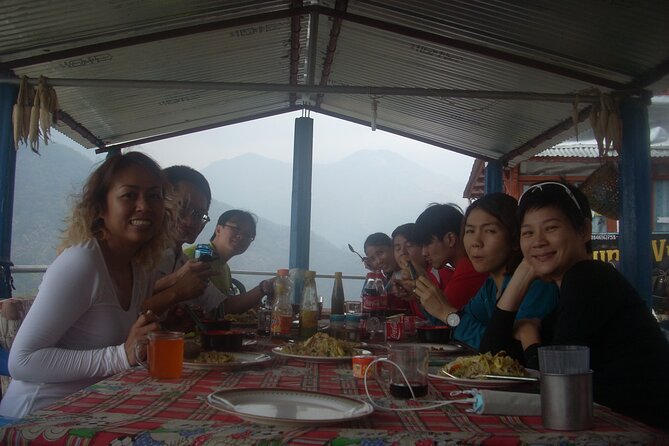
The final morning starts with breakfast and another look toward Annapurna I and Machhapuchhre. After a short walk to Samrung, you board a private jeep for the drive back to Pokhara along the Baglung highway area. The day is listed at roughly three hours.
Ending with a vehicle transfer is sensible. After nearly a week of steep paths, you do not want a final marathon walk simply to reach town. The private jeep also brings the trip back to its starting point, at Pokhara Lakeside.
The end point is the original meeting point. Hotel accommodation in Pokhara is not included, so you should arrange where you will sleep after the trek. If you plan to continue elsewhere, leave enough flexibility for road delays and tired legs.
Tea houses, food, and what to pack
Accommodation is provided in lodges along the route. Tea houses are a practical part of trekking in Nepal, but you should expect basic mountain lodging rather than hotel comforts. The program includes seven breakfasts, six lunches, and six dinners, matching the seven-day structure and the nights spent on the trail.
Water purification is included, which helps reduce the need to buy treated water along the way. A duffle bag is also supplied, while your porter carries the main luggage. Keep valuables and daily necessities in your own small pack.
You should pack layered clothing, a waterproof outer layer, sturdy walking shoes, sun protection, personal medication, and warm clothing for the high sections. The supplied information does not provide a full equipment list, so ask the operator what they recommend for your travel season.
Guides, porters, and the private format
The human support is one of the strongest reasons to choose this trek. The operator assigns a government-registered guide and porters, and their listed expenses are covered. Past bookings have included guides named Sanjay, Amar, Laxman, Kumar, Min, and female guides such as Ritika and Andrea, but names and assignments can change.
The useful pattern is not one particular name. It is the repeated praise for attentive care, route knowledge, and flexibility. One person found the guide and porter supportive enough to feel like traveling with friends. Another praised the team for helping with changes to the plan. A separate trip used Ram as a porter-cum-guide, showing that staffing can vary by group and arrangement.
You should confirm whether your party will have both a guide and a separate porter, and ask who will lead the trek. That is especially important if you have specific needs, a preferred pace, or concerns about altitude and long walking days.
Tips are not included. Carry enough Nepalese currency for gratuities, and ask the company for current guidance on customary amounts. A fair tip is a practical way to recognize the people who carry equipment and manage the route.
Who should book this seven-day trek?
I would choose this trip if you want to reach Annapurna Base Camp without organizing permits, transport, tea houses, meals, and porters yourself. It suits a private party that values control over pace and does not want to join a large group.
It is also a good match for people who want a clear seven-day plan from Pokhara. The route includes mountain views, villages, forest, rivers, shrines, and the Jhinu Danda hot spring, rather than focusing only on the final viewpoint.
I would hesitate if you dislike steep stairs, long walking days, basic lodge accommodation, or a fixed schedule with little spare time. The eight-hour day and the 2,500-step descent are not minor details. You should also avoid booking without travel insurance.
The 4.8 rating from 50 reviews and 98 percent recommendation rate support the operator’s reputation for care and organization. Still, ratings cannot make the hills flatter. Your decision should come down to fitness, preparation, and whether you value private support more than extra comfort.
Should you book it?
Book this trek if Annapurna Base Camp is your goal and you want a reasonably priced private package with transport, permits, meals, lodging, a guide, and porter support included. The flexible approach and strong praise for personal care make it attractive for couples, friends, and small parties.
Before paying, confirm your guide, porter arrangement, overnight stops, equipment needs, and the exact transport plan. If you are comfortable with steep stairs and long mountain days, $625 offers a useful level of support. If you want an easy holiday, choose something shorter and less demanding instead.
FAQ
Where does the Annapurna Base Camp trek start?
The trek starts at the meeting point in Pokhara Lakeside, at 6X84+3JQ, Lakeside Road, Pokhara 33700, Nepal. The scheduled start time is 8:15 am.
How long does the private trek last?
The experience lasts approximately seven days and ends back at the Pokhara meeting point.
Is this a private tour?
Yes. Only your own party participates, so you do not join a larger shared group.
Are meals and accommodation included?
Yes. Lodge accommodation along the trek is included, along with seven breakfasts, six lunches, and six dinners.
Are guide and porter fees included?
Yes. One government-registered trekking guide and porters are included, along with their listed expenses. Tips are not included.
Is travel insurance included?
No. Travel insurance is not included, and you should arrange it before the trek. Emergency rescue evacuation assistance is listed as an inclusion, but that does not replace your own travel insurance.
Recently added around Pokhara
- Pokhara: Majestic Mardi Base Camp Guided Trek with HotSpring★ 5.0 · 6 reviews
- Pokhara: 9-Day Annapurna Base Camp Trek with Poon Hill★ 5.0 · 6 reviews
- Pokhara: 5-Day Trek to Annapurna Base Camp and Hot Springs★ 5.0 · 4 reviews
- Pokhara: 5-Day Ghorepani and Poon Hill Private Trek★ 5.0 · 4 reviews
- Pokhara: 7-Day Annapurna Base Camp Trek & Hot Spring★ 4.0 · 3 reviews
- Pokhara:4-Day Ghorepani Poon Hill Guided Trek via Ghandruk★ 5.0 · 3 reviews
- Pokhara: 4-Day Poon Hill and Ghandruk Guided Trek★ 5.0 · 14 reviews
- Pokhara: 4-Day Beautiful Ghorepani Poon Hill & Ghandruk Trek★ 4.8 · 21 reviews
Annapurna Base Camp Treks, compared.
Trekking in Annapurna/Langtang/Everest/Upper Mustang regions
Read our review →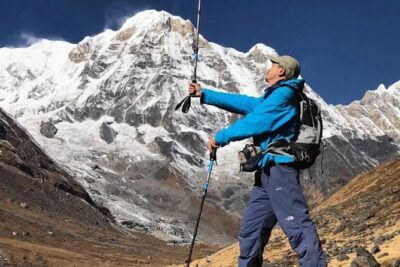
Kathmandu to Annapurna Base Camp (ABC) 5-Day Trek
Read our review →Browse the lists this tour appears in