
REVIEW · POKHARA
Annapurna Base Camp Trek -8 days
Eight days can take you remarkably high. This private Annapurna Base Camp trek takes you from Pokhara’s warm farm country to the icy world below Machhapuchare and Annapurna, with village life, forest trails, stone steps, and huge Himalayan views along the way. I like the route’s variety, and I especially like that it includes the natural hot springs at Jhinu Danda.
The strongest part of the experience is the care from the guides and porters, with names such as Binod, Anish, Dibash, Kiran, and Soma Jangbu Sherpa praised repeatedly for patience and support. The catch is simple: eight days is a tight schedule, and the trek includes long walking days, steep steps, high altitude, and basic mountain lodging. You need a moderate level of fitness and a sensible attitude toward discomfort.
Key points before you book
- Annapurna Base Camp reaches about 4,130 meters, with Machhapuchare Base Camp the night before.
- The trek starts and ends in Pokhara, with private transport between Pokhara and Nayapul included.
- Every day involves substantial walking, with listed days running roughly 10 to 12 hours.
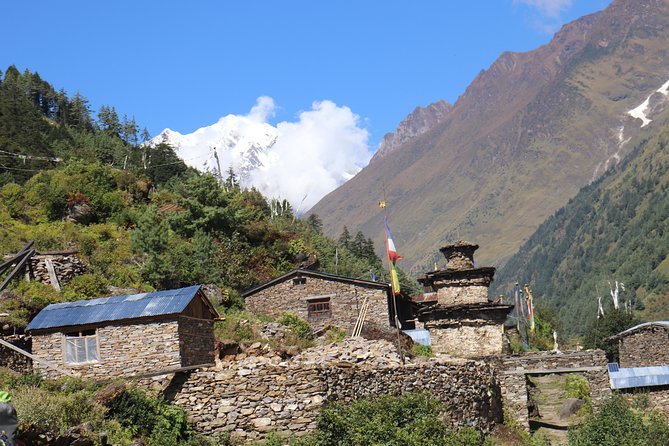
- The route changes character constantly, from Gurung villages and rice fields to bamboo forest, alpine scrub, and the open Annapurna Sanctuary.
- Jhinu Danda adds a welcome recovery stop, with natural hot springs about half an hour downhill.
- The $899 price includes major trekking costs, but not Pokhara or Kathmandu accommodation, personal insurance, drinks, tips, or evacuation insurance.
What the eight-day route is really like
This is not a gentle sightseeing holiday with a short walk each afternoon. The itinerary uses a fast version of the Annapurna Base Camp route, and the schedule packs a great deal into eight days.
You walk through changing altitudes rather than simply driving to a viewpoint. That matters because the scenery keeps shifting. The lower sections feel agricultural and warm. Higher up, the trail enters rhododendron, pine, and bamboo forest. Near Base Camp, trees disappear and the surroundings become stark, cold, and exposed.
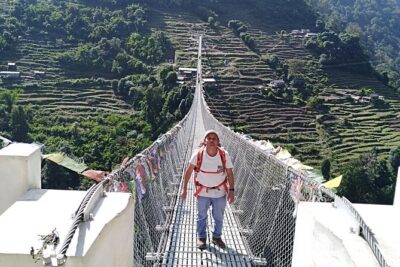
The route also gives you contact with Gurung villages, where the stone paths, lodges, farm terraces, and local customs are part of the experience. You will not spend all your time staring at mountains. Some of the best moments may come from watching village life unfold between long stretches of walking.
The listed duration for each day is generous and appears to include travel, breaks, and time on the trail. Still, you should prepare for physically demanding days. The itinerary specifically says you need moderate physical fitness, and that advice should be taken seriously.
More Annapurna Treks in Pokhara
- Trekking in Annapurna/Langtang/Everest/Upper Mustang regions
★ 5.0 · 161 reviews - Kathmandu/Pokhara: 5-Day Annapurna Base Camp (ABC) Trek
★ 4.9 · 72 reviews - Annapurna Panorama trek
★ 5.0 · 71 reviews
Day 1: Pokhara to Ghandruk through the lower foothills
After breakfast in Pokhara, you travel by private vehicle toward Nayapul and Bhirethati. Bhirethati is described as one of the appealing villages in the Annapurna area, and it marks the point where the walking begins in earnest.
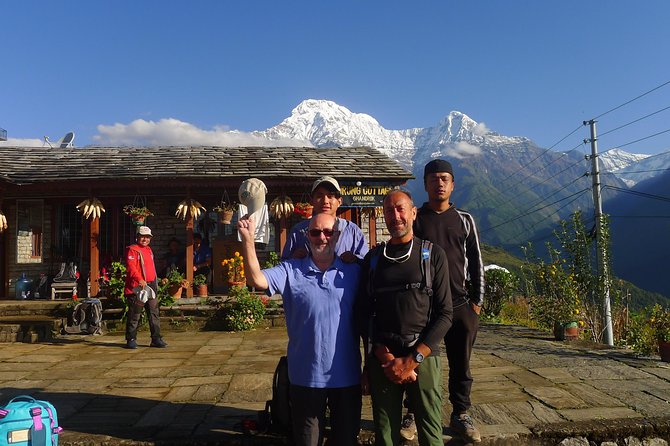
The first part follows the Modi River through lower, warmer country. Then the trail turns upward toward Ghandruk, using stone steps and uphill paths. Ghandruk is a substantial Gurung settlement and one of the most appealing village stops on the route, with views toward the Annapurna range and Machhapuchare.
I like this opening because it gives you a clear sense of Nepal’s geographic change. You begin among farms and river valleys, then gain height on foot rather than being dropped into the mountains by vehicle.
The drawback is timing. This is listed as a roughly 12-hour day, combining the drive and trek, so you may arrive tired. Ghandruk is best treated as a place to eat, rest, and enjoy the mountain views rather than as a long sightseeing stop.
Day 2: Ghandruk to Chhomrong over ridges and river valleys
The trail starts near the upper part of Ghandruk before moving along a gradual path toward Kimrong Danda. From the ridge, you descend into a cooler wooded section and reach the Kimrong River valley, where a farm settlement sits among the hills.
Then comes the work. The route climbs for an hour or more toward a hilltop before following a more gradual, stone-paved path above Chhomrong. A final descent brings you into Chhomrong, another large Gurung village.
Chhomrong is important because it is the last major permanent settlement before the route moves farther into the mountain interior. It is also a useful place to check your supplies, charge devices if possible, and settle into the rhythm of lodge-based trekking.
The day includes repeated climbs and descents. This is not a steady uphill walk, and the rolling profile can be tiring in a different way from one long climb. Pace yourself early. Saving energy here will help later.
Day 3: Chhomrong to Dovan through Bamboo forest
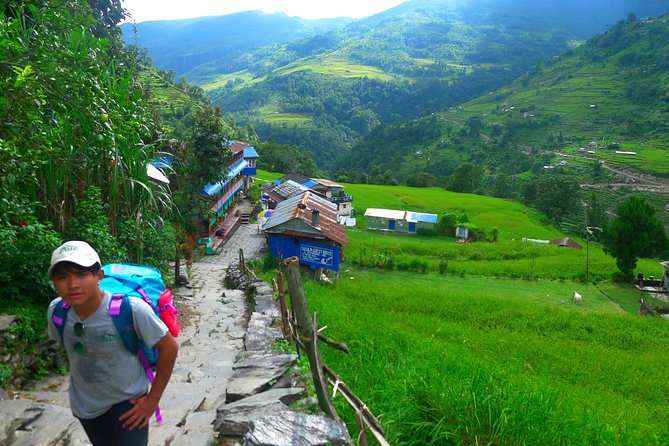
From Chhomrong, you descend to cross the Chhomrong River, then climb toward Sinuwa Danda. The path enters heavier forest, with winding uphill sections followed by descents through bamboo and rhododendron.
Bamboo is a small trekking settlement with lodges in a river gorge. It is a useful stop for food or rest, but the overnight destination is Dovan, a quieter and more isolated place with only a few lodges.
This section is one of the best parts of the route for forest scenery. The trail feels enclosed, with trees, river sounds, and changing light replacing the broad views of the lower villages. You should not expect constant mountain panoramas here. The reward is a more peaceful section of the walk.
Dovan’s small size also has a practical side. Lodge choice is more limited than in Chhomrong or Ghandruk, and the accommodation is likely to feel basic. That is normal for this part of the route. Pack patience, a warm layer, and something to do during quiet evenings.
Same trailhead, a longer or shorter day out:
- Poon hill Trek 3 days
★ 5.0 · 176 reviews - Pokhara: 4-Day Ghorepani, Poonhill & Ghandruk Mountain Trek
★ 5.0 · 132 reviews - Ghorepani – Poon Hill Trek 3N-4D
★ 5.0 · 125 reviews - From Pokhara: 3-Day Ghorepani Poon Hill Trek with Guide
★ 4.9 · 68 reviews
Day 4: Dovan to Machhapuchare Base Camp
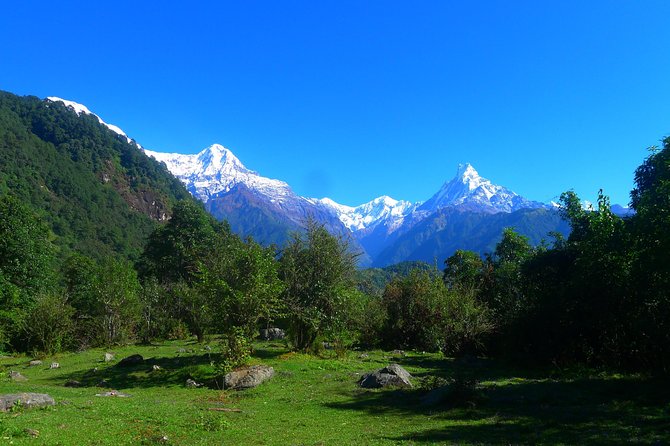
The trail now moves toward the high mountains. You pass through forest and reach Himalaya Hotel, near the large overhanging cave known as Hinko. The route then drops close to the Modi River before climbing toward Deurali.
At Deurali, tall trees give way to shorter alpine vegetation. The scenery opens as you follow the Modi River toward Machhapuchare Base Camp, usually called MBC. The night’s lodging sits beneath the dramatic north face of Machhapuchare, or Fish Tail.
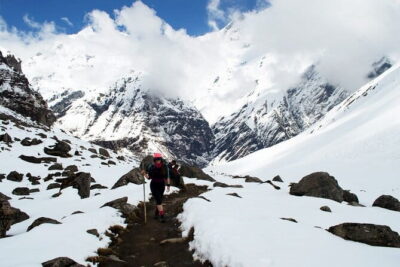
This is a major transition day. You are leaving the forest behind and entering a colder, more exposed setting. The route is listed at about 10 hours, so the combination of altitude, cold, and walking time deserves respect.
MBC is not the final goal, but it is one of the most memorable stops. The mountain walls feel much closer here, and the setting gives you a preview of the Annapurna Sanctuary ahead. Keep your evening quiet and focus on eating, drinking, and resting.
Day 5: Machhapuchare Base Camp to Annapurna Base Camp
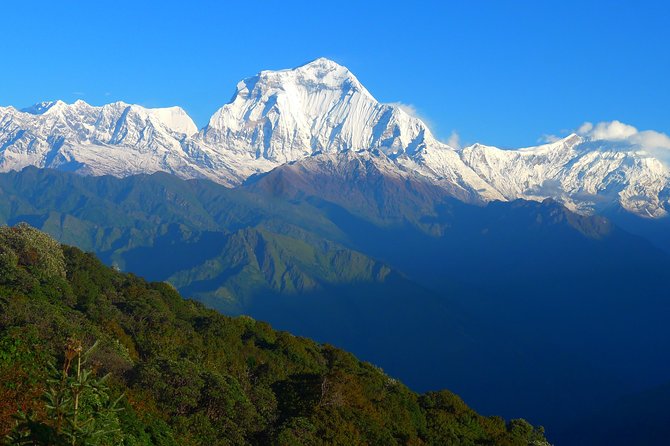
This is the shortest walking day on paper, and it leads to the main objective. From MBC, the trail enters the Annapurna Sanctuary and climbs gradually across a broad open area surrounded by high peaks.
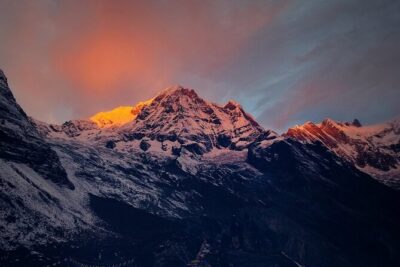
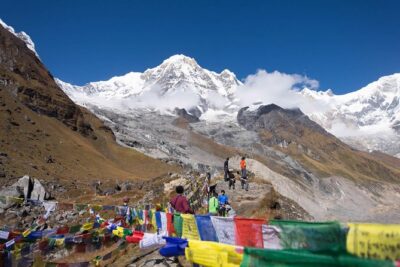
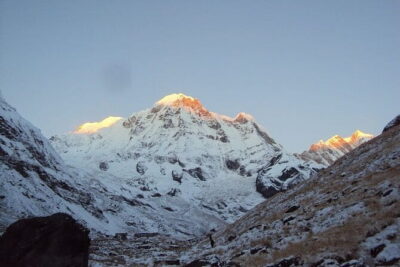
The arrival at the Annapurna Base Camp signpost is the emotional high point of the trek. The camp sits at about 4,130 meters beneath Annapurna and near peaks including Annapurna South, Gangapurna, and Varaha Shikhar.
The setting is unusually enclosed by mountains. Instead of seeing a single distant summit, you look around at a ring of high peaks. The wide plateau and towering walls create a strong sense of place, especially after the long approach through forests and river gorges.
There is a lodge at Base Camp with food and rooms facing the peaks. That convenience is valuable, but do not confuse a lodge with comfort at low altitude. Conditions can be cold and basic, and sleeping at 4,130 meters may be difficult for some people.
Take altitude seriously. The trek includes no extra acclimatization day, so you should walk steadily, tell your guide if you feel unwell, and avoid treating the final climb as a race.
Day 6: Returning from Base Camp to Bamboo
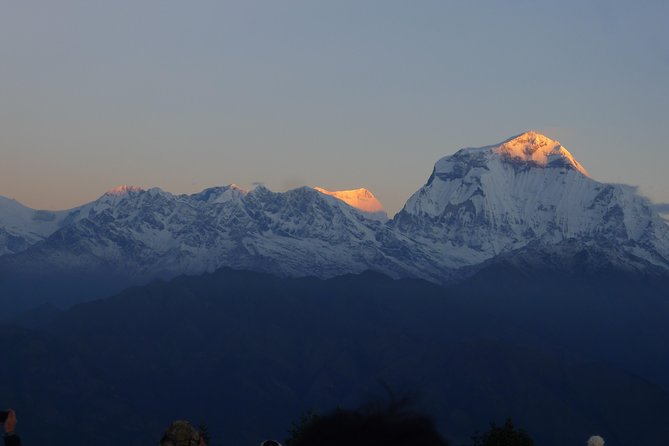
After the big morning at Annapurna Base Camp, you retrace much of the route downhill. The walk takes close to six hours and includes short uphill sections before returning to the tree line and Bamboo.
The change is striking. At Base Camp, you have been in a cold, open alpine zone. By the time you reach Bamboo, you are back among taller trees and thicker vegetation.
Downhill does not mean easy. Stone steps can be hard on knees, especially after several days of walking. Trekking poles can be useful, though they are not specifically included in the package, so you should ask the operator about equipment before departure.
This day is also a good reminder of the route’s value. You see the same valley from a different angle, and the return journey reveals details you may have missed while focused on gaining altitude.
Day 7: Bamboo and Chhomrong to Jhinu Danda
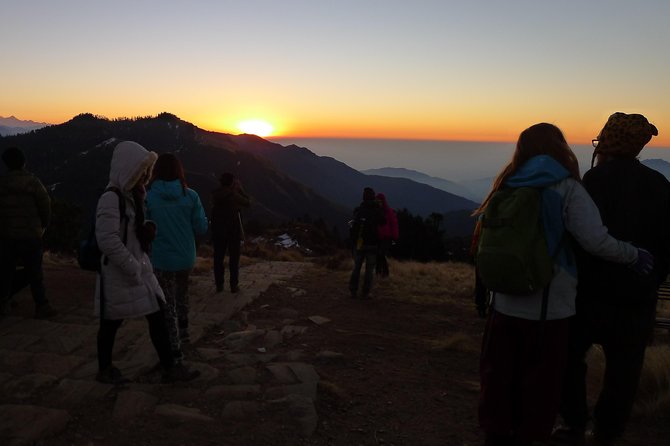
The trail returns toward Chhomrong, with more ups and downs along the way. From the top of Chhomrong, you take a different route toward Jhinu Danda, a hill village with broad views over the surrounding hills and mountains.
Jhinu’s main attraction is its natural hot spring. The pools are about half an hour downhill from the village, near the rushing Modi River. After days of walking, the warm water can be a welcome treat for tired legs.
Remember that the hot spring visit requires another downhill walk, followed by a climb back to the lodge. It is refreshing, but not entirely effortless. Bring suitable clothing and keep your expectations practical. The value here is the chance to relax in a natural setting, not resort-style facilities.
Day 8: Jhinu Danda back to Pokhara
The final morning takes you downhill through warmer farmland and paddy fields. After the mountain trail, the lower country feels open and mild.
The route then connects with transport back to Pokhara, where the trek ends near the serene shores of Lake Phewa. This is a satisfying finish because you return to the same city where the journey began, but with a very different view of the Annapurna region.
The last day is listed as about 12 hours, including the walk and drive. Do not plan a demanding evening in Pokhara. Give yourself time to shower, eat, and recover.
Guides, porters, and the human side of the trek
A good guide can change the entire experience on a demanding Nepal trek. The strongest pattern in the feedback is personal care from the guiding team.
Binod receives repeated praise for his positive attitude, preparation, and ability to keep morale high during difficult stretches. Anish is highlighted for adapting the route and stages thoughtfully, including on a trek involving a mother and daughter. Dibash is praised for staying close to a slower walker without pushing the pace, while Kiran is described as attentive and warm.
Soma Jangbu Sherpa is also singled out for making the journey safe, smooth, and full of local insight. These details matter more than a polished itinerary. When your legs hurt or the trail feels rough, a guide who respects your pace is worth paying for.
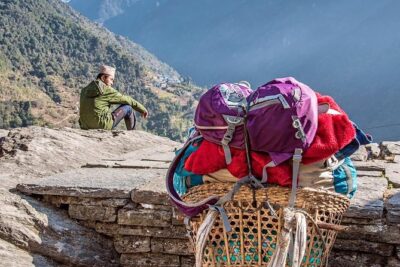
The package includes an English-speaking guide, a first-aid kit, duffle bags, route maps, emergency evacuation arrangements, and a Trekking Planner T-shirt and cap. Porter service is reflected in the supplied equipment and comments, but confirm exactly what porter support and baggage limits apply before you pay.
What the $899 price includes, and what it does not
At $899 per person, the trek offers fair value if you want a private, organized journey. Included are the national park entrance fee, TIMS card, guide, first-aid kit, emergency evacuation arrangement, private transport between Pokhara and Nayapul, seven dinners, eight lunches, and eight breakfasts.
That covers many of the expenses that can make independent planning complicated. You are paying for route organization, permits, transport, meals, and on-trail support rather than just a guide for a few hours.
The price does not include accommodation or meals in Kathmandu and Pokhara. It also excludes personal travel and health insurance, helicopter evacuation insurance, drinks, boiled water, laundry, phone calls, battery charging, tips, and other personal expenses.
Insurance deserves special attention. Emergency evacuation arrangements are included, but your personal insurance and helicopter evacuation coverage are not. Do not assume that an arrangement made by the company replaces your own policy.
Who should book this trek?
I would choose this trek if you have limited time in Nepal but still want to reach Annapurna Base Camp on foot. It suits people who prefer a private trip, want an English-speaking guide, and value having transport and meals organized.
It can also suit a first-time trekker who is reasonably fit and comfortable with long days. Several first-time participants praised the support they received from their guide and porter, which is encouraging if you are new to Himalayan trekking.
I would hesitate if you dislike basic lodges, struggle with steep steps, or want several rest days. The route is fast, the highest overnight stop is above 4,000 meters, and the daily schedule leaves little spare time.
The tour starts at 8:15 a.m. in Pokhara, offers pickup, and ends back at the meeting point. It is a private activity, so your group does not have to match the pace or preferences of a large public tour.
Practical advice before you go
Keep your daypack light. Your guide can help with the larger duffle bag, but you will still need water, warm clothing, personal medicine, and rain protection close at hand.
Prepare for changing conditions. The route moves from warm farm country to cold alpine ground, so layers are more useful than one heavy jacket. Comfortable walking shoes are essential because the trail includes stone steps, rough ground, forest paths, and repeated descents.
Budget for extras. Drinks, hot water, battery charging, tips, and personal purchases are not included. The package covers the main meals, but not every item you may want during the trek.
Finally, listen to your guide. The trip earns a top rating of 5 from 56 ratings, with 100 percent recommending it, but high praise does not remove the physical demands. A careful pace and honest communication will do more for your enjoyment than trying to walk quickly.
Should you book the Annapurna Base Camp Trek?
Book it if you want a compact but serious Himalayan trek with strong guide support, varied scenery, and a real night at Annapurna Base Camp. The combination of Gurung villages, forest, hot springs, Machhapuchare, and the Sanctuary gives you far more than a simple mountain viewpoint.
Do not book it just because the price looks manageable or because eight days sounds easy. This is a demanding route with long walking days and high-altitude lodging. If you are prepared for that, the private format, included meals and permits, and praised guiding team make the $899 cost reasonable.
FAQ
Where does the Annapurna Base Camp trek start?
It starts in Pokhara, Nepal, at 8:15 a.m.
Where does the trek end?
The trek ends back at the meeting point in Pokhara.
How long is the trek?
The trek lasts approximately eight days.
How high is Annapurna Base Camp?
Annapurna Base Camp is at about 4,130 meters.
Is transport from Pokhara included?
Yes. Private vehicle transport between Pokhara and Nayapul, and back to Pokhara, is included.
Is this a private tour?
Yes. Only your own group participates in the activity.
Are meals included?
Breakfast is included for eight days, lunch for eight days, and dinner for seven days.
Is accommodation in Pokhara included?
No. Accommodation and meals in Pokhara and Kathmandu are not included.
Is a guide included?
Yes. The package includes an experienced English-speaking guide, along with a first-aid kit and emergency evacuation arrangements.
Is insurance included?
No. Personal travel and health insurance, including helicopter evacuation insurance, are not included.
What fitness level is required?
You should have a moderate level of physical fitness. The trek includes long days, steep sections, stone steps, and walking at high altitude.
Can I cancel for a refund?
You can cancel at least 24 hours before the start time for a full refund. Cancellations or changes made less than 24 hours before the start time are not accepted for a refund.
Recently added around Pokhara
- Pokhara: Majestic Mardi Base Camp Guided Trek with HotSpring★ 5.0 · 6 reviews
- Pokhara: 9-Day Annapurna Base Camp Trek with Poon Hill★ 5.0 · 6 reviews
- Pokhara: 5-Day Trek to Annapurna Base Camp and Hot Springs★ 5.0 · 4 reviews
- Pokhara: 5-Day Ghorepani and Poon Hill Private Trek★ 5.0 · 4 reviews
- Pokhara: 7-Day Annapurna Base Camp Trek & Hot Spring★ 4.0 · 3 reviews
- Pokhara:4-Day Ghorepani Poon Hill Guided Trek via Ghandruk★ 5.0 · 3 reviews
- Pokhara: 4-Day Poon Hill and Ghandruk Guided Trek★ 5.0 · 14 reviews
- Pokhara: 4-Day Ghorepani, Poonhill & Ghandruk Village Trek★ 5.0 · 6 reviews
Annapurna Base Camp Treks, compared.
Trekking in Annapurna/Langtang/Everest/Upper Mustang regions
Read our review →
Kathmandu to Annapurna Base Camp (ABC) 5-Day Trek
Read our review →Browse the lists this tour appears in