
REVIEW · CUSCO
Classic Choquequirao Trek – 5 Days / 4 Nights
The Andes make you earn every view. This five-day Choquequirao trek combines a rarely visited Inca citadel, huge Apurímac Canyon views, and strong support from guides, cooks, and muleteers. I like the small-group format of up to 10 people and the careful extras, including snacks, emergency satellite phones, an inflatable mattress, and a portable toilet. The main drawback is clear: this is a hard trek, with long descents followed by steep climbs in high, hot, and remote country.
I also like the way the route adds Saywite and the Cconoc hot springs on the way back to Cusco. Guides such as Guido, George, Carlos, Franz, Roman, Caesar, and Anthony have been praised for encouragement, humor, clear briefings, and close attention to dietary needs. Still, you need to arrive in Cusco at least two days early to adjust to the altitude, and you should treat the $735 price as a serious trekking investment rather than a cheap walk.
Key points to know before booking
- Choquequirao is the main prize: You get a full day at the Inca citadel, including its plazas, terraces, temples, and famous white llama designs.
- The route is physically demanding: Expect a major descent into the Apurímac Valley, a river crossing, then a hard climb toward Marampata and Choquequirao.
- Your heavy gear is handled: Muleteers and porters carry camping equipment and up to 5 kilograms of your personal belongings.
- The food and camp service are major strengths: A cook, dining tent, chairs, snacks, tea time, and three meals a day make the remote route more manageable.
- The return day has worthwhile extras: Saywite and Cconoc hot springs add culture and rest after four demanding days on foot.
- Plan carefully for altitude and heat: The tour requires strong physical fitness, and children must be at least 12 and accompanied by an adult.
Why Choquequirao is worth the effort
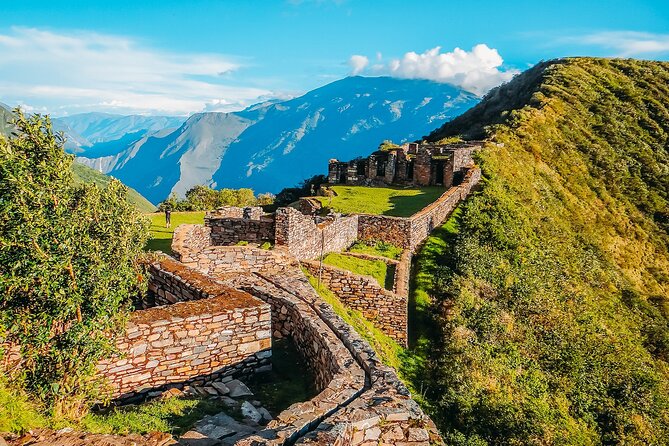
Choquequirao sits at about 3,050 meters, or 10,007 feet, above the Apurímac Canyon. The site is often compared with Machu Picchu, but the two visits feel very different. Machu Picchu is easier to reach and more heavily visited. Choquequirao asks you to walk for days before you see its stonework.
That effort changes the mood. You approach through steep mountain country, dry slopes, deep ravines, and quiet camps rather than by train or short shuttle ride. The citadel is also only partly exposed. The tour information estimates that about 40 percent of the site is visible, so you are seeing a place that still feels unfinished and partly concealed by the mountains.
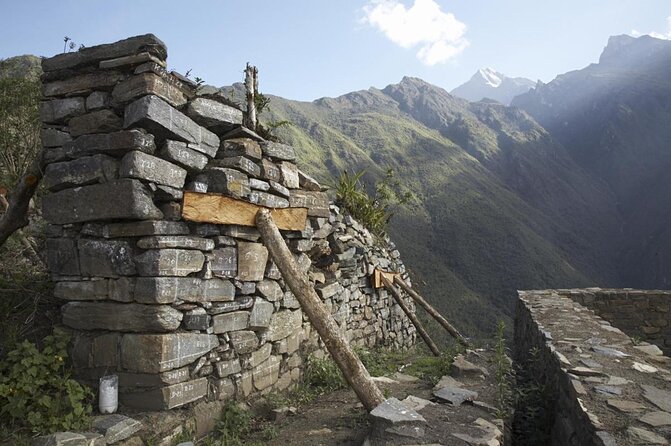
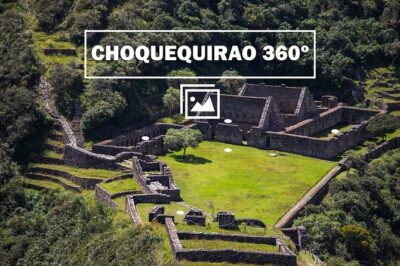
The archaeological area includes plazas, temples, agricultural terraces, and stone carvings of white llamas on the platforms. A guide can help you read the site rather than simply photograph it. This matters because the buildings are spread across a broad area, and the meaning of the terraces and ceremonial spaces is not always obvious on your own.
The setting is just as important as the stonework. From the trail, you look into the Apurímac Valley and toward Padreyoc and Qoriwayrachina. Condors may circle above the canyon. One person counted seven during the trek, though sightings are never guaranteed.
More Inca Trail Treks in Cusco
- Salkantay Trek Challenge – 3 Days / 2 Nights
★ 5.0 · 101 reviews - Choquequirao Trek 4 days and 3 nights
★ 5.0 · 81 reviews - Machu Picchu: 5-Day Salkantay Trek with Panoramic Train
★ 5.0 · 79 reviews
Day 1: Cachora, Capuliyoc, and the long drop to Chiquisca
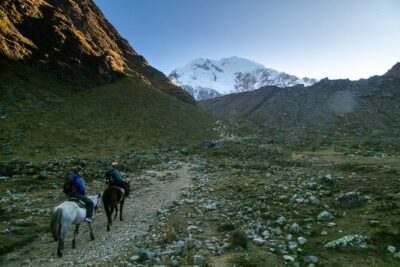
Your day begins very early, with hotel pickup in Cusco around 4:00 or 4:30 a.m. That early start allows the private vehicle to reach Cachora, where you may see the Salkantay and Humantay glaciers. The transfer is part of the deal, but it also means your first day starts before dawn, so plan a quiet evening before departure.
After breakfast, you continue to Capuliyoc. This is where you meet the cooks and muleteers who handle the camp operation. You hand over the personal duffel carried by the support team, with a limit of 5 kilograms or 11 pounds. Pack that small bag carefully because you will still carry your daypack, water, rain gear, and anything you need during the walk.
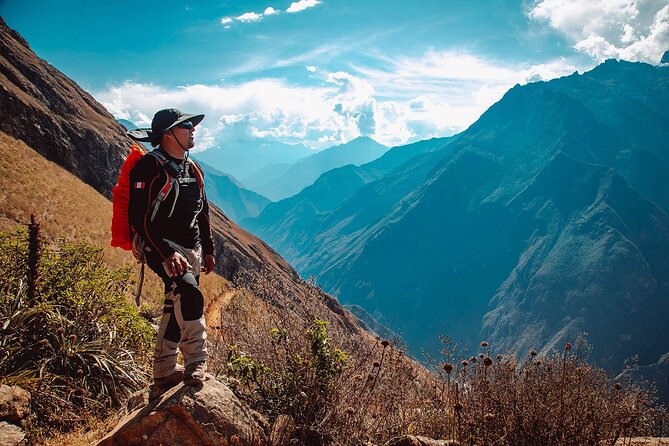
From Capuliyoc, the trail drops for about three hours toward Chiquisca. This is not a gentle warm-up. The descent puts strain on your knees, and the dry mountain air can make the route feel hotter than expected. The views help: the Apurímac Valley opens below, with steep slopes and large mountain walls around it.
The route passes fruit-growing areas near Chiquisca. If conditions are right, you may see condors above the valley. The first camp is warm and dry, surrounded by arid mountains. Dinner is prepared by the cook, and you sleep at camp after a long first day.
The combination of an early vehicle transfer and a major descent makes this day tougher than its simple schedule suggests. Trekking poles are not included, so bring your own if you use them. A sleeping bag is also excluded.
Day 2: Crossing the Apurímac River and climbing to Marampata
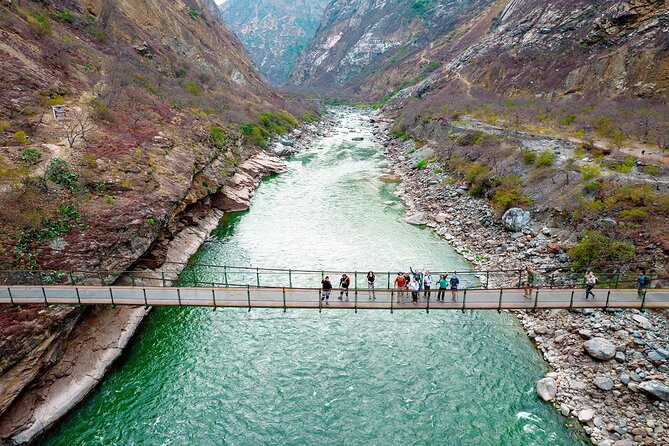
Day two is the key physical test. After breakfast at Chiquisca, you descend for about an hour to Playa Rosalinas, the lowest point in the valley. The route crosses a footbridge, and then the trail turns sharply upward.
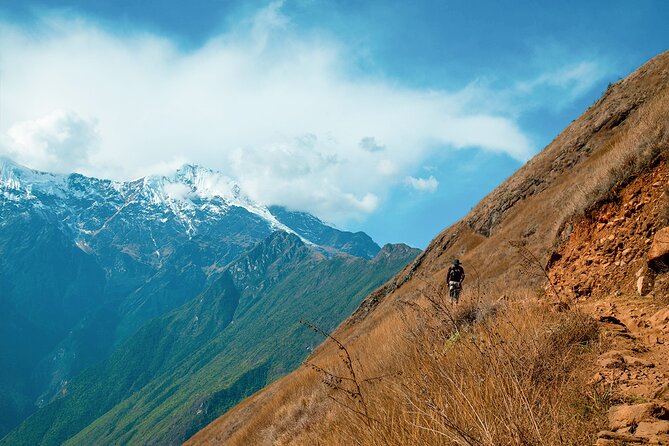
This is where the trek earns its reputation. You climb through zigzagging sections toward Santa Rosa, with roughly three more hours of uphill walking after lunch before reaching Marampata. The schedule lists several shorter blocks, but you should think of the day as a sustained descent, river crossing, and long climb.
Marampata gives you the reward of altitude gained: broad views into some of the deepest canyons in the region. Late afternoon light can turn the mountains and Apurímac Valley orange. At night, the remote camp offers a clear sky when weather allows.
The support team matters most on a day like this. Guides have been praised for giving morning and evening briefings, checking on people during the climb, and keeping the group moving without treating the slowest person as a problem. Franz was especially attentive to a gluten-free diet, which is useful evidence that dietary requests are taken seriously when you give advance notice.
The tour has a maximum group size of 12 in the additional information, while the included details describe a small group of up to 10. Ask for the confirmed group limit when booking. Either way, this is a much more personal setup than a large coach excursion.
Day 3: A full day at Choquequirao
From Marampata, the citadel is about an hour away on foot. After breakfast, you head to Choquequirao with your guide and spend the day exploring the complex.
This generous amount of time is one of the strongest features of the route. You are not rushing through a short photo stop. You can walk among the plazas, study the agricultural terraces, and visit the carved llama designs on the platforms. The guide explains the architecture and the Inca use of the site, while the mountain setting gives you a sense of why this place is so hard to reach.
A picnic lunch gives you a break during the visit. Bring sun protection, water, and a light layer because the day combines exposed walking with cooler high-altitude conditions. Your guide can also help pace the visit so that you still have energy for the return to Marampata.
The citadel is larger than Machu Picchu in area, according to the tour description, but the comparison should not lead you to expect the same type of visit. Choquequirao is spread through a mountain setting and has much less of the polished visitor infrastructure associated with Machu Picchu. Its appeal is the sense of scale, isolation, and unfinished archaeological work.
You return to Marampata for dinner and another night at camp. This day is long, but it is also the emotional center of the trek. After two hard days, you finally see the site that motivated the climb.
Same trailhead, a longer or shorter day out:
- From Cusco: 7 Lakes Ausangate Trek with Breakfast and Lunch
★ 4.8 · 360 reviews - Cusco: Full-Day Rainbow Mountain & Red Valley Trekking Tour
★ 4.5 · 121 reviews - From Cusco: Rainbow Mountain Trek
★ 4.5 · 98 reviews - Ancascocha Trek To Machu Picchu 4 Days And 3 Nights
★ 5.0 · 77 reviews
Day 4: Retracing the canyon route
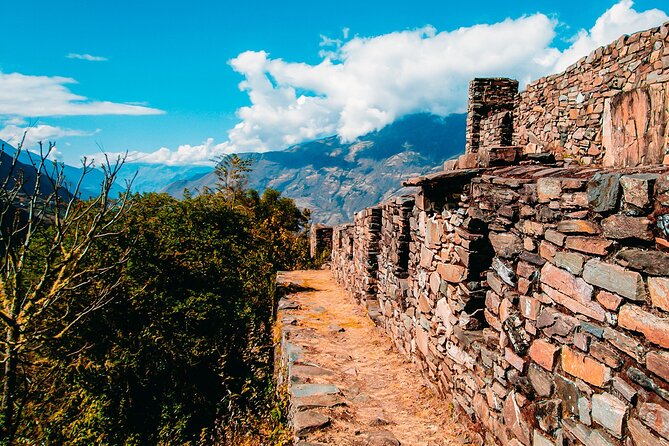
There is no easy way out of Choquequirao. Day four reverses much of the route, beginning with the walk away from the citadel and the last canyon view from Marampata.
You descend for about two hours through lush vegetation toward Santa Rosa, where lunch is served. The change from dry slopes to greener sections gives the route welcome variety, but the downhill walking can be hard on tired legs.
At Playa Rosalinas, you can cool off in the cold waters of the Apurímac River before continuing toward Chiquisca. The river stop is optional in spirit, since cold water and fatigue will not appeal to everyone. It can be refreshing, but do not count on it as a long swimming break.
At Chiquisca, a local family welcomes the group into their home. This is one of the more personal parts of the route because it connects the trek with daily Andean customs and the relationship with Pachamama, or Mother Earth. You have dinner and rest at the campsite afterward.
The day can feel repetitive because you are walking back over familiar ground. That is the tradeoff for seeing Choquequirao without taking a much longer one-way route. A good guide helps by explaining details you missed on the way in and by keeping the group’s morale steady.
Day 5: Capuliyoc, Saywite, and Cconoc hot springs
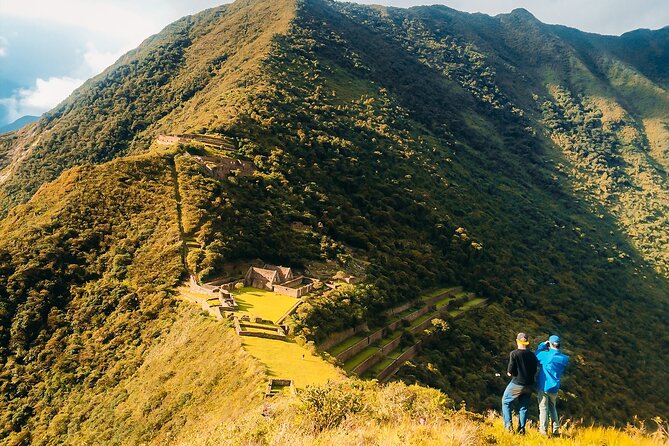
The final walking day begins early, partly to avoid the strongest sun. The sound of the Apurímac River accompanies the first section as you walk for about two hours before continuing for roughly four hours to Capuliyoc.
This final hike is not a token stroll. After the earlier climb and the return from Choquequirao, your legs will feel the distance. At Capuliyoc, you say goodbye to the cooks, muleteers, and porters who carried the camp equipment and personal duffels.
Private transport then takes you to Saywite. The Saywite Monolith has more than 200 carved figures and was valued as a sacred Inca site. It is a worthwhile addition because it gives you one last cultural stop after several days focused on trekking and ruins.
The final stop is Cconoc, where you can bathe in hot springs before lunch. This is smart trip design. Your body gets a chance to relax before the drive back to Cusco, and the hot springs break up the return journey.
You reach Cusco around 6:00 p.m. and transfer to your accommodation. Dinner that night is not included, so keep money and energy for a meal after arrival.
Camping, food, and what the price covers
At $735 per person, the trek is not priced like a basic self-guided hike. The value comes from the amount of service carried into a remote route.
Included support covers a licensed bilingual guide, private transport, hotel pickup and drop-off, camping equipment, a cook, a dining tent, chairs, porters, muleteers, a duffel bag, snacks, water, tea time, and daily breakfasts, lunches, and dinners. The crew also carries emergency equipment, including a first aid kit, oxygen, walkie-talkies, and satellite phones.
The tents are described as high-quality tents for two people, with private camping equipment and an inflatable mattress. Hygiene supplies include a small towel and soap. A portable travel toilet is also provided, which is a practical comfort in a remote camp.
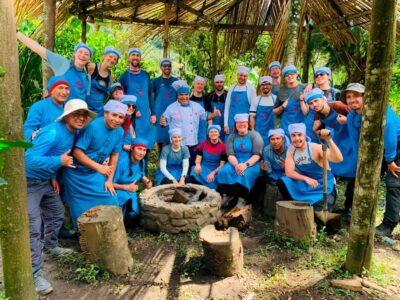
Food appears to be one of the strongest parts of the service. The cooks have prepared full meals, snacks, tea, and even fresh cakes for some groups. Vegetarian and vegan meals are available if you request them when booking.
There is one detail to clarify. The inclusions say three nights of camping, while the route describes overnight camps at Chiquisca, Marampata, Marampata, and Chiquisca across four nights. Ask the operator to confirm the exact sleeping arrangement before you pay.
You still need to bring or rent a sleeping bag and trekking poles. Your personal hiking clothes, footwear, travel insurance, and other gear are also your responsibility.
Who should book this trek
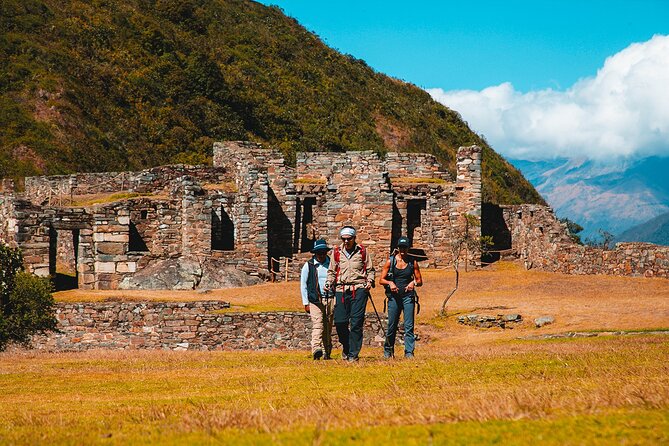
I would recommend this trip to fit hikers who want an archaeological visit earned through effort. You should be comfortable walking for six to 11 hours a day, handling steep uphill and downhill sections, and camping for several nights.
It suits people who value a strong support crew. The guides have been praised for humor, motivation, history talks, and careful attention to individual needs. Guido, George, Carlos, Franz, Roman, Caesar, and Anthony are among the guides singled out for encouragement and organization.
This is not a good choice if you want short walks, hotel rooms, or a relaxed sightseeing schedule. The high altitude, heat, rough trail, early starts, and repeated climbs can overwhelm anyone who arrives unprepared.
Children aged 12 and over may join, but they must stay with a responsible adult. Everyone should have good health and physical fitness. Service animals are allowed, though the remote trail and camping conditions may require careful planning.
Booking, timing, and cancellation details
You need to provide each participant’s passport name, number, expiry date, and country at booking. Make sure your passport is current for the travel date.
Confirmation is sent within 48 hours, subject to availability. The start time is around 4:00 a.m., and hotel pickup and drop-off are included.
The experience is non-refundable and cannot be changed after booking. If poor weather or an insufficient minimum group causes cancellation, you are offered another date or experience, or a full refund. Travel insurance is recommended because your own cancellation or medical problems are not listed as refundable reasons.
Should you book the Classic Choquequirao Trek?
Book it if you want a demanding Andes trek with a full day at one of Peru’s most remote major Inca sites. The combination of Choquequirao, canyon views, condor possibilities, Saywite, hot springs, and a capable support team gives the $735 price real value.
Skip it if you are not ready for steep climbs, long descents, early starts, and four nights of camping. Arrive in Cusco two days early, train with hills before the trip, and confirm the number of camping nights, group size, sleeping bag arrangements, and dietary needs before booking. For the right hiker, this is a tough but memorable route, with the ruins as the reward and the people around you making the hard sections possible.
FAQ
How long is the Choquequirao trek?
The trek lasts approximately five days and four nights, beginning and ending in Cusco.
What time does the tour start?
Hotel pickup begins around 4:00 a.m., with the itinerary also describing a departure from Cusco around 4:30 a.m. Confirm the exact pickup time with the operator.
How high is Choquequirao?
The archaeological site is located at about 3,050 meters, or 10,007 feet.
How fit do I need to be?
You need a strong physical fitness level. The route includes long descents, steep uphill sections, several hours of walking each day, and repeated climbs through the Apurímac Valley.
How many people can join the tour?
The experience is described as a small-group tour for up to 10 people. Additional information gives a maximum of 12, so confirm the final group limit when booking.
Is camping equipment included?
Yes. Camping equipment, tents, an inflatable mattress, a bag cover, a rain poncho, a dining tent, chairs, and a portable travel toilet are included.
Is a sleeping bag included?
No. You need to bring or arrange your own sleeping bag. Trekking poles are also not included.
Are meals included?
Yes. The package includes five breakfasts, five lunches, and four dinners, along with water, tea time, and daily trail snacks. Dinner in Cusco on day five is not included.
Can I request vegetarian or vegan food?
Yes. Vegetarian and vegan options are available, but you should request them when booking.
Are the entrance fees included?
Entrance to Choquequirao, Saywite, and the Cconoc hot springs is included according to the tour details.
More 5-Day Experiences in Cusco
- Ausangate Trek 5 Days
★ 5.0 · 74 reviews - Ultimate Lares Trek & Inca Trail 5 days
★ 5.0 · 47 reviews - Salkantay Trek To Machu Picchu 5 Days And 4 Nights
★ 5.0 · 44 reviews - 5-Day: Salkantay Trek to Machupicchu and Humantay Lake
★ 5.0 · 42 reviews
Recently added around Cusco
- 5 Day – Salkantay trek to Machu Picchu – Group Service★ 4.5 · 27 reviews
- Small Group: 4-Day Inca Trail Trek to Machu Picchu★ 5.0 · 33 reviews
- 6 day Rainbow Mountain x Ausangate Trek – FlashpackerConnect★ 5.0 · 30 reviews
- Salkantay Trek: 5 Days to Machu Picchu★ 5.0 · 33 reviews
- Salkantay 5-Day Trek To Machu Picchu★ 5.0 · 39 reviews
- Inca Trail Trek to Machu Picchu – 2 Days (Small Group or Private)★ 5.0 · 31 reviews
- Humantay Lake Full-Day Adventure: Scenic Trek and Stunning Views★ 4.5 · 39 reviews
- Ausangate and Rainbow Mountain Trek – 3 Days / 2 Nights★ 5.0 · 35 reviews
Machu Picchu & Inca Trail Treks, compared.
Machu Picchu: 5-Day Salkantay Trek with Panoramic Train
Read our review →
Ancascocha Trek To Machu Picchu 4 Days And 3 Nights
Read our review →
4 Day Inca Trail Trek to Machu Picchu Multi day tour
Read our review →
Salkantay Trek 4 Days to Machu Picchu by Glamping Sky Lodge Dome
Read our review →
Browse the lists this tour appears in