
REVIEW · CUSCO
Salkantay Trek: 5 Days to Machu Picchu
The mountains set the pace here. This five-day Salkantay Trek trades the Inca Trail’s tighter crowds for Humantay Lake, Salkantay Pass, and a changing trail from high Andes to rainforest. I like the small maximum group of 12 and the strong support system, including horses for gear, an emergency horse, cooking staff, tents, sleeping bags, and a guide.
I also like the way the route builds toward Machu Picchu instead of rushing straight there. The food earns repeated praise, and guides such as Carlos, Nico, Juan de Dios, Diego, Daniel, and Alvina are described as warm, organized, funny, and well informed about local culture and nature. The main caution is simple: this is a serious mountain walk, especially on the first two days, with a 4,650-meter pass and long descents.
Key points at a glance
- Salkantay Pass reaches 4,650 meters, making altitude preparation essential.
- Humantay Lake arrives on day one, after an early start and an uphill walk.
- The first two days are the toughest, with long hours and steep climbs or descents.
- Camping lasts three nights, with a hotel night in Aguas Calientes.
- Meals and camp support are major strengths, including a cook, muleteers, mattresses, sleeping bags, and hot drinks.
- The $909 price includes the train and return transport, but not Machu Picchu shuttle buses, insurance, tips, or some meals.
Why choose Salkantay instead of the Inca Trail?
Salkantay offers a bigger change of scenery. You begin among high mountain peaks and cold open slopes, then move through warmer valleys, coffee plantations, orchids, bromeliads, and tropical vegetation before reaching Machu Picchu.
That variety is the heart of the trip. On the Inca Trail, the focus is on Inca pathways and ruins. On Salkantay, the appeal is the combination of mountain drama, rural trail life, changing temperatures, and the final approach through Aguas Calientes.
You also avoid the feeling of walking in a single long line. The maximum group size is 12, which is small enough for a guide to keep track of everyone and explain the surroundings without shouting across a crowd.
Still, quieter does not mean easy. The route climbs to 4,650 meters, and the second day alone is listed at about 10 hours. I would not choose this trek simply because you want an alternative to a busy classic route. Choose it because you are ready for a demanding hike.
More Inca Trail Treks in Cusco
- Salkantay Trek Challenge – 3 Days / 2 Nights
★ 5.0 · 101 reviews - Choquequirao Trek 4 days and 3 nights
★ 5.0 · 81 reviews - Machu Picchu: 5-Day Salkantay Trek with Panoramic Train
★ 5.0 · 79 reviews
Day one: Humantay Lake and the first high camp
Your day begins at about 4:30 am with pickup in Cusco. That early departure allows the group to reach Mollepata around 7:30 am, where breakfast is served and you can hand up to 5 kilograms of personal belongings to the muleteers.
The road then continues to Challacancha, at about 3,380 meters. From there, you walk for roughly three hours to Soraypampa, at about 3,900 meters. Lunch comes at camp, followed by the walk to Humantay Lake.
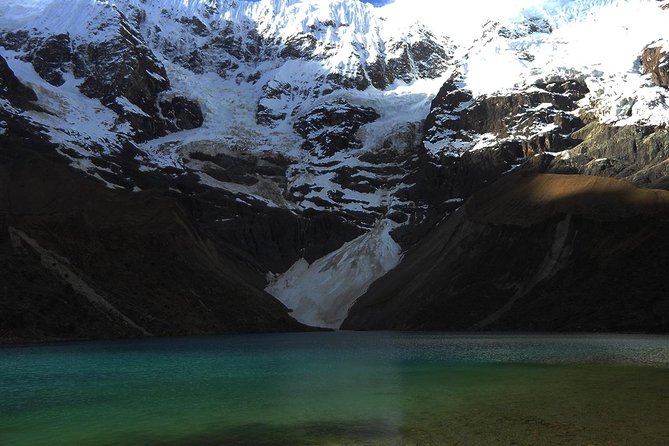
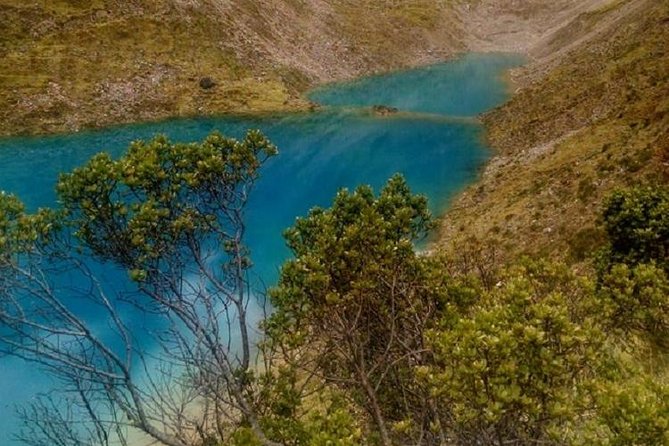
Humantay is a fine first reward. The lake sits beneath snow-covered peaks, and the route gives you an immediate taste of the high Andes. It also makes the altitude impossible to ignore. You gain height quickly, so keep your pace slow and drink water.
The listed walking time for the day is about five hours, but the early start and the altitude make it feel longer. Breakfast on day one is not included, so plan for that detail. The tour provides water after the first four hours of trekking, but you need to bring your own supply at the beginning.
You return to the campsite after visiting the lake. The camping setup includes a personal double tent, an inflatable Therm-a-Rest mattress, a sleeping bag rated to minus 5 degrees Celsius, a blanket, and a pillow. A four-person tent is used for two people, leaving room for backpacks and making the night less cramped than basic trekking camp.
Day two: Salkantay Pass is the real test
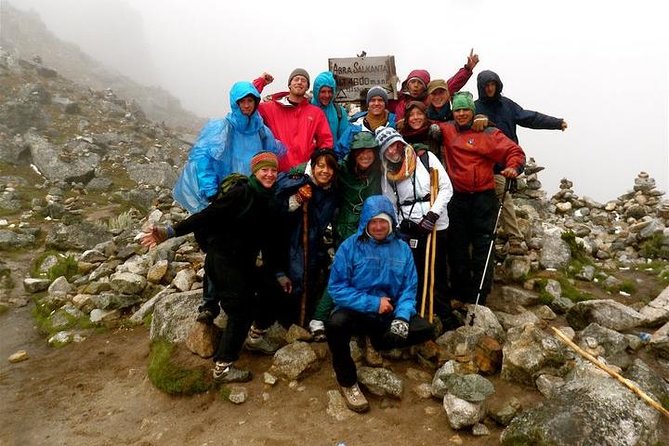
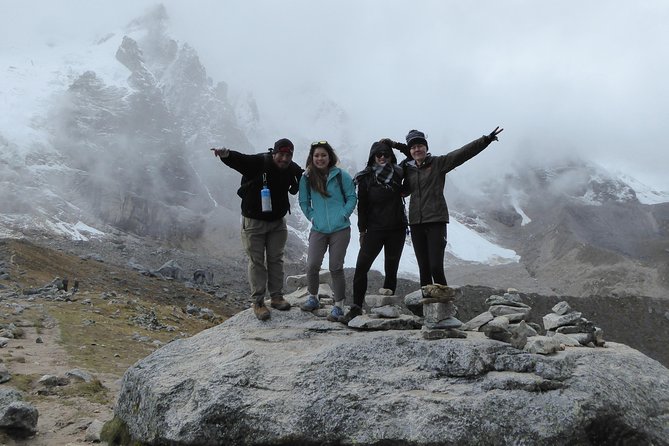
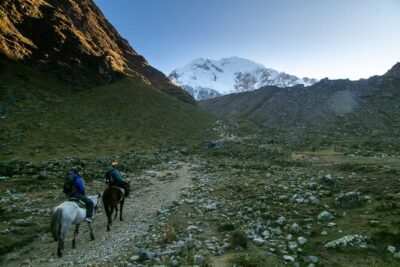
Breakfast comes at 5:00 am, and this is the day to take seriously. From Soraypampa, the trail climbs toward Abra Salkantay, the highest point of the trek at about 4,650 meters.
The climb takes roughly three hours. Along the way, you pass Salkantaypampa and Soyrococha, with views toward Salkantay, Humantay, Tucarhuay, and Pumasillo. At the pass, the mountains feel large and close, and the open high-altitude setting is very different from the warmer country later in the trip.
After the pass, you descend to Huayracmachay, around 3,800 meters, for lunch. The descent continues to Chaullay, around 2,900 meters, where the campsite is located.
The whole day is listed at about 10 hours. That figure matters more than any marketing language. You need stamina, layers, rain protection, and patience. The uphill section can be slowed by altitude, while the long descent can trouble knees and ankles.
One person described needing help on the steep descents and renting horses along the way. That is useful information, not a sign of failure. The tour includes an emergency horse that can be ridden if you feel ill or fall behind, and additional horse rental may be possible along the route. If your knees are uncertain, trekking poles are included and worth using.
This is also the day when the guide matters most. Guides named in the feedback, including Nico, Daniel, Juan de Dios, and Diego, were praised for staying attentive, explaining the route, and helping people manage difficult sections. Your assigned guide may differ, but the support team is a key part of the package.
Day three: From mountain trail to Santa Teresa
The route changes character on day three. After breakfast at 6:00 am, you walk for about five and a half hours through the upper rainforest zone, with moderate climbs and descents.
The plants become a major part of the experience. You may see coffee plantations, orchids, bromeliads, and plants used in local natural medicine. This is a good day to slow down and notice the details that disappear when you focus only on reaching camp.
The walk ends at Playa Sahuayaco, where lunch is served. Transport then takes you to the Santa Teresa campsite. This break from walking is welcome after the long day before.
Santa Teresa offers an optional visit to the Cocalmayo hot springs. The entrance fee is not included, so you should budget separately if you want to go. The itinerary also mentions a choice between a hot springs visit and an archaeological site, but the day-by-day details specifically describe Cocalmayo. Confirm the current option during your briefing.
The climate will be warmer here, and mosquitoes become a practical concern. Bring insect repellent and light, long clothing. This is one of the few points where the trip’s tropical section asks for a different kit from the cold mountain days.
Tea and dinner are served at about 6:00 pm. The cooks receive some of the strongest praise across the experience. Several guide and cook teams are named, including Leoncio, Clemente, Louis, Jesus, and other camp staff. The meals are not an afterthought, and vegetarian food is available at no extra cost if you request it when booking.
Same trailhead, a longer or shorter day out:
- From Cusco: 7 Lakes Ausangate Trek with Breakfast and Lunch
★ 4.8 · 360 reviews - Cusco: Full-Day Rainbow Mountain & Red Valley Trekking Tour
★ 4.5 · 121 reviews - From Cusco: Rainbow Mountain Trek
★ 4.5 · 98 reviews - Ancascocha Trek To Machu Picchu 4 Days And 3 Nights
★ 5.0 · 77 reviews
Day four: Walking beside the railway to Aguas Calientes
Day four moves through warmer country toward the base town for Machu Picchu. After breakfast, you travel toward Hydroelectric, where lunch is served at a restaurant.
From Hydroelectric, you walk through the tropical zone to Aguas Calientes. This section is less about high mountain views and more about the feeling of nearing the famous ruins. After several days of camping, reaching a hostel or hotel in town gives you a useful change of pace.
Dinner with the guide is scheduled for 6:30 pm. The group then prepares for the final day, including the timing for the Machu Picchu visit.
The day is listed at about five hours, but the exact feel depends on the pace and transport arrangements. Keep your small daypack organized. You will want water, a rain layer, sun protection, and only the essentials for the citadel visit.
One practical point deserves attention: the package includes a hotel night in Machu Picchu, while the detailed schedule refers to lodging in Aguas Calientes. These names describe the same gateway town for practical purposes, but you should confirm the exact property before departure.
Day five: Machu Picchu before the return journey
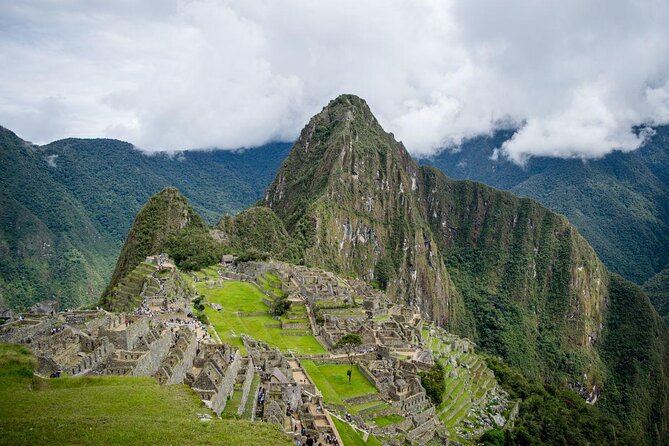
You wake early for Machu Picchu. The visit includes a guided tour of the citadel, with temples, terraces, palaces, and platforms, followed by time to take photographs and explore on your own.
The guided portion is listed at about two hours. That is enough for an introduction, but not an entire day of wandering. If you want more time at the site, ask during the pre-trek briefing how much free time is available and what your entry schedule permits.
The package does not include the shuttle bus between Aguas Calientes and Machu Picchu. A one-way ride is listed at $12, or $24 round trip. You may instead walk between the town and the citadel, but the tour information does not provide details about that option, so confirm the current arrangements.
At the proper time, you descend to Aguas Calientes and board the tourist train to Ollantaytambo. A representative meets you there, and the included tourist bus continues to Cusco, with drop-off at your hotel.
Lunch on the final day is not included. Keep cash or another payment method ready for that meal, the shuttle bus, tips, hot springs, insurance, and other extras.
What the $909 price really covers
At $909, this is not a cheap day trip, but it covers a lot of expensive moving parts. You receive four breakfasts, four lunches, four dinners, and four afternoon hot drinks, plus a professional bilingual guide and cook.
The support equipment is another reason the price can make sense. The package includes horses and muleteers to carry food, cooking gear, camping equipment, and up to 7 kilograms of your belongings. The information also refers to 5 kilograms at the first breakfast, so confirm the exact baggage allowance before you pack.
You receive tents, mattresses, sleeping bags, blankets, pillows, a duffel bag, hiking poles, daily water after the first four hours, and transport from the trailhead. The train from Aguas Calientes to Ollantaytambo and the tourist bus to Cusco are also included.
The value is strongest if you would otherwise need to rent camping gear, arrange baggage transport, buy meals, and organize the train separately. It is less attractive if you want a private trek, a luxury camp, or a short and gentle route.
The package does not include travel insurance, Huayna Picchu entry, the Machu Picchu shuttle bus, breakfast on day one, lunch on day five, or tips. The Huayna Picchu entrance is listed at $25. Build those costs into your real budget.
Food, guides, and group support
Food is one of the clearest strengths. The cooks are repeatedly praised for generous, creative meals, with one group even describing six-course cooking. That should not lead you to expect restaurant service at every camp, but it does suggest that meal quality is treated as part of the experience.
Vegetarian meals are available without an added fee. Tell the company when you book, not after you arrive in the mountains.
Guide quality can shape the entire trip. Carlos is praised for excellent English and strong knowledge of the mountains and Inca culture. Nico is described as attentive and willing to arrange extra help, including massages in Aguas Calientes. Juan de Dios, Diego, Daniel, Alvina, Jennifer, and Edy also receive warm comments for patience, humor, organization, and support.
Because the guide assigned to you is not guaranteed in advance, focus on the company’s support structure rather than booking solely for one name. The small group size, emergency horse, cooks, muleteers, and pre-trek briefing all help when the walking becomes hard.
What to pack for five changing days
Pack for cold, wet, sunny, and humid conditions. The first two days are high and exposed, while the final three days are warmer and more tropical.
Useful items include:
- A warm layer, gloves, and a hat for the high pass
- Waterproof clothing and sturdy walking shoes
- Insect repellent for Santa Teresa and the rainforest section
- Sun protection, including a hat and sunscreen
- A refillable water bottle for the opening hours before water is supplied
- Personal altitude-sickness medicine, after consulting your doctor
- A small daypack, with the main belongings placed in the provided duffel
- Cash for shuttle buses, hot springs, lunch, tips, and other extras
You should have moderate physical fitness. The minimum age is listed as four, but the route length and altitude make the practical question less about age and more about stamina, health, and comfort with long mountain days.
Who should book this Salkantay Trek?
I would recommend it to you if you want Machu Picchu as part of a real multi-day journey, enjoy dramatic mountain scenery, and accept basic camping in exchange for a changing route.
It suits active couples, friends, and mixed-age groups who can manage a long day at altitude. One group included a 65-year-old couple alongside five younger adults, showing that age alone is not the deciding factor. Your knees, lungs, and preparation matter more.
I would hesitate if you dislike early mornings, shared camp routines, steep descents, mosquitoes, or uncertain weather. The trek becomes easier after the first two days, but it never becomes a relaxed sightseeing tour.
The cancellation policy is strict close to departure: cancel at least six full days before the start for a full refund, two to six days before for a 50 percent refund, and within two days for no refund. Confirmation is sent within 48 hours, subject to availability.
Should you book it?
Yes, if you want a demanding but well-supported route to Machu Picchu with huge scenery, strong food, and a small group. The $909 cost is reasonable when you count the guide, cook, camp equipment, baggage horses, meals, train, and return transport.
I would book only after checking your altitude readiness, confirming the baggage limit, and adding the unlisted extras to your budget. If you prepare for the first two days rather than treating this as a casual trek, Salkantay gives you a memorable route that feels much larger than the final visit to Machu Picchu alone.
FAQ
How long is the Salkantay Trek?
The experience lasts approximately five days, beginning with a 4:30 am pickup from Cusco and ending with transport back to your Cusco hotel.
What is the highest point of the trek?
The highest point is Abra Salkantay at approximately 4,650 meters.
How difficult is the trek?
You should have a moderate level of physical fitness. The first two days are the hardest, with day two lasting about 10 hours and including a high pass plus a long descent.
How many people are in the group?
The maximum group size is 12 people.
How much luggage can the horses carry?
The package includes horse support for up to 7 kilograms of each passenger’s belongings. The first morning also refers to leaving 5 kilograms with the muleteers, so confirm the exact allowance before departure.
Where do you sleep during the trek?
You spend three nights at campsites and one night in a hotel or hostel in Aguas Calientes, also referred to as Machu Picchu town.
Are meals included?
Four breakfasts, four lunches, four dinners, and four afternoon hot drinks are included. Breakfast on day one and lunch on the final day are not included.
Is vegetarian food available?
Yes. Vegetarian meals are available at no additional cost, but you should request this when booking.
Is the Machu Picchu shuttle bus included?
No. The shuttle bus between Machu Picchu and Aguas Calientes costs $12 one way or $24 round trip.
More 5-Day Experiences in Cusco
- Ausangate Trek 5 Days
★ 5.0 · 74 reviews - Classic Choquequirao Trek – 5 Days / 4 Nights
★ 5.0 · 52 reviews - Ultimate Lares Trek & Inca Trail 5 days
★ 5.0 · 47 reviews - Salkantay Trek To Machu Picchu 5 Days And 4 Nights
★ 5.0 · 44 reviews
Recently added around Cusco
- Small Group: 4-Day Inca Trail Trek to Machu Picchu★ 5.0 · 33 reviews
- 5 Day – Salkantay trek to Machu Picchu – Group Service★ 4.5 · 27 reviews
- 6 day Rainbow Mountain x Ausangate Trek – FlashpackerConnect★ 5.0 · 30 reviews
- Humantay Lake Full-Day Adventure: Scenic Trek and Stunning Views★ 4.5 · 39 reviews
- Salkantay 5-Day Trek To Machu Picchu★ 5.0 · 39 reviews
- Inca Trail Trek to Machu Picchu – 2 Days (Small Group or Private)★ 5.0 · 31 reviews
- Ausangate and Rainbow Mountain Trek – 3 Days / 2 Nights★ 5.0 · 35 reviews
- 4-Day Lares Trek to Machu Picchu★ 5.0 · 30 reviews
Machu Picchu & Inca Trail Treks, compared.
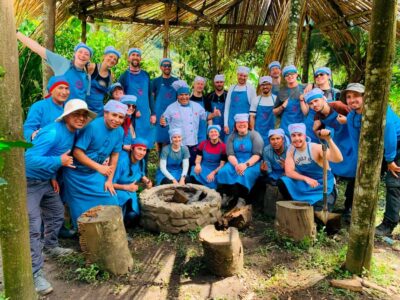
Machu Picchu: 5-Day Salkantay Trek with Panoramic Train
Read our review →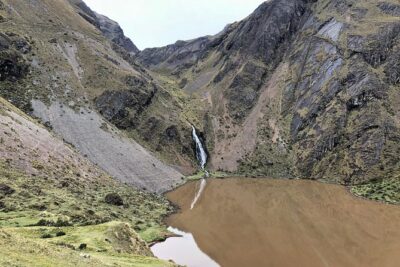
Ancascocha Trek To Machu Picchu 4 Days And 3 Nights
Read our review →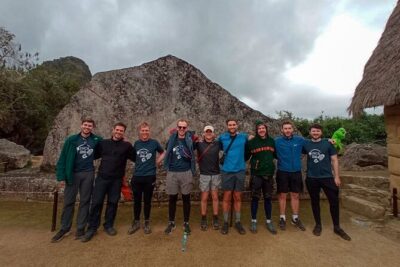
4 Day Inca Trail Trek to Machu Picchu Multi day tour
Read our review →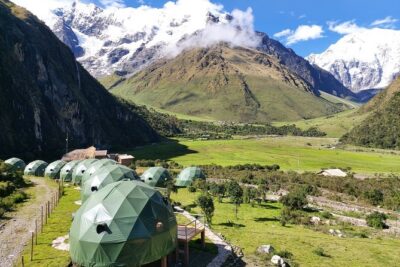
Salkantay Trek 4 Days to Machu Picchu by Glamping Sky Lodge Dome
Read our review →
Browse the lists this tour appears in