
REVIEW · SAPA
Sapa: Ta Phin Village Trek & Red Dao Herbal Bath
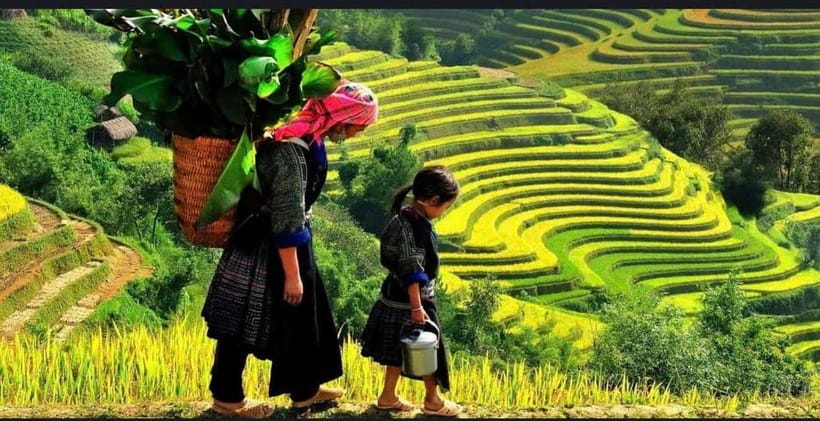
Sapa gets quieter beyond the town. This six-hour walk links Suoi Ho, Ma Tra, and Ta Phin, giving you rice terraces, pine woods, village life, and a traditional Red Dao herbal bath in one well-priced day. I especially like the small group size, limited to 10 people, and the chance to hear local stories from guides such as Su and Gao. I also like that the route ends with a hot herbal soak instead of a rushed ride back to town.
The main consideration is the trek itself. At roughly 12 to 14 kilometers, it is rated easy to moderate, but that is still a full day on foot. The route suits most reasonably fit people, yet it is not suitable for children under six or people with mobility impairments. Comfortable shoes and a fair level of stamina matter.
Key points at a glance
- Three village route: Walk through Suoi Ho, Ma Tra, and Ta Phin rather than visiting only one community.
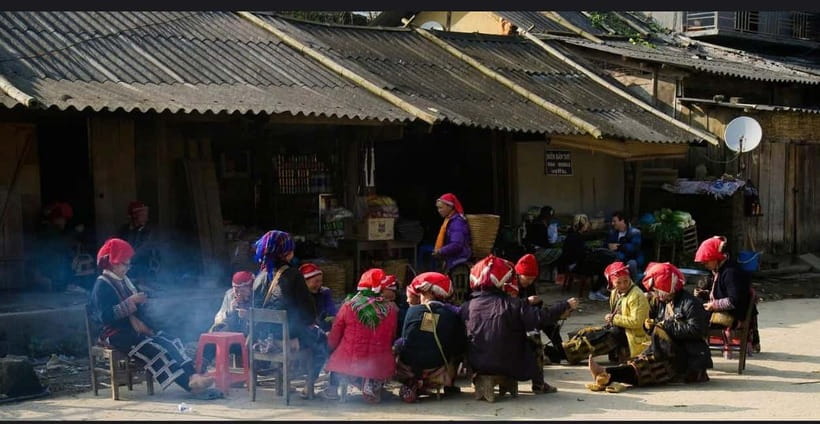
- Black H’mong and Red Dao culture: Learn about farming, family life, crafts, embroidery, and herbal medicine.
- A low-tourism feel: The route passes through quieter rural areas around Sapa, with plenty of ordinary village life.
- Lunch with a view: Eat a picnic or a homestay meal featuring traditional Vietnamese dishes.
- Red Dao herbal bath: Finish in a wooden tub filled with aromatic herbs, a soothing reward after the walk.
- Strong value at $26: The price covers the guide, food, bath, and transport back to Sapa.
Why this six-hour Sapa trek is worth your time
Sapa is famous for its mountain scenery and rice terraces, but it is easy to spend your whole visit around the town center and the busiest viewpoints. This route takes you outward on foot, where the pace slows and the setting becomes more rural.
I like the balance here. You get enough walking to feel that you have seen the area properly, but you are not committing to a demanding multi-day hike. You also get a clear cultural focus, with time to ask questions about crops, farming, food, family life, crafts, and traditional medicine.
At $26 per person, the price is strong. It includes a local guide, lunch or a homestay meal, the herbal bath, and the car ride back to Sapa. That means you are not paying separately for the day’s main parts. Personal expenses are not included, so bring some extra cash if you want to buy anything locally, though no purchases are required.
The small group limit is important. With no more than 10 participants, the guide can usually answer questions and keep the group together without the feel of a large coach excursion. Guides Su and Gao have been praised for explaining local customs clearly, and Su is noted for speaking very good English and even some French. Guide quality can shape this kind of day, since the villages become far more interesting when someone explains what you are seeing.
More Homestay Treks in Sapa
- Number one top rated ethical cultural trekking and homestay by ETHOS
★ 5.0 · 456 reviews - Sa Pa: 2-Day Trekking Trip with Ethnic Minority Homestay
★ 4.7 · 145 reviews - Sapa : 2-Day Trek & Heartwarming Homestay with an Ethnic Family
★ 5.0 · 143 reviews
Starting at Sapa Stone Church
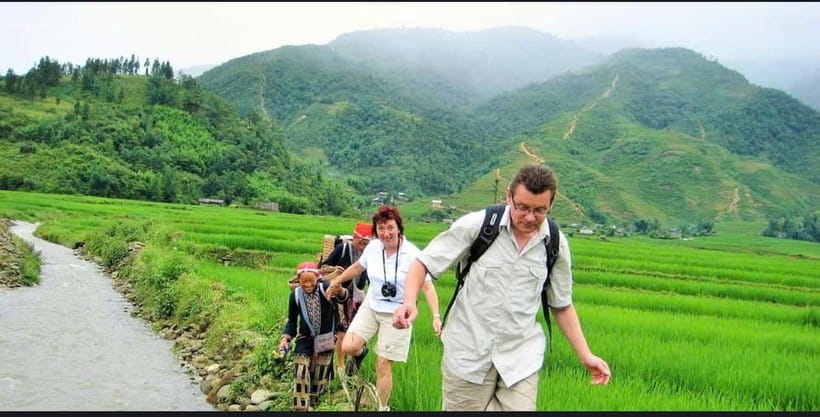
The day begins at Nhà Thờ Đá Sapa, commonly known as Sapa Main Church, at 9:00 in the morning. This is a simple meeting point in central Sapa, so you can reach it without arranging a separate hotel pickup.
After meeting your guide, you begin with a short walk toward Suoi Ho. The early part of the route helps you leave the town behind without starting with the hardest section. It also gives you time to settle into the walking pace and ask your guide about the communities ahead.
The tour is conducted in English or Vietnamese. If cultural questions are a main reason for booking, let your guide know early. The best parts of the day come from conversation, not simply from moving between photo stops.
Suoi Ho and the Black H’mong way of life
Suoi Ho is associated with the Black H’mong people. Here, the focus is daily life rather than a staged cultural show. You learn about traditional farming, animal husbandry, and the work that supports families in the area.
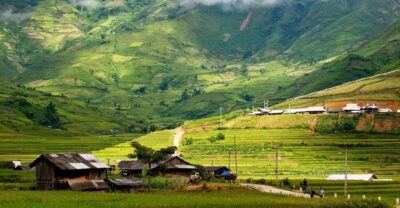
The walk passes through rice terraces and lush mountain scenery. Depending on the season, you might see fields at different stages of cultivation, but the supplied tour details do not promise a particular crop view or harvest scene. That is worth keeping in mind if you are visiting with one very specific photo in mind.
What I like about this stop is its ordinary quality. You are not just being taken to a viewpoint, then returned to a vehicle. You are given context for the fields and homes around you. The guide can help explain how crops are grown and harvested, which makes the scenery easier to understand.
You should also keep your expectations sensible. This is a rural walk, not a museum visit. The experience depends on the guide’s explanations and on what is happening in the villages that day. For that reason, a curious attitude will serve you better than a checklist of sights.
Ma Tra, village paths, and lunch
The trek continues to Ma Tra at about 10:30. The route remains mostly easy to moderate, with mountain views, terraces, and quieter paths. A school visit or a conversation with villagers may be part of this section, giving you another chance to learn about local customs and crafts.
The wording here matters: a school or conversation is listed as a possible part of the visit, rather than a guaranteed formal tour of a school. Either way, this part of the walk is less about grand monuments and more about seeing how communities function.
Lunch follows at about 11:30. Depending on the arrangement, you may have a picnic or eat at a local homestay. Traditional dishes are included, and the meal may be served with views over the surrounding hills. Some groups have enjoyed a homestay lunch, while another group had a fresh sturgeon hotpot. Vegetarian food options have also been available at a local restaurant.
Food quality can vary more than the route itself. One meal was described as tasty, while another was considered simply okay, though the setting was pleasant. I would treat lunch as a welcome local meal rather than a gourmet event. If you have dietary needs, tell the operator ahead of time, since the tour details only specifically confirm that vegetarian choices have been available.
More Homestay Treks in Vietnam
- Sapa Valley Trek and Homestay – 3D2N
★ 5.0 · 105 reviews - 2 days authentic trekking tour in Sapa ( Homestay – Less touristy )
★ 5.0 · 68 reviews - From Sapa: 2 Days 1 Night Trek Over Night At Homestay
★ 5.0 · 68 reviews - 3-Day Trek in Amazing Muong Hoa Valley & ethnic Homestay
★ 5.0 · 49 reviews
Ta Phin and Red Dao culture
After lunch, the walk continues toward Ta Phin, home to the Red Dao people. This is the cultural center of the day and the place where the trek moves beyond scenery into textile work and traditional remedies.
You can learn about Red Dao embroidery, local customs, and herbal medicine traditions. These subjects give the village visit more depth. Embroidery is not just a souvenir detail, and the herbal bath is not simply a spa treatment. Both connect to skills and practices that form part of local life.
The walking route to Ta Phin is described as picturesque and not especially hard, but it still adds to the day’s total distance. If you have already spent a morning hiking around Sapa, you will feel the accumulated miles. The final section may be physically manageable, yet tired legs are exactly why the bath works so well as the closing activity.
The route is also promoted as less touristy than some other places around Sapa. That does not mean you will have the villages entirely to yourself. It means the emphasis is on rural surroundings and local life, rather than a busy attraction packed with stops and sales pitches.
The Red Dao herbal bath
At around 2:00, you trade walking shoes for a traditional Red Dao herbal bath. You soak in a wooden tub filled with aromatic medicinal herbs. The bath is believed to ease muscle pain and improve circulation, making it a logical finish after 12 to 14 kilometers on foot.
This is the tour’s most unusual feature. Many Sapa day walks end with lunch or a drive, but this one gives you time to sit, warm up, and let your legs recover. The bath has been described as hot, calming, and especially welcome after the trek.
Do not expect a clinical medical treatment. The claims about pain relief and circulation are traditional beliefs, not a promise of a medical result. Still, the bath can be a pleasant cultural experience and a practical way to relax.
The bath temperature may feel very hot, so approach it at your own pace. If you do not enjoy hot water, this may be less appealing than it sounds. For most people who like a warm soak, though, it is a memorable ending and a good reason to choose this route over a standard village walk.
After the bath, transportation returns you to Sapa by car. The day normally ends around 3:30 in the afternoon, leaving your evening free.
How hard is the 12 to 14 kilometer walk?
The trek is rated easy to moderate, and most reasonably fit people should be able to manage it. That rating should not be confused with effortless. You are walking for much of the day through village paths, terraces, and mountain scenery, so your footwear and water supply matter.
I would bring:
- Comfortable walking shoes with a reliable grip
- Water
- Insect repellent
- Clothing suited to the weather
- A small daypack
The weather in Sapa can change, so layers are useful. The tour information does not specify the condition of every trail section, and rural paths can feel different depending on the season. Wear shoes you trust rather than casual sandals.
The tour is not suitable for children under six or people with mobility impairments. If you are unsure about your fitness, remember that the distance is the clearest warning sign. The walking is not described as technically difficult, but 12 to 14 kilometers is a serious outing for anyone unused to long walks.
What makes the guiding valuable
A guide is particularly useful on this route because the main attractions are cultural. Without explanation, a rice terrace is simply a beautiful field. With context, you can understand more about crops, harvesting, animal care, household life, and the differences between the Black H’mong and Red Dao communities.
Su has received especially strong praise for his English, his answers about food and family life, and his ability to explain local culture. He has also helped visitors with restaurant and local dish suggestions after the tour. Gao has guided the route as well and has been described as offering a pleasant day with village walks, lunch, and the bath.
Guide assignments can change, so you should not assume that Su will lead every departure. The useful point is that the tour is built around a live guide, not an audio recording or a self-guided route. Ask questions as you go. This is where much of the tour’s value lies.
Who should book this Sapa experience?
I would recommend it to you if you want a moderate day outside Sapa with a strong local focus. It works particularly well for couples, small groups, solo visitors who like meeting others, and anyone who wants more cultural explanation than an independent hike usually provides.
It is also a good choice if you want variety. The day includes walking, village visits, food, mountain views, conversation, and a bath. No single part lasts long enough to dominate the whole experience.
You may want a different outing if your priority is a strenuous mountain hike, a dramatic summit, or a tightly structured sightseeing schedule. The route is about rural life and conversation, not athletic achievement or a long list of famous landmarks.
The experience also suits visitors with one spare day in Sapa. The 9:00 start and 3:30 return give you a full excursion without consuming your entire evening. At the same time, the 12 to 14 kilometer distance means you should not plan another demanding hike for the same day.
Free cancellation up to 24 hours before departure and reserve-now, pay-later booking add flexibility. Those policies are useful if mountain weather or your wider Vietnam plans are still uncertain.
Final verdict: a strong-value village day
Book this tour if you want a quieter side of Sapa, a guide who can explain local life, and a relaxing ending. The strongest parts are the cultural conversations, the rural route through Suoi Ho, Ma Tra, and Ta Phin, and the Red Dao herbal bath.
Skip it if you dislike long walks, hot baths, or meals whose exact format may vary. For everyone else, $26 is a fair price for six hours that include a guide, food, the bath, and transport back to town.
My practical advice is simple: wear proper shoes, carry water, and save your questions for the guide. If you do that, this should give you a fuller sense of Sapa than a quick viewpoint stop ever could.
FAQ
Where does the Sapa trek begin?
The tour begins at Nhà Thờ Đá Sapa, also known as Sapa Main Church.
How long does the activity last?
The experience lasts about six hours. It begins at 9:00 in the morning and normally ends back in Sapa around 3:30 in the afternoon.
How far do you walk?
The trekking distance is approximately 12 to 14 kilometers.
Is the trek difficult?
The trek is rated easy to moderate and is suitable for most fitness levels. You still need reasonable stamina because it is a full day of walking.
Which villages does the route visit?
The route passes through Suoi Ho, Ma Tra, and Ta Phin. Suoi Ho is associated with the Black H’mong people, while Ta Phin is home to the Red Dao community.
Is lunch included?
Yes. The tour includes either a picnic lunch or a meal at a local homestay. Traditional dishes are served, and vegetarian options have been available.
What is included in the price?
The $26 price includes a local guide, lunch or a homestay meal, the traditional Red Dao herbal bath, and transportation back to Sapa.
Who should not join this trek?
The activity is not suitable for children under six or people with mobility impairments.
More Homestay Treks in Sa Pa
- Muong Hoa Valley Trek & Homestay Experience – 4D3N
★ 5.0 · 42 reviews - Private Hoang Lien National Park & Tribal Village Trek
★ 4.7 · 30 reviews - Sapa: 2-Day Local Guided Valley Trek with Night Homestay
★ 5.0 · 27 reviews - From Sapa: Muong Hoa Valley View & Village Trek 1-Day
★ 5.0 · 21 reviews
Recently added around Sa Pa
- Soob Sapa Trekking Tour★ 4.3 · 3 reviews
- Sapa Trekking – Waterfalls And H’mong Villages★ 5.0 · 2 reviews
- Sapa Trekking Private Tour With Ethnic Female Tour Guide★ 4.9 · 24 reviews
- Sapa: Trekking Through Terraced Rice Fields & Valley 1 Day★ 4.8 · 4 reviews
- Sapa: Y Linh Ho – Lao Chai, and Ta Van Trekking Day Tour★ 5.0 · 25 reviews
- Sapa: Ta Phin Village Trek with Lunch and Bathing Experience★ 4.7 · 13 reviews
- Sapa Trekking Guide Francophone 2 days – 1 night★ 5.0 · 2 reviews
- Sapa small groupe activities: 1 Day trek – Meet the locals★ 4.7 · 3 reviews
Homestay & Village Treks, compared.
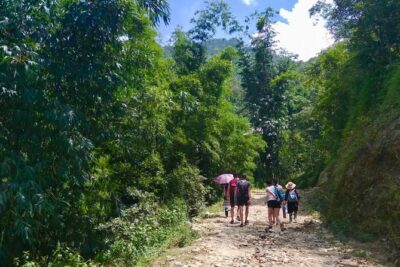
Number one top rated ethical cultural trekking and homestay by ETHOS
Read our review →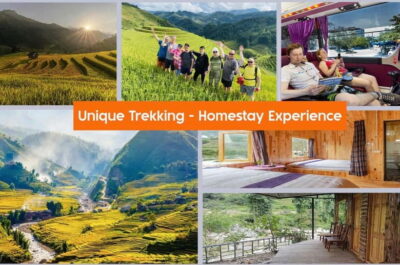
2-Day Sa Pa Ethnic Homestay Tour & Trek with Limousine Bus
Read our review →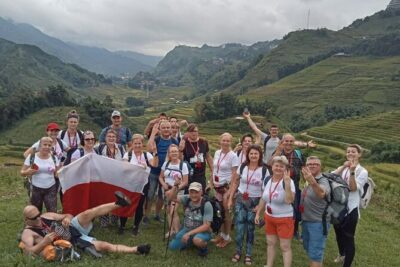
Sapa 3 Day 2 Night Trekking With Hotel & Homestay
Read our review →
Sapa 2 Days 1 Night Overnight At Local Homestay
Read our review →
2-Day Trekking Trip with Ethnic Minority Homestay
Read our review →
2-Day Trek & Heartwarming Homestay with an Ethnic Family
Read our review →Browse the lists this tour appears in