
REVIEW · HANOI
2-Day Sa Pa Ethnic Homestay Tour & Trek with Limousine Bus
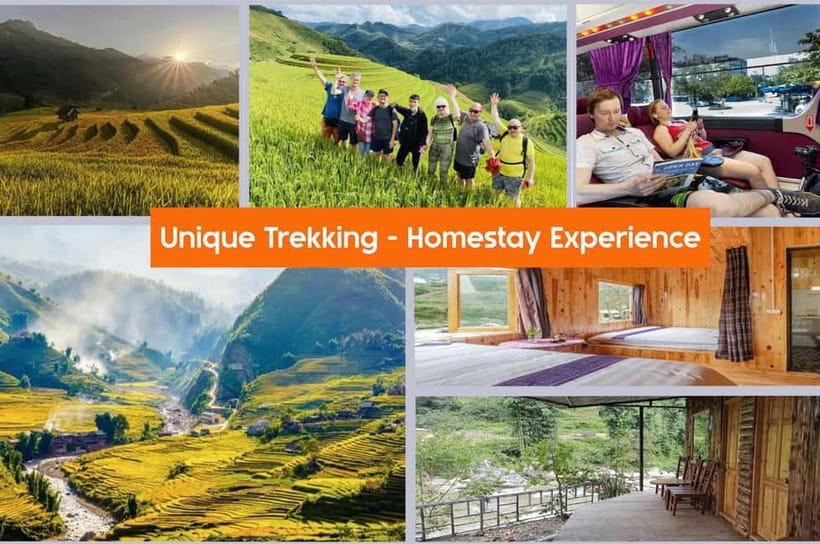
Sa Pa rewards walkers, not window-shoppers. This two-day trip combines a comfortable bus ride from Hanoi with rice-terrace trekking, a local Hmong guide, and an overnight stay in Ta Van village. I especially like the chance to learn about mountain life from guides such as Soso, Sua, and Tung, rather than simply stopping for photographs. The homestay and home-cooked food also give the trip more character than a quick visit to Sa Pa town.
The main drawback is the weather and footing. Rain can turn the trails into slippery mud, while fog may hide the best mountain views. The homestay is basic, village noise can start early, and local craft sellers may follow part of the route. Still, for a short visit, this tour gives you a strong taste of northern Vietnam without asking you to arrange every transfer yourself.
Five details that shape the experience
- The first-day trek runs mostly downhill: Expect around 8 kilometers through rice terraces, village paths, and the Muong Hoa Valley.
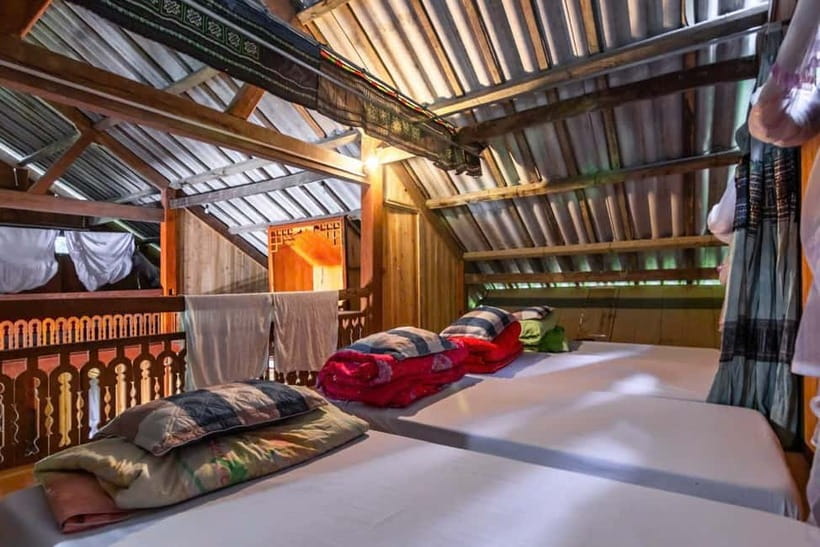
- Ta Van homestay is simple but comfortable: You receive a mattress, clean water, fresh food, and basic washing facilities, with a private-room upgrade sometimes available.
- Your guide is part of the attraction: Local Hmong guides such as Soso, Sua, Soa, Gom, Wan, and Tung explain village life, customs, plants, and local traditions in English.
- Day two includes bamboo forest trails: The shorter trek is around 4 kilometers but remains uneven, with uphill and downhill sections.
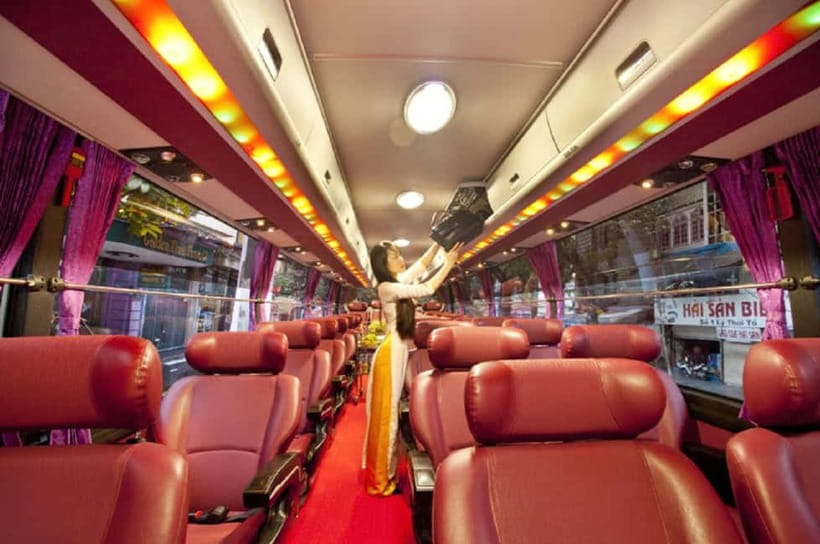
- The bus upgrade can make a real difference: An upgraded sleeper bus or private cabin may be available, giving you a better chance to rest during the long road journey from Hanoi.
- Cash and proper shoes matter: Carry Vietnamese Dong for snacks and handmade items, and bring hiking shoes with strong grip rather than ordinary trainers.
Why this two-day Sa Pa trip works
Sa Pa is not just a mountain town with viewpoints and cafés. Its real appeal begins outside town, where rice terraces, bamboo forests, narrow paths, and minority villages spread through the Muong Hoa Valley. This trip gets you onto those paths quickly.
I like the balance. You travel from Hanoi by road, eat lunch in Sa Pa, walk into the countryside, sleep in Ta Van, and return to the town the next day for lunch and a shower. You see a good amount in a short time, though the schedule is busy and leaves little room for wandering around Sa Pa itself.
The tour has earned a 4.8 rating from 440 customers, and the strongest praise focuses on three things: the local guides, the smooth transport arrangements, and the quality of the food. Those are exactly the areas that matter most on a short mountain trip.
More Homestay Treks in Hanoi
- Hanoi – Sapa 2 Days 1 Night Overnight At Homestay
★ 5.0 · 899 reviews - From Hanoi: 2-Day Sapa Trekking Trip with Homestay & Meals
★ 4.8 · 704 reviews - Hanoi – Sapa 3 Day 2 Night Trekking With Hotel & Homestay
★ 5.0 · 389 reviews
From Hanoi to Sa Pa by limousine bus
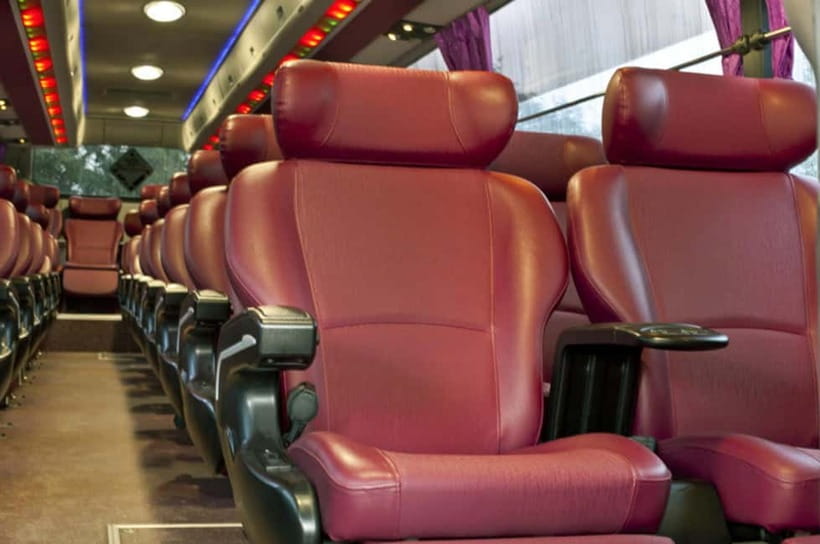
The road trip begins early in Hanoi and follows the new highway toward Lao Cai before continuing uphill to Sa Pa. The included transport is described as a limousine bus, with an optional upgrade available. Some people received a sleeper bus with individual cabins, blankets, water, and Wi-Fi for much of the route.
That upgrade is worth asking about when you book. The drive is long, and a reclining sleeper space can make the journey less tiring than a standard seat. The bus is not simply a minor detail here. It determines how much energy you have left for the afternoon walk.
Your luggage can stay in the bus trunk during the journey. After arriving in Sa Pa, you can leave larger bags at the hotel where lunch is served, then carry only what you need to Ta Van. Pack carefully before starting the trek because you will not have your full luggage with you overnight.
The operator normally contacts you through WhatsApp, Line, Viber, or Kakaotalk to confirm arrangements. Leave a working number when you book. This is particularly useful if you request a bus upgrade, a private room, or a later return to Hanoi.
Lunch and the first look at Sa Pa town
Once you reach Sa Pa, a local representative meets you at the bus stop and takes you to a hotel or meeting point. You have time to rest and eat a local lunch before setting out.
The meal is practical rather than fancy, but that is what you need before walking. Food is included at lunch, dinner, and breakfast, and the meals receive consistent praise for generous portions and good flavor. Drinks are not included, so keep some cash handy.
Sa Pa town is also where you may see Hmong, Dzao, and Tay people in traditional clothing. The bright fabrics and detailed patterns are an important part of the region’s identity, but remember that people wearing traditional dress are going about their daily lives. Ask before taking close-up photographs.
Walking through Lao Chai and the Muong Hoa Valley
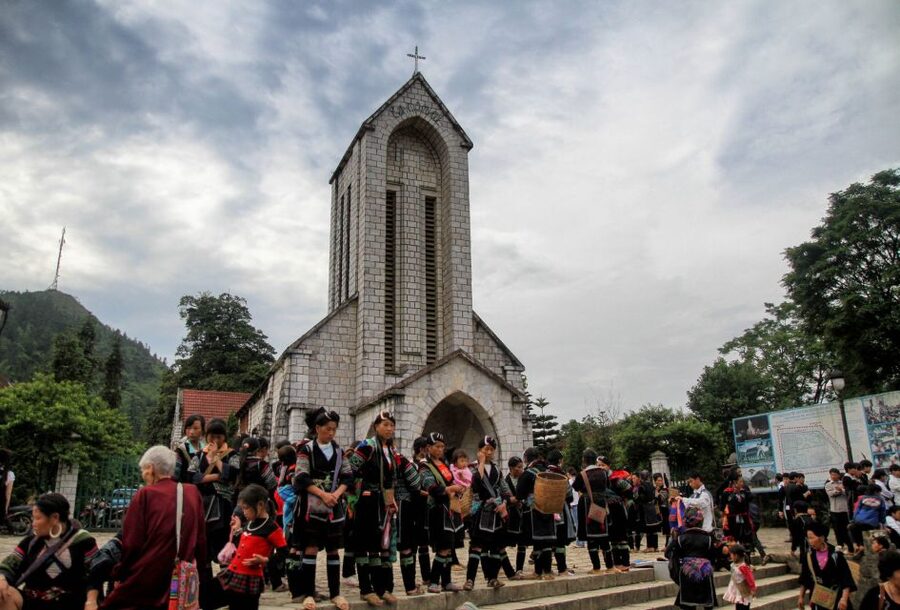
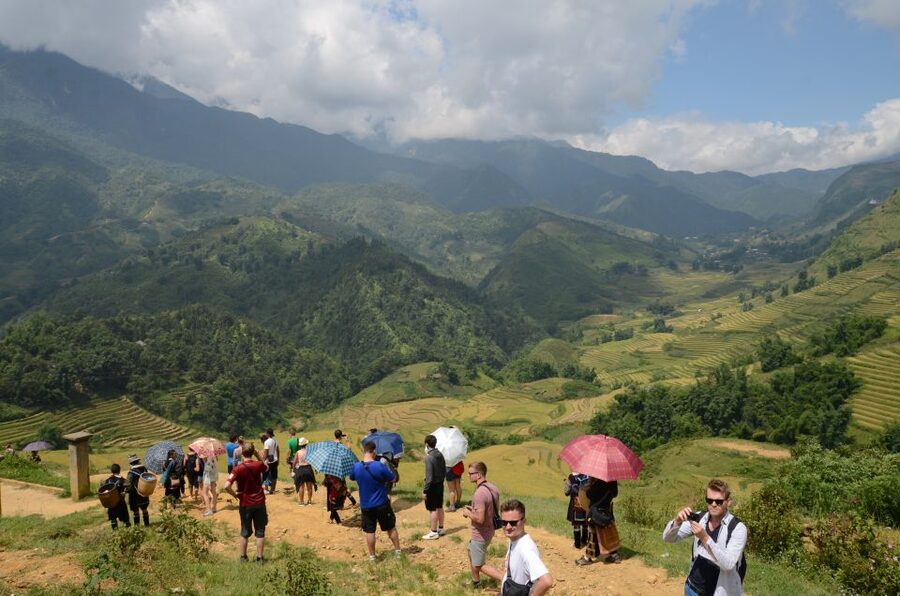
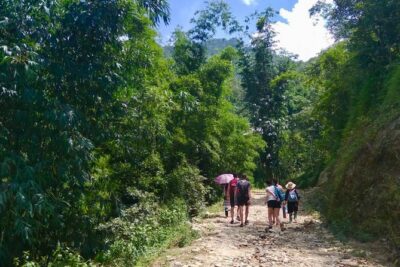
The first walk heads through rice terraces and along the Muong Hoa Stream toward Lao Chai, a Black Hmong village. The route is the heart of the trip. Instead of viewing the terraces from one lookout, you move through them at ground level, following narrow paths between fields and homes.
One commonly described version of the first day covers about 8 kilometers and is mostly downhill. That does not mean it is easy. Downhill walking can be hard on your knees, and wet soil makes each step uncertain. Some sections are steep, especially after rain.
Your guide makes a major difference here. Soso, Sua, Soa, Gom, Wan, and Tung are among the guides praised for friendly conversation, clear English, and explanations of local life. Guides are local, and that gives you a better chance to ask useful questions about farming, clothing, family life, and village customs.
The scenery changes with the season. During the growing season, the terraces can be intensely green. After harvest, the fields may look brown or golden, but the stepped hills and mountain views remain impressive. Fog is common, and it can reduce visibility at the lookouts. Do not judge the trip only by the weather on the first afternoon.
More Homestay Treks in Vietnam
- Hanoi – Sapa 2 Days 1 Night Overnight At Local Homestay
★ 5.0 · 233 reviews - From Hanoi: 2-Day Luxury Sapa Trekking Tour with Homestay
★ 4.4 · 49 reviews - 3-Night Sapa Trek and Homestay with Round Trip Transfer from Hanoi
★ 4.5 · 37 reviews - Hanoi- SaPa: 3-Day Homestay Trek to Explore Ethnic cultures
★ 4.5 · 29 reviews
Ta Van village and the overnight homestay
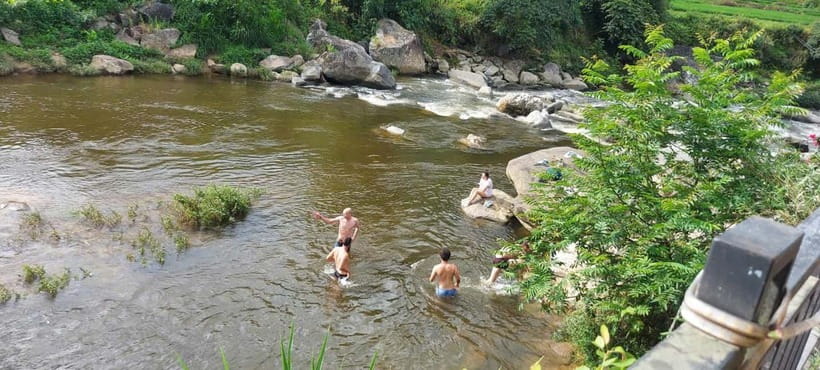
From Lao Chai, you continue toward Ta Van, an ethnic village surrounded by the Hoang Lien Son mountains. The village setting is one of the strongest reasons to spend the night rather than return to a hotel in Sa Pa.
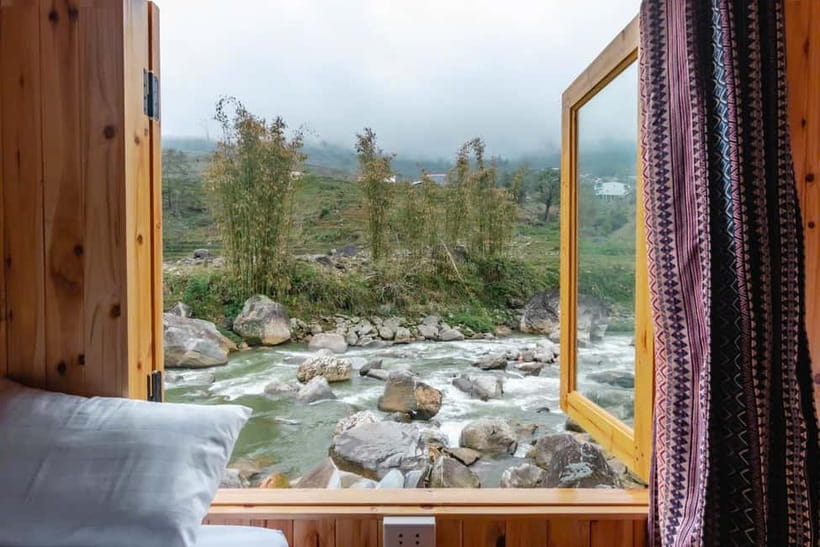
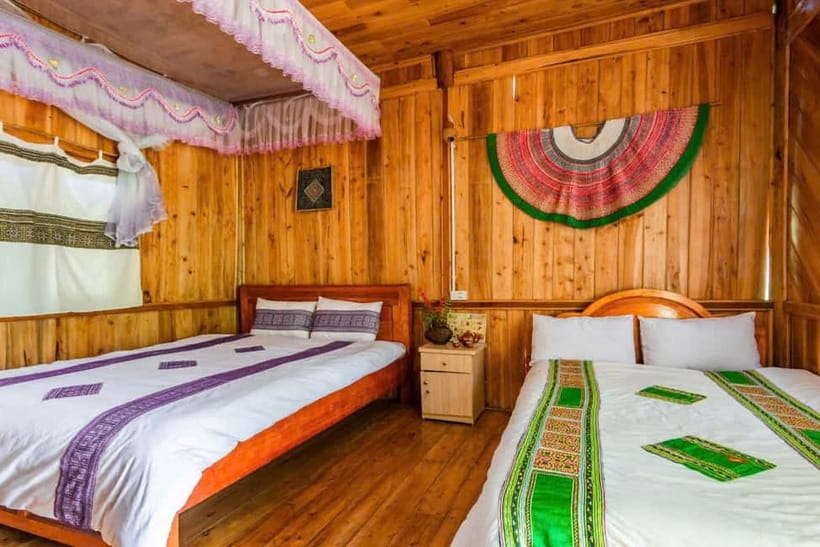
The accommodation is basic. You may sleep on a single mattress, and the facilities are described as cultural or simple rather than hotel-standard. Clean water and fresh food are provided, and private rooms may be available if you request an upgrade. Several people received private rooms with hot showers, but you should confirm this option before departure rather than assume it is included.
The meaning of homestay can vary. In some cases, the accommodation feels more like a small mountain guesthouse than a family home. Even so, the location beside the river, the shared meal, and the chance to meet the host family provide a more local setting than a standard Sa Pa hotel.
Dinner is prepared by the host, and the food is one of the most praised parts of the tour. You may eat with the family, which can be a memorable chance to see how an evening unfolds in the village. Do not expect a long formal cultural talk, though. Some hosts spend limited time with the group, so your guide is usually the main source of information.
Village life can be noisy early in the morning. Roosters, household activity, and general movement may disturb light sleepers. Pack earplugs if you need silence to sleep.
Day two: bamboo forest, Giang Ta Chai, and the return
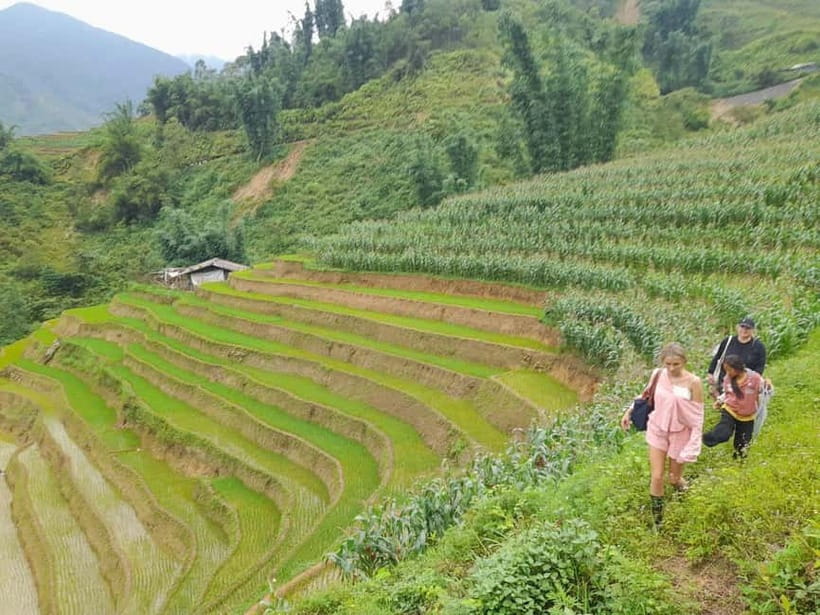
Breakfast is served at the homestay before the second walk. The route passes through rice paddies and bamboo forest, then gives you a wider view toward Giang Ta Chai village.
The second trek is shorter, often described as around 4 kilometers, but it is not flat. You will deal with uneven ground, muddy sections, and rolling climbs. The bamboo forest adds variety after the open terraces, and crossing the Giang Ta Chai Bridge creates a clear end point for the mountain walk.
At the bridge, a vehicle takes you back to Sa Pa for lunch and a shower. This is a very useful part of the schedule. You can clean up, collect your luggage, and change clothes before the road trip back to Hanoi.
The return bus drops you at the original meeting point. From there, you make your own way to your hotel. Confirm the end point in advance, since it can vary with the option booked.
How hard is the trekking?
I would call this a moderate trek, not a casual stroll. You do not need advanced mountaineering skills, but you do need steady footing and enough stamina for several hours on uneven paths.
The biggest challenge is not distance alone. Mud, steep drops, heat, and wet rocks can slow you down. Ordinary sneakers have poor grip, and several people struggled after rain. Proper hiking shoes are one of the most important things to pack.
Bring:
- Hiking shoes with firm soles
- Spare socks and extra clothes
- Sunglasses and sunscreen
- Insect repellent
- A small bag for overnight essentials
- Cash in Vietnamese Dong
- Earplugs if you sleep lightly
The local women who sometimes walk alongside the group can help on slippery sections. Their balance on muddy paths is impressive. However, some later try to sell handmade scarves, jewelry, or other goods. If you want to buy, bring enough cash and treat it as a chance to support local craft sellers. If not, give a firm and polite answer early rather than encouraging a long negotiation.
Food, guides, and the human side of the trip
The strongest part of the trip is the contact with local people. A guide such as Soso or Sua can turn a walk through a rice field into a lesson about village life. You hear personal stories, learn about Hmong traditions, and get answers to questions that a guidebook cannot handle well.
The guides are also important for pacing and safety. They help you through slippery sections and keep the group moving when the route becomes confusing. Some groups found the pace fairly quick, while others felt well supported when walking more slowly. Tell your guide early if you need a pause.
The food is another reason this works as a package. You receive two lunches, one dinner, and one breakfast. Meals in Sa Pa town provide a reliable start and finish, while the homestay meals connect more closely with the setting.
The tour is best when you approach it with curiosity rather than luxury expectations. You are not buying a polished resort stay. You are paying for access to mountain villages, a local guide, transport, meals, and a night in a simple rural setting.
Value, comfort, and who should book
No price is provided here, so I cannot make a precise cost comparison. In value terms, the package covers the expensive and awkward pieces: round-trip transport from Hanoi, a guide, village entry, accommodation, meals, and the vehicle back to Sa Pa after the second trek.
That is useful if you have only two days and do not want to arrange separate buses, village permits, a guide, and a homestay. The optional sleeper-bus and private-room upgrades may add cost, but they can be worthwhile if comfort matters to you.
This trip suits you if you:
- Have limited time in northern Vietnam
- Want mountain scenery and village contact in one outing
- Can walk on uneven and sometimes muddy trails
- Prefer a local guide to exploring alone
- Are happy with simple accommodation
- Want to leave your main luggage in Sa Pa
It is a poor match if you need wheelchair access, have limited mobility, or are traveling with a child under six. Pets are not allowed. If you want a slow schedule, more time in town, or a polished hotel, consider staying longer in Sa Pa instead.
Some people also found two days too short because travel takes up a large part of the schedule. If your timetable allows, adding a third day would give you more breathing room. Still, the two-day format works well as an introduction.
Should you book this Sa Pa homestay trek?
Yes, if you want a compact, active introduction to northern Vietnam and you accept basic facilities. The guides are the main strength, the scenery is powerful even in fog, and the combination of rice terraces, bamboo forest, local food, and village accommodation feels far more rewarding than a quick viewpoint stop.
Book it with good shoes, spare clothes, cash, and realistic expectations. Ask about the sleeper-bus and private-room upgrades, and remember that a homestay may feel more like a simple guesthouse than a family home. If mud, early mornings, persistent craft sellers, or a basic bathroom would spoil your trip, choose a different Sa Pa plan. Otherwise, this is a strong way to make two days count.
FAQ
Where does the tour start?
The tour starts from a meeting point in Hanoi, though the exact point can vary depending on the option you book.
How do I travel from Hanoi to Sa Pa?
You travel by round-trip limousine bus via the new highway to Lao Cai and then Sa Pa. An upgraded sleeper bus or cabin may be available as an optional choice.
Where do I stay overnight?
You stay at a homestay in Ta Van village. The accommodation is basic and includes a single mattress, clean water, and fresh food.
Can I request a private room?
A private-room upgrade may be available at an additional charge. You should request it when booking.
What meals are included?
The tour includes two lunches, one dinner, and one breakfast. Drinks are not included.
How difficult is the trek?
The trek is generally moderate, with steep and slippery sections. The first day is around 8 kilometers and mostly downhill, while the second day is around 4 kilometers with uneven and undulating ground.
What should I bring?
Bring hiking shoes, sunglasses, sunscreen, insect repellent, spare clothing, and cash. Vietnamese Dong is recommended because banking services in Sa Pa can be unreliable.
Can children or wheelchair users join?
Children under six, wheelchair users, and people with mobility impairments should not take part.
Where does the tour finish?
After lunch and a shower in Sa Pa on day two, you return to Hanoi by bus. The activity ends at the meeting point, and you arrange your own transfer from there to your hotel.
More Two-Day Treks in Hanoi
- From Hanoi: 2-Day Sapa Trek Tour – Luxury Limousine Transfer
★ 4.1 · 249 reviews - 2-Day Trekking Adventure of Sapa from Hanoi with Night Bus
★ 5.0 · 134 reviews - Sapa Trekking Tour 2 Days 1 Night By Bus
★ 5.0 · 86 reviews - 2 days AMAZING trekking Sapa from Hanoi with various options
★ 4.5 · 53 reviews
Recently added around Hanoi
- Trekking around Ha Giang 5 days 4 nights★ 3.0 · 2 reviews
- From Hanoi : Sapa Moutain Trek – Halong bay Heritage★ 4.5 · 25 reviews
- 2-Day SAPA Trekking – Villages-Homestay-Ethnic-Local Food-Market★ 5.0 · 2 reviews
- 8-Days Hanoi, Sapa Trekking And Halong Bay Cruise★ 5.0 · 8 reviews
- Hanoi: 3D2N Mu Cang Chai Visit All Attractions, Trek, Ethnic Life★ 5.0 · 3 reviews
- Mai Chau – Pu Luong trekking 3 days 2 nights★ 4.5 · 7 reviews
- Trekking In Ha Giang 5 Days★ 5.0 · 4 reviews
- Sapa trekking – Unique Route – 2D1N★ 5.0 · 3 reviews
Homestay & Village Treks, compared.
Number one top rated ethical cultural trekking and homestay by ETHOS
Read our review →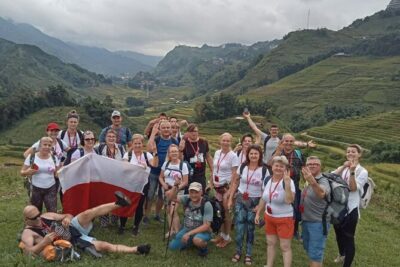
Sapa 3 Day 2 Night Trekking With Hotel & Homestay
Read our review →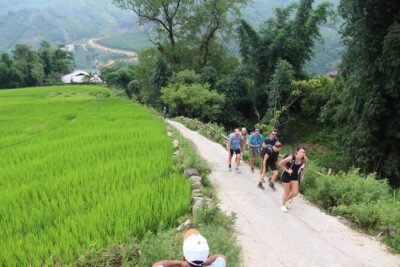
Sapa 2 Days 1 Night Overnight At Local Homestay
Read our review →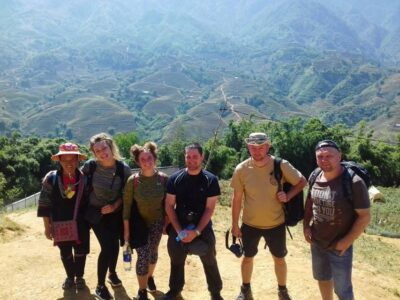
2-Day Trekking Trip with Ethnic Minority Homestay
Read our review →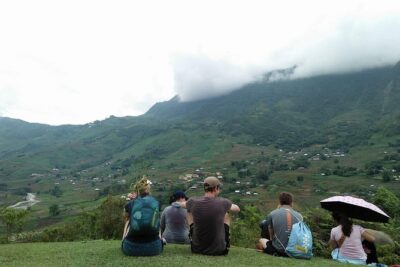
2-Day Trek & Heartwarming Homestay with an Ethnic Family
Read our review →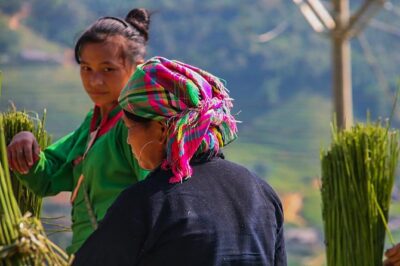
Browse the lists this tour appears in