
REVIEW · PERU
Salkantay Trek to Machu Picchu 5 Days with Sky Lodge Domes
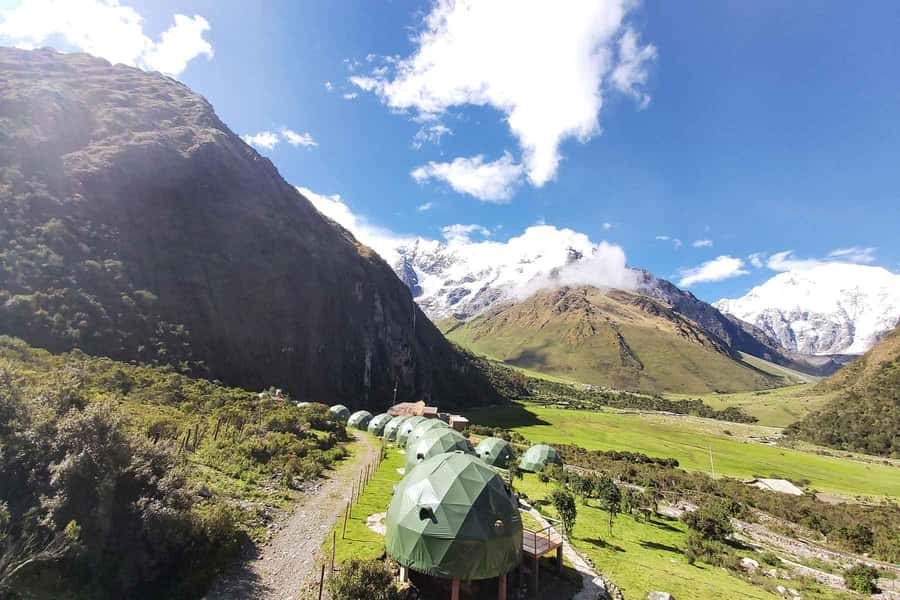
Five days, one hard pass, and Machu Picchu. This Salkantay route combines high Andean scenery, the turquoise waters of Humantay Lake, ancient Inca paths, and a guided visit to Machu Picchu for $680 per person. I like the small groups of up to eight and the comfort of Sky Lodge Domes with private bathrooms and hot showers.
I also like that mules carry equipment and up to 7 kilos of your personal luggage, leaving you with a lighter daypack. The main consideration is the second night, which may be more basic than the advertised dome accommodation. The trek is demanding, especially at altitude, so this is not a gentle shortcut to Machu Picchu.
Key points to know before booking
- Humantay Lake comes early: You reach the famous turquoise glacial lake on the first day, after beginning the walk at Challacancha.
- Salkantay Pass is the big test: Day two brings the highest and hardest section, with broad views of snow-covered Andean peaks.
- Small groups matter: With no more than eight people, your guide can keep a closer eye on the pace and altitude comfort.
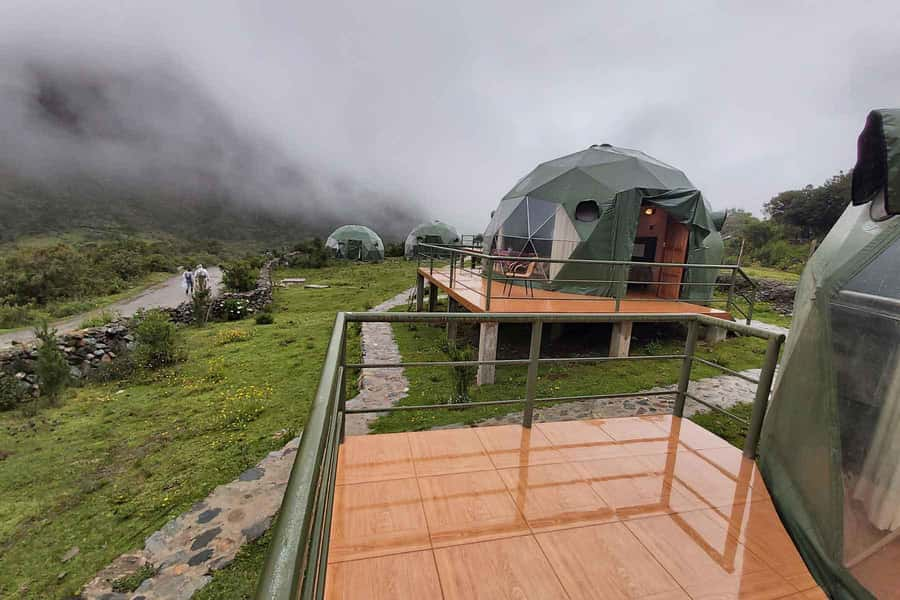
- Comfort is mixed but useful: Three nights are planned around dome-style camping, but the second night can feel more basic than expected.
- Meals are a real strength: A professional cook prepares four breakfasts, four lunches, four dinners, and three snacks.
- The final approach has variety: You walk part of the Original Inca Trail, visit Llactapata, and can hike or take the train into Aguas Calientes.
What the five-day Salkantay route is really like
This trip is best understood as a physical journey with a comfortable finish, not a luxury trek from start to end. You cross several types of Andean scenery in five days: high mountain slopes, glacial water, dry passes, greener valleys, and the railway corridor leading toward Aguas Calientes.
The group size is limited to eight, and the tour runs with a bilingual English and Spanish guide. That matters on a route where the pace can change quickly. Some people may feel strong at breakfast and slow down sharply after climbing higher.
The evening briefing takes place at 6:00pm at your Cusco hotel the night before departure. Use it well. This is the time to clarify what goes into your duffel, what stays in your daypack, and how the horse support works. You receive a duffel bag, and the mule team carries up to 7 kilos of your personal luggage.
At $680, the price covers much more than a simple walking guide. You get private tourist transport from Cusco to the trailhead, a guide, cooks, meals in camp, mule support, dome accommodation, one hotel night in Aguas Calientes, the Machu Picchu entrance fee, and return transport toward Cusco. You still need to budget for your first breakfast, final dinner, sleeping bag rental if needed, trekking poles if needed, and any paid horse rides.
More Inca Trail Treks in Peru:
- Salkantay Trek Challenge – 3 Days / 2 Nights
★ 5.0 · 101 reviews - Choquequirao Trek 4 days and 3 nights
★ 5.0 · 81 reviews - Machu Picchu: 5-Day Salkantay Trek with Panoramic Train
★ 5.0 · 79 reviews
Day one: Cusco to Challacancha and Humantay Lake
The first morning starts with an early pickup in Cusco. You drive to Mollepata for breakfast, then continue to Challacancha, where the walk begins.
This opening transfer is practical but long enough that the day feels full before the main climb begins. Mollepata provides a useful meal stop, while Challacancha marks the real start of the trek. From there, you walk toward Soraypampa and your first Sky Lodge Dome.
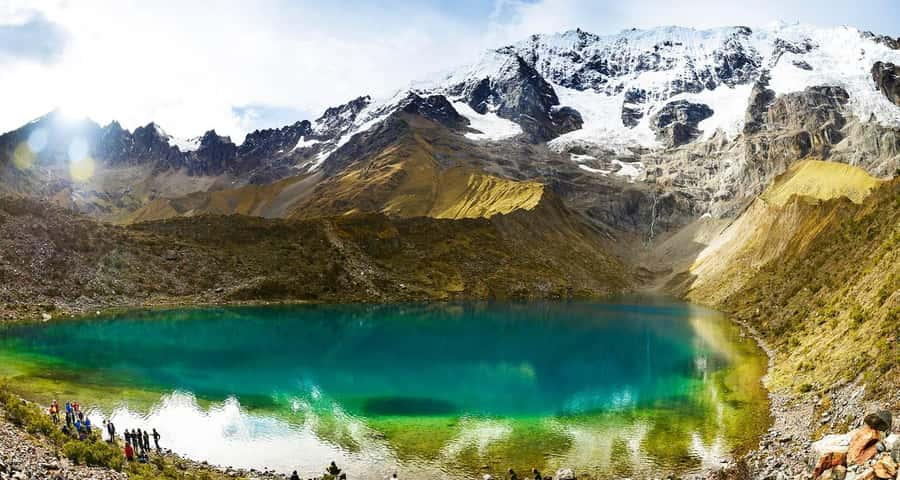
The day’s headline is Humantay Lake. Set below snow-peaked mountains, the lake has the bright turquoise color that makes it one of the most photographed stops on the Salkantay route. The water comes from glacial sources, and the setting feels far removed from Cusco’s streets and plazas.
Do not mistake a short-looking lake visit for an easy outing. You are already gaining altitude, and the climb can feel sharp after the drive from Cusco. Warm clothing, sun protection, and steady pacing matter here. The supplied information specifically recommends hiking shoes, rain gear, a sun hat, sunglasses, sunscreen, hiking pants, and a daypack.
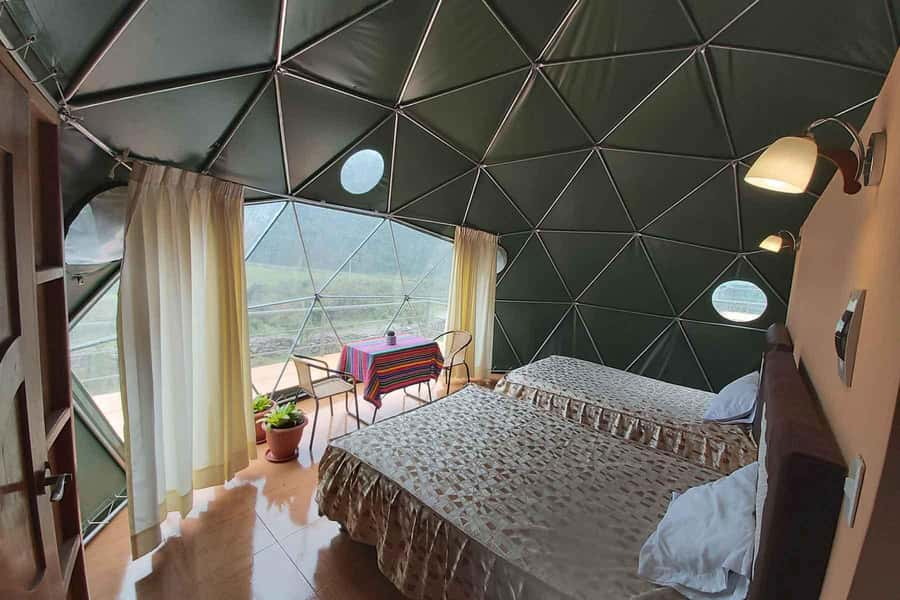
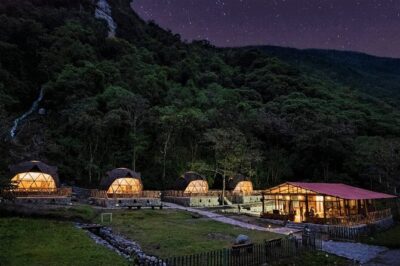
The night at Soraypampa is meant to be one of the special touches. Your dome has a private bathroom and hot shower, and you can spend the evening looking at the stars rather than returning to a town hotel. That comfort is valuable after a demanding first day, though a dome is still a camp accommodation. Pack warm layers, even when Cusco feels mild.
Day two: Salkantay Pass and the long descent
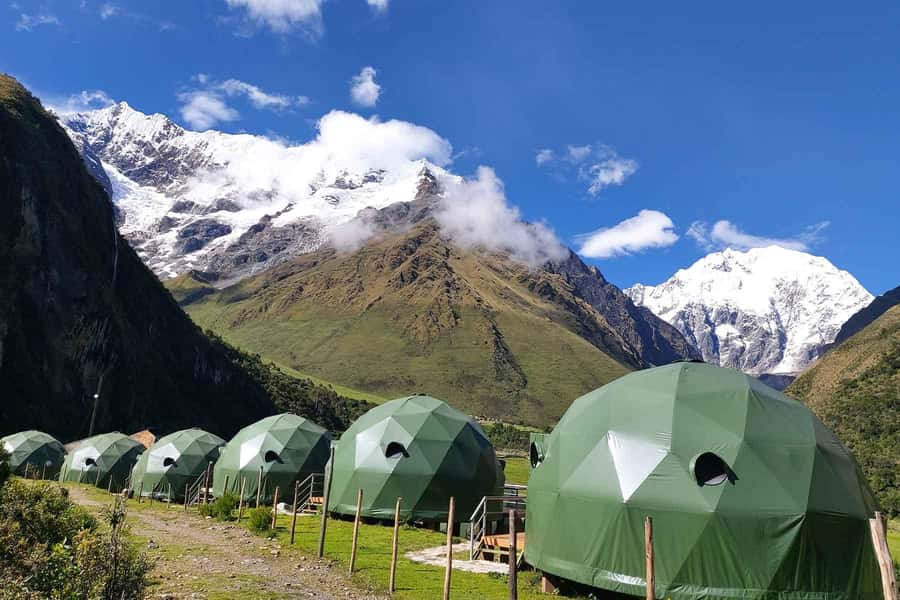
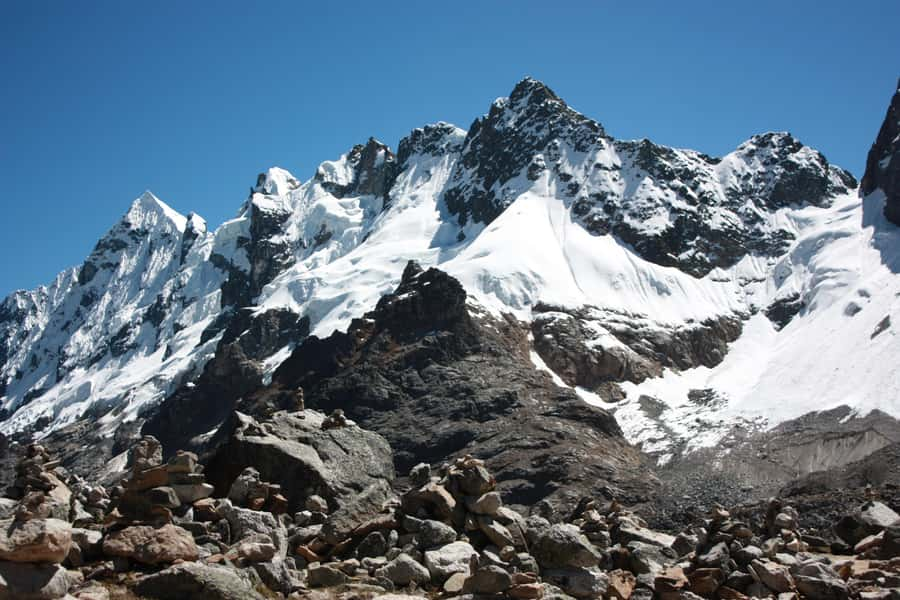
Day two is the physical center of the trip. You start early and climb toward Salkantay Pass, one of the highest points on the route. The reward is a broad view of snow-covered Andean peaks and a strong sense of how remote this part of Peru can feel.
This is where you should be honest with yourself about altitude. The pass is challenging, and no amount of enthusiasm changes that. The itinerary includes horse and mule support, and you can pay to ride a horse if altitude sickness or fatigue becomes a problem. That option is not a sign of failure. It is a sensible backup on a high route.
The descent to Chaullay brings a change in mood and scenery. After the exposed high section, the route drops toward lower ground, and the air and plant life begin to shift. You will still be tired, but the downhill direction helps.
The main accommodation caution comes here. One night is described by the operator as less comfortable than expected, with more basic conditions than the dome description suggests. Keep that in mind when comparing this trip with a fully luxury-focused trek. The overall package includes strong comforts, but not every night is equal.
Your support team matters most on this day. Previous groups have praised guides such as Fernando and Nildo for their care, clear explanations, and ability to help with decisions along the route. The guide also carries a first aid kit, and one oxygen tank is included for the group.
Day three: Santa Teresa Valley and a softer walking day
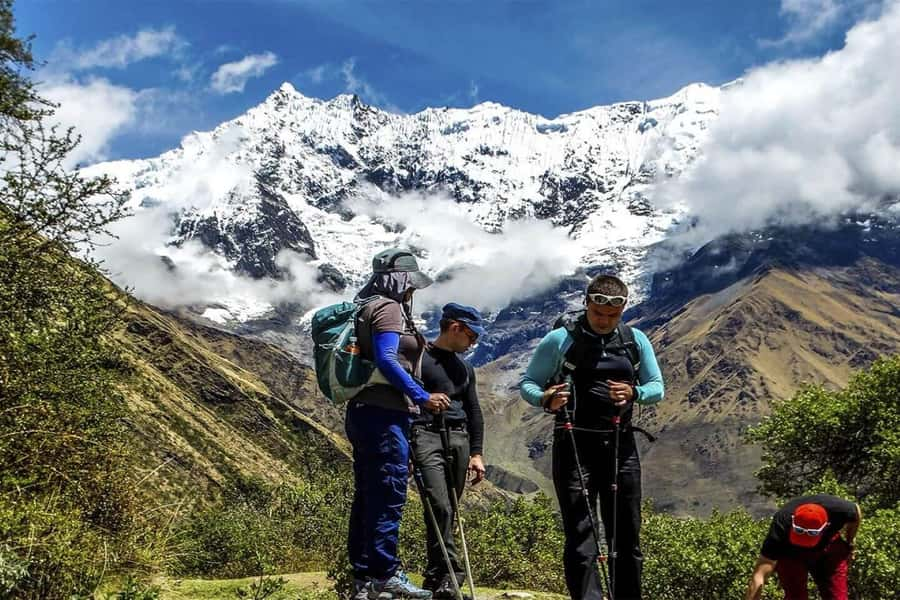
Day three is easier by comparison. You pass through the Santa Teresa Valley, where the high mountain setting gives way to greener surroundings. After the severity of Salkantay Pass, this change provides a welcome physical reset.
The route is not simply a filler day. It helps connect the high pass with the Machu Picchu area, and it gives you time to notice how sharply the scenery changes across the trek. You are no longer walking only through stark mountain terrain.
An optional visit to hot springs is available. The details do not specify the entrance cost, so ask your guide before setting out. After two demanding days, warm water can be appealing, but you should treat it as an option rather than a guaranteed part of the base price.
Another Sky Lodge Dome is planned for the night. The contrast between a private bathroom and hot shower at camp and the rougher second-night conditions is worth remembering. You are paying for a mixed experience: outdoor scenery and camp meals, with selected touches of comfort.
The food is one of the package’s strongest features. The cook prepares traditional, fresh, varied meals, and the schedule includes four breakfasts, four lunches, four dinners, and three snacks. After long walking days, a proper meal is not a small luxury. It helps you recover and keeps the group moving the next morning.
A few more treks around Peru worth a look
- Ausangate Trek 5 Days
★ 5.0 · 74 reviews - Classic Choquequirao Trek – 5 Days / 4 Nights
★ 5.0 · 52 reviews - Ultimate Lares Trek & Inca Trail 5 days
★ 5.0 · 47 reviews - Salkantay Trek To Machu Picchu 5 Days And 4 Nights
★ 5.0 · 44 reviews
Day four: Llactapata and the final approach to Aguas Calientes
Day four shifts the focus from mountains to Inca sites. You pass along part of the Original Inca Trail and visit Llactapata, an Inca site with views toward Machu Picchu.
Llactapata is especially useful as a preview. Instead of arriving at Machu Picchu with no sense of where it sits, you see the famous site from a more distant point first. That gradual approach adds meaning to the final morning.
From there, you can either hike onward or take a train to Aguas Calientes. This choice gives the trip some flexibility after three days on foot. If your legs are still strong, the walk extends the experience. If you are saving energy for Machu Picchu, the train is the practical call.
You spend the night in a hotel in Aguas Calientes. Compared with the camps, this is a straightforward comfort stop before the major visit. It also means you do not have to rush directly from the trail into the Machu Picchu tour.
The route into Aguas Calientes is important when judging the price. The package includes not only the trekking days but also the hotel night and the Machu Picchu entrance fee. Those costs can add up quickly when arranged separately.
Day five: Machu Picchu with a guided visit
The final day begins with a bus ride from Aguas Calientes to Machu Picchu. The guided visit is included, and you can choose from additional hikes if those options are available with your entry arrangements.
Your guide’s role matters here. A good guide does more than point at famous stones. Fernando, for example, was praised for explaining culture, plants, mountains, and practical ticket choices while keeping the amount of information manageable. That kind of help is especially useful at Machu Picchu, where the site can feel overwhelming without a clear route through it.
The trip ends with a train to Ollantaytambo and a transfer back to Cusco. This is a long final transport day, but it avoids returning by foot and gives you a clear end point in the city.
Check your personal plans before booking. The package includes the return transfer, but not your final dinner. If you have a flight soon after the trek, leave room for delays and fatigue rather than scheduling a tight connection.
What the $680 price includes and what it does not
I see the $680 price as good value for people who want a supported trek with several comfort features. The package covers:
- Private tourist transportation from Cusco to Mollepata and Challacancha
- Hotel pickup and a bilingual English and Spanish guide
- Mule and horse support for equipment, food, and up to 7 kilos of personal luggage
- Duffel bag use
- Four breakfasts, four lunches, four dinners, and three snacks
- Professional cook and camp dining equipment
- Sky Lodge Domes with private bathrooms and hot showers
- One hotel night in Aguas Calientes
- Machu Picchu entrance fee
- First aid kit and one oxygen tank
- Train transport to Ollantaytambo and the transfer back to Cusco
The extras are limited but worth noting. Your first breakfast and last dinner are not included. Sleeping bags and trekking poles can be rented, but they are not part of the base price. Horse rides for tired hikers are also paid separately.
The value is strongest if you would otherwise need to arrange transport, meals, luggage support, Machu Picchu admission, and the return journey one by one. It is less attractive if you want five consistently polished nights, since the second-night accommodation may be basic.
Guides, cooking, and group size
The most praised parts of the service are the guides and the food. Fernando and Nildo received particular praise for being attentive, clear, and supportive throughout the route. Fernando was also praised for strong English and for explaining local culture and the natural setting without overwhelming the group.
The small group limit of eight is a real benefit. You are less likely to feel like a number, and your guide has a better chance of noticing if you are struggling with altitude, pace, or cold.
The cook is another important part of the experience. Armando was praised for preparing healthy, traditional, fresh meals each day. On a trek, food quality affects both comfort and energy, so this is more than a nice bonus.
The operator also provides portable tables and chairs for meals. That does not turn camp into a restaurant, but it makes the evening routine easier after a long walk.
Who should book this trek?
I would recommend this trip to you if you want:
- A demanding but supported route to Machu Picchu
- A small group rather than a large departure
- High mountain scenery and Humantay Lake
- Mule support for your main luggage
- A guide who can explain both the route and the culture
- A mix of dome camping, hotel comfort, and train transport
- The option to ride a horse if altitude becomes a problem
You should think twice if you have back or heart problems, are pregnant, or dislike long uphill walks. The route reaches high altitude and includes a difficult pass. A positive attitude helps, but it does not replace preparation.
Bring warm clothing even if your trip begins in sunny Cusco. Add rain gear, hiking shoes, sunscreen, sunglasses, a sun hat, hiking pants, and a daypack. You also need your passport. Trekking poles and a sleeping bag may be rented if you do not own them.
The flexible cancellation policy allows cancellation up to 24 hours before departure for a full refund, and you can reserve now and pay later. Check the departure time when choosing your date, since availability controls the start time.
Final call: is this Salkantay trek worth it?
I would book this trek if I wanted the full Salkantay route without giving up every comfort. The turquoise Humantay Lake, the Salkantay Pass, Llactapata, and Machu Picchu create a varied five-day journey, while the cooks, mule support, small group, dome stays, and hotel night make the effort easier to manage.
I would not choose it for a soft adventure or a perfectly consistent luxury experience. The pass is hard, altitude is serious, and the second-night accommodation may disappoint if you expect every night to match the best dome.
For a fit hiker who wants scenery, Inca pathways, strong guiding, and a well-supported route at $680, this is a sound choice. Go in ready for cold, steep walking, and one rougher night, and the rewards should feel well earned.
FAQ
How long is the Salkantay Trek to Machu Picchu?
The trek lasts five days and includes the route from Cusco to Machu Picchu, a hotel night in Aguas Calientes, and the return journey to Cusco.
How much does the experience cost?
The listed price is $680 per person.
What languages does the guide speak?
The guide service is available in English and Spanish.
How large is the group?
The group is limited to eight participants.
Is Humantay Lake included?
Yes. The first day includes the hike to the turquoise Humantay Lake.
Is Machu Picchu admission included?
Yes. The entrance fee to Machu Picchu is included.
Where do you sleep during the trek?
The package includes Sky Lodge Domes with private bathrooms and hot showers, plus one hotel night in Aguas Calientes. The second night may have more basic accommodation than expected.
Is luggage support provided?
Yes. Horsemen and mules carry equipment, food, and up to 7 kilos of personal luggage per person. A duffel bag is provided.
Are meals included?
Four breakfasts, four lunches, four dinners, and three snacks are included. The first breakfast and final dinner are not included.
Recently added around Peru
- Small Group: 4-Day Inca Trail Trek to Machu Picchu★ 5.0 · 33 reviews
- 5 Day – Salkantay trek to Machu Picchu – Group Service★ 4.5 · 27 reviews
- 6 day Rainbow Mountain x Ausangate Trek – FlashpackerConnect★ 5.0 · 30 reviews
- Salkantay Trek: 5 Days to Machu Picchu★ 5.0 · 33 reviews
- Humantay Lake Full-Day Adventure: Scenic Trek and Stunning Views★ 4.5 · 39 reviews
- Salkantay 5-Day Trek To Machu Picchu★ 5.0 · 39 reviews
- Inca Trail Trek to Machu Picchu – 2 Days (Small Group or Private)★ 5.0 · 31 reviews
- Ausangate and Rainbow Mountain Trek – 3 Days / 2 Nights★ 5.0 · 35 reviews
Machu Picchu & Inca Trail Treks, compared.
Machu Picchu: 5-Day Salkantay Trek with Panoramic Train
Read our review →
Ancascocha Trek To Machu Picchu 4 Days And 3 Nights
Read our review →
4 Day Inca Trail Trek to Machu Picchu Multi day tour
Read our review →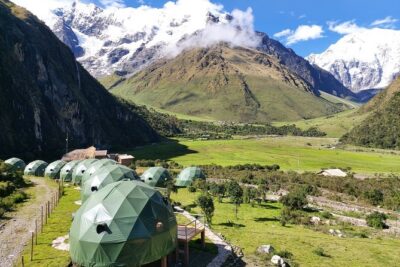
Salkantay Trek 4 Days to Machu Picchu by Glamping Sky Lodge Dome
Read our review →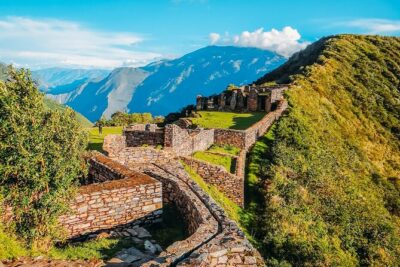
Browse the lists this tour appears in