
REVIEW · SAPA
Sa Pa: Fansipan Peak One Day Trek with Local Guide
Fansipan is earned on foot. This one-day hike takes you from Sapa to Tram Ton Pass, through Hoang Lien Son forest, and up to the 3,143-meter Roof of Indochina. I like the local guide support and the lunch cooked high on the mountain, especially since guides such as Binh have been praised for patience, good humor, and close attention during slippery sections. The forest also offers more than a bare summit walk, with giant pines, yellow bamboo, and the sharp scent of cardamom.
The main catch is the weather. Fog can erase the views, and rain or strong wind can make the trail much harder. At $64 per person, the package covers the guide, lunch, permits, water, transport, and a certificate, but the cable car down costs extra if you decide your legs have had enough.
Key points to know before booking
- The hike begins at 2,000 meters: A taxi carries you from Sapa to Tram Ton Pass, so the walking starts high on the mountain rather than in town.
- Lunch comes at 2,800 meters: You stop to eat before the final climb, giving you time to rest and refuel.
- The summit reaches 3,143 meters: Fansipan is the highest point in Vietnam and is often called the Roof of Indochina.
- Binh receives especially strong praise: His helpful manner, mountain knowledge, cooking, and encouragement have made a real difference on difficult sections.
- Weather controls the views: Clear skies can reveal distant mountain scenery, but fog may leave you with the achievement of the climb rather than the panorama.
- The cable car is not included: You return on foot unless you pay separately to ride down after reaching the top.
Starting at Tram Ton Pass, 2,000 meters up
Your day begins with pickup near Sapa Church or another central point in Sapa. From there, a taxi takes you to Tram Ton Pass, about 2,000 meters above sea level. This transfer matters because it saves your energy for the real climb, but it also means you begin at an altitude where the air is already thinner.
The trail heads into Hoang Lien National Park, with the entrance fee included in the tour price. You are not simply walking toward a viewpoint from town. You are entering a high mountain route that rises through several types of vegetation before reaching the summit.
A local guide is useful here for more than navigation. The route involves forest walking, steep climbing, and changing weather. A guide can help you judge your pace, point out plants, and give you encouragement when the trail turns wet or tiring.
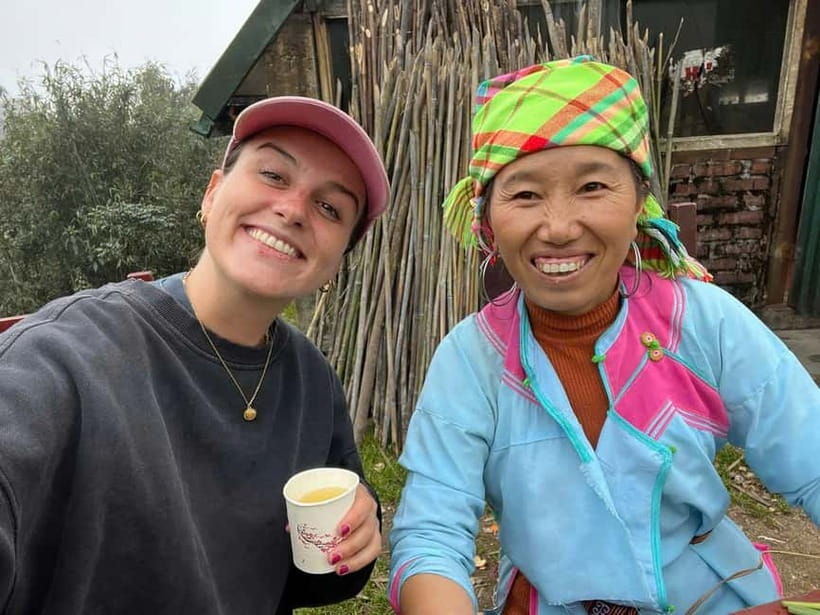
The English-speaking guide also speaks Vietnamese. Binh has received particular praise for being cheerful, attentive, and supportive when the going gets tough. That personal help is one of the strongest reasons to choose a guided climb instead of trying to organize the route alone.
More Fansipan Treks in Sa Pa:
- 1 day Fansipan Trekking
★ 5.0 · 180 reviews - 2 Days Fansipan Trekking
★ 5.0 · 84 reviews - 2-Day Fansipan Mountain Trek – Indochina’s Highest Peak
★ 4.3 · 42 reviews
Through giant pines, bamboo, and cardamom
The early section takes you into thick forest beneath towering trees. Giant pine trees provide the most impressive scale, while cardamom plants add a distinctive scent to the walk. These details give the route more character than a simple uphill march.
I like this part because the forest keeps the hike interesting even when clouds block the big views. You get changing plant life, shade, mountain air, and the feeling of moving through a real highland environment rather than following a paved route.
After about two hours, you reach a bamboo forest. Here the vegetation becomes lower, and the trail begins to open toward distant views. This is an important change in the walk. The first section is mainly about the forest, while the upper section offers more exposure and a clearer sense of how high you have climbed.
The surface can be slippery, particularly in wet weather. One account described the hike as tough and very slippery, so proper hiking shoes are not optional decoration. Shoes with a secure grip will make each step more comfortable and reduce the worry of sliding on the trail.
Lunch at 2,800 meters
The scheduled lunch stop comes at about 2,800 meters. This is well above the tree-covered lower section and close enough to the summit that the break has real value. You can eat, drink, and let your legs recover before tackling the final stretch.
Lunch is included, and the guide may prepare it at the mountain stop. Binh was praised for making a delicious meal halfway up, which gives this break a more personal feel than opening a snack beside the trail. The menu is not specified, so you should not book this expecting a particular dish.
The tour includes a 1.5-liter bottle of water, but you should still bring your own daypack and any extra snacks or soft drinks you want. Additional food and drinks are not included. A small snack can be useful if you know you get hungry during long uphill walks.
The lunch stop also gives you a chance to think about the final climb. At this height, the air can feel colder, and weather can shift quickly. A jacket belongs in your pack even if Sapa feels mild when you leave town.
The final climb to Fansipan Peak
From the lunch stop, you continue toward Fansipan Peak at 3,143 meters. Reaching the summit is the central goal, but the experience is not guaranteed to look the same each day.
On a clear day, the height gives you broad mountain views from the Roof of Indochina. On a cloudy or foggy day, you may see very little beyond the immediate summit area. Guides can sometimes show you photographs of what the view looks like in clear weather, but no guide can push the clouds away.
That uncertainty is worth taking seriously. If your main reason for booking is photography, the weather may leave you disappointed. If your main reason is the physical achievement of reaching the highest point, the climb can still feel worthwhile even when the scenery disappears.
The summit area is also where you can decide if you want to use the cable car down. The cable car is not part of the $64 price. You must pay separately, and the supplied information does not give a fixed fare. Plan for the extra cost if you want an easier return option.
More One-Day Treks in Sa Pa:
- From Sapa: 1-Day Guided Trek to Lao Chai & Ta Van with Lunch
★ 4.9 · 416 reviews - Sapa 1 Day Long Trek: Trek to Hau Thao and Sa Seng Villages
★ 4.6 · 344 reviews - 1-day Authentik trek & Panorama valley views
★ 5.0 · 189 reviews - Sapa 1 day trek with local guide to the village by Comlam
★ 5.0 · 148 reviews
Returning to Tram Ton and Sapa
The standard plan is to descend on foot to Tram Ton Pass, then take a taxi back to Sapa. That return makes the day physically demanding, since you must manage tired legs on the way down. Descending can be hard on knees and slippery footing, so do not assume the second half will feel easy simply because you are no longer climbing.
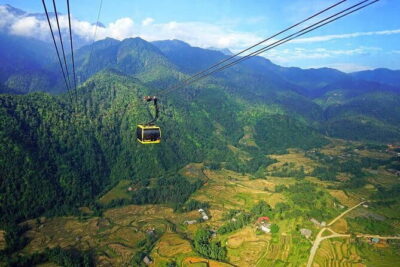
The alternative is the cable car after reaching the summit. This gives you a practical escape if weather, fatigue, or a sore knee changes your plan. Since the ride is an extra expense, bring enough money for that possibility.
Once you return to Sapa, the tour ends there. Transport between Sapa and Tram Ton is included, so you do not need to arrange that taxi yourself. The route is efficient: central pickup, mountain transfer, guided hike, return to the same trailhead, and transport back to town.
What the $64 price really covers
At $64 per person, the tour is not just a guide fee. The price includes the English-speaking guide, Hoang Lien National Park entrance fee, lunch, a 1.5-liter bottle of water, transport between Sapa and Tram Ton, and a raincoat on rainy days.
A porter is included for groups of four or more. That detail matters if you are traveling with friends, since it may reduce the load each person carries. The information does not specify the porter’s exact duties or how much luggage can be carried, so keep your daypack sensible rather than treating the porter as a full luggage service.
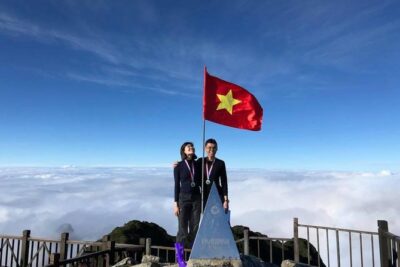
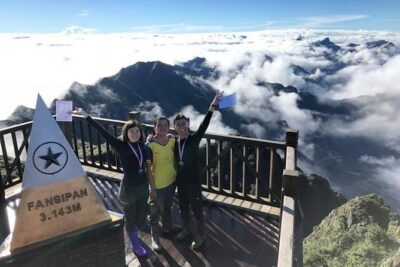
You also receive a certificate. Some guides have added a small celebratory touch at the end, including medals, but the certificate is the formal included item. It is a nice reminder of the achievement, particularly on a day when fog hides the views.
The price looks fair if you want transport, park entry, food, guiding, and basic weather support bundled together. It feels less generous if you need the cable car down, since that important backup option costs extra. I would budget for the cable car before deciding that $64 is your final spend.
Weather, fitness, and what to pack
This is a serious mountain hike, not a casual walk in Sapa. You need a good fitness level, and the experience is not suitable for people with heart problems, respiratory issues, or low fitness. It is also not suitable for wheelchair users because the route involves forest trails and high-altitude climbing.
Weather can change quickly. Rain and strong winds may make the trail more complicated, and fog may block the scenery. A raincoat is supplied on rainy days, but you should still bring a jacket, comfortable clothing, and sun protection.
Bring:
- Hiking shoes with good grip
- A hat
- Sunscreen
- A jacket
- Comfortable clothes
- A daypack
- Extra snacks or soft drinks if you want them
Do not litter or make fires. These rules are simple, but they matter in a national park and on a route where food wrappers or carelessly discarded materials can remain for a long time.
You also need to send your passport after booking so the operator can complete the climbing procedure. Do this promptly, since it is part of preparing for the trek.
How the guides shape the experience
The guide may be the difference between a hard day and a miserable one. The strongest praise has gone to Binh, who has been described as kind, attentive, cheerful, and experienced. Those qualities matter when the trail is slippery or when you are struggling to maintain a steady pace.
Binh has also shared local information about the mountain and culture, pointed out plants along the route, prepared lunch at about 2,800 meters, and helped make the summit feel like an occasion. That is a lot more useful than a guide who simply walks ahead and points toward the trail.
Guide quality can vary from day to day, so I would not assume every departure will feel identical. Still, the operator clearly places value on local guiding, and the experience is available in English and Vietnamese.
Who should book this Fansipan trek?
I would choose this tour if you want to reach Fansipan under your own power and enjoy the route rather than simply arrive at the top. It suits fit walkers who are comfortable with steep, wet, high-altitude conditions and who like having a local person manage the route and logistics.
It is also a good fit if you want a practical package. The taxi transfer, park entrance, lunch, water, and guide are already arranged. That removes several small tasks from a demanding day.
I would think twice if you have limited fitness, heart or respiratory problems, or a strong dislike of uncertain weather. I would also reconsider if your main goal is a guaranteed panoramic photograph. Clouds and fog may win that argument.
The cable car option makes the tour more flexible, but you must pay separately. If you are unsure about descending on foot, include that possible cost in your budget from the beginning.
Should you book it?
Book it if the challenge itself appeals to you. The best parts are the changing forest, the mountain lunch, the personal help from guides such as Binh, and the satisfaction of reaching 3,143 meters on foot.
Skip it if you want an easy summit visit or dependable views. Fansipan can be foggy, wet, windy, and slippery, and the return walk can be demanding. For a fit person who accepts those limits, $64 is a sensible price for the transport, guide, meal, permit, water, and support included. Just pack for poor weather and keep extra money available for the cable car down.
FAQ
Where does the Fansipan trek begin?
The tour begins with pickup from Sapa Church or another central location in Sapa. A taxi then takes you to Tram Ton Pass, located at about 2,000 meters above sea level.
How high is Fansipan Peak?
Fansipan Peak is 3,143 meters above sea level. It is known as the Roof of Indochina.
Is transport from Sapa included?
Yes. Transport between Sapa and Tram Ton Pass is included in the tour price.
Is lunch included?
Yes. Lunch is included and is served at about 2,800 meters. The guide may prepare the meal at the mountain stop.
Is drinking water included?
Yes. The tour includes one 1.5-liter bottle of water.
Is the cable car ride included?
No. The cable car down is not included. You pay separately if you choose to use it after reaching the summit.
Is a guide included?
Yes. An English-speaking guide is included. Vietnamese is also available.
Do I need to send my passport?
Yes. After booking, you need to send your passport so the climbing procedure can be completed.
Is this trek suitable for people with low fitness?
No. The climb requires a good fitness level and is not suitable for people with low fitness, heart problems, or respiratory issues.
Can I cancel for a full refund?
Yes. You can cancel up to 24 hours in advance for a full refund.
Recently added around Sa Pa
- Soob Sapa Trekking Tour★ 4.3 · 3 reviews
- Sapa Trekking – Waterfalls And H’mong Villages★ 5.0 · 2 reviews
- Sapa Trekking Private Tour With Ethnic Female Tour Guide★ 4.9 · 24 reviews
- Sapa: Trekking Through Terraced Rice Fields & Valley 1 Day★ 4.8 · 4 reviews
- Sapa: Y Linh Ho – Lao Chai, and Ta Van Trekking Day Tour★ 5.0 · 25 reviews
- Sapa Trekking Guide Francophone 2 days – 1 night★ 5.0 · 2 reviews
- Sapa: Ta Phin Village Trek with Lunch and Bathing Experience★ 4.7 · 13 reviews
- Sapa small groupe activities: 1 Day trek – Meet the locals★ 4.7 · 3 reviews
Fansipan Treks, compared.
3 Days Luxury Sapa Trek & Fansipan Peak with Dcar
Read our review →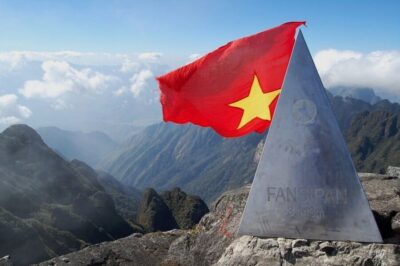
2-Day Fansipan Mountain Trek – Indochina’s Highest Peak
Read our review →
Sapa 2 days 1 night trekking Lao Chai Ta Van – Fansipan mountain by cable car
Read our review →
2-Days Sapa Tour with Fansipan Cable Car Trekking Three Village
Read our review →Browse the lists this tour appears in