
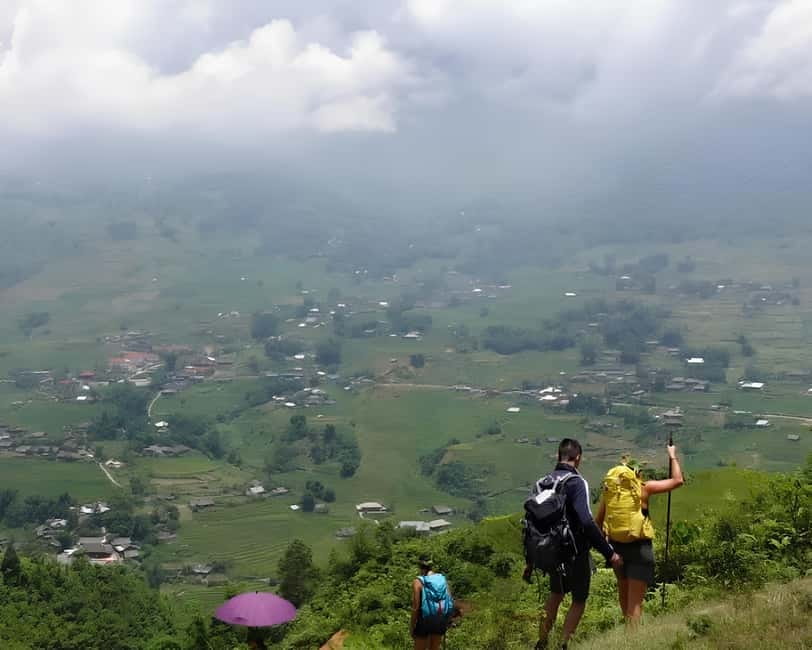
REVIEW · SAPA
Sapa 1 Day Long Trek: Trek to Hau Thao and Sa Seng Villages
Mud is part of the mountain bargain. This full-day trek takes you above Muong Hoa Valley, through Black Hmong villages and rice terraces, then back to Sapa by vehicle. I like the big Fansipan views from Sa Seng and the chance to learn about farming, homes and customs from local guides such as Mao, Su, Zozo and Chau. I also like the hearty family-style lunch, which gives the day a useful pause rather than another hurried roadside stop. The main catch is simple: this is not an easy village stroll, and rain can turn steep paths into slippery work.
The route is best for you if you want a proper day on foot and have reasonable fitness. The scenery can disappear into fog, especially in winter or wet weather, but the village visits and guide-led conversations still give the outing value. I would wear solid hiking shoes, carry cash, and accept that local sellers may follow the group for part of the walk.
Five things to know before you book
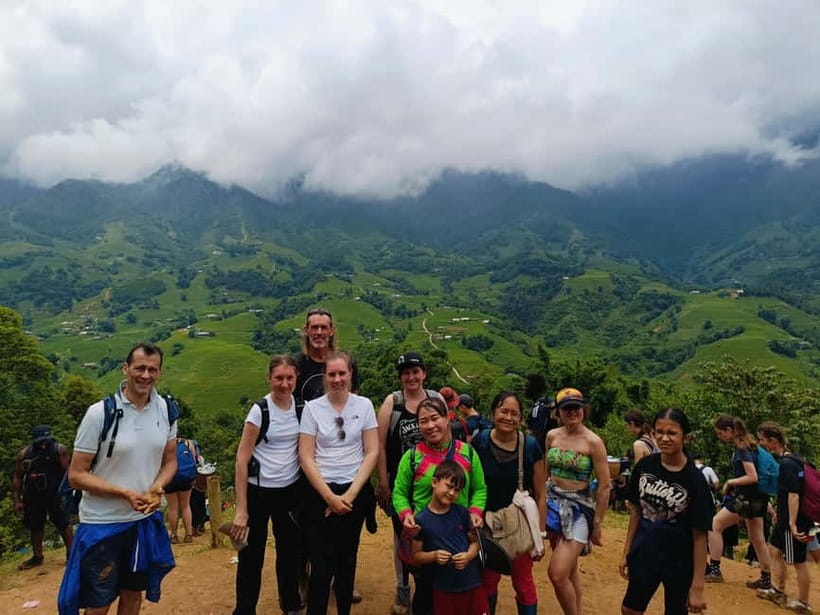
- Sa Seng gives the day its high point: On a clear morning, you can see Mount Fansipan and much of Muong Hoa Valley from above.
- The route is a real hike: Expect an uphill start, uneven ground, rice fields, bamboo forest, rocky sections and a long descent.
- Black Hmong culture is part of the experience: Your guide explains rice farming, house-building, marriage customs and village life.
- Lunch is local and generous: A family-run restaurant provides a freshly cooked midday meal, with drinks usually costing extra.
- Weather changes the day: Fog may erase the big views, while rain makes the paths muddy and slippery.
- You finish away from Sapa: The trek ends around Giang Ta Chai, followed by private transport back to town.
Starting in Sapa with a steep first hour
Pickup is scheduled for 9:00 AM from accommodation in Sapa Town. If you stay in town, the operator can collect you at your hotel. If not, you can pay for a transfer to a meeting point, with Sapa TT Homestay at 812 Dien Bien Phu Street and July Hotel Central Sapa at 02 To Vinh Diem Street among the stated options.
The meeting details deserve attention. One person found the pickup arrangement confusing and had to walk from a hotel meeting point, while other bookings included direct hotel collection. Leave your WhatsApp number when booking and confirm the exact pickup place and time before the morning begins.
After a short briefing, you start with roughly 1 kilometer of uphill walking. The distance sounds modest, but the climb is the first test. The path is uneven, and you gain height quickly enough to feel it in your legs. I would not treat the advertised seven to ten hours as a casual day out. The route can cover around 15 kilometers, and one outing recorded 15.6 kilometers with about 630 meters of ascent and 1,100 meters of descent.
That figure will vary with the group, weather and route choices. Still, it gives you a better idea of the effort than the word village might suggest.
More One-Day Treks in Sa Pa:
- From Sapa: 1-Day Guided Trek to Lao Chai & Ta Van with Lunch
★ 4.9 · 416 reviews - 1-day Authentik trek & Panorama valley views
★ 5.0 · 189 reviews - 1 day Fansipan Trekking
★ 5.0 · 180 reviews
Sa Seng Mountain and the best views of the day
After about an hour of moderate uphill walking, you reach the top of Sa Seng Mountain. This is the reward for the early climb, and the place to pause for photographs.
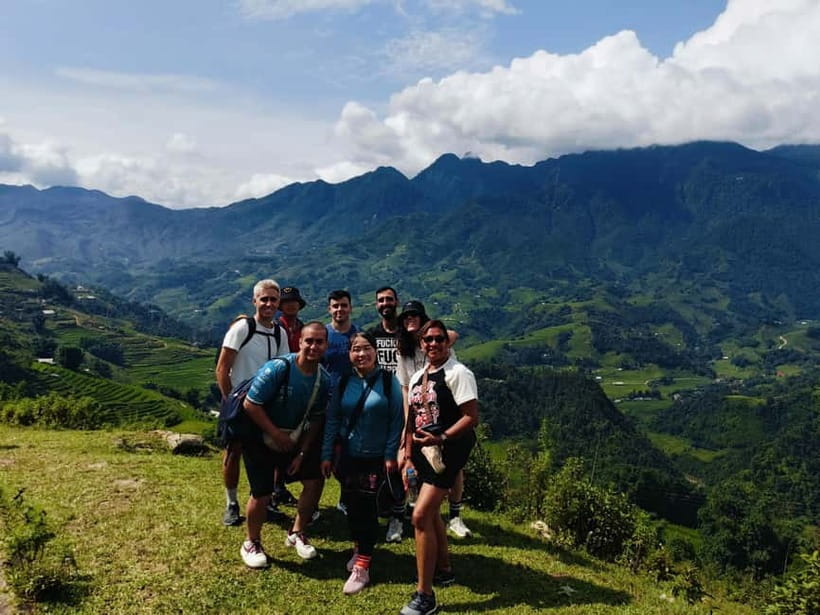
On a clear day, you can look toward Mount Fansipan, at 3,143 meters the highest peak in Indochina. Below, Muong Hoa Valley spreads across the mountains with its famous rice terraces, river and scattered settlements. The view is broad rather than intimate, so this is the moment when the scale of the Sapa region becomes clear.
Weather controls how much you see. In February, several outings had heavy fog or almost no visibility, while other days cleared enough to reveal the valley. In the wet months, cloud and rain can stay around the peaks, but even then the walk remains worthwhile for some people because the route, villages and guide add more than a viewpoint alone.
Your guide should help you judge the conditions. Chau, for example, offered a choice between climbing higher in poor visibility or staying lower when mist covered the upper route. That flexibility matters. You do not need to chase a view that the weather has already hidden.
Down to Hang Da through working countryside
From Sa Seng, the route turns downhill toward Hang Da Village. This change of direction gives your legs a different problem. Uphill walking tests your breathing, while the descent places more pressure on knees and ankles, particularly on wet ground.
The scenery shifts as you walk. You may pass rice fields, corn fields, bamboo forest and rougher rocky sections. Free-roaming buffaloes, pigs and horses are common sights along the route. These animals are not staged for a tour. They are part of the farming system and daily life of the mountain communities, which makes the walk feel connected to the place rather than arranged around a single photo stop.
The bamboo forest is a favorite section for many people. In dry conditions it can feel peaceful and shaded. In rain, it becomes one of the trickier parts, with mud and slippery footing. A pair of sturdy shoes is much better than light trainers, and you should be ready to slow down when the ground turns slick.
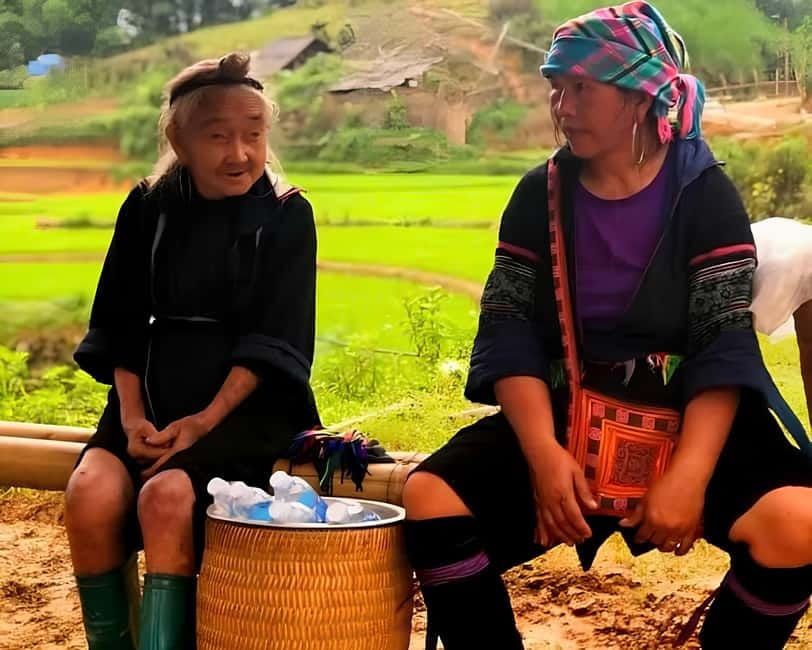
At Hang Da, you meet members of the Black Hmong community. The value of this stop depends heavily on your guide. Guides from nearby villages can explain what you are seeing in a direct, personal way. Mao, Su, Zozo, Vang, La and Chau were all praised for keeping groups cheerful while explaining local customs and mountain life.
Do not expect a museum-style presentation. This is a walk through active villages, where people farm, raise animals and carry on with their day. You see more when you stay observant and polite, rather than treating each home or person as a photograph.
A family lunch that breaks up the long walk
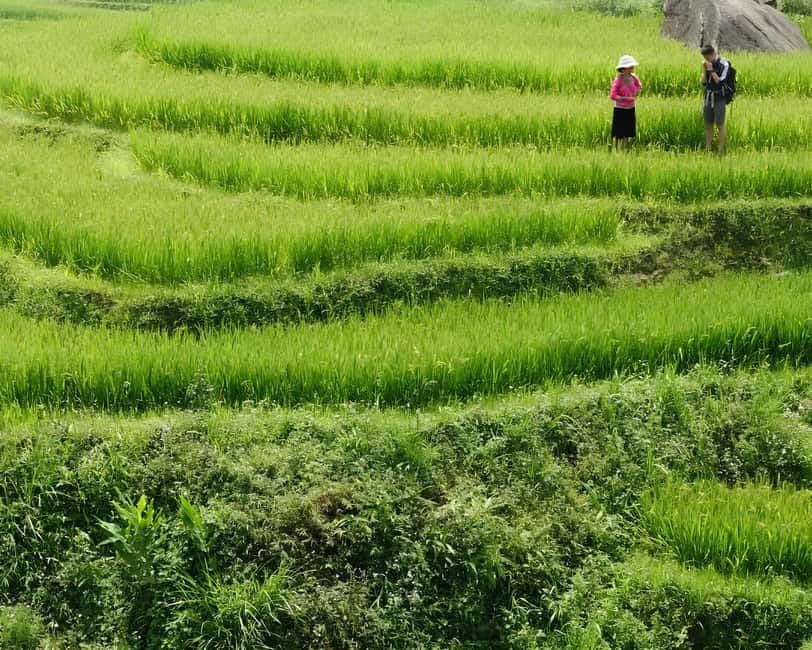
Around midday, you stop at a family-run local restaurant for lunch. This is practical as well as cultural. By this point, you have climbed, descended and crossed uneven ground, so a proper meal gives you time to rest before the afternoon section.
The food is home-style and freshly prepared. Several people found the lunch especially good, and one described it as generous. Drinks are not always included, so carry cash if you want something beyond the meal and bottled water provided during the trek.
The lunch stop can also be social. Small groups often share the table and compare notes about the route, weather and sore legs. Group size is described as small-group, though the exact number can change. A group of five was considered a particularly comfortable size because it allowed people to talk without losing the personal feel.
This is not a luxury meal, and you should not book the trek expecting a long restaurant experience. Its strength is simple local food, a warm break and a chance to recover.
A few more treks around Sa Pa worth a look
- Sa Pa: Muong Hoa Valley Trek and Local Ethnic Villages
★ 4.6 · 864 reviews - Sapa: Eco Adventure Terrace Fields and Local Villages Trek
★ 4.9 · 636 reviews - Number one top rated ethical cultural trekking and homestay by ETHOS
★ 5.0 · 456 reviews - Sa Pa Full Day Trekking Tour
★ 5.0 · 414 reviews
Hau Thao and the human side of the trek
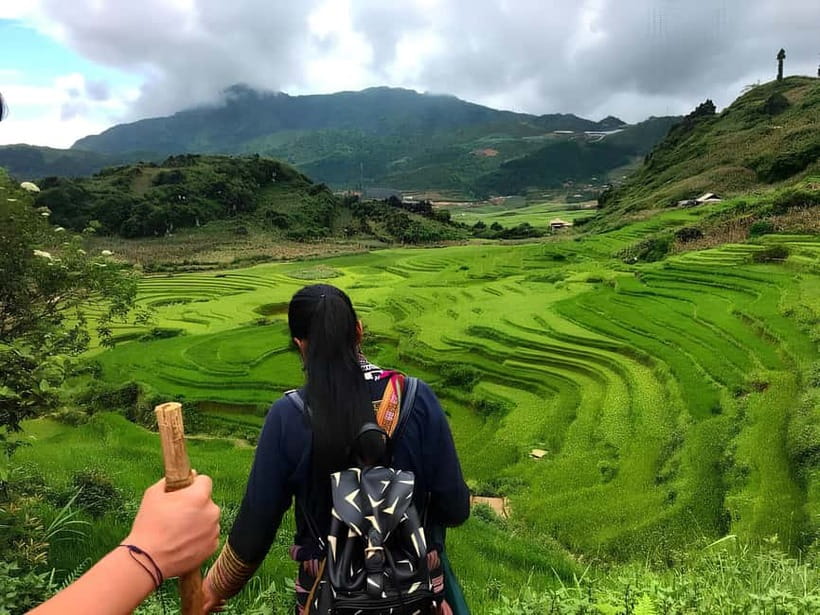
After lunch, you continue toward Hau Thao Village, another Black Hmong community in the mountains. Depending on the season, you might see farmers planting or harvesting rice. The timing of your visit affects what the fields look like, so the terraces are not always bright green or full of standing crops.
This part of the route offers more context than a quick viewpoint. Your guide can explain rice cultivation, traditional house-building, marriage customs and the way farming shapes village life. Ask questions. The strongest part of the day is often the conversation while walking, not a formal stop with a fixed schedule.
Guides with a personal connection to the area add a great deal. Some guides share stories about their families and traditions, which gives the information a human scale. Su was praised for taking care of everyone while explaining the mountains and culture. Other guides, including Mama Mao and Zozo, were repeatedly valued for their humor and patience.
The cultural element is still a tour, so keep your expectations sensible. You are not visiting an untouched village outside modern life. You are walking through communities that have contact with visitors and local commerce. The experience feels most respectful when you listen, ask before taking close photographs and buy something only if you genuinely want it.
Finishing at Giang Ta Chai, then riding back
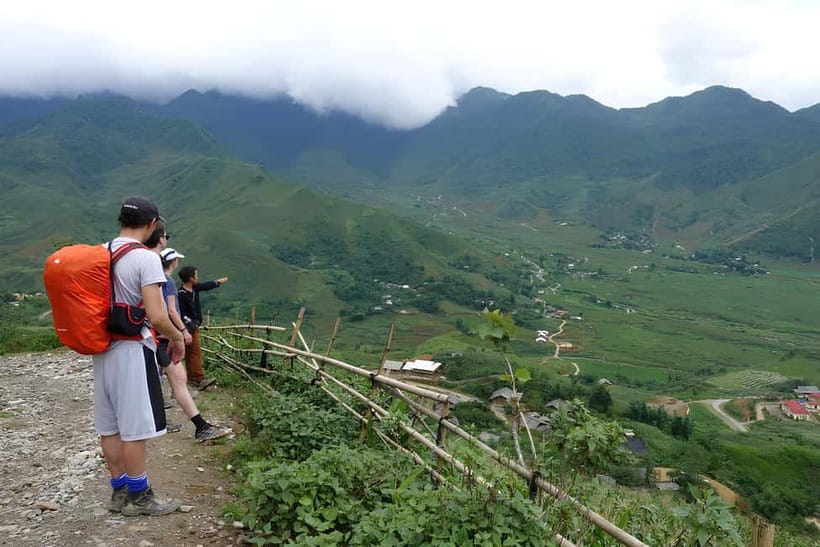
The trek finishes around 3:30 PM at Giang Ta Chai Village, where a vehicle waits to return you to Sapa. The exact total duration may reach seven to ten hours once pickup, breaks, lunch and transport are counted.
The final walking section can be tiring. Some routes end with several kilometers of steep concrete road, while others include more mud and uneven trail. One recorded outing found the hardest walking near the end because of a long descent. If your knees dislike downhill walking, use trekking poles if you have them and tell the guide early when you need a slower pace.
The return vehicle is a welcome part of the arrangement. You do not need to walk back to Sapa after covering the mountain route. Drop-off at your accommodation may be free or may involve a fee depending on the location, so confirm that detail before setting off.
You can also ask in advance about staying overnight near Hau Thao or Giang Ta Chai. The operator may help arrange a local homestay, luggage transfer and transport, but this needs to be organized before the trek.
What the $24 price really gives you
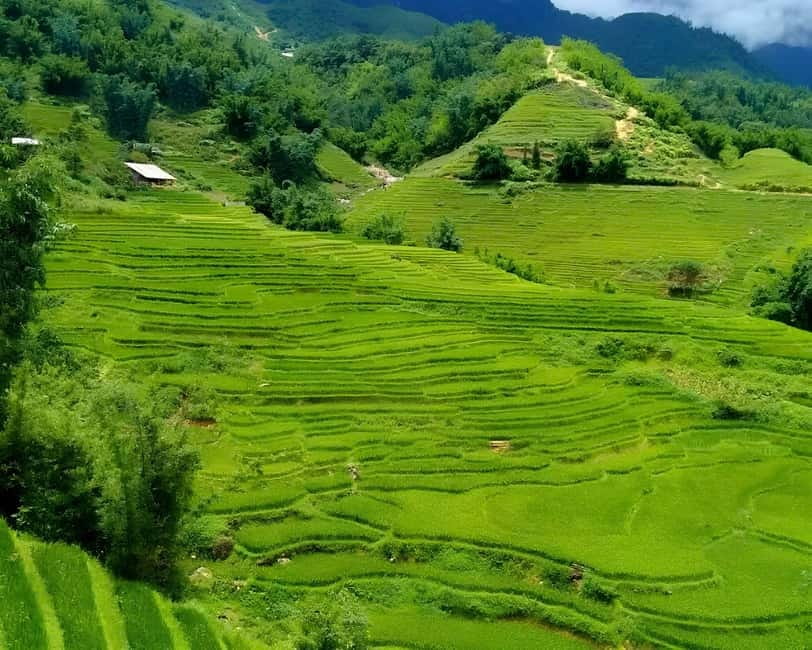
At $24 per person, this is strong value if you want a full day outdoors. The price includes hotel pickup and drop-off in Sapa Town, transport back after the walk, an English or Vietnamese-speaking guide, village and route entrance fees, bottled water and lunch.
The value comes from combining transport, a local guide and a long route in one day. Hiring separate transport and trying to find the paths yourself would make the outing less straightforward, especially in poor weather. The guide also provides safety help on difficult ground and explains what you are seeing.
The price does not include anything not listed. Drinks at lunch, purchases from local sellers, paid pickup from outside Sapa Town and possible extra drop-off fees should be treated as additional costs. Bring cash, sunglasses and a sun hat. A rain jacket and proper shoes are not listed as inclusions, but both make sense for this terrain.
Free cancellation up to 24 hours before departure and reserve-now, pay-later booking add useful flexibility. The more important practical point is to check the weather and communication details before the trip.
Rain, fog and local selling
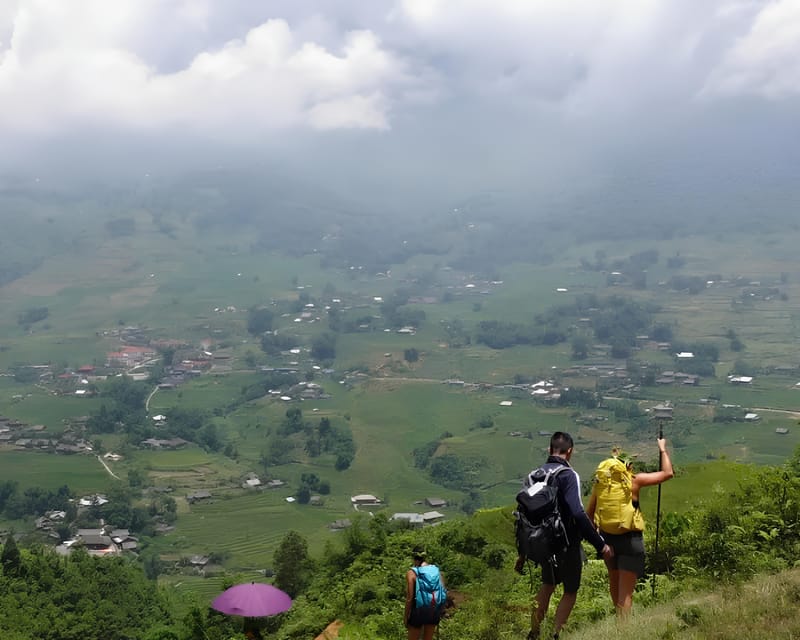
Sapa weather can change the character of this trek. Fog may hide Fansipan and the valley, while rain makes bamboo forest paths and steep trails muddy. Dry weather gives you better views and safer footing, but a wet day does not automatically ruin the experience.
If rain is forecast, ask whether the route can be adjusted. Guides have offered lower paths when high viewpoints were covered in mist, and they may provide rubber boots in bad conditions. Still, boots are not a substitute for careful walking. One person specifically advised wearing proper hiking shoes even after receiving gumboots.
There is also a social pressure point. Local women may walk alongside groups and offer scarves or other goods, then ask for purchases near the end. You can buy something if you want it, but you are not required to do so. A friendly, clear no is enough. Knowing this in advance helps you enjoy the walk without feeling caught off guard.
Who should book this trek?
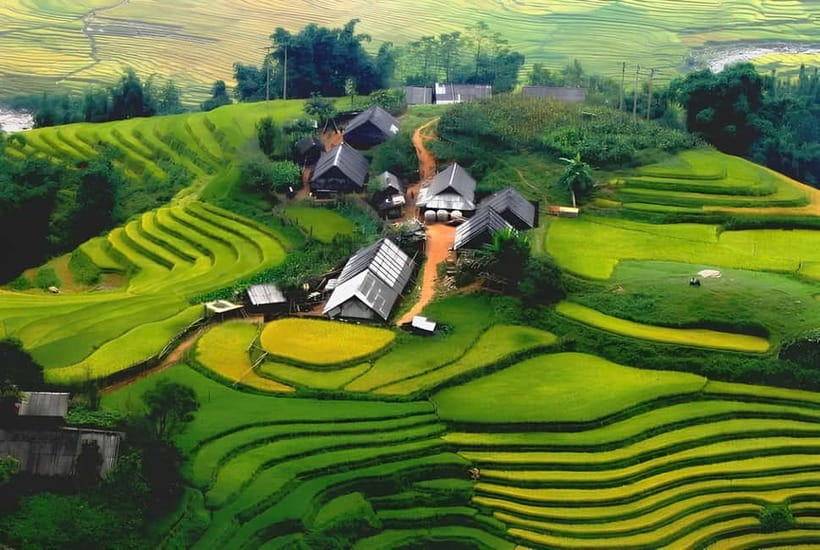
I would choose this experience if you have one day in Sapa and want more than a short village visit. It gives you a high viewpoint, working countryside, several Black Hmong communities, a local meal and a guide who can connect the scenery to everyday life.
It suits people who walk regularly and can manage a long day with elevation changes. It is not a good match for wheelchair users, people with mobility limitations, serious heart or kidney problems, altitude sickness, visual impairment or babies and very young children. The stated restrictions also exclude people over 80, people over 95 and anyone over 159 kilograms.
First-time hikers can do it, but the route may feel too demanding if you are not used to uneven paths. The climb is steep in places, and the descent can be hard on tired knees. Tell the guide about your pace and take the offered breaks.
Should you book Sa Seng, Hang Da and Hau Thao?
Book it if you want a proper mountain trek with cultural insight, not a gentle scenic outing. The guides are the main strength, with people such as Mama Mao, Su, Zozo and Vang bringing humor, patience and useful local knowledge to the day.
Skip it if you need guaranteed views, dislike mud or want a short walk with little exertion. On a clear day, the views from Sa Seng and the descent through the valley can be superb. On a foggy day, you will rely more on the villages, lunch and guide.
For $24, the mix of transport, food, guiding and a long route is hard to fault. Wear serious shoes, confirm pickup, carry cash and check the forecast. If you can accept a little discomfort, this is one of the better ways to spend a single full day around Sapa.
FAQ
How long does the trek take?
The activity lasts about seven to ten hours. Pickup is scheduled for 9:00 AM, and the walking portion is expected to finish around 3:30 PM before transport returns you to Sapa.
Where does the trek start?
Pickup is available from accommodation in Sapa Town. Meeting points include Sapa TT Homestay at 812 Dien Bien Phu Street and July Hotel Central Sapa at 02 To Vinh Diem Street.
Which villages does the route visit?
The route goes through Sa Seng, Hang Da and Hau Thao, and finishes around Giang Ta Chai before the vehicle returns to Sapa.
Is lunch included?
Yes. A traditional lunch at a family-run local restaurant is included. Drinks may cost extra, so bring cash.
Is bottled water included?
Yes. Bottled water is provided during the trek.
What views can I see?
From Sa Seng Mountain, you may see Mount Fansipan and Muong Hoa Valley, including its rice terraces, river and surrounding mountains. Fog and rain can reduce visibility.
Is this an easy walk?
No. The route includes an uphill start, uneven paths, rice fields, bamboo forest, rocky ground and a long descent. Some sections can be muddy and slippery.
What should I bring?
Bring sunglasses, a sun hat or hat, and cash. Proper hiking shoes and weather protection are also sensible for the conditions described.
Can I be picked up outside Sapa Town?
Pickup outside Sapa Town may be possible for an extra fee. You can also travel to one of the stated meeting points in town.
Can I stay overnight near the final village?
Yes, but you must request this in advance. The operator can assist with local homestay arrangements, luggage transfer and transport plans near Hau Thao or Giang Ta Chai.
Recently added around Sa Pa
- Soob Sapa Trekking Tour★ 4.3 · 3 reviews
- Sapa Trekking – Waterfalls And H’mong Villages★ 5.0 · 2 reviews
- Sapa Trekking Private Tour With Ethnic Female Tour Guide★ 4.9 · 24 reviews
- Sapa: Trekking Through Terraced Rice Fields & Valley 1 Day★ 4.8 · 4 reviews
- Sapa: Y Linh Ho – Lao Chai, and Ta Van Trekking Day Tour★ 5.0 · 25 reviews
- Sapa Trekking Guide Francophone 2 days – 1 night★ 5.0 · 2 reviews
- Sapa: Ta Phin Village Trek with Lunch and Bathing Experience★ 4.7 · 13 reviews
- Sapa small groupe activities: 1 Day trek – Meet the locals★ 4.7 · 3 reviews
Sapa Trekking Tours, compared.
Muong Hoa Valley Trek and Local Ethnic Villages
Read our review →
Eco Adventure Terrace Fields and Local Villages Trek
Read our review →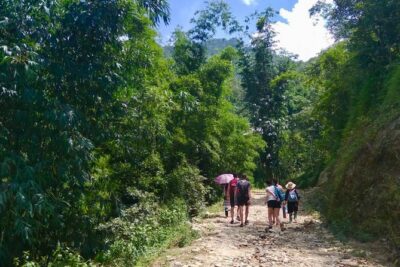
Number one top rated ethical cultural trekking and homestay by ETHOS
Read our review →
1-Day Guided Trek to Lao Chai & Ta Van with Lunch
Read our review →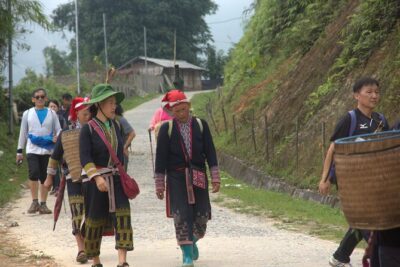
Explore Sapa by TrekkingAdventures, Mountain,Rice fields
Read our review →
EXPLORE SAPA: 2D1N TREKKING & HMONG CULTURE WITH DINH
Read our review →
Browse the lists this tour appears in