
REVIEW · INDIA
Ladakh One Day Trek- Gyamtsa to Phyang Village
High passes, quiet valleys, one rewarding day.
This private hike gives you a practical taste of Ladakh’s high-altitude trekking without committing to several days on the trail. I like the small-group format, which lets you set a sensible pace, and I like that lunch, walking poles, transport, and a guide are included rather than added as surprises. The main caution is altitude: the route rises from about 3,900 meters to 4,800 meters, so five to six hours of uphill walking can feel much harder than the distance suggests.
You meet at the Ladakh Backpackers office in Leh at 8:00 am, then travel toward the Gyamtsa and Stok area. The trail passes through a valley, reaches Gyamtsa La, and descends to Murubrok and Phyang Village. It is a good fit for an active visitor who wants big Indus Valley views and a genuine mountain walk, but less suitable if you are still struggling to adjust to Leh’s thin air.
Key points at a glance
- A high pass in a single day: The route climbs from about 3,900 meters to Gyamtsa La at roughly 4,800 meters.
- Private attention: Only your own group takes part, so you are not forced to match a large party’s speed.
- A rocky, uphill trail: Expect a moderately challenging walk, with steeper sections and uneven ground.
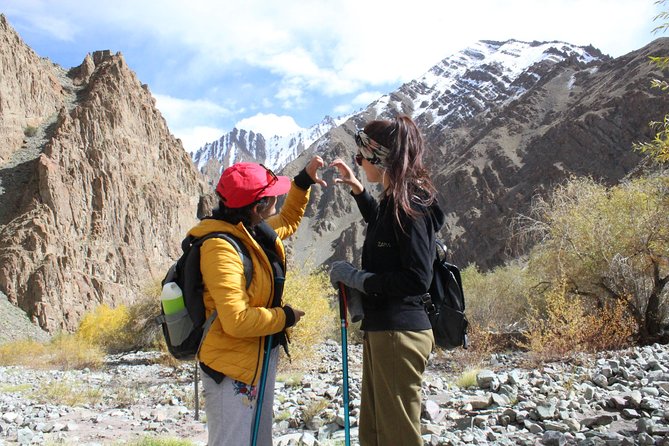
- Views toward the Indus Valley: From the pass, you can see across the valley and toward the Ladakh Range, along with the route leading to Lasermo La.
- Useful trail support: Walking sticks, a packed lunch, private transport, and a trek guide are provided.
- A flexible weather policy: Poor weather can lead to a new date or a full refund, while cancellations made at least 24 hours ahead receive a full refund.
Why this short Ladakh trek works
Many visitors come to Leh hoping to hike, then discover that a multi-day trek requires more time, gear, and planning than they have available. This outing solves that problem neatly. You get a full day outside the city, a serious high pass, and a return to Leh without arranging tents, porters, or overnight camps.
The route also offers a useful change of pace from Leh’s monasteries, markets, and motor roads. You walk through a valley rather than simply stopping at a viewpoint. That matters in Ladakh, where the pleasure often comes from watching the terrain change slowly under your own feet.
I especially like the private setup. You can stop for water, take photographs, or slow down on a steep section without worrying about a busload of people waiting. The guide can also give you more direct help, which is important when the air gets thin.
Still, private does not mean easy. A previous solo outing with Padma was described as tough because of the temperature and weather, though his encouragement helped the walker finish on time. That is a useful warning: the guide can support you, but you still need to arrive with reasonable fitness and respect for the altitude.
More One-Day Treks in India:
- 1 Day Activity Adventure Trekking Kerala
★ 5.0 · 5 reviews - From Sapa: 1-Day Guided Trek to Lao Chai & Ta Van with Lunch
★ 4.9 · 416 reviews - Sapa 1 Day Long Trek: Trek to Hau Thao and Sa Seng Villages
★ 4.6 · 344 reviews
Starting near Gyamtsa at 3,900 meters
The day begins at the Ladakh Backpackers office in the Gangba Complex on Changspa Road, opposite Hotel Enso, at 8:00 am. Pickup is offered, and private transport is included, so the morning is fairly simple. You do not need to arrange a taxi to a remote trailhead on your own.
The starting point, Gyamtsa, is about 3 kilometers north of central Leh and sits at approximately 3,900 meters. The published description also refers to the Stok village area as the starting point, so you should confirm the exact pickup and trailhead details with the operator when booking.
That short distance from town can be deceptive. Leh itself is already high, and the walk begins from an elevation that would be a major summit for many ordinary hikes. Give yourself time to adjust before attempting this route. If you have only just arrived in Ladakh, a slower first day in Leh may be wiser than rushing straight onto a high pass.
The opening section leads through a picturesque valley and takes about two to three hours. You will be walking through an area noted for its varied plant life and wildlife. The route is not presented as a wildlife safari, so sightings are never guaranteed, but it is worth keeping your eyes open rather than staring only at your boots.
The uphill walk to Gyamtsa La
The trail gradually rises toward Gyamtsa La, at about 4,800 meters. Gradual does not mean effortless. The altitude makes each climb more demanding, and the uneven, rocky surface requires steady footing.
This is where the walking poles become useful. They give you extra balance on rough ground and can help take some pressure off your knees during the later descent. Since poles are supplied, you do not need to pack your own unless you strongly prefer a particular style.
The most important skill here is pacing. You do not win anything by racing through the first hour. I would keep your steps short, drink regularly, and tell the guide early if you feel unusually tired, dizzy, or short of breath. A private guide can adjust the rhythm more easily than a large group leader.
The route has been described as uphill and rocky, with steeper sections. That description is more useful than calling it simply scenic. You should expect a real mountain walk, not a broad, level stroll with occasional views.
Gyamtsa La and the high point of the day
At the pass, the reward is a wide view across the Indus Valley and toward the Ladakh Range. You can also see the main route that leads toward Lasermo La, giving you a sense of how the local trekking routes connect across the high country.
This is the natural place for a proper rest. Take time to eat, drink, and enjoy the view before going on. The pass is likely to feel exposed and strenuous because of its height, so the break is not just for photographs. It gives your body a chance to settle before the descent.
The views are the strongest reason to choose this particular route. You are not only looking at distant mountains from a road. You have climbed to a pass and can see the valley from a higher, quieter position. On a clear day, the combination of the Indus Valley and the Ladakh Range should be the visual centerpiece of the outing.
Cloud, wind, and weather can change the experience. The operator requires good weather, and a cancellation caused by poor conditions comes with either another date or a full refund. That policy is sensible for a high-altitude route, where bad weather can affect both comfort and safety.
A few more treks around India worth a look
- Half day trekking (munnar valley Trekking & Tours )
★ 5.0 · 310 reviews - Nag Tibba 2 Days Trek (Pantwari to Pantwari)
★ 5.0 · 274 reviews - Bhrigu Lake and Alpine Meadow Trek
★ 5.0 · 121 reviews - Har Ki dun Trek by Himalaya Shelter
★ 5.0 · 102 reviews
Descending through Murubrok to Phyang Village
After the rest at Gyamtsa La, the route drops toward Murubrok at about 3,900 meters and finishes in Phyang Village. The descent gives your legs a different challenge from the morning climb. Rocky downhill sections can be awkward, especially after several hours of walking, so use the poles and take your time.
Phyang marks the end of the walking portion. A vehicle waits there to take you back to Leh, which makes the route more appealing than an out-and-back walk. You see new ground throughout the day instead of retracing every uphill step.
The return drive also keeps the experience within a manageable six-hour window, approximately. Exact timing can vary with walking speed, rest stops, weather, and trail conditions. You should not plan an important evening activity that requires you to return at an exact minute.
Because the walk ends in a village rather than at the original trailhead, the day has a pleasing sense of progress. You start near Leh, cross a high pass, pass through Murubrok, and finish at Phyang before riding back to town.
Lunch, water, and what to carry
A packed lunch is included, which is a welcome practical touch. Food is more than a convenience on this route. After several hours of uphill walking, you need a proper pause and some fuel before the descent.
You still need to carry plenty of water. The supplied information specifically warns you to do so, and high-altitude exertion makes hydration important. A small daypack is the sensible choice for water, lunch, a warm layer, sun protection, and personal items.
Do not treat the presence of a packed lunch as a reason to pack lightly on fluids. Lunch is provided, but drinks beyond what you bring are not promised. You should also avoid assuming that a porter’s help is available, since porters are not included.
The route can feel warm in direct sun and cold in wind or changing weather. Layering is practical, even though the exact clothing list is not specified. Wear footwear suited to a rocky trail, and keep your hands free when possible so you can use the walking sticks.
Guide support and the private-tour advantage
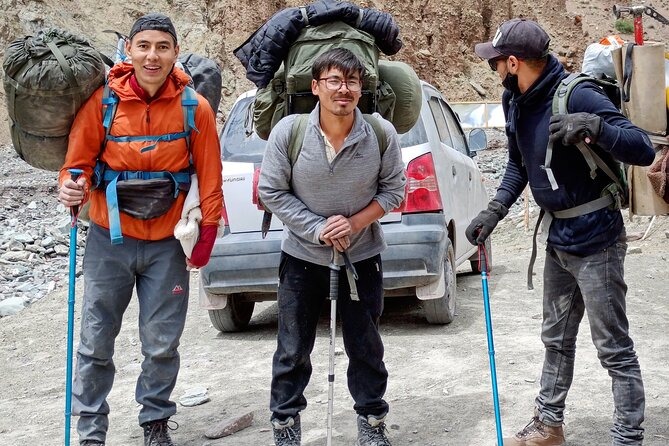
The guide is one of the more important parts of this experience. English-speaking guide Aijaz accompanied one group, while Padma guided a solo walker on another outing. Padma was praised for being friendly, cooperative, and encouraging during a difficult walk.
Those details matter because a guide on a high route does more than point out scenery. You need someone who can help maintain a safe pace, explain the route, and notice when the day is becoming too demanding. The private format should make that support more personal.
The tour is for your group only. That gives you more control over stops and pace, but it also means you cannot rely on a larger party to set the rhythm or share equipment. You need to be honest about your fitness and communicate clearly with the guide.
The experience is described as moderately challenging and best suited to people with a moderate fitness level. Five to six hours of hiking at altitude is a serious day for many fit people. You do not need to be an expedition climber, but you should be comfortable with sustained uphill walking on rough ground.
Is $99 a fair price?
At $99 per person, the cost is reasonable if you value convenience and private attention. The price includes transportation, a guide, packed lunch, and walking sticks. Those inclusions reduce the number of separate arrangements you need to make in Leh.
The value is strongest for a solo participant or a small group that wants a dedicated guide. A private high-altitude hike can be costly to organize independently once you add transport to the trailhead, a local guide, food, and a ride back from Phyang.
Group discounts are offered, which may make the price more attractive for families or friends booking together. Accommodation in Leh, insurance, and porters are not included. You should budget for those separately and make sure your insurance covers the kind of mountain activity you plan to do.
The price would be less appealing if you want a gentle half-day outing or a guided sightseeing trip with little physical effort. This is an active experience. You are paying for access to a mountain route and the support needed to complete it, not for a relaxed ride with a few short walks.
Who should book this route?
I would recommend it to an active visitor who has adjusted to Leh’s altitude and wants one strong day outdoors. It is especially useful if you have limited time but still want a proper trek rather than a roadside viewpoint.
It also suits people who prefer a private guide. Families with older children or mixed fitness levels may appreciate the ability to set a shared pace, though every participant still needs a moderate level of fitness.
I would hesitate to recommend it to anyone with little hiking experience, poor preparation for high altitude, or a tight schedule later that day. The rough trail, steep sections, and 4,800-meter pass can turn a simple plan into a tiring one.
The four recorded ratings produce an overall score of 4.8, and the strongest praise centers on the scenery, the unusual one-day format, and helpful guides. The most useful criticism is equally clear: the route is tough in poor weather and the surface is rocky. That balance gives you a fair picture of the day.
Booking, cancellation, and practical details
Confirmation is provided when you book. The activity begins at 8:00 am from the Ladakh Backpackers office, and it ends back at the meeting point in Leh after the return drive.
Free cancellation is available up to 24 hours before the start time for a full refund. Changes or cancellations inside that 24-hour window are not accepted for a refund. The operator uses local time for the cutoff.
Service animals are allowed, and the meeting point is near public transportation. Insurance is not included, so arranging your own cover is important. Since the route depends on good weather, a cancellation by the operator should result in a different date or a full refund.
Should you book the Gyamtsa to Phyang trek?
Book it if you want a demanding but manageable day hike, wide views from a 4,800-meter pass, and the comfort of private transport and guide support. The packed lunch and walking sticks are useful extras, while the private format lets you move at a pace that suits your group.
Skip it if you have just arrived in Leh, dislike rocky uphill trails, or need a guaranteed finish time. This is not a casual walk. With sensible pacing, enough water, and proper respect for the altitude, it offers a strong introduction to Ladakh’s high country without requiring a multi-day expedition.
FAQ
Where does the trek start?
The meeting point is the Ladakh Backpackers office at Gangba Complex on Changspa Road, opposite Hotel Enso, Leh. The walking route begins at Gyamtsa, about 3 kilometers north of Leh city center, in the Stok area.
What time does the experience begin?
The stated start time is 8:00 am.
How long does the trek take?
The experience lasts approximately six hours, with about five to six hours of hiking included.
How high does the route climb?
The trek starts at about 3,900 meters and rises to Gyamtsa La at approximately 4,800 meters.
Are lunch and walking poles included?
Yes. A packed lunch and walking sticks are included, along with private transportation and a trek guide.
What happens if bad weather cancels the trek?
If poor weather causes the operator to cancel, you will be offered a different date or a full refund. You can also cancel at least 24 hours before the start time for a full refund.
Recently added around India
- Prashar Lake Trek★ 5.0 · 7 reviews
- Kasol + Kheerganga Trek 3D/2N, all inclusive with BanBanjara★ 3.5 · 3 reviews
- Jogini Waterfall Trek from Manali★ 5.0 · 2 reviews
- 8 Days Markha Valley Trek: Shared Tour with Meals Included★ 5.0 · 3 reviews
- Ladakh Sham Valley Trek★ 5.0 · 7 reviews
- 1 Day Activity Adventure Trekking Kerala★ 5.0 · 5 reviews
- Kolukkumalai Trekking with Night stay in Tent★ 5.0 · 2 reviews
- Gokarna Beach Trek★ 5.0 · 9 reviews
India Trekking Tours, compared.
Half day trekking (munnar valley Trekking & Tours )
Read our review →
Wild Elephant Anakulam & Waterfalls Tour(munnar valley Trekking)
Read our review →
Browse the lists this tour appears in