

REVIEW · POKHARA
From Pokhara: 5-Day Mardi Himal Base Camp Trek
Mountain views come early here. This five-day trek from Pokhara takes you through rhododendron forests, small villages, and high mountain country toward Mardi Himal and Machapuchre. I like the route’s quiet feel and the care provided by guides such as Santosh, who has helped trekkers manage food, pace, and trail choices. I also like the generous time at High Camp and Base Camp, where you can focus on the mountains instead of rushing from one stop to the next.
The main consideration is effort. The first two days involve steady uphill walking, and the cold increases quickly at higher elevations. You will also need cash for personal purchases, and the meal arrangement should be confirmed before departure because food is described as included only with selected options.
Five things to know before walking toward Mardi Himal
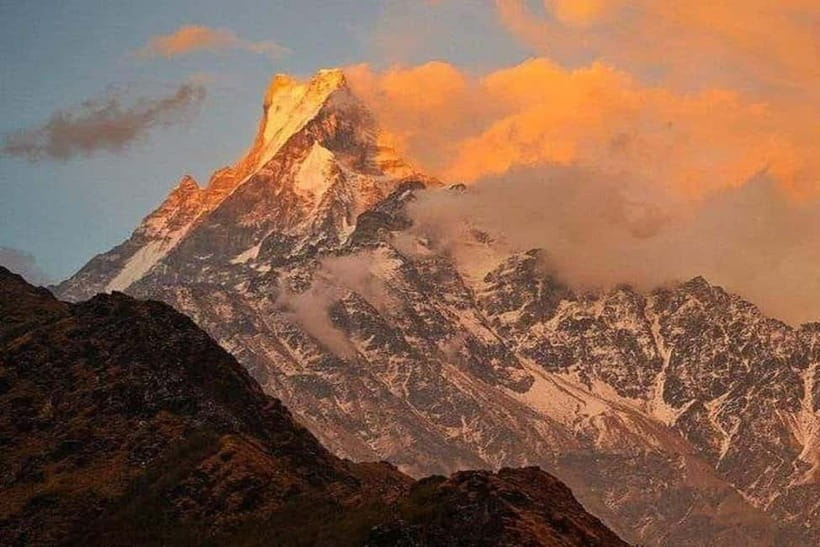
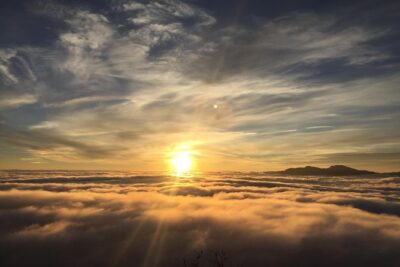
- The sunrise walk is the highlight: Day four takes you from High Camp to Mardi Himal Base Camp, with time for mountain views and a sunrise over the Annapurna range.
- The route begins gently but gets tougher: Australian Camp, Pothana, and Pitam Deurali make a scenic opening, while the climb to Low Camp and High Camp requires better fitness.
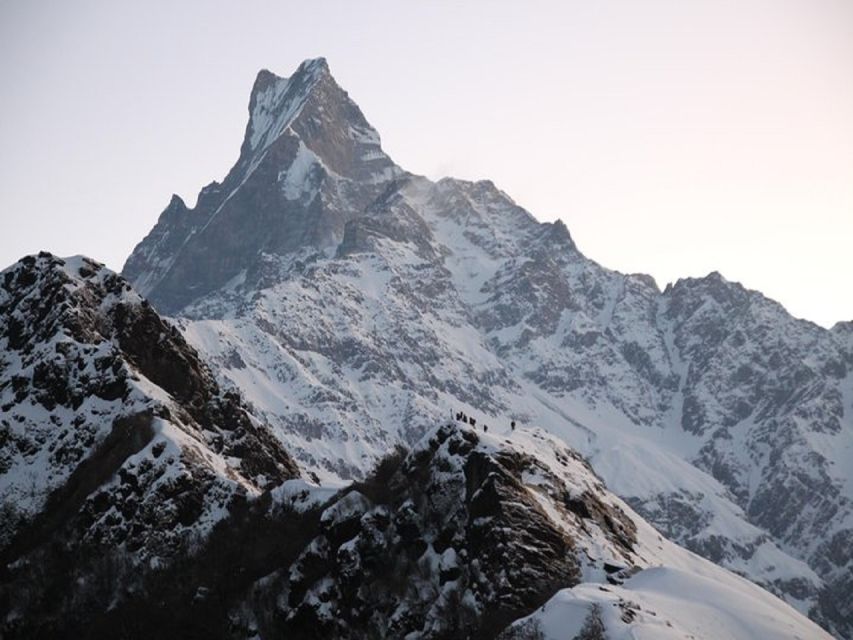
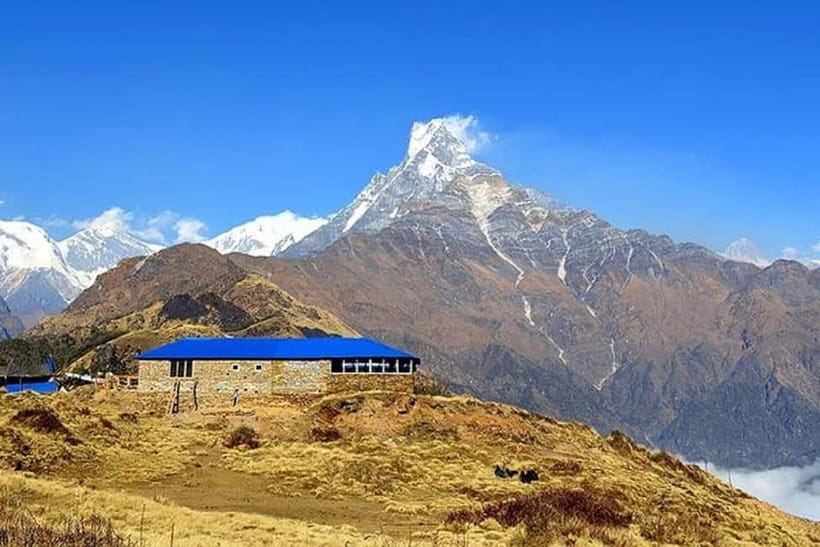
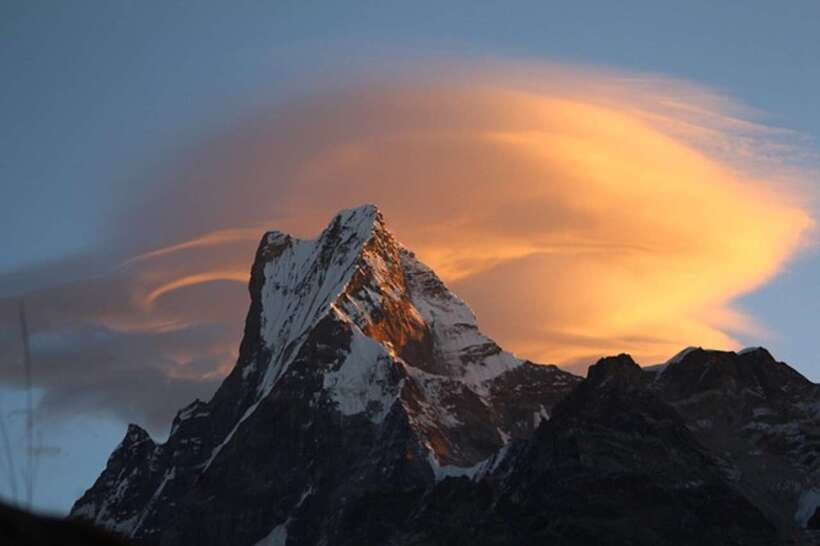
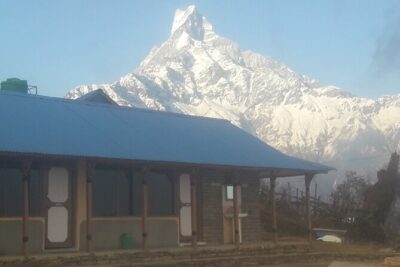
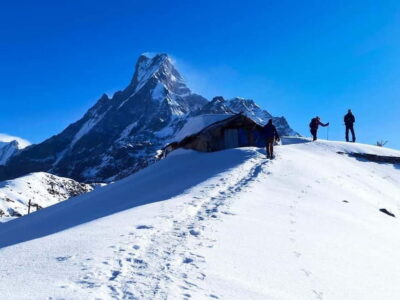
- Machapuchre feels remarkably close: The route gives you striking views of the distinctive Fishtail peak and surrounding Annapurna mountains.
- Guides make a real difference: Santosh, Sun-Bahadur Nepali, and Niva Nepali have been praised for patience, practical help, English skills, and good humor.
- The $181 price can be good value: Permits, transport, lodging, guide costs, insurance, and trekking equipment are included, but meals and a porter may cost extra depending on your booking choice.
Why this five-day route works
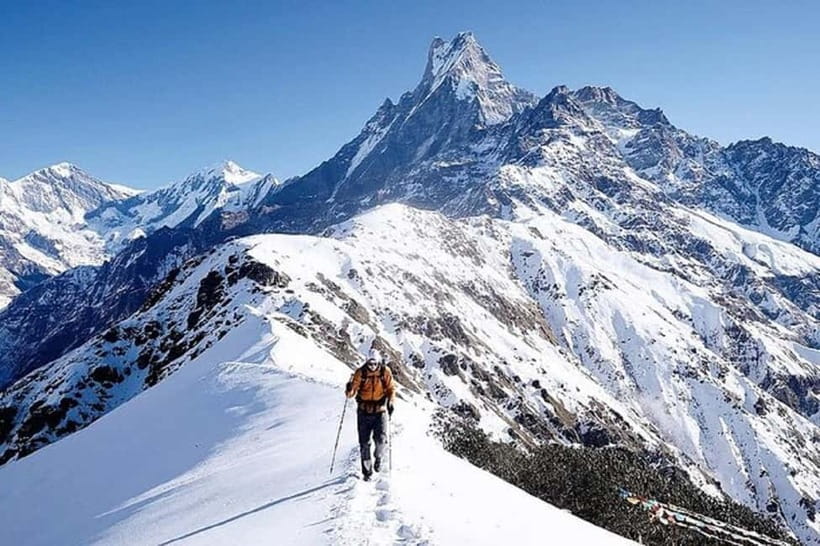
Mardi Himal is a good choice if you want a Himalayan trek without committing to a much longer expedition. The route from Pokhara reaches high mountain viewpoints in a compact five days, yet still gives you time in forests, villages, tea houses, and open ridgelines.
The trip is arranged as a private group, with an English, Hindi, or Nepali-speaking guide. That matters on a mountain route where weather, fatigue, and trail conditions can change the feel of a day. You are not left to work out every turn or lodge decision alone.
I also like the balance of walking and rest. The first two days are the hardest for many people, while the final mountain day includes a relatively short walk to Base Camp and a return to Low Camp. That schedule allows you to spend time looking around instead of treating the trek as a race.
The scenery changes often enough to keep the route interesting. You begin among forest and village paths, then climb into more open country with broad views toward the Annapurna range. Near the top, the trees thin out and the mountains become the main event.
More Mardi Himal Treks in Pokhara
- Pokhara: 4-Day Mardi Himal Trek
★ 4.9 · 59 reviews - Private Mardi Himal Trek
★ 5.0 · 42 reviews - From Pokhara: 4-Day Mardi Himal Base Camp Trek
★ 4.9 · 31 reviews
Day one: Pokhara to Pitam Deurali through Australian Camp
Your morning begins with transport from Pokhara Lakeside, Lakeside Road 6, or Pokhara International Airport. The drive takes you to Kande, where you start walking toward Australian Camp, Pothana, and Pitam Deurali.
This opening section gives you a useful introduction to the route. The path passes through rhododendron forest and small settlements, with breaks for lunch along the way. Australian Camp and Pothana are scenic early stops, offering a softer start than a direct push into higher country.
The day is listed at about four hours of hiking. That sounds manageable, but the route is not simply flat walking. You should expect regular climbs and uneven trail surfaces, so comfortable shoes are essential.
Pitam Deurali is a practical first overnight point. The simple tea house or lodge stay gives you a chance to eat, rest, and adjust to the rhythm of walking several hours each day. The accommodation is basic, so pack with comfort rather than luxury in mind.
Day two: Rhododendron forest and the climb to Low Camp
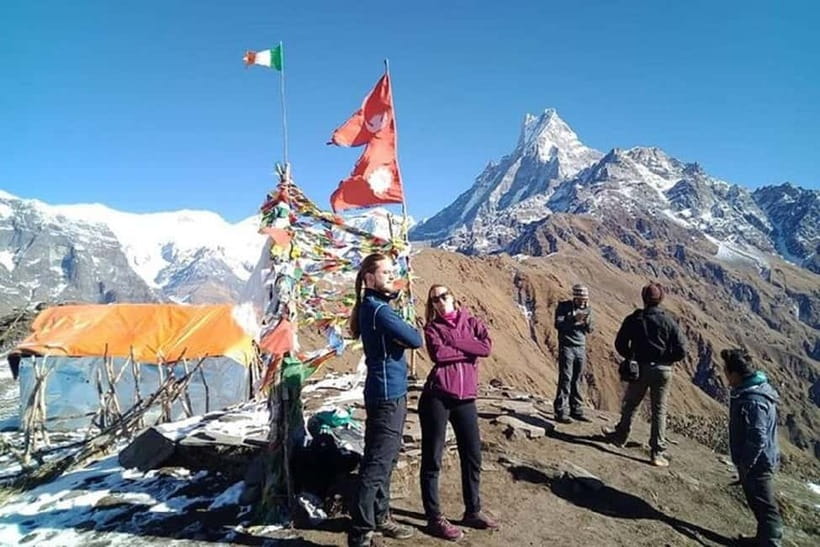
Day two takes you from Pitam Deurali toward Low Camp, with about six hours of hiking. This is one of the more demanding parts of the trip, especially because the route continues uphill for much of the day.
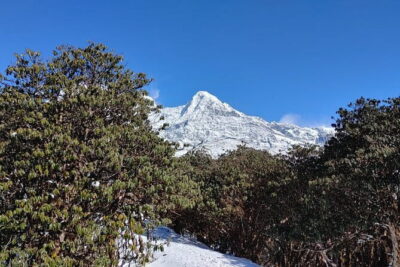
You pass through more forest and small settlements. Rhododendron trees are a major feature here, and the forest provides shade and a strong sense of distance from Pokhara. Lunch is taken along the route, giving you a chance to stop before the final stretch to Low Camp.
The pace matters. A good guide will help you avoid walking too fast early in the day. Santosh has been praised for patience and encouragement, while Sun-Bahadur Nepali and Niva Nepali were especially helpful with backpacks, food, and trail decisions. Those small acts become valuable when your legs are tired.
Low Camp is not the highest point of the trek, but it marks a clear change in the trip. You are now moving away from the lower forested sections and closer to the open mountain views that draw people to Mardi Himal.
Day three: The final settlement at High Camp
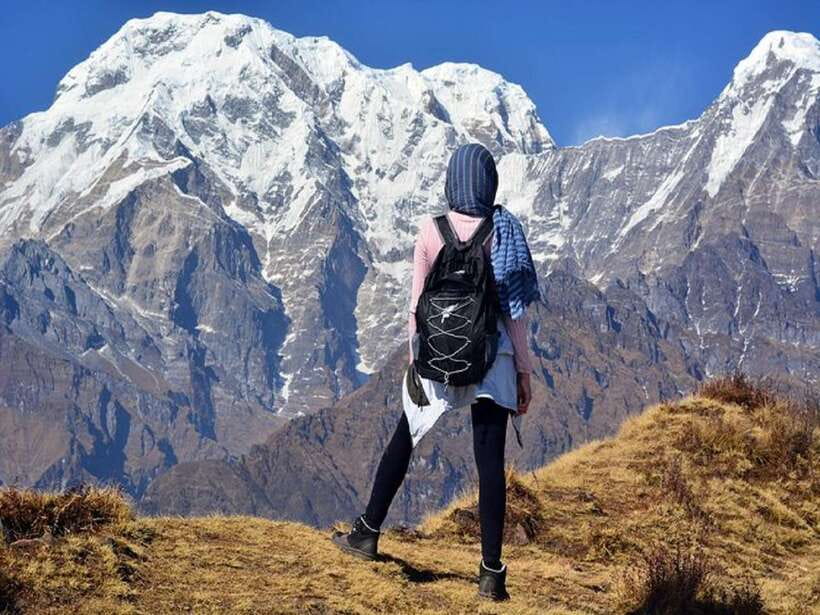
The walk from Low Camp to High Camp takes about four hours. Compared with the previous day, it is shorter, but the altitude and uphill grade can make it feel serious.
High Camp is described as the final settlement on this trail. That gives the stop extra importance. You spend the night close to the next morning’s goal, rather than trying to reach Base Camp in one long push from lower down.
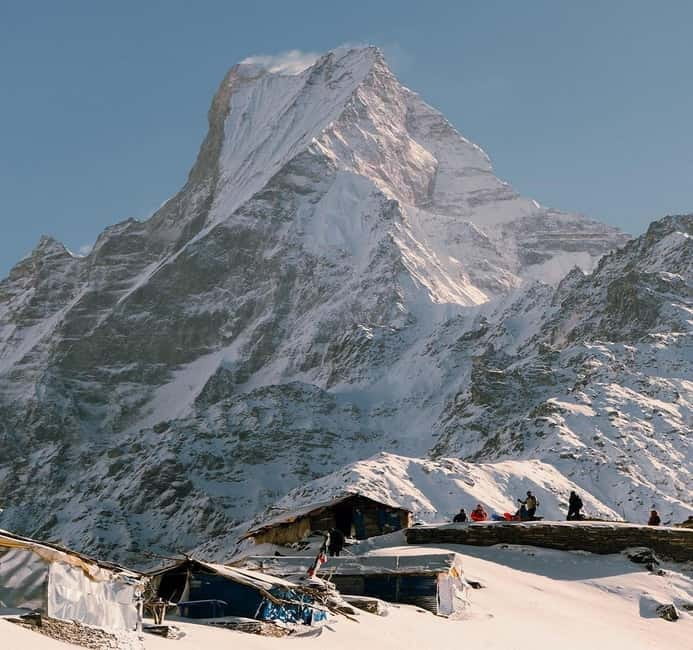
The mountain views become more open as you climb. This is where the setting begins to feel distinctly high Himalayan. Mardi Himal and Machapuchre appear closer, and the Annapurna range becomes the dominant view.
High Camp is also where cold-weather preparation matters most. Temperatures can change sharply with altitude, and the night may feel very cold. Bring a warm jacket, suitable layers, a hat, and clothing that can handle both warmer walking conditions and cold rest periods.
The scheduled walking time leaves room to rest after arrival. That is useful because the next day begins early if you want to catch sunrise from the Base Camp area. A trekking pole can also help on both the ascent and the descent. One participant with a knee problem found hiking poles useful, though the trek still requires reasonable fitness.
Same trailhead, a longer or shorter day out:
- Poon hill Trek 3 days
★ 5.0 · 176 reviews - Trekking in Annapurna/Langtang/Everest/Upper Mustang regions
★ 5.0 · 161 reviews - Pokhara: 4-Day Ghorepani, Poonhill & Ghandruk Mountain Trek
★ 5.0 · 132 reviews - Ghorepani – Poon Hill Trek 3N-4D
★ 5.0 · 125 reviews
Day four: Sunrise at Mardi Himal Base Camp
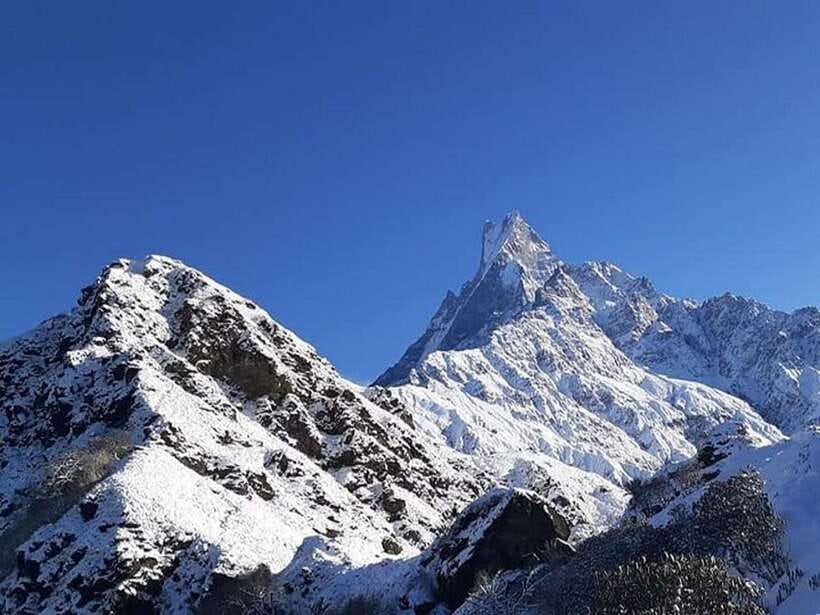
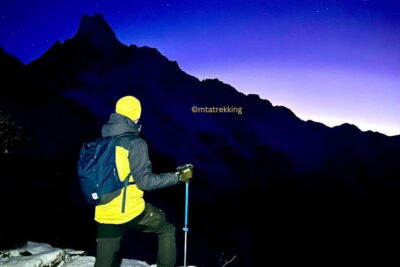
This is the central day of the trek. After breakfast at High Camp, you walk to Mardi Himal Base Camp, with roughly three hours of hiking listed for the route.
The early start is worthwhile. Sunrise brings light across the Annapurna range and Machapuchre, and the high viewpoint gives you a close look at the peaks. Weather determines how much you see, so clear skies can make a major difference. Even in good conditions, mountain visibility is never something you can guarantee.
You are given time to enjoy the Base Camp area before returning to Low Camp. That return is important to understand: this is not an overnight stay at Base Camp. You climb up, spend time with the views, and then retrace your steps to a lower place for the night.
The return walk also makes day four more physical than the three-hour estimate suggests. You should treat the full day as a serious mountain outing, with changing elevation and a descent that can be hard on knees.
The schedule does have a welcome advantage. Once you reach Low Camp, you have time to recover, eat, and reflect on the main climb. Several people found the later days easier because the walking hours were shorter and the afternoons allowed rest.
Day five: Descending through Sidding to Lumre
The final day leads downhill toward Sidding, then continues to Lumre. The walking time is listed at about five hours, followed by transport back to Pokhara.
You stop for lunch at Sidding before continuing toward Lumre. The route includes the Lumre canyons and Lwang Ghalel area, adding a different setting after several days of high mountain walking.
The descent can be harder than expected. Downhill paths may feel easy at first, but tired legs and sore knees can make the final hours slow. One useful option is hiring a porter, listed at $20 per day. A porter can carry heavier luggage, though you should still bring a small day pack with your jacket, water, cash, and personal items.
At Lumre, a vehicle takes you back to Pokhara. The road near the end has been described as bumpy, so do not expect a smooth final transfer. If you are sensitive to rough roads, ask about a jeep rather than assuming every vehicle will offer the same comfort.
Guides, porters, and the human side of the trek
The strongest part of this trip may be the guide service. Santosh is repeatedly praised for fluent English, kindness, patience, and good company. He has helped people with food and pacing, and in one case invited a trekker for dal bhat at his home after the walk.
Sun-Bahadur Nepali and Niva Nepali have also been praised for their care as guide and porter team. They helped with food, backpacks, route choices, and encouragement, and were happy to adjust to a slower pace. That kind of support is more useful than a guide who simply points out peaks.
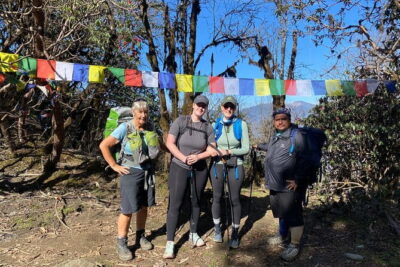
The group is private, so you can expect a more personal arrangement than a large shared departure. The guide also covers safety matters, cultural information, permits, and route decisions. Guides speak English, Hindi, and Nepali.
A porter is optional rather than automatically included. If you prefer to carry your own gear, pack carefully and keep the load light. If you want more comfort on the uphill and downhill sections, the extra $20 per day may be worthwhile.
What $181 includes, and what it may not
At $181 per person, this trek offers solid value if your selected option includes the full package. The price covers round-trip transport between your hotel, the airport, and the trailhead, along with trekking permits, paperwork, and TIMS fees.
It also includes simple tea house or lodge accommodation, a government-certified English-speaking guide, guide insurance and expenses, government and local taxes, a first aid kit, luggage storage in Pokhara, and some trekking gear such as a trekking stick or sleeping bag when needed.
The important qualification is food. The details say meals are included depending on the option selected, but also state that meals may need to be purchased during the trek. Confirm this before booking. One person calculated that paying for meals directly could be cheaper, at roughly £16 per day, but you must carry enough cash and budget for tea, snacks, and extra drinks.
You should also budget for personal expenses and a porter if you want one. The price is best for someone who values organized transport, permits, a private guide, and storage in Pokhara. A highly independent trekker might spend less by arranging a guide, food, and accommodation separately, but would take on more planning.
Fitness, packing, and practical preparation
You do not need to be an elite mountaineer, but you should be in good health and reasonably fit. The route includes several days of uphill or downhill walking, with the longest scheduled day lasting about six hours.
Pack for changing temperatures. Useful items include:
- Comfortable walking shoes
- A warm jacket and comfortable clothes
- A hat and hair tie
- Cash for meals and personal purchases
- Trekking gear, including poles if useful for your knees
- A camera
- A sleeping bag if you prefer or if your selected arrangement requires one
The required passport copy must be provided at least one day before the trek so permits can be arranged with the Government of Nepal. Travel insurance is mandatory, and emergency rescue services are available if needed.
Diamox was recommended by one participant, but medication decisions should be discussed with a qualified medical professional. The more practical point is to walk at a steady pace, drink regularly, and tell your guide early if you feel unwell.
Who should book this Mardi Himal trek?
I would recommend this trip to you if you want dramatic Annapurna views in five days and prefer a private, guided format. It suits people who enjoy active days but still want time to rest at the lodges and mountain stops.
It is also a good fit for first-time multi-day trekkers who are prepared for a real physical challenge. One first-time trekker completed it despite a knee problem, while another described the difficulty as neither too easy nor too hard. That does not make the route easy for everyone, but it suggests the effort is manageable with preparation.
You may want another option if you dislike basic lodging, cold nights, rough roads, or carrying cash for food. You should also think twice if you want a very relaxed walk, since day two and the descent can test your legs.
The route has room for personal moments beyond the standard schedule. After finishing early, one guide took a group to Lwang village, where they watched a volleyball tournament and shared a barbecue with local people. That kind of unscripted stop can become one of your best memories, but it depends on time, energy, and local activity.
Should you book the five-day Mardi Himal Base Camp trek?
Book it if mountain views, a private guide, and a compact Himalayan route matter more to you than polished hotels or complete price certainty for meals. The strongest reasons are the close views of Machapuchre, the sunrise at Base Camp, the forest and village walking, and the personal help offered by guides such as Santosh, Sun-Bahadur, and Niva.
Before paying, confirm exactly which meal option you are choosing, ask about transport back from Lumre, and decide if you want a porter. If you prepare for cold, uphill walking, and simple tea house stays, the $181 package can deliver a memorable and well-supported week in the mountains.
FAQ
How long is the Mardi Himal Base Camp trek?
The trek lasts five days, beginning and ending in Pokhara.
Where can pickup take place?
Pickup is available from Pokhara Lakeside, Pokhara International Airport, or Lakeside Road 6.
Where does the trek begin?
The vehicle takes you to Kande, where you begin walking toward Australian Camp, Pothana, and Pitam Deurali.
Is the trek private?
Yes. The activity is arranged for a private group.
What languages does the guide speak?
Guides are available in English, Hindi, and Nepali.
Are meals included?
Meals are included with selected options, but the details also state that meals can be purchased during the trek. Confirm the exact meal arrangement before booking.
Is a porter included?
No. A porter is optional and is available for $20 per day.
Do I need travel insurance?
Yes. Travel insurance is mandatory, and emergency rescue services are available if required.
What documents are needed before departure?
You must provide a copy of your passport at least one day before the trek so the required permits can be arranged with the Government of Nepal.
More 5-Day Experiences in Pokhara
- Kathmandu/Pokhara: 5-Day Annapurna Base Camp (ABC) Trek
★ 4.9 · 72 reviews - Pokhara: 5 Day Annapurna Base Camp Trek & Natural Hot Spring
★ 4.9 · 44 reviews - From Pokhara: 5-Day Annapurna Basecamp Trek with Hot Springs
★ 4.9 · 26 reviews - Pokhara: 5-Day Trek to Annapurna Base Camp and Hot Springs
★ 5.0 · 4 reviews
Recently added around Pokhara
- Pokhara: Majestic Mardi Base Camp Guided Trek with HotSpring★ 5.0 · 6 reviews
- Pokhara: 9-Day Annapurna Base Camp Trek with Poon Hill★ 5.0 · 6 reviews
- Pokhara: 5-Day Trek to Annapurna Base Camp and Hot Springs★ 5.0 · 4 reviews
- Pokhara: 5-Day Ghorepani and Poon Hill Private Trek★ 5.0 · 4 reviews
- Pokhara: 7-Day Annapurna Base Camp Trek & Hot Spring★ 4.0 · 3 reviews
- Pokhara:4-Day Ghorepani Poon Hill Guided Trek via Ghandruk★ 5.0 · 3 reviews
- Pokhara: 4-Day Poon Hill and Ghandruk Guided Trek★ 5.0 · 14 reviews
- Pokhara: 4-Day Ghorepani, Poonhill & Ghandruk Village Trek★ 5.0 · 6 reviews
Mardi Himal Treks, compared.
Mardi Himal Trek – 8 Days | Hidden Gem of the Annapurnas
Read our review →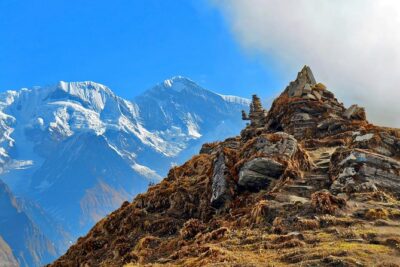
Browse the lists this tour appears in