
REVIEW · SAPA
Sapa Easy Trekking Tour 1 Day – Rice Paddies and Cultures
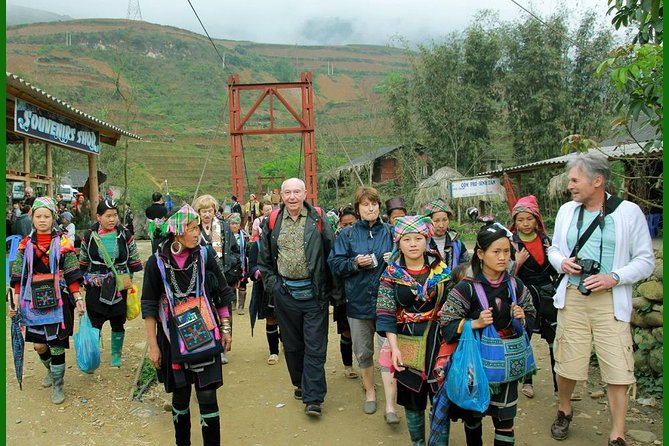
Rice terraces reward every uphill step. This 5.5-hour Sapa trek links Suoi Ho, Ma Tra, and Ta Phin, giving you mountain views, village life, rice paddies, and a visit to Ta Phin Cave for $40 per person. I like the small maximum of two people and the chance to walk with a local guide rather than follow a large group.
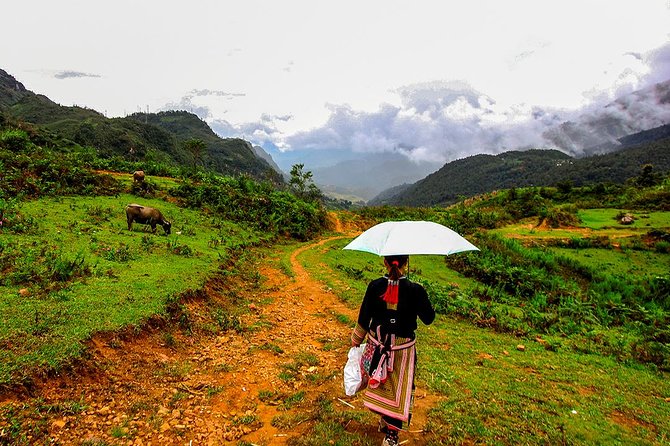
I also like the cultural range. You see Black Hmong and Red Dao communities, meet everyday farm animals such as water buffalo, and pass cardamom trees, a valuable crop in Sapa. The main caution is simple: easy does not mean flat. One participant described the route as roughly 11 kilometers, and another found the pace and slippery sections demanding.
Guide Pang has earned particular praise for sharing personal stories as a Hmong woman, while Zhu has been praised for explaining local nature and traditions. The experience suits you best if you can handle a moderate walk and want scenery with real village context, not just a quick viewpoint stop.
Key points at a glance
- A two-person maximum: You get a quieter walk and more room to ask questions than on a standard group excursion.
- Three villages in one route: The Sapa to Suoi Ho, Ma Tra, and Ta Phin route shows Black Hmong and Red Dao communities.
- Up to 1,900 meters: Expect mountain walking, changing views, and some uneven or slippery ground.
- Ta Phin Cave included: The cave adds a distinct natural stop to a day otherwise focused on paddies and villages.
- Lunch and return transport included: Vegetarian food is available, but drinks cost extra.
- A local guide makes the difference: Pang and Zhu have been praised for personal stories and explanations of local customs.
What the Sapa Ta Phin trek is really like
This is a half-day experience on paper, lasting about 5 hours and 30 minutes, but it packs a lot into that time. You begin at 9:00 am in Sapa, either with pickup from your hotel in town or at Sapa’s main church on Ham Rong Street.
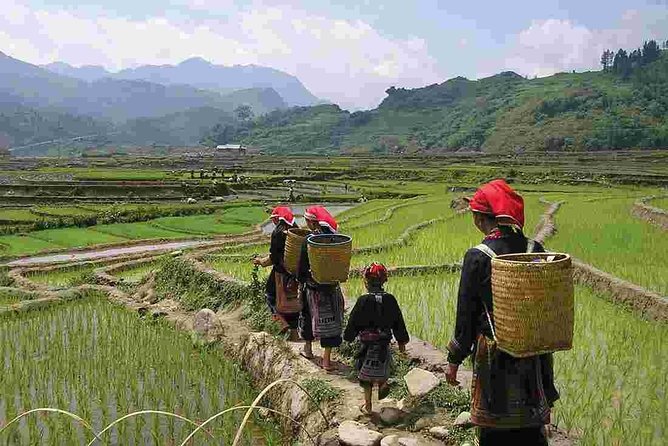
The route combines mountain paths, small roads, rice terraces, village homes, farm animals, and a cave. You are not simply driven to a viewpoint, given ten minutes for photos, and returned to town. Most of the value comes from walking between places and seeing how the countryside connects.
I like the small group limit of two people. That matters here because the path can change underfoot, and a guide can adjust explanations and attention more easily with one or two participants. It also gives you a better chance to ask about plants, homes, farming, or the communities you pass.
The experience requires moderate physical fitness. You should be comfortable walking for several hours and dealing with slopes. One detailed account put the distance at about 11 kilometers and warned that the tour was not an easy stroll. That is useful advice. Bring the right shoes, expect some effort, and do not book this because the title sounds gentle.
More One-Day Treks in Sapa:
- From Sapa: 1-Day Guided Trek to Lao Chai & Ta Van with Lunch
★ 4.9 · 416 reviews - Sapa 1 Day Long Trek: Trek to Hau Thao and Sa Seng Villages
★ 4.6 · 344 reviews - 1-day Authentik trek & Panorama valley views
★ 5.0 · 189 reviews
Starting in Sapa and reaching the first trail
The guide meets you at 9:00 am at your hotel in Sapa town or outside the main church. After a short introduction, you walk for about five minutes to a smaller trail.
That short opening walk helps you leave the town behind quickly. The first natural detail is cardamom, one of Sapa’s valuable crops, growing in small valleys. It is an easy detail to miss when you are focused only on the mountain views, so having a local guide adds real value.
Cardamom also gives you an early reminder that this is a working countryside, not a decorative park made for photographs. The route passes plants, animals, homes, and fields that are part of ordinary life. I find that more rewarding than a viewpoint with no explanation.
The trail then heads down toward Suoi Ho, a small Black Hmong village. The homes are described as old and small, and the setting gives you an early look at the built environment before the route moves on toward wider rice-field views.
You may see water buffalo, chickens, dogs, and pigs along the way. These are not arranged for a show. They are animals used and kept by local people, which makes the walk feel tied to daily village life.
Suoi Ho and the first rice terrace views
Suoi Ho is a useful first stop because it places the scenery in context. You see the Black Hmong presence in the area, along with modest homes and working farmland. The guide can help connect what you see with local culture, though the exact depth of explanation may depend on the person leading your walk.
This is where a local guide such as Pang can make the experience much stronger. Pang has been praised for sharing stories about her life as a Hmong woman, not just reciting basic facts. That personal connection gives the cultural side of the walk more weight.
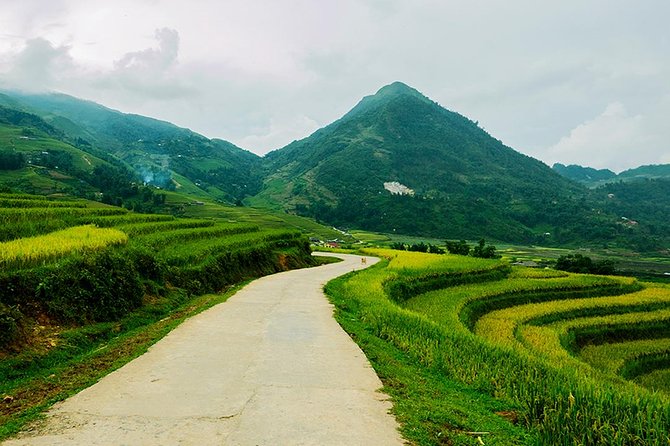
The rice terraces are the visual highlight for many people. Their appearance will depend on the season and conditions, but the route is designed to show the paddies and mountain scenery from several points rather than one fixed overlook.
You should keep your camera ready, but do not let photography turn the walk into a series of stops. The path itself is part of the experience. You are moving through valleys and villages, with the scenery changing as you gain or lose height.
The road and trail mix is another practical point. The route includes small roads as well as narrower walking paths. That makes the distance more manageable than a continuous mountain climb, but it also means the experience is not a wilderness hike from start to finish.
Ma Tra and the change of scenery
The route continues through Ma Tra before reaching Ta Phin. This section helps build the full picture of the area, as you pass more rice fields, mountain views, and village surroundings.
I like the fact that the route does not focus on only one minority community. You have the opportunity to see both Black Hmong and Red Dao communities during the same outing. That does not turn a short trek into a full cultural study, but it gives you a broader view of the people and traditions connected with Sapa.
A guide can also help you notice differences that you might otherwise miss. Zhu has been praised for explaining local nature and traditions, which is exactly the sort of practical interpretation that improves a walk. Without that help, you may see a roof, a field, or a piece of clothing without understanding its place in local life.
The physical demands may become clearer here. The route reaches heights of up to 1,900 meters above sea level, and at least one person found slippery slopes difficult. If you need to slow down on wet ground, say so early and clearly. A private or two-person format should make that easier, but you still need to communicate with the guide.
Weather matters a great deal. Rain can affect the footing, the comfort of the walk, and the views across the paddies. The operator may cancel in poor weather and offer another date or a full refund, but you should still pack with changing mountain conditions in mind.
A few more treks around Sapa worth a look
- Sa Pa: Muong Hoa Valley Trek and Local Ethnic Villages
★ 4.6 · 864 reviews - Sapa: Eco Adventure Terrace Fields and Local Villages Trek
★ 4.9 · 636 reviews - Number one top rated ethical cultural trekking and homestay by ETHOS
★ 5.0 · 456 reviews - Sa Pa Full Day Trekking Tour
★ 5.0 · 414 reviews
Ta Phin Village and Red Dao culture
Ta Phin is the main cultural destination on the route and the point where you encounter the Red Dao community. The village offers a different perspective from the Black Hmong settlements earlier in the walk.
The experience is strongest when you treat Ta Phin as a living community rather than a photo backdrop. Walk respectfully, listen to your guide, and allow space for ordinary village life. The stated aim is to visit two different villages connected with the Black Hmong and Red Dao communities, so the cultural value depends partly on your attention and attitude.
Ta Phin also gives the day its most distinctive natural feature: Ta Phin Cave. The cave is well known in Sapa and adds some variety after the open rice fields and mountain paths.
The available information does not give the cave’s length, lighting, or internal route, so you should not expect a detailed cave expedition. Think of it as an included point of interest within a village trek. Its value is that it breaks up the walking and gives the route a clear destination.
If you prefer a day made entirely of dramatic mountain viewpoints, the village sections may feel slower. I see that as a strength, but only if you want cultural contact and ordinary rural scenery along with your photographs.
Lunch, drinks, and what the $40 covers
At $40 per person, the tour offers reasonable value for a small, guided outing. The price includes lunch, vegetarian food if needed, village entry fees, a small bottle of water, a local guide, and transport back to Sapa.
The small group limit matters most when considering the price. You are not paying only for a meal and a ride. You are also paying for a guide who accompanies you through multiple communities and interprets what you see.
Lunch is included, but drinks at the restaurant or homestay are not. Extra bottled water or beer also costs more. Since the tour includes only one small bottle of water, I would not rely on that as your full supply for several hours of walking.
Tips are not included. You can decide what to give based on the service you receive, especially the guide’s pacing, explanations, and help on difficult ground.
The value is less convincing if you want a very short walk or a large number of formal attractions. It becomes more attractive if you want a small group, local guidance, village access, food, and transport bundled into one outing.
Walking difficulty, footwear, and pace
The word easy needs a little translation. It likely means easier than a strenuous multi-day mountain trek, not easy in the sense of a level city walk.
You should expect a moderate physical challenge, with mountain walking and some uneven ground. One account described the route as about 11 kilometers, and another raised concerns about slippery slopes and pace. Those details are important because fitness and weather can change your view of the tour completely.
Wear shoes with reliable grip. The supplied information does not specify required footwear, but the mention of slippery sections makes smooth-soled trainers a poor choice. You also need clothing suitable for mountain weather, though the tour description does not promise any particular conditions.
If you have concerns about speed, tell the guide at the start. The maximum of two people should help, but the tour is still scheduled as a set experience and may not be suitable if you need frequent or lengthy stops.
The route reaches up to 1,900 meters, though that does not mean every section feels equally high or strenuous. You will likely notice the combination of slopes, distance, and changing ground more than the altitude alone.
The guide can shape the whole day
The strongest praise focuses on the guides. Pang was singled out for sharing stories about her life as a Hmong woman, while Zhu was praised for explaining nature and local traditions.
That matters because the route passes through places that can look similar if you do not know what to notice. A guide can turn cardamom from an unfamiliar plant into an important local crop, and a village walk from a scenic path into a clearer look at how people live and work.
The guide also has a practical role. The terrain can be slippery, and the pace may need discussion. You should not assume every guide will handle every concern in exactly the same way, so speak up if you need to slow down or want more time at a particular stop.
There has also been a serious complaint about pace and safety from one person who said the guide did not respond well to repeated requests to slow down. The operator disputed that account and said the person may have reviewed the wrong company. I would not ignore the issue, but I also would not treat it as representative proof. The sensible approach is to confirm the meeting details, explain your comfort level at the outset, and make your needs clear during the walk.
Timing, transport, and booking details
The formal start is 9:00 am. Pickup is offered from a Sapa hotel, or you can meet at Sapa’s main church. The activity ends back at the meeting point after transport returns you to Sapa.
Because the route lasts about 5 hours and 30 minutes, leave the rest of your day flexible. The exact pace can vary with weather, trail conditions, stops, and the needs of the small group.
Confirmation is provided at booking, and the meeting area is near public transport. The activity requires a minimum number of participants, so it can be canceled if that minimum is not met. In that case, you are offered another date or experience, or a full refund.
You can cancel for a full refund up to 24 hours before the start time. A cancellation made less than 24 hours before the tour is not refundable, and late changes are not accepted.
Personal travel insurance is not included. That is worth noting for a mountain walk, especially if you already carry cover for outdoor activities.
Who should book this Sapa trek?
I would choose this tour if you want a compact introduction to Sapa’s countryside, prefer a very small group, and care about meeting local communities as much as seeing rice terraces.
It suits you particularly well if you:
- Can manage several hours of moderate walking
- Want both Black Hmong and Red Dao cultural encounters
- Like local guides who share personal stories
- Want lunch, entry fees, and return transport included
- Prefer a village route over a single viewpoint
- Are comfortable with changing ground and possible slippery sections
I would think twice if you want a flat walk, dislike uneven paths, or need a guaranteed slow pace. I would also avoid treating the word easy as a promise of low effort.
Should you book the Sapa Easy Trekking Tour?
Yes, if you want the best mix of rice terraces, village life, local interpretation, and a modest price in one day. The $40 cost is fair because it includes a guide, lunch, village fees, water, and return transport, while the two-person maximum keeps the outing personal.
Book it with sensible expectations. This is not a gentle stroll, and the roughly 11-kilometer distance, mountain height, and possible slippery slopes deserve respect. Confirm your meeting point, explain your preferred pace, bring extra water, and wear shoes with good grip.
If Pang or Zhu is assigned to your walk, you may get an especially personal introduction to local life. Even without a named guide, the route itself offers plenty: cardamom valleys, water buffalo, rice paddies, Black Hmong and Red Dao villages, and Ta Phin Cave. For an active half-day in Sapa, that is a useful amount of experience for the price.
FAQ
Where does the tour start?
The tour starts at 9:00 am from Sapa Church on Ham Rong Street, or pickup can be arranged from a hotel in Sapa town.
Where does the tour end?
The activity ends back at the meeting point in Sapa after transport returns you from the route.
How long does the experience last?
The tour lasts approximately 5 hours and 30 minutes.
What villages does the route visit?
The route runs from Sapa through Suoi Ho and Ma Tra to Ta Phin, with visits involving Black Hmong and Red Dao communities.
How high does the trek go?
The mountain trek reaches up to 1,900 meters above sea level.
Is lunch included?
Yes. Lunch is included, and vegetarian food is available.
Are drinks included?
No. Drinks at the restaurant or homestay, including extra bottled water or beer, are not included. The tour includes one small bottle of water.
Is transport included?
Yes. Transport back to Sapa is included.
How many people can join the tour?
The activity has a maximum of two participants.
Can I cancel for a refund?
Yes. You can cancel at least 24 hours before the start time for a full refund. Poor weather or failure to meet the minimum number of participants may also lead to a different date, another experience, or a full refund.
Recently added around Sapa
- Soob Sapa Trekking Tour★ 4.3 · 3 reviews
- Sapa Trekking – Waterfalls And H’mong Villages★ 5.0 · 2 reviews
- Sapa: Y Linh Ho – Lao Chai, and Ta Van Trekking Day Tour★ 5.0 · 25 reviews
- Sapa Trekking Private Tour With Ethnic Female Tour Guide★ 4.9 · 24 reviews
- Sapa: Trekking Through Terraced Rice Fields & Valley 1 Day★ 4.8 · 4 reviews
- Sapa Trekking Guide Francophone 2 days – 1 night★ 5.0 · 2 reviews
- Sapa: Ta Phin Village Trek with Lunch and Bathing Experience★ 4.7 · 13 reviews
- Sapa small groupe activities: 1 Day trek – Meet the locals★ 4.7 · 3 reviews
Sapa Trekking Tours, compared.
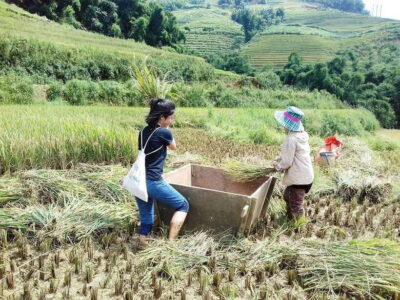
Muong Hoa Valley Trek and Local Ethnic Villages
Read our review →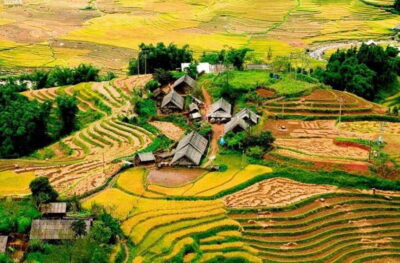
Eco Adventure Terrace Fields and Local Villages Trek
Read our review →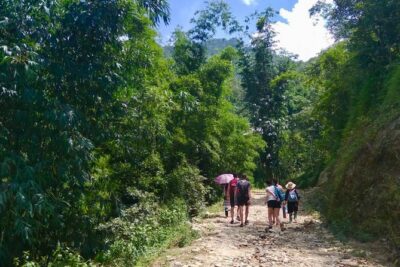
Number one top rated ethical cultural trekking and homestay by ETHOS
Read our review →
1-Day Guided Trek to Lao Chai & Ta Van with Lunch
Read our review →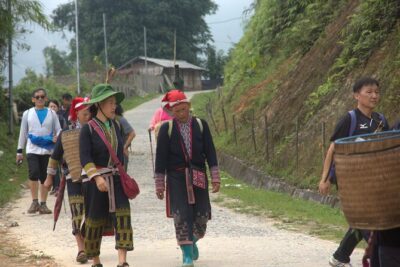
Sapa 1 Day Long Trek: Trek to Hau Thao and Sa Seng Villages
Read our review →
Explore Sapa by TrekkingAdventures, Mountain,Rice fields
Read our review →
EXPLORE SAPA: 2D1N TREKKING & HMONG CULTURE WITH DINH
Read our review →Browse the lists this tour appears in