
REVIEW · AREQUIPA
From Arequipa: 2-Day Colca Canyon Trekking Tour
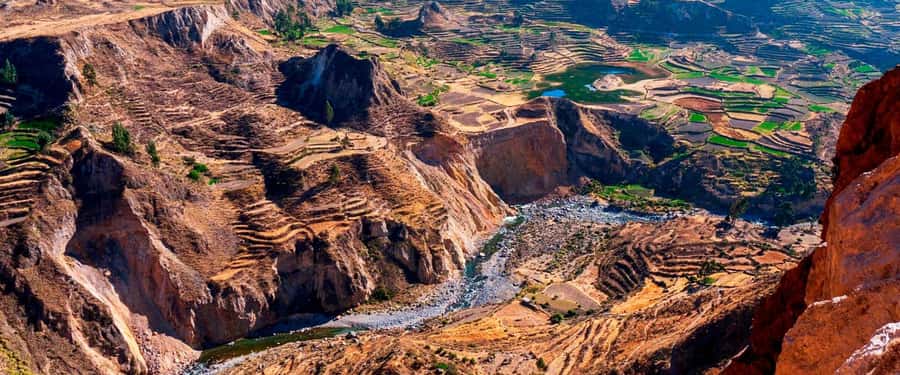
The canyon earns every step. This two-day trek takes you beyond the roadside viewpoints and into the heart of Colca Canyon, with a condor stop, guided walks through the canyon, a night at Sangalle Oasis, and hot springs on the way back to Arequipa. I especially like the small group of up to 11 people and the guides’ care with pacing, plants, local life, and safety. I also like that the tour includes several stops beyond the hike, so you see more of the Colca Valley than you would on a simple viewpoint trip.
The catch is serious: this is not a gentle walk. You descend roughly 1,100 to 1,200 meters on the first day, then climb almost all of it back up before breakfast on day two. The $30 price is only the reservation payment, not the full cost, and you should clarify the final amount before booking.
Key points to know before you book
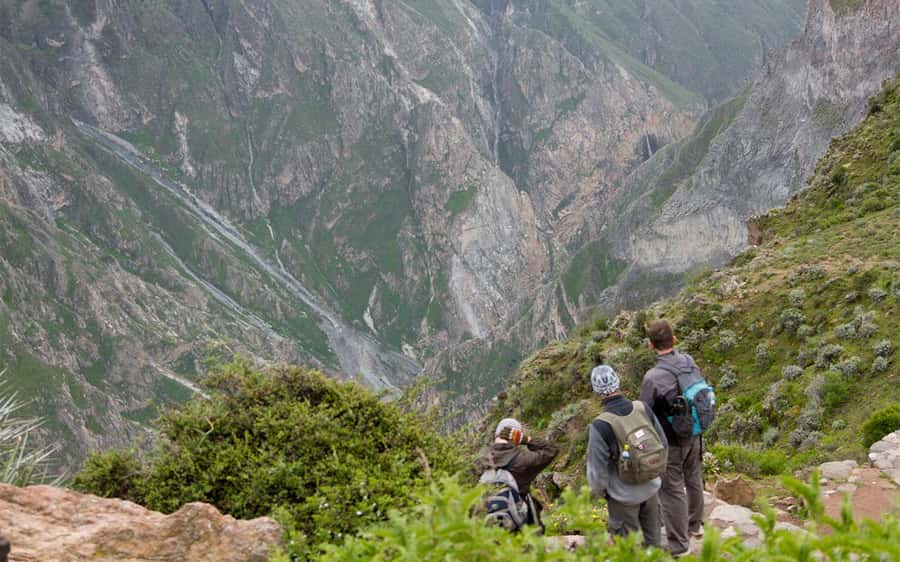
- The second morning is the real test: The climb from Sangalle to Cabanaconde begins around 4:30 a.m. and rises about 1,000 to 1,100 meters.
- Cruz del Cóndor is an early highlight: The tour pauses for views into Colca Canyon and a chance to see Andean condors riding the morning air.
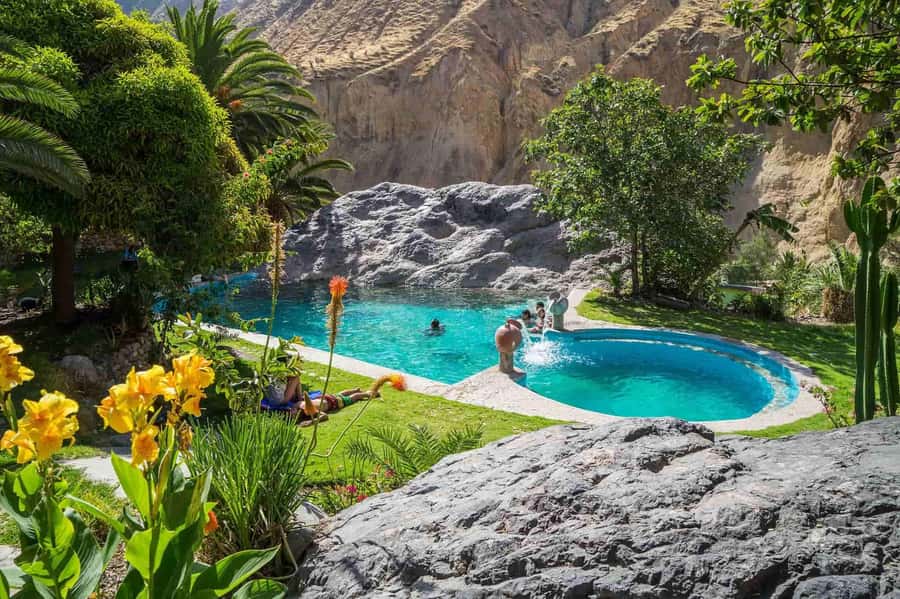
- Sangalle is more than a sleeping stop: The oasis has a pool, bar, views, dinner, and basic rooms at the canyon floor.
- Guides make a big difference: Carlos, Rafael, Alex, Luigi Ormachea, Fernando, Fidal, Tonny, and others are praised for encouragement, local knowledge, and helping people set a sensible pace.
- Bring cash in soles or dollars: Food, canyon admission, and hot springs are collected separately by the guide according to the booking information.
- Pack for a basic overnight: A flashlight, toilet paper, towel, water, walking poles, and comfortable hiking shoes will make the trip much easier.
The real cost of a $30 Colca Canyon trek
At first glance, $30 sounds remarkably cheap for two days of transport, guiding, meals, and a night in the canyon. It is not the full tour price. The information provided says the initial payment reserves your place, then the guide collects about $100, or 350 soles, in cash for food, the Colca Canyon entrance, and the hot springs.
Another line refers to a $95 payment covering the same extras, so the exact amount is not perfectly consistent. I would ask the operator to confirm the total in writing before you go. Using the larger figure, your actual cost is about $130 per person, while the lower figure would put it closer to $125.
That total is still reasonable for a two-day outing with hotel pickup, transport from Arequipa, a guide, meals, accommodation, and several stops. The value depends on what you want. If you only want to see condors and canyon viewpoints, a day trip may be simpler. If you want to walk down into Colca and spend a night at Sangalle, this package saves you from arranging transport and lodging on your own.
The extra payment must be made in cash, in soles or dollars. Do not arrive with only a bank card and hope for the best.
More Two-Day Treks in Peru:
- 2 Day 1 Night Trek / Colca Canyon
★ 4.5 · 92 reviews - 2 Day Trek Including Transfer to Puno / Colca Canyon
★ 4.5 · 38 reviews - From Arequipa Trek : 2-Days of Hiking in the Colca Canyon
★ 4.5 · 35 reviews
The 3 a.m. departure from Arequipa
Pickup is scheduled between 3:00 and 3:30 a.m. from your hotel lobby. That is brutally early, but the long drive to the canyon requires it. The first bus ride lasts about three and a half hours, and the early darkness gives you a chance to sleep before the first proper stop.
The road reaches Chivay, where you stop for about 30 minutes for breakfast. The meal is described as simple, and one traveler found the first breakfast fairly basic. Treat it as fuel rather than a grand Peruvian feast.
From Chivay, the bus continues for roughly 45 minutes to Cruz del Cóndor. The vehicle is a major part of the experience, and most of the transport is described as well organized. Still, one account reported an overbooked van, with a passenger sitting on a stool, and an uncomfortable return ride with poor air conditioning. That seems to be a possible weak point, so check the vehicle arrangement when you are picked up.
Cruz del Cóndor and the morning flight
Cruz del Cóndor is the first major stop, with about 30 minutes for photos, views, and a guided visit. You look down into Colca Canyon while watching for Andean condors gliding on rising air.
There is no guarantee of a perfect show, since birds do not follow a timetable. Still, several people had good sightings, including groups that saw multiple condors. The stop works well because it gives you a dramatic introduction before you begin the long descent.
The viewpoint can feel busy compared with the walk itself, but it is worth keeping your camera ready. The condors are only part of the appeal. You also get your first clear sense of the canyon’s huge scale, which is hard to understand from photographs alone.
The six-hour descent into Colca Canyon
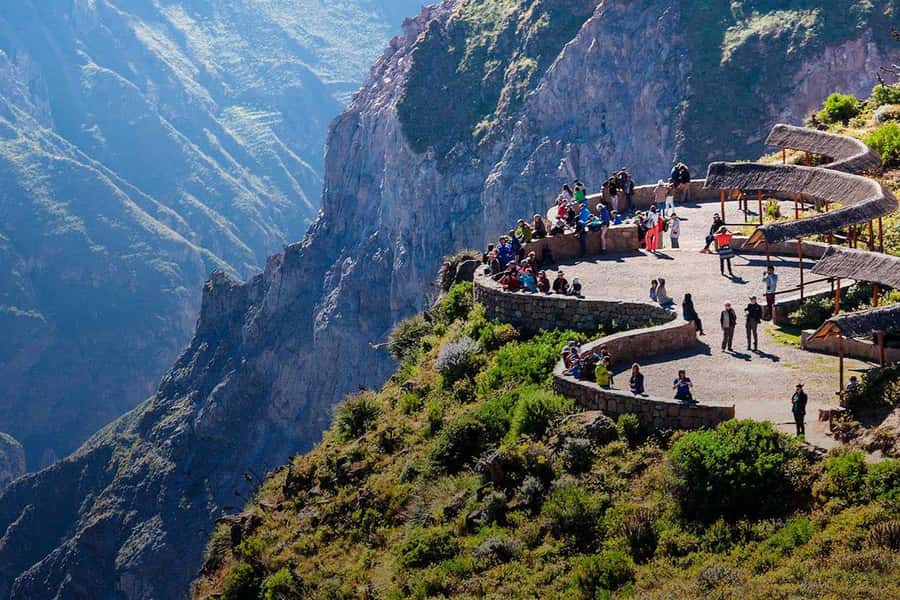
After Cruz del Cóndor, the bus travels toward Cabanaconde and the trailhead. There is a short stop in Cabanaconde, then you begin walking.
The first day is mainly downhill. The stated hiking distance is about 24 kilometers over both days, while individual accounts describe roughly 16 kilometers on day one and about 5 kilometers on the second day, with the figures varying by route and how distances are counted. The important point is not the exact number. You lose around 1,100 to 1,200 meters in elevation during the descent, and downhill walking can be hard on your knees.
After about three hours, you reach San Juan de Chuccho in the San Juan Valley, near the Colca River. This is the lunch stop, with time to rest, eat, and look around. Local families host meals along the route, and the food is described as simple but good. Vegetarian meals can be accommodated.
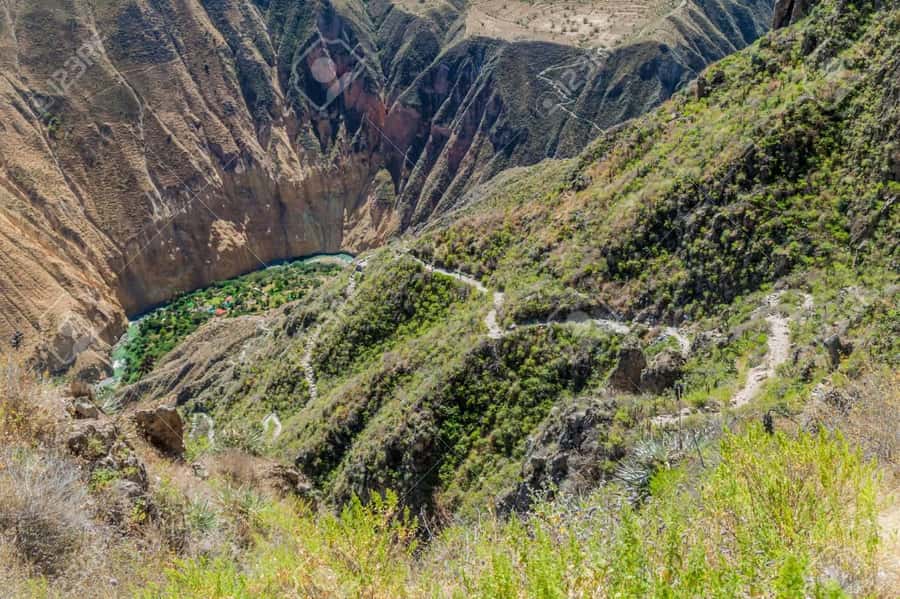
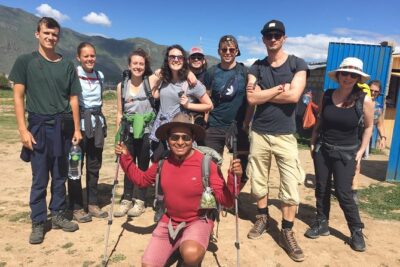
After lunch, you walk for another three hours through the canyon toward Sangalle. Guides point out plants, trees, and local farming life along the way. Carlos, Rafael, Alex, Luigi Ormachea, Fernando, Fidal, Tonny, and other guides receive particularly warm praise for explaining local plants and culture, encouraging slower walkers, and helping with practical problems such as shoes or fatigue.
The group size matters here. With a limit of 11, the guide can usually keep an eye on everyone without turning the walk into a private tour. You should still expect different walking speeds. The guide may need to balance the strongest walkers with people who need more time.
A few more treks around Peru worth a look
- From Arequipa: Sillar Route Trek
★ 4.2 · 461 reviews - From Cusco: 7 Lakes Ausangate Trek with Breakfast and Lunch
★ 4.8 · 360 reviews - Cusco: Full-Day Rainbow Mountain & Red Valley Trekking Tour
★ 4.5 · 121 reviews - Salkantay Trek Challenge – 3 Days / 2 Nights
★ 5.0 · 101 reviews
Sangalle Oasis after a hard afternoon
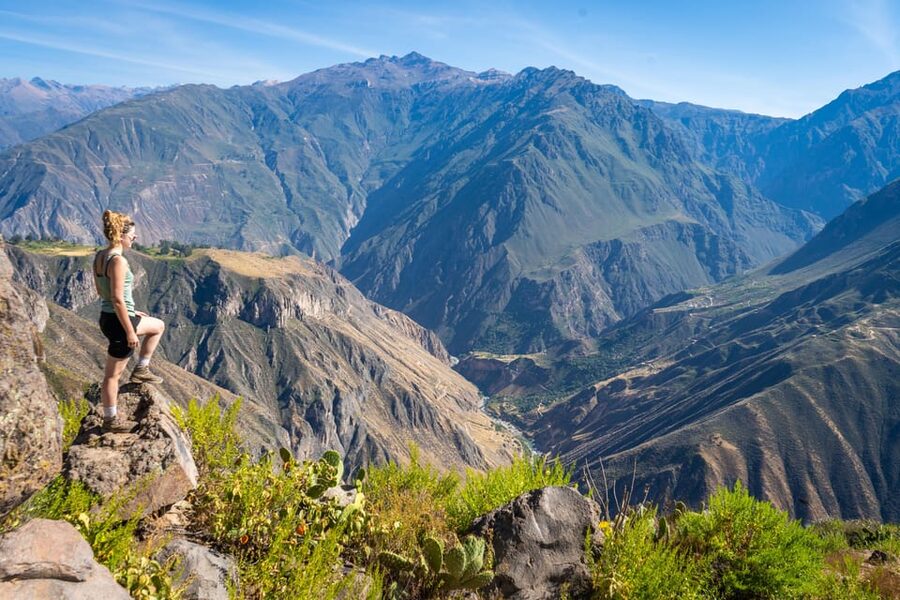
Sangalle Oasis sits at the bottom of the canyon, surrounded by dramatic cliffs and greenery. After six hours of walking, the setting feels like a reward rather than just an overnight stop.
The accommodation is basic, but it varies in comfort. Some rooms have private bathrooms and hot water. Other accounts describe cold showers, poor lighting, and a need to bring your own towel and toilet paper. Do not count on hotel-style supplies.
The oasis has a pool, and some packages include access to a bar or Wi-Fi. You can swim, have a beer or cocktail, eat dinner, and enjoy the scenery before turning in. The pool is a useful way to loosen tired legs, though you may have little energy left after the descent.
Dinner is included in the additional cash payment, according to the tour information. Food is generally described as good and well organized, but this remains a simple mountain overnight, not a luxury stay.
The 4:30 a.m. climb back to Cabanaconde
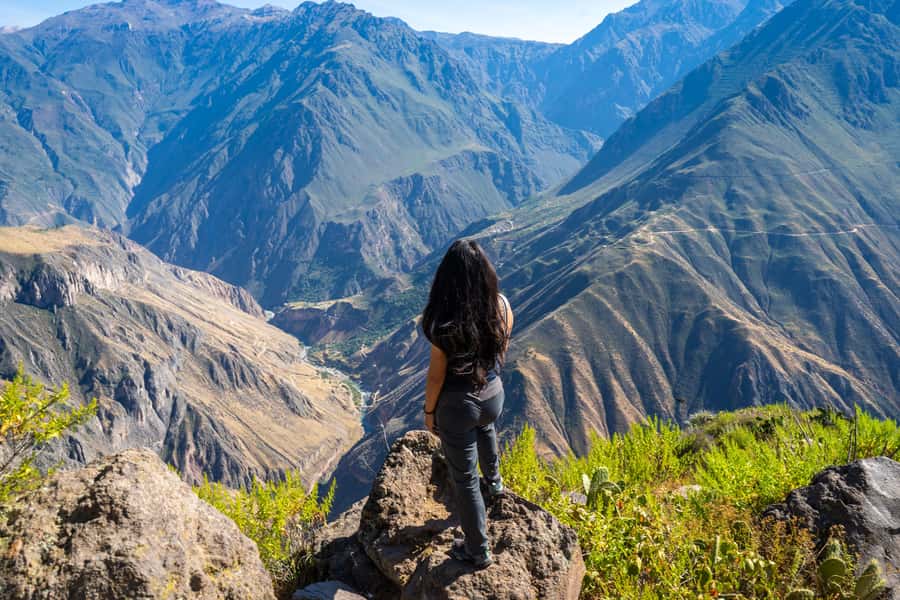
The second day begins early, often around 4:30 a.m. You leave Sangalle in the dark and climb almost continuously to Cabanaconde. A flashlight is strongly recommended. Several people used their phones for light, but that is less convenient and drains your battery.
This ascent is the part you must take seriously. The route gains roughly 1,000 to 1,100 meters, and the morning can feel relentless. Some people finish in about three hours, but your time may be longer if you take breaks. The guide’s job is not to make the mountain disappear, but good guides help the group keep moving without panic.
Walking poles are useful on both days. Bamboo poles can be rented near the start of the trek in San Miguel for about 5 soles per stick. You can also bring your own poles or buy bamboo sticks locally. Fernando gave his poles to a struggling participant, and that sort of support can matter when the climb becomes steep.
At Cabanaconde, you stop for breakfast and recover before boarding the bus. The timing means you should not expect a leisurely morning. The reward is the satisfaction of looking back at the route you have just climbed.
This hike suits someone who exercises regularly and is comfortable with long uphill and downhill walks. It does not suit someone with a low fitness level, altitude sickness, heart problems, high or low blood pressure, vertigo, or other conditions listed by the operator. The tour is also marked as unsuitable for children under 15 and people over 55. Those age limits are unusually strict, so ask before booking if your situation falls near the boundary.
Hot springs, terraces, and high-altitude stops
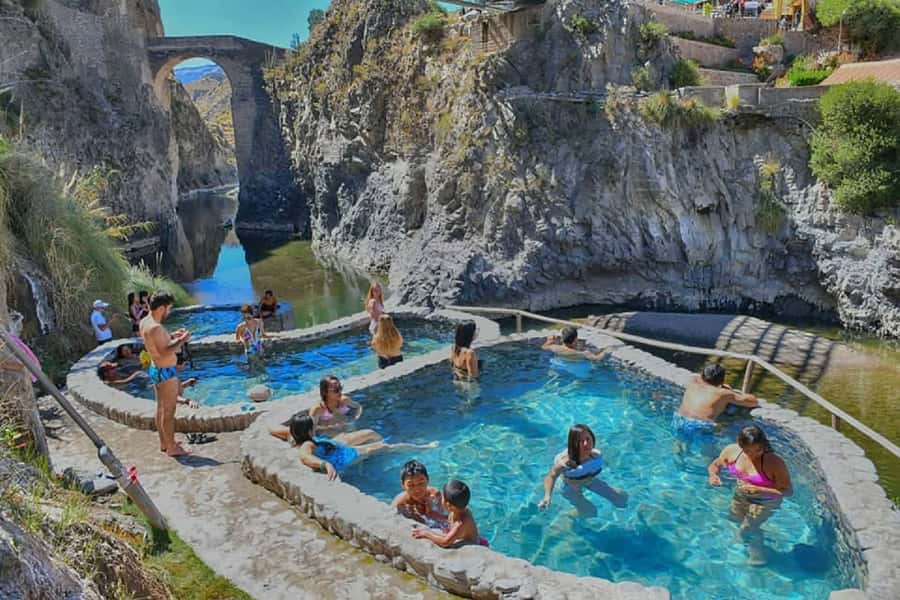
The return route adds several stops, which helps break up the long bus ride to Arequipa.
At Antahuilque Viewpoint near Maca, you see pre-Inca terraces across the Colca Valley. This is a good stop for understanding that the canyon is not only a natural attraction. People have shaped and farmed these slopes for generations.
Next comes Chacapi Hot Springs, where you have about an hour to soak. After the hard climb, warm water is one of the tour’s best practical features. It is not just sightseeing. Your legs may genuinely need it. Admission is not included in the initial $30 payment and is collected as part of the extra cash charge.
The group then stops in Chivay for lunch. The exact order and road timing can vary, but the trip includes a longer bus ride afterward, so use this pause to eat and refill water if possible.
Near the highest point of the route, a volcano viewpoint gives you a short photo stop. The itinerary places this stop after about two and a half hours of bus travel from Chivay. The air can feel thin at altitude, especially after the hike, so keep the visit relaxed.
The final high-altitude section includes the Salinas and Aguada Blanca Reserve, where you may see llamas, alpacas, and vicuñas. The stop adds a taste of the open Andean scenery before you return to Arequipa.
Arrival is expected around 5:30 p.m., two blocks from Plaza de Armas at C. San Agustín 335. That makes the ending fairly central, but it is a long day after the climb.
What the guides add to the walk
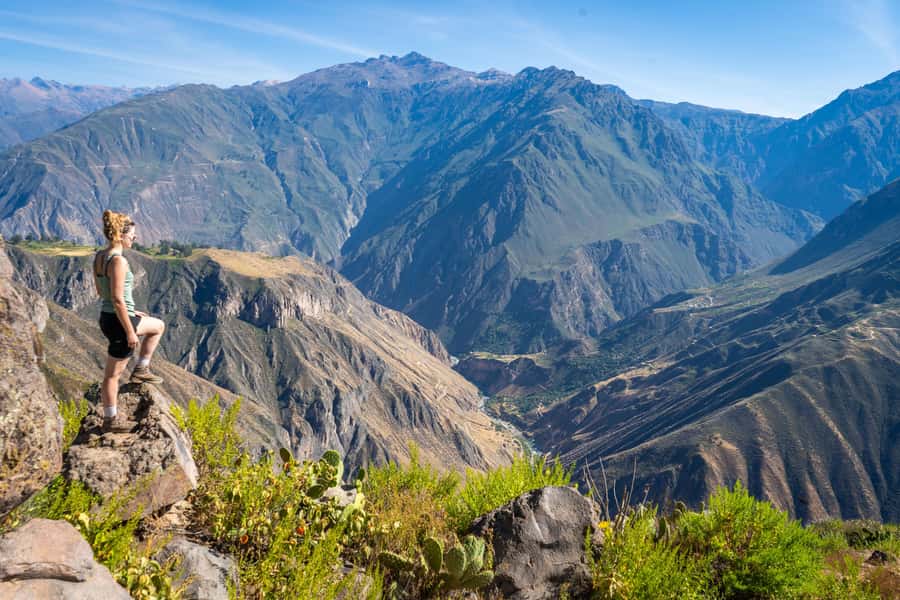
The strongest part of this tour is the human side. Guides such as Carlos and Rafael are praised for explaining plants, wildlife, local customs, and daily life in the Andes, not simply pointing out the trail.
Alex is described as warm and helpful, while Luigi Ormachea is praised for historical and cultural explanations and for motivating the group when the route became tiring. Tonny brought humor and a good mood, and Fernando helped a slower participant by giving up his own poles.
Those details matter because a six-hour walk can become a slog if you are only following a path. A guide who explains a fruit tree, a farming terrace, or a local custom gives the walk a stronger sense of place.
The quality may depend on which guide leads your group. The names above are examples of guides who have been well received, not a promise that you will be assigned one of them.
What to pack for these two days
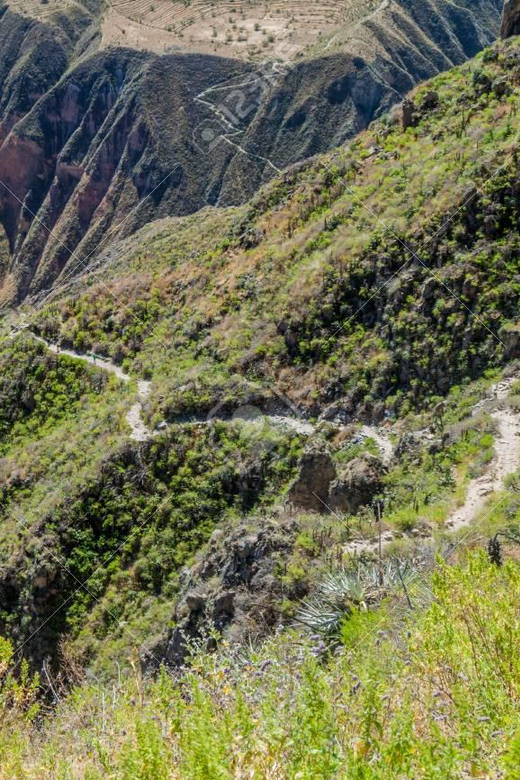
Keep your bag light. You will carry it downhill and uphill, and every unnecessary item becomes annoying by the second morning.
Bring:
- A small backpack with water and basic personal items
- Toilet paper
- A towel for the oasis or hot springs
- A flashlight or headlamp for the pre-dawn climb
- Hiking shoes with solid grip
- Walking poles, or cash for bamboo poles
- Warm layers for the early morning
- Sun protection
- Cash in soles or dollars for the required extra payment and small purchases
- A swimsuit if you plan to use the pool or hot springs
The accommodation may not provide towels, toilet paper, or good bathroom lighting. Pack as if you are staying in a simple mountain lodge.
Should you book the Colca Canyon trek?
Book it if you want a demanding walk into the canyon rather than a quick viewpoint visit. The guides, small group, Sangalle setting, condor stop, local food, and hot springs make this a well-rounded two-day outing.
Do not book it because the headline price is $30. Confirm the full cost, including the extra food, entrance, and hot springs payment. Also do not book it if a 1,000-meter climb before breakfast sounds unreasonable. It is the defining feature of the tour.
For a fit visitor with limited time in Arequipa, I think the two-day format offers much more than a bus tour. You get the canyon at walking pace, a night at its floor, and a real sense of the height you have crossed. Just arrive prepared, accept the basic accommodation, carry cash, and treat the second morning as a serious mountain climb.
FAQ
How much does the tour really cost?
The initial payment is $30 per person for the reservation. The guide then collects about $100, or 350 soles, for food, the Colca Canyon entrance, and the hot springs. Another provided detail mentions $95 for these extras, so confirm the exact total before departure.
How long is the tour?
The experience lasts two days. Pickup from Arequipa begins between 3:00 and 3:30 a.m. on the first day, and arrival back in Arequipa is expected around 5:30 p.m. on the second day.
How difficult is the hike?
It is a strenuous hike with substantial elevation change. You descend about 1,100 to 1,200 meters on the first day and climb roughly 1,000 to 1,100 meters from Sangalle to Cabanaconde on the second morning.
What time does the second-day climb begin?
The ascent usually begins very early, around 4:30 a.m. You should bring a flashlight or headlamp because part of the climb takes place before sunrise.
Is accommodation at Sangalle included?
Accommodation is booked as part of the tour arrangements, but the initial $30 payment does not cover all tour costs. Rooms are basic, and some have private bathrooms and hot water while others may have cold showers or limited bathroom lighting.
Are meals included?
Meals are covered by the additional payment collected by the guide, according to the provided information. The trip includes breakfast stops, lunch at San Juan de Chuccho, dinner at Sangalle, breakfast in Cabanaconde, and lunch in Chivay.
Is the Colca Canyon entrance included?
The entrance is not included in the initial $30 reservation payment. It is part of the extra cash payment collected by the guide.
How many people are in the group?
The group is limited to 11 participants. The guide is listed as providing English, and the included guide information also refers to English and Spanish.
Recently added around Peru
- 5 Day – Salkantay trek to Machu Picchu – Group Service★ 4.5 · 27 reviews
- Small Group: 4-Day Inca Trail Trek to Machu Picchu★ 5.0 · 33 reviews
- 6 day Rainbow Mountain x Ausangate Trek – FlashpackerConnect★ 5.0 · 30 reviews
- Salkantay Trek: 5 Days to Machu Picchu★ 5.0 · 33 reviews
- Humantay Lake Full-Day Adventure: Scenic Trek and Stunning Views★ 4.5 · 39 reviews
- Salkantay 5-Day Trek To Machu Picchu★ 5.0 · 39 reviews
- Inca Trail Trek to Machu Picchu – 2 Days (Small Group or Private)★ 5.0 · 31 reviews
- Ausangate and Rainbow Mountain Trek – 3 Days / 2 Nights★ 5.0 · 35 reviews
Arequipa Trekking Tours, compared.
4 hours Tour: Route of Sillar with Trek in Culebrillas
Read our review →
Private 3 Day Colca Canyon Trekking tour (superior Service)
Read our review →
2 Day Trek Including Transfer to Puno / Colca Canyon
Read our review →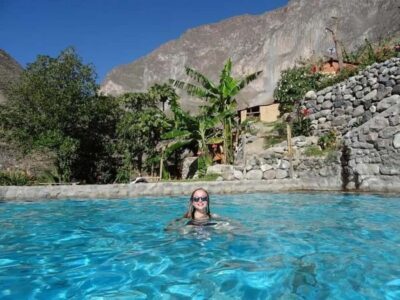
Browse the lists this tour appears in