
REVIEW · AREQUIPA
Private 3 Day Colca Canyon Trekking tour (superior Service)
The canyon earns its drama. This three-day private trek mixes steep mountain paths, village life, local food, and quiet time far below the rim, rather than rushing through the Colca Canyon in a single day. I like the small group size, capped at eight, and the chance to stay in family-run accommodation with private bathrooms and hot water. The main catch is the physical effort: this is a real trek, not a sightseeing ride with a short walk.
I also like the way the route gives you time at Sangalle, where you can use the pool and rest before the final climb. Guides such as José, also called Pepe, Miguel, Jarley, and Marcello have been praised for being friendly, attentive, and good at explaining plants, wildlife, local customs, and geography. Still, the first pickup begins around 3:15 a.m., and the last day starts at 4:00 a.m., so you need to value mountain scenery more than sleep.
Key points worth knowing before you book
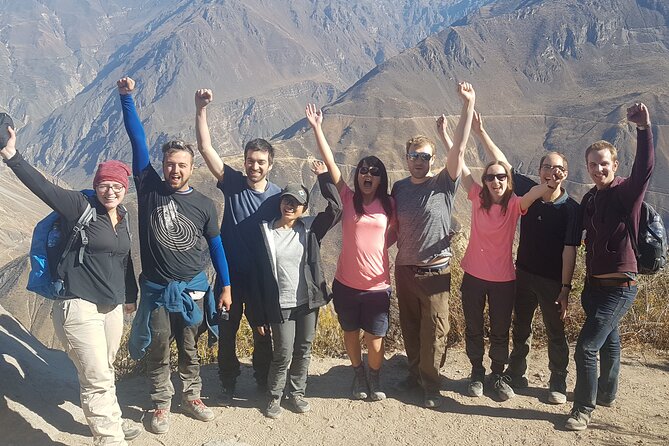
- A true three-day canyon route: You descend about 1,200 meters on the first hiking day, spend time in the canyon, then climb back to Cabanaconde before returning to Arequipa.
- Condor viewing at Cruz del Condor: You have about 40 minutes at the main viewpoint, with a chance to see Andean condors riding the air above the canyon.
- Family accommodation: Both nights are in family homes with private bathrooms and hot water, a practical touch after long walks.
- Small private group: Only transportation is shared, while the tour itself is private for your group, with a minimum of two and maximum of eight people.
- Meals are part of the plan: Three breakfasts, three lunches, and two dinners are included, with vegetarian and vegan options available.
- A mule can help on the final climb: One mule is included to carry the group’s backpacks on the last day, and you can rent another mule if needed.
What the $400 price really covers
At $400 per person, this tour costs more than a large shared Colca Canyon outing. The value comes from the extra time, the private guiding, and the many items bundled into the price.
You receive two nights of family accommodation, an English and Spanish speaking hiking guide, entrance tickets, tourist transport, meals, snacks, medical oxygen, and a first-aid kit. You also get mule support for the backpacks on the final day. Tips and accident travel insurance are not included.
That package matters in a remote canyon. Meals do not become a daily puzzle, and you do not need to arrange separate transport between Arequipa, the trail, Cabanaconde, Chivay, and the reserve. The private format also gives your group more room to set a sensible pace, stop for photos, or ask questions about local plants and farming.
The price is easiest to justify if you want a slower three-day route instead of the tighter two-day version. The extra day gives you a longer afternoon at Sangalle and more time to enjoy the canyon. It is less compelling if you want only a quick view from Cruz del Condor or dislike basic rural accommodation.
More Three-Day Treks in Peru:
- Salkantay Trek Challenge – 3 Days / 2 Nights
★ 5.0 · 101 reviews - 3-Day Colca Canyon trek with Professional Guide
★ 5.0 · 40 reviews - Ausangate and Rainbow Mountain Trek – 3 Days / 2 Nights
★ 5.0 · 35 reviews
Before sunrise from Arequipa to Yanque
Pickup begins between 3:15 and 3:30 a.m. in Arequipa. The early start is not a small detail. You spend roughly three hours on the road before reaching the Colca Valley, so plan for a quiet ride and bring a warm layer.
As daylight reaches the Andes, the route opens into mountain scenery. Your guide explains the name and origins of Arequipa, the Colca Valley, and the canyon, giving the drive a useful cultural frame instead of treating it as empty transfer time.
At about 6:30 a.m., you stop in Yanque for a traditional breakfast prepared by a local family. This is one of the tour’s strongest touches. You eat early, meet local people, and start the hiking day with food made in the valley rather than relying only on packaged snacks.
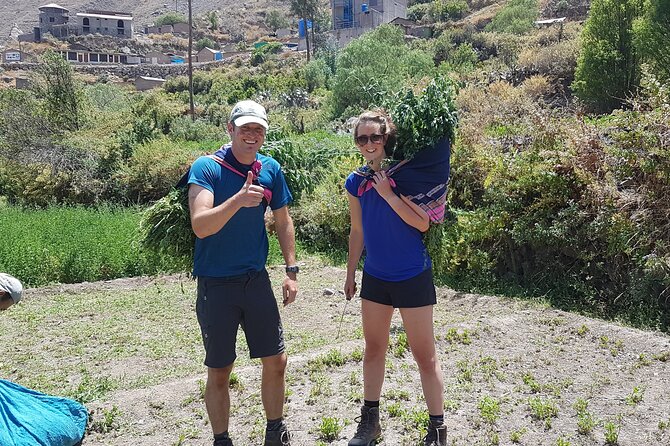
After breakfast, the route continues through what the program calls the Valley of Fire. You see pre-Inca agricultural terraces built over generations to create useful farmland on difficult slopes. The Colca River cuts through the valley, while the Chila mountain range rises beyond it. The guide also points out the work involved in farming on these steep mountain sides.
Cruz del Condor and the first great view
Around 8:00 a.m., you reach Cruz del Condor, the canyon’s best-known lookout. The stop lasts about 40 minutes, which gives you time to take in the scale of the canyon and wait for the Andean condors.
Condor sightings are never guaranteed, but this is a good place to try. The birds are important in local belief and remain threatened, so the guide’s reminder to watch respectfully is worth taking seriously. Keep your distance, avoid loud behavior, and treat the viewpoint as a wildlife site, not just a photo stop.
The stop also helps you understand what the trek will demand. From above, the canyon looks grand and almost abstract. Soon you will be walking down into it, where the slopes feel much steeper and the distances become real.
The 1,200-meter descent to Pallca
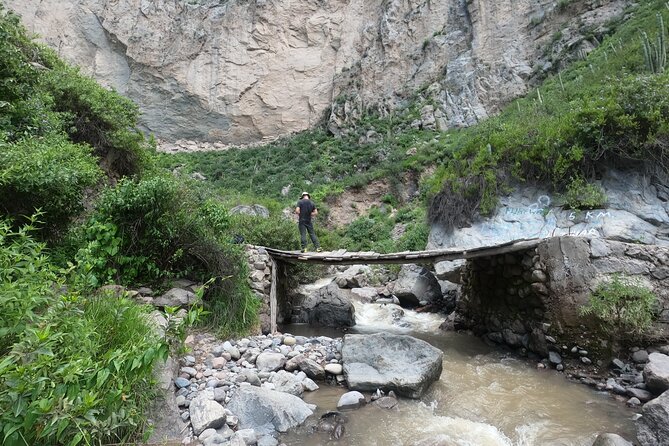
The first major hike takes about five hours and drops roughly 1,200 meters. That descent can be hard on your knees, even before the effort of climbing back out on day three. Trekking poles are not decoration here. They can help with balance and reduce strain on the way down.
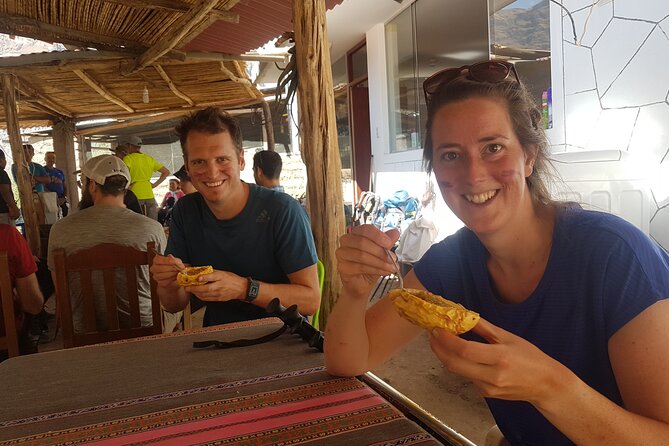
The path follows winding trails toward the Colca River and a place called Pallca. Along the way, you have time to stop for photographs, rest, and taste local fruit. This is where the three-day schedule earns its keep. You are not simply racing to the bottom and turning around.
The supplied route also refers to Llahuar Lodge in the second-day section, while the accommodation description says family homes with private bathrooms and hot water. Confirm the exact overnight locations with the operator before departure, since rural lodging names and route details can vary.
At the overnight stop, lunch uses products from the surrounding area. The afternoon is free for rest, exploring, or soaking in thermal baths. That unstructured time is valuable after a long descent. It also makes the trip feel more connected to daily life in the canyon, rather than like a march between scheduled photo stops.
A few more treks around Peru worth a look
- From Arequipa: Sillar Route Trek
★ 4.2 · 461 reviews - From Cusco: 7 Lakes Ausangate Trek with Breakfast and Lunch
★ 4.8 · 360 reviews - From Arequipa: 2-Day Colca Canyon Trekking Tour
★ 4.8 · 243 reviews - Cusco: Full-Day Rainbow Mountain & Red Valley Trekking Tour
★ 4.5 · 121 reviews
Day two, farms, bridges, and the road to Sangalle
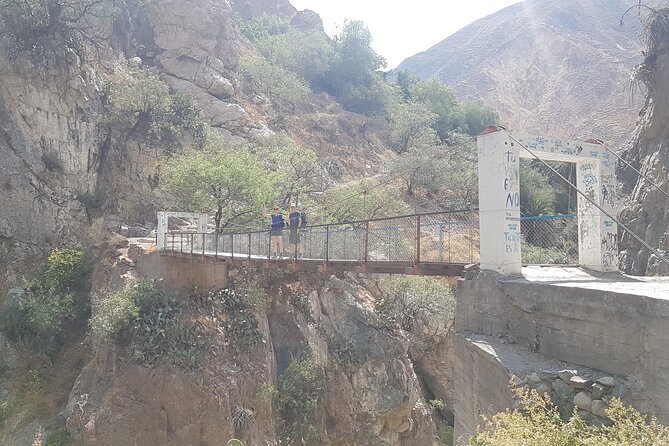
The second hiking day takes about five hours. The route begins after breakfast and first climbs for around two hours toward the Apacheta viewpoint. You cross hanging bridges and pass small communities where residents carry water to their fields.
This section shows the practical side of canyon life. The Colca is not only a dramatic natural formation. It is also a working place, shaped by farming, irrigation, footpaths, and the effort needed to move supplies and water across steep ground.
Your guide explains local plants, animals, and the canyon’s formation. Guides José and Miguel have received especially warm praise for explaining nature and culture in a clear, friendly way. José, often called Pepe, is also known for pointing out local plant uses and keeping the mood light while still watching the group closely. Guide assignments are not guaranteed, but the company uses English and Spanish hiking guides.
The trail then descends through the Amphitheater, an archaeological site associated with agricultural use between 1200 and 1500 B.C. After a rest and a chance to rehydrate, you continue along a zigzag path toward Sangalle.
Sangalle Oasis gives the trek room to breathe
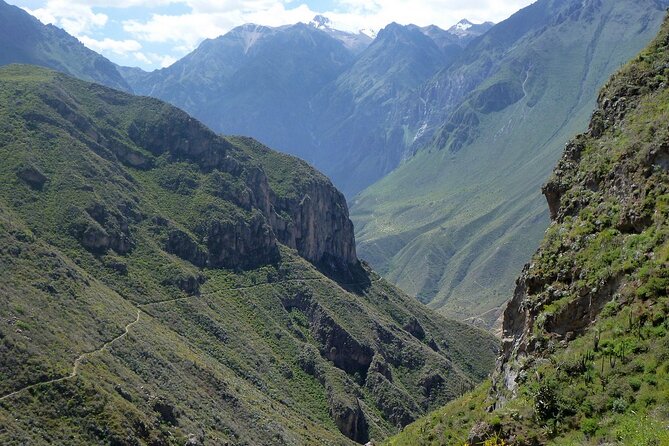
You should reach Sangalle around 1:00 p.m. at an altitude of about 2,100 meters. The timing is a major advantage of this itinerary. You arrive early enough to use the natural pool, walk among fruit trees, rest, or simply sit with a drink and look around.
Lunch follows arrival, then the afternoon remains free. A Colca sour is suggested as part of the experience, but bring extra money for drinks and personal purchases. Cash is also useful for water and emergencies.
The oasis is not a luxury resort. It is a simple stopping place inside the canyon, and the appeal is the setting and the pause after a demanding route. You sleep in basic family accommodation, with the comfort level shaped by a rural mountain environment. The private bathroom and hot water are welcome, but you should still pack light, practical gear rather than expecting hotel service.
Dinner is at about 7:00 p.m. The guide then explains the next morning’s ascent, including pacing and energy use. Pay attention. The final climb is the hardest physical test of the trip, and the briefing gives you a chance to ask about the route before you set off in the dark.
The 4:00 a.m. climb to Cabanaconde
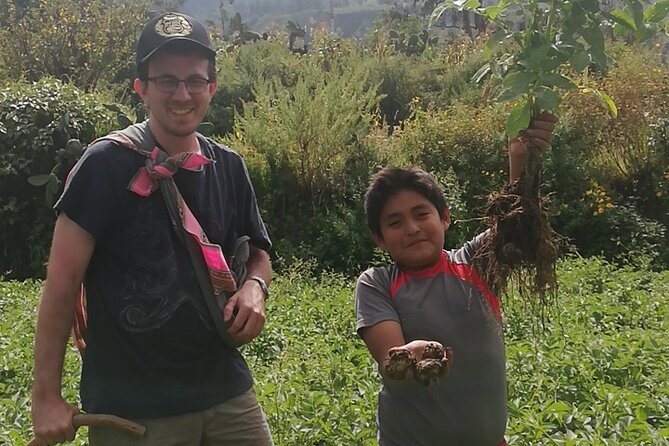
The final hiking day begins at 4:00 a.m. and takes about three hours for roughly five kilometers. The group uses a steady mountaineer’s rhythm, conserving energy instead of trying to win a race.
The route climbs from Sangalle to the top of the canyon. The first light gradually reveals how far you have come, and the changing view gives you natural reasons to pause. The climb is still demanding, especially after two days of walking, but the steady pace and mule support can make it more manageable.
A mule is provided to carry the group’s backpacks on this final day. You can also rent a mule to carry you to the top of the canyon, according to the tour details. Confirm the cost and arrangements before setting out if you think you may need that option.
Once at the top, you continue to Cabanaconde. There is time to rest and eat breakfast before boarding the tourist vehicle. This is a good moment to take stock of the route. You have seen the canyon from above, walked down into it, crossed its paths and bridges, and climbed out again.
Chivay, volcano views, and vicuñas
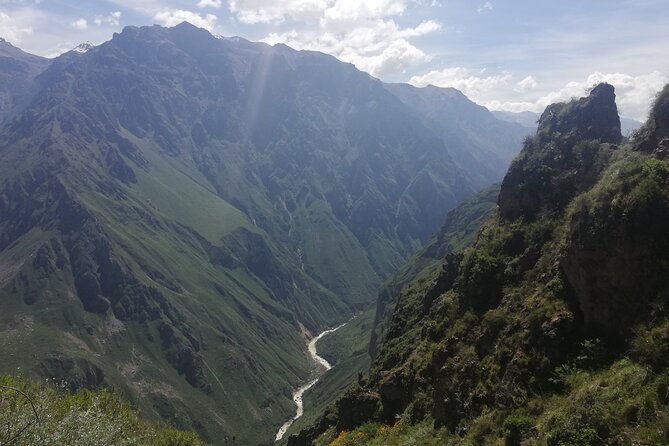
The road continues toward Chivay, the main town in the Colca Valley. Around 1:00 p.m., you have a chance to eat traditional Arequipeña dishes. Food is not an afterthought here. It gives the trip a cultural finish and lets you try regional cooking after several meals in rural communities.
From Chivay, the route heads toward the volcano viewpoint and the Salinas y Aguada Blanca National Reserve. At Abra Patapampa, about 4,910 meters above sea level, you reach the highest point of the expedition.
The view includes volcanoes such as Misti, Chachani, Sabancaya, Walka Walka, and Ampato. The area is also connected with the story of Juanita, the Inca princess sacrificed at a high-altitude sanctuary. Expect cold, thin air and a short stop of about 15 minutes, not a long hike at the pass.
The final stop is the reserve, where you can see vicuñas among volcanoes, rivers, and lagoons. The guide explains their behavior and the importance of protecting the area. You leave the bus for photographs, then continue to Arequipa, arriving at roughly 5:00 p.m.
Fitness, packing, and the real level of comfort
The tour calls for moderate physical fitness, but that phrase deserves a practical reading. You walk for about five hours on the first day, five hours on the second, and climb for about three hours on the third. The first day includes a large descent, and the final morning includes a sustained ascent.
Pack a 40-liter backpack, hiking boots, trekking poles, sunscreen, sunglasses, a hat, a jacket, a rain poncho during the rainy season, mosquito repellent, swimwear, a flashlight with spare batteries, personal items, water, rehydration supplies, and extra money.
Medical oxygen and a first-aid kit are carried for the group. That is reassuring, but it does not replace preparation or travel insurance. Accident insurance is not included, and you should arrange your own cover.
The tour is not recommended for babies. Vegetarian and vegan meals can be arranged, along with other dietary needs. Tell the operator about those needs before departure rather than waiting until the first meal.
Guide quality is a major part of the experience
The strongest praise centers on the guides. José, or Pepe, is repeatedly described as attentive, funny, caring, and good at explaining plants, animals, and local life. Miguel is praised for a well-paced itinerary and clear explanations. Jarley, also spelled Jarly, is noted for patience, local insight, and handling changes when luggage problems affected a trip. Marcello is described as friendly and informative.
Those personal touches matter on a difficult trek. A guide who watches your pace, explains why terraces exist, and identifies useful plants can turn a hard walk into a meaningful one. You should remember that a particular guide cannot be promised unless the company confirms it directly.
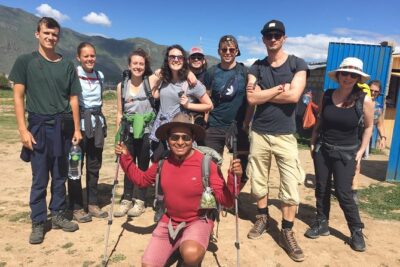
The private setup also helps. Your group can ask more questions and take sensible breaks without being tied to a large crowd. The vehicle is shared, but the walking experience is private for your group, with two to eight participants.
Should you book this Colca Canyon trek?
Book it if you want the canyon as a lived-in place, not just a viewpoint. The three-day route gives you local meals, family accommodation, village paths, a long stay at Sangalle, condor viewing, high volcano passes, and time to learn from a guide.
Skip it if you dislike early starts, basic lodging, steep trails, or long hours on your feet. A two-day route may be faster, but it leaves less time at the oasis and makes the schedule feel tighter.
For hikers with moderate fitness who value local contact and a small group, $400 is a fair price for the amount included. Bring the right gear, keep your pack light, carry cash, and treat the ascent as a serious climb. If you do that, this is one of the better ways to experience the Colca Canyon without reducing it to a quick bus stop.
FAQ
How long is the Colca Canyon trek?
The experience lasts approximately three days. Hiking takes about five hours on the first day, five hours on the second, and about three hours for the final ascent to Cabanaconde.
What time does pickup begin in Arequipa?
Hotel pickup begins between 3:15 and 3:30 a.m. on the first day.
Is the tour private?
Yes. The activity is private for your group, with a minimum of two and maximum of eight participants. Tourist transportation is shared.
What accommodation is included?
Two nights of accommodation in family homes are included. The rooms have private bathrooms and hot water.
Are meals included?
Yes. The package includes three breakfasts, three lunches, and two dinners. Vegetarian and vegan options can be arranged.
Is a mule included?
One mule is included to carry the group’s backpacks on the last day. You can also rent a mule to climb to the top of the canyon.
Recently added around Peru
- 5 Day – Salkantay trek to Machu Picchu – Group Service★ 4.5 · 27 reviews
- Small Group: 4-Day Inca Trail Trek to Machu Picchu★ 5.0 · 33 reviews
- 6 day Rainbow Mountain x Ausangate Trek – FlashpackerConnect★ 5.0 · 30 reviews
- Salkantay Trek: 5 Days to Machu Picchu★ 5.0 · 33 reviews
- Salkantay 5-Day Trek To Machu Picchu★ 5.0 · 39 reviews
- Inca Trail Trek to Machu Picchu – 2 Days (Small Group or Private)★ 5.0 · 31 reviews
- Humantay Lake Full-Day Adventure: Scenic Trek and Stunning Views★ 4.5 · 39 reviews
- Ausangate and Rainbow Mountain Trek – 3 Days / 2 Nights★ 5.0 · 35 reviews
Arequipa Trekking Tours, compared.
4 hours Tour: Route of Sillar with Trek in Culebrillas
Read our review →
2 Day Trek Including Transfer to Puno / Colca Canyon
Read our review →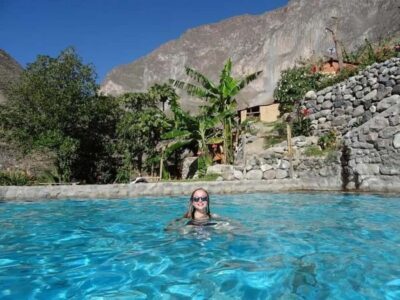
Browse the lists this tour appears in