
REVIEW · CUSCO
5-Day: Salkantay Trek to Machupicchu and Humantay Lake
High passes, jungle paths, and an Inca citadel await. This five-day Salkantay trek links Humantay Lake, the 15,091-foot Salkantay Pass, Santa Teresa, and Machu Picchu in one demanding trip. I like the small maximum group of 15 and the fact that horses carry up to 5 kilograms of your gear during the hardest first days. I also like the mix of camping, hostel lodging, mountain scenery, hot springs, and a guided visit to Machu Picchu.
The main concern is the physical load. You will hike at high altitude, climb to 4,600 meters, walk for hours on several days, and return to Cusco late on the final night. The $360 price is attractive for four nights, meals, transportation, a guide, and the Machu Picchu entry, but extras such as the hot springs, sleeping bag, optional train, and optional mountain permits cost more.
Key Points Before You Book
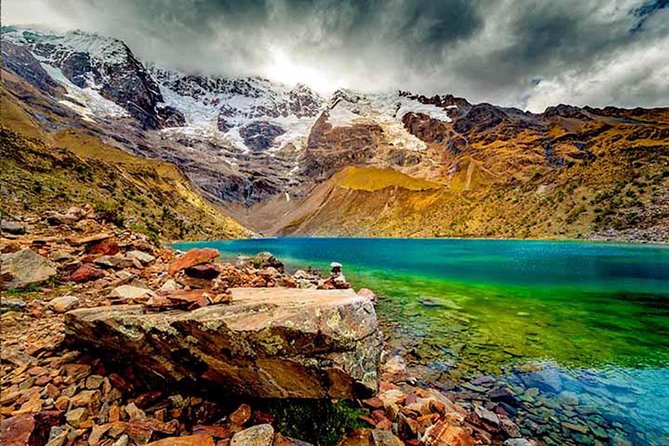
- Humantay Lake comes on day one: You reach 4,200 meters after a long morning transfer and a hike from Soraypampa.
- The Salkantay Pass reaches 4,600 meters: This is the trek’s highest and toughest point, followed by a long descent toward warmer jungle country.
- Your gear gets horse support: Up to 5 kilograms can be carried for you during the first three days, while your personal daypack remains your responsibility.
- Cocalmayo is an optional reward: The hot springs near Santa Teresa cost $6 and are not included in the tour price.
- Machu Picchu begins before dawn: The group leaves around 4:00 a.m. to walk up for an early entry and a two-hour guided tour.
- The final return is long: The bus leaves Hydroelectric at 3:00 p.m. and reaches Cusco around 10:00 p.m.
What the $360 Price Really Covers
At $360 per person, this trip offers a lot for the money. You receive four breakfasts, four lunches, and four dinners, along with three nights of camping and one night in a hostel. Private transportation, camping equipment, entrance fees, a bilingual guide, and the return bus to Cusco are also included.
The package also covers horse support for a maximum of 5 kilograms during the first three days. That matters most on day two, when the route reaches the Salkantay Pass and then drops for several hours. You still need a daypack, but you do not need to carry every piece of camping gear over the highest section.
The sleeping bag is not included. You can bring your own or arrange one separately, and that is worth planning before departure because the first camp sits at 3,900 meters. The stated night temperature at Soraypampa is about 2°C, so a warm sleeping setup is not a luxury.
You also pay separately for the $6 Cocalmayo hot springs. A train return from Machu Picchu is another optional cost. It lets you stay in Machu Picchu longer, until about 5:00 p.m., before taking the train to Ollantaytambo and continuing by vehicle to Cusco.
The price is strongest for hikers who want a full route with food, lodging, transport, and a guide arranged in one booking. It is less appealing if you want a private room every night, a relaxed schedule, or a short return to Cusco after Machu Picchu.
More Inca Trail Treks in Cusco
- Salkantay Trek Challenge – 3 Days / 2 Nights
★ 5.0 · 101 reviews - Choquequirao Trek 4 days and 3 nights
★ 5.0 · 81 reviews - Machu Picchu: 5-Day Salkantay Trek with Panoramic Train
★ 5.0 · 79 reviews
Day One: Humantay Lake and Soraypampa at 3,900 Meters
The day starts very early, with pickup times listed between 4:30 and 6:00 a.m. The drive takes about four hours, with a 30-minute stop in Mollepata at 2,900 meters. This is a useful break before the road climbs toward Challacancha, where you meet the porters and horses.
From Challacancha, you walk for about four hours to Soraypampa. The route follows Inca water irrigation channels and ends at the first camp beside the Salkantay range. Lunch comes at camp, giving you a chance to eat before the afternoon climb to Humantay Lake.
The lake sits at 4,200 meters, and the walk from camp takes about an hour and a half. You spend roughly an hour at the lake before returning. The blue-green water, high peaks, and thin mountain air make this a memorable first goal, but the timing is not gentle. You are already dealing with a long transfer, a four-hour hike, and a high-altitude climb on your first day.
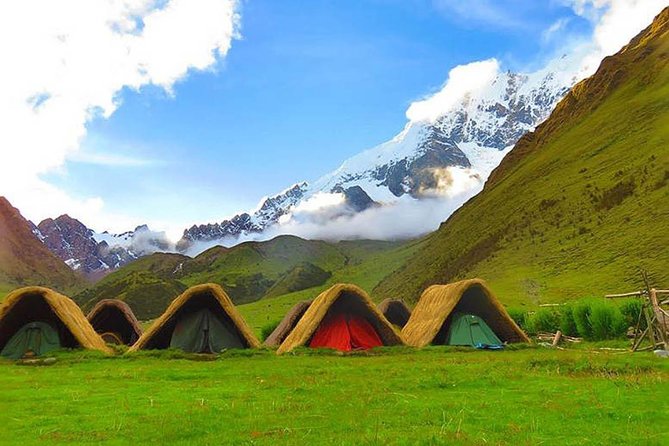
The first camp uses a four-season tent with an additional straw roof. Daytime temperatures at Soraypampa are listed around 10°C, with nights near 2°C. Bring warm layers, gloves, and a hat in your daypack. You should also keep rain protection close because weather can affect the experience and may lead to a rescheduled departure.
Day Two: The 4,600-Meter Salkantay Pass
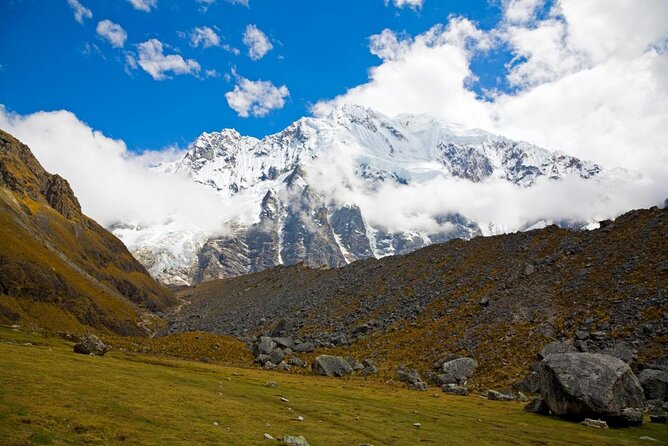
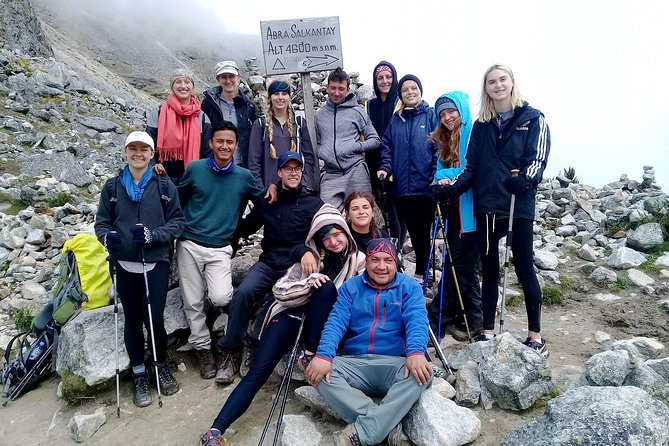
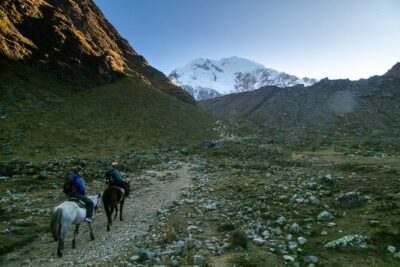
Day two is the physical centerpiece. The morning begins with tea and breakfast, followed by about three hours of uphill walking to the Salkantay Pass at 4,600 meters. This is the point where altitude, not distance alone, makes the trek demanding.
At the pass, the route pauses for views of powerful Andean peaks. The group also follows a traditional practice, asking the Apus, or mountain gods, for permission to pass. It is a small cultural detail, but it gives the climb a sense of place rather than turning the pass into a simple photo stop.
After the high point, you descend toward Wayracpunku, also called Huayra Pampa, for lunch. The second half of the day continues downhill and gradually changes from exposed high mountain country to warmer forest. Large trees, streams, bromeliads, and orchids appear along the route.
The full day takes about eight hours, including the uphill and downhill sections, and ends at Chaullay at 2,900 meters. Dinner and rest follow at camp. This is the day when the 5-kilogram horse allowance is especially useful. Carry water, warm clothing, rain protection, snacks, and anything you may need during the walk, but let the support animals handle the heavier camping load.
Day Three: From High Country to Santa Teresa
The third morning brings a sharp change in climate. After breakfast around 6:30 a.m., you continue through the jungle toward Sahuyaco, also called La Playa, at about 2,000 meters. The listed daytime temperature is around 25°C, with nights near 14°C.
This six-hour day is less about reaching another dramatic high point and more about watching the surroundings change. The cold, open slopes give way to trees, streams, and warmer air. Lunch is served in La Playa before transport continues to Santa Teresa at 1,550 meters.
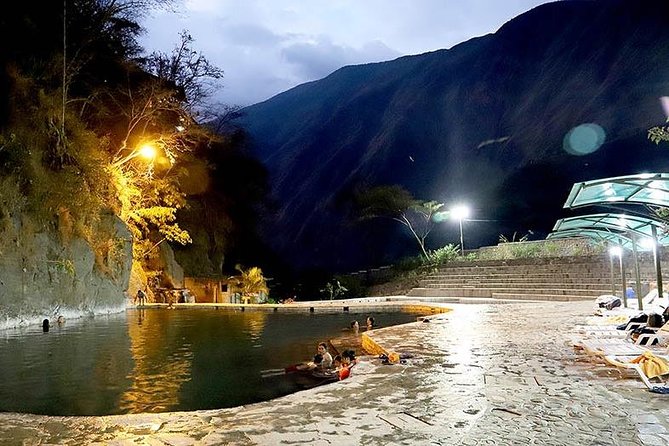
Santa Teresa is the base for the night and the location of Cocalmayo, the trip’s optional hot spring visit. The pools offer a welcome break after two hard mountain days, but admission is not part of the $360 price. The stated cost is $6, payable locally.
I would treat Cocalmayo as a sensible extra if your schedule and energy allow it. The tour already includes a full day of walking, so the springs provide rest rather than another activity to conquer. Dinner is traditional Peruvian food, followed by a night in camp.
Same trailhead, a longer or shorter day out:
- From Cusco: 7 Lakes Ausangate Trek with Breakfast and Lunch
★ 4.8 · 360 reviews - Cusco: Full-Day Rainbow Mountain & Red Valley Trekking Tour
★ 4.5 · 121 reviews - From Cusco: Rainbow Mountain Trek
★ 4.5 · 98 reviews - Ancascocha Trek To Machu Picchu 4 Days And 3 Nights
★ 5.0 · 77 reviews
Day Four: Rail Tracks, Waterfalls, and Aguas Calientes
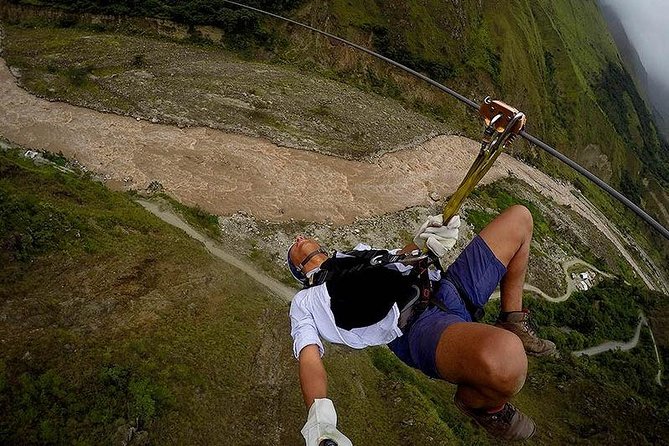
You have two choices on day four. If you book the zip line, transport picks you up from camp for an activity lasting about two and a half hours. It includes more than six cables, with the longest stretching 1 kilometer, a top speed listed at 70 kilometers per hour, a climbing wall, and a suspension bridge.
If you skip the zip line, you walk for about two hours from Santa Teresa to Hydroelectric. The full group meets there for lunch, then follows the railway toward Aguas Calientes for roughly three hours. Along the way, you may see waterfalls, ecological farms, and wildlife.
The railway walk is not as steep as the pass, but it still adds up after three days on foot. You reach Aguas Calientes around 5:00 p.m. and spend the night in a hostel. The included room is private for couples, according to the tour details.
That evening includes dinner at a local restaurant and a briefing about Machu Picchu. Pay attention here. The next morning begins around 4:00 a.m., and knowing the meeting time, route, entry process, and return plan will make the early start easier.
Day Five: Sunrise at Machu Picchu and a Late Return
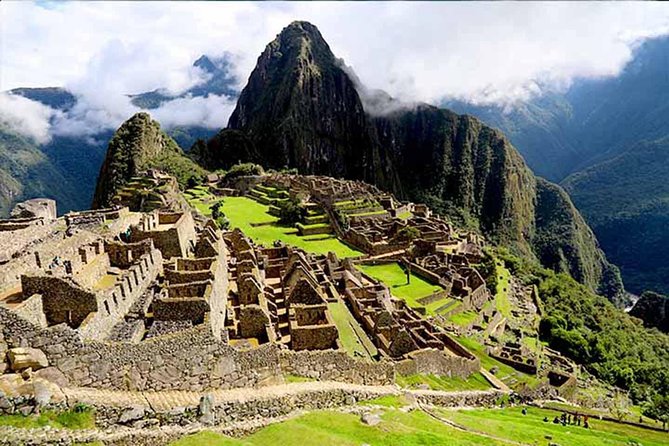
The final day begins before dawn. You walk uphill through the high jungle toward Machu Picchu, aiming to pass the entrance control around 6:00 a.m. The plan is designed to give you a chance at an early visit and sunrise views, although exact visibility always depends on the weather.
Inside the citadel, a private bilingual guide leads a two-hour tour. Afterward, you have free time to look around on your own. The included Machu Picchu entry requires booking about two months ahead, so early planning matters. If the standard arrangements are unavailable, you need to contact the operator about other options.
At 11:30 a.m., the standard plan has you walking back to Hydroelectric. The return walk takes about three and a half hours, and the bus waits there until 3:00 p.m. From Hydroelectric, the drive to Cusco takes several more hours, with arrival around 10:00 p.m.
This is the least comfortable part of the trip. You have an early morning, a major sightseeing visit, another long walk, and a late bus ride on the same day. The payoff is a lower-cost return, but it is not the best plan if you want a calm afternoon after Machu Picchu.
The Optional Train and Extra Mountain Time
The train return is the practical upgrade for anyone who wants more time at Machu Picchu. With this option, you can remain in the citadel area until a maximum of about 5:00 p.m. The train runs from Aguas Calientes to Ollantaytambo in about one hour and 40 minutes, where a vehicle continues to Cusco.
The train costs extra, but it replaces the long walk back to Hydroelectric and gives you a more comfortable end to the trip. It also makes sense if you care more about time at Machu Picchu than the lowest possible price.
You can also spend one more night in Machu Picchu town for an additional $30. This may suit you if you want to climb Huayna Picchu or Machu Picchu Mountain, though the separate mountain entry is listed at another $30. Availability should be checked after booking or in Cusco.
Guides, Group Size, and the Feel of the Trek
The maximum group size is 15, which is small enough for a guide to keep the group together without creating a crowded procession. The tour includes a professional English and Spanish-speaking guide, plus a briefing one day before departure.
Roger is specifically praised for being helpful and friendly, and the small group format made the experience feel more personal. That kind of guidance matters on this route because the trip combines altitude, changing weather, several camps, horses, transport connections, and a major archaeological site.
The route is not a luxury trek. Camping is basic, the final day is long, and the schedule leaves little room for a slow morning. But the guide, meals, gear transport, and private transportation remove much of the organizational work that can make a self-guided route stressful.
Who Should Book This Salkantay Route?
I would recommend this trip to an active hiker who wants a full alternative route to Machu Picchu and does not mind early starts, shared camp routines, or a long return to Cusco. It suits someone who wants both mountain scenery and warmer jungle paths instead of spending the entire trip at one altitude.
You should think twice if you have little recent hiking experience or if high-altitude walking is a serious concern. The itinerary includes a 4,600-meter pass and several long days, while the tour only states that participants need moderate physical fitness.
Book well ahead if you want the included Machu Picchu entry, especially because the tour is commonly reserved about 44 days in advance and the package notes that entry booking is best handled around two months ahead. The cancellation policy is strict: the experience is non-refundable and cannot be changed, except that poor weather may lead to another date or a full refund.
Should You Book It?
Book this Salkantay trek if you want strong scenery, a demanding route, basic but useful included services, and a guide-led trip at a competitive price. The best features are the Humantay Lake visit, the high Salkantay Pass, horse support for your gear, and the chance to reach Machu Picchu early.
I would add the train if comfort and extra time at Machu Picchu matter to you. I would also budget for the hot springs and sleeping bag rather than treating the advertised price as the complete cost. For fit hikers who accept the hard final day, this is a well-packed way to reach Machu Picchu without paying for a higher-priced luxury trek.
FAQ
How long is the Salkantay trek to Machu Picchu?
The experience lasts approximately five days and includes four nights of accommodation.
What is the highest point on the trek?
The Salkantay Pass reaches 4,600 meters, or about 15,091 feet.
Is Humantay Lake included?
Yes. The first day includes the hike to Humantay Lake, which sits at about 4,200 meters.
How much luggage can the horses carry?
The tour carries a maximum of 5 kilograms of your backpack during the first three days.
Is a sleeping bag included?
No. Full camping gear is included except for the sleeping bag.
How many nights are spent camping?
You spend three nights camping and one night in a hostel.
Are meals included?
Four breakfasts, four lunches, and four dinners are included. Breakfast on the first day, plus lunch and dinner on the final day, are not included.
Does the tour include the hot springs at Cocalmayo?
No. Entry costs $6 and is paid separately at the site.
Can I return from Machu Picchu by train?
Yes. A train return can be added for an extra cost. It allows you to stay near Machu Picchu until about 5:00 p.m., then travel by train to Ollantaytambo before continuing to Cusco by vehicle.
How many people are in the group?
The maximum group size is 15 people.
More 5-Day Experiences in Cusco
- Ausangate Trek 5 Days
★ 5.0 · 74 reviews - Classic Choquequirao Trek – 5 Days / 4 Nights
★ 5.0 · 52 reviews - Ultimate Lares Trek & Inca Trail 5 days
★ 5.0 · 47 reviews - Salkantay Trek To Machu Picchu 5 Days And 4 Nights
★ 5.0 · 44 reviews
Recently added around Cusco
- 5 Day – Salkantay trek to Machu Picchu – Group Service★ 4.5 · 27 reviews
- Small Group: 4-Day Inca Trail Trek to Machu Picchu★ 5.0 · 33 reviews
- 6 day Rainbow Mountain x Ausangate Trek – FlashpackerConnect★ 5.0 · 30 reviews
- Salkantay Trek: 5 Days to Machu Picchu★ 5.0 · 33 reviews
- Humantay Lake Full-Day Adventure: Scenic Trek and Stunning Views★ 4.5 · 39 reviews
- Salkantay 5-Day Trek To Machu Picchu★ 5.0 · 39 reviews
- Inca Trail Trek to Machu Picchu – 2 Days (Small Group or Private)★ 5.0 · 31 reviews
- Ausangate and Rainbow Mountain Trek – 3 Days / 2 Nights★ 5.0 · 35 reviews
Machu Picchu & Inca Trail Treks, compared.
Machu Picchu: 5-Day Salkantay Trek with Panoramic Train
Read our review →
Ancascocha Trek To Machu Picchu 4 Days And 3 Nights
Read our review →
4 Day Inca Trail Trek to Machu Picchu Multi day tour
Read our review →
Salkantay Trek 4 Days to Machu Picchu by Glamping Sky Lodge Dome
Read our review →
Browse the lists this tour appears in