
REVIEW · CUSCO
Salkantay Trek To Machu Picchu 5 Days And 4 Nights
Big views demand serious walking. This five-day Salkantay Trek links Cusco with Machu Picchu by way of Humantay Lake, the 15,252-foot Salkantay Pass, rainforest trails, a coffee plantation, and Llactapata ruins. I like the way the package handles the hard logistics, including horses, tents, cooks, train tickets, and hotel lodging in Aguas Calientes. I also like the small maximum group size of 16, which should give you more personal support than a large coach-style excursion.
The main catch is the altitude and physical effort. The first two days are demanding, with steep climbs, long descents, and a high pass above 15,000 feet. You also need to bring or rent a sleeping bag, pay for Machu Picchu’s shuttle bus, and budget for crew tips. At $690 per person, the trek offers a lot, but it is not a casual walk to the ruins.
What makes this trek worth considering
- 15,252-foot Salkantay Pass: The highest point comes on day two, after an uphill climb from camp.
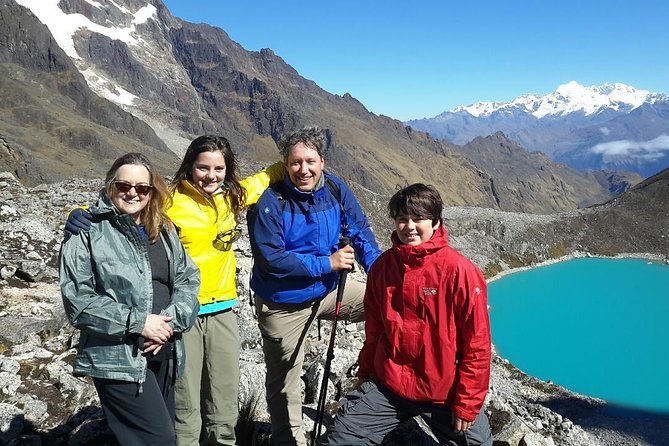
- Humantay Lake at the start: You reach this striking alpine lake before the main days of hiking begin.
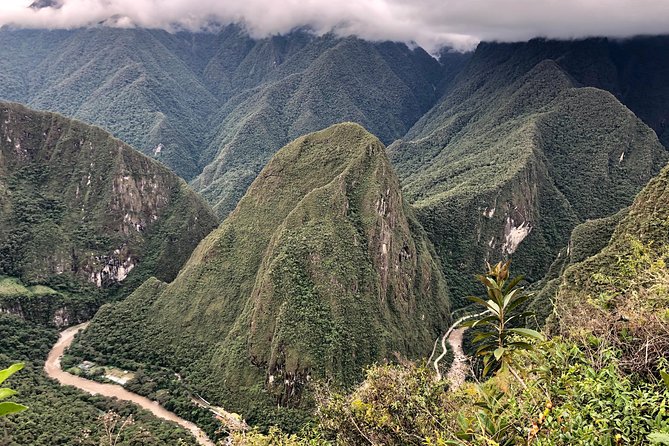
- Three distinct walking zones: The route shifts from high Andes terrain to rainforest and river valleys.
- Coffee plantation visit: Day three includes a local coffee tour beside the Lucmabamba camp.
- Llactapata viewpoint: You get your first distant view of Machu Picchu before arriving at Aguas Calientes.
- Full expedition support: Cooks, horses, a kitchen tent, a toilet tent, medical supplies, and an emergency horse are included.
The real character of the Salkantay route
The Salkantay Trek is a good choice if you want Machu Picchu to be the payoff for a genuine mountain journey. You are not simply transferred from Cusco to the ruins. You spend four nights moving through changing elevations and climates, with the toughest mountain work early and a more relaxed approach to Machu Picchu later.
That progression matters. The first part feels remote and exposed, while the final days bring warmer air, forest, coffee, ruins, trains, and a proper hotel room. I like this contrast. It gives the trip a sense of movement rather than repeating the same type of trail for five days.
The route is supported rather than stripped-down. A chef and assistant prepare meals, wranglers and horses carry camp equipment, and each pair receives a four-person tent with a mattress and pillow. You can also send up to 8 kilograms of personal belongings by horse in the supplied duffle bag.
That makes the trek more manageable, but it does not make it easy. You still carry a daypack, walk for several hours a day, and deal with altitude, sun, cold, rain, and steep descents. The trip is best for someone with moderate fitness who is ready for sustained hiking.
More Inca Trail Treks in Cusco
- Salkantay Trek Challenge – 3 Days / 2 Nights
★ 5.0 · 101 reviews - Choquequirao Trek 4 days and 3 nights
★ 5.0 · 81 reviews - Machu Picchu: 5-Day Salkantay Trek with Panoramic Train
★ 5.0 · 79 reviews
Day 1: Humantay Lake and the first high-altitude test
Your day begins around 4:30 a.m. with hotel pickup in Cusco. The drive to Mollepata takes about three hours, followed by breakfast at a local home. You then continue for roughly one hour and 45 minutes to Soraypampa, the trailhead at about 12,467 feet.
This transfer is long, but it gives you an early look at the mountains. You begin seeing Salkantay and Humantay before leaving the vehicle, which helps build anticipation for the hike ahead.
At Soraypampa, the support team takes charge of the heavy gear. You then walk to Humantay Lake on a two-hour excursion. The lake visit is a strong opening moment because it puts dramatic high-altitude scenery right in front of you before the longer trail days begin.
The full day is listed at about six hours, including the lake excursion and further hiking from the trailhead. The exact overnight camp location is not specified in the supplied details, so you should ask for the final day-one camping point during the pre-departure briefing.
This first day has two challenges: altitude and an early start. You may be tired before the serious trekking begins, especially after the road journey from Cusco. Take the morning slowly, drink the supplied water, and do not treat the lake walk as a warm-up race.
Day 2: Reaching the 15,252-foot Salkantay Pass
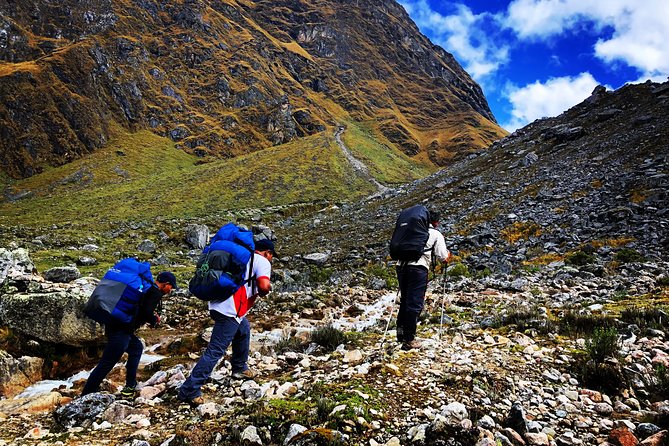
Day two is the physical centerpiece. After breakfast, you climb for about an hour to the Salkantay Pass, the highest point of the trip at 15,252 feet.
At the pass, the guide makes an offering to Salkantay and explains the importance of the site in Inca culture. This is one of the moments where a strong guide adds real value. The mountain is not just a photo stop. It is tied to local beliefs, and the pause gives the climb a clear purpose.
From the pass, you descend for about two hours to Huayrac at 12,464 feet for lunch. After eating, you continue downhill for another four hours to Colpapampa, at approximately 10,170 feet.
The numbers tell you what kind of day this is: about eight hours of walking, a major climb, and a long descent. The downhill section can be especially tiring on knees and thighs, so trekking poles are worth considering. They are not included, but they can be rented.
This is the day when altitude preparation matters most. Spend time in Cusco before the trek if your schedule allows, and take the pre-departure briefing seriously. The tour requires moderate fitness, but day two is closer to strenuous for many people because of the elevation and distance.
Day 3: Rainforest trails and coffee at Lucmabamba
Day three offers a welcome change. You leave the highest terrain behind and follow the Santa Teresa River through rainforest on a gentler six-hour walk with rolling ups and downs.
The route includes a notable waterfall, and the forest setting gives you a different side of the Andes. The air should feel warmer than it did near the pass, and the steady route is easier to handle than day two, although six hours is still a full day on foot.
You reach Lucmabamba around noon and eat lunch at camp. The timing is useful because the afternoon coffee visit takes place at a plantation beside the campsite. This is more than a filler activity. It connects the trek to local farming and gives you a slower, more grounded experience after two demanding mountain days.
The coffee tour is one of the best details in the program because it breaks up the usual pattern of walking, eating, and sleeping. You get to see how a local product fits into life along the trail, rather than passing through the forest with no contact beyond the route itself.
The camp setup also becomes easier to appreciate here. After walking, you have a dining tent, chairs, hot water for washing, and meals prepared by the cooking team. The food receives especially strong praise, with several descriptions of multi-course meals and careful attention to dietary needs. Specific dietary arrangements are not explained, so mention any requirements before departure.
Same trailhead, a longer or shorter day out:
- From Cusco: 7 Lakes Ausangate Trek with Breakfast and Lunch
★ 4.8 · 360 reviews - Cusco: Full-Day Rainbow Mountain & Red Valley Trekking Tour
★ 4.5 · 121 reviews - From Cusco: Rainbow Mountain Trek
★ 4.5 · 98 reviews - Ancascocha Trek To Machu Picchu 4 Days And 3 Nights
★ 5.0 · 77 reviews
Day 4: Llactapata, the first Machu Picchu view, and Aguas Calientes
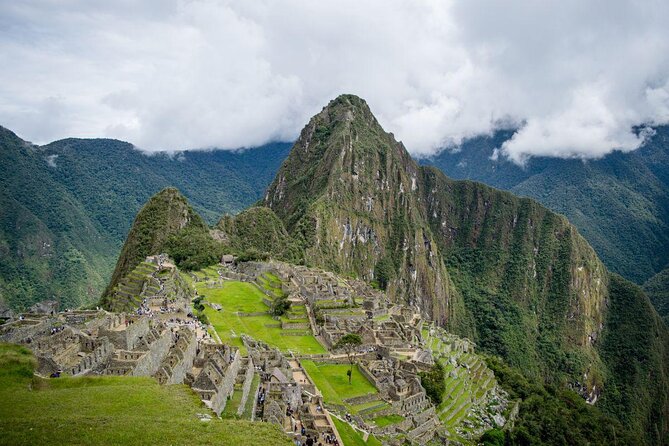
Day four begins early with breakfast and a moderate 3.5-hour climb through rainforest to Llactapata, at about 8,856 feet. The ruins receive a thorough guided visit, and this is where you first see Machu Picchu in the distance.
That distant view is a clever part of the route. You do not arrive at the famous ruins immediately. Instead, you see them from across the valley, which builds a little suspense and helps you understand the wider setting before the next morning’s visit.
After Llactapata, you descend for about 2.5 hours to Hidroelectrica, where lunch is provided. At 3 p.m., you board the train to Aguas Calientes, also called Machu Picchu Pueblo.
This day is listed at about five hours of walking, but the transfer schedule still matters. You need to reach the train on time, so lingering too long at the ruins or walking at your own pace may not be possible. The train is included, as is a hotel room in Aguas Calientes on a double-occupancy basis.
The change from tent to hotel is welcome. You get a bed and a restaurant dinner before the early visit to Machu Picchu. Keep in mind that the package does not include your day-five lunch in Aguas Calientes, so set aside money for that meal.
Day 5: Machu Picchu and the return to Cusco
After breakfast at the hotel, you take a bus up to Machu Picchu. The round-trip bus ticket is not included, so this is an extra cost and one of the details to clarify before you leave Cusco.
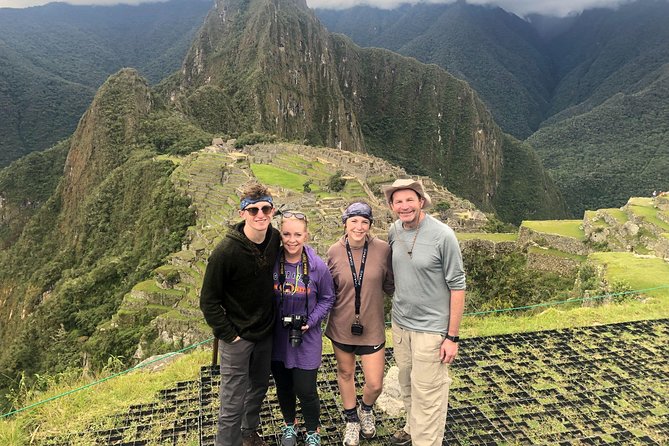
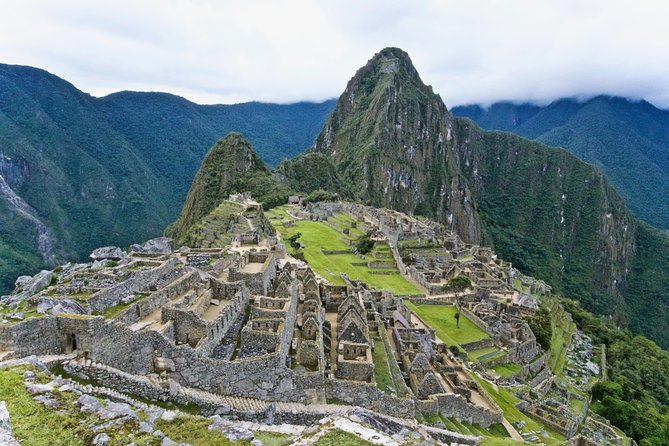
Inside the site, your guide provides a two-hour walking tour. That guided time is valuable because Machu Picchu is not simply a place to wander with a camera. The terraces, buildings, and mountain setting make more sense when someone explains what you are seeing and how the site fits into the wider Inca world.
If you have booked Huayna Picchu separately, the climb begins at 10 a.m. Huayna Picchu is not part of the package, and the description does not include the entrance cost or any extra arrangements for it. If you are not climbing, you have some free time at Machu Picchu before returning to Aguas Calientes.
The return journey uses the train to either Ollantaytambo or Poroy, followed by private van transport to Cusco. The exact endpoint can affect your schedule, so confirm which train option applies to your booking. The final day is listed at about three hours, not counting all waiting and transfer time.
Guides, meals, and camp support
The guide team is one of the strongest parts of this experience. Christian is repeatedly praised for his explanations of Peruvian history, plants, wildlife, and mountain culture. He has also led documentary crews on expeditions across South America, according to the supplied comments. Eddie, Edy, Hipo, and Dario are also named in positive accounts, with praise for patience, care, humor, and ceremony.
Guide quality matters on a trek like this. A good guide watches the group’s pace, explains why a place matters, and helps you manage difficult stretches without turning the day into a military exercise. The small-group limit of 16 should help, although the actual number on your departure can vary.
The food program is unusually substantial for a camping trek. Breakfast, lunch, and dinner are included across the route, with four lunches and four dinners listed, plus five breakfasts. The cooking crew uses a kitchen tent and dining tent, and the supplied comments describe generous multi-course meals.
You should still bring snacks you know you will eat. The package details do not list trail snacks, and personal preferences vary. Treat the supplied meals as the main food service, not a guarantee that every snack or drink will be covered.
What the $690 price really covers
At $690 per person, the price is strong for a supported five-day route to Machu Picchu. You receive bilingual guiding, hotel pickup, transport to Soraypampa, camping equipment, mattresses, pillows, cooks, horses, a personal duffle allowance, an emergency horse, medical supplies, oxygen, train transport, hotel lodging, and private transport back toward Cusco.
The value comes from the number of moving parts handled for you. Carrying tents, tables, chairs, food, and cooking equipment would change the trip completely. Here, you still hike under your own power, but the camp arrives ahead of you.
The price is not all-inclusive. You need to add a sleeping bag, unless you rent one, and trekking poles if you want them. The Machu Picchu bus ticket, day-five lunch, and crew tips are also extra. Huayna Picchu is an additional choice, not part of the basic package.
Budget for those items before booking. The cancellation policy is generous if your plans change: cancellation at least 24 hours before the start time qualifies for a full refund. Inside 24 hours, the payment is not refunded.
What to pack for five changing days
The packing list tells you exactly how varied the route can be. You need warm layers for high elevations, lighter clothes for the forest, rain protection, sun protection, and basic camp toiletries.
Bring your original passport. If you received a new passport after booking, bring both the old and new documents. Also pack trekking boots, warm fleece, socks, gloves, a sun hat, warm underwear, light long pants, sunscreen of SPF 35 or higher, sunglasses, insect repellent, and a headlamp.
A sleeping bag is required, though it can be rented. Trekking poles are recommended for the steep descents and can also be rented. Wet wipes, toilet paper, and a personal towel will make camp life easier.
The supplied guidance also notes that high altitude can drain camera batteries faster. Bring spare batteries if photography matters to you. A small book can be useful during quiet camp periods, when you may have free time after meals.
Who should book this trek?
I would recommend it to you if you want a demanding but well-supported route to Machu Picchu, enjoy changing scenery, and prefer a small group over a large organized departure. It is particularly good for people who value local guides, proper meals, and the ease of having horses carry camp supplies.
I would hesitate if you dislike early mornings, camping, steep descents, or high-altitude walking. The route is not designed for a relaxed sightseeing pace, and day two can be a serious test even with support.
Families with older children may find it workable if everyone has the required fitness, but the information only specifies moderate physical fitness and does not give a minimum age. Ask the provider before booking for younger hikers.
Final verdict: a strong choice for prepared hikers
You should book this Salkantay Trek if you want Machu Picchu to be part of a real mountain journey rather than a stand-alone visit. The route has a satisfying rhythm: Humantay Lake, the high pass, rainforest, coffee, Llactapata, and finally the ruins themselves.
The strongest reasons to choose it are the full camp support, highly praised guide team, excellent food, and thoughtful mix of natural and cultural stops. The main reasons to pause are the altitude, the long hiking days, and the extra costs for the bus, sleeping bag, poles, lunch, and tips.
Go prepared, allow time to adjust to Cusco’s altitude, and use the pre-departure briefing to settle every detail. If you can handle the walking, $690 buys a well-organized route with far more substance than a simple transfer to Machu Picchu.
FAQ
How long is the Salkantay Trek to Machu Picchu?
The experience lasts five days and four nights.
What time does the trek begin?
Hotel pickup begins around 4:30 a.m. on day one.
Is hotel pickup included?
Yes. Pickup from your hotel and transport to Soraypampa are included on day one.
What is the highest point of the trek?
The Salkantay Pass is the highest point, at approximately 15,252 feet.
Is Humantay Lake included?
Yes. The first day includes an excursion to Humantay Lake.
How difficult is the trek?
A moderate level of physical fitness is required. The first two days include high-altitude climbs and long descents, while the later days are generally gentler.
Are meals included?
Yes. The package includes five breakfasts, four lunches, and four dinners. Lunch on day five in Aguas Calientes is not included.
Is camping equipment provided?
Yes. The package includes tents, mattresses, pillows, a kitchen tent, dining tent, tables, chairs, and a toilet tent with a portable toilet.
Is a sleeping bag included?
No. You need to bring or rent a sleeping bag.
Is the bus to Machu Picchu included?
No. The round-trip bus ticket to Machu Picchu is not included.
Is Huayna Picchu included?
No. The optional Huayna Picchu climb is not included in the package.
How large is the group?
The tour has a maximum group size of 16 people.
Is a guide included?
Yes. A bilingual English-speaking guide is included.
Are tips included?
No. Tips for the guides, chefs, and muleteers are not included.
What happens after Machu Picchu?
You return to Aguas Calientes, take the train to Ollantaytambo or Poroy, and continue to Cusco by private van.
Can I cancel for a full refund?
Yes, if you cancel at least 24 hours before the experience start time. Cancellations within 24 hours are not refunded.
More 5-Day Experiences in Cusco
- Ausangate Trek 5 Days
★ 5.0 · 74 reviews - Classic Choquequirao Trek – 5 Days / 4 Nights
★ 5.0 · 52 reviews - Ultimate Lares Trek & Inca Trail 5 days
★ 5.0 · 47 reviews - 5-Day: Salkantay Trek to Machupicchu and Humantay Lake
★ 5.0 · 42 reviews
Recently added around Cusco
- 5 Day – Salkantay trek to Machu Picchu – Group Service★ 4.5 · 27 reviews
- Small Group: 4-Day Inca Trail Trek to Machu Picchu★ 5.0 · 33 reviews
- 6 day Rainbow Mountain x Ausangate Trek – FlashpackerConnect★ 5.0 · 30 reviews
- Salkantay Trek: 5 Days to Machu Picchu★ 5.0 · 33 reviews
- Humantay Lake Full-Day Adventure: Scenic Trek and Stunning Views★ 4.5 · 39 reviews
- Salkantay 5-Day Trek To Machu Picchu★ 5.0 · 39 reviews
- Inca Trail Trek to Machu Picchu – 2 Days (Small Group or Private)★ 5.0 · 31 reviews
- Ausangate and Rainbow Mountain Trek – 3 Days / 2 Nights★ 5.0 · 35 reviews
Machu Picchu & Inca Trail Treks, compared.
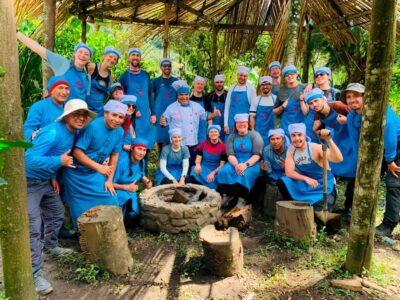
Machu Picchu: 5-Day Salkantay Trek with Panoramic Train
Read our review →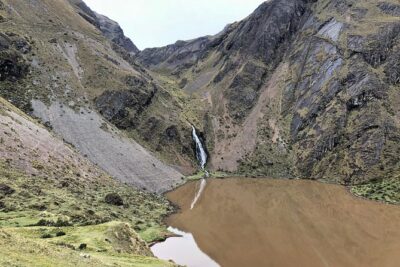
Ancascocha Trek To Machu Picchu 4 Days And 3 Nights
Read our review →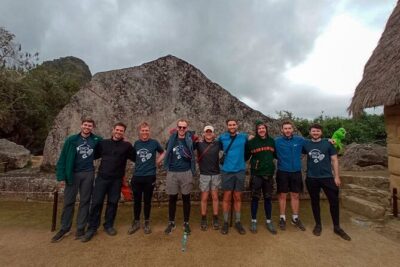
4 Day Inca Trail Trek to Machu Picchu Multi day tour
Read our review →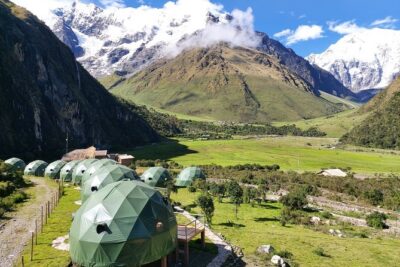
Salkantay Trek 4 Days to Machu Picchu by Glamping Sky Lodge Dome
Read our review →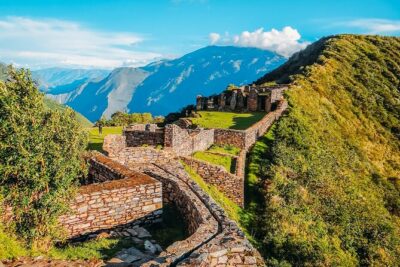
Browse the lists this tour appears in