
REVIEW · INDIA
Kashmir Great Lakes Trek
Kashmir saves its best views for walkers. This eight-day private trip links Srinagar, Sonamarg, Vishansar, Gadsar, Gangabal, and Naranag across high passes and open mountain meadows. I like the way the tour combines a fully supported trek with a Srinagar hotel or houseboat night, and I like that horses carry the main equipment so you only need a day pack. The main caution is physical: this is not a gentle sightseeing holiday. Several days last six to eight hours, with passes reaching above 4,000 meters.
The route feels rewarding because each day changes character. You get river-side camping at Sonamarg, long climbs, famous alpine lakes, and a final descent to Naranag’s Hindu pilgrimage site. The $112 listed price offers strong value if all advertised transport, meals, permits, equipment, horses, and accommodation are included, but you should confirm the exact package before paying.
Key Things to Know Before You Go
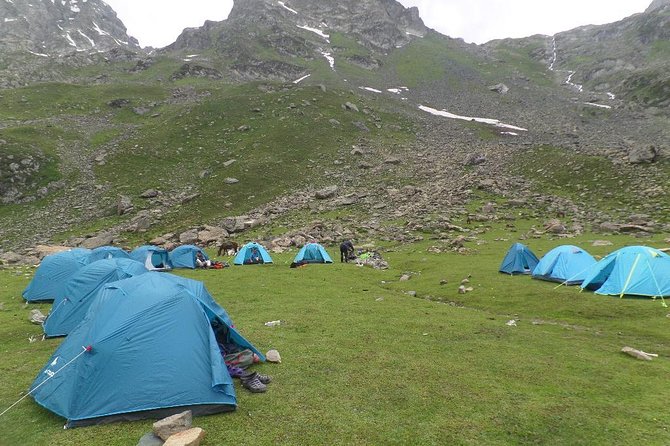
- Three major lake stops: Vishansar, Gadsar, and Gangabal provide the main visual highlights, with smaller lakes and mountain tarns appearing along the route.
- Four high passes: Nichnai, Gadsar, Zajibal, and another high crossing bring the route above 4,000 meters on several days.
- Horses carry the camp: Tents, sleeping bags, mats, blankets, poles, cooking gear, and other main supplies are offloaded onto horses.
- Vegetarian meals are cooked at camp: Breakfast, lunch, dinner, tea, coffee, and bottled water are included during the trek.
- A private trip: Only your group participates, with an English-speaking guide and private transportation.
- A flexible final night: The trip ends with a descent to Naranag, followed by a drive back to Srinagar.
Sonamarg Gives You a Gentle Start
Your first day begins with an 8 a.m. pickup in Srinagar. The drive to Sonamarg covers about 100 kilometers and takes roughly three hours, moving from Srinagar’s elevation of 1,600 meters to Sonamarg at 2,610 meters.
This is useful acclimatization time. You are not thrown straight into a high pass after landing or arriving by bus. The first camp sits beside the Sind River, and the day includes transport, tea, and dinner. It is a simple opening, but it gives you time to meet your guide, sort your day pack, and adjust to the higher altitude.
The private format helps here. You can ask questions about the next day, discuss your walking pace, and check the equipment before the long trekking days begin. Guides named in past feedback include Wajid, Ali, and Mudasir, while Mehraz and his team have also been praised for organizing transport and camp support.
The first night is still a tent night, not a hotel night. If you sleep poorly outdoors, bring suitable personal clothing and be ready for basic mountain camping. The package supplies tents, sleeping bags, mats, and blankets, but personal clothing and equipment remain your responsibility.
A few more treks around India worth a look
- Half day trekking (munnar valley Trekking & Tours )
★ 5.0 · 310 reviews - Nag Tibba 2 Days Trek (Pantwari to Pantwari)
★ 5.0 · 274 reviews - Bhrigu Lake and Alpine Meadow Trek
★ 5.0 · 121 reviews
Sonamarg to Nichnai: The First Seven-Hour Test
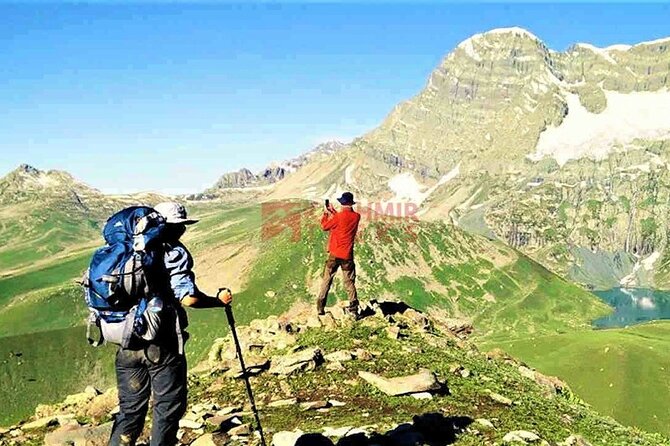
Day two covers 11 kilometers from Sonamarg to Nichnai. The route climbs from 2,610 meters to 3,450 meters and takes about seven hours.
This is where the trip begins to feel like a serious trek. You will spend much of the day walking uphill toward open country, with the mountain setting changing as you leave the lower valley. The tour provides breakfast, lunch, tea, and dinner, so you do not need to carry a full food supply.
Your day pack still matters. The horses carry the main gear, but you need your water, personal clothing, camera, medication, and anything else required during the day. Pack light, but do not confuse light with unprepared.
Nichnai is your first high camp. The altitude gain is considerable, and you should use the evening to rest rather than treat camp as another sightseeing stop. The private guide can help keep the pace sensible, but your own fitness remains important.
Nichnai Pass and Vishansar Lake
Day three is one of the route’s big milestones. You walk 12 kilometers in about seven hours, climbing from Nichnai at 3,450 meters through Nichnai Pass at 4,080 meters before reaching Vishansar Lake at about 3,650 meters.
The pass is the day’s main effort. At more than 4,000 meters, even a moderate climb can feel slow. You should expect a long walking day, not a quick viewpoint visit. The reward is Vishansar, one of the most recognizable lakes on the route.
Vishansar gives the trek its classic Kashmir Great Lakes character: open mountain country, high water, and snow-covered peaks when conditions allow. One particularly unusual report from the route described a brief light display near Nichnai at about 5:30 p.m. You cannot schedule a moment like that, but it shows why the late afternoon in camp can be worth staying awake for.
The campsite routine is practical rather than luxurious. Meals are cooked on a stove, and the full-board plan means you get breakfast, lunch, tea, and dinner. The cooking team also carries the LPG stove and utensils, which removes a major burden from your pack.
Gadsar Lake and the Highest Pass
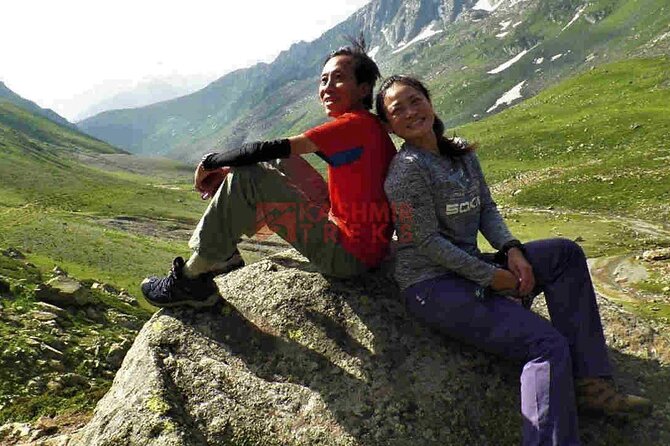
Day four is the longest and one of the most demanding. You cover 14 kilometers in about eight hours, walking from Vishansar at 3,650 meters over Gadsar Pass at 4,180 meters, then down toward Gadsar at approximately 3,550 meters.
This is the day to judge your fitness honestly. The total distance is not extreme by itself, but the altitude, pass crossing, uneven ground, and long duration add up. You will want good footwear, clothing for changing weather, and a day pack arranged so that essentials are easy to reach.
Gadsar Lake is a major visual reward after the pass. Its appeal is tied to the setting, with the lake framed by high slopes and open mountain ground. The crossing also shows why this route feels more like an expedition than a series of short walks. You earn the views through sustained effort.
Weather matters here. The operator states that the experience requires good weather and may be moved or canceled if conditions are poor. That is sensible for a route with high passes. You should keep some flexibility around the trek rather than scheduling an important flight immediately after the final walking day.
Same trailhead, a longer or shorter day out:
- Har Ki dun Trek by Himalaya Shelter
★ 5.0 · 102 reviews - Wild Elephant Anakulam & Waterfalls Tour(munnar valley Trekking)
★ 5.0 · 98 reviews - Friendship Peak Trek
★ 5.0 · 94 reviews - Half Day Hiking in Munnar Trekking Tour
★ 5.0 · 89 reviews
Gadsar to Satsar: A Shorter Day With Room to Recover
Day five covers nine kilometers in about five hours, rising from 3,550 meters to 3,650 meters. Compared with the previous eight-hour crossing, this is a welcome pause.
The shorter schedule gives you more time at camp and a chance to recover before the final high route to Gangabal. The scenery remains the main attraction, with meadows, mountain slopes, and views toward the surrounding peaks. Satsar is known for a group of lakes, and the route may show you more than the named stops listed in the day-by-day plan.
This is also a good day to inspect your gear. If your boots are rubbing, your sleeping system feels inadequate, or your day pack is too heavy, fix the problem now. The horse support reduces the weight of camp supplies, but it does not remove the need to walk comfortably for several hours each day.
Zajibal Pass and the Gangabal Lakes
Day six takes you from Satsar at 3,650 meters to the Gangabal area at about 3,580 meters. The 11-kilometer walk takes approximately six hours and crosses Zajibal Pass at 4,080 meters.
The numbers can look misleading. You finish slightly lower than you started, but the pass still demands a substantial climb and descent. High-altitude walking often works this way: a day with little net gain can still be tiring because you repeatedly move uphill and downhill.
Gangabal is the final major lake area and one of the most anticipated stops. The wide views, high peaks, and water make it a strong closing point for the mountain section. Past groups have particularly praised the scenery, the sense of achievement, and the care provided by guides, including Wajid and Ali.
You should also expect a change in mood. After several nights of tent camping, Gangabal can feel like the last great mountain camp before the return to roads and Srinagar. Enjoy it without rushing. The next day is still a 15-kilometer walk.
The Long Descent to Naranag
Day seven is the final and longest distance day. You walk 15 kilometers from Gangabal at 3,580 meters down to Naranag at about 2,250 meters, taking around six hours.
The lower altitude may make breathing easier, but descending is not effortless. Long downhill sections can be hard on knees and ankles, especially after several days on uneven ground. Trekking poles are included, and this is the day to use them carefully.
Naranag adds cultural meaning to the route. It is a village and Hindu pilgrimage site, and the itinerary includes Naranag Temple before the drive back to Srinagar. This is a better ending than simply walking out to a road, because the trip connects Kashmir’s high mountain scenery with a place of religious importance.
The day includes breakfast, transport, lunch, and dinner. After reaching Naranag, you drive back to Srinagar. The package also includes one deluxe houseboat or hotel night in Srinagar, though the schedule places that accommodation within the eight-day program rather than clearly specifying the exact night. Confirm this detail when booking.
What the $112 Price Really Covers
At $112, this trip is priced far below what many supported multi-day treks might cost, especially once transport, staff, meals, permits, equipment, and accommodation are counted. The value looks strongest for anyone who would otherwise need to arrange tents, cooking supplies, horses, permits, and a private vehicle separately.
The included items are substantial:
- Private transportation
- One night in a deluxe Srinagar hotel or houseboat
- Six nights of full-board tented camping
- Tents, sleeping bags, mats, blankets, and trekking poles
- Cooking utensils and an LPG stove
- Horses to carry the main gear
- Trekking and wildlife permits
- First aid
- Breakfast, lunch, dinner, tea, coffee, and bottled water
You still pay for travel insurance, personal clothing and equipment, and tips for guides and local staff. The price also deserves a careful confirmation because the published figure is unusually low for eight days with this many inclusions. Ask what the $112 covers for your exact dates and group before you rely on it as the final cost.
Who Will Enjoy This Trek Most
I would recommend this trek to you if you have a moderate level of physical fitness and want real mountain walking rather than short scenic outings. The private setup works well for families or friends who prefer their own pace and want direct contact with one guide.
It also suits first-time high-altitude trekkers who want logistical support. You do not need to carry the tents or cooking equipment, and you receive meals throughout the mountain section. That support can make a major difference.
I would hesitate to recommend it if you dislike tent camping, need a relaxed schedule, or have little experience with long uphill and downhill days. The route includes four passes above 4,000 meters and several days lasting six to eight hours. Good weather is important, and a current passport is required on the day of the trip.
Dietary requirements should be provided when booking. Meals are described as vegetarian, so you should discuss your needs in advance rather than hope the camp kitchen can adjust at the last minute.
Practical Booking Advice for Srinagar
The meeting time is 8 a.m., and pickup is offered in Srinagar. On the final day, the operator provides a drive to the bus stand, about five kilometers and 20 minutes, or to Srinagar Airport, about 12 kilometers and 30 minutes.
Do not book a tight onward connection without allowing for mountain conditions and the long return day. The trek requires good weather, and changes made less than 24 hours before the start are not accepted. Cancellation is free up to 24 hours in advance, with a full refund, while a weather cancellation offers a different date or a full refund.
A passport is required, and booking requires each participant’s passport name, number, expiry date, and country. The activity is private, so only your own group takes part.
Should You Book the Kashmir Great Lakes Trek?
Book it if you want Kashmir’s famous high lakes with the hard work organized for you. The route offers genuine variety: river-side Sonamarg, Nichnai Pass, Vishansar, Gadsar, Satsar, Gangabal, and the cultural finish at Naranag. The strongest points are the scenery, horse-supported camping, full-board meals, and the personal feel of a private guide.
Think twice if you are not ready for altitude, long walking days, or basic tent accommodation. Before paying, confirm the unusually low $112 price, the exact houseboat or hotel arrangement, your dietary needs, and the equipment supplied. For a fit walker who wants a well-supported route through Kashmir’s high country, this is a remarkably ambitious trip for the money.
FAQ
How long is the Kashmir Great Lakes Trek?
The experience lasts approximately eight days, including transport from Srinagar, six nights of mountain camping, the trek to Naranag, and the return to Srinagar.
Where does the trek begin?
The trek begins at Sonamarg. The tour provides pickup in Srinagar, followed by a drive of about 100 kilometers that takes roughly three hours.
Where does the trek finish?
The walking route finishes at Naranag, a village and Hindu pilgrimage site. From there, private transport takes you back to Srinagar.
How difficult is the trek?
You need a moderate level of physical fitness. Walking days range from nine to 15 kilometers and take about five to eight hours. Several passes reach elevations above 4,000 meters.
Are tents and sleeping bags included?
Yes. The package includes tents, sleeping bags, mats, blankets, and trekking poles. Horses carry the main equipment, while you carry a day pack.
Are meals included?
Yes. Breakfast, lunch, dinner, tea, coffee, and bottled water are included. The mountain meals are vegetarian and cooked at camp.
Is transportation included?
Yes. Private transportation includes the Srinagar pickup, the drive to Sonamarg, transport from Naranag back to Srinagar, and the final drop-off at the Srinagar bus stand or airport.
What documents are required?
A current valid passport is required on the day of the experience. At booking, you must provide each participant’s passport name, number, expiry date, and country.
Recently added around India
- Prashar Lake Trek★ 5.0 · 7 reviews
- Kasol + Kheerganga Trek 3D/2N, all inclusive with BanBanjara★ 3.5 · 3 reviews
- Jogini Waterfall Trek from Manali★ 5.0 · 2 reviews
- 8 Days Markha Valley Trek: Shared Tour with Meals Included★ 5.0 · 3 reviews
- Ladakh One Day Trek- Gyamtsa to Phyang Village★ 5.0 · 4 reviews
- Ladakh Sham Valley Trek★ 5.0 · 7 reviews
- 1 Day Activity Adventure Trekking Kerala★ 5.0 · 5 reviews
- Kolukkumalai Trekking with Night stay in Tent★ 5.0 · 2 reviews
India Trekking Tours, compared.
Half day trekking (munnar valley Trekking & Tours )
Read our review →
Wild Elephant Anakulam & Waterfalls Tour(munnar valley Trekking)
Read our review →
Browse the lists this tour appears in