
REVIEW · SAPA
Easy Trek in Sapa mountain : Y Linh Ho – Lao Chai – Ta Van
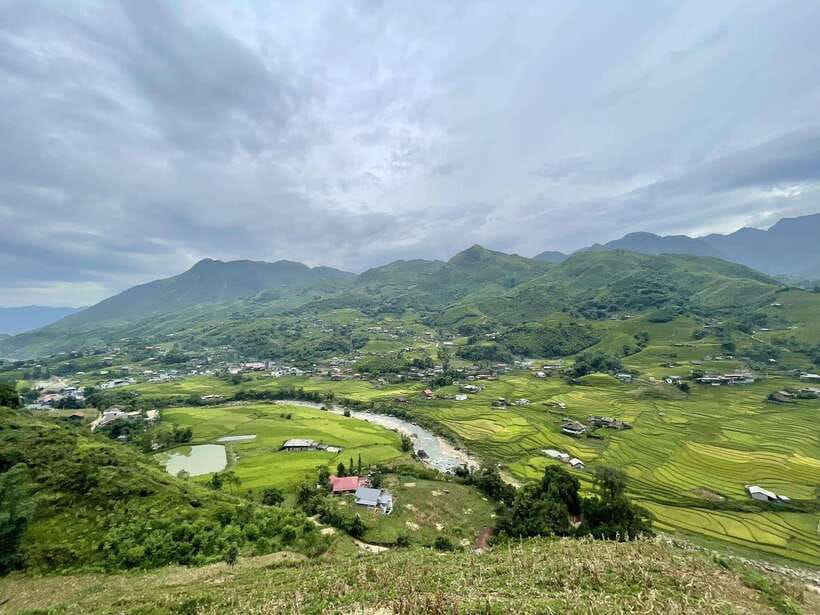
Rice terraces, mountain paths, and local homes make this seven-hour Sapa trek a strong choice for seeing rural Northern Vietnam without committing to an overnight hike. You ride a short distance from town, then walk through bamboo forest, along the Muong Hoa River, and into villages connected by broad views and steep paths.
I especially like the lunch with a Hmong family, which gives the day a human center rather than turning it into a string of photo stops. I also like the small group, limited to 10 people, and the chance to compare Black Hmong and Giay culture in one outing. The main catch is simple: this is called an easy trek, but the hills, slippery ground, and long walking time can make it fairly demanding.
Guide quality seems to add real value. Mao is praised for her warmth, humor, and invitations into her home, while Su is described as patient, attentive, and fluent in English. If rain arrives, your shoes and legs will work harder than the title suggests.
Key points to know before booking
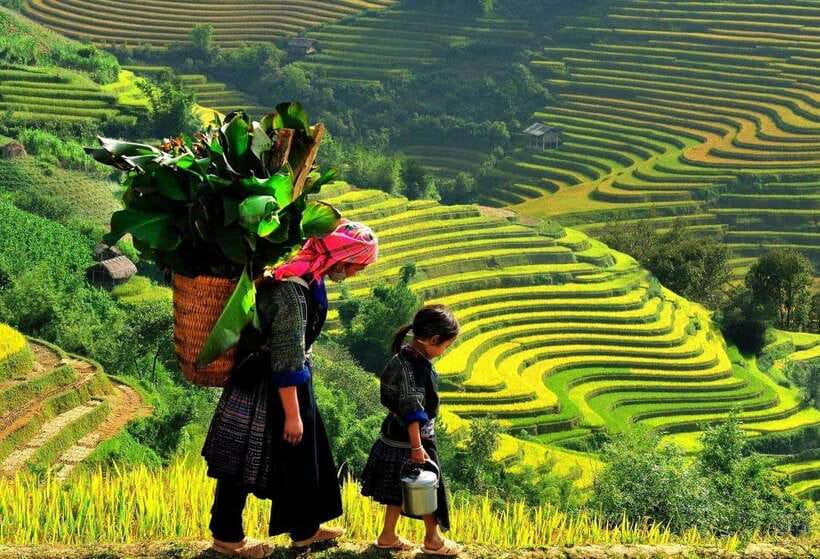
- The route covers three important Sapa-area communities: Y Linh Ho, Lao Chai, and Ta Van, with Hmong and Giay culture along the way.
- The best views come on foot: you pass bamboo forest, the Muong Hoa River, rice terraces, buffalo, mountain slopes, and village paths.
- Lunch is part of the experience: you eat at a small traditional restaurant run by a local Hmong family.
- The trek is more physical than the word easy suggests: steep sections and rain can make the ground slippery.
- You return to Sapa around 15:30: that timing may work well if you need to catch a later bus.
- The $20 price is strong value: transport, an English-speaking guide, and lunch are included for a small group.
From Hoang Van Thu to the Muong Hoa Valley
The day begins at 9:00 at Massage Lits, 01 Hoang Van Thu Street, in Sapa. A van collects you there and drives for about 15 minutes, taking you roughly 2 kilometers down toward the Cat Gat road and the mountain villages below town.
That short ride matters. Sapa town is busy with hotels, cafés, and tour traffic, while the walk quickly shifts you into a quieter rural setting. The route reaches the area around the Muong Hoa River and its hanging bridge, a useful early landmark before the trail turns upward.
Your guide introduces the route and helps set the pace. With no more than 10 people, the group should be easier to manage than a large coach excursion, especially on narrow or wet paths. You still need to stay attentive, since this is a proper walking day rather than a gentle roadside sightseeing trip.
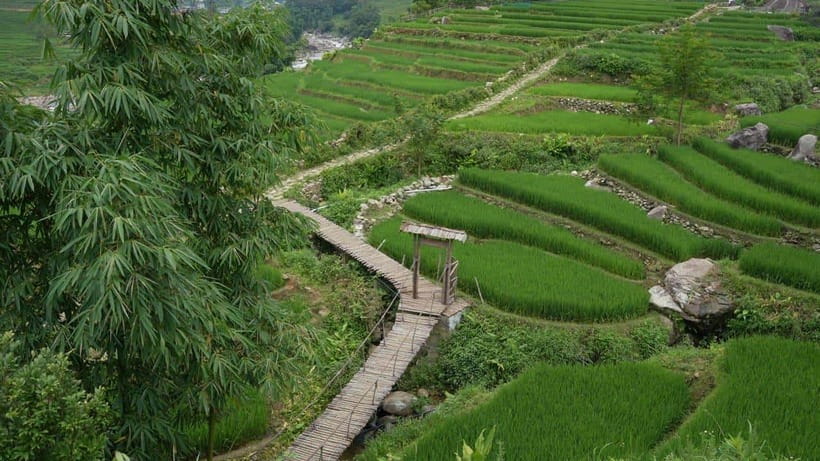
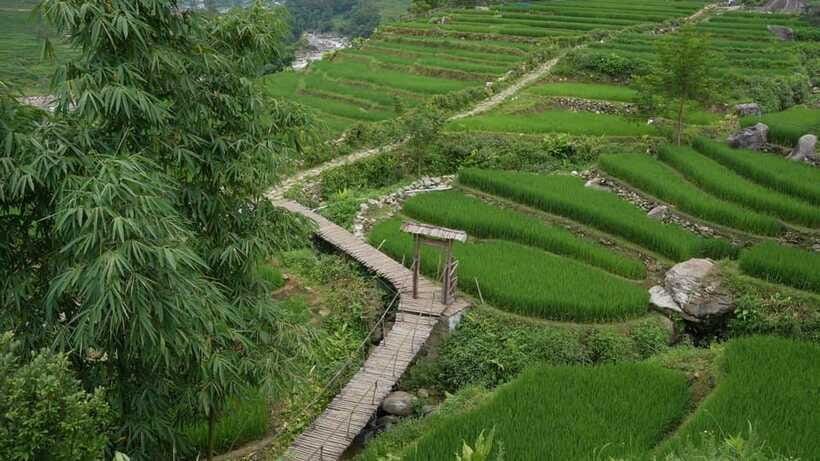
The first section leads uphill through bamboo forest. It is a good reminder that Sapa’s scenery is not only about rice fields. The route changes underfoot and in height, giving you forest shade before opening onto wide mountain views.
A few more treks around Sa Pa worth a look
- Sa Pa: Muong Hoa Valley Trek and Local Ethnic Villages
★ 4.6 · 864 reviews - Sapa: Eco Adventure Terrace Fields and Local Villages Trek
★ 4.9 · 636 reviews - Number one top rated ethical cultural trekking and homestay by ETHOS
★ 5.0 · 456 reviews
Bamboo paths and Sapa’s largest rice terraces
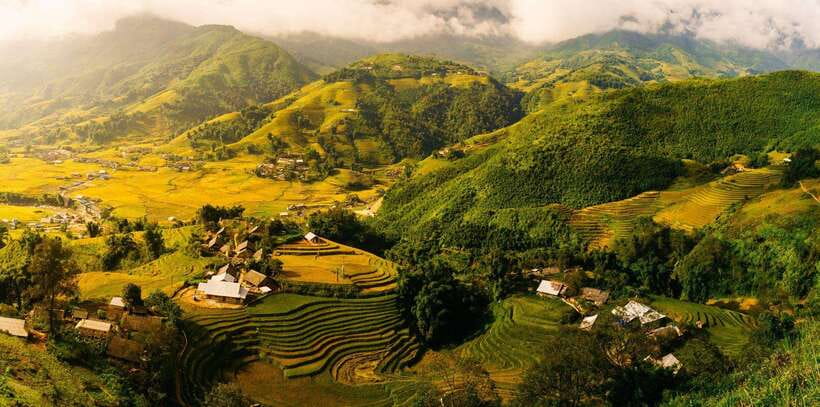
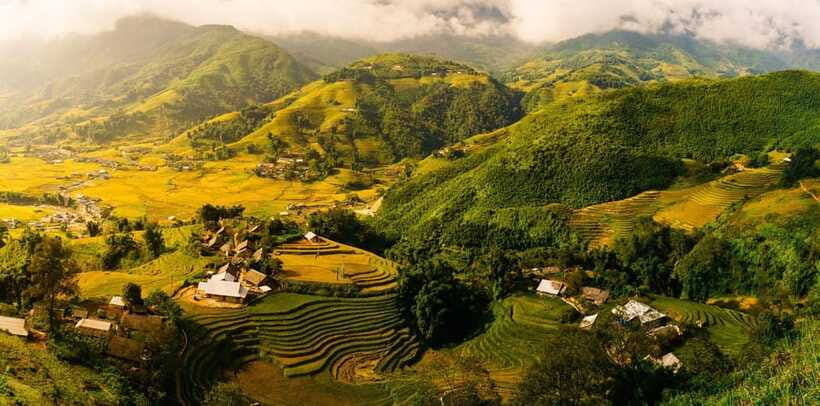
The main reward arrives as the path climbs above the valley. From here, you can see some of the biggest and most striking rice terraces in Vietnam, spread across the folds of the Hoang Lien Son mountain range.
The exact look depends on the season. The supplied information does not promise a particular planting or harvest view, so you should go for the shape of the terraces and the mountain setting rather than one fixed color. Reviews from wet-weather days still describe the scenery as worth the effort, though rain can make the walking more taxing.
I like this part because the view is earned gradually. You are not simply driven to a lookout, told to take a picture, and moved along. You walk through the setting that makes the view possible, with fields, village paths, and slopes around you.
The route also brings you close to everyday rural details. One review specifically mentions rice fields and buffalo, while others focus on walking among the terraces. These details give the day a better sense of place than a viewpoint alone.
Bring water, sunscreen, and a hat. The open sections can feel exposed, and the seven-hour schedule leaves little room for ignoring thirst or sun. Comfortable, breathable clothing is more useful than anything fashionable. Sapa’s paths will not be impressed by your outfit.
Y Linh Ho and lunch beside the river
After the high section, the route heads down to Y Linh Ho village. The descent may feel easier on your lungs, but it can be harder on your knees, especially if the ground is wet. Walking shoes with good grip are important here.
Y Linh Ho is a Black Hmong village, and this is where the day moves from scenery toward community life. The stop includes time for photos, sightseeing, walking, and a break, but the most important part is lunch at a small traditional restaurant run by a local Hmong family.
The meal is included in the $20 price, along with transport and the guide. Drinks are not included, so carry water and budget for anything extra you want to buy. A local meal also makes the schedule feel more natural. You pause, eat, and let your legs recover instead of treating lunch as fuel grabbed between attractions.
Several comments praise the lunch as good, including a memorable meal beside the river in one village. The information does not give a fixed menu, so do not book this expecting a specific dish. Think of it as a simple local meal in a family-run setting, which is exactly the point.
Your guide can also explain local life here. Su is praised for sharing details about the area’s ethnic groups and customs, while Mao is described as friendly, funny, and willing to share her own life. Those personal conversations can be the most valuable part of the stop, as long as you listen respectfully and avoid treating village homes as staged attractions.
Lao Chai and the Black Hmong connection
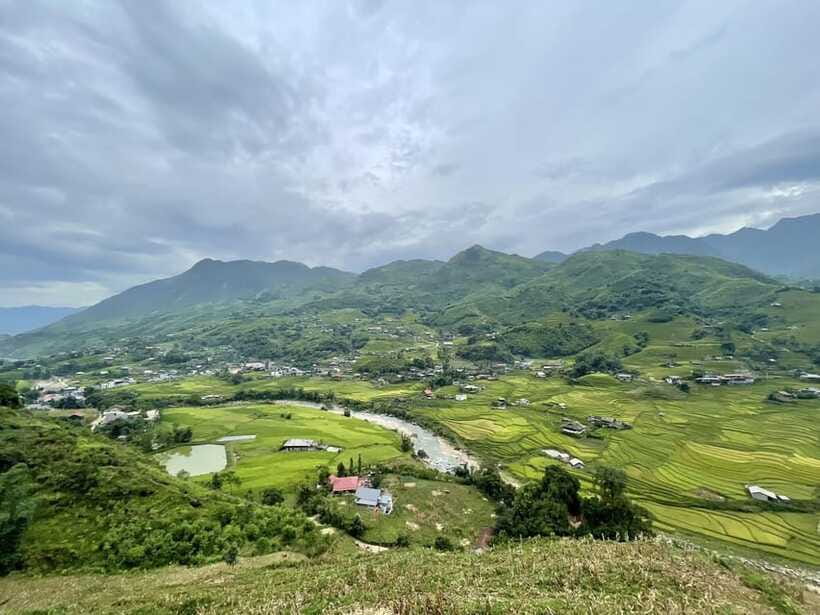
After lunch, you continue to Lao Chai, another important Black Hmong village. This section lasts about an hour in the stated schedule and includes walking, photos, free time, and guided sightseeing.
Lao Chai is useful because it places the terraces and culture side by side. You are not simply looking at farmland from a distant viewpoint. You pass through a settlement where the Black Hmong identity is part of the area’s daily character.
Your guide’s explanation matters here. The tour is designed to help you understand differences between local ethnic groups, not just memorize village names. Ask questions about clothing, language, homes, farming, and customs if the guide raises those subjects. The supplied details do not promise a formal cultural demonstration, so the value comes from conversation and observation.
Be polite with photography. The guidance specifically asks you to respect local customs and traditions. That means giving people space, asking when appropriate, and remembering that a village is a home, not a backdrop built for visitors.
The route can be slippery after rain. Su is praised for watching out for people on wet paths, and that kind of attention is useful here. Still, a guide cannot remove the hills or the mud. If you have back problems, a recent surgery, or limited walking ability, this is not the right outing.
Same trailhead, a longer or shorter day out:
- From Sapa: 1-Day Guided Trek to Lao Chai & Ta Van with Lunch
★ 4.9 · 416 reviews - Sa Pa Full Day Trekking Tour
★ 5.0 · 414 reviews - Sapa 1 Day Long Trek: Trek to Hau Thao and Sa Seng Villages
★ 4.6 · 344 reviews - Explore Sapa by TrekkingAdventures, Mountain,Rice fields
★ 4.9 · 229 reviews
Ta Van and the Giay minority
The final village is Ta Van, where you meet the Giay minority. This gives the trek a clear cultural progression: you begin around Hmong communities, learn about the Black Hmong in Y Linh Ho and Lao Chai, then compare what you see with Giay life in Ta Van.
The Ta Van section is scheduled for about an hour and includes another break, sightseeing, photos, and free time. After several hours on the trail, that pause is welcome. It also gives the guide time to explain the differences between the groups in a setting where you can connect the discussion to what you have seen.
The strongest cultural experience may come from a guide who can speak openly about local life. Mao has invited people to her home and offered tea, and her accommodation includes small individual cottages with mountain views and a pool for longer stays. That longer option is separate from this day trek, but it tells you the guide may offer a more personal connection than a standard route briefing.
Do not assume every group will receive the same private invitation. The day tour itself promises a visit through villages and explanations about ethnic groups. Treat any additional home visit as a welcome possibility, not a guaranteed part of the schedule.
The return to Sapa and the value of the timing
From Ta Van, you walk to the waiting vehicle and ride back to Sapa. The return drive takes about 15 minutes, and the day should finish around 15:30 at Hoang Van Thu.
That timing is useful if you need to book a bus to Hanoi or another destination later in the day. I would still leave a reasonable buffer rather than scheduling an immediate departure. Mountain roads, group pace, weather, and the final walk to the vehicle can all affect the exact finish.
The meeting point is also the location of Massage Lits. After the trek, you receive a 20 percent massage discount there. That is a practical extra, especially if the downhill sections have made your legs complain. Massage is not included, so consider it an optional follow-up rather than part of the tour price.
Is $20 good value for seven hours?
Yes, the price is one of the strongest reasons to consider this outing. For $20 per person, you receive transportation, an English-speaking guide, and lunch with locals. A small group of up to 10 also helps the price feel fair, since you are not paying for a private tour but are avoiding a very large crowd.
The value is not only in the number of included items. You get a full day outside Sapa, access to mountain villages, cultural interpretation, and a meal in a local setting. The tour covers a lot of ground without asking you to arrange separate transport between trail sections.
There are a few costs to remember. Drinks are not included, and no tax invoice or visa service is part of the price. You also need to bring suitable clothing, shoes, water, sunscreen, and a charged phone. These are small expenses, but they matter when you are preparing for a seven-hour outing.
Free cancellation up to 24 hours before departure and the option to reserve now and pay later add flexibility. That is useful in Sapa, where wet weather can change your plans. The operator does not promise dry conditions, so check the forecast and decide if you are comfortable walking in rain.
How difficult is this supposedly easy trek?
I would describe it as moderate rather than easy. The route includes uphill and downhill walking, a bamboo forest, mountain paths, and several hours on foot. One direct account calls it quite physical, and another says the trek became fairly demanding because of the steep terrain.
Rain is the main troublemaker. A wet path can be slippery, and the experience becomes more about careful footing than relaxed strolling. Wear comfortable walking shoes with grip, not smooth-soled trainers or casual sandals.
The tour is not suitable for children under 10, pregnant women, wheelchair users, people with back problems, people with recent surgery, or babies under one year. The information also lists people over 70 as unsuitable, with additional restrictions for older ages. If you have any doubt about your fitness, ask before booking.
A charged smartphone is recommended. It helps with photos and may be useful for contacting the group, but do not let it distract you on uneven paths. Put it away when walking and take pictures during safe pauses.
Which guide might shape your day?
The experience can vary with the guide, and two names appear repeatedly in the positive feedback: Mao and Su. Mao is described as kind, humorous, and generous with personal stories. She may offer tea and a glimpse into her home life, and she also arranges longer stays for people who want more time in the mountains.
Su is praised for excellent English, patience, attention on slippery paths, and clear explanations of local ethnic groups. If cultural context is important to you, his ability to connect the scenery with local customs could make a big difference.
You cannot choose a particular guide from the information provided, so book for the route and format rather than for a guaranteed individual. The small group helps, but the pace and character of the day will still depend partly on who leads it.
Who should book this Sapa trek?
I would recommend it to you if you want a full day of terraces and villages without arranging an overnight stay. It suits people who enjoy walking, value local food, and prefer a guide who explains culture rather than simply pointing out views.
It is also a good fit if you have limited time in Sapa. The 9:00 start and return around 15:30 leave the evening free, while the short van transfers keep the day focused on walking.
I would not choose it if you want a truly gentle stroll, guaranteed dry paths, or a fully accessible route. It is also not a good match for anyone with the listed health, age, pregnancy, or mobility limits.
Should you book it?
Book this trek if your priorities are big rice terraces, a local lunch, and direct contact with Hmong and Giay communities at a low price. The route offers more than a viewpoint visit, and the guide can add real depth through stories about local life.
Skip it if the word easy has made you expect flat paths. The hills are real, rain can make them slippery, and seven hours is a long time to be on your feet. For a reasonably fit walker with proper shoes, though, this is a well-priced and rewarding way to see the Sapa valley.
FAQ
Where does the trek start?
It starts at Massage Lits, 01 Hoang Van Thu Street, in Sapa.
What time does the tour begin and end?
Pickup begins at 9:00, and the tour ends at about 15:30 in Sapa town.
How long is the experience?
The full experience lasts about seven hours.
What is included in the $20 price?
Transportation, an English-speaking guide, and lunch with local people are included.
Is the tour conducted in English?
Yes. The live tour guide speaks English.
How large is the group?
The group is limited to 10 participants.
What should I bring?
Bring comfortable walking shoes, a sun hat or hat, comfortable breathable clothing, water, sunscreen, and a charged smartphone. Alcohol and smoking are not allowed in the vehicle.
Recently added around Sa Pa
- Soob Sapa Trekking Tour★ 4.3 · 3 reviews
- Sapa Trekking – Waterfalls And H’mong Villages★ 5.0 · 2 reviews
- Sapa Trekking Private Tour With Ethnic Female Tour Guide★ 4.9 · 24 reviews
- Sapa: Trekking Through Terraced Rice Fields & Valley 1 Day★ 4.8 · 4 reviews
- Sapa: Y Linh Ho – Lao Chai, and Ta Van Trekking Day Tour★ 5.0 · 25 reviews
- Sapa Trekking Guide Francophone 2 days – 1 night★ 5.0 · 2 reviews
- Sapa: Ta Phin Village Trek with Lunch and Bathing Experience★ 4.7 · 13 reviews
- Sapa small groupe activities: 1 Day trek – Meet the locals★ 4.7 · 3 reviews
Sapa Trekking Tours, compared.
Muong Hoa Valley Trek and Local Ethnic Villages
Read our review →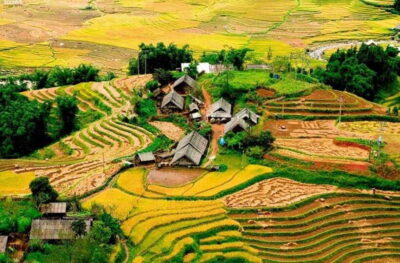
Eco Adventure Terrace Fields and Local Villages Trek
Read our review →
Number one top rated ethical cultural trekking and homestay by ETHOS
Read our review →
1-Day Guided Trek to Lao Chai & Ta Van with Lunch
Read our review →
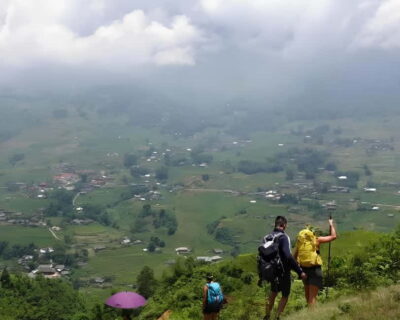
Sapa 1 Day Long Trek: Trek to Hau Thao and Sa Seng Villages
Read our review →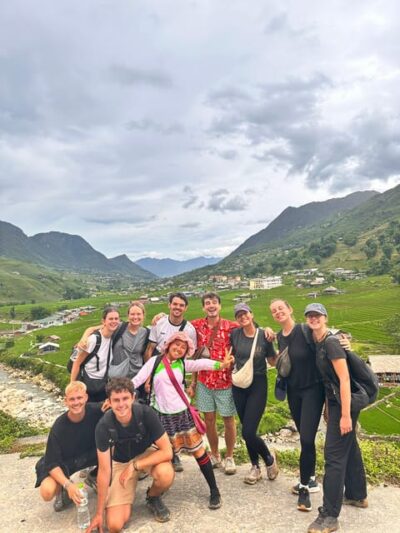
Explore Sapa by TrekkingAdventures, Mountain,Rice fields
Read our review →
EXPLORE SAPA: 2D1N TREKKING & HMONG CULTURE WITH DINH
Read our review →Browse the lists this tour appears in