
REVIEW · PERU
2 day 1 night trek / Colca Canyon
Colca Canyon rewards an early start. This two-day trek combines the famous Cruz del Cóndor, long canyon walks, an overnight stay at Sangalle oasis, and a return through the Colca Valley. I like the route because it gives you more than a roadside viewpoint: you walk through the canyon itself, sleep at the bottom, and climb out at sunrise.
I also like the chance to watch Andean condors near Cruz del Cóndor and relax in Sangalle’s pool after the first day. The main drawback is the demanding schedule, with a 3:00 to 3:30 a.m. pickup, six hours of walking on day one, and a steep three-hour climb on day two. A serious personal-boundary complaint involving a guide named Paul also makes it wise to stay alert and speak up if any conduct feels inappropriate.
Key points to know before booking
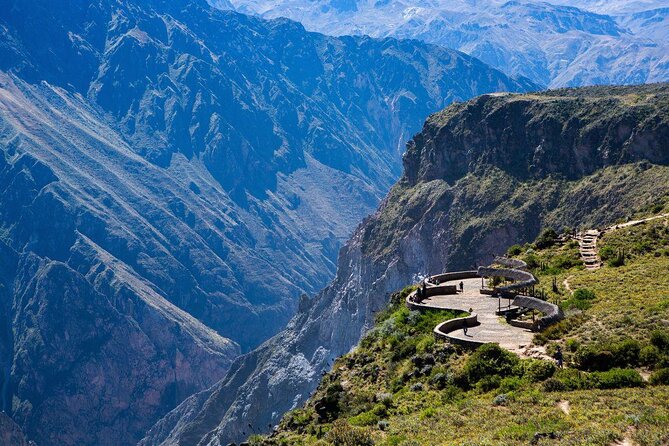
- Cruz del Cóndor at 3,800 meters: The tour includes a stop at one of the best-known condor viewpoints in the Colca region.
- Six kilometers into the canyon: The first day includes about three hours of walking from Pampas of San Miguel to San Juan de Chuccho.
- Sangalle overnight stay: You spend the night at 2,225 meters, with time for a pool swim before dinner.
- A steep sunrise climb: The second morning begins with a three-kilometer ascent to Cabanaconde, taking about three hours.
- Flexible return route: You can return to Arequipa or take an optional regular bus to Puno from Chivay.
- Small group format: The group is limited to 15 people, with guiding in English or Spanish.
What the $90 price really covers
At $90 per person, this is an inexpensive way to combine transportation, guiding, meals, and a two-day route through the canyon. The price includes pickup in Arequipa, transport to the trekking start, return transport from Cabanaconde, an English or Spanish guide, two breakfasts, lunch, and dinner.
That package has real value. Arranging the same route independently would require sorting out early transport to the canyon, meals, the overnight stay, and the return from Cabanaconde. Having a guide also helps keep the group moving through several villages and viewpoints.
The price is not fully all-inclusive. You need to budget for the tourist ticket, which is listed as S/. 40 for Latin American foreign nationals and S/. 70 for foreign nationals from other countries. You also pay for drinking water, snacks, the final lunch, and the optional hot springs, listed at S/. 15.
One useful warning concerns price consistency. A recent Australian booking review noted that people on the same tour had paid different amounts. That does not change what the $90 package includes, but I would compare the current price carefully before paying and check exactly which extras are included.
A few more treks around Peru worth a look
- 2 Day 1 Night Trek / Colca Canyon
★ 4.5 · 92 reviews - From Cusco: 5-Night Trip with Salkantay Trek & Machu Picchu
★ 4.7 · 6 reviews - PARACAS|| Sunset trekking in the Paracas National Reserve
★ 3.3 · 3 reviews
The 3:00 a.m. start from Arequipa
The day begins before most of Arequipa wakes up. Pickup is scheduled between 3:00 and 3:30 a.m. from the square, with the vehicle leaving around 3:30.
You then spend about three hours traveling toward the Colca Valley. The early departure is tiring, but it serves a purpose. It gets you to Cruz del Cóndor during the morning period when condors may be seen riding rising air currents.
The first stop is Chivay, where you have a short breakfast break. Do not expect a leisurely café morning. This is a practical stop to eat, use the facilities, and prepare for the high-altitude route.
The trip reaches elevations above 3,000 meters, so the first morning can feel demanding even before the hike begins. I would keep your first day in Arequipa light, drink water, and avoid treating the breakfast stop as your only chance to eat. Snacks are not included.
Condors and the Colca Valley
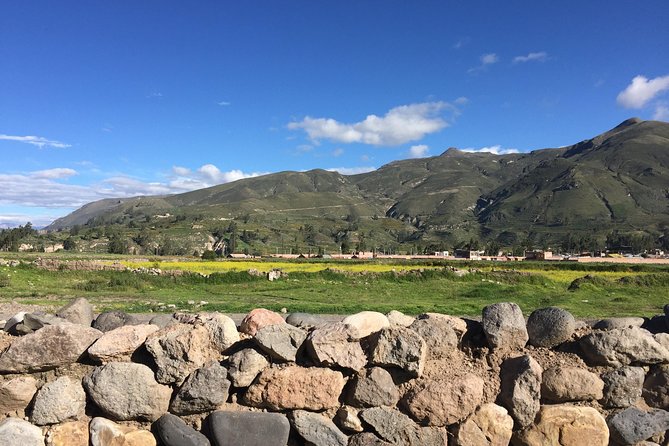
Cruz del Cóndor sits at about 3,800 meters above sea level. The stop gives you a chance to look across the Andean valleys and watch condors in flight.
The condor viewing is the most famous part of this route, but it is also the least predictable. The birds are wild, not scheduled performers. You may get excellent views, but the timing and number of condors can vary.
The viewpoint adds a strong visual opening to the trip. You see the scale of the canyon from above before walking down into it. That contrast matters: the first impression is wide and open, while the trek itself becomes more enclosed and physical.
Bring a warm layer for this stop. The high viewpoint and early hour can feel cold, even though the lower canyon and Sangalle may be warmer later in the day.
Six kilometers down to San Juan de Chuccho
After Cruz del Cóndor, the group reaches Pampas of San Miguel at about 3,300 meters. From there, the route enters the canyon and continues for roughly six kilometers, taking about three hours.
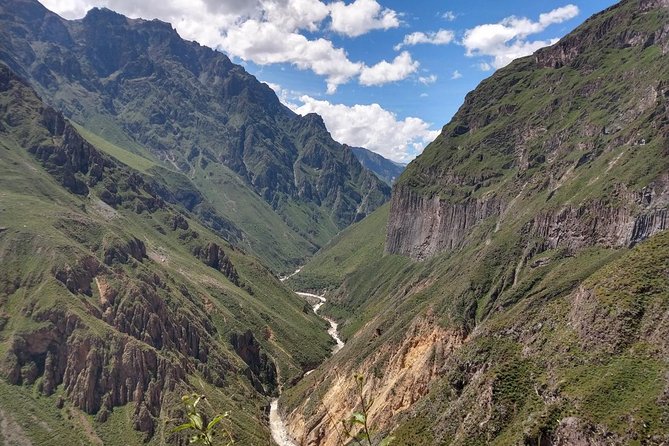
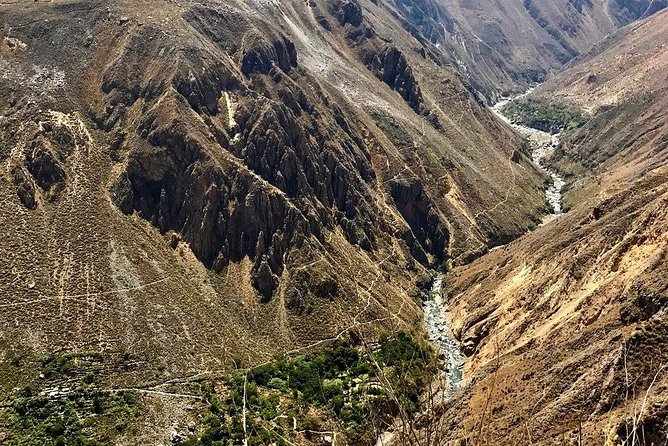
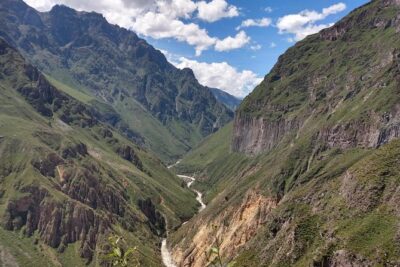
This is where the tour becomes a proper trek rather than a sightseeing trip. You walk along the canyon floor and pass through changing scenery, with steep canyon walls and Andean views around you. The route offers a closer look at how people live in the Colca Valley, rather than showing only the famous viewpoints.
The first walking section is not described as a technical climb, but it is still a serious hike. The total length, altitude, uneven ground, and early start can combine to make the day feel longer than the numbers suggest.
At San Juan de Chuccho, you stop for lunch and a rest. This break is important. It gives you time to eat, recover, and prepare for another three kilometers of walking.
You should carry only what you need for the overnight portion. The provided details do not specify luggage transport, so ask the operator before departure if larger bags can be sent ahead or stored. That question can make a big difference on a route with several hours of walking.
More Two-Day Treks in Peru:
- From Arequipa: 2-Day Colca Canyon Trekking Tour
★ 4.8 · 243 reviews - 2 Day Trek Including Transfer to Puno / Colca Canyon
★ 4.5 · 38 reviews - From Arequipa Trek : 2-Days of Hiking in the Colca Canyon
★ 4.5 · 35 reviews - Inca Trail Trek to Machu Picchu – 2 Days (Small Group or Private)
★ 5.0 · 31 reviews
Villages, canyon paths, and Sangalle
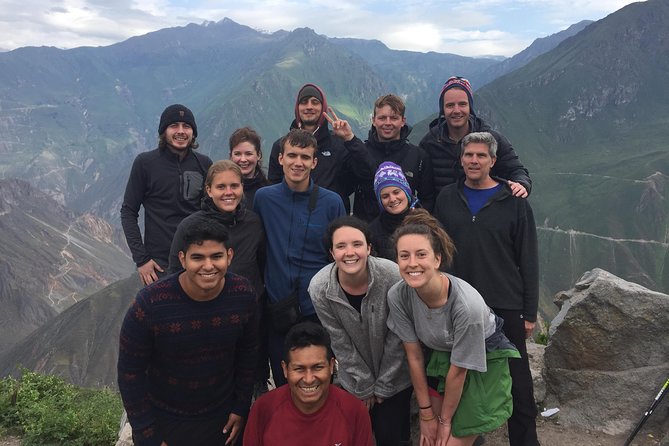
After lunch, the route continues through Cosñirhua and Malata. This second section covers about three kilometers and takes around two and a half hours.
The villages make this part more than a test of endurance. You pass through inhabited parts of the canyon and see the route as a lived-in valley, not simply a natural attraction. The pace may feel slower after lunch, particularly if the morning walk has already used much of your energy.
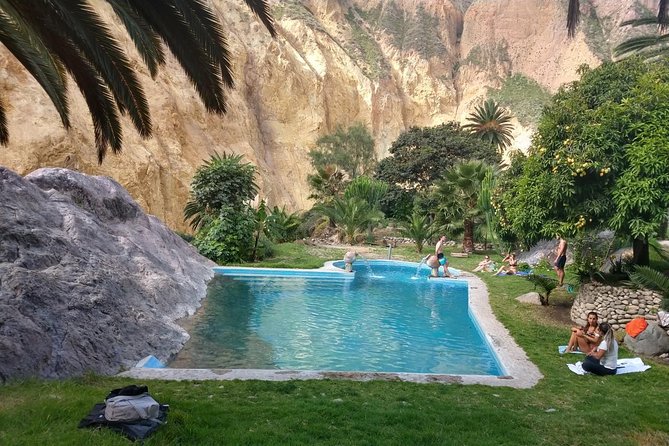
The day ends at Sangalle, an oasis at about 2,225 meters. The lower elevation and pool make it a welcome change from the cold, high viewpoint at Cruz del Cóndor.
A swim is included as an activity opportunity, but the hot springs are a separate optional stop on the following day. At Sangalle, the pool is the place to cool off and rest before dinner.
Dinner is included, followed by an overnight stay. This is one of the strongest reasons to choose the two-day route. A short visit can show you the canyon from above, but sleeping at Sangalle lets you experience the change from high valley to canyon floor.
Keep expectations practical. This is a trekking overnight, not a luxury hotel stay. The supplied details do not give room standards, bedding information, or private bathroom arrangements, so confirm those points if comfort is important to you.
The sunrise climb to Cabanaconde
The second day starts early again. You walk three kilometers up the canyon wall toward Cabanaconde, climbing from Sangalle at 2,225 meters to the town at about 3,230 meters.
The ascent takes around three hours. It is short in distance but serious in effort. You are climbing more than 1,000 meters, and the route begins after a full day of hiking.
The timing gives you a chance to see the sunrise and morning views from the canyon. That is a memorable reward, but the climb is the tour’s clearest physical challenge. You need steady shoes, water, and patience. There is no prize for racing the group.
If you are unsure about your fitness, consider this section carefully. A person who manages long walks on relatively level ground may still find the steep ascent hard. The activity is better suited to someone comfortable with sustained uphill hiking than to someone looking for a gentle valley walk.
At Cabanaconde, the hardest hiking is finished. The rest of the day uses road transport through the Colca Valley.
Antahuilque, Maca, and the ride toward Chivay
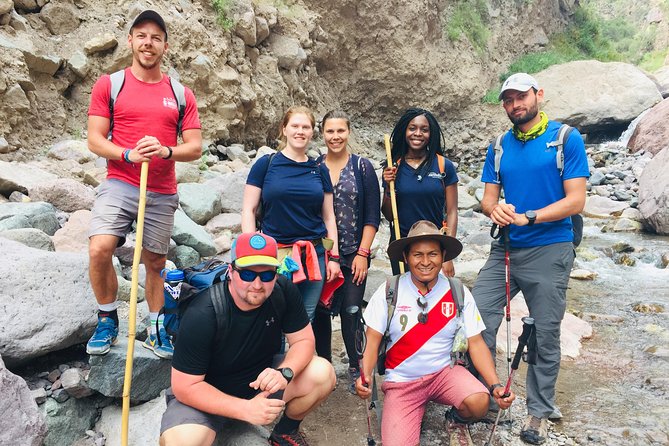
The route continues toward Chivay with a stop at the Antahuilque viewpoint. From here, you can see Andean terraces and broad views of the Colca Valley.
The terraces are an important part of the region’s character. They show how farming has adapted to steep mountain terrain. After walking inside the canyon, this viewpoint gives you another sense of its scale.
The tour also includes a panoramic visit to Maca and its colonial church. The wording matters: this is a brief outside view rather than a long town visit. It adds cultural interest without turning the second day into a full historical tour.
You should expect a packed schedule. The day includes a demanding climb, road travel, several short stops, and the optional hot springs. It offers a lot, but it leaves limited time for lingering.
Yanque hot springs and your return choice
At Yanque, you can pay separately to visit the hot springs. The listed cost is S/. 15. The pools are presented as both relaxing and associated with healing properties, though the practical benefit here is simple: warm water can feel good after the canyon climb.
The hot springs are optional, so you can skip them if you prefer more rest or want to keep costs down. You also have an optional lunch in Chivay, which is not included.
After Chivay, you have two return possibilities. You can take a regular bus to Puno at 1:00 p.m., arriving at Puno’s main square around 7:00 p.m. This makes the trek useful for people connecting Arequipa with Lake Titicaca.
Or you can return to Arequipa, passing near Pampa Cañahuas National Reserve. The reserve is home to llamas, alpacas, vicuñas, and guanacos, and the tour finishes two blocks from Arequipa’s Plaza de Armas.
Check your onward plans closely. The Puno bus and the return to Arequipa are different choices, and the timing leaves little room for confusion on the second afternoon.
Food, water, and what to pack
Two breakfasts, lunch, and dinner are included. The final lunch is not included, and neither are water or snacks.
That arrangement is common on a trek, but it means you need to prepare before departure. Bring enough drinking water for the walking sections, plus snacks that can survive a long morning and a steep climb. The supplied details do not specify how much food is served, so do not depend on the included meals for every calorie you need.
Your packing list should focus on the route:
- Sturdy walking shoes
- Warm clothing for the early high-altitude stops
- Lighter clothing for Sangalle
- Sun protection
- Personal water and snacks
- A small overnight bag
- Any personal medication you need
The tour is only two days, but the temperature and elevation changes make smart packing more important than the short duration suggests.
Guide quality, group size, and a serious caution
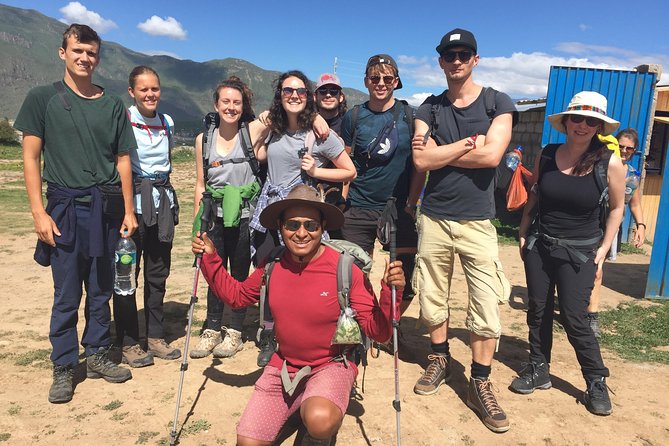
The group is limited to 15 people, which is a useful middle ground. It is small enough for a guide to keep track of the group, but not so small that you should expect a private tour.
Guiding is offered in English and Spanish. One Australian booking described the guide as only okay, while the food and company received stronger praise in another booking. That points to a tour whose appeal rests more on the canyon route, meals, and scenery than on polished guiding.
There is also a serious concern that should not be brushed aside. A verified account from March 2025 describes guide Paul entering a guest’s room before dinner, sitting close, holding the guest, expressing romantic interest, and giving a hug while the guest was barely dressed. The guest described this conduct as unacceptable.
I cannot tell you how the operator handled that incident, and the information provided does not establish whether Paul is still guiding this route. Still, I would ask for the guide’s name before departure, keep your room boundaries clear, and report any unwanted contact immediately to the company and booking platform. A beautiful canyon does not excuse unsafe or unprofessional conduct.
Is this Colca Canyon trek right for you?
I would choose this tour if you want a low-cost, active route that includes the canyon floor, Sangalle, condors, meals, and transportation from Arequipa. It is especially useful if you want to continue to Puno instead of returning to Arequipa.
I would think twice if you dislike pre-dawn departures, steep climbs, basic overnight arrangements, or tightly scheduled sightseeing. The second-day ascent is the key test, and the first day is already long.
The overall rating is 3 out of 5 from three bookings, so this is not a clear-cut recommendation. The canyon itself receives the strongest praise, along with the food and company. The uneven guide feedback, price differences, extra fees, and serious personal-boundary complaint deserve careful consideration.
Book it if the route and price matter most, you are fit for the climb, and you confirm the current guide and inclusions. If you want a gentler schedule or more dependable service standards, compare other Colca Canyon operators before committing.
FAQ
How long is the Colca Canyon tour?
The tour lasts two days and one night, with hiking on both days and an overnight stay in Sangalle.
What time is pickup in Arequipa?
Pickup is scheduled between 3:00 and 3:30 in the morning from the square, with departure planned for about 3:30 a.m.
How long do you walk on the first day?
The first day includes six kilometers, taking about three hours, from Pampas of San Miguel to San Juan de Chuccho. A further three kilometers takes about two and a half hours through Cosñirhua and Malata to Sangalle.
How difficult is the second day?
The second day begins with a three-kilometer uphill walk from Sangalle to Cabanaconde. The ascent takes about three hours and reaches Cabanaconde at approximately 3,230 meters above sea level.
Are the hot springs included?
No. The Yanque hot springs are optional and listed at S/. 15. Lunch in Chivay is also optional and not included.
Can you continue to Puno after the trek?
Yes. An optional regular bus leaves Chivay at 1:00 p.m. and arrives at Puno’s main square at about 7:00 p.m. You can also return to Arequipa instead.
Recently added around Peru
- 5 Day – Salkantay trek to Machu Picchu – Group Service★ 4.5 · 27 reviews
- Small Group: 4-Day Inca Trail Trek to Machu Picchu★ 5.0 · 33 reviews
- 6 day Rainbow Mountain x Ausangate Trek – FlashpackerConnect★ 5.0 · 30 reviews
- Salkantay Trek: 5 Days to Machu Picchu★ 5.0 · 33 reviews
- Inca Trail Trek to Machu Picchu – 2 Days (Small Group or Private)★ 5.0 · 31 reviews
- Humantay Lake Full-Day Adventure: Scenic Trek and Stunning Views★ 4.5 · 39 reviews
- Salkantay 5-Day Trek To Machu Picchu★ 5.0 · 39 reviews
- Ausangate and Rainbow Mountain Trek – 3 Days / 2 Nights★ 5.0 · 35 reviews
Peru Trekking Tours, compared.
7 Lakes Ausangate Trek with Breakfast and Lunch
Read our review →
Full-Day Rainbow Mountain & Red Valley Trekking Tour
Read our review →
Browse the lists this tour appears in