
REVIEW · CUSCO
Ausangate and Rainbow Mountain Trek – 3 Days / 2 Nights
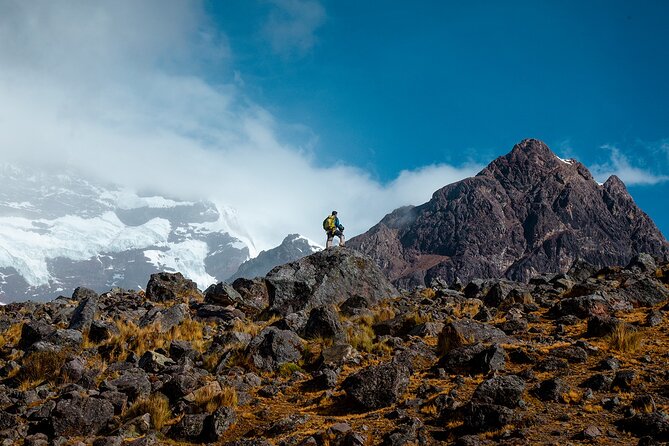
High passes, cold nights, huge rewards. This three-day trek from Cusco links the remote scenery around Ausangate with the famous colors of Vinicunca, or Rainbow Mountain. I like the quiet trail around the glacial lakes and the fact that your guide, cook, horseman, transport, camping gear, meals, and luggage support are included. I also like the small maximum group size of 12, which can make a demanding route feel more personal and flexible.
The main drawback is altitude. You will hike above 4,800 meters on a physically hard route, and the 5:00 a.m. start on day one is not gentle. Arrive in Cusco at least two days early to adjust, and take the fitness warning seriously.
Five Things That Matter Most
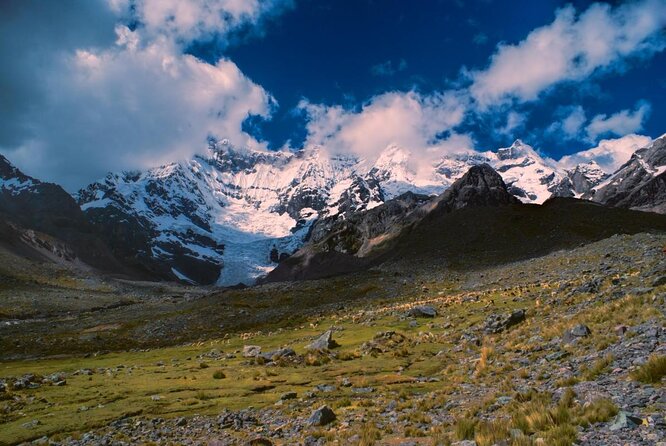
- High-altitude passes: You cross Arapa Pass, Puca Pass, and Warmisaya Pass, with several sections above 4,800 meters.
- Glacial lakes at Ausangate: The route circles clear mountain lagoons beneath Nevado Ausangate, one of the great sights in the Cusco region.
- Rainbow Mountain before the crowds: An early start gives you a better chance to see Vinicunca with fewer people around.
- Full camp support: Tents, sleeping bags, mattresses, dining equipment, meals, snacks, water, and transport are covered.
- Small-group care: The maximum group size is 12, and guides such as Nestor, Marco, Fredy Apaza, Elisban, and Franklin have received praise for patience, safety, and route knowledge.
- A serious physical challenge: This is not a casual walk to a photo stop. Cold, rain, steep climbs, and altitude are all part of the deal.
Why This Three-Day Route Is Worth Your Time
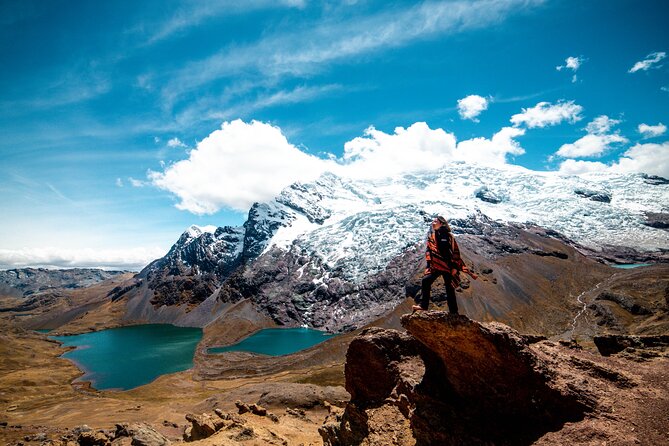
Ausangate feels different from the more crowded day trips around Cusco. The area is remote, stark, and quiet. You are not simply walking to a viewpoint and returning to town. You spend two nights in a tent, cross high passes, see glacial water, and watch the scenery shift with the weather.
The route also gives you two very different mountain experiences. Ausangate is about scale and solitude: broad valleys, snowy peaks, lagoons, and hard climbs. Rainbow Mountain is more famous and more crowded, but reaching it after two days in the high Andes gives the final morning extra weight.
At $535 per person, the price is not small. Still, it covers private transport, hotel pickup and return, park entry, an experienced mountain guide, camping equipment, meals, snacks, water, a 7-kilogram luggage allowance, hiking poles, a rain poncho, first-aid supplies, and oxygen. You are paying for a supported high-altitude expedition rather than a simple excursion.
That value depends on using the included services. If you already carry your own camping equipment and arrange your own transport, the cost may feel high. If you want a prepared camp, cooked meals, route support, and a small team handling heavy equipment, the price becomes easier to justify.
More Three-Day Treks in Cusco:
- Salkantay Trek Challenge – 3 Days / 2 Nights
★ 5.0 · 101 reviews - Sapa 3 Days 2 Nights Trekking Tour (1 Night In Ta Van Village, 1 Night In Hotel)
★ 5.0 · 699 reviews - 3-Day Trekking Adventure of Sapa from Hanoi – Stay Ta Van Village
★ 5.0 · 611 reviews
Leaving Cusco at 5:00 a.m. for Upis
The trip begins early, with hotel pickup at about 5:00 a.m. Round-trip private transport keeps the morning simple. You do not need to find a separate bus or coordinate several transfers before the hike starts.
The drive takes you toward Upis, a small town and the trailhead for the first day. From there, you walk for about three hours to lunch. This opening section lets you settle into the rhythm of the trek while taking in views of the mighty Ausangate massif.
Do not treat the first morning as a warm-up that does not count. You are already at high elevation, and the route continues for around nine hours on day one. Keep your pace steady, drink water, and use the guide’s judgment. A strong start is useful, but burning too much energy early can make the afternoon climb much harder.
The included luggage service allows you to send up to 7 kilograms along the route. You still need a small daypack with essentials such as water, layers, sun protection, and anything you need between camp stops. That luggage limit is generous enough for a compact trekking bag, but it is not a reason to pack heavily.
Day One: Ausangate, Arapa Pass, and Hatun Pucacocha
After lunch, the route turns uphill toward Arapa Pass. This is where the trek begins to feel properly demanding. The climb comes after several hours of walking, so patience matters more than speed.
The reward is a broad mountain setting around Nevado Ausangate. The peak gives the route a fixed point as clouds shift, light changes, and the surrounding slopes open up. You may see a mix of clear weather, mist, snow, or rain. Conditions can change quickly at this height.
After crossing the pass, you descend toward Hatun Pucacocha, the first camp. The full day lasts about nine hours, so the final descent may feel just as tiring as the climb. At camp, hot drinks and dinner are ready, and you sleep at the foot of Ausangate.
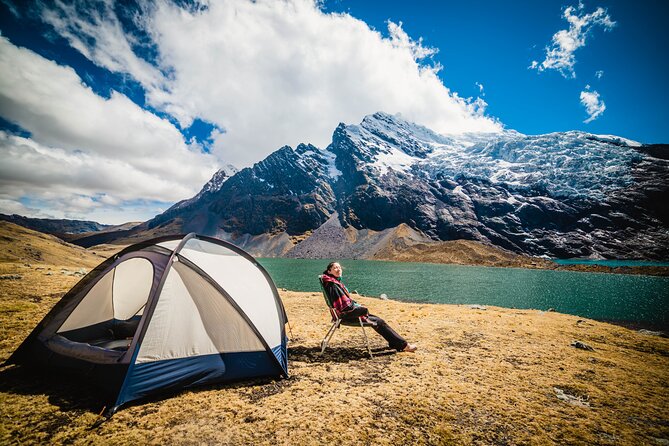
Camping here is part of the experience, not just a budget compromise. The team provides a sleeping tent, air mattress, sleeping bag, dining room, tables, and chairs. Several accounts of the trek praised the food and nighttime warmth, including extra blankets, fleece liners, and hot-water bags on some departures. The exact setup can vary, but the supplied sleeping bag and additional warmth are useful at these elevations.
Day Two: Puca Pass, Glacial Lagoons, and Warmisaya
Day two starts with hot coca tea and breakfast. That small morning ritual matters. You need food and fluids before another long day above the tree line.
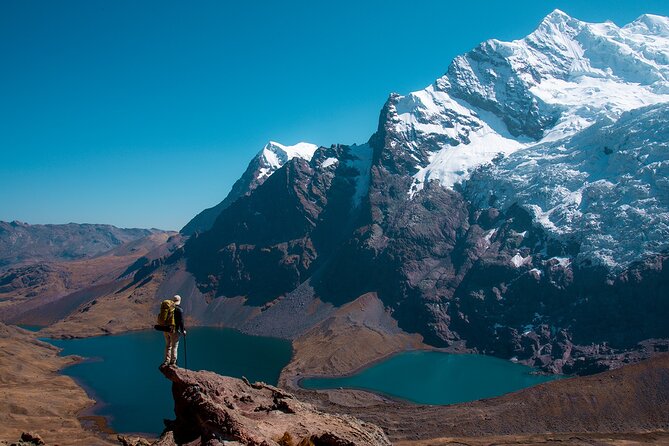
The first major climb leads to Puca Pass. The route offers strong views of the high Andes, and you might catch sight of a condor. The real prize is the series of glacial lagoons, with clear water set against rugged slopes and snowy peaks.
This section is one of the best reasons to choose the longer trek instead of a single Rainbow Mountain outing. The lagoons are not a quick stop beside a road. You reach them as part of a sustained route through the Ausangate area, with the mountain scenery unfolding around you.
You then continue to Anantapata for lunch. After eating, the trail rises again toward Warmisaya Pass. Day two is listed at about seven hours, but the repeated climbs can make it feel intense. You are not only walking for distance. You are gaining and losing height at an altitude that makes ordinary effort feel larger.
Warmisaya Pass offers a 360-degree view, including the first sight of Rainbow Mountain and the surrounding peaks. Seeing Vinicunca from a distance is a useful reminder that the famous viewpoint is only one part of a much larger mountain region.
The descent leads to Surinecocha camp for dinner and rest. A private group of no more than 12 can make this day easier to manage because the guide can monitor different walking speeds. Franklin, one of the named guides associated with this experience, was praised for adjusting the pace, providing encouragement, and responding quickly when a hiker needed oxygen.
That detail deserves attention. Oxygen and a first-aid kit are included, but the presence of safety equipment does not make altitude sickness harmless. Tell your guide early if you feel unwell. Do not try to hide symptoms to keep up with the group.
A few more treks around Cusco worth a look
- From Cusco: 7 Lakes Ausangate Trek with Breakfast and Lunch
★ 4.8 · 360 reviews - Cusco: Full-Day Rainbow Mountain & Red Valley Trekking Tour
★ 4.5 · 121 reviews - From Cusco: Rainbow Mountain Trek
★ 4.5 · 98 reviews - Choquequirao Trek 4 days and 3 nights
★ 5.0 · 81 reviews
Day Three: Reaching Vinicunca Before the Rush
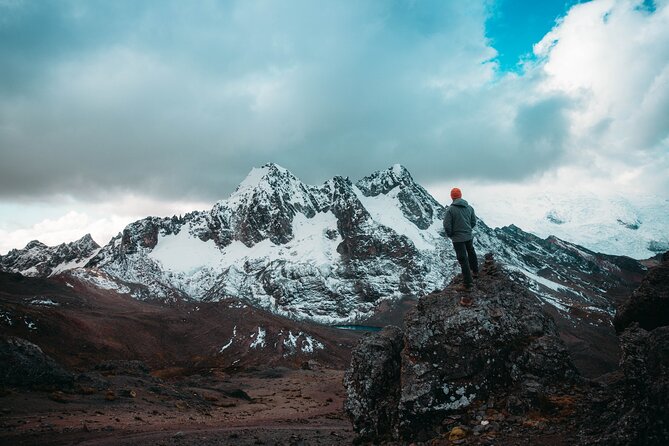
The final day begins early. The goal is to reach Rainbow Mountain before the largest crowds arrive. You walk through the first section and stop for initial views of Vinicunca before continuing toward the mountain itself.
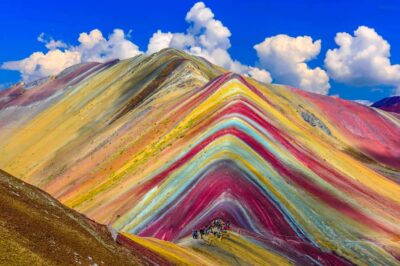
Rainbow Mountain is famous for its bands of mineral color. The sight is striking, but it is also easy to oversimplify. The colors are part of a wider high-altitude setting of red slopes, pale ridges, open sky, and distant peaks. The mountain is not an isolated rainbow painted onto an otherwise ordinary hill.
You have time to learn about the importance of the place and take photographs. Your guide can explain the area and help you understand what you are seeing rather than treating the stop as a quick photo queue.
There is a practical tradeoff here. Early arrival can mean fewer people and better photo conditions, but it also means another early morning after two demanding days. The final walk is listed at about three hours, followed by a descent to private transport and lunch.
After lunch, the vehicle takes you back to Cusco. Hotel drop-off is included, so you finish at your accommodation rather than searching for a taxi with tired legs and dusty boots.
Food, Camp Life, and the Human Side
The strongest praise for this experience centers on the support team. Guides, cooks, and horsemen work long days, setting up camp, carrying equipment, preparing meals, and walking the route themselves.
Meals are included as three breakfasts, three lunches, and two dinners. The food is more than a basic fuel stop. Past participants singled out cooks such as Heber and Juan Carlos for producing nutritious, home-style meals in remote camps. Vegetarian and vegan meals are available, but you must request them when booking.
The horseman or muleteer helps move equipment. Horse assistance for you is optional and costs extra. That distinction matters. The included luggage transport covers 7 kilograms, but a horse is not automatically available as a personal ride or rescue option. If you think you may need horse support, arrange it before setting out.
The guide team can also add a human touch to the route. Elisban was praised for handling both Spanish and English, sharing information about the mountain, and making the group feel welcome. Fredy Apaza was described as patient and reassuring, with strong knowledge of Inca culture and Peruvian history. Names and assignments can change, but the standard of care is clearly a major part of the experience.
Altitude, Weather, and What to Pack
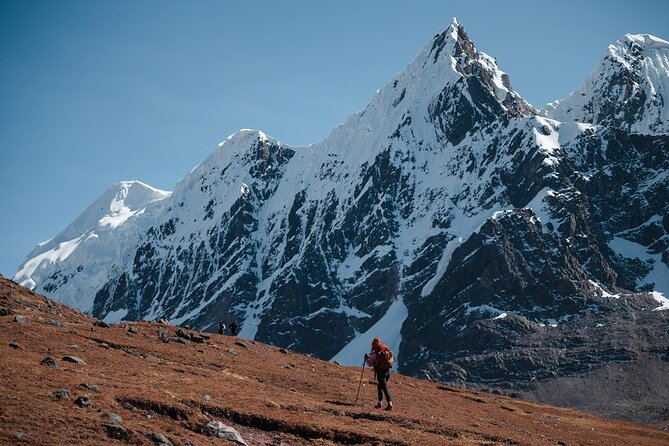
The biggest question is not simply Can you walk for seven to nine hours? It is Can you do that at very high altitude? You should be in good health and strong physical condition before booking.
Arrive in Cusco at least two days before the trek. That gives your body time to adjust before you add steep climbs and cold nights. A trip to Rainbow Mountain is sometimes sold as an easy day outing, but this three-day route is much harder because of the distance, elevation, and camping conditions.
The weather may bring sunshine, fog, rain, or snow. Pack layers rather than relying on one thick jacket. The provided rain poncho is useful, but you should still bring warm clothing suitable for cold nights and changing conditions.
A practical personal packing list includes:
- Warm base layers and a fleece or insulated jacket
- Waterproof outer clothing
- Gloves, a warm hat, and sun protection
- Sturdy hiking shoes
- A small daypack
- Reusable water storage
- Personal medication and basic toiletries
- Passport and a copy of important details
The operator requires each participant’s passport name, number, expiry date, and country at booking. Keep your passport current and ready for the travel date.
Who Will Enjoy This Trek Most?
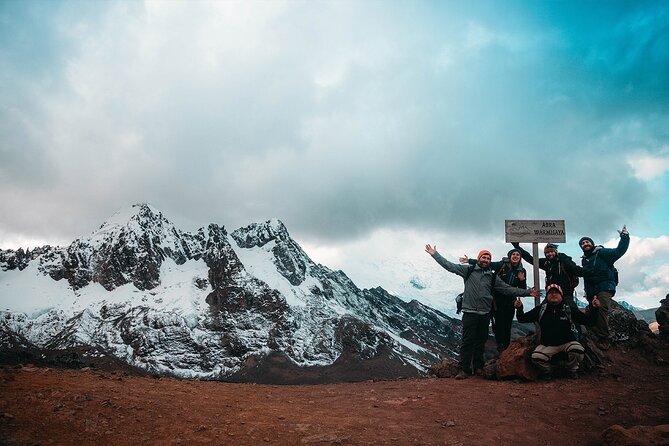
I would choose this route if you want more than a quick visit to Rainbow Mountain. It suits hikers who enjoy remote camps, high mountain passes, long days, and a strong sense of place.
It is also a good choice for people who prefer a supported trek. You do not need to organize a separate vehicle, cook your meals, hire camping equipment, or carry all your gear. The small group limit can make the experience feel less anonymous, and the guide can keep an eye on pace and altitude issues.
This is not the best fit if you want a relaxed holiday, dislike early starts, or have little tolerance for cold and basic camp conditions. Children must be at least 12 and accompanied by a responsible adult. Even fit hikers should not assume the route will feel easy.
The experience is also a good option for mixed-language groups. Guides have handled English and Spanish groups, and the itinerary can sometimes be adjusted for a small party. Do not count on major changes, but a smaller group may allow some flexibility with pace or viewpoints.
Booking, Timing, and Cancellation Details
The trip costs $535 per person and confirmation is provided within 48 hours, subject to availability. The tour requires a minimum number of participants, and poor weather can force a date change or cancellation.
The payment is non-refundable if you cancel or request an amendment. That makes travel insurance especially sensible, and insurance is recommended as part of the booking information.
The note about Machu Picchu spaces applies to people combining this trek with a Machu Picchu visit. Those spaces can sell out quickly, so plan at least three months ahead if you want to link both experiences.
Service animals are allowed. The maximum group size is 12, though the precise group on your departure may be smaller.
Should You Book the Ausangate and Rainbow Mountain Trek?
Book it if you want the full high-Andes experience: glacial lagoons, serious passes, remote camps, and Rainbow Mountain as the final highlight. The support package is strong, the meals receive exceptional praise, and the guide team appears to take safety and personal care seriously.
Skip it if you are looking for a gentle sightseeing trip or have not allowed time to adjust to Cusco’s altitude. The $535 price buys real support, but no company can remove the physical demands of walking above 4,800 meters.
For a fit hiker who prepares properly, this is a powerful three-day route with much more substance than a quick Vinicunca visit. The colorful mountain gets the headlines, but Ausangate and its lagoons are the reason I would choose this trip.
FAQ
How long is the Ausangate and Rainbow Mountain trek?
The experience lasts three days and two nights, with approximately nine hours of hiking on day one, seven hours on day two, and three hours on day three.
What time does the trek begin?
Hotel pickup and the start of the trip are scheduled for 5:00 a.m.
Where does the hike begin?
Transport takes you from Cusco to the small town of Upis, where the first day of hiking begins.
What mountain passes are included?
The route includes Arapa Pass on day one, Puca Pass on day two, and Warmisaya Pass later on day two.
Is Rainbow Mountain included in the entry fees?
Yes. Entry fees for both the Ausangate area and Rainbow Mountain are included.
What camping equipment is provided?
The equipment includes a sleeping tent, air mattress, sleeping bag, dining room, tables, and chairs.
How much luggage can be transported?
The included luggage transport covers up to 7 kilograms during the hike.
Are meals included?
Yes. The package includes three breakfasts, three lunches, and two dinners, along with water and snacks.
Can I request vegetarian or vegan food?
Yes. Vegetarian and vegan options are available, but you should request them when booking.
How old must children be to join?
Children must be at least 12 years old and accompanied by a responsible adult at all times.
Recently added around Cusco
- 5 Day – Salkantay trek to Machu Picchu – Group Service★ 4.5 · 27 reviews
- Small Group: 4-Day Inca Trail Trek to Machu Picchu★ 5.0 · 33 reviews
- 6 day Rainbow Mountain x Ausangate Trek – FlashpackerConnect★ 5.0 · 30 reviews
- Salkantay Trek: 5 Days to Machu Picchu★ 5.0 · 33 reviews
- Salkantay 5-Day Trek To Machu Picchu★ 5.0 · 39 reviews
- Inca Trail Trek to Machu Picchu – 2 Days (Small Group or Private)★ 5.0 · 31 reviews
- Humantay Lake Full-Day Adventure: Scenic Trek and Stunning Views★ 4.5 · 39 reviews
- 4-Day Salkantay Trek to Machu Picchu★ 4.5 · 36 reviews
Cusco Trekking Tours, compared.
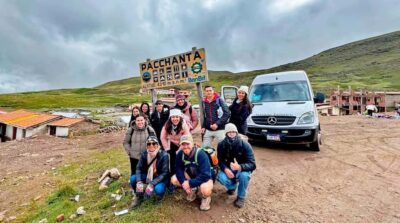
7 Lakes Ausangate Trek with Breakfast and Lunch
Read our review →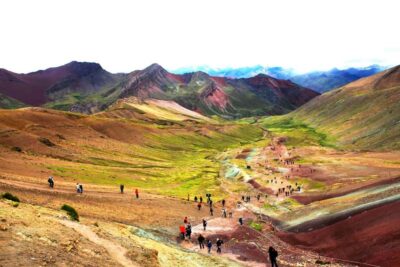
Full-Day Rainbow Mountain & Red Valley Trekking Tour
Read our review →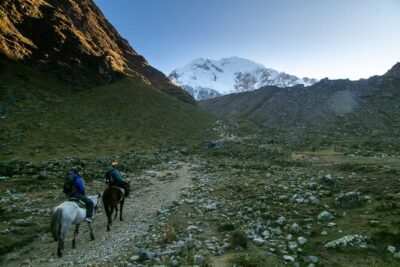
Machu Picchu: 5-Day Salkantay Trek with Panoramic Train
Read our review →
Ancascocha Trek To Machu Picchu 4 Days And 3 Nights
Read our review →
Browse the lists this tour appears in