
REVIEW · ARUSHA
7 Days Machame Route Kilimanjaro Trekking
Kilimanjaro saves its hardest day for last. This 7-day Machame Route trek gives you changing habitats, strong mountain views, and a careful climb toward Uhuru Peak at 5,895 meters. I like the route’s Lava Tower acclimatization day and the warm, capable support team associated with Mafie Adventures, including guides such as Oliver, Godlove, Ombeni, and Safaeli. The main drawback is simple: the summit day is long, cold, and physically punishing.
I also like the practical setup. Pickup from Arusha, porters, camping equipment, meals, rescue fees, and park costs are included in the $2,200.11 price. Still, you need to budget for a sleeping bag, rental climbing gear if needed, tips, visas, travel insurance, and accommodation before and after the climb.
Key points before you book
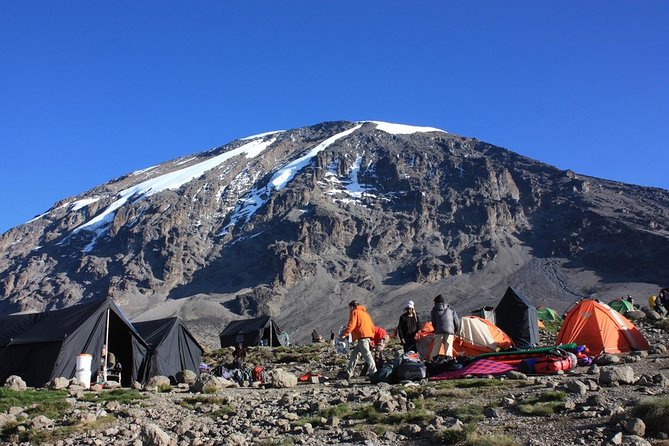
- Machame gives you five distinct habitats: You move from rainforest to moorland, semi-desert, alpine desert, and icy summit terrain.
- Lava Tower helps with acclimatization: Day 3 takes you up to 4,630 meters before dropping to Barranco Camp at 3,950 meters.
- The summit day is a serious test: Expect an overnight start, about eight hours to Uhuru Peak, then another seven to eight hours down to Mweka.
- Camping support is included: Tents, a mess tent, mattresses, cooking gear, porters, a chef, and rescue fees are part of the package.
- The route is private: Only your group participates, which gives you more control over pace and encouragement.
- The cancellation terms are strict: The trek is non-refundable and cannot be changed after booking.
Why the Machame Route is so popular
Machame is often called the Whiskey Route, a nickname that hints at its tougher profile compared with easier trekking options. The appeal is not just the challenge. You get a fuller range of scenery and a better sense of how Kilimanjaro changes with altitude.
About half of all climbers choose this route, and experienced climbers favor it too. Access is fairly easy from Arusha, and the seven-day schedule keeps the price lower than longer routes. That lower cost does not mean a stripped-down trip, since the package includes porters, meals, camping equipment, rescue fees, park fees, and a professional guide.
You should still be honest about the tradeoff. Machame is not a gentle walk. Some days are short, but the trail often climbs and drops over rough ground. The summit push combines darkness, cold, altitude, loose stone, and fatigue. Your success depends as much on pacing and patience as on fitness.
The private format helps. Your group is not tied to a large mixed party, so the guide can respond to your pace and condition. That matters on summit night, when one person may need more time, encouragement, or a slower rhythm.
More Kilimanjaro Climbs in Arusha:
- 8-Day Small-group Lemosho Kilimanjaro Summit Trekking
★ 5.0 · 186 reviews - 7 Days Kilimanjaro trek via Machame route
★ 5.0 · 13 reviews - Mount Kilimanjaro day trip trekking
★ 5.0 · 12 reviews
Day 1: Arusha to Machame Gate through rainforest
The day begins early, with a 4:00 am start time and pickup in Arusha at about 1,400 meters. You drive to Machame Village, where you can buy mineral water and collect a packed lunch. Depending on road conditions, the vehicle continues for about three kilometers or you walk that section to Machame Gate at 1,490 meters.
The gate is more than a starting point. Your porters organize the luggage, while you and your guide register with the Tanzania National Park authorities. This can take time, so do not expect to start walking the moment you arrive.
The hike then enters montane forest. The stated distance is about 18 kilometers, with roughly seven hours on foot. Rain, mud, and fog are normal here. Waterproof layers and shoes with dependable grip are not optional comforts. They can decide how pleasant your first day feels.
The forest is a fine opening because it gives you shade and a gradual introduction to the mountain. It is also a long first day. You will want to keep a steady pace rather than race ahead, especially since the real altitude gain comes quickly over the next two days.
Your tent is set up at camp before you arrive, and the porters prepare water for drinking and washing. That support is one of the package’s better values. You carry a daypack, while the crew handles the heavier camp load.
Day 2: Shira Plateau and the first cold night
Day 2 covers about nine kilometers in around six hours. You leave the rainforest and enter heathland and moorland, with streams and a rocky ridge leading toward the Shira Plateau at about 3,840 meters.
This is where the mountain begins to feel open and exposed. The trees fall away, and the route offers views toward the Western Breach and its glaciers. At camp, you are beside a stream, but the height changes the mood. Temperatures can drop below freezing, so a warm sleeping system and dry layers matter greatly.
The short distance does not make this an easy day. You are gaining altitude, and the thinner air may affect your sleep and appetite. The crew serves snacks and dinner, with the chef preparing meals at camp. That hot food is useful, not decorative, since your body is working hard in the cold.
I would treat this night as your first proper test of camp life. You may hear wind, feel the cold through the tent, and discover that washing at altitude requires a bit of courage. The comfort comes from having water prepared and camp arranged before your arrival.
Day 3: Lava Tower provides the key acclimatization lesson
Day 3 is one of the most important parts of the route. You walk about 15 kilometers over seven hours, leaving moorland for a rocky semi-desert. After around five hours, you reach Lava Tower at 4,630 meters.
Lunch is served at the tower, and you may climb it if weather allows. The real value, however, is the altitude exposure. You go high for the day, then descend to Barranco Camp at 3,950 meters. This climb-high, sleep-lower pattern helps your body adjust, and it gives you a useful preview of the thin air above camp.
It is normal to feel a headache or shortness of breath around Lava Tower. You should tell your guide rather than quietly push through it. The 680-meter descent to Barranco is not wasted effort. It is one of the reasons this day is so valuable.
The semi-desert setting also changes the visual character of the trek. Rocks replace dense plant growth, and the route feels more severe. Barranco Camp is a welcome finish, with the dramatic wall rising nearby. You have covered a lot of ground, so conserve energy for the following morning.
A few more treks around Arusha worth a look
- 7 Days Machame Route Trek Mount Kilimanjaro
★ 5.0 · 12 reviews - Lemosho Route 7 Days Trekking at Mount Kilimanjaro
★ 5.0 · 7 reviews - 7 Days Kilimanjaro Trekking Machame Route with Professional Guide
★ 5.0 · 5 reviews - Best Kilimanjaro Adventure 7 days Machame route Trekking
★ 5.0 · 42 reviews
Day 4: Barranco Wall and the Karanga Valley
Day 4 is shorter, at roughly five kilometers and four to five hours, but it is not merely a rest day. You climb the Great Barranco Wall, a rocky Class 2 section that looks more intimidating from below than it usually feels once you are on it.
You will use your hands in places, and the guide’s instructions matter. This is not a technical climbing route, but it is still uneven and exposed enough to demand care. At the top, you get views toward Heim Glacier and the cloud layer below.
The trail then rises and falls through Karanga Valley. Those ups and downs can feel unfair after the wall, yet this is an excellent acclimatization day. You continue gaining experience at altitude without the mileage of Day 3.
Karanga Camp sits at about 3,959 meters. The short schedule gives you time to eat, drink, sort your summit clothing, and rest. Use it well. The next camp is higher, colder, and far less sheltered.
Day 5: Barafu Camp and the quiet before summit night
Day 5 covers only about four kilometers in two to three hours. You leave Karanga and follow the route toward Barafu Hut at about 4,550 meters. The trail joins the Mweka Route, which you will use for the descent.
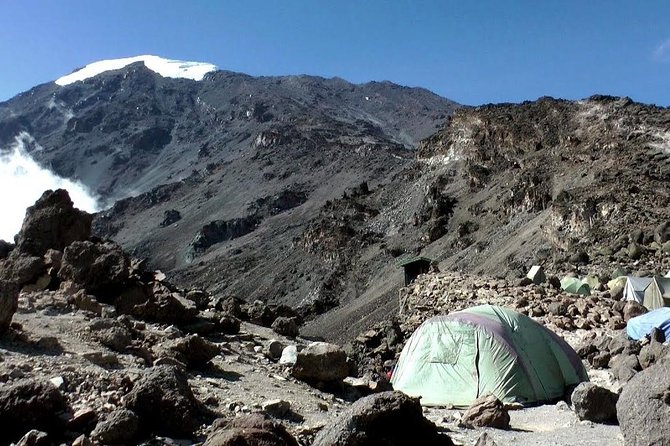
The short walk can be deceptive. Barafu means ice in Swahili, and the camp sits on a rocky, exposed ridge. There is no accessible water at Barafu Camp, so this is the final water stop for the porters. You will notice the difference in camp comfort, wind, and temperature.
The tents are exposed to wind and rocks. Arrive before dark if possible and learn where everything is inside your tent. You do not want to search for gloves, headwear, or a water bottle at midnight.
Dinner is served early, followed by rest. Your guide wakes you around 11:30 pm for tea and biscuits. I would keep your summit kit close and avoid packing anything unnecessary. The goal is to make the night start as simple as possible.
Day 6: Stella Point, Uhuru Peak, and the long descent
This is the day that defines the trek. You start around midnight and climb over stone scree toward the crater rim. The ascent to Stella Point at 5,685 meters takes about six hours, though your actual pace depends on altitude, weather, and how your body responds.
The route is mentally demanding. Darkness hides the scale of the climb, while the loose stone makes each step feel slow. You may have a headache, shortness of breath, or little appetite. Small sips of water, measured steps, and close attention to your guide are more useful than trying to prove anything.
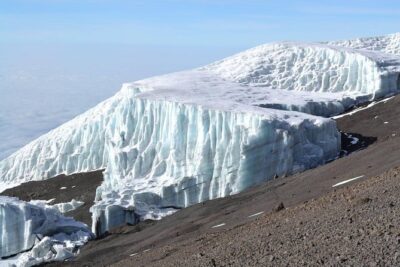
At Stella Point, you can watch the sunrise. From there, you continue for about two hours over a snow-covered trail to Uhuru Peak, the highest point in Africa, at 5,895 meters. The summit section includes ice-capped scenery that feels far removed from the rainforest below.
The listed distance is about seven kilometers up and 23 kilometers down. Reaching the summit is only half the day. After returning from Uhuru Peak, you descend to Mweka Camp, with total descent time listed at seven to eight hours.
That makes this an extremely long day, and you should judge the trek by the full effort, not just the summit photograph. The reward is considerable, but the descent can be rough on tired legs. A green certificate is awarded for reaching Stella Point, while a gold certificate is given for reaching Uhuru Peak.
Day 7: Mweka Gate and the return to Arusha
After breakfast, the mountain crew holds a celebration with dancing and singing. This is also the traditional time to present tips to your guides, assistant guides, chef or chefs, and porters. Plan your tip money before the trek so the moment feels organized rather than awkward.
You then walk about 15 kilometers through forest over roughly three hours to Mweka Gate. At the national park office, climbers sign their names and receive completion certificates. From the gate, you continue to Mweka Village for about one hour and three kilometers before returning to the meeting point in Arusha.
The final walk can feel surprisingly long after summit day, but the forest provides a cooler, lower-altitude finish. Your body is tired, so use trekking poles if you bring them and keep your pace controlled.
What the $2,200.11 price really covers
At $2,200.11 per person, this is a substantial purchase, but the inclusions make it easier to judge. You receive camping equipment, a mess tent, mattress, cooking gear, porters, a professional driver and guide, rescue fees, parking fees, taxes, and six breakfasts, six dinners, and seven lunches.
Accommodation is included during the trek, but not before or after it. International flights, visas, insurance, souvenirs, bath towels, climbing gear, and a sleeping bag are extra. Gear and sleeping bags can be rented, which is useful if you do not want to buy equipment for one mountain.
Tips are not included and should be treated as a real expense. Government increases in park fees or taxes may also be passed on to you. Ask for the current amount before paying in full.
The value is strongest for someone who wants a private, supported climb without arranging each service separately. It is less attractive if you already own all equipment, have your own logistics, or prefer a very basic self-managed setup, although independent climbing on Kilimanjaro is not the point of this package.
The crew, food, and practical support
The strongest praise attached to this experience concerns the team. Guides named in connection with Mafie Adventures include Oliver, Godlove, Ombeni, Safaeli, and Mathew, while Erastus handles communication and arrangements. The positive accounts emphasize kindness, professionalism, airport or hotel coordination, and steady support on the mountain.
One particularly useful detail is the availability of a private toilet on some trips. The supplied information does not promise one for every booking, so ask before you go if that matters to you.
Meals include breakfast, lunch, and dinner according to the seven-day schedule, with a chef preparing food at camp. You should still bring personal snacks and drinking capacity suited to the route, since the climb includes long days and cold camps. Mineral water can be bought in Machame Village at the start.
The activity is private, and most people can participate, but that should not be confused with easy. You need enough fitness for long uphill and downhill walks, plus the ability to manage cold, basic camping, and altitude.
Who should book this Machame trek?
I would recommend it to hikers who want a full Kilimanjaro route with changing scenery and a strong support crew. It suits people who value private scheduling, included porters, and a chef, but who are prepared to work hard for the summit.
It may not suit you if you dislike tents, cold nights, early starts, or long descents. The summit morning begins at 11:30 pm, and Day 6 can last around 15 hours when ascent and descent are combined.
The non-refundable cancellation policy deserves attention before you pay. You cannot change or cancel the experience for a refund, so confirm your dates, insurance, equipment needs, and health readiness first.
Should you book it?
Book this trek if you want Kilimanjaro’s most varied route, a private group, and practical support from Arusha through Mweka Gate. The Lava Tower acclimatization day, Barranco Wall, and summit sunrise give the week a satisfying rhythm, while the included camp services make the price easier to justify.
I would ask the operator three questions before booking: what sleeping bags and climbing gear are available for rent, whether a private toilet will be provided, and what tip and park-fee changes you should expect. If the answers suit your needs, this is a strong choice for a serious first high-altitude climb.
FAQ
Where does the trek start and finish?
The trek starts in Arusha, Tanzania, with pickup offered at the meeting point. It ends back at the meeting point after the descent from Mweka Village.
What time does the experience start?
The listed start time is 4:00 am on the first day.
Is this a private trek?
Yes. Only your group participates in the activity.
Are meals included?
Yes. The package includes seven lunches, six dinners, and six breakfasts.
Is a sleeping bag included?
No. Sleeping bags are available to rent, but they are not included in the listed package.
Can I cancel for a refund?
No. The experience is non-refundable and cannot be changed for any reason.
Recently added around Arusha
- 3 Days Mount Meru trekking★ 4.5 · 7 reviews
- Mount Kilimanjaro day trip trekking★ 5.0 · 12 reviews
- 7 Days Machame Route Trek Mount Kilimanjaro★ 5.0 · 12 reviews
- 5 Days Marangu Route – Mount Kilimanjaro Trek★ 5.0 · 5 reviews
- Private One-Day Trek to Mount Kilimanjaro★ 4.5 · 2 reviews
- 8 Days Lemosho Route Kilimanjaro Trekking★ 5.0 · 5 reviews
- Lemosho Route 7 Days Trekking at Mount Kilimanjaro★ 5.0 · 7 reviews
- 5 Days Marangu Route Kilimanjaro Trekking★ 5.0 · 4 reviews
Kilimanjaro Climbs, compared.
8-Day Small-group Lemosho Kilimanjaro Summit Trekking
Read our review →
Best Kilimanjaro Adventure 7 days Machame route Trekking
Read our review →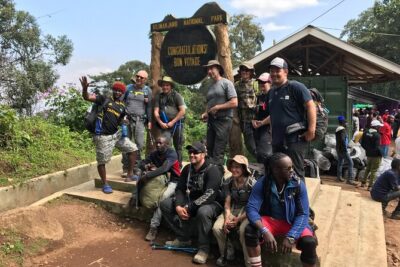
Kilimanjaro 7 Day Private Trekking Experience
Read our review →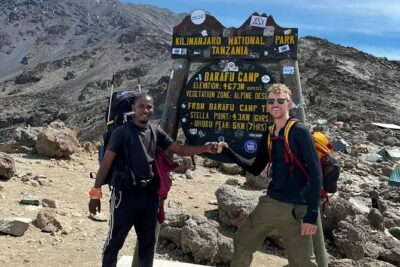
6 Days Machame Route Kilimanjaro Climbing Trekking Tour
Read our review →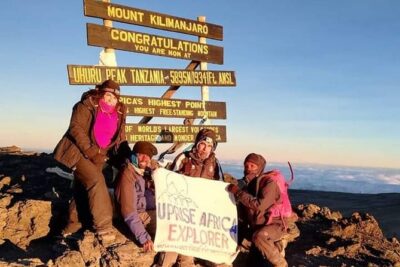
Kilimanjaro Trekking 7Days 6Night Lemosho Route
Read our review →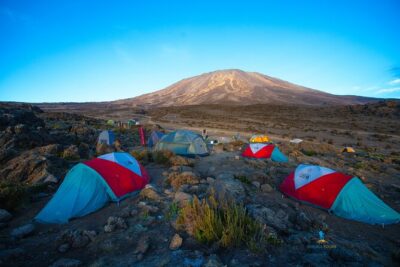
Top 6 Days Mt. Kilimanjaro Bike trek Tour by Marangu-Kilema Route
Read our review →Browse the lists this tour appears in