
REVIEW · ARUSHA
8 Days Lemosho Route Kilimanjaro Trekking
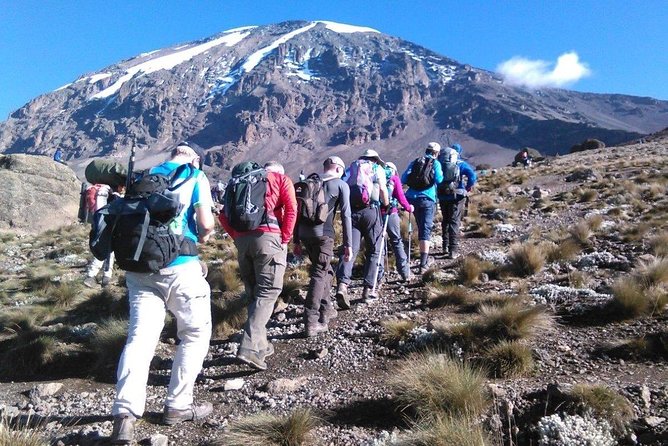
Kilimanjaro saves its best scenery for the patient climber. This 8-day Lemosho trek moves from rainforest to moorland, across the wide Shira Plateau, and around the southern slopes before the final push to Uhuru Peak. I especially like the low-crowd opening days and the extra acclimatization time, both of which matter on a high-altitude climb. The main concern is the price, $2,700.52 per person, and the fact that the summit day is physically severe even with eight days to prepare.
You begin in Arusha at 6:00 am, with pickup offered, and finish back at the meeting point after descending through Mweka. This is a private trip, so your group is not combined with strangers. That can make a real difference when you are tired, cold, and moving at a slow uphill pace. The experience is operated by Mafie Adventures, a local Tanzanian company praised for direct communication and strong staff, including owner Erastus and guides such as Oliver and John.
Key points to know before booking
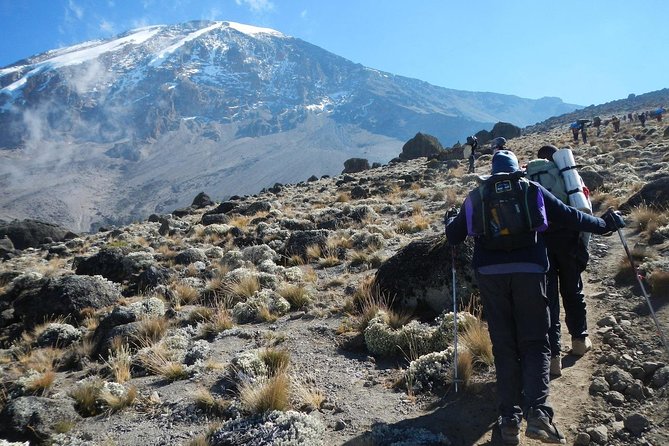
- Lemosho gives you Kilimanjaro’s widest range of scenery, from thick rainforest to volcanic moorland, semi-desert, stone scree, and the ice-capped summit.
- The route uses altitude wisely, with a high point near Lava Tower followed by a descent to Barranco Camp before the climb continues.
- The summit attempt begins around 11:30 pm, followed by roughly six hours to Stella Point and another two hours to Uhuru Peak.
- This is a camping trip, with a mess tent, mattress, cooking equipment, porters, meals, park fees, rescue fees, and taxes included.
- The price covers much more than guiding, but you still need to budget for gear rental, a sleeping bag, tips, insurance, visa costs, and pre- and post-trek lodging.
- The private format suits couples and small groups, especially people who want direct contact with the organizer and more control over the pace.
Why Lemosho is Kilimanjaro’s scenic choice
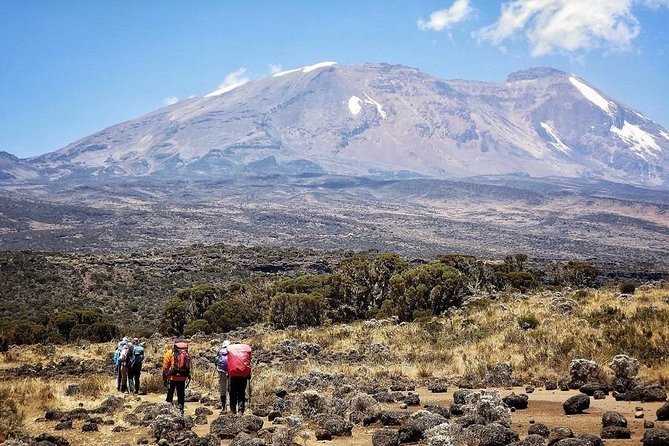
Lemosho is often chosen for scenery rather than speed. The trail starts on the western side of Kilimanjaro in thick rainforest, then climbs into open moorland before joining the southern circuit near Machame. The first days are quieter, while the route becomes busier after it connects with the more popular southern trails.
That progression gives you a satisfying change of scenery. You are not simply walking uphill through the same kind of forest for a week. The plants thin out, the air feels colder and drier, and the views toward Kibo, Kilimanjaro’s main volcanic cone, become more impressive each day.
The eight-day schedule is also useful for altitude adjustment. You spend time at Shira, Moir Hut, Barranco, Karanga, and Barafu before attempting the summit. No itinerary can guarantee success at high altitude, but this route gives your body more time than shorter programs.
The tradeoff is simple: eight days require more time and money. You also need to be comfortable sleeping in tents and walking for several hours on most days. This is not a sightseeing trip with a mountain backdrop. The mountain is the trip.
More Kilimanjaro Climbs in Arusha:
- 8-Day Small-group Lemosho Kilimanjaro Summit Trekking
★ 5.0 · 186 reviews - 7 Days Kilimanjaro trek via Machame route
★ 5.0 · 13 reviews - Mount Kilimanjaro day trip trekking
★ 5.0 · 12 reviews
Day 1: Arusha to the rainforest near Londorossi
Your day begins with breakfast at your hotel and a briefing from the guide. The drive from Arusha, at roughly 1,400 meters, to Londorossi Park Gate, at about 2,100 meters, takes around two hours. Entry formalities are completed in the village near the gate, followed by another hour on the road to the trailhead.
That extra drive is worth understanding before you go. You do not start walking immediately after leaving Arusha. The approach takes time, and the rougher final section may make the journey feel longer than expected.
After lunch at the trailhead, you walk about 6 kilometers through undisturbed rainforest. The hiking time is listed at three to four hours, with the trail ending at the first camp. This is a gentle introduction compared with the days ahead, though the humid forest and uphill grade still require steady pacing.
I like this opening because it gives you a proper beginning. You leave roads and buildings behind and enter a shaded forest before the mountain opens up. The day is short enough to conserve energy, but you still arrive at camp feeling that the climb has truly started.
Day 2: From rainforest to Shira Ridge
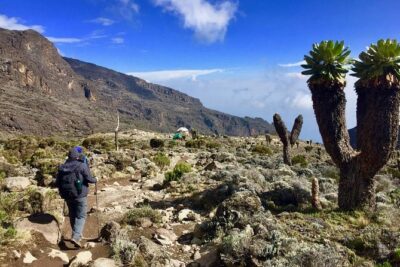
The forest gradually gives way to moorland on this 8-kilometer day. You climb through tall grasses, heather, volcanic rock, and lichen-covered vegetation. Several streams cross the route as you gain height toward Shira Ridge.
The hiking time is about five to five and a half hours. The route then drops gently to Shira 1 Camp, an important detail because the day is not one continuous uphill grind. You gain altitude, reach the ridge, and then descend slightly into the plateau area.
The reward is the first broad view of Kibo across the Shira Plateau. After the enclosed rainforest, the open space can feel dramatic. You get more sky, longer views, and a better sense of the mountain’s scale.
This is also where the route begins to feel exposed. The vegetation is lower, the sun can be stronger, and the terrain is more open to wind. Bring layers that you can add or remove without stopping for long.
Day 3: Shira 2 and Moir Hut
Day 3 covers about 15 kilometers and takes roughly five to seven hours, depending on pace and conditions. You walk east across the plateau toward Kibo, passing Shira 2 Camp on moorland meadows beside a stream before continuing toward Moir Hut.
Moir Hut sits beneath the Northern Ice Fields at the base of Lent Hills. It is a less-used camp, and that quieter setting is one of the appealing parts of this route. The Lent Hills offer several walking options, making this an important acclimatization day rather than just a transfer from one campsite to another.
The Shira Plateau is one of the highest plateaus on Earth, and its scale is hard to appreciate from a schedule alone. You are walking across broad, open ground with Kibo ahead, not threading through a narrow mountain valley.
The drawback is the distance. Fifteen kilometers at altitude is not trivial, even if the trail is not steep throughout. Keep your pace slow, drink regularly, and treat this as a conditioning day, not a chance to prove how fast you can walk.
A few more treks around Arusha worth a look
- 4 Days Mount Meru Trekking
★ 5.0 · 55 reviews - 4 Days Mount Meru Climbing | Hiking | Trekking Tour
★ 5.0 · 13 reviews - 7 Days Machame Route Trek Mount Kilimanjaro
★ 5.0 · 12 reviews - 7 Days Machame Route Kilimanjaro Trekking
★ 5.0 · 9 reviews
Day 4: Lava Tower, Arrow Glacier junction, and Barranco
This is one of the smartest days in the itinerary. From Moir Hut, you climb east along a ridge, pass the junction toward Kibo, and turn southeast toward Lava Tower, also called the Shark’s Tooth. The route reaches roughly 16,000 feet near the Arrow Glacier junction before dropping to Barranco Hut at about 13,000 feet.
The distance is listed at approximately 7 kilometers, with about seven hours of hiking. You finish the day close to the elevation where you started, but your body has spent time much higher. That climb high, sleep lower pattern is valuable for acclimatization.
Lava Tower and the surrounding semi-desert terrain mark another sharp change in scenery. Plant life becomes sparse, and the volcanic ground feels harsher. Then the descent toward Barranco brings a welcome change in altitude and a memorable view of the mountain’s southern features.
This day may feel strange because you work hard to gain height, then give much of it back. Trust the plan. The purpose is not simply to reach the next camp. It is to prepare your body for the summit push.
Day 5: The Barranco Wall and Karanga Camp
The Barranco Wall looks intimidating when you first see it. The itinerary describes it as a Class 2 hike, and the route is generally more manageable than its appearance suggests. You use hands in places, but this is not technical climbing with ropes or specialist climbing equipment.
After the wall, you reach views of Heim Glacier and climb above the clouds. The trail then rises and falls through the Karanga Valley before ending at Karanga Camp, around 3,950 meters. The day covers about 5 kilometers and takes four to five hours.
I like this short day because it lets you recover after the longer routes while still gaining useful altitude. It also breaks up the approach to Barafu. You are not forced to go directly from Barranco to the final high camp in one long push.
Take the wall seriously, but do not dramatize it. Wear shoes with good grip, keep both hands available, and follow your guide’s line. The more difficult part is often managing fatigue and breath, not finding complicated moves.
Day 6: Karanga to Barafu Camp
The route from Karanga to Barafu is only about 4 kilometers and takes three to four hours. That sounds easy on paper, but Barafu Camp sits at about 4,550 meters, where even a short ascent can feel slow.
You pass the point where the Mweka Route joins the trail. Mweka is used for the descent, so this junction marks the beginning of the final approach and the route you will later follow down.
Barafu means ice in Swahili. The camp sits on a rocky, exposed ridge, with no accessible water for porters at the campsite. Water must be carried up, and that logistical detail helps explain why the final camp can feel stark and bare.
Your tent may be exposed to wind and rocks, so familiarize yourself with the camp before dark. Dinner is served early, then you rest for the midnight start. This is not the night for a long chat or a careful repacking session. Keep your summit clothing, headlamp, water, and snacks ready before you lie down.
Day 7: Stella Point, Uhuru Peak, and the long descent
Summit day is the hardest part of the trek by a wide margin. Your guide wakes you at about 11:30 pm for tea and biscuits, and you begin walking over stone scree in darkness.
The route to Stella Point takes about six hours and gains height steadily. The cold, thin air and loose ground can make this section mentally demanding. The slow pace is deliberate. You may take frequent breaks, and the mountain can feel very quiet apart from footsteps and breathing.
Stella Point sits at 5,685 meters on the crater rim. Reaching it earns a green completion certificate, while Uhuru Peak, at 5,895 meters, earns a gold certificate. From Stella Point, you continue for about two hours on a snow-covered trail toward the summit.
Sunrise near the crater rim is one of the major rewards of the route, but do not treat it as guaranteed or easy. The summit attempt is long, cold, and strenuous. Some people reach Stella Point but cannot continue to Uhuru Peak. The schedule recognizes both achievements, and you should do the same for yourself.
After the summit, you descend to Mweka Camp. The listed descent covers about 23 kilometers, making the full day exceptionally long. Your legs will be tired, and the downhill can be hard on knees and toes. Save energy for the return, not just the summit photo.
Day 8: Mweka Gate and the return to Arusha
The final walking day takes about three hours and covers roughly 15 kilometers through forest. Compared with summit day, it should feel straightforward, but tired legs can make a simple descent surprisingly slow.
At Mweka Gate, you sign your name to receive your completion certificate. Green certificates are issued for Stella Point, and gold certificates are issued for Uhuru Peak. This formal finish gives the climb a clear endpoint.
A mountain celebration follows, with dancing and singing by the staff. You also present tips to the guides, assistant guides, chefs, and porters. Tips are not included in the listed price, so plan for that expense separately and ask the operator for current guidance before you leave.
The information provided also describes a descent into Mweka village after the gate. The activity ends back at the Arusha meeting point, but confirm the exact final transfer details when you book, especially if you have a flight or separate hotel reservation that day.
What the $2,700.52 price covers
At $2,700.52 per person, this is not a budget walk. Still, the price includes the basic services that make a guided Kilimanjaro climb possible:
- Camping equipment, including a mess tent, mattress, and cooking equipment
- Park and parking fees
- Rescue fees
- Taxes and VAT
- Camping accommodation during the trek
- Professional driver and mountain guide
- Porters
- Seven dinners
- Seven breakfasts
- Eight lunches
That package has real value. You are not only paying for trail guidance. You are also covering food, camp support, transport-related costs, porterage, rescue fees, and required park charges.
You still need money for a sleeping bag, climbing gear, bath towels, tips, insurance, visa fees, souvenirs, international flights, and accommodation before and after the trek. Climbing gear and sleeping bags are available for rent, but you should arrange that before departure rather than assume it will be handled automatically.
The price can make sense for someone who values a longer route, private group format, and direct support from a local operator. Compare exactly what other companies include before judging the number. A cheaper quote may leave out rescue fees, meals, porterage, or transport costs.
The people supporting the climb
The strongest praise for this experience centers on the staff and communication. Owner Erastus is described as quick to answer messages through WhatsApp and helpful when plans needed adjustment, including close to departure. That direct contact is useful when you are arranging airport transfers, extra nights, or a combined safari and climb.
Oliver is identified as a main guide who was friendly and helped make the trek memorable. John is also named among the crew connected with the expedition. You should confirm your final guide team before departure, since staffing can change.
A local Tanzanian company can be a good choice when you want to deal directly with the people organizing the climb rather than a distant booking office. You should still ask clear questions about group size, porter welfare, equipment, emergency procedures, and tipping expectations. The private format means only your group participates, but the supplied information does not state the maximum number of people in that group.
Who should book this route?
I would point you toward this trek if you want Kilimanjaro’s most varied scenery and can spare eight days on the mountain. It suits fit hikers who are ready for long days, basic camping, cold conditions, and a very early summit start.
It is also a good match for couples and small private groups. One honeymoon couple used the trek as a major shared goal, and the private setup can make the experience feel personal rather than like a large procession up the mountain.
You should think twice if you dislike camping, need a short itinerary, or expect a comfortable hotel-style holiday. The summit day is particularly demanding, and the long descent afterward should not be underestimated.
Confirmation is provided at booking, public transportation is nearby, and most people can participate according to the supplied information. Still, high-altitude hiking requires honest preparation. Ask your doctor about personal medical concerns, and do not treat a general participation statement as a promise that the climb will be easy.
Should you book the 8-day Lemosho trek?
Book it if your priorities are scenery, a longer acclimatization schedule, and a private local operation. Lemosho gives you rainforest, the Shira Plateau, Lava Tower, Barranco Wall, glacier views, and a dramatic summit approach in one trip.
The main costs are time, money, and effort. You need extra funds for equipment, tips, insurance, visas, and lodging outside the trek. The non-refundable policy also means you should confirm your health, dates, gear, and flights before paying.
For a serious first Kilimanjaro attempt, this is a strong route choice. It does not remove the risks of altitude or the hard work of summit day, but it gives you a thoughtful schedule, varied scenery, and a support team that has earned warm praise for communication and care.
FAQ
Where does the trek start?
The trek starts in Arusha, Tanzania, with pickup offered. The stated start time is 6:00 am.
How long is the Lemosho trek?
The experience lasts approximately eight days, with the final day ending back at the Arusha meeting point.
Is this a private tour?
Yes. Only your group participates in the activity.
What meals are included?
The package includes seven dinners, seven breakfasts, and eight lunches.
Are camping equipment and porters included?
Yes. Camping equipment includes a mess tent, mattress, and cooking equipment. Porterage is also included.
Are climbing gear and sleeping bags included?
No. Climbing gear and sleeping bags are available for rent, but they are not included in the listed price.
Recently added around Arusha
- 3 Days Mount Meru trekking★ 4.5 · 7 reviews
- Mount Kilimanjaro day trip trekking★ 5.0 · 12 reviews
- 7 Days Machame Route Trek Mount Kilimanjaro★ 5.0 · 12 reviews
- 5 Days Marangu Route – Mount Kilimanjaro Trek★ 5.0 · 5 reviews
- Private One-Day Trek to Mount Kilimanjaro★ 4.5 · 2 reviews
- Lemosho Route 7 Days Trekking at Mount Kilimanjaro★ 5.0 · 7 reviews
- 5 Days Marangu Route Kilimanjaro Trekking★ 5.0 · 4 reviews
- 7 Days Machame Route Kilimanjaro Trekking★ 5.0 · 9 reviews
Kilimanjaro Climbs, compared.
8-Day Small-group Lemosho Kilimanjaro Summit Trekking
Read our review →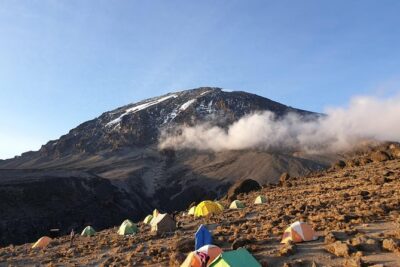
Best Kilimanjaro Adventure 7 days Machame route Trekking
Read our review →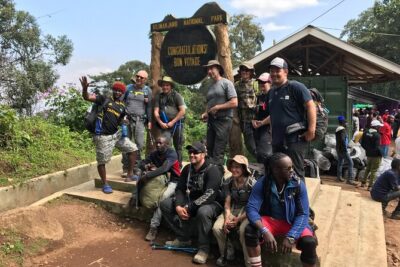
Kilimanjaro 7 Day Private Trekking Experience
Read our review →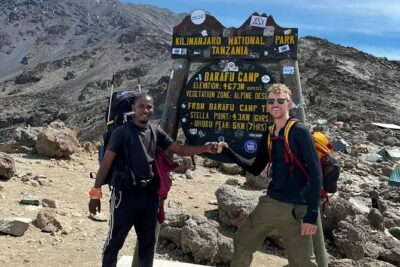
6 Days Machame Route Kilimanjaro Climbing Trekking Tour
Read our review →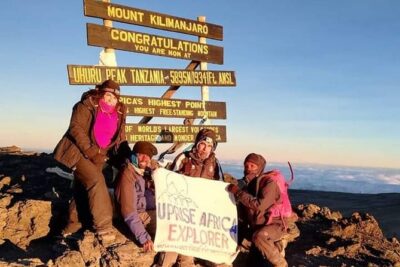
Kilimanjaro Trekking 7Days 6Night Lemosho Route
Read our review →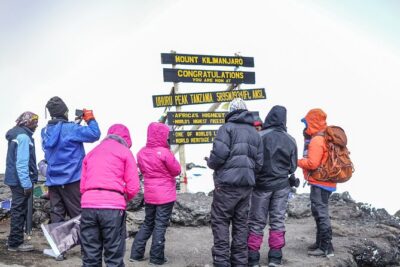
Browse the lists this tour appears in