
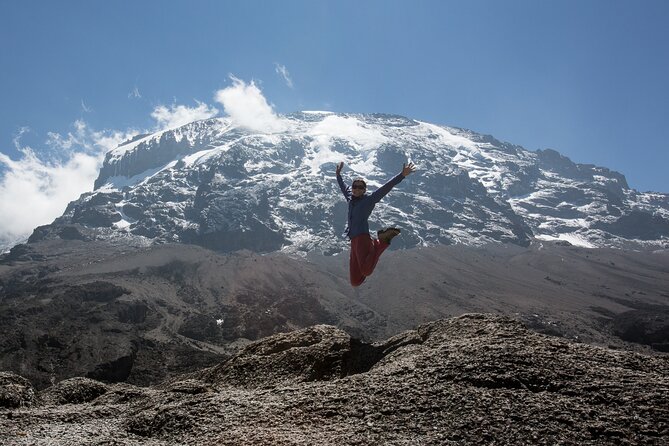
REVIEW · ARUSHA
8-Day Small-group Lemosho Kilimanjaro Summit Trekking
Africa’s rooftop demands patience. This 8-day Lemosho climb gives you a gradual route through rainforest, heath, high desert, and ice-bound alpine terrain, with time built in for altitude adjustment. I especially like the small-group format and the route’s careful climb-high, sleep-lower rhythm. The main concern is simple: summit night is long, cold, steep, and physically demanding.
The $2,895 price is not pocket change, but it covers park fees, camping gear, meals, transfers, and guiding. That makes the cost easier to judge. You are paying for a planned expedition, not just a walk uphill. Still, you need strong fitness, patience, and a real willingness to spend eight days camping above the clouds.
Why this Kilimanjaro climb deserves a closer look
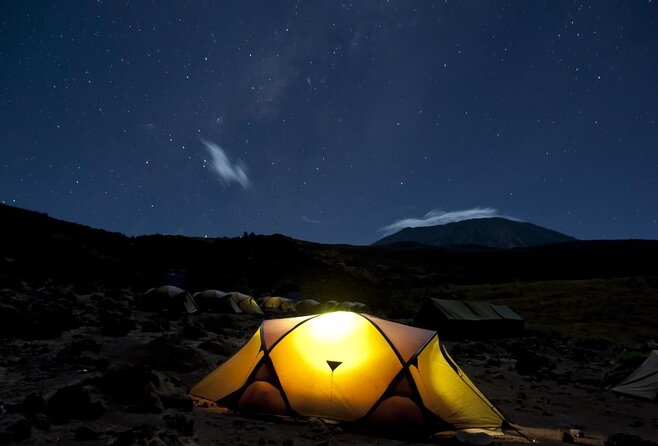
- Lemosho gives you eight days to adjust, a useful advantage on a mountain where altitude, not technical climbing, is often the biggest challenge.
- The route crosses several climate zones, from rainforest and heather to volcanic desert and the arctic summit zone.
- The group limit is 15 people, though smaller departures may feel more personal and easier to manage.
- Lava Tower is used for acclimatization, followed by a descent to Barranco Camp.
- Summit night begins around midnight, giving you a chance to reach Stella Point near sunrise and continue to Uhuru Peak.
- The package includes the major practical pieces, including transfers from your Arusha hotel, meals, camping equipment, and park admission.
What the 8-day Lemosho route is really like
Lemosho is often chosen because it gives you more time on the mountain than shorter Kilimanjaro routes. That extra day matters. You are not racing from the trailhead to the summit. Instead, your body gets repeated chances to adjust as you move into thinner air.
The route begins on Kilimanjaro’s western side, then crosses toward the southern slopes before summit night. You will walk through several distinct zones, and that variety keeps the trek interesting even when your legs are tired.
The hiking itself is non-technical. You do not need ropes or climbing experience based on the information provided. But non-technical does not mean easy. The altitude reaches 19,340 feet at Uhuru Peak, and the final ascent is a serious physical and mental test.
I would choose this route over a shorter option if your schedule and budget allow it. Eight days give you a better pace and a more complete mountain experience. You also have time to enjoy the changing scenery instead of treating Kilimanjaro like a race.
More Kilimanjaro Climbs in Arusha:
- 7 Days Kilimanjaro trek via Machame route
★ 5.0 · 13 reviews - Mount Kilimanjaro day trip trekking
★ 5.0 · 12 reviews - 7 Days Machame Route Trek Mount Kilimanjaro
★ 5.0 · 12 reviews
Day 1: Big trees and a gentle start
Your first morning begins with pickup from your Arusha hotel at about 8 a.m. You then head to the Londorossi Gate on the western side of Kilimanjaro for park registration and trail formalities.
The hike to Mti Mkubwa Camp covers roughly 3 miles and takes about three to four hours. The trail rises gently through montane forest, which is a pleasant introduction after the drive and gate procedures.
Mti Mkubwa means Big Tree in Swahili. The camp sits in the rainforest, and your tent is prepared before you arrive. That detail matters after a travel day. You can focus on eating, settling in, and getting a good night’s rest rather than dealing with camp setup.
The first day is not especially long, but do not treat it as disposable. A calm beginning helps you protect your energy for the days ahead.
Day 2: Leaving the rainforest for the Shira plateau
The second day covers about 4.9 miles and takes roughly five to six hours. You leave the forest behind and move into tall grasses, heather, volcanic rock, and lichen.
This is one of the first big visual changes on the route. The thick forest gives way to a more open high-altitude setting, and Kilimanjaro begins to feel much larger around you. Views of the mountain open across the Shira plateau.
The camp reaches about 11,500 feet. That jump in elevation is noticeable, even if the walking pace remains manageable. You should expect your guide to encourage a slow, steady rhythm. On Kilimanjaro, pole pole, meaning slowly slowly, is not a slogan for a T-shirt. It is sound mountain strategy.
The day is listed as about four hours in the schedule, although the route description gives five to six hours of hiking. Treat the timing as approximate. Terrain, breaks, weather, and the group’s pace all affect the actual day.
Day 3: A high-altitude day on Shira
Day three is a full exploration of the Shira plateau. The route covers about 8.7 miles and takes roughly five to seven hours, making it one of the longer walking days before the summit push.
You head east toward Kibo, Kilimanjaro’s highest volcanic cone. There is also an option to visit the collapsed Shira cone, the oldest of the mountain’s three volcanic cones. That optional feature adds geological interest to a day that might otherwise feel like a long transfer across high ground.
Moir Camp sits at the end of a dormant lava flow, in a large gorge, at about 13,800 feet. The setting feels spare and remote. You are now well above the forest, with less shelter and less oxygen.
This is a day when you should pay close attention to how your body feels. The walk may not involve steep climbing all day, but altitude can make ordinary tasks feel surprisingly tiring. Take your time with meals, water, clothing changes, and getting into your sleeping bag.
A few more treks around Arusha worth a look
- 4 Days Mount Meru Trekking
★ 5.0 · 55 reviews - 4 Days Mount Meru Climbing | Hiking | Trekking Tour
★ 5.0 · 13 reviews - 7 Days Machame Route Kilimanjaro Trekking
★ 5.0 · 9 reviews - 3 Days Mount Meru trekking
★ 4.5 · 7 reviews
Day 4: Lava Tower, high altitude, then Barranco
Day four is designed around acclimatization. You climb toward Lava Tower at approximately 15,000 feet, then descend to Barranco Camp at about 13,000 feet.
That climb-high, sleep-lower pattern is one of the most valuable parts of the itinerary. You spend time at a higher altitude, then rest at a lower camp. It does not guarantee that you will avoid altitude trouble, but it gives your body more time to adapt than a compressed schedule would.
The walk covers about 4.3 miles and takes roughly four to six hours, though the schedule also gives a six-hour estimate. Near Lava Tower, the trail reaches an important junction toward Arrow Glacier. The route then drops through giant senecio plants before reaching Barranco.
Barranco Camp lies below the massive Barranco Wall. Clouds can drift up from the valley, and the mountain feels more dramatic here. You may also feel the altitude more clearly. This is not the day to prove how tough you are. Let the guide set the pace and tell the crew if you feel unwell.
Day 5: The Barranco Wall and Karanga Valley
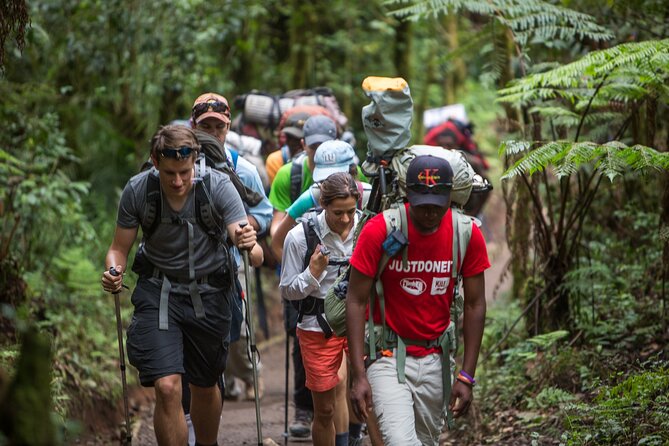
Day five is shorter by distance, about 2.2 miles, but it includes the famous Barranco Wall. The walking time is listed at roughly four to five hours.
The wall is an adventurous section, but it is part of the non-technical route. You climb out of Barranco Valley and enter the arctic zone of Kilimanjaro. The route then continues along the southern circuit toward Karanga Valley.
This is a good example of why distance alone does not tell you how hard a mountain day will be. A short route with steep or uneven ground can require more concentration than a longer, gentler trail.
Karanga Camp sits at about 13,100 feet. The relatively short day gives you time to rest and prepare for the higher camps ahead. I like this part of the plan because it avoids stacking every difficult section together.
Day 6: Kosovo Camp and the final preparation
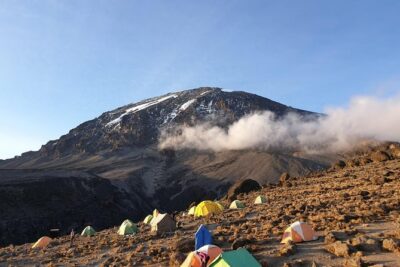
Day six takes you toward Kosovo Camp at roughly 16,000 feet. You pass Barafu Camp, where you get strong views of Kibo and Mawenzi, the two most prominent peaks of Kilimanjaro’s volcanic massif.
The route covers about 2.6 miles and takes around five to six hours. It is a slow day, but that is exactly what you want before the summit attempt. You are not trying to squeeze in sightseeing. You are saving energy.
Kosovo Camp sits on an exposed ridge. You are advised to learn the terrain before dark, which is practical advice. Summit preparations become much easier when you know where your tent, dining area, and trail direction are located.
You should use this afternoon to organize your clothing, headlamp, water, snacks, and any personal items you need for the midnight departure. The schedule includes time to rest and acclimatize, and you should guard that rest carefully.
Day 7: Stella Point, Uhuru Peak, and a long descent
Summit day is the heart of the trip and the part you must respect most. The start is around midnight, with the goal of reaching Stella Point near sunrise.
The ascent to Stella Point takes approximately six to seven hours. It is one of the steepest sections on the non-technical paths of Kilimanjaro, with heavy scree underfoot. Scree is loose volcanic rock, and it can make each step feel like two steps because your boots slide backward.
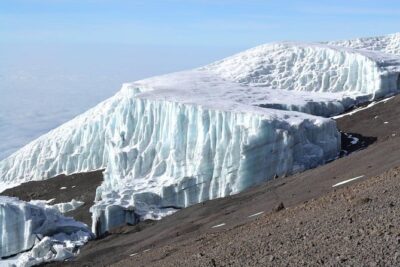
From Stella Point, Uhuru Peak is about another hour away. The summit sits at 19,340 feet, the highest point in Africa. The route passes between the Rebmann and Ratzel glaciers before reaching the top.
The final hours can be mentally harder than expected. You may be cold, short of breath, tired, and moving slowly. The summit can look close while still taking time to reach. Your guide’s pacing and encouragement matter a great deal here.
After the summit, you descend to Mweka Camp for dinner and celebration. The day is listed at about 11 hours, with five kilometers of ascent and 12 kilometers of descent. The detailed timing gives six to seven hours up and four to six hours down. Either way, expect a very long day. Reaching the summit is only half of it. You still need to walk down.
Day 8: Mweka Gate and a welcome shower
The final morning brings a walk of about 6.4 miles to Mweka Gate. It takes roughly three to four hours.
This descent is less dramatic than summit day, but it can be hard on tired knees and feet. You will also have time to reflect on the week as the mountain gives way to lower elevations.
At the gate, the Climb Kili vehicle transfers you back to your Arusha hotel. The promised shower is not a small detail. After eight days of hiking and camping, clean clothes and running water may feel like a major attraction.
Small groups, guides, and the human side of the climb
The maximum group size is 15, but the experience may be much smaller. One departure included four climbers with two guides, a setup that allowed close communication without making the group feel crowded.
That distinction matters on a mountain. A guide can notice changes in your pace, mood, or energy more easily in a compact group. You also have more room to ask questions and speak up about how you are feeling.
Several guides and crew members receive repeated praise in the supplied material. Names include Amani, Isaya, Emmanuel, Raymond, Herment Mosha, Manny, Cinga, Veda, Dastan, Jackson, and Steve. The comments point to patient pacing, encouragement, humor, clear communication, and close attention to safety.
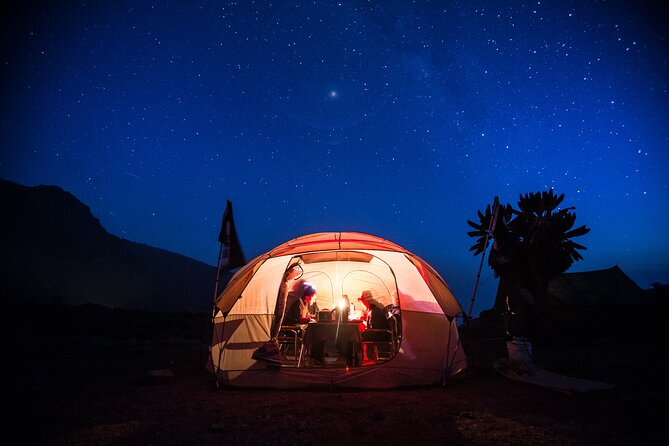
The support team also includes cooks and porters. Specific praise goes to Simon the chef, as well as crew members such as Thomas and Balthasar. Reports of coffee wake-up calls, comfortable tents, satisfying meals, and careful attention to comfort give you a useful sense of how camp life is handled.
You should still ask the operator exactly what gear is supplied and what you need to bring. The package includes camping equipment, but the supplied information does not list every personal item. Strong footwear, warm summit clothing, and reliable rain protection remain your responsibility unless confirmed otherwise.
What $2,895 buys you
At $2,895 per person, this is a major purchase. The price includes round-trip transfers from your Arusha hotel, park admission, camping equipment, meals, and the guiding operation.
Those inclusions carry real value. Kilimanjaro costs are not limited to the walk itself. Park fees, food, camp logistics, staff, transport, and equipment all need to be arranged. Having those pieces handled reduces the number of decisions you must make before and during the climb.
The eight-day schedule also helps justify the price. A shorter climb may cost less, but it gives you less time to adjust to altitude. Here, the Shira exploration day, Lava Tower acclimatization, and staged movement through Karanga and Kosovo all serve a purpose.
I would not call this a bargain trek. I would call it a full-service mountain package aimed at people who value structure, support, and a better-paced route. The high summit rate described for the trip is encouraging, but no operator can promise that you will reach the top. Fitness, health, weather, and altitude response still matter.
Who should book this trek
This trip suits you if you want Kilimanjaro’s classic summit experience and can commit eight days to it. It is presented as suitable for beginners and experienced climbers, but beginners still need strong physical fitness.
You should be comfortable walking for several hours on consecutive days, sleeping in tents, handling changing temperatures, and continuing when the air gets thin. The trip is not technical mountaineering, but it is a demanding high-altitude hike.
The route also works well for solo climbers who want to join a group. One solo departure joined a group of four other people, creating a shared experience without requiring a private expedition.
I would hesitate to recommend it if you dislike camping, struggle with long uphill walks, or want a relaxed holiday with flexible mornings. Summit night alone requires endurance and a willingness to accept discomfort.
The booking terms allow free cancellation up to 24 hours before the local start time for a full refund. Changes or cancellations made inside that 24-hour window are not accepted or refunded.
Should you book the 8-day Lemosho trek?
I would choose this experience if you want a carefully paced route, strong logistical support, and a small-group feel. The extra day gives you more time to adjust, and the route offers some of Kilimanjaro’s best variety, from rainforest to volcanic high desert and glacier country.
The biggest caution is the summit day. You need to be ready for a midnight start, loose rock, extreme altitude, cold, and a long descent after reaching Uhuru Peak.
For a fit first-time climber, this is a sensible Kilimanjaro option. For an experienced hiker, it offers a well-supported route without reducing the mountain to a quick uphill sprint. At $2,895, the value rests in the included logistics, experienced guides, meals, equipment, and extra acclimatization time. If those are your priorities, this trek is worth serious consideration.
FAQ
Where does the Kilimanjaro trek begin?
The trek begins after pickup from your Arusha hotel, with registration at Londorossi Gate on Kilimanjaro’s western side.
What time does the experience start?
The stated start time is 8 a.m.
How long is the trek?
The trek lasts approximately eight days.
What route does the trek use?
It uses the Lemosho route, beginning on the western side of Mount Kilimanjaro and continuing across the Shira plateau and southern circuit toward the summit.
How high is Uhuru Peak?
Uhuru Peak reaches 19,340 feet, or about 5,895 meters.
Is camping equipment included?
Yes. Camping equipment is included in the experience.
Are meals included?
Yes. Meals are included throughout the trekking program.
How large can the group be?
The maximum group size is 15 people. Some departures may be smaller.
Is hotel transportation included?
Yes. Round-trip transfers from your Arusha hotel are included, including transport back to the hotel after the Mweka Gate descent.
Recently added around Arusha
- 3 Days Mount Meru trekking★ 4.5 · 7 reviews
- Mount Kilimanjaro day trip trekking★ 5.0 · 12 reviews
- 7 Days Machame Route Trek Mount Kilimanjaro★ 5.0 · 12 reviews
- 8 Days Lemosho Route Kilimanjaro Trekking★ 5.0 · 5 reviews
- 5 Days Marangu Route – Mount Kilimanjaro Trek★ 5.0 · 5 reviews
- Private One-Day Trek to Mount Kilimanjaro★ 4.5 · 2 reviews
- Lemosho Route 7 Days Trekking at Mount Kilimanjaro★ 5.0 · 7 reviews
- 5 Days Marangu Route Kilimanjaro Trekking★ 5.0 · 4 reviews
Kilimanjaro Climbs, compared.
Best Kilimanjaro Adventure 7 days Machame route Trekking
Read our review →
Kilimanjaro 7 Day Private Trekking Experience
Read our review →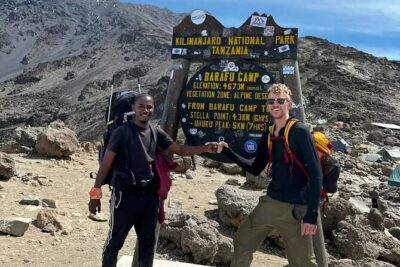
6 Days Machame Route Kilimanjaro Climbing Trekking Tour
Read our review →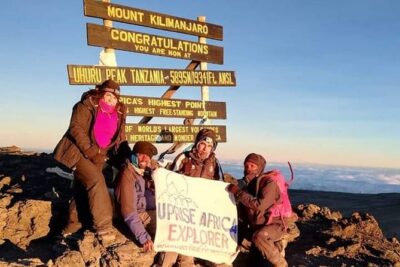
Kilimanjaro Trekking 7Days 6Night Lemosho Route
Read our review →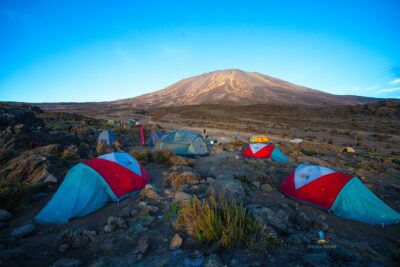
Top 6 Days Mt. Kilimanjaro Bike trek Tour by Marangu-Kilema Route
Read our review →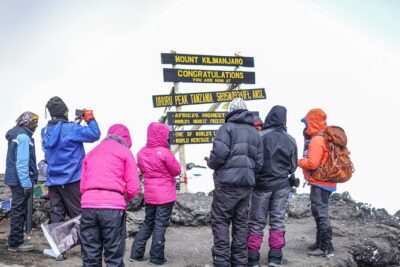
Browse the lists this tour appears in