
REVIEW · DARJEELING
5-Days Singalila Ridge Trek in Darjeeling
The mountains do the talking here. This five-day Singalila Ridge trek packs Nepal and Sikkim views, sunrise walks, forest trails, and the famous Sandakphu and Phalut ridgeline into a shortened route from Darjeeling. I like the chance to see four major peaks, Everest, Makalu, Lhotse, and Kanchenjunga, from one trek. I also like that the package includes lodging, meals, transport, park fees, poles, and a head torch, rather than leaving you to arrange the practical pieces yourself.
The main caution is the pace. Day 3 covers about 21 kilometers, and several days begin early for sunrise. You need moderate fitness and a willingness to handle long mountain days, simple accommodation, and changing weather. The private format is useful if you want your own group and guide, while past bookings have praised guides such as Rakesh and Sekhar for their energy and communication.
Five details that shape this trek
- Four high Himalayan peaks: Sandakphu and Phalut can provide views of Everest, Makalu, Lhotse, and Kanchenjunga.
- A five-day custom route: The usual trek takes six days, but this version compresses it into five.
- Sunrise is part of the plan: Early starts are built into the schedule at Sandakphu, Phalut, and Gorkhey.
- Red panda country: The trek passes through Singalila National Park, with Gairibans noted for bird watching and possible red panda sightings.
- Useful gear is included: Walking poles, a head torch, national park entry, private transport, and a GoPro 7 Black camera are provided.
- The hardest day is clear: The Phalut section on Day 3 covers approximately 21 kilometers and lasts about 18 hours according to the schedule.
Why the Singalila Ridge route is special
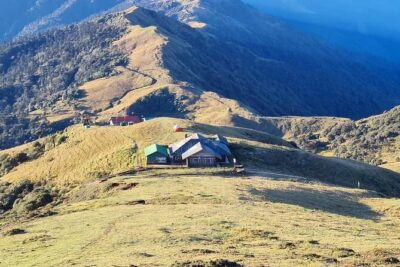
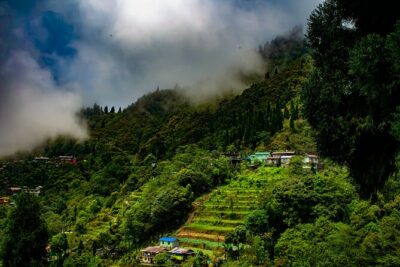
The Singalila Ridge runs along the high country near the India and Nepal border, giving this trek a rare two-country feel without requiring a complicated international itinerary. From the ridge, you look across toward Nepal and Sikkim, with some of the highest mountains on earth lined up in the distance.
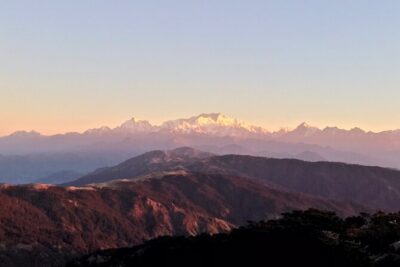
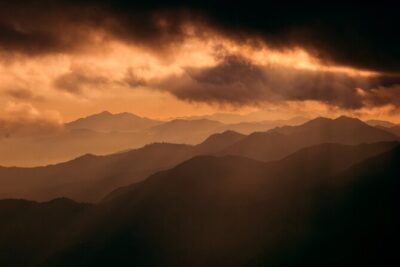
The main prize is the view from Sandakphu and Phalut. On a clear day, the route can reveal Everest, Makalu, Lhotse, and Kanchenjunga. That is an exceptional collection of peaks, but mountain weather has the final say. You should book this for the route, forest, villages, and walking itself, not only for one perfect photograph.
The entire trek lies within a national park. That matters because the scenery is not simply a road journey with short walks. You spend your days moving through forest and high ridge country, with bird watching and a chance, though no guarantee, of seeing a red panda near Gairibans.
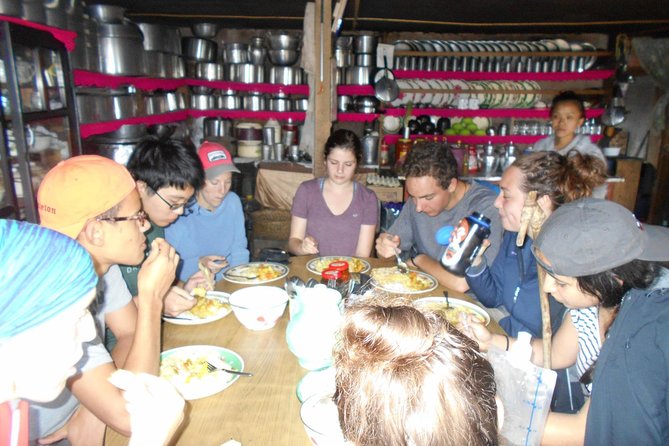
Food is another practical strength. Nepali and Indian meals are provided, including five breakfasts, five lunches, and four dinners. You will not need to plan each meal on the trail, though alcohol, personal purchases, insurance, and any porter service cost extra.
A few more treks around India worth a look
- Half day trekking (munnar valley Trekking & Tours )
★ 5.0 · 310 reviews - Nag Tibba 2 Days Trek (Pantwari to Pantwari)
★ 5.0 · 274 reviews - Bhrigu Lake and Alpine Meadow Trek
★ 5.0 · 121 reviews
Day 1: Darjeeling to Dhotrey and the first trail
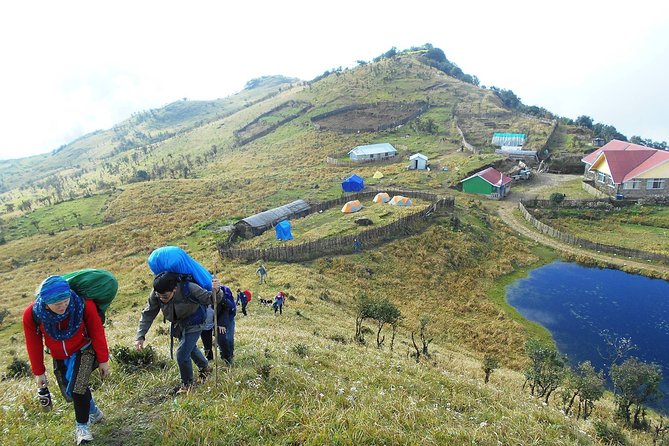
Your guide picks you up from your Darjeeling hotel at about 7:00 in the morning. The first transfer covers roughly 40 kilometers to Dhotrey, with a stop after about an hour at Maneybhanjyang, the border area between India and Nepal.
This opening day combines a drive with a serious start to the trek. The scheduled duration is about 12 hours, so you should expect a full day rather than a gentle introduction. The route begins with the setting and border character that make Singalila different from a standard Darjeeling excursion.
Dhotrey is the first major walking point, and the day gives you time to settle into the rhythm of walking, eating, and staying in mountain accommodation. Since the tour includes private transportation, you avoid having to arrange the transfer yourself, a useful feature when the trailhead is reached early in the day.
The details provided for this day do not specify the exact overnight village or walking distance. That is worth confirming before departure, especially if you want a precise packing plan. You should also ask how much of the 12-hour schedule is driving and how much is on foot.
Day 2: Gairibans, Kala Pokhari, and the road to Sandakphu
The second day begins early with a sunrise outing. Gairibans is highlighted for bird watching and possible red panda sightings, so this is one of the best parts of the trek for anyone more interested in forest life than in collecting summit photographs.
After breakfast, the trail climbs through dwarf rhododendron forest toward Kala Pokhari. The name means black lake, and the stop gives the day a clear natural landmark rather than a simple point-to-point walk. From there, the route continues toward Sandakphu.
This is a day of steady ascent, and the forest setting changes the feel of the walk. The schedule runs about 12 hours, so you should be ready for an early start, a long day, and limited spare time. The reward is reaching the best-known viewpoint on the ridge, where the mountain panorama can be extraordinary in clear conditions.
The red panda possibility needs a realistic reading. You are entering the right kind of habitat, but wildlife sightings are never promised. Go for the forest, bird life, and quiet trail first. If a red panda appears, it is a remarkable bonus.
Day 3: Sandakphu to Phalut, the trek’s biggest test
Day 3 is the longest walking day, covering approximately 21 kilometers. The guide wakes you early for another sunrise, then the route continues toward Phalut after you have had time to enjoy the view from Sandakphu.
This is where the five-day version asks more of you. The itinerary lists the day at about 18 hours, which signals a demanding schedule even for a reasonably fit walker. Compressing a normal six-day trek into five days saves time, but it also leaves less room for slow mornings, long rests, or an unplanned delay.
The mountain views are the main reason for the effort. Sandakphu offers a wide panorama, including the chance to see Everest, Makalu, Lhotse, and Kanchenjunga together. Phalut continues that high-ridge experience and gives you another strong viewpoint rather than ending the best scenery after one stop.
I would treat this day as the key decision point. If you regularly walk long distances and are comfortable starting before sunrise, the challenge may feel worthwhile. If you prefer shorter walking days, the standard six-day version may be easier to manage, though this package is specifically customized to five days.
Ask in advance about the expected departure time, lunch arrangements, and the exact overnight plan at Phalut. The included meals are helpful, but a long day still makes water, personal snacks, and warm layers sensible items to carry.
Same trailhead, a longer or shorter day out:
- Har Ki dun Trek by Himalaya Shelter
★ 5.0 · 102 reviews - Wild Elephant Anakulam & Waterfalls Tour(munnar valley Trekking)
★ 5.0 · 98 reviews - Friendship Peak Trek
★ 5.0 · 94 reviews - Half Day Hiking in Munnar Trekking Tour
★ 5.0 · 89 reviews
Day 4: The forest descent to Gorkhey
The fourth day starts with another early wake-up for sunrise and mountain views. After breakfast, you walk downhill from Phalut to Gorkhey, a route of approximately 15 kilometers.
This section changes the mood. After the exposed high ridge and the long Day 3 crossing, the descent brings you into dense forest. The setting is described as especially beautiful, and the walking should feel more sheltered than the high sections, though downhill miles can still test your knees.
Gorkhey is a useful overnight stop because it breaks up the return route rather than sending you straight from the high ridge to the road. The schedule again lists about 18 hours, largely because the sunrise start and full walking day create a long day overall.
You should not expect a lazy recovery day. It is shorter than the previous 21-kilometer stretch, but 15 kilometers downhill still requires care. Walking poles are included, and this is exactly the kind of section where they can help with balance and reduce strain.
Day 5: Villages, Sirikhola, and the drive back to Darjeeling
The last day begins early from Gorkhey. You walk through Sammanden and Rammam villages before reaching Sirikhola at around noon.
These village sections give the final walking day a more settled human character. Instead of ending on a bare road or at a single viewpoint, you pass through local communities before stopping for lunch. The schedule allows about an hour for that meal.
After lunch, you return by private company vehicle to Darjeeling. The drive takes about four hours, so the final day still requires patience. You may reach Darjeeling later than expected if road conditions slow the transfer, but private transport keeps the return organized.
The provided schedule does not state the exact arrival time in Darjeeling. If you have a train, flight, or fixed evening plan, leave plenty of room rather than booking a tight connection.
What the $460 price includes
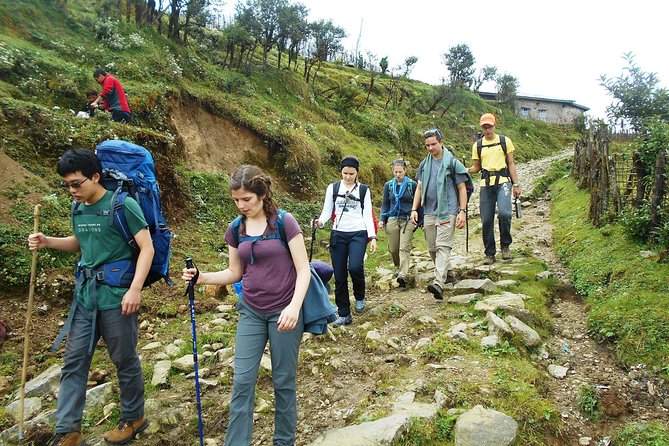
At $460, the package asks you to look at the whole five-day arrangement rather than compare it with the cost of a simple walking permit. The price includes private transportation, four nights of accommodation, national park entry fees, five breakfasts, five lunches, and four dinners.
It also includes walking poles and a head torch. Those are small items individually, but useful ones on a trek with early starts. The GoPro 7 Black camera is another unusual inclusion. You can use it for photographs and videos during the trek, which may appeal if you want more than phone snapshots.
The package does not include alcohol, personal expenses, travel insurance, or a porter. A porter costs 1,000 per day if you choose to hire one. That extra charge is important because the five-day schedule is active, and carrying a heavy bag can make the long third day much harder.
The strongest value comes from convenience. You have a private vehicle, guide support, meals, park access, mountain accommodation, and basic trail equipment arranged in one booking. The tradeoff is that accommodation details are not spelled out, so you should ask what type of lodging is used at each overnight stop and what you need to bring for sleeping.
Guides, private groups, and the human side
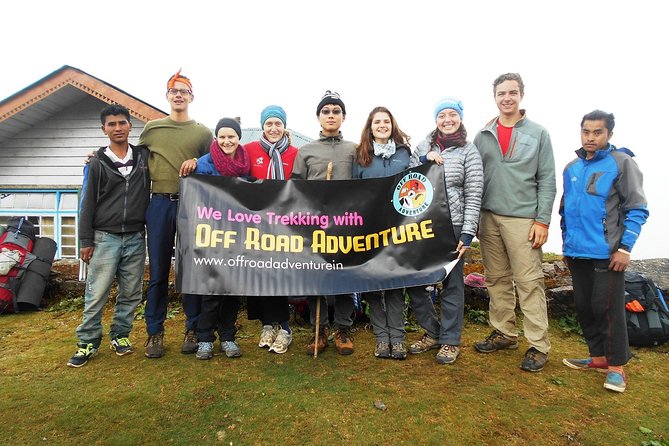
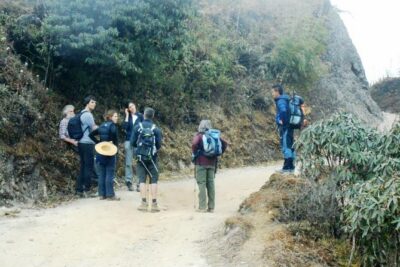
This is a private activity, meaning only your own group participates. That gives you more control than a large shared departure, though the early starts and fixed route still limit how much you can alter the schedule.
The guides are described as active and cheerful, which matters on a long trek. A guide who keeps conversation going and helps maintain morale can make a tough day feel more manageable. Rakesh is specifically praised as a strong guide for the route, while Sekhar is described as communicative and able to speak good English.
Sangay, who handles communication for Off Road Adventure, has also been praised for being easy to reach by email and telephone. That is useful when you need to confirm details before arrival, especially because this is a customized five-day version rather than the usual six-day plan.
The available feedback is highly positive, with four five-star ratings. One particularly practical point is that a booking was arranged at short notice, showing some flexibility in the operator’s planning. Still, short-notice success should not be treated as a promise. Confirm availability, route details, and accommodation as early as you can.
Fitness, timing, and what to pack
The operator sets a moderate physical fitness requirement. That is a useful baseline, but the schedule gives you a clearer picture: early sunrise walks, a 21-kilometer third day, a 15-kilometer descent on Day 4, and several days lasting 12 to 18 hours.
You should be comfortable walking for much of a day and handling uneven mountain trails. The route is not presented as a technical climbing expedition, but it is not a casual sightseeing walk either. Your fitness matters most on Day 3, when the shortened schedule reaches its toughest point.
The included head torch supports the early starts, while walking poles can help on climbs and descents. Bring suitable clothing for changing mountain weather, personal water and snacks, and any medication you need. Travel insurance is not included, so arrange it separately.
Because the tour requires good weather, your plans should have some flexibility. If poor weather causes cancellation, you are offered a different date or a full refund. You can also cancel for a full refund up to 24 hours before the start time, but changes made inside that window are not accepted.
Who should book this trek?
I would recommend it to fit walkers who want a concentrated Himalayan ridge experience and who value having transport, meals, guides, and park fees organized. It is also a good match if your time in Darjeeling is limited and you prefer five days to the usual six.
The route suits you if sunrise views, forest walking, border-country atmosphere, and large mountain panoramas matter more than comfort or a relaxed timetable. The chance of seeing a red panda adds interest, but it should not be your only reason for booking.
I would hesitate if you dislike long walking days, early wake-ups, simple mountain accommodation, or uncertain weather. I would also ask for a detailed daily schedule before paying if you need precise distances, overnight lodging information, or a guaranteed return time to Darjeeling.
FAQ
How long is the Singalila Ridge trek?
The experience lasts approximately five days. It is a customized version of a trek that normally takes six days.
Where does the trek start?
The guide picks you up from your Darjeeling hotel at about 7:00 am. The first drive goes toward Dhotrey, with a stop at Maneybhanjyang.
Is transportation included?
Yes. Private transportation is included, including the return drive from Sirikhola to Darjeeling on the final day.
Are meals included?
Yes. The package includes five breakfasts, five lunches, and four dinners. Alcoholic drinks and personal expenses are not included.
Is accommodation included?
Yes. The price includes four nights of accommodation.
What equipment is provided?
Walking poles and a head torch are included. A GoPro 7 Black camera is also available during the trek for photos and videos.
How difficult is the trek?
The tour requires a moderate level of physical fitness. Day 3 is the longest, covering approximately 21 kilometers, and Day 4 covers about 15 kilometers from Phalut to Gorkhey.
Can I hire a porter?
Yes. A porter can be arranged for an additional charge of 1,000 per day.
What happens if bad weather cancels the trek?
If poor weather causes cancellation, you are offered a different date or a full refund. The experience also requires a minimum number of participants, and a cancellation for that reason brings the same options.
Should you book the five-day Singalila Ridge trek?
Book it if you want a well-organized, private mountain trek with major Himalayan views and you are ready for an intense schedule. The combination of Sandakphu, Phalut, four possible high-peak views, forest trails, village routes, included meals, and active guides gives the $460 price solid value.
Before booking, confirm the exact overnight accommodation, the daily walking hours, and how the 21-kilometer Day 3 is handled. If those demands fit your ability, this is a strong choice for seeing the Singalila Ridge in a short window.
Recently added around India
- Prashar Lake Trek★ 5.0 · 7 reviews
- Kasol + Kheerganga Trek 3D/2N, all inclusive with BanBanjara★ 3.5 · 3 reviews
- Jogini Waterfall Trek from Manali★ 5.0 · 2 reviews
- 8 Days Markha Valley Trek: Shared Tour with Meals Included★ 5.0 · 3 reviews
- Ladakh One Day Trek- Gyamtsa to Phyang Village★ 5.0 · 4 reviews
- Ladakh Sham Valley Trek★ 5.0 · 7 reviews
- 1 Day Activity Adventure Trekking Kerala★ 5.0 · 5 reviews
- Kolukkumalai Trekking with Night stay in Tent★ 5.0 · 2 reviews
Darjeeling Trekking Tours, compared.
Tiger Hill Darjeeling Nature Walk (3 Hours Guided Trekking Experience)
Read our review →
Browse the lists this tour appears in